
Conversational English: Slang, Colloquialisms,

Conversational English: Slang, Colloquialisms,
1 / 1
Conversational English: Slang, Colloquialisms, - slide 1 of 8 Conversational English: Slang, Colloquialisms, - slide 2 of 8 Conversational English: Slang, Colloquialisms, - slide 3 of 8 Conversational English: Slang, Colloquialisms, - slide 4 of 8 Conversational English: Slang, Colloquialisms, - slide 5 of 8 Conversational English: Slang, Colloquialisms, - slide 6 of 8 Conversational English: Slang, Colloquialisms, - slide 7 of 8 Conversational English: Slang, Colloquialisms, - slide 8 of 8
Conversational English: Slang, Colloquialisms, Clichés, ETC. From the UWF Writing Labs 101 Grammar Mini-Lessons Series Mini-Lesson 44 Conversational English is bad English for academic and professional writing. Conversational English

Related Topics

Download this presentation From Below

"Conversational English: Slang, Colloquialisms," is the property of its rightful owner. Permission is granted to download and print the materials on this website for personal, non-commercial use only, and to display it on your personal computer provided you do not modify the materials and that you retain all copyright notices contained in the materials. By downloading content from our website, you accept the terms of this agreement.

Presentation Transcript

01
Conversational English: Slang, Colloquialisms, Clichés, ETC. From the
UWF Writing Lab’s 101
Grammar Mini-Lessons Series Mini-Lesson #44<br>
02
Conversational English is “bad English” for academic and professional writing. Conversational English usually consists of the following:
Slang
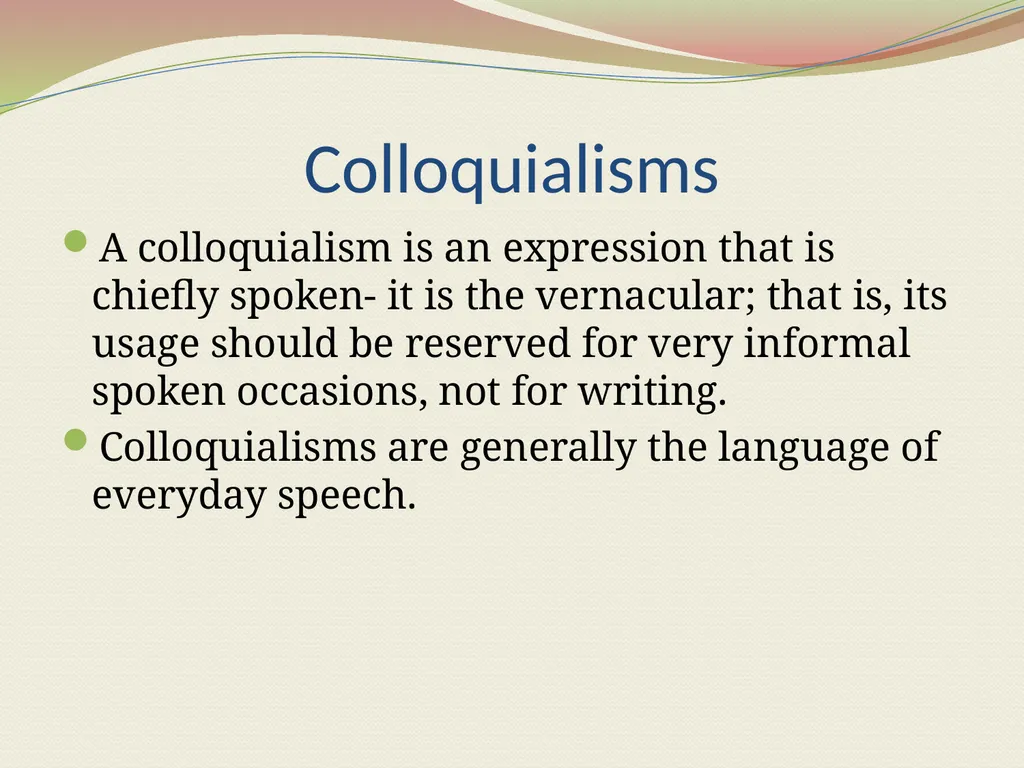
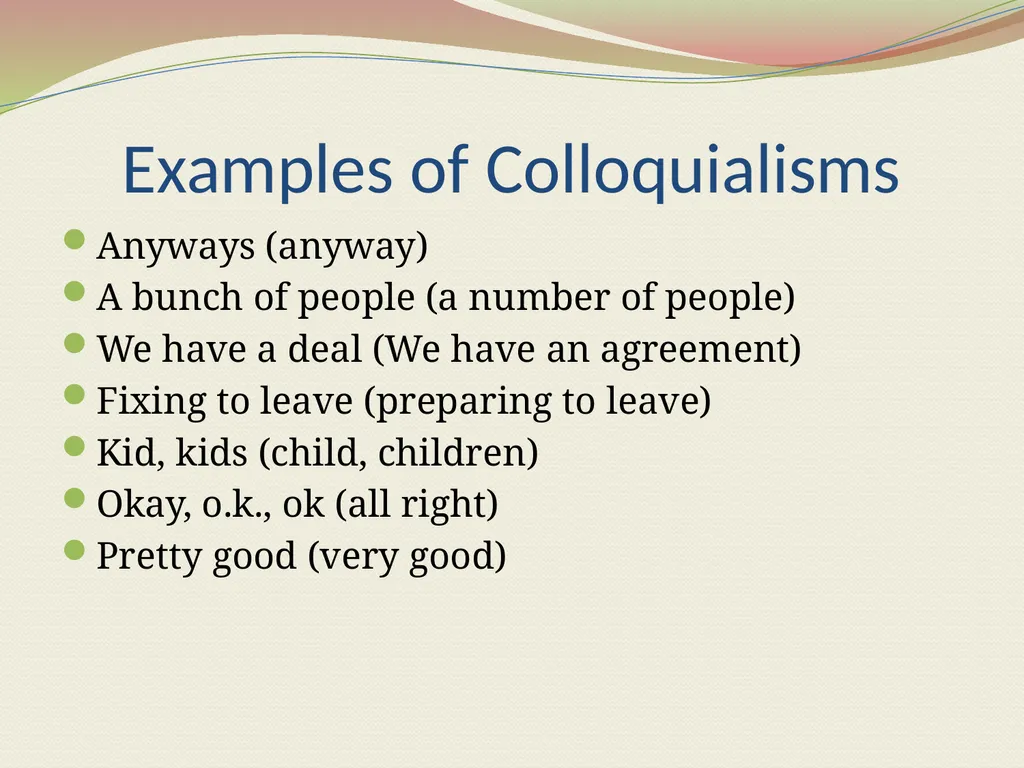
Colloquialisms
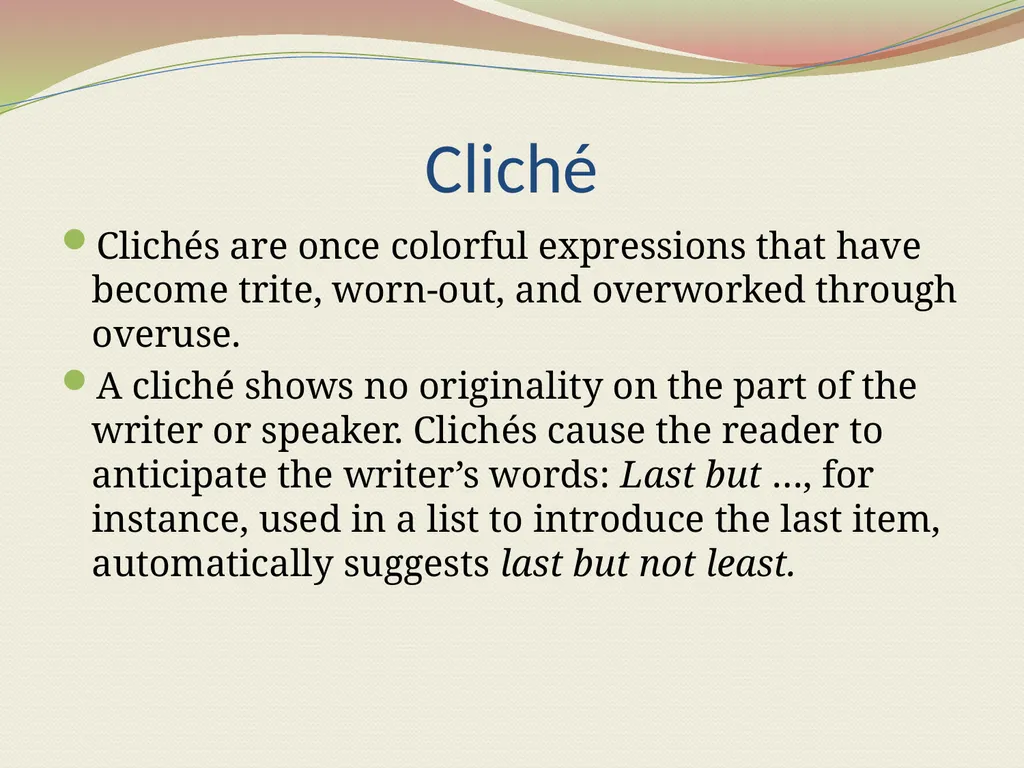
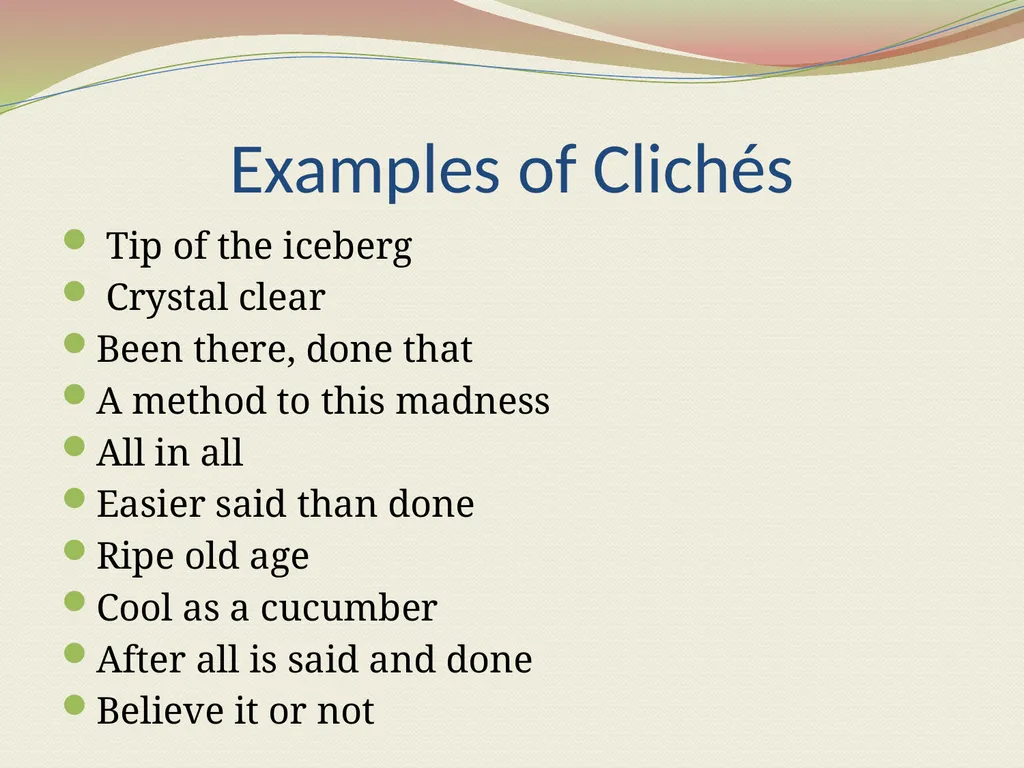
Clichés Conversational English<br>
03
Slang Slang is a style of language characteristic of given localities, age groups, time periods, and cultural and social groups.
Slang may be used effectively in informal and formal speech and writing, as long as the slang expression is set off in quotation marks to indicate the usage is intentionally informal.<br>