Conversion, Obversion, Contraposition The Logical Operations In this lecture, we will learn a procedure for manipulating categorical statements. In the following we learn (1) to perform each operation, (2) diagram the resulting statement,
"Conversion, Obversion, & Contraposition The" is the property of its rightful owner. Permission is granted to
download and print the materials on this website for personal, non-commercial use only, and to display it
on your personal computer provided you do not modify the materials and that you retain all copyright
notices contained in the materials. By downloading content from our website, you accept the terms of this
agreement.
Presentation Transcript
01
Conversion, Obversion, & Contraposition The Logical Operations<br>
02
In this lecture, we will learn a procedure for manipulating categorical statements.
In the following we learn (1) to perform each operation, (2) diagram the resulting statement, (3) tell whether the resulting statement is logically equivalent to the original.<br>
03
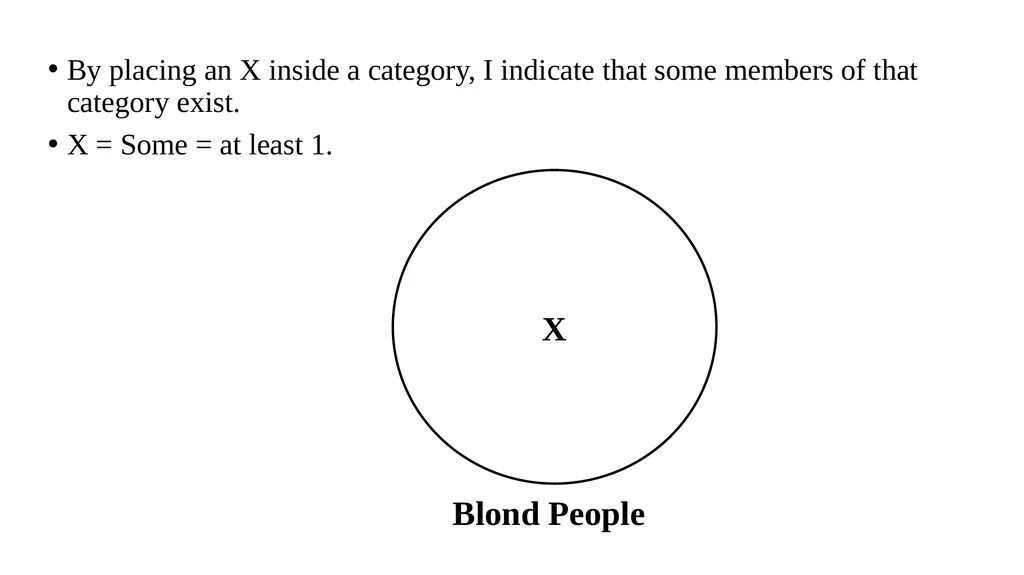
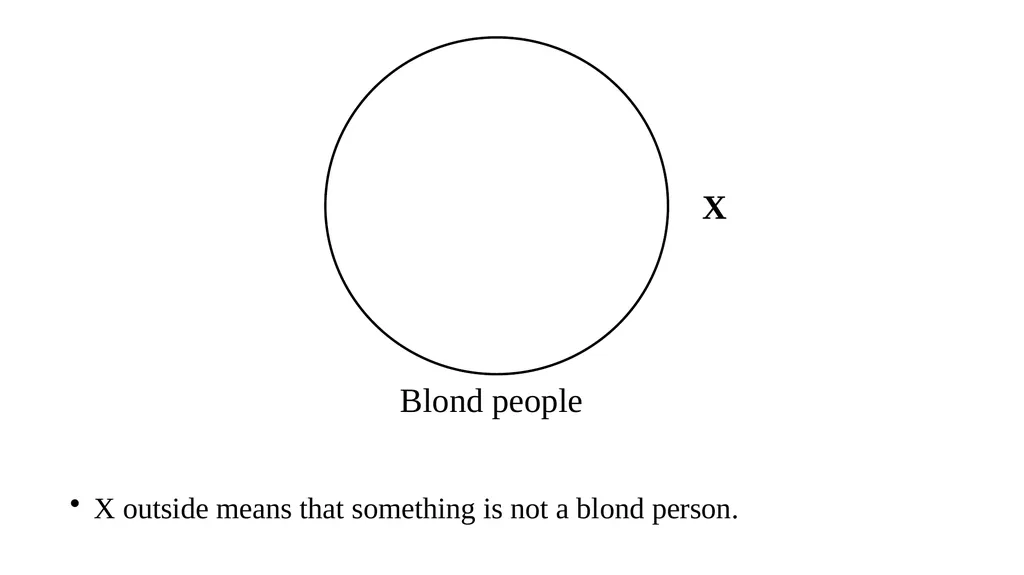
By placing an X inside a category, I indicate that some members of that category exist.
X = Some = at least 1. X Blond People<br>
04
X Blond people X outside means that something is not a blond person.<br>
05
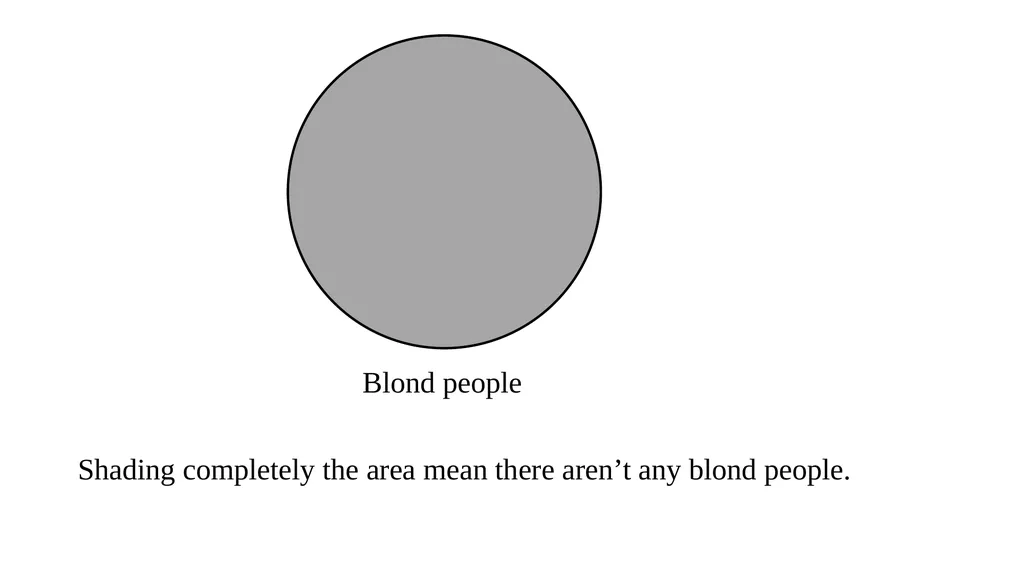
Blond people Shading completely the area mean there aren’t any blond people.<br>
06
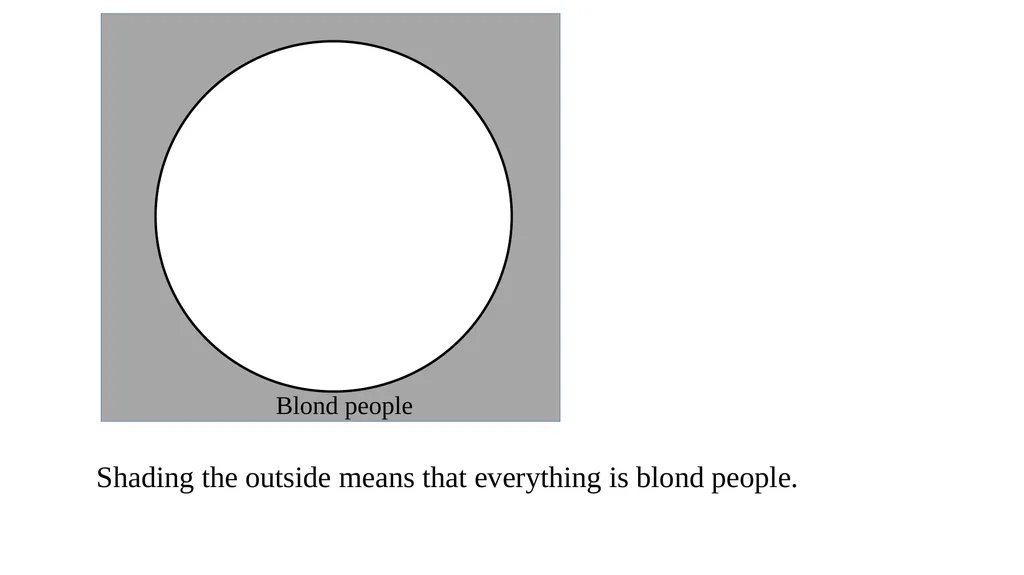
Blond people Shading the outside means that everything is blond people.<br>
07
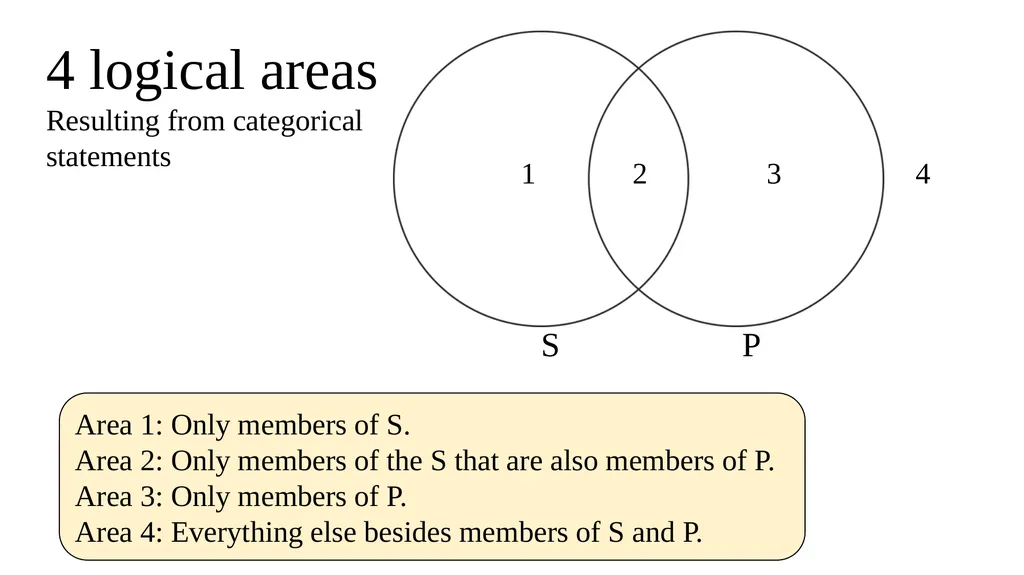
4 logical areas
Resulting from categorical statements 1 2 3 4 Area 1: Only members of S.
Area 2: Only members of the S that are also members of P.
Area 3: Only members of P.
Area 4: Everything else besides members of S and P. S P<br>
08
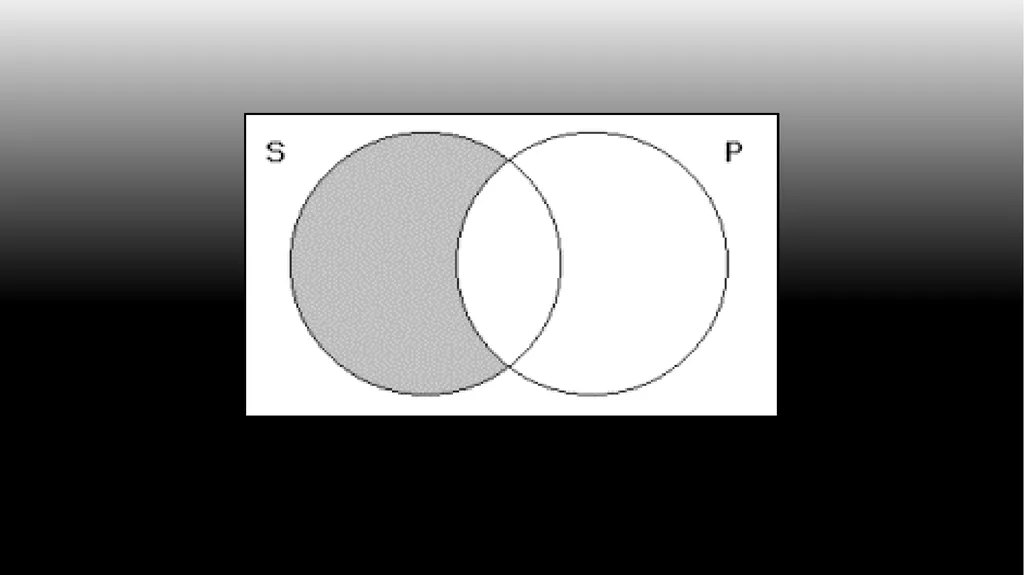
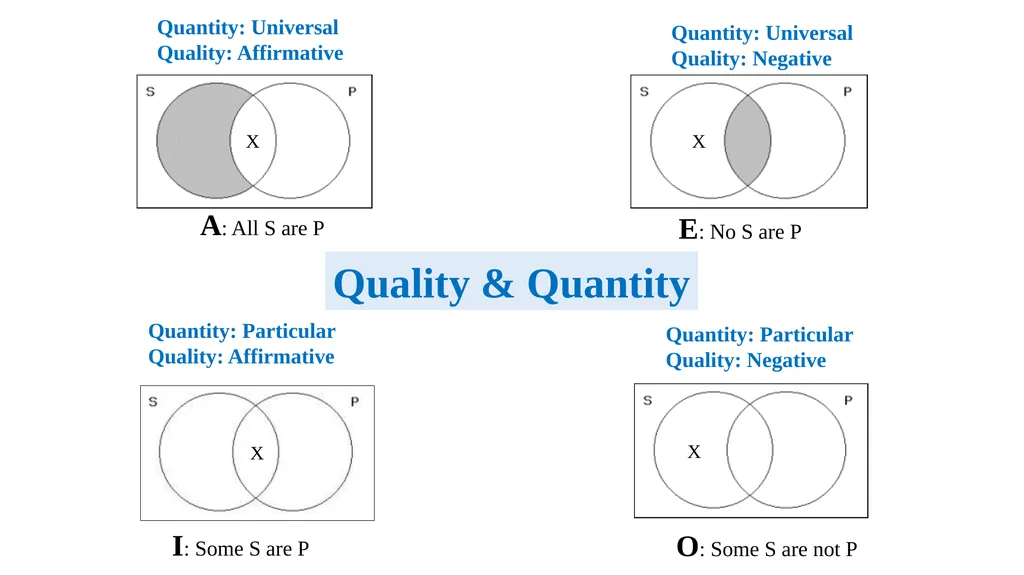
A: All S are P<br>
09
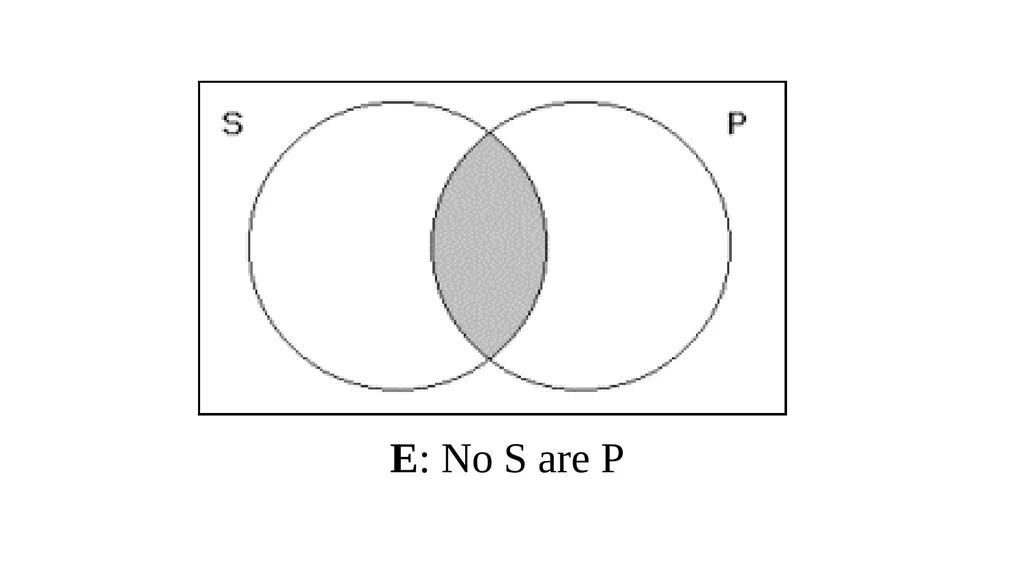
E: No S are P<br>
10
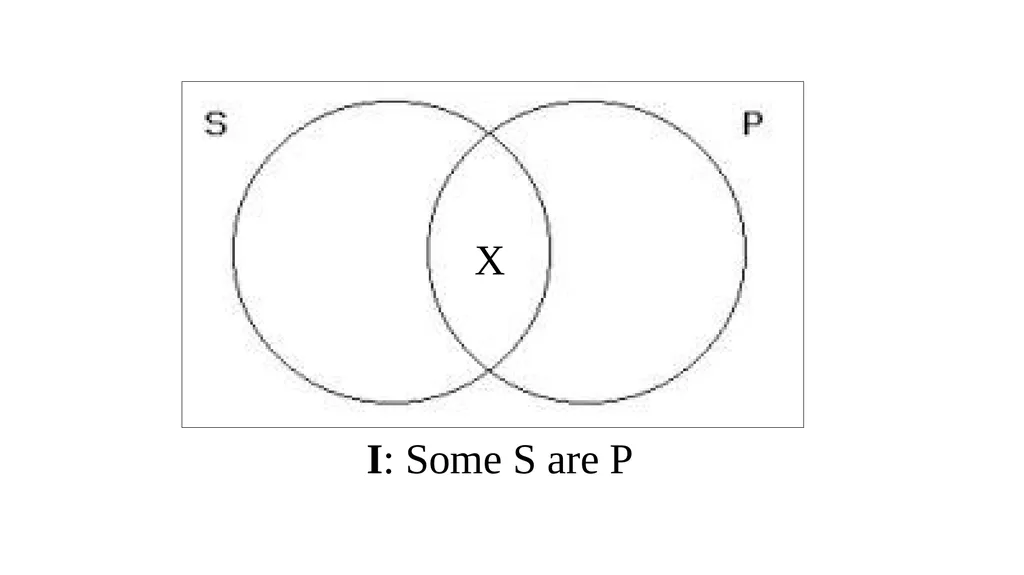
I: Some S are P X<br>
11
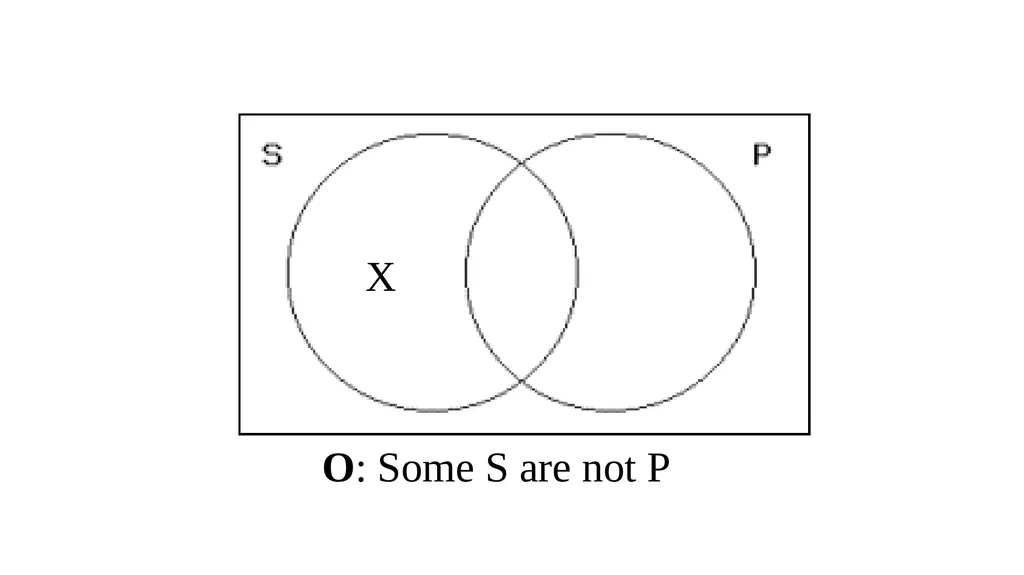
O: Some S are not P X<br>
12
A: All S are P E: No S are P I: Some S are P O: Some S are not P X X X X Quantity: Universal
Quality: Affirmative Quantity: Universal
Quality: Negative Quantity: Particular
Quality: Affirmative Quantity: Particular
Quality: Negative Quality & Quantity<br>
13
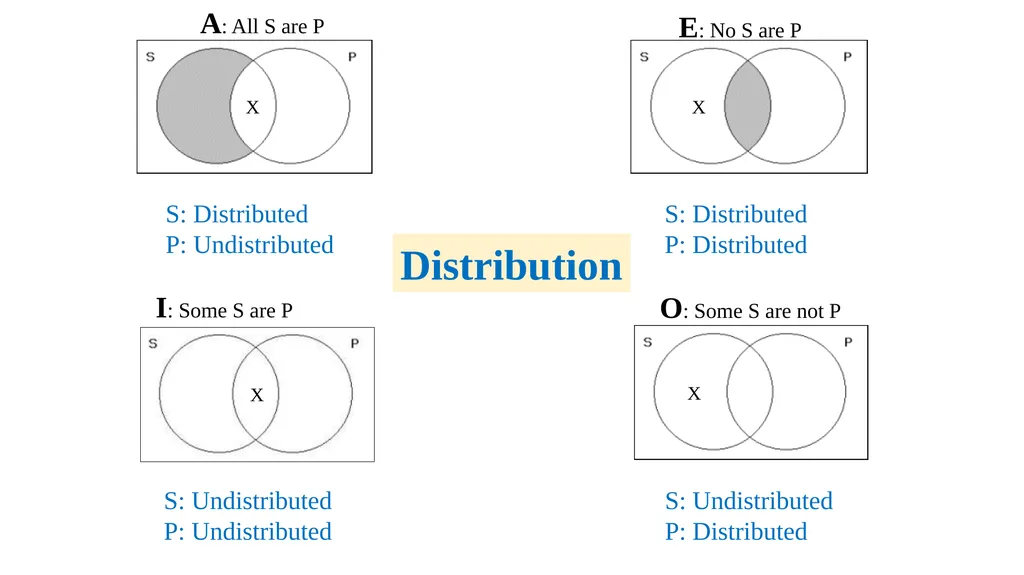
A: All S are P E: No S are P I: Some S are P O: Some S are not P X X X X S: Distributed
P: Undistributed S: Distributed
P: Distributed S: Undistributed
P: Undistributed S: Undistributed
P: Distributed Distribution<br>
14
THE 3 LOGICAL OPERATIONS<br>
15
1. Conversion: The first operation is called conversion: Swapping the subject with the predicate. The result of this operation is a new sentence, which is said to be the converse of the original sentence.<br>
16
All dogs are mammals All mammals are dogs No dogs are cats No cats are dogs Some cats are mammals Some mammals are cats Some fruit are not bananas Some bananas are not fruit<br>
17
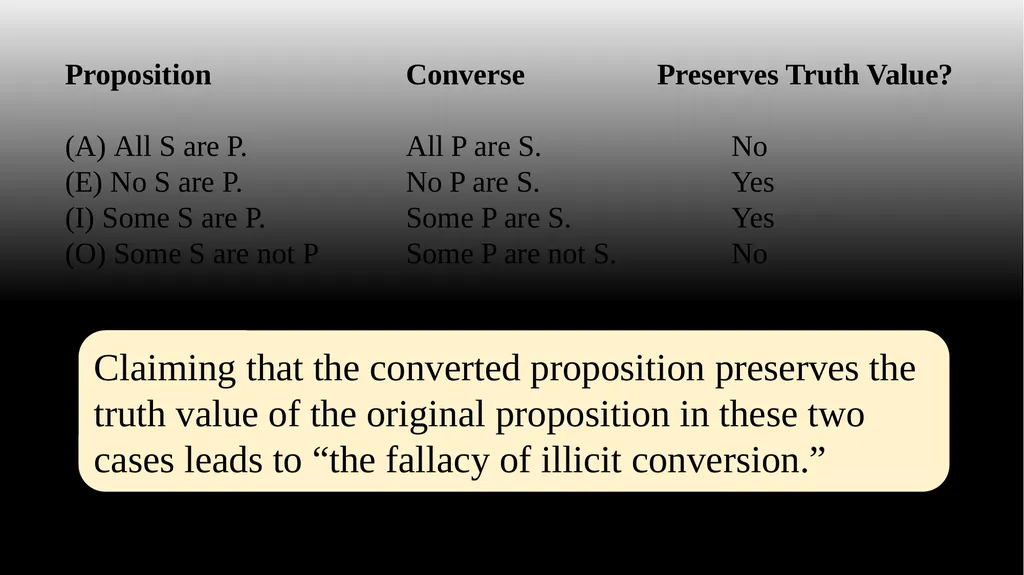
Proposition
All S are P.
(E) No S are P. (I) Some S are P.
(O) Some S are not P Converse
All P are S.
No P are S.
Some P are S.
Some P are not S. Preserves Truth Value?
No
Yes
Yes
No Claiming that the converted proposition preserves the truth value of the original proposition in these two cases leads to “the fallacy of illicit conversion.”<br>
18
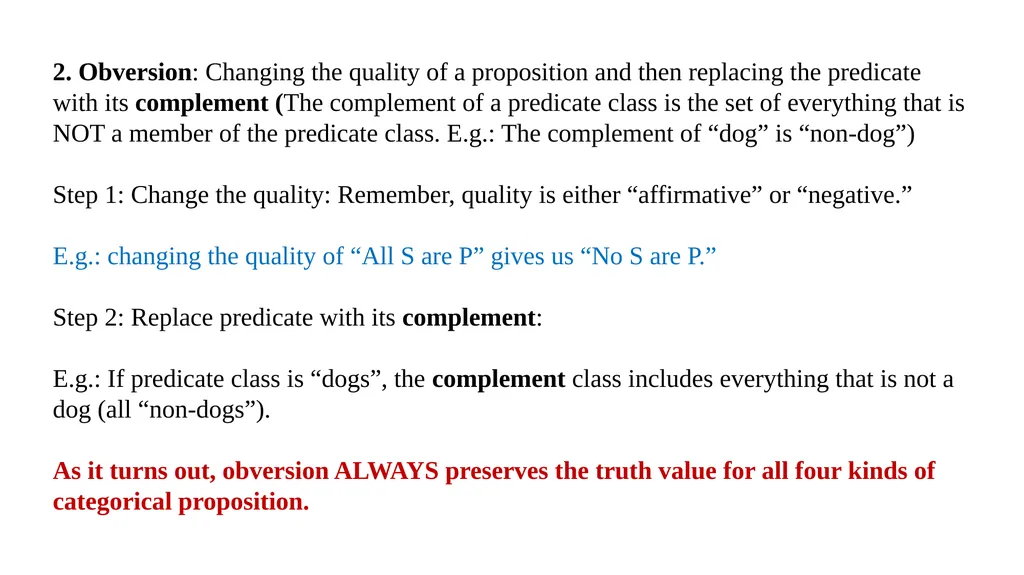
2. Obversion: Changing the quality of a proposition and then replacing the predicate with its complement (The complement of a predicate class is the set of everything that is NOT a member of the predicate class. E.g.: The complement of “dog” is “non-dog”)
Step 1: Change the quality: Remember, quality is either “affirmative” or “negative.”
E.g.: changing the quality of “All S are P” gives us “No S are P.”
Step 2: Replace predicate with its complement:
E.g.: If predicate class is “dogs”, the complement class includes everything that is not a dog (all “non-dogs”).
As it turns out, obversion ALWAYS preserves the truth value for all four kinds of categorical proposition.<br>
19
All dogs are mammals No dogs are non-mammals No dogs are cats All dogs are non-cats Some cats are mammals Some cats are not non-mammals Some fruit are not bananas Some fruit are non-bananas<br>
20
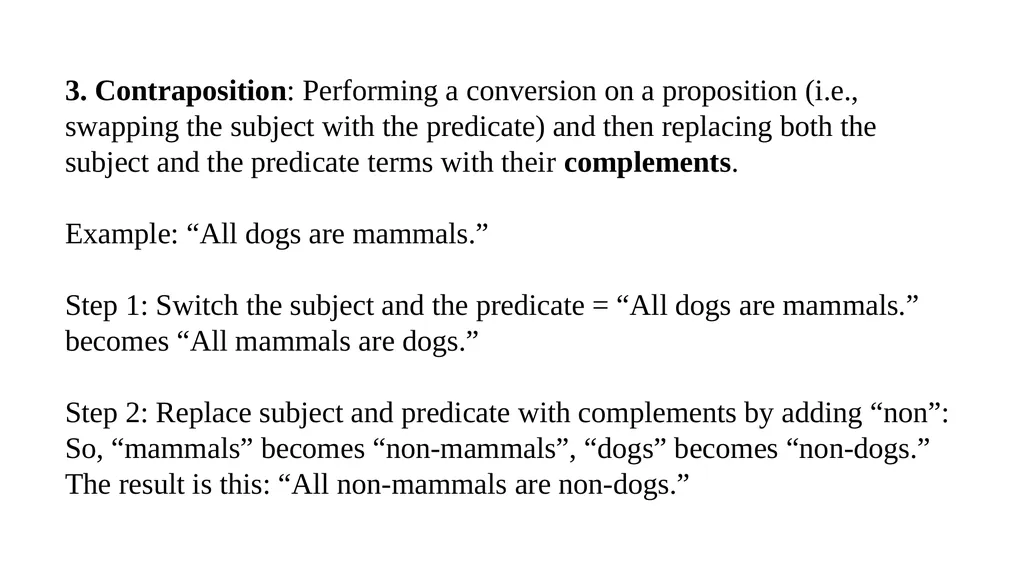
3. Contraposition: Performing a conversion on a proposition (i.e., swapping the subject with the predicate) and then replacing both the subject and the predicate terms with their complements.
Example: “All dogs are mammals.”
Step 1: Switch the subject and the predicate = “All dogs are mammals.” becomes “All mammals are dogs.”
Step 2: Replace subject and predicate with complements by adding “non”: So, “mammals” becomes “non-mammals”, “dogs” becomes “non-dogs.” The result is this: “All non-mammals are non-dogs.”<br>
21
All dogs are mammals. All non-mammals are non-dogs. No dogs are cats. No non-cats are non-dogs. Some cats are mammals. Some non-mammals are non-cats. Some fruit are not bananas. Some non-bananas are not non-fruit (they are fruit) x<br>
22
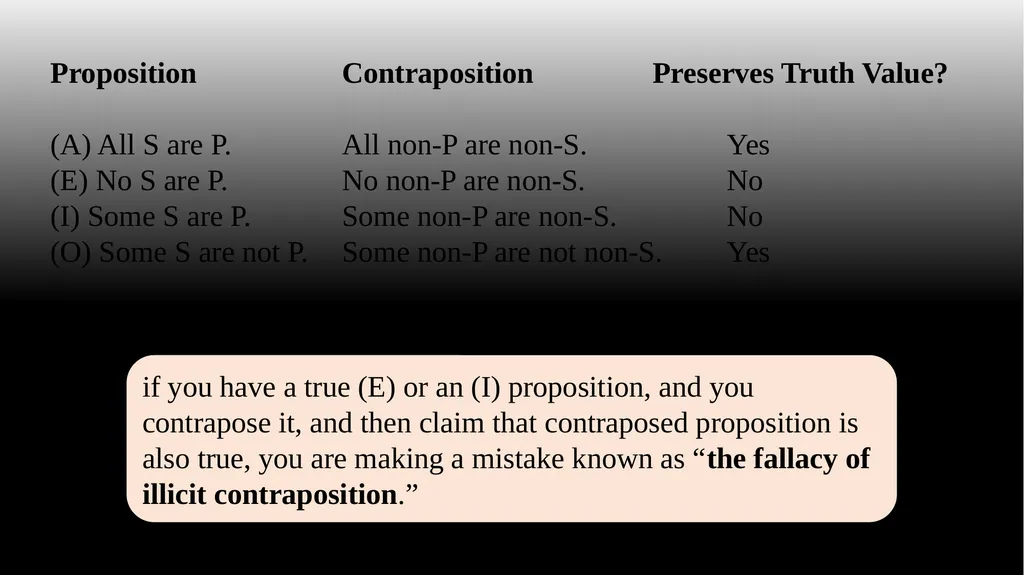
Proposition
(A) All S are P. (E) No S are P. (I) Some S are P. (O) Some S are not P. Contraposition
All non-P are non-S. No non-P are non-S.
Some non-P are non-S.
Some non-P are not non-S. Preserves Truth Value?
Yes
No
No
Yes if you have a true (E) or an (I) proposition, and you contrapose it, and then claim that contraposed proposition is also true, you are making a mistake known as “the fallacy of illicit contraposition.”<br>