Coordination Saves Lives Community Responder Training Disaster impact Name Presentation Title: Session 02 PresenterInstructor: Community Responder Training Coordination Saves Lives Disaster Impact Hazards Risks Dangers Community
"Coordination Saves Lives Community Responder" is the property of its rightful owner. Permission is granted to
download and print the materials on this website for personal, non-commercial use only, and to display it
on your personal computer provided you do not modify the materials and that you retain all copyright
notices contained in the materials. By downloading content from our website, you accept the terms of this
agreement.
Presentation Transcript
01
Coordination Saves Lives Community Responder Training Disaster impact <Name> Presentation Title: Session 02 Presenter/Instructor:<br>
02
Community Responder Training Coordination Saves Lives Disaster Impact Hazards
Risks
Dangers<br>
03
Community Responders have little training and no personnel protective equipment.
That is why you need to pay special attention to hazards, risks and dangers on-site.
The following slides show some examples. The post disaster situation: risky for rescuers<br>
04
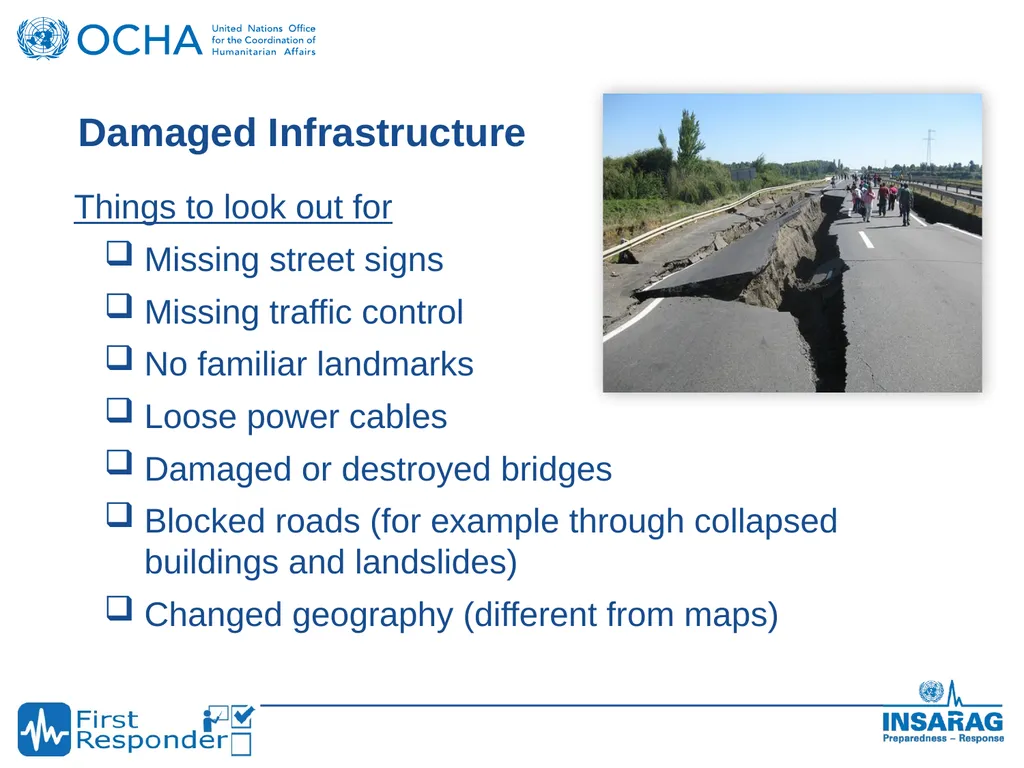
Damaged Infrastructure Things to look out for
Missing street signs
Missing traffic control
No familiar landmarks
Loose power cables
Damaged or destroyed bridges
Blocked roads (for example through collapsed buildings and landslides)
Changed geography (different from maps)<br>
05
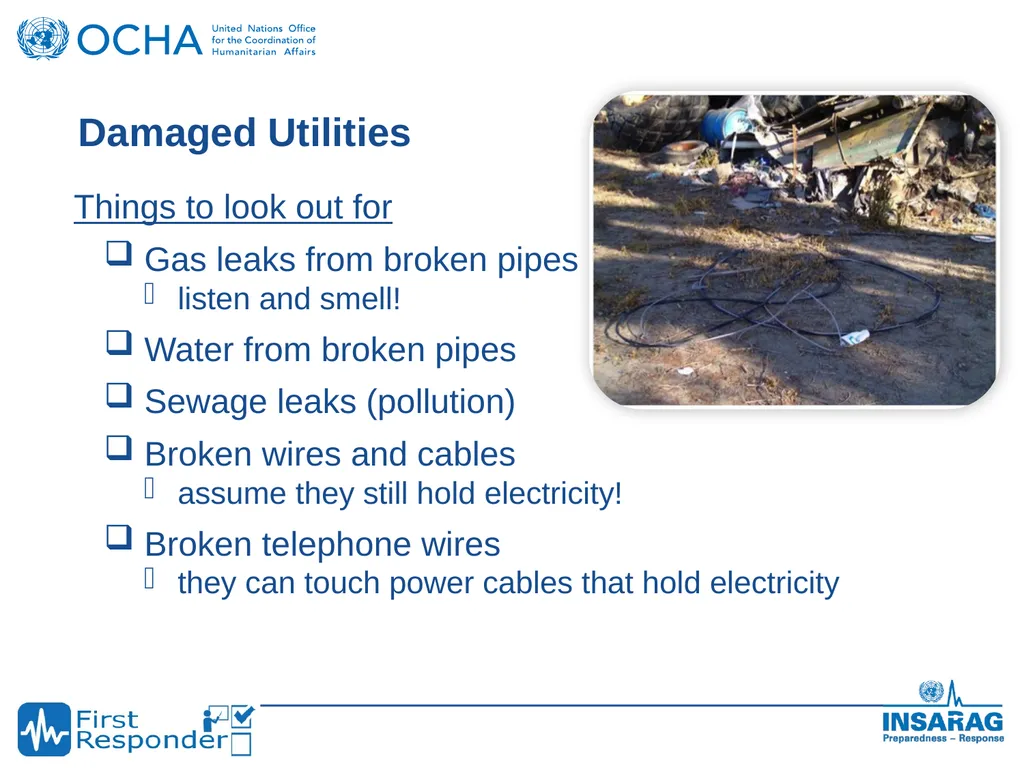
Damaged Utilities Things to look out for
Gas leaks from broken pipes
listen and smell!
Water from broken pipes
Sewage leaks (pollution)
Broken wires and cables
assume they still hold electricity!
Broken telephone wires
they can touch power cables that hold electricity<br>
06
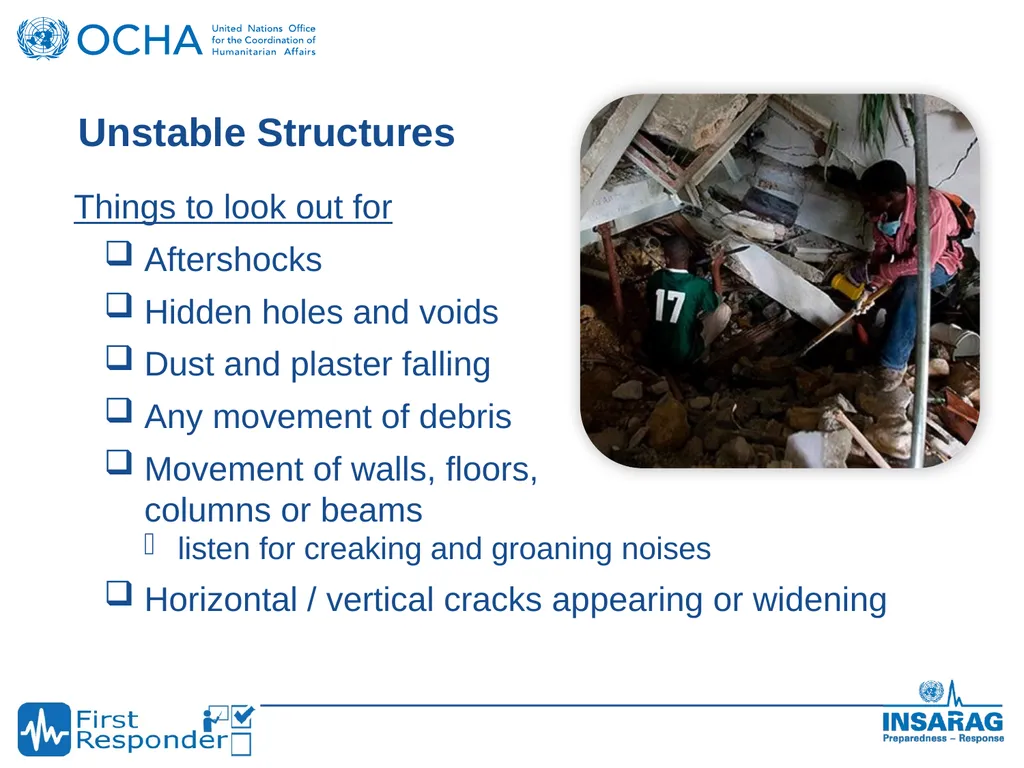
Unstable Structures Things to look out for
Aftershocks
Hidden holes and voids
Dust and plaster falling
Any movement of debris
Movement of walls, floors, columns or beams
listen for creaking and groaning noises
Horizontal / vertical cracks appearing or widening<br>
07
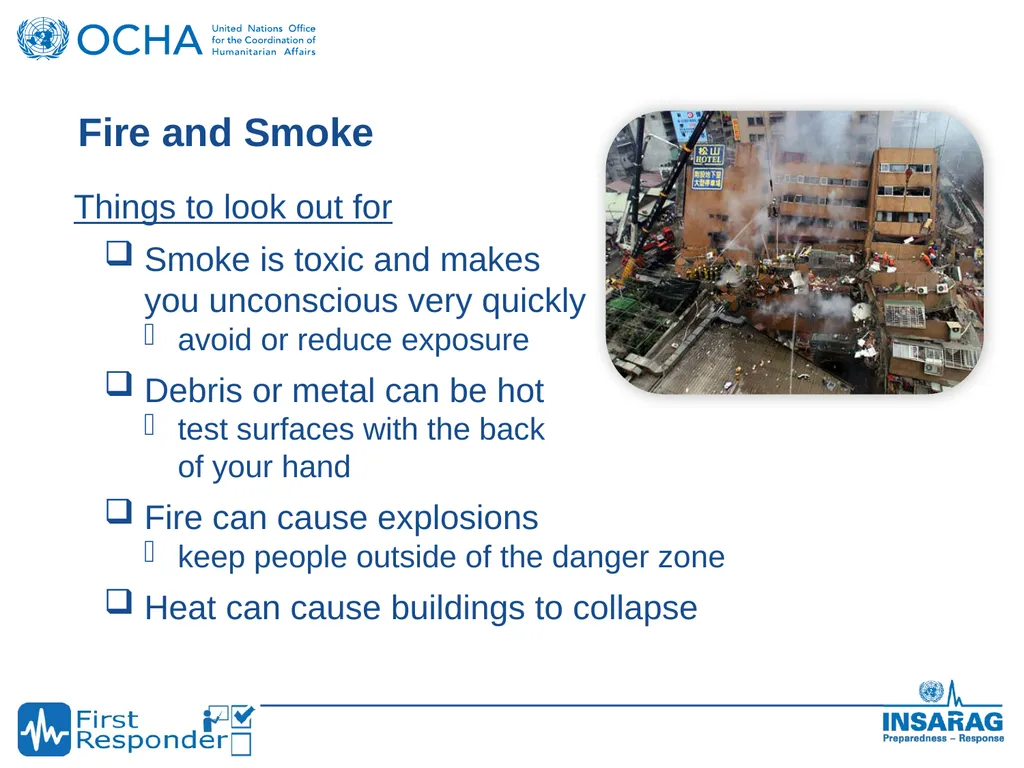
Fire and Smoke Things to look out for
Smoke is toxic and makes you unconscious very quickly
avoid or reduce exposure
Debris or metal can be hot
test surfaces with the back of your hand
Fire can cause explosions
keep people outside of the danger zone
Heat can cause buildings to collapse<br>
08
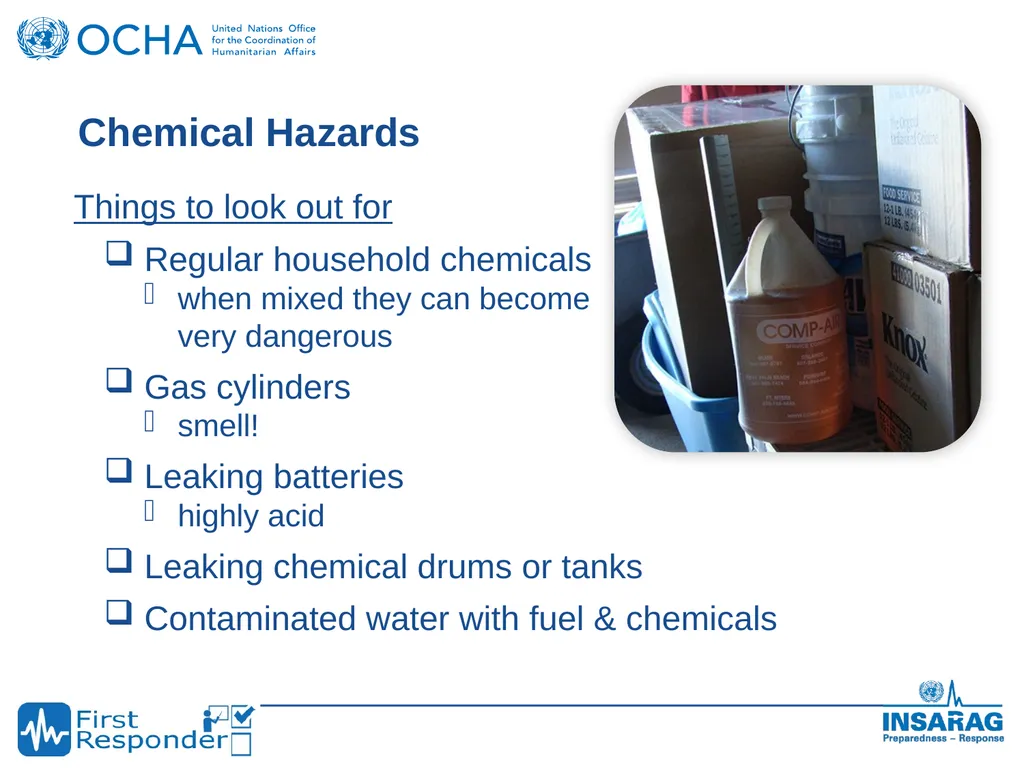
Chemical Hazards Things to look out for
Regular household chemicals
when mixed they can become very dangerous
Gas cylinders
smell!
Leaking batteries
highly acid
Leaking chemical drums or tanks
Contaminated water with fuel & chemicals<br>
09
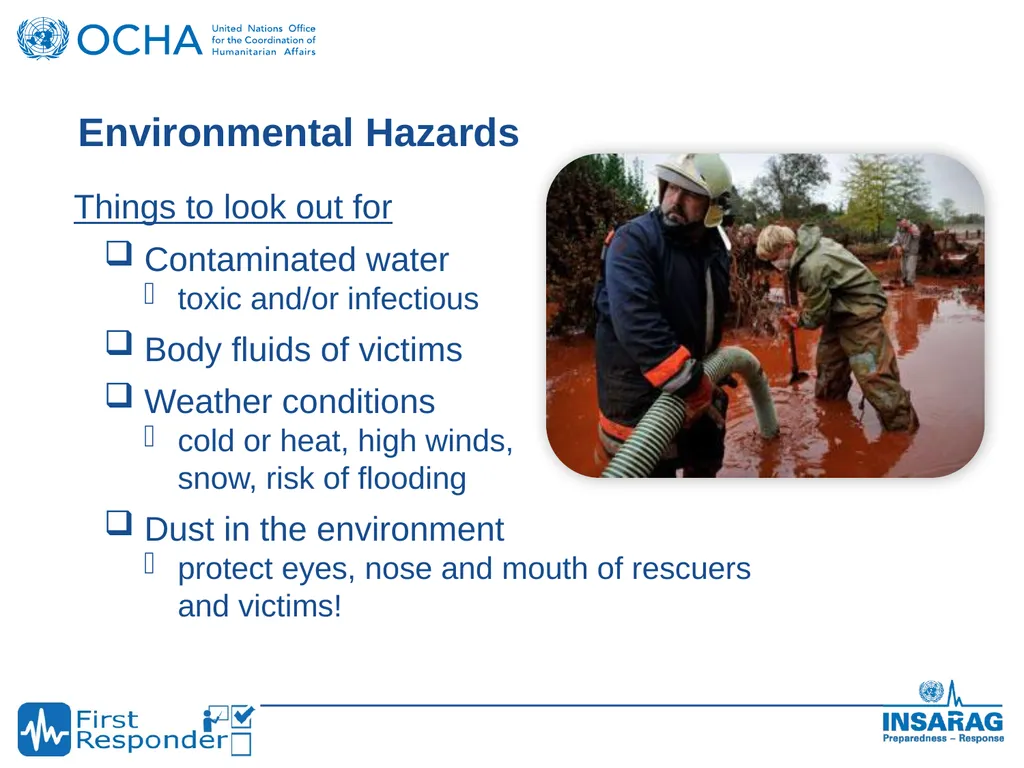
Environmental Hazards Things to look out for
Contaminated water
toxic and/or infectious
Body fluids of victims
Weather conditions
cold or heat, high winds, snow, risk of flooding
Dust in the environment
protect eyes, nose and mouth of rescuers and victims!<br>
10
Brainstorming: You have 10 minutes to think about the following questions:
Which rules are important in a risky environment?
And which is the most important one? ... 10 minutes …<br>
11
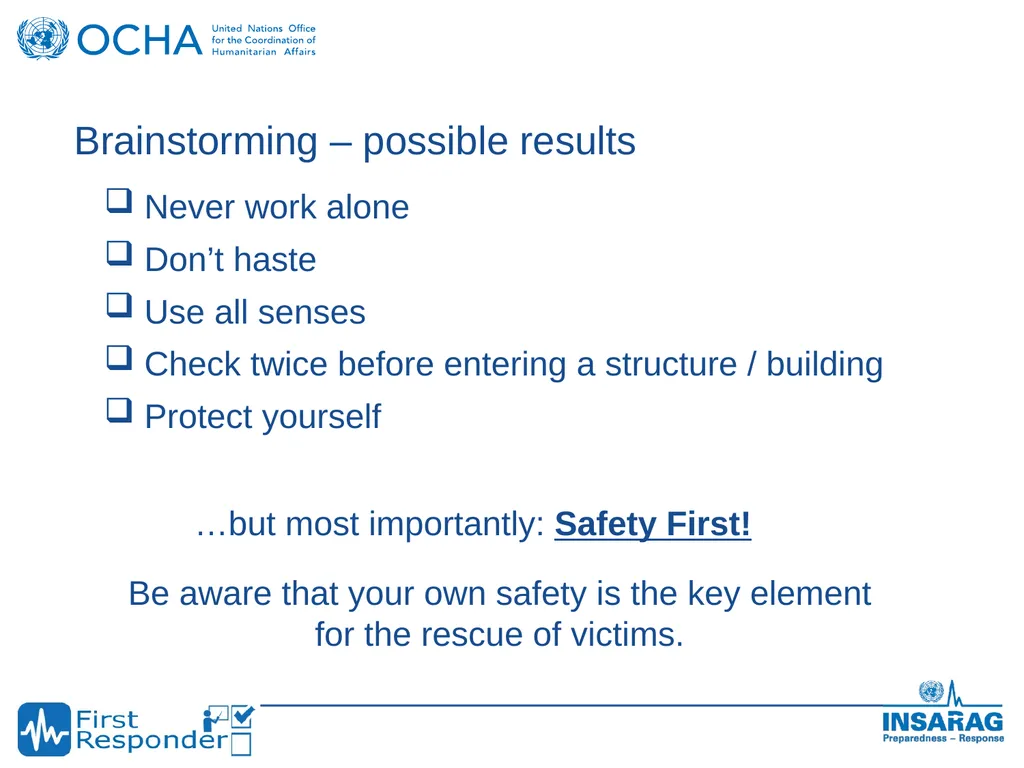
Other rules are: Never work alone
Don’t haste
Use all senses
Check twice before entering a structure / building
Protect yourself
…but most importantly: Safety First!
Be aware that your own safety is the key element for the rescue of victims. Brainstorming – possible results<br>
12
Questions Cuestión La question الأسئلة въпроси 问题 otázky spørgsmål vragen küsimused kysymykset Fragen सवालों के जवाब pertanyaan domande 質問 perguntas вопросов sorular ?<br>