Corporate Finance Thirteenth Edition Stephen A. Ross Randolph W. Westerfield Jeffrey F. Jaffe Bradford D. Jordan Chapter 1 Introduction to Corporate Finance McGraw Hill LLC. All rights reserved. No reproduction or distribution
"Corporate Finance Thirteenth Edition Stephen A." is the property of its rightful owner. Permission is granted to
download and print the materials on this website for personal, non-commercial use only, and to display it
on your personal computer provided you do not modify the materials and that you retain all copyright
notices contained in the materials. By downloading content from our website, you accept the terms of this
agreement.
Key Concepts and Skills Know the basic types of financial management decisions and the role of the financial manager.
Know the financial implications of the various forms of business organization.
Know the goal of the financial manager.
Understand the conflicts of interest that can arise between owners and managers.
Understand the various regulations that firms face. 2<br>
03
Chapter Outline 1.1 What is Corporate Finance?
1.2 The Corporate Firm
1.3 The Importance of Cash Flows
1.4 The Goal of Financial Management
1.5 The Agency Problem and Control of the Corporation
1.6 Regulation 3<br>
04
1.1 What Is Corporate Finance? Corporate finance addresses the following three questions:
In what long-lived assets should the firm invest?
How can the firm raise cash for required capital expenditures?
How should short-term operating cash flows be managed? 4<br>
05
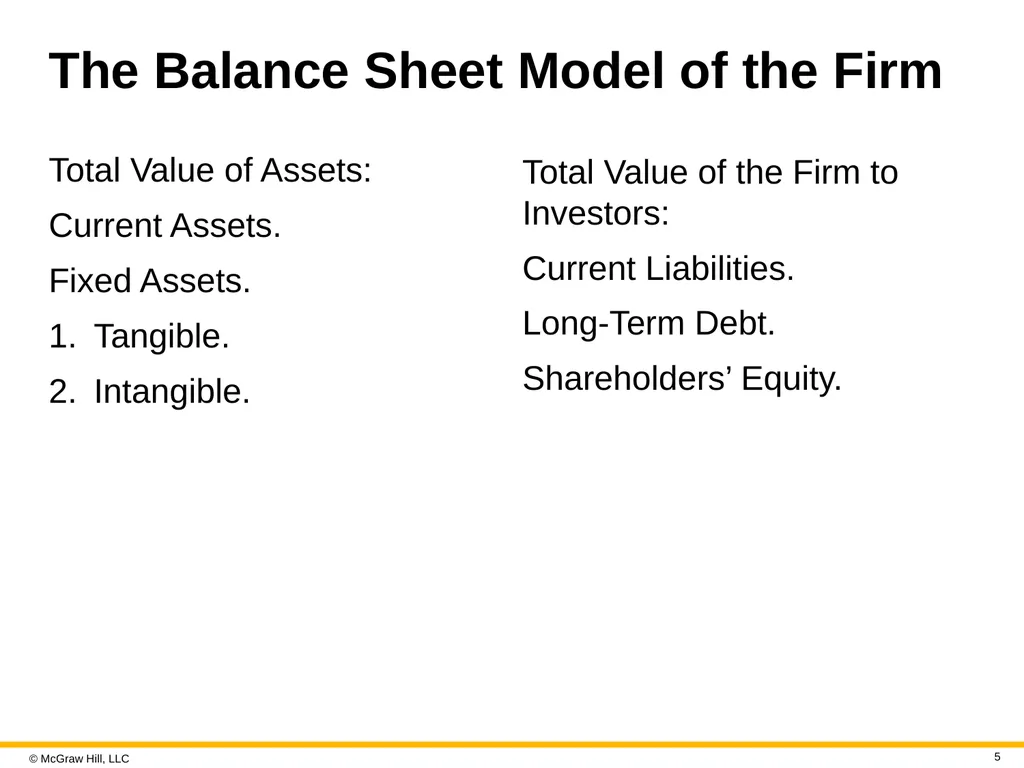
The Balance Sheet Model of the Firm Total Value of Assets:
Current Assets.
Fixed Assets.
Tangible.
Intangible. Total Value of the Firm to Investors:
Current Liabilities.
Long-Term Debt.
Shareholders’ Equity. 5<br>
06
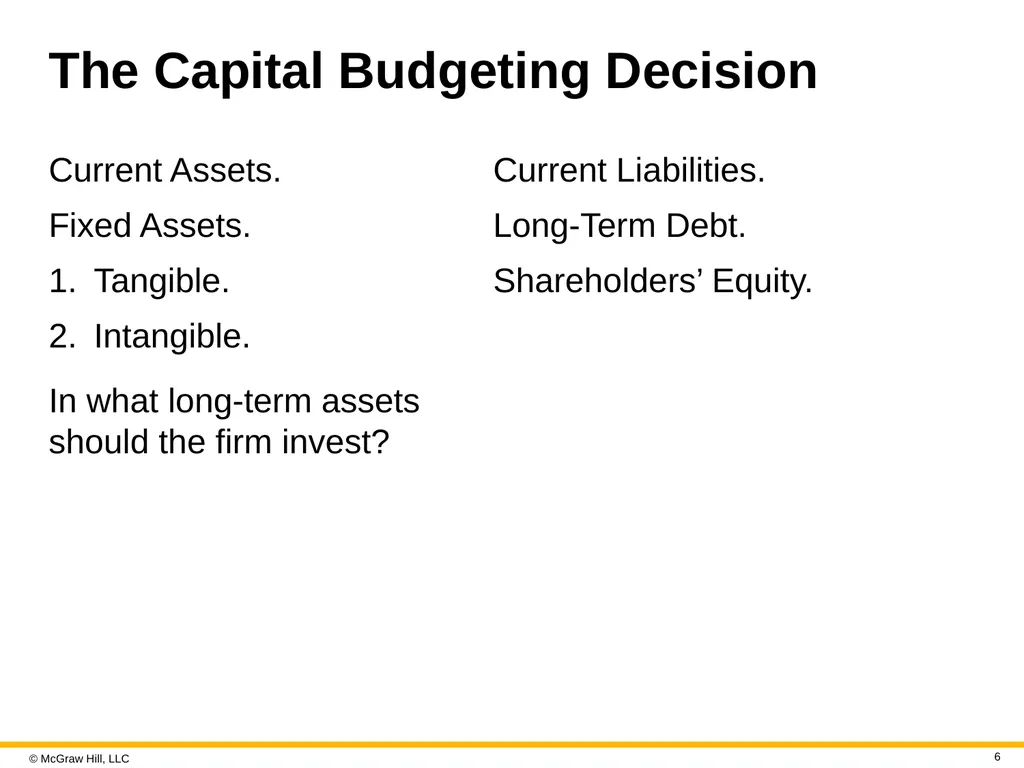
The Capital Budgeting Decision Current Assets.
Fixed Assets.
Tangible.
Intangible. In what long-term assets should the firm invest? Current Liabilities.
Long-Term Debt.
Shareholders’ Equity. 6<br>
07
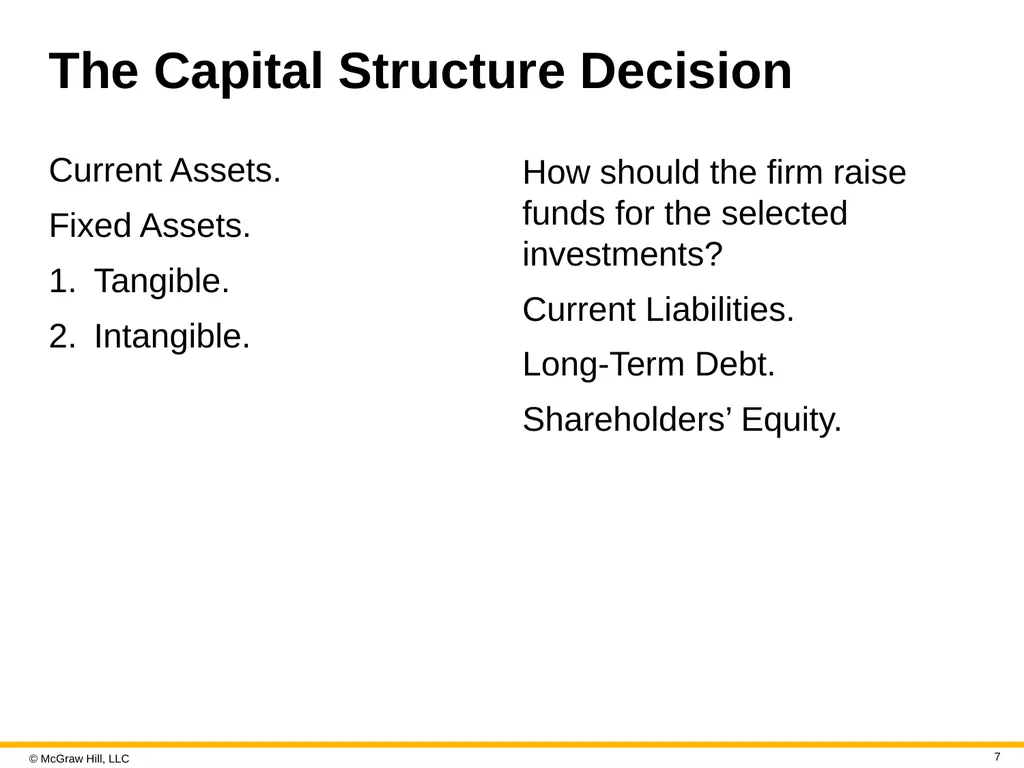
The Capital Structure Decision Current Assets.
Fixed Assets.
Tangible.
Intangible. How should the firm raise funds for the selected investments?
Current Liabilities.
Long-Term Debt.
Shareholders’ Equity. 7<br>
08
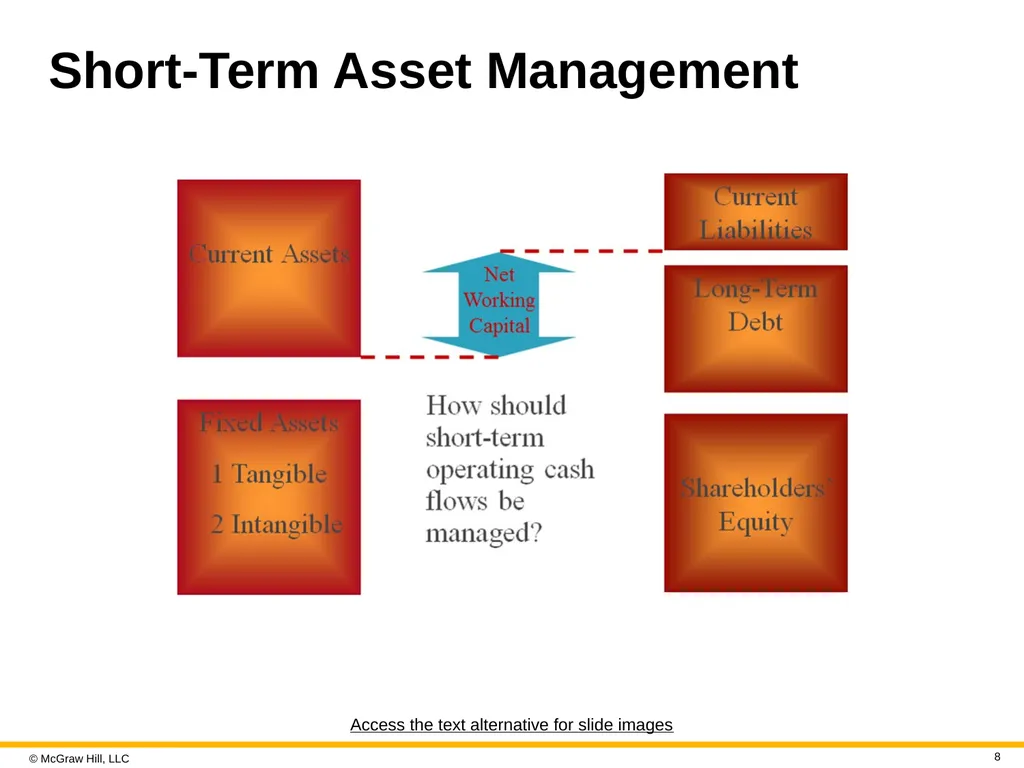
Short-Term Asset Management Access the text alternative for slide images 8<br>
09
The Financial Manager The financial manager’s primary goal is to increase the value of the firm by:
Selecting value-creating projects.
Making smart financing decisions. 9<br>
10
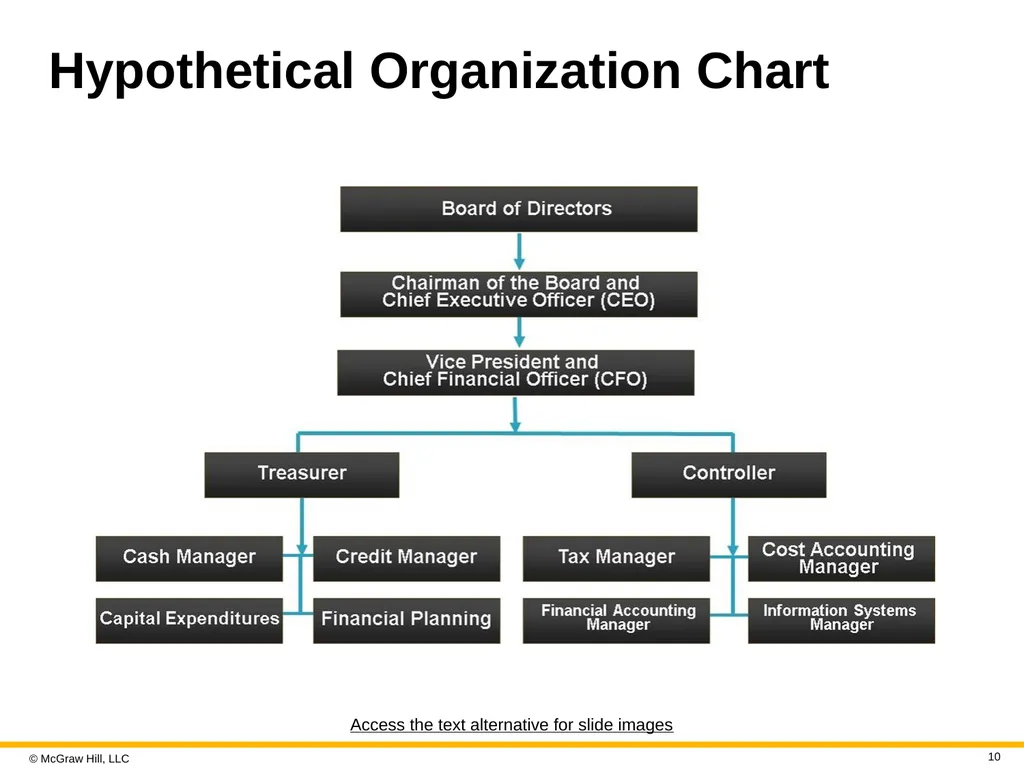
Hypothetical Organization Chart Access the text alternative for slide images 10<br>
11
1.2 The Corporate Firm The corporate form of business is the standard method for solving the problems encountered in raising large amounts of cash.
However, businesses can take other forms. 11<br>
12
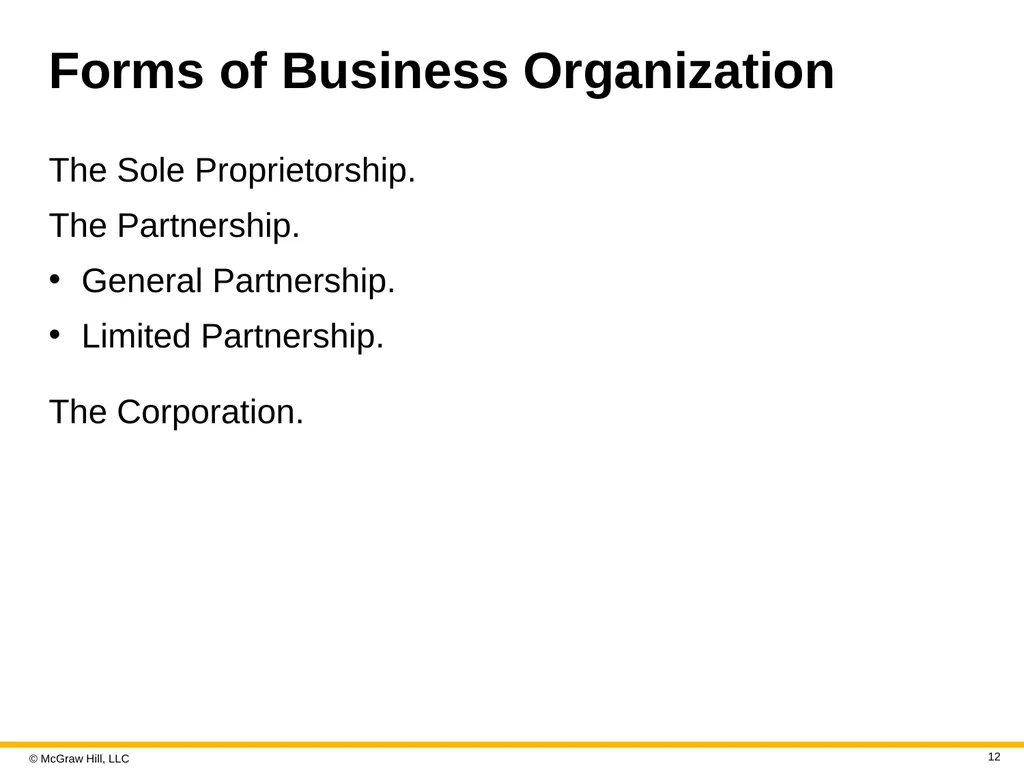
Forms of Business Organization The Sole Proprietorship.
The Partnership.
General Partnership.
Limited Partnership. The Corporation. 12<br>
13
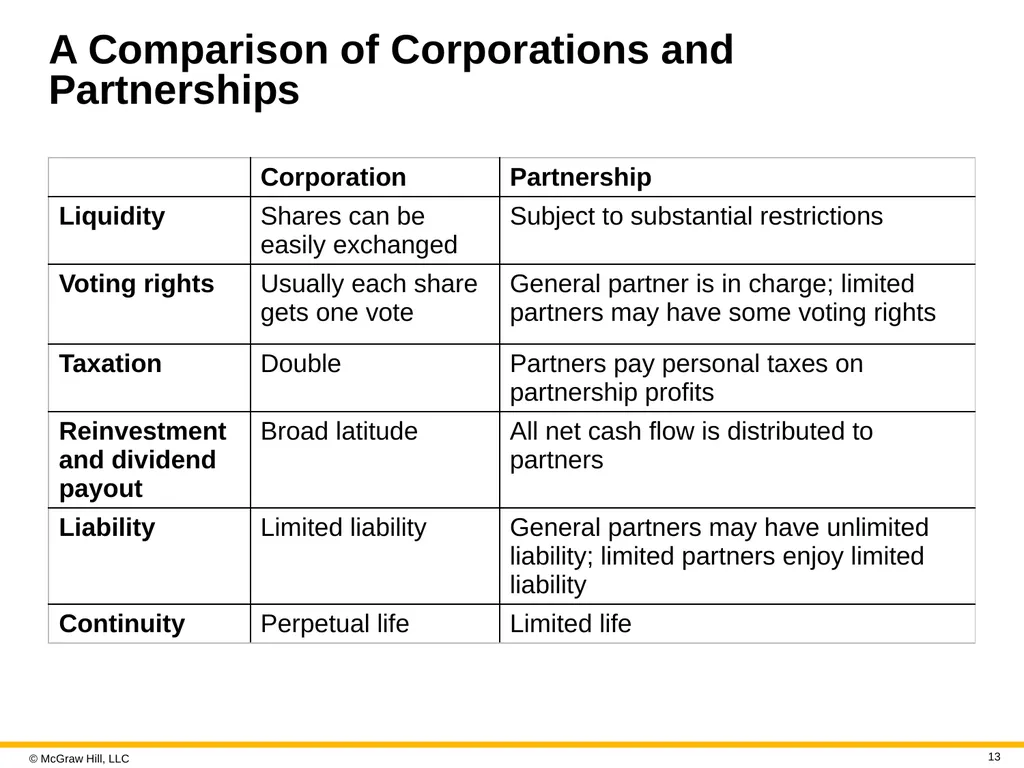
A Comparison of Corporations and Partnerships 13<br>
14
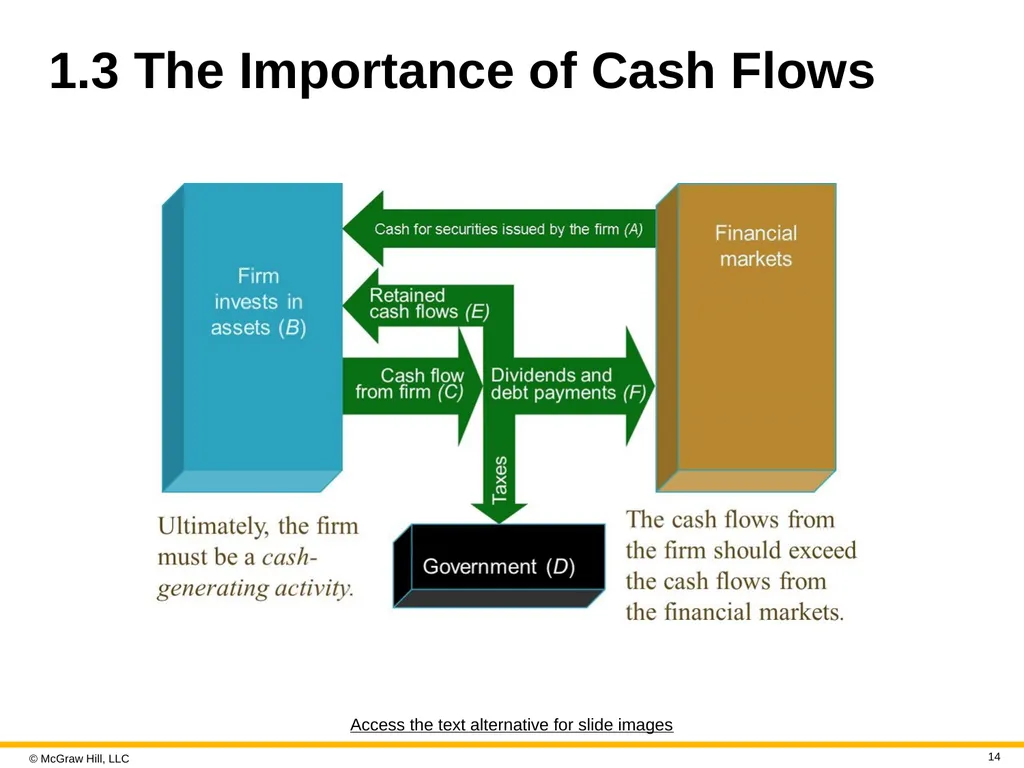
1.3 The Importance of Cash Flows Access the text alternative for slide images 14<br>
15
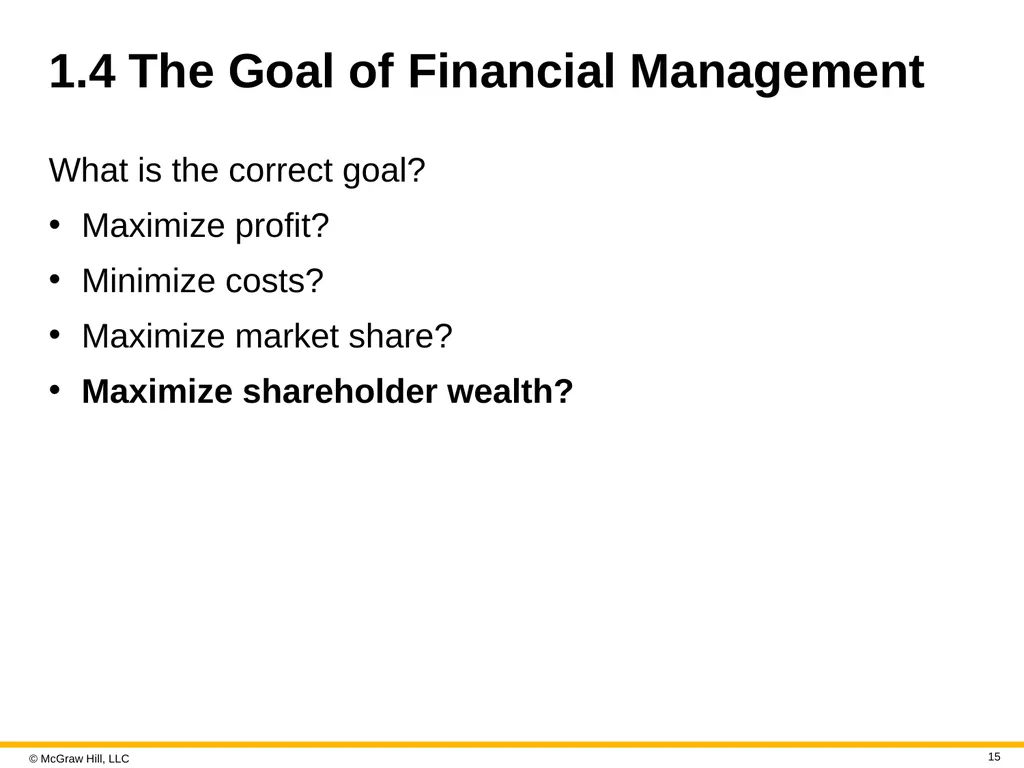
1.4 The Goal of Financial Management What is the correct goal?
Maximize profit?
Minimize costs?
Maximize market share?
Maximize shareholder wealth? 15<br>
16
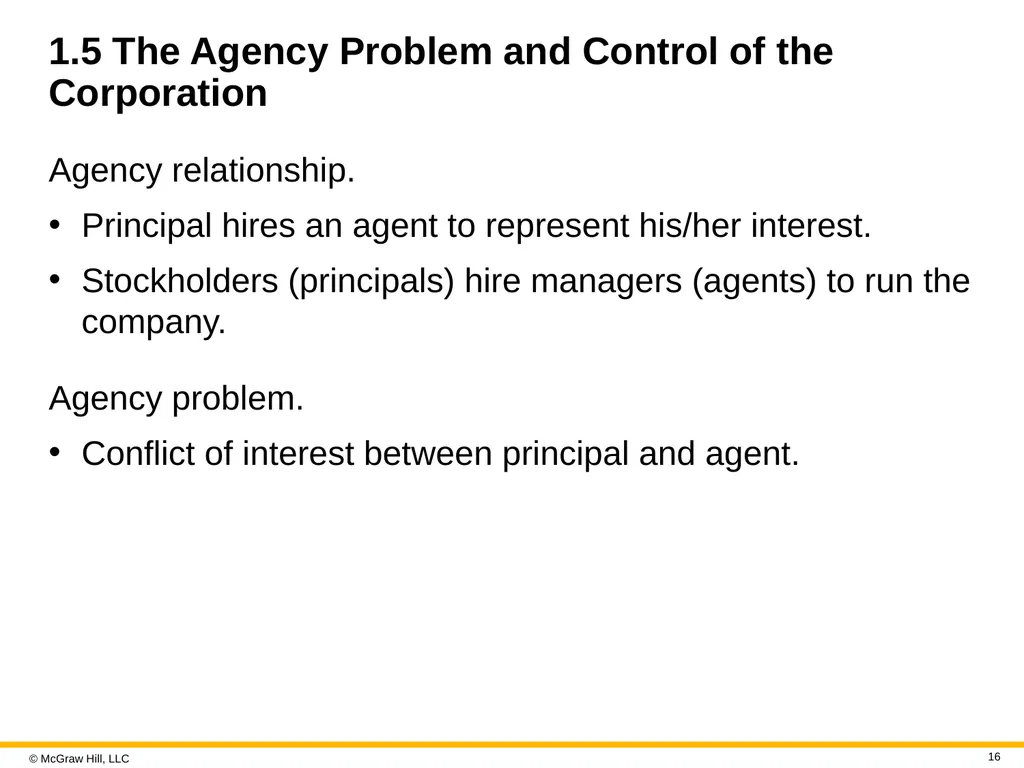
1.5 The Agency Problem and Control of the Corporation Agency relationship.
Principal hires an agent to represent his/her interest.
Stockholders (principals) hire managers (agents) to run the company. Agency problem.
Conflict of interest between principal and agent. 16<br>
17
Management Goals Management goals may be different from shareholder goals.
Expensive perquisites.
Survival.
Independence. Increased growth and size are not necessarily equivalent to increased shareholder wealth. 17<br>
18
Managing Managers Managerial compensation.
Incentives can be used to align management and stockholder interests.
The incentives need to be structured carefully to make sure that they achieve their intended goal. Corporate control.
The threat of a takeover may result in better management. Other stakeholders. 18<br>
19
1.6 Regulation The Securities Act of 1933 and the Securities Exchange Act of 1934.
Issuance of Securities (1933)
Creation of S E C and reporting requirements (1934) Sarbanes-Oxley (“S O X”)
Increased reporting requirements and responsibility of corporate directors. 19<br>
20
Quick Quiz What are the three basic questions financial managers must answer?
What are the three major forms of business organization?
What is the goal of financial management?
What are agency problems, and why do they exist within a corporation?
What major regulations impact public firms? 20<br>
Accessibility Content: Text Alternatives for Images 22<br>
23
Short-Term Asset Management – Text Alternative Return to parent-slide containing images. On the left side of this graphic are two rectangles. One is labeled "Current assets," and the other is labeled "Fixed assets," which includes tangible and intangible fixed assets. On the right side of the graphic are three rectangles stacked vertically. The top is labeled "Current liabilities" and is tied to Current assets. The difference between those two rectangles is labeled "Net working capital." The second of the three rectangles on the right is labeled "Long-term debt." The third is labeled Shareholders' equity. Across the bottom are labels of Total Value of Assets at the left and Total Value of the Firm to Investors at the right. Return to parent-slide containing images. 23<br>
24
Hypothetical Organization Chart – Text Alternative Return to parent-slide containing images. Organizational chart starts at the top with Board of Directors followed by Chairman of the board and chief executive officer (C E O). This is followed by Vice President and chief financial officer (C F O) followed by a branch to Treasurer on the left and Controller on the right. Treasurer leads to Cash Manager and Credit Manager, followed below by Capital expenditures and Financial planning. Controller leads to Tax Manager and Cost Accounting Manager followed by a horizontal layer of Financial accounting manager and Information Systems Manager. Return to parent-slide containing images. 24<br>
25
1.3 The Importance of Cash Flows – Text Alternative Return to parent-slide containing images. This flowchart shows a vertical rectangle on the right characterizing Total value of the firm to investors in the financial markets, with the internal label of Financial Markets and Short-term debt, Long-term debt, and Equity shares. A similar vertical rectangle on the left characterizes Total value of firm’s assets with an internal label of B, Firm invests in assets, Current assets, and Fixed assets. Arrow A points leftward from the right rectangle to the left rectangle. The arrow is labeled A, Cash for securities issued by the firm. Below arrow A is a rightward arrow C, Cash flow from firm’s assets that points rightward to the Financial markets rectangle and splits three ways. The first is into arrow F, Dividends and debt payments that points to the Financial markets rectangle. The second flow is downward into an arrow pointing to a bottom rectangle labeled D, Government. The third flow is upward and looping leftward to the current and fixed asset rectangle with the arrow labeled E, Retained cash flows. Return to parent-slide containing images. 25<br>