Course name: Microbiology Parasitology Lecture (1) Objectives: After completing this lecture, you will be able to : Identify some terminologies of microbiology. describe shapes and types of microorganisms and their distribution in nature.
"Course name: Microbiology & Parasitology Lecture" is the property of its rightful owner. Permission is granted to
download and print the materials on this website for personal, non-commercial use only, and to display it
on your personal computer provided you do not modify the materials and that you retain all copyright
notices contained in the materials. By downloading content from our website, you accept the terms of this
agreement.
Presentation Transcript
01
Course name: Microbiology & Parasitology
Lecture (1)
Objectives:
After completing this lecture, you will be able to :
Identify some terminologies of microbiology.
describe shapes and types of microorganisms and their distribution in nature.
define scopes of microbiology
recognize classification of microorganisms and the difference between prokaryotic and eukaryotic cells.
Identify light and electron microscopes. Prepared by Dr.Khalid Suliman Abd-Ulgadir- Assistant prof.of Microbiology<br>
02
Medical Microbiology and Parasitology
What is microbiology? Micro- means small, bio- means living organism and logy- means study of. Therefore, microbiology means study of very small microorganisms which cannot be seen by naked eye but seen by microscope. These microorganisms exists almost everywhere, such like in the air, soil, animal body and in our bodies, they include bacteria, protozoa, fungi and viruses. prepared by Dr.Khalid Suliman Abd-Ulgadir- Assistant prof.of Microbiology<br>
03
Scopes of microbiology:
There are many fields of microbiology; they include General microbiology, Medical microbiology, Veterinary microbiology, Agricultural microbiology, Industrial microbiology, Environmental microbiology, sanitary microbiology and Pharmaceutical microbiology. Prepared by Dr. Khalid Suliman Abd-Ulgadir- Assistant prof.of Microbiology<br>
04
Types of microorganisms:
1- Bacteria: study under the term Bacteriology.
2- Fungi: study under the term Mycology.
3- Viruses: study under the term Virology.
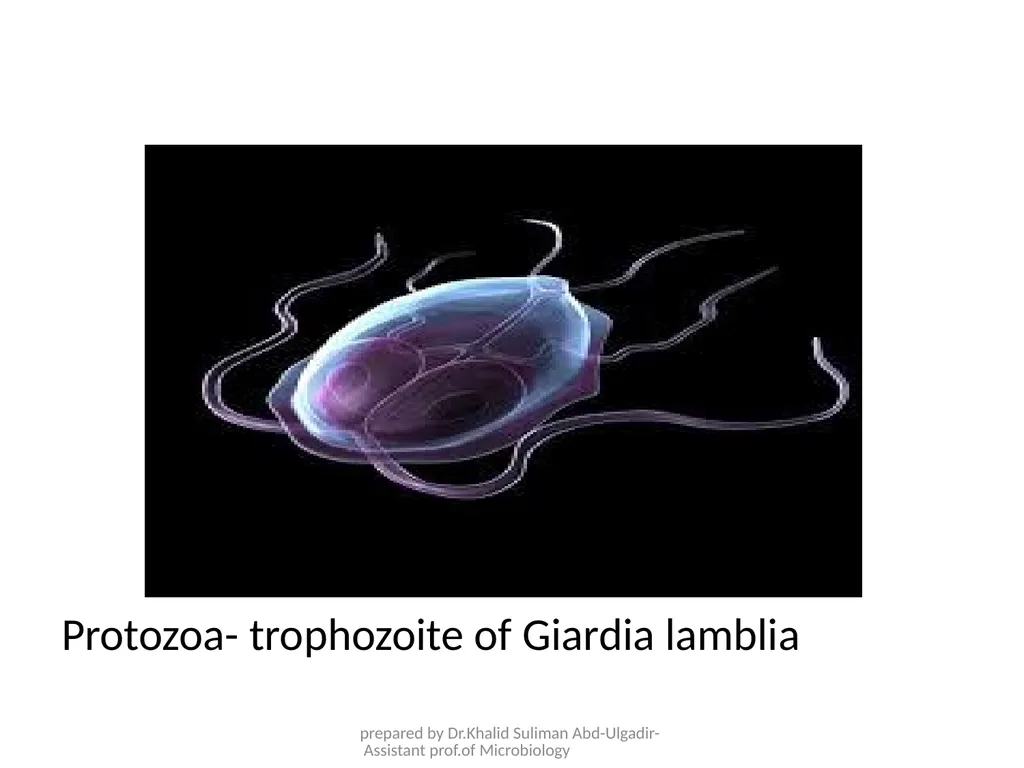
4-Protozoa: study under the term Protozology.
5- Helmiths (worms): study under the term Helminthology. prepared by Dr. Khalid Suliman Abd-Ulgadir- Assistant prof. of Microbiology<br>
05
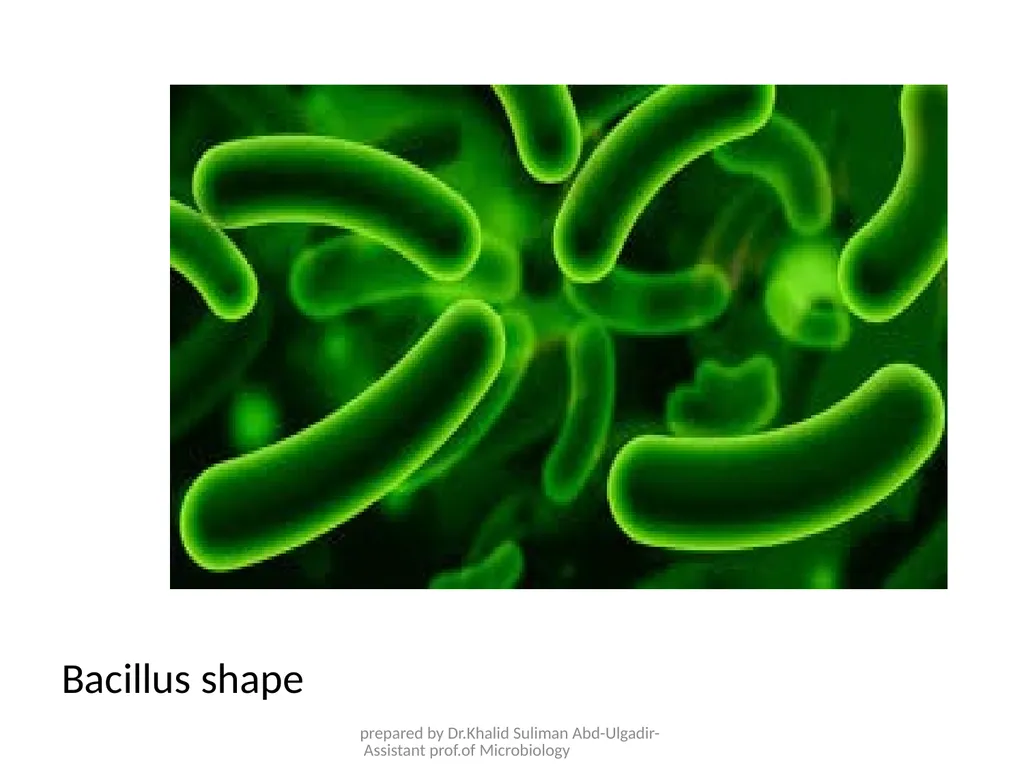
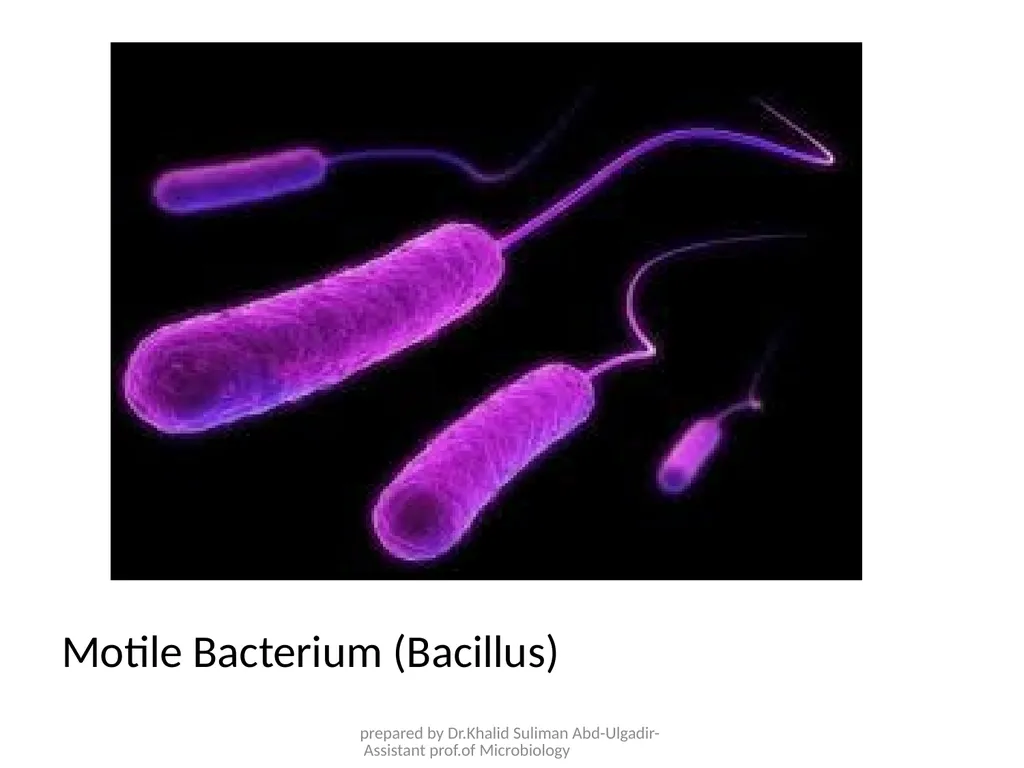
Bacillus shape prepared by Dr.Khalid Suliman Abd-Ulgadir- Assistant prof.of Microbiology<br>
prepared by Dr.Khalid Suliman Abd-Ulgadir- Assistant prof.of Microbiology<br>
14
Microscope: It is a tool of microbiology and there are two types of microscopes used to direct observation of microorganisms.
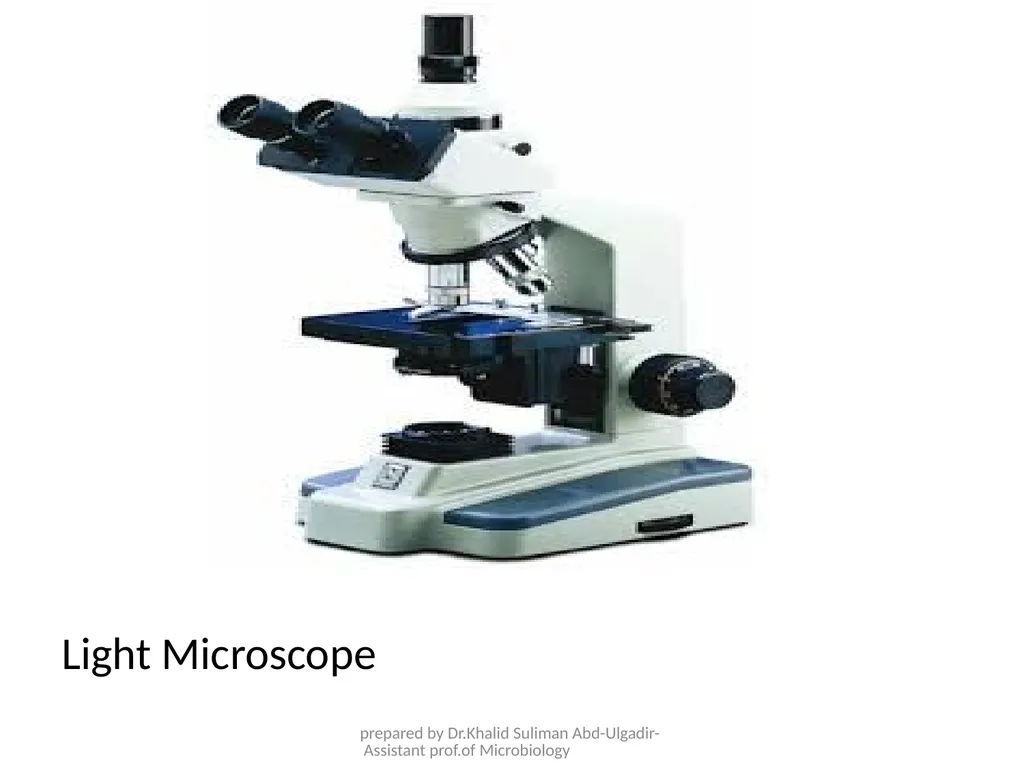
The light microscope: It is used for the routine examination of microorganisms. This microscope uses the light its magnification power ranged from 40 – 1600 times. It has an eye lenses (10 X &16 X) and an objective lenses of (4 X, 10 X, 40 X and 100 X).
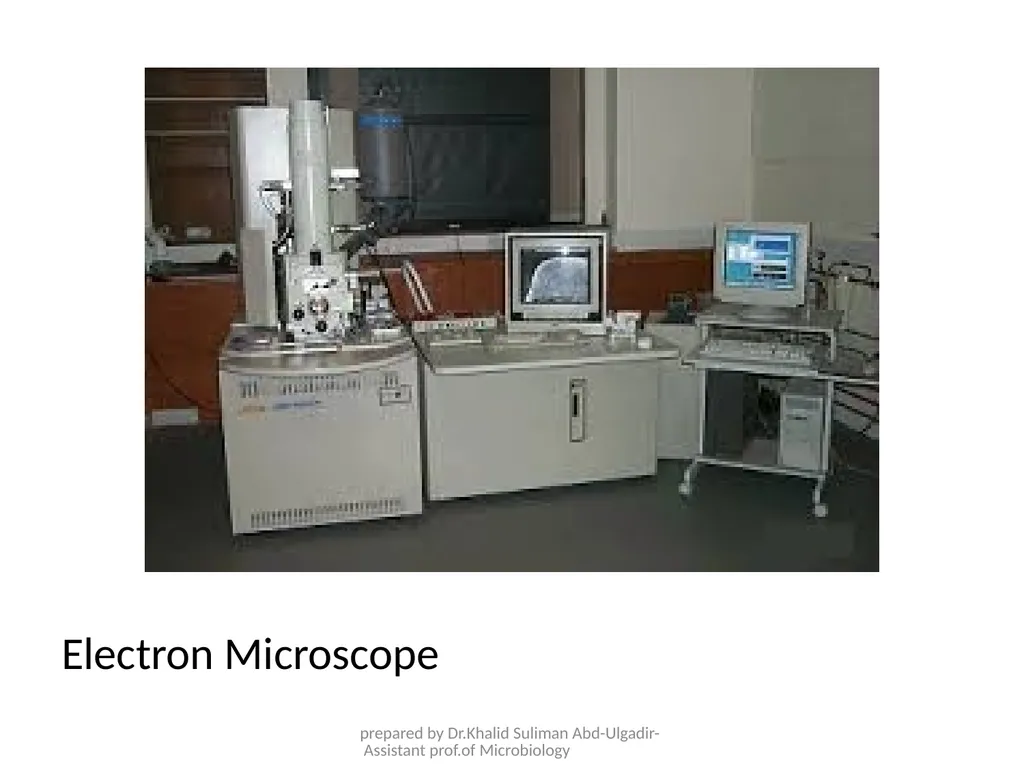
The electron microscope: It is used to examine the minute structure of microorganisms. It uses a beam of electron instead of light. There are two types of electron microscope; Transmission electron microscope and Scanning electron microscope. prepared by Dr.Khalid Suliman Abd-Ulgadir- Assistant prof.of Microbiology<br>
15
Light Microscope prepared by Dr.Khalid Suliman Abd-Ulgadir- Assistant prof.of Microbiology<br>
16
Electron Microscope prepared by Dr.Khalid Suliman Abd-Ulgadir- Assistant prof.of Microbiology<br>