
Coverage options for people with Medicare and
SN
Published · 40 slides · 0 views

1 / 1



Description
Coverage options for people with Medicare and Medicaid Page 2 The Medicare Rights Center is a national not-for- profit consumer service organization that works to ensure access to affordable health care for older adults and people with
Related Topics
Share
Embed code
Download this presentation From Below
"Coverage options for people with Medicare and" is the property of its rightful owner. Permission is granted to download and print the materials on this website for personal, non-commercial use only, and to display it on your personal computer provided you do not modify the materials and that you retain all copyright notices contained in the materials. By downloading content from our website, you accept the terms of this agreement.
Presentation Transcript
01
Coverage options for people with Medicare and Medicaid<br>
02
Page 2 The Medicare Rights Center is a national not-for-
profit consumer service organization that works to
ensure access to affordable health care for older
adults and people with disabilities through Counseling and advocacy Educational programs Public policy initiatives Medicare Rights Center<br>
profit consumer service organization that works to
ensure access to affordable health care for older
adults and people with disabilities through Counseling and advocacy Educational programs Public policy initiatives Medicare Rights Center<br>
03
This toolkit for State Health Insurance Assistance
Programs (SHIPs), Area Agencies on Aging (AAAs),
and Aging and Disability Resource Centers (ADRCs)
was made possible by grant funding from the
National Council on Aging.
The National Council on Aging is a respected national leader and trusted partner to help people aged 60+ meet the challenges of aging. They partner with nonprofit organizations, government, and business to provide innovative community programs and services, online help, and advocacy. National Council on Aging Page 3<br>
Programs (SHIPs), Area Agencies on Aging (AAAs),
and Aging and Disability Resource Centers (ADRCs)
was made possible by grant funding from the
National Council on Aging.
The National Council on Aging is a respected national leader and trusted partner to help people aged 60+ meet the challenges of aging. They partner with nonprofit organizations, government, and business to provide innovative community programs and services, online help, and advocacy. National Council on Aging Page 3<br>
04
Learning objectives After this presentation, you should be able to:
Understand the coverage option landscape for dually eligible individuals
Describe how the new integration requirements affect Dual-eligible Special Needs Plans (D-SNPs) Page 4<br>
Understand the coverage option landscape for dually eligible individuals
Describe how the new integration requirements affect Dual-eligible Special Needs Plans (D-SNPs) Page 4<br>
05
Medicare & Medicaid basics Page 5<br>
06
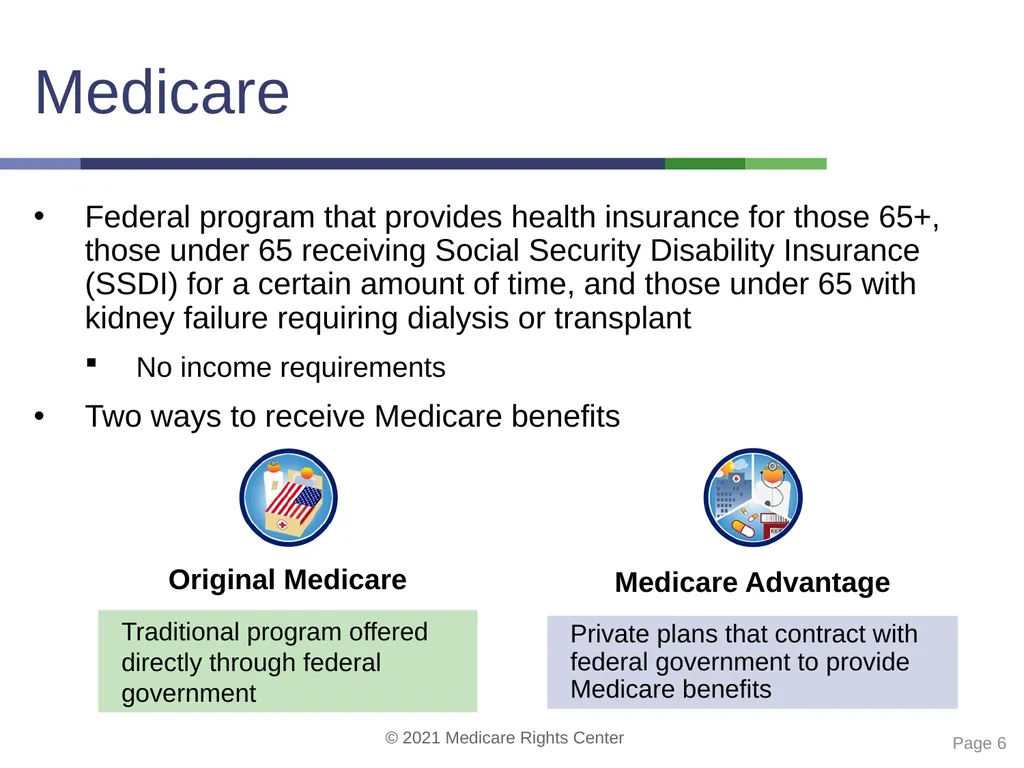
Medicare Federal program that provides health insurance for those 65+, those under 65 receiving Social Security Disability Insurance (SSDI) for a certain amount of time, and those under 65 with kidney failure requiring dialysis or transplant
No income requirements
Two ways to receive Medicare benefits Page 6 Traditional program offered directly through federal government Private plans that contract with federal government to provide Medicare benefits Original Medicare Medicare Advantage<br>
No income requirements
Two ways to receive Medicare benefits Page 6 Traditional program offered directly through federal government Private plans that contract with federal government to provide Medicare benefits Original Medicare Medicare Advantage<br>
07
Medicare eligibility – 65+ After turning 65, individual qualifies for Medicare if they
Collect or qualify to collect Social Security or Railroad Retirement benefits
OR are a current U.S. resident and either
A U.S. citizen
OR a permanent resident having lived in the U.S. for five years in a row before applying for Medicare Page 7<br>
Collect or qualify to collect Social Security or Railroad Retirement benefits
OR are a current U.S. resident and either
A U.S. citizen
OR a permanent resident having lived in the U.S. for five years in a row before applying for Medicare Page 7<br>
08
Medicare eligibility – under 65 Individual not yet 65 qualifies for Medicare if
They have received Social Security Disability Insurance (SSDI) or Railroad Disability Annuity checks for total disability for at least 24 months
If they have amyotrophic lateral sclerosis (ALS), there is no waiting period, and they are eligible for Medicare when they start receiving SSDI
OR, they have End-Stage Renal Disease (ESRD or kidney failure) and they or a family member have enough Medicare work history Page 8<br>
They have received Social Security Disability Insurance (SSDI) or Railroad Disability Annuity checks for total disability for at least 24 months
If they have amyotrophic lateral sclerosis (ALS), there is no waiting period, and they are eligible for Medicare when they start receiving SSDI
OR, they have End-Stage Renal Disease (ESRD or kidney failure) and they or a family member have enough Medicare work history Page 8<br>
09
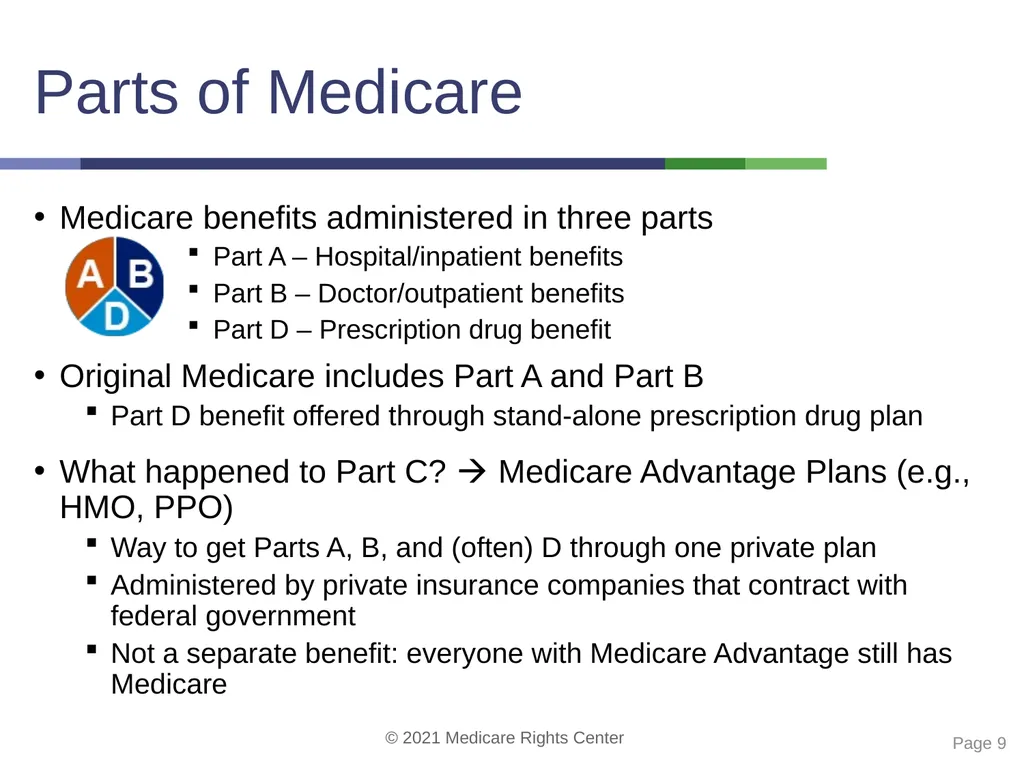
Parts of Medicare Page 9 Medicare benefits administered in three parts
Part A – Hospital/inpatient benefits
Part B – Doctor/outpatient benefits
Part D – Prescription drug benefit
Original Medicare includes Part A and Part B
Part D benefit offered through stand-alone prescription drug plan
What happened to Part C? Medicare Advantage Plans (e.g., HMO, PPO)
Way to get Parts A, B, and (often) D through one private plan
Administered by private insurance companies that contract with federal government
Not a separate benefit: everyone with Medicare Advantage still has Medicare<br>
Part A – Hospital/inpatient benefits
Part B – Doctor/outpatient benefits
Part D – Prescription drug benefit
Original Medicare includes Part A and Part B
Part D benefit offered through stand-alone prescription drug plan
What happened to Part C? Medicare Advantage Plans (e.g., HMO, PPO)
Way to get Parts A, B, and (often) D through one private plan
Administered by private insurance companies that contract with federal government
Not a separate benefit: everyone with Medicare Advantage still has Medicare<br>
10
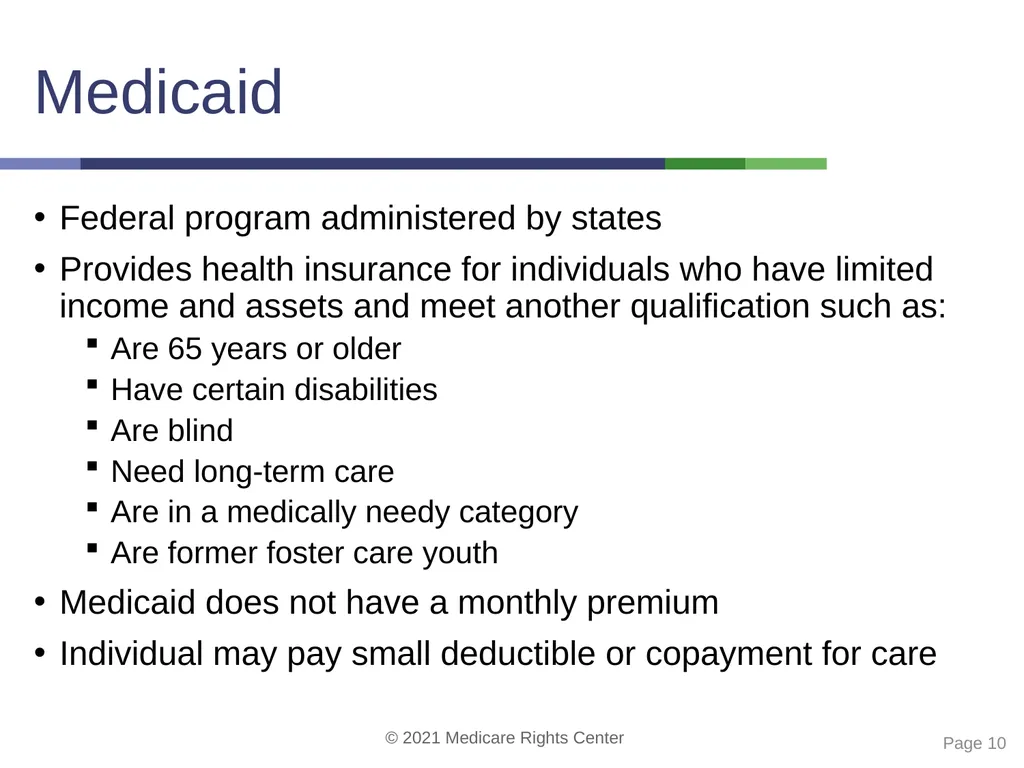
Medicaid Federal program administered by states
Provides health insurance for individuals who have limited income and assets and meet another qualification such as:
Are 65 years or older
Have certain disabilities
Are blind
Need long-term care
Are in a medically needy category
Are former foster care youth
Medicaid does not have a monthly premium
Individual may pay small deductible or copayment for care Page 10<br>
Provides health insurance for individuals who have limited income and assets and meet another qualification such as:
Are 65 years or older
Have certain disabilities
Are blind
Need long-term care
Are in a medically needy category
Are former foster care youth
Medicaid does not have a monthly premium
Individual may pay small deductible or copayment for care Page 10<br>
11
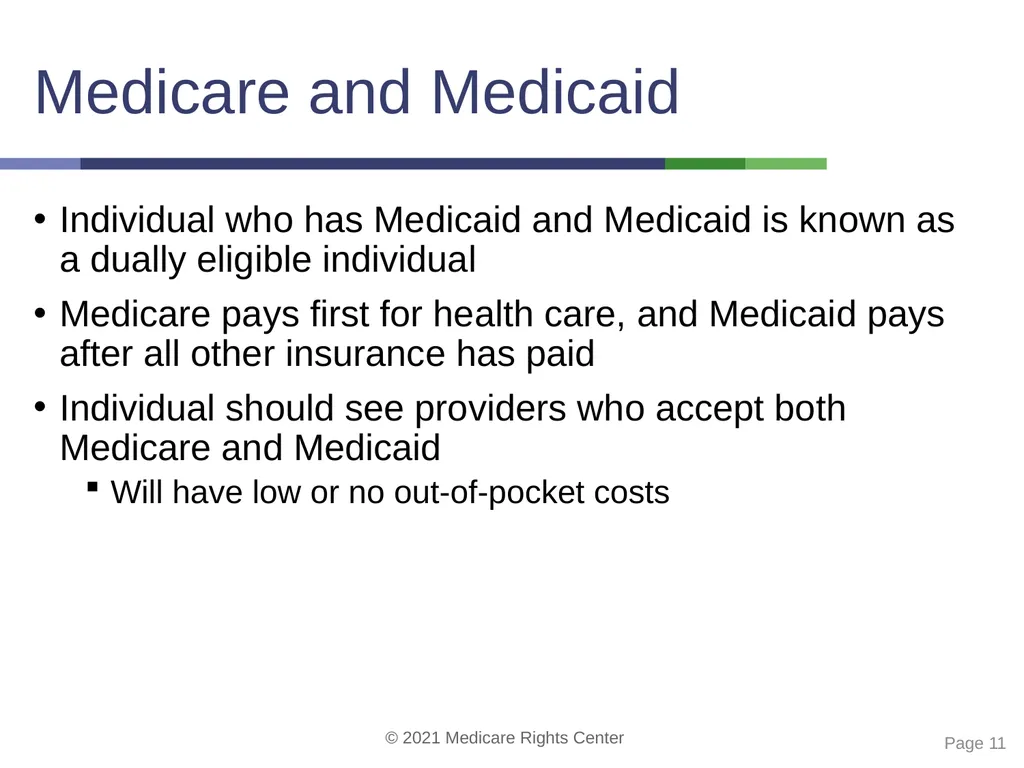
Medicare and Medicaid Individual who has Medicaid and Medicaid is known as a dually eligible individual
Medicare pays first for health care, and Medicaid pays after all other insurance has paid
Individual should see providers who accept both Medicare and Medicaid
Will have low or no out-of-pocket costs Page 11<br>
Medicare pays first for health care, and Medicaid pays after all other insurance has paid
Individual should see providers who accept both Medicare and Medicaid
Will have low or no out-of-pocket costs Page 11<br>
12
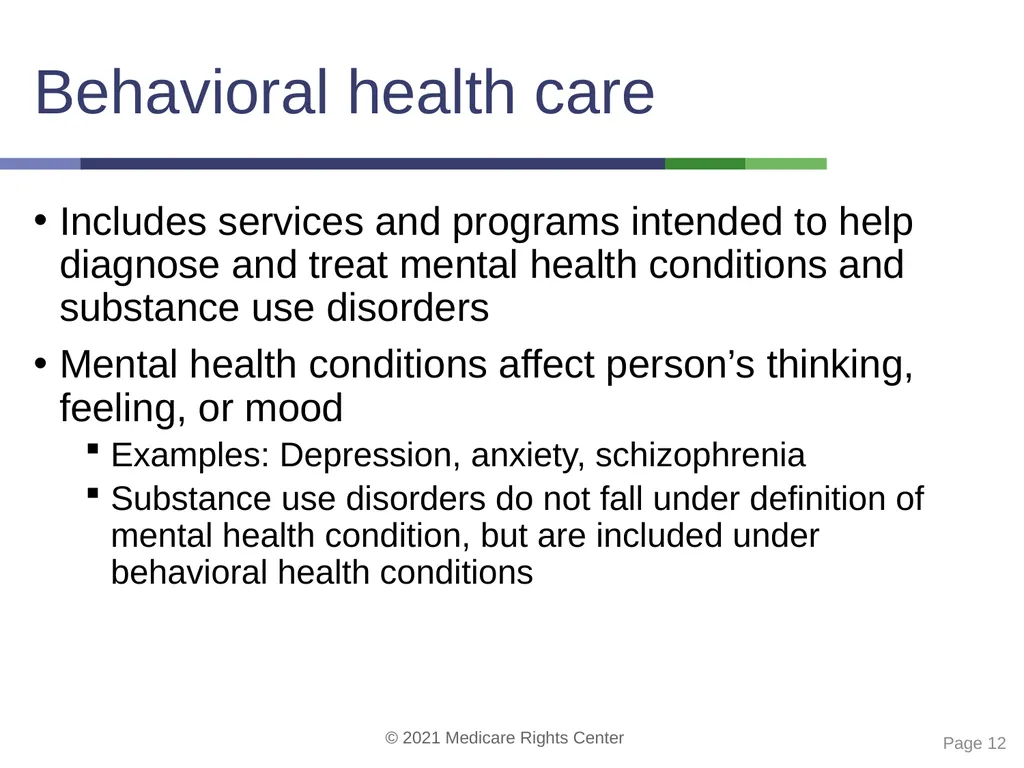
Behavioral health care Includes services and programs intended to help diagnose and treat mental health conditions and substance use disorders
Mental health conditions affect person’s thinking, feeling, or mood
Examples: Depression, anxiety, schizophrenia
Substance use disorders do not fall under definition of mental health condition, but are included under behavioral health conditions Page 12<br>
Mental health conditions affect person’s thinking, feeling, or mood
Examples: Depression, anxiety, schizophrenia
Substance use disorders do not fall under definition of mental health condition, but are included under behavioral health conditions Page 12<br>
13
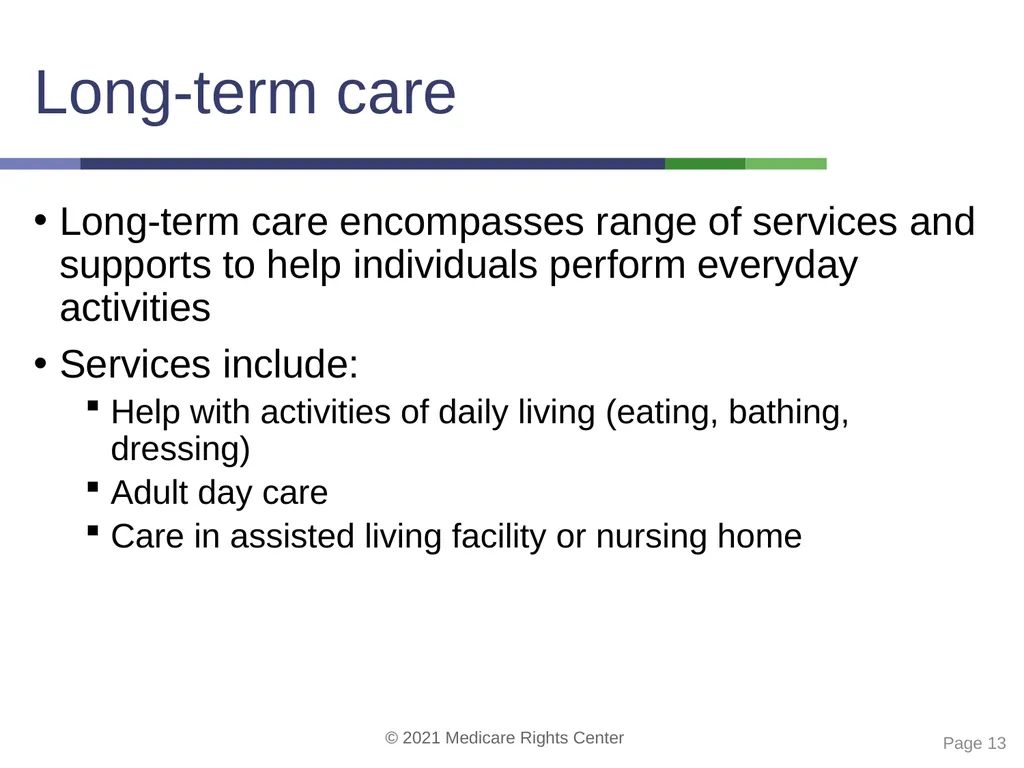
Long-term care Long-term care encompasses range of services and supports to help individuals perform everyday activities
Services include:
Help with activities of daily living (eating, bathing, dressing)
Adult day care
Care in assisted living facility or nursing home Page 13<br>
Services include:
Help with activities of daily living (eating, bathing, dressing)
Adult day care
Care in assisted living facility or nursing home Page 13<br>
14
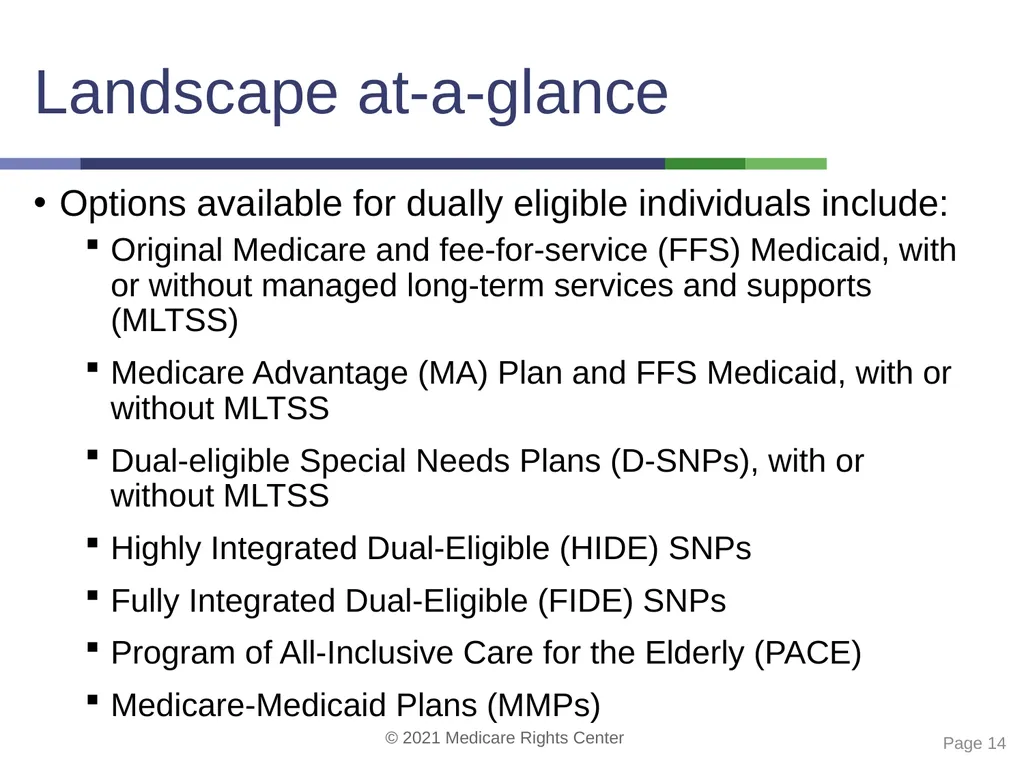
Landscape at-a-glance Options available for dually eligible individuals include:
Original Medicare and fee-for-service (FFS) Medicaid, with or without managed long-term services and supports (MLTSS)
Medicare Advantage (MA) Plan and FFS Medicaid, with or without MLTSS
Dual-eligible Special Needs Plans (D-SNPs), with or without MLTSS
Highly Integrated Dual-Eligible (HIDE) SNPs
Fully Integrated Dual-Eligible (FIDE) SNPs
Program of All-Inclusive Care for the Elderly (PACE)
Medicare-Medicaid Plans (MMPs) Page 14<br>
Original Medicare and fee-for-service (FFS) Medicaid, with or without managed long-term services and supports (MLTSS)
Medicare Advantage (MA) Plan and FFS Medicaid, with or without MLTSS
Dual-eligible Special Needs Plans (D-SNPs), with or without MLTSS
Highly Integrated Dual-Eligible (HIDE) SNPs
Fully Integrated Dual-Eligible (FIDE) SNPs
Program of All-Inclusive Care for the Elderly (PACE)
Medicare-Medicaid Plans (MMPs) Page 14<br>
15
Managed long-term services and supports (MLTSS) plans Page 15<br>
16
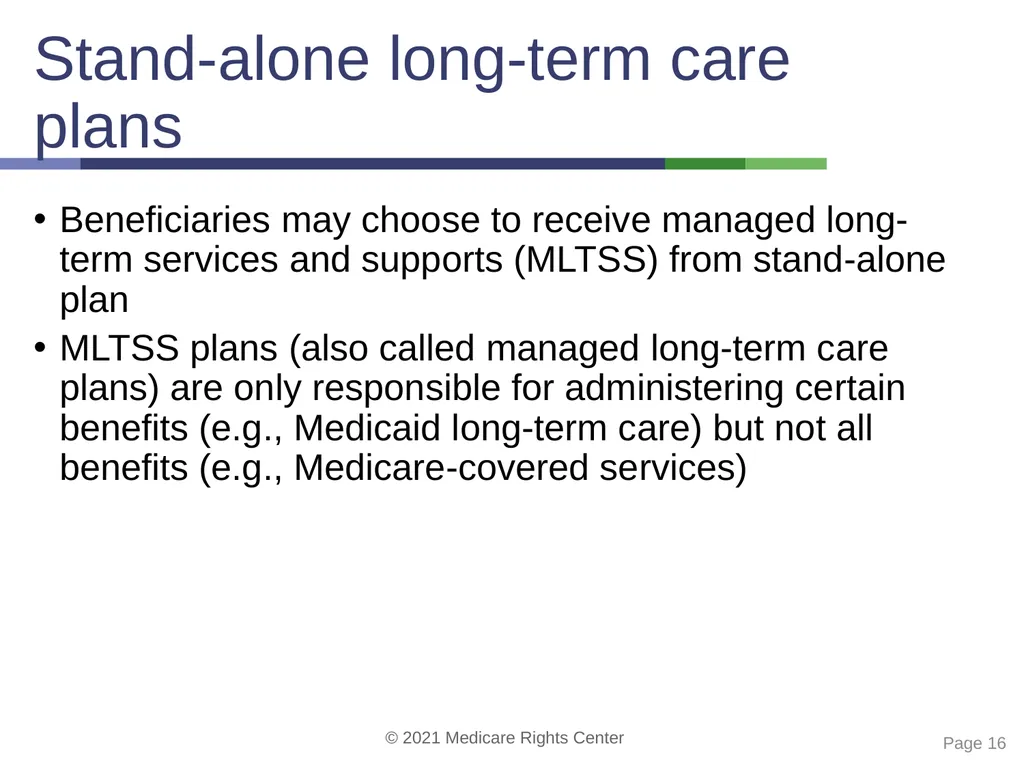
Stand-alone long-term care plans Beneficiaries may choose to receive managed long-term services and supports (MLTSS) from stand-alone plan
MLTSS plans (also called managed long-term care plans) are only responsible for administering certain benefits (e.g., Medicaid long-term care) but not all benefits (e.g., Medicare-covered services) Page 16<br>
MLTSS plans (also called managed long-term care plans) are only responsible for administering certain benefits (e.g., Medicaid long-term care) but not all benefits (e.g., Medicare-covered services) Page 16<br>
17
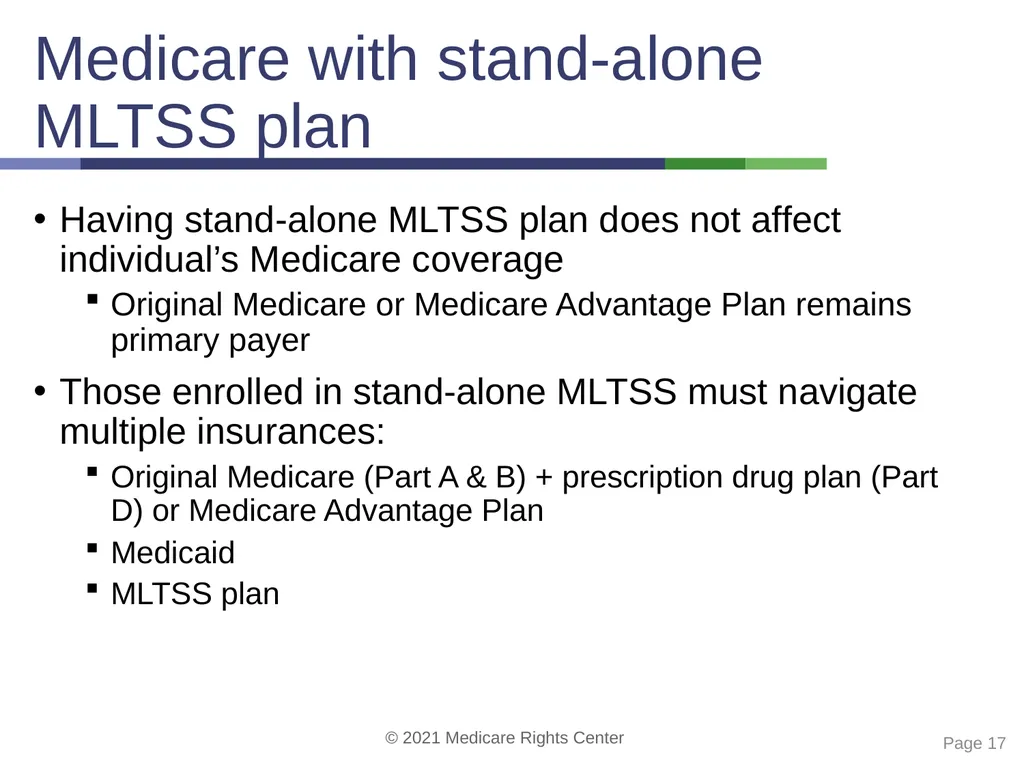
Medicare with stand-alone MLTSS plan Having stand-alone MLTSS plan does not affect individual’s Medicare coverage
Original Medicare or Medicare Advantage Plan remains primary payer
Those enrolled in stand-alone MLTSS must navigate multiple insurances:
Original Medicare (Part A & B) + prescription drug plan (Part D) or Medicare Advantage Plan
Medicaid
MLTSS plan Page 17<br>
Original Medicare or Medicare Advantage Plan remains primary payer
Those enrolled in stand-alone MLTSS must navigate multiple insurances:
Original Medicare (Part A & B) + prescription drug plan (Part D) or Medicare Advantage Plan
Medicaid
MLTSS plan Page 17<br>
18
Dual-eligible Special Needs Plans (D-SNPs) Page 18<br>
19
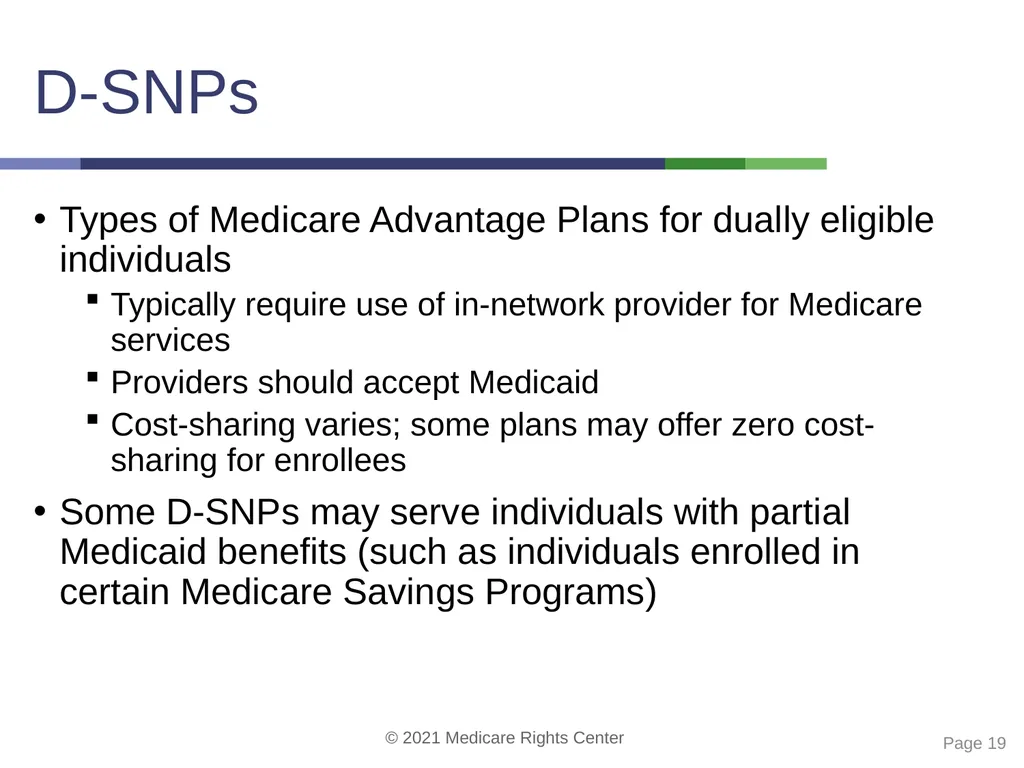
D-SNPs Types of Medicare Advantage Plans for dually eligible individuals
Typically require use of in-network provider for Medicare services
Providers should accept Medicaid
Cost-sharing varies; some plans may offer zero cost-sharing for enrollees
Some D-SNPs may serve individuals with partial Medicaid benefits (such as individuals enrolled in certain Medicare Savings Programs) Page 19<br>
Typically require use of in-network provider for Medicare services
Providers should accept Medicaid
Cost-sharing varies; some plans may offer zero cost-sharing for enrollees
Some D-SNPs may serve individuals with partial Medicaid benefits (such as individuals enrolled in certain Medicare Savings Programs) Page 19<br>
20
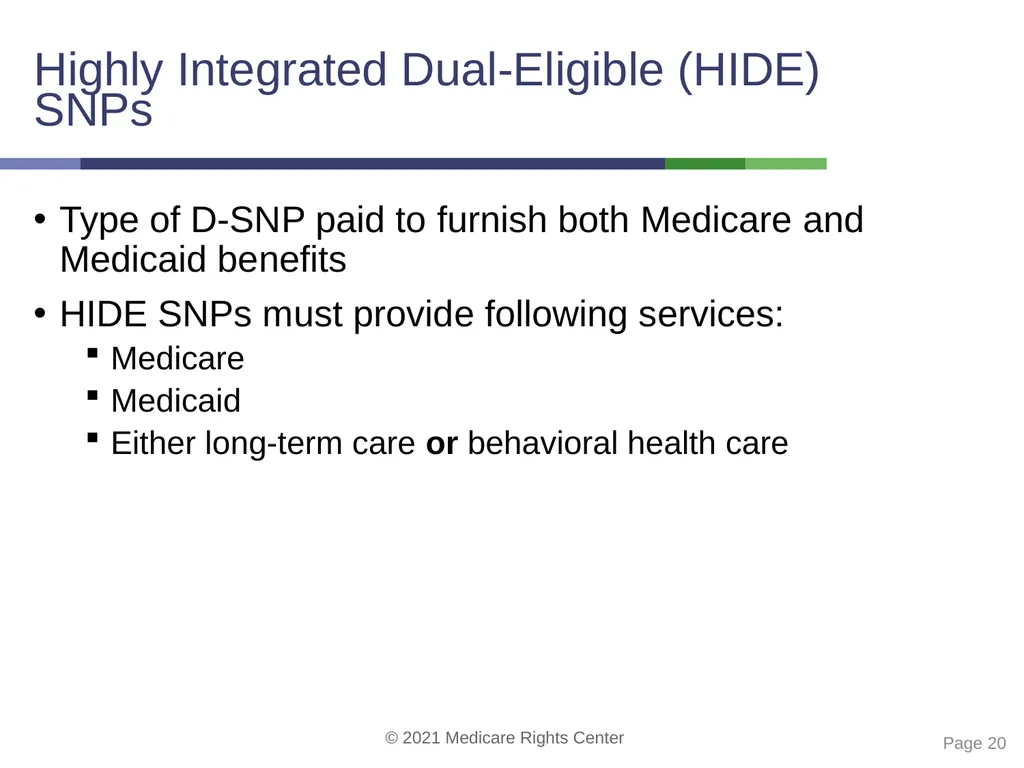
Highly Integrated Dual-Eligible (HIDE) SNPs Type of D-SNP paid to furnish both Medicare and Medicaid benefits
HIDE SNPs must provide following services:
Medicare
Medicaid
Either long-term care or behavioral health care Page 20<br>
HIDE SNPs must provide following services:
Medicare
Medicaid
Either long-term care or behavioral health care Page 20<br>
21
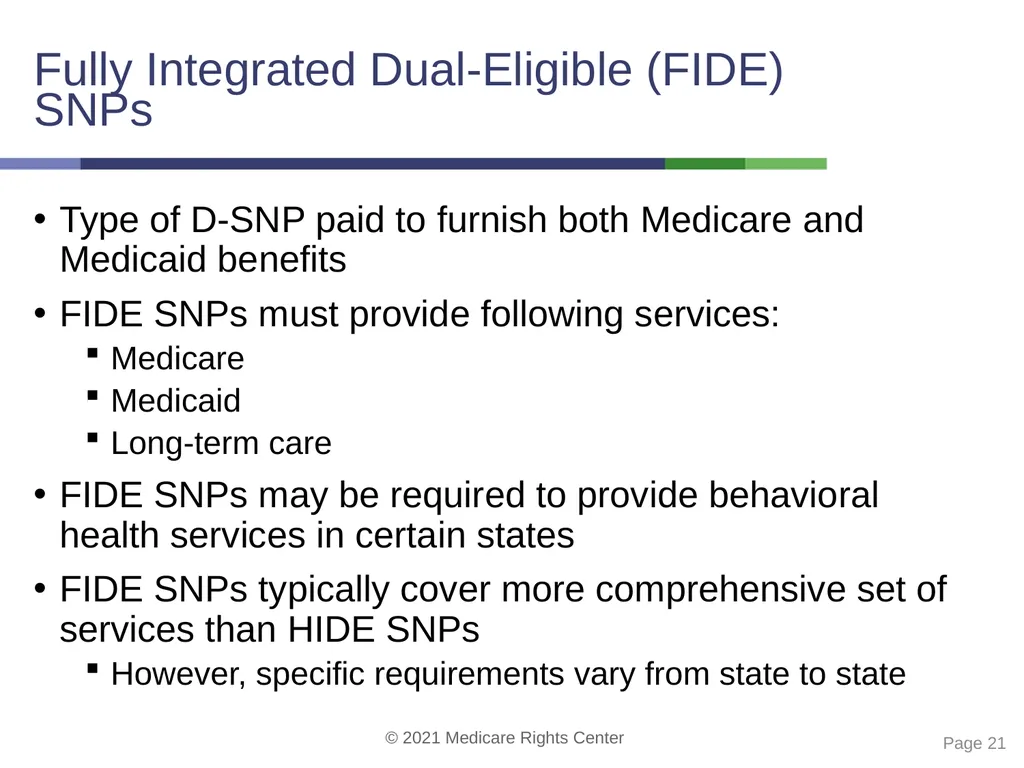
Fully Integrated Dual-Eligible (FIDE) SNPs Type of D-SNP paid to furnish both Medicare and Medicaid benefits
FIDE SNPs must provide following services:
Medicare
Medicaid
Long-term care
FIDE SNPs may be required to provide behavioral health services in certain states
FIDE SNPs typically cover more comprehensive set of services than HIDE SNPs
However, specific requirements vary from state to state Page 21<br>
FIDE SNPs must provide following services:
Medicare
Medicaid
Long-term care
FIDE SNPs may be required to provide behavioral health services in certain states
FIDE SNPs typically cover more comprehensive set of services than HIDE SNPs
However, specific requirements vary from state to state Page 21<br>
22
Program of All-Inclusive Care for the Elderly (PACE) Page 22<br>
23
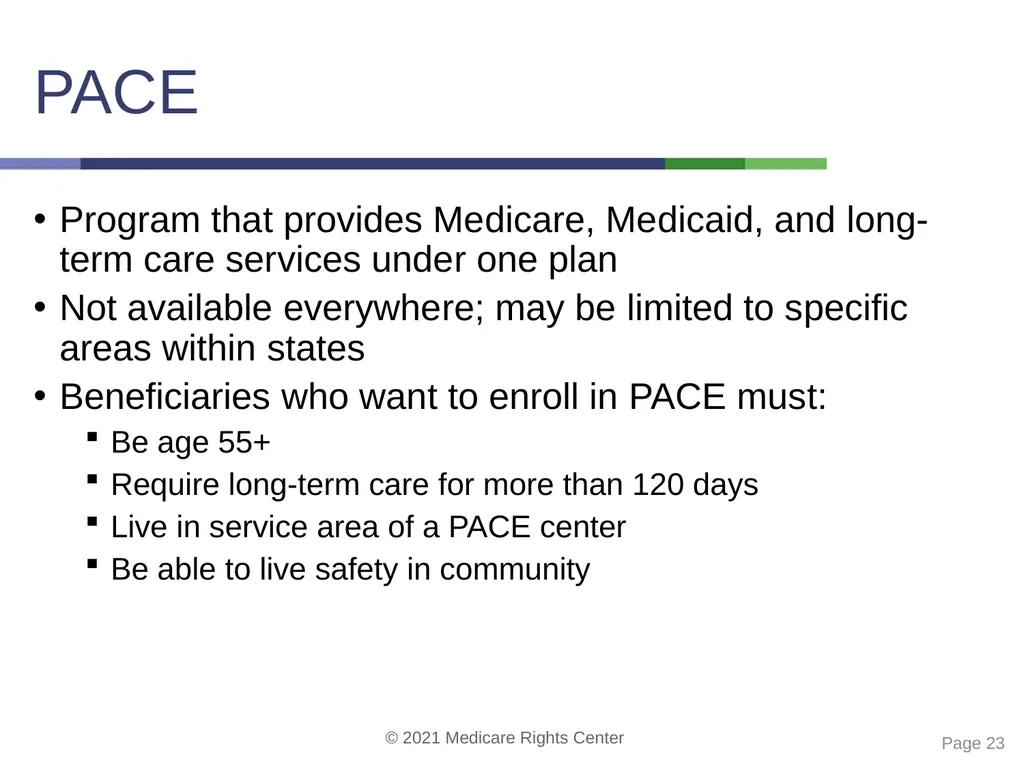
PACE Program that provides Medicare, Medicaid, and long-term care services under one plan
Not available everywhere; may be limited to specific areas within states
Beneficiaries who want to enroll in PACE must:
Be age 55+
Require long-term care for more than 120 days
Live in service area of a PACE center
Be able to live safety in community Page 23<br>
Not available everywhere; may be limited to specific areas within states
Beneficiaries who want to enroll in PACE must:
Be age 55+
Require long-term care for more than 120 days
Live in service area of a PACE center
Be able to live safety in community Page 23<br>
24
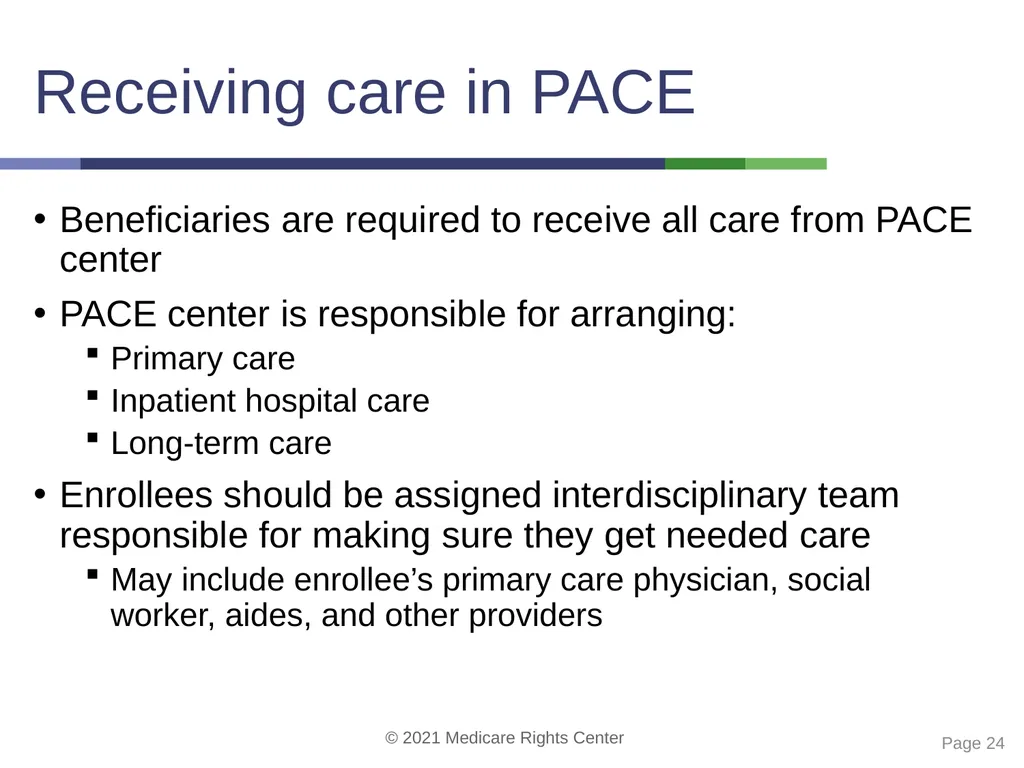
Receiving care in PACE Beneficiaries are required to receive all care from PACE center
PACE center is responsible for arranging:
Primary care
Inpatient hospital care
Long-term care
Enrollees should be assigned interdisciplinary team responsible for making sure they get needed care
May include enrollee’s primary care physician, social worker, aides, and other providers Page 24<br>
PACE center is responsible for arranging:
Primary care
Inpatient hospital care
Long-term care
Enrollees should be assigned interdisciplinary team responsible for making sure they get needed care
May include enrollee’s primary care physician, social worker, aides, and other providers Page 24<br>
25
Medicare-Medicaid Plans (MMPs) Page 25<br>
26
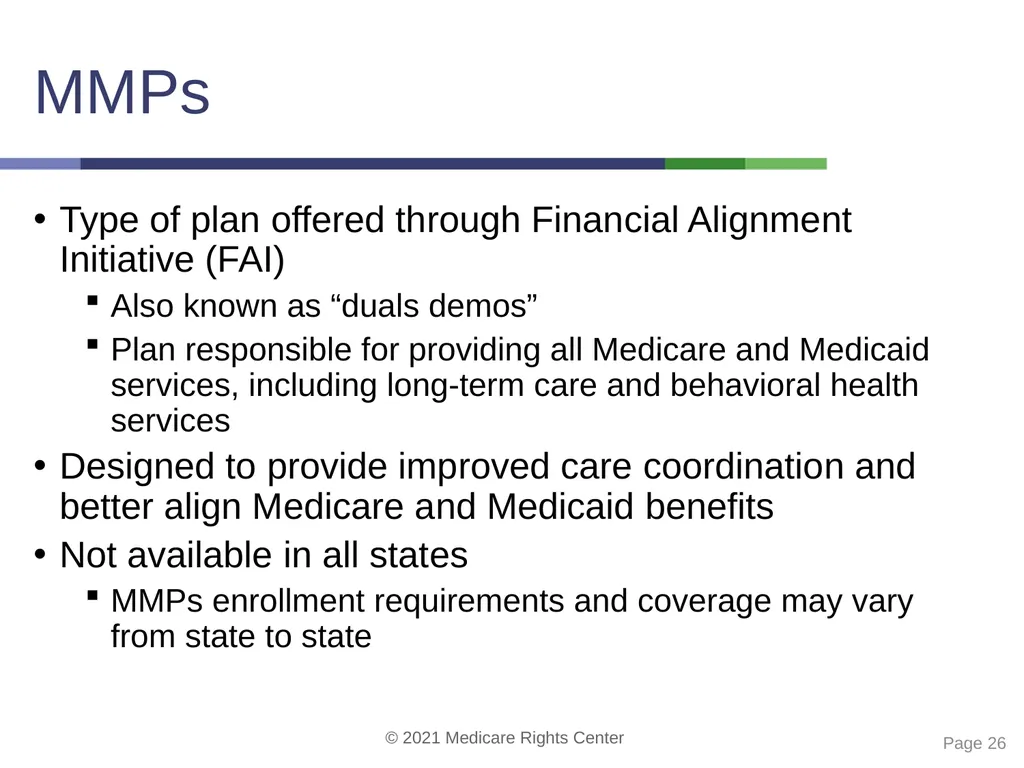
MMPs Type of plan offered through Financial Alignment Initiative (FAI)
Also known as “duals demos”
Plan responsible for providing all Medicare and Medicaid services, including long-term care and behavioral health services
Designed to provide improved care coordination and better align Medicare and Medicaid benefits
Not available in all states
MMPs enrollment requirements and coverage may vary from state to state Page 26<br>
Also known as “duals demos”
Plan responsible for providing all Medicare and Medicaid services, including long-term care and behavioral health services
Designed to provide improved care coordination and better align Medicare and Medicaid benefits
Not available in all states
MMPs enrollment requirements and coverage may vary from state to state Page 26<br>
27
Helping clients understand plan options Page 27<br>
28
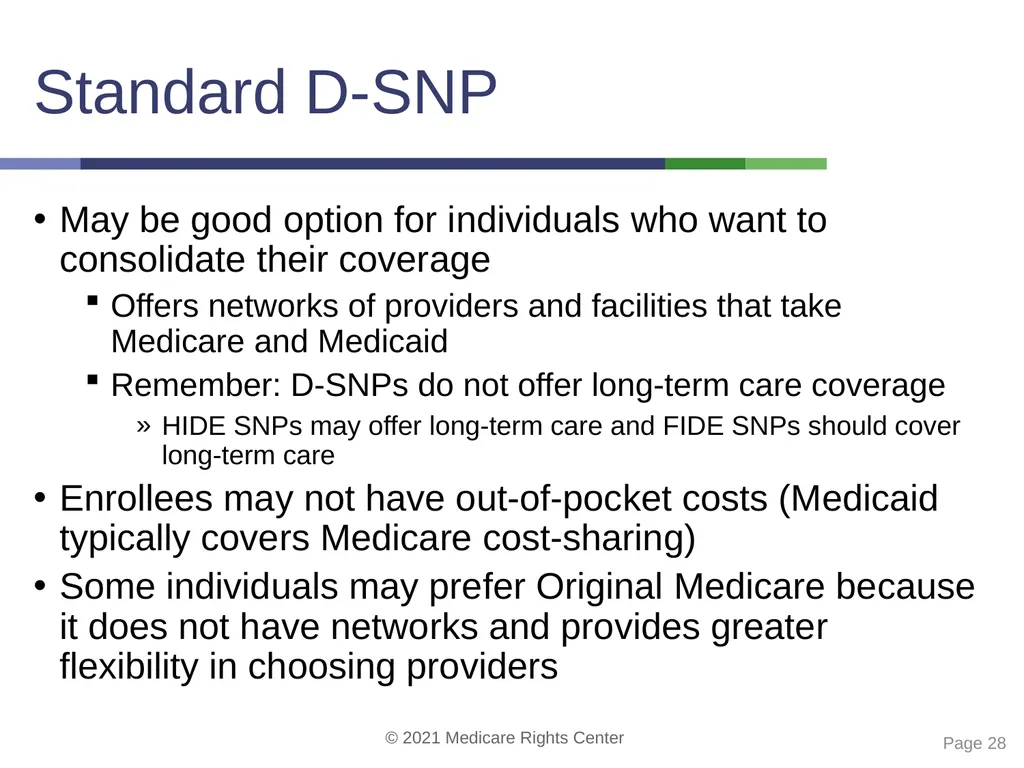
Standard D-SNP May be good option for individuals who want to consolidate their coverage
Offers networks of providers and facilities that take Medicare and Medicaid
Remember: D-SNPs do not offer long-term care coverage
HIDE SNPs may offer long-term care and FIDE SNPs should cover long-term care
Enrollees may not have out-of-pocket costs (Medicaid typically covers Medicare cost-sharing)
Some individuals may prefer Original Medicare because it does not have networks and provides greater flexibility in choosing providers Page 28<br>
Offers networks of providers and facilities that take Medicare and Medicaid
Remember: D-SNPs do not offer long-term care coverage
HIDE SNPs may offer long-term care and FIDE SNPs should cover long-term care
Enrollees may not have out-of-pocket costs (Medicaid typically covers Medicare cost-sharing)
Some individuals may prefer Original Medicare because it does not have networks and provides greater flexibility in choosing providers Page 28<br>
29
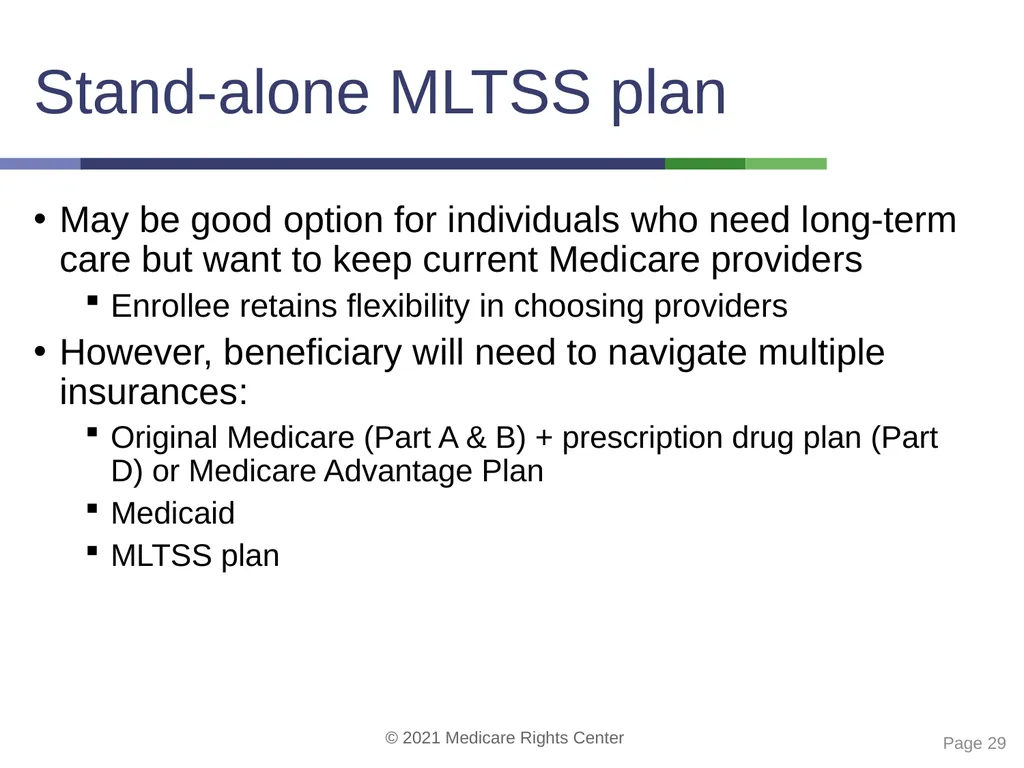
Stand-alone MLTSS plan May be good option for individuals who need long-term care but want to keep current Medicare providers
Enrollee retains flexibility in choosing providers
However, beneficiary will need to navigate multiple insurances:
Original Medicare (Part A & B) + prescription drug plan (Part D) or Medicare Advantage Plan
Medicaid
MLTSS plan Page 29<br>
Enrollee retains flexibility in choosing providers
However, beneficiary will need to navigate multiple insurances:
Original Medicare (Part A & B) + prescription drug plan (Part D) or Medicare Advantage Plan
Medicaid
MLTSS plan Page 29<br>
30
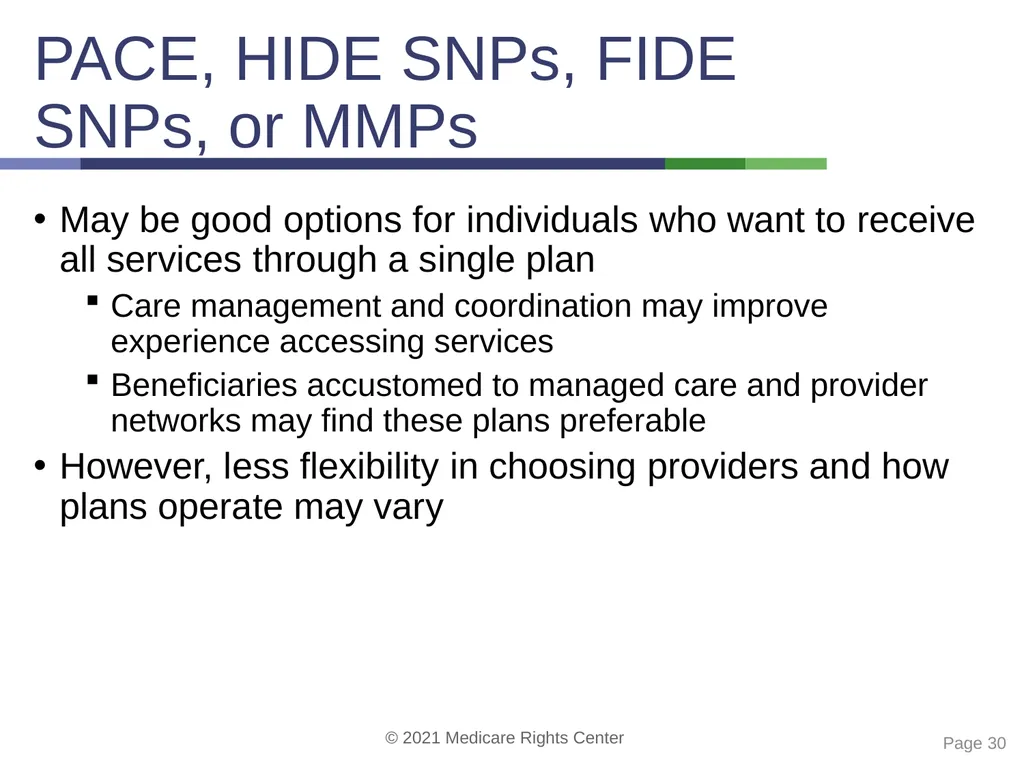
PACE, HIDE SNPs, FIDE SNPs, or MMPs May be good options for individuals who want to receive all services through a single plan
Care management and coordination may improve experience accessing services
Beneficiaries accustomed to managed care and provider networks may find these plans preferable
However, less flexibility in choosing providers and how plans operate may vary Page 30<br>
Care management and coordination may improve experience accessing services
Beneficiaries accustomed to managed care and provider networks may find these plans preferable
However, less flexibility in choosing providers and how plans operate may vary Page 30<br>
31
Finding available plans Page 31<br>
32
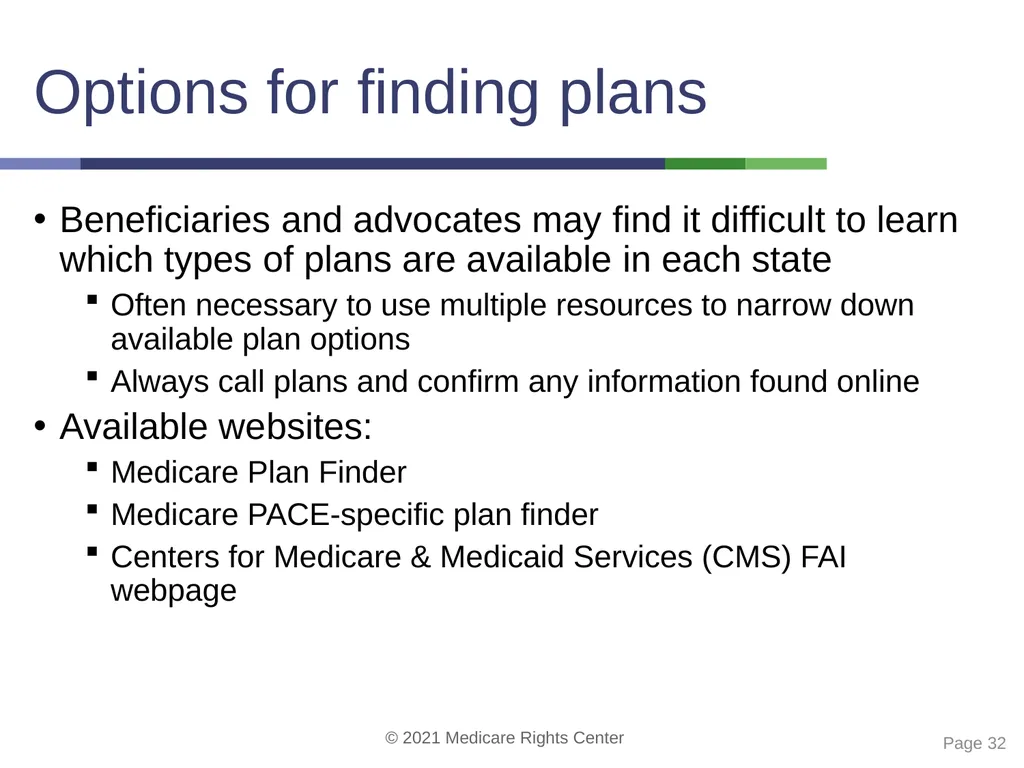
Options for finding plans Beneficiaries and advocates may find it difficult to learn which types of plans are available in each state
Often necessary to use multiple resources to narrow down available plan options
Always call plans and confirm any information found online
Available websites:
Medicare Plan Finder
Medicare PACE-specific plan finder
Centers for Medicare & Medicaid Services (CMS) FAI webpage Page 32<br>
Often necessary to use multiple resources to narrow down available plan options
Always call plans and confirm any information found online
Available websites:
Medicare Plan Finder
Medicare PACE-specific plan finder
Centers for Medicare & Medicaid Services (CMS) FAI webpage Page 32<br>
33
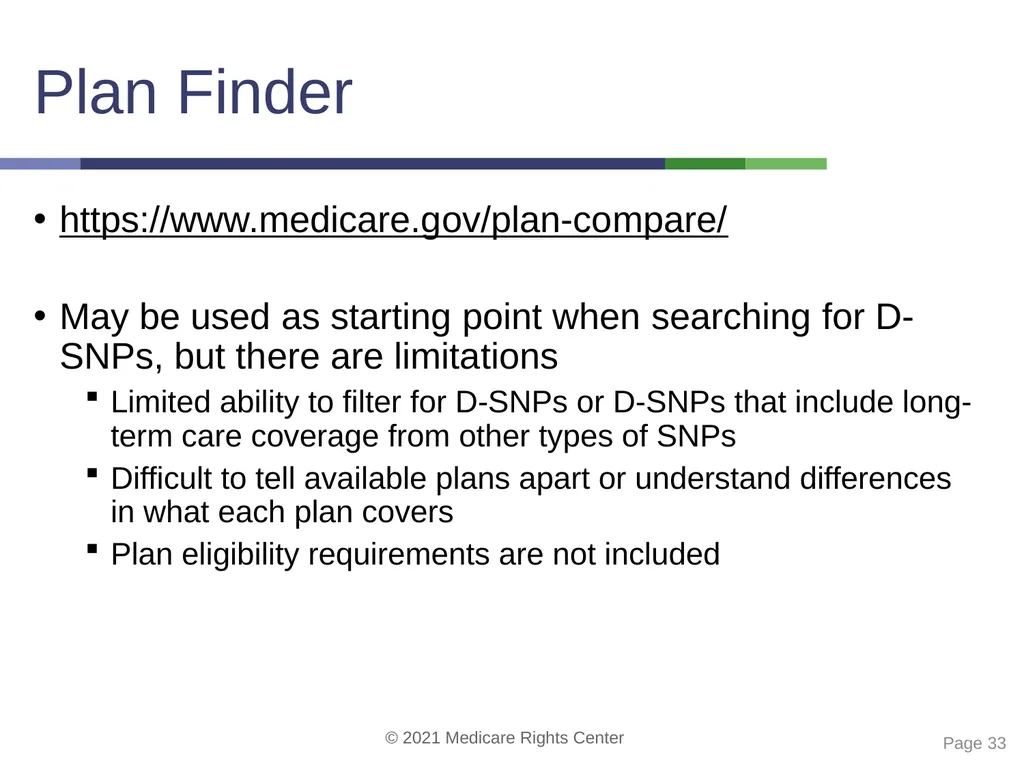
Plan Finder https://www.medicare.gov/plan-compare/
May be used as starting point when searching for D-SNPs, but there are limitations
Limited ability to filter for D-SNPs or D-SNPs that include long-term care coverage from other types of SNPs
Difficult to tell available plans apart or understand differences in what each plan covers
Plan eligibility requirements are not included Page 33<br>
May be used as starting point when searching for D-SNPs, but there are limitations
Limited ability to filter for D-SNPs or D-SNPs that include long-term care coverage from other types of SNPs
Difficult to tell available plans apart or understand differences in what each plan covers
Plan eligibility requirements are not included Page 33<br>
34
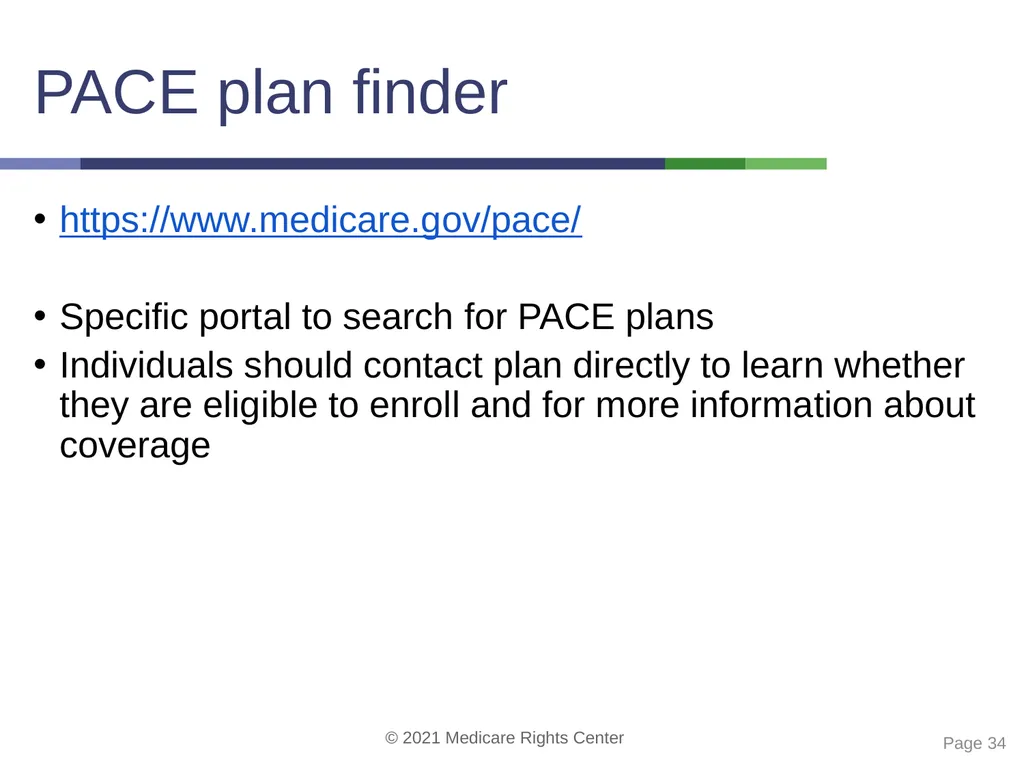
PACE plan finder https://www.medicare.gov/pace/
Specific portal to search for PACE plans
Individuals should contact plan directly to learn whether they are eligible to enroll and for more information about coverage Page 34<br>
Specific portal to search for PACE plans
Individuals should contact plan directly to learn whether they are eligible to enroll and for more information about coverage Page 34<br>
35
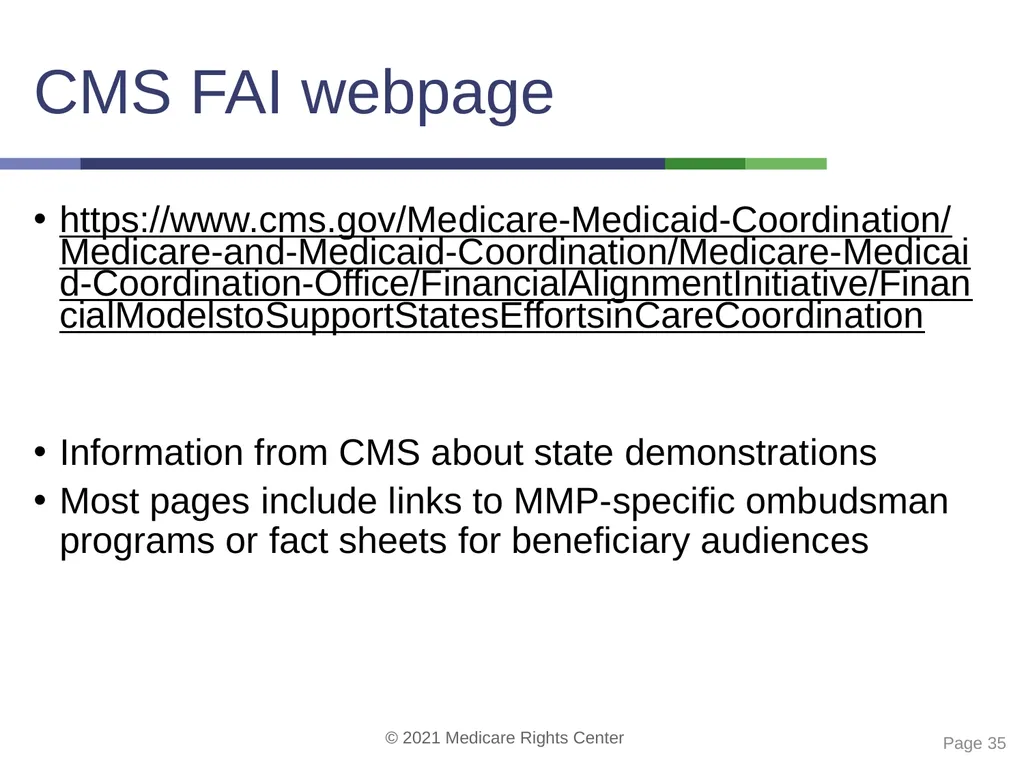
CMS FAI webpage https://www.cms.gov/Medicare-Medicaid-Coordination/Medicare-and-Medicaid-Coordination/Medicare-Medicaid-Coordination-Office/FinancialAlignmentInitiative/FinancialModelstoSupportStatesEffortsinCareCoordination
Information from CMS about state demonstrations
Most pages include links to MMP-specific ombudsman programs or fact sheets for beneficiary audiences Page 35<br>
Information from CMS about state demonstrations
Most pages include links to MMP-specific ombudsman programs or fact sheets for beneficiary audiences Page 35<br>
36
New integration requirements Page 36<br>
37
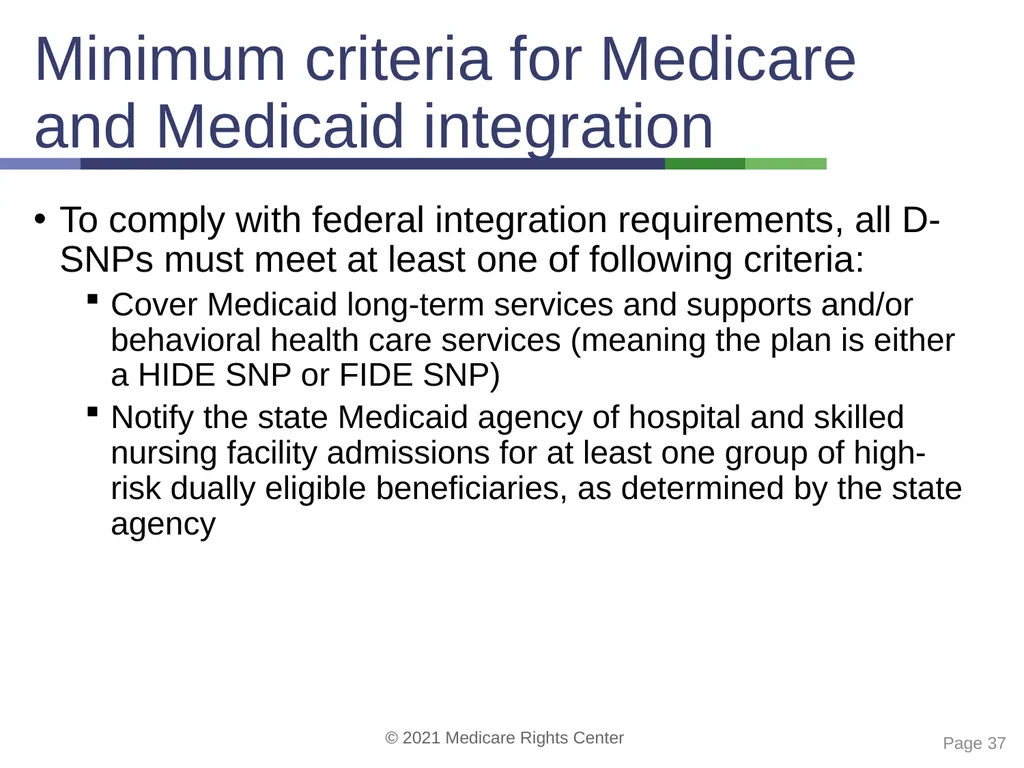
Minimum criteria for Medicare and Medicaid integration To comply with federal integration requirements, all D-SNPs must meet at least one of following criteria:
Cover Medicaid long-term services and supports and/or behavioral health care services (meaning the plan is either a HIDE SNP or FIDE SNP)
Notify the state Medicaid agency of hospital and skilled nursing facility admissions for at least one group of high-risk dually eligible beneficiaries, as determined by the state agency Page 37<br>
Cover Medicaid long-term services and supports and/or behavioral health care services (meaning the plan is either a HIDE SNP or FIDE SNP)
Notify the state Medicaid agency of hospital and skilled nursing facility admissions for at least one group of high-risk dually eligible beneficiaries, as determined by the state agency Page 37<br>
38
Unified grievance and appeals processes Certain HIDE SNPs and FIDE SNPs are required to have unified process at plan level for grievances and appeals
Unified process means beneficiaries use single process to receive coverage determinations and grievance responses for Medicare and Medicaid
Plans must also have one timeline for filing, responding to, and resolving appeal or grievance
Applies to services covered by both Medicare Part A or Part B and Medicaid
Appeals escalated beyond plan level must be filed with either Medicare, Medicaid, or both, depending on service being denied Page 38<br>
Unified process means beneficiaries use single process to receive coverage determinations and grievance responses for Medicare and Medicaid
Plans must also have one timeline for filing, responding to, and resolving appeal or grievance
Applies to services covered by both Medicare Part A or Part B and Medicaid
Appeals escalated beyond plan level must be filed with either Medicare, Medicaid, or both, depending on service being denied Page 38<br>
39
Review Coverage option landscape
Stand-alone MLTSS plans
D-SNPs, including HIDE SNPs and FIDE SNPs
PACE
MMPs
New integration requirements
Minimum criteria for Medicare and Medicaid integration
Unified grievance and appeals processes Page 39<br>
Stand-alone MLTSS plans
D-SNPs, including HIDE SNPs and FIDE SNPs
PACE
MMPs
New integration requirements
Minimum criteria for Medicare and Medicaid integration
Unified grievance and appeals processes Page 39<br>
40
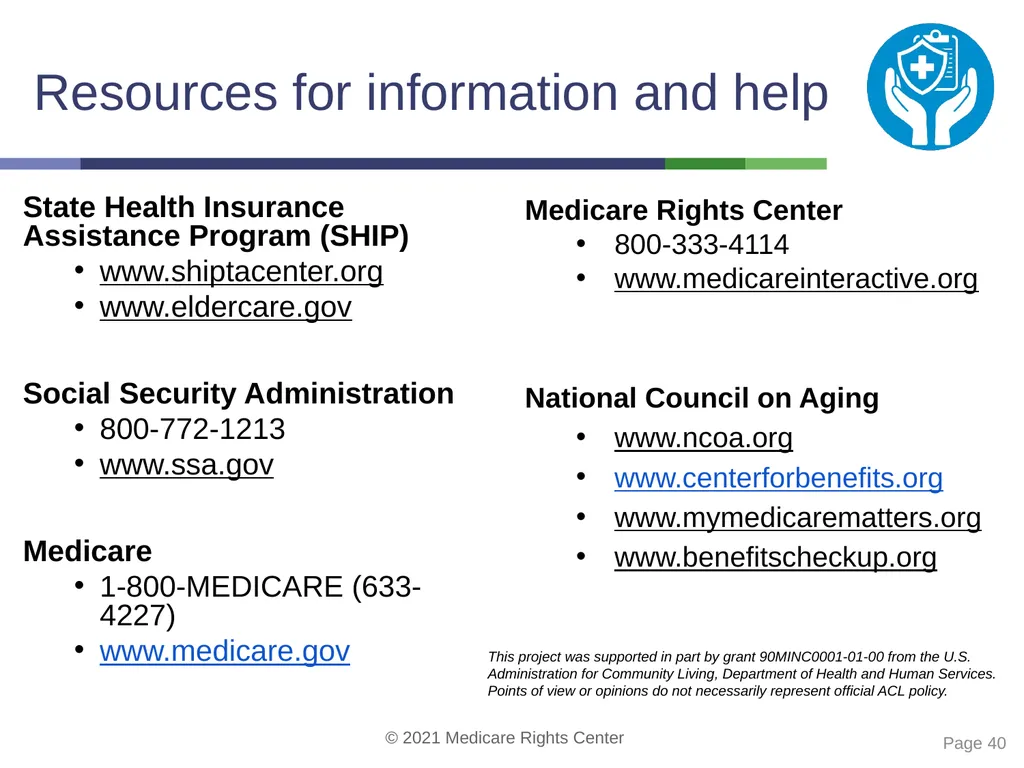
Resources for information and help Page 40 State Health Insurance Assistance Program (SHIP)
www.shiptacenter.org
www.eldercare.gov
Social Security Administration
800-772-1213
www.ssa.gov
Medicare
1-800-MEDICARE (633-4227)
www.medicare.gov Medicare Rights Center
800-333-4114
www.medicareinteractive.org
National Council on Aging
www.ncoa.org
www.centerforbenefits.org
www.mymedicarematters.org
www.benefitscheckup.org This project was supported in part by grant 90MINC0001-01-00 from the U.S. Administration for Community Living, Department of Health and Human Services. Points of view or opinions do not necessarily represent official ACL policy.<br>
www.shiptacenter.org
www.eldercare.gov
Social Security Administration
800-772-1213
www.ssa.gov
Medicare
1-800-MEDICARE (633-4227)
www.medicare.gov Medicare Rights Center
800-333-4114
www.medicareinteractive.org
National Council on Aging
www.ncoa.org
www.centerforbenefits.org
www.mymedicarematters.org
www.benefitscheckup.org This project was supported in part by grant 90MINC0001-01-00 from the U.S. Administration for Community Living, Department of Health and Human Services. Points of view or opinions do not necessarily represent official ACL policy.<br>