
Crisis Intervention Crisis – an event where a


Description: Crisis Intervention Crisis an event where a person is faced with a situation that pushes him or her beyond their capacity to cope and continue to function normally Crisis Intervention methods used to offer short-term, immediate help to
Related Topics
Download Presentation
"Crisis Intervention Crisis – an event where a" is the property of its rightful owner. Permission is granted to download and print the materials on this website for personal, non-commercial use only, and to display it on your personal computer provided you do not modify the materials and that you retain all copyright notices contained in the materials. By downloading content from our website, you accept the terms of this agreement.
Presentation Transcript
slide1. Crisis Intervention<br>
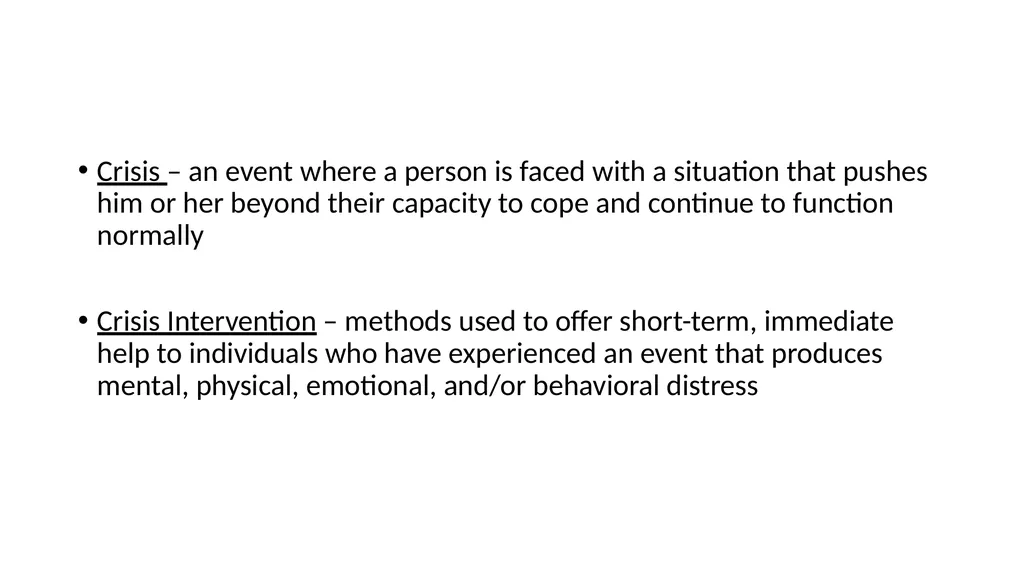
slide2. Crisis – an event where a person is faced with a situation that pushes him or her beyond their capacity to cope and continue to function normally
Crisis Intervention – methods used to offer short-term, immediate help to individuals who have experienced an event that produces mental, physical, emotional, and/or behavioral distress<br>
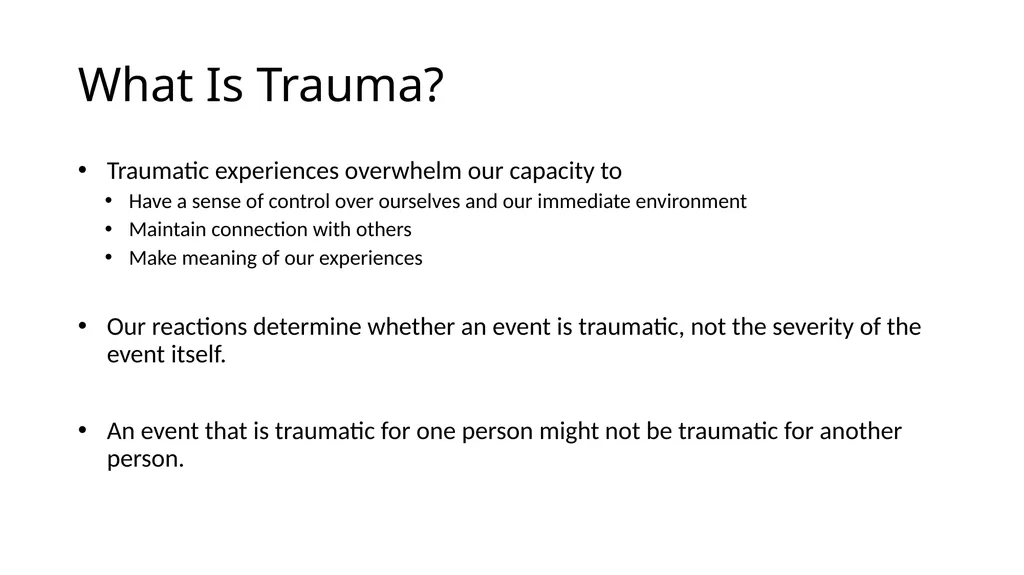
slide3. What Is Trauma? Traumatic experiences overwhelm our capacity to
Have a sense of control over ourselves and our immediate environment
Maintain connection with others
Make meaning of our experiences
Our reactions determine whether an event is traumatic, not the severity of the event itself.
An event that is traumatic for one person might not be traumatic for another person.<br>
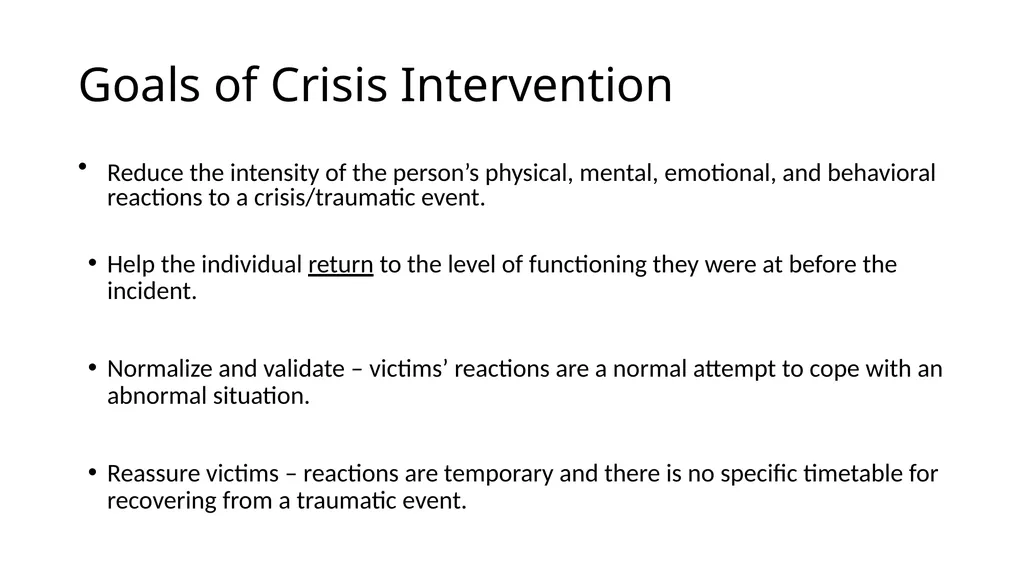
slide4. Goals of Crisis Intervention Reduce the intensity of the person’s physical, mental, emotional, and behavioral reactions to a crisis/traumatic event.
Help the individual return to the level of functioning they were at before the incident.
Normalize and validate – victims’ reactions are a normal attempt to cope with an abnormal situation.
Reassure victims – reactions are temporary and there is no specific timetable for recovering from a traumatic event.<br>
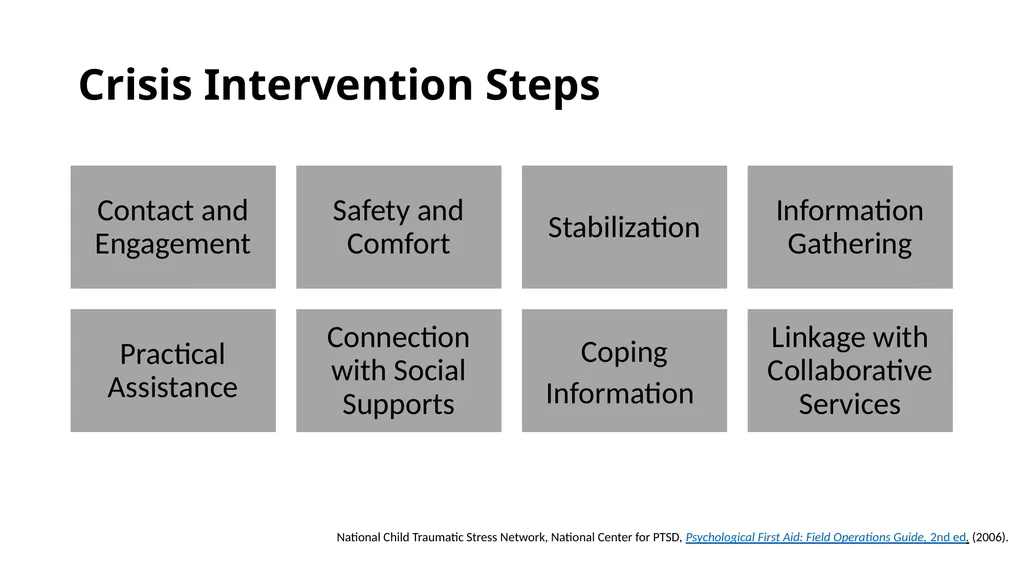
slide5. Crisis Intervention Steps National Child Traumatic Stress Network, National Center for PTSD, Psychological First Aid: Field Operations Guide, 2nd ed. (2006).<br>
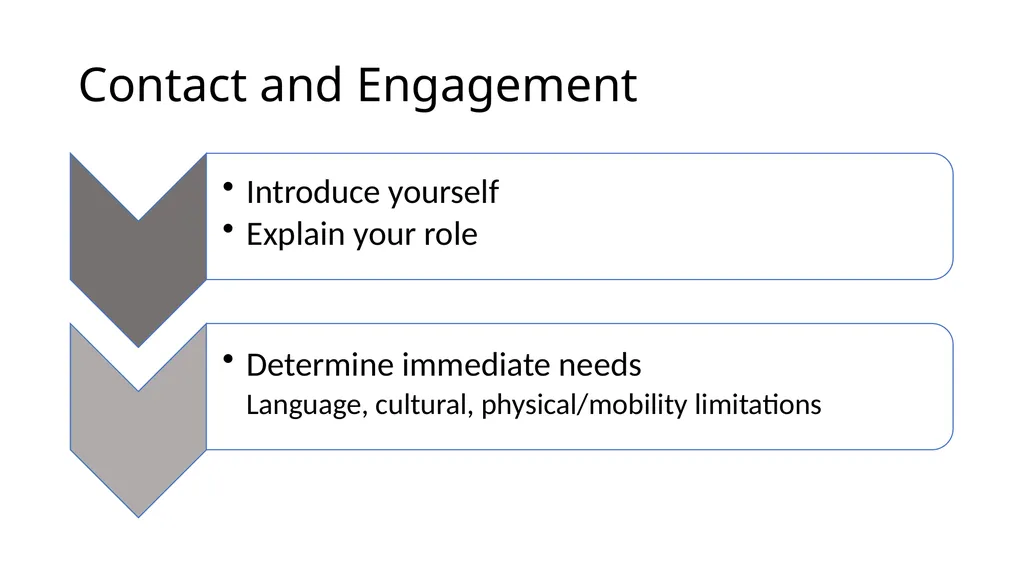
slide6. Contact and Engagement<br>
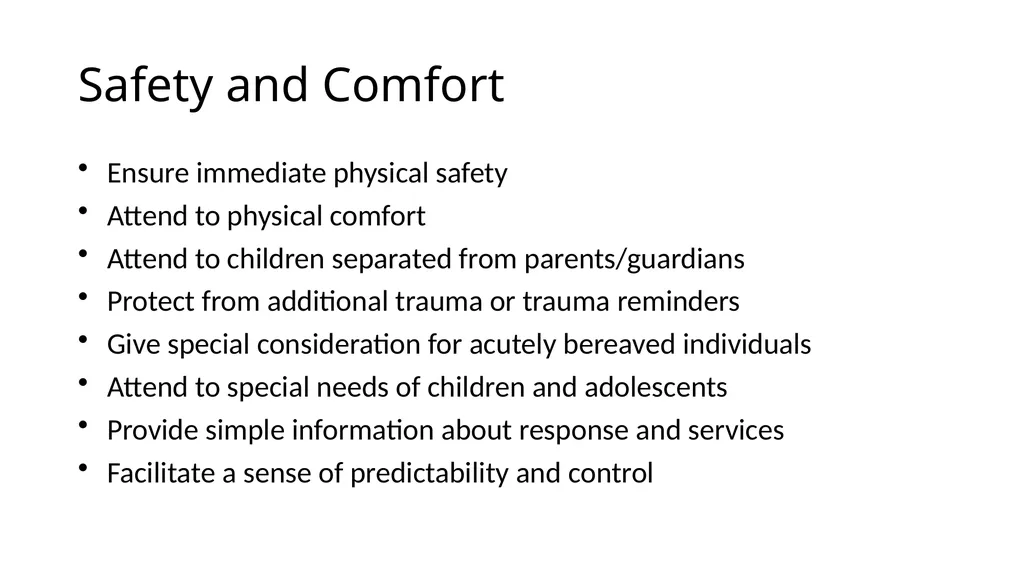
slide7. Safety and Comfort Ensure immediate physical safety
Attend to physical comfort
Attend to children separated from parents/guardians
Protect from additional trauma or trauma reminders
Give special consideration for acutely bereaved individuals
Attend to special needs of children and adolescents
Provide simple information about response and services
Facilitate a sense of predictability and control<br>
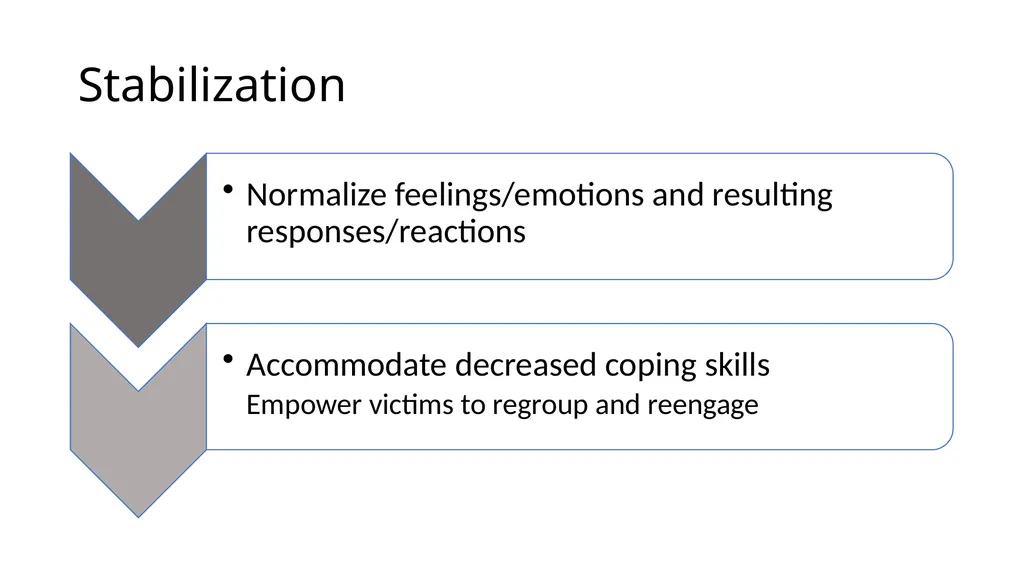
slide8. Stabilization<br>
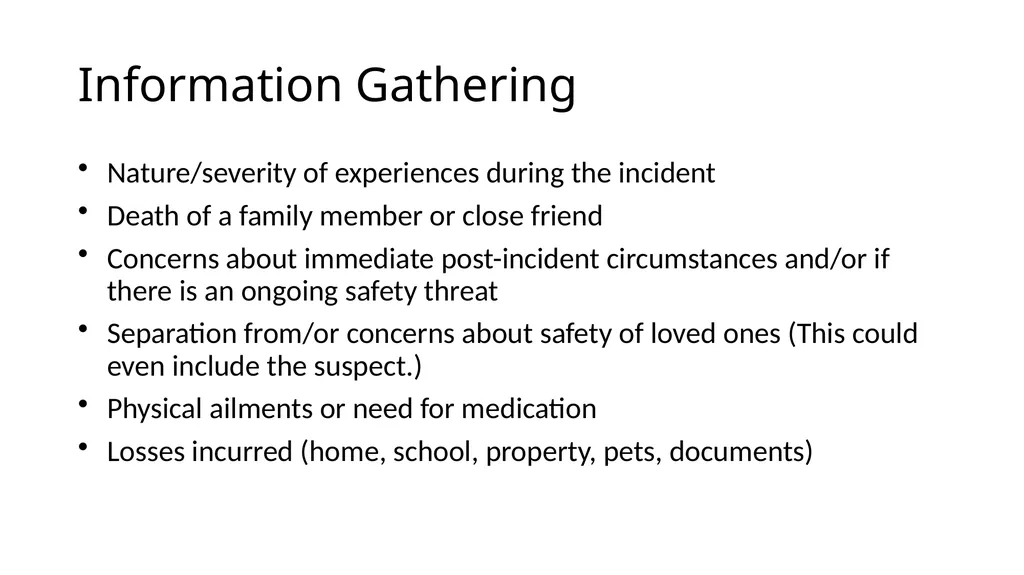
slide9. Information Gathering Nature/severity of experiences during the incident
Death of a family member or close friend
Concerns about immediate post-incident circumstances and/or if there is an ongoing safety threat
Separation from/or concerns about safety of loved ones (This could even include the suspect.)
Physical ailments or need for medication
Losses incurred (home, school, property, pets, documents)<br>
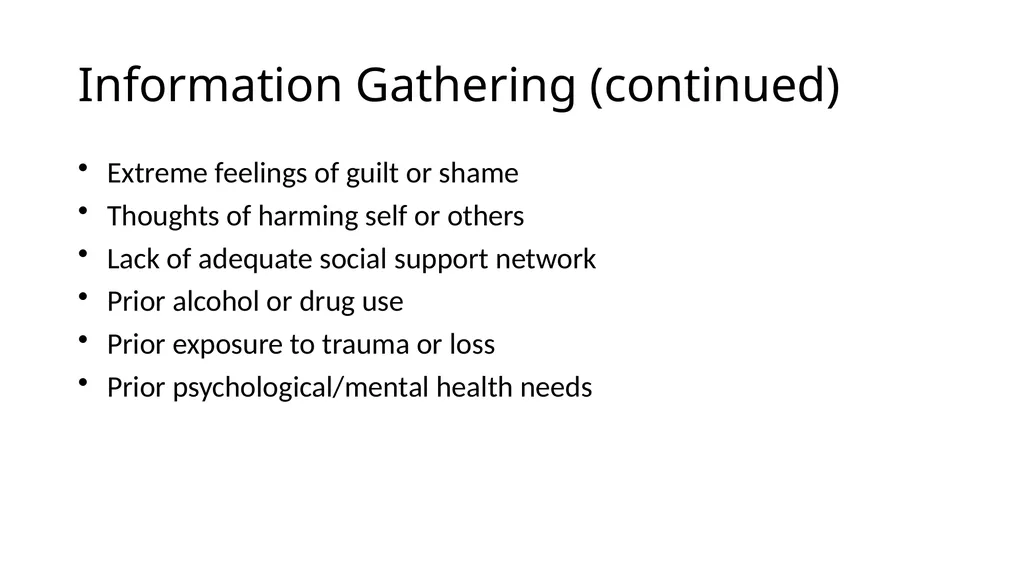
slide10. Information Gathering (continued) Extreme feelings of guilt or shame
Thoughts of harming self or others
Lack of adequate social support network
Prior alcohol or drug use
Prior exposure to trauma or loss
Prior psychological/mental health needs<br>
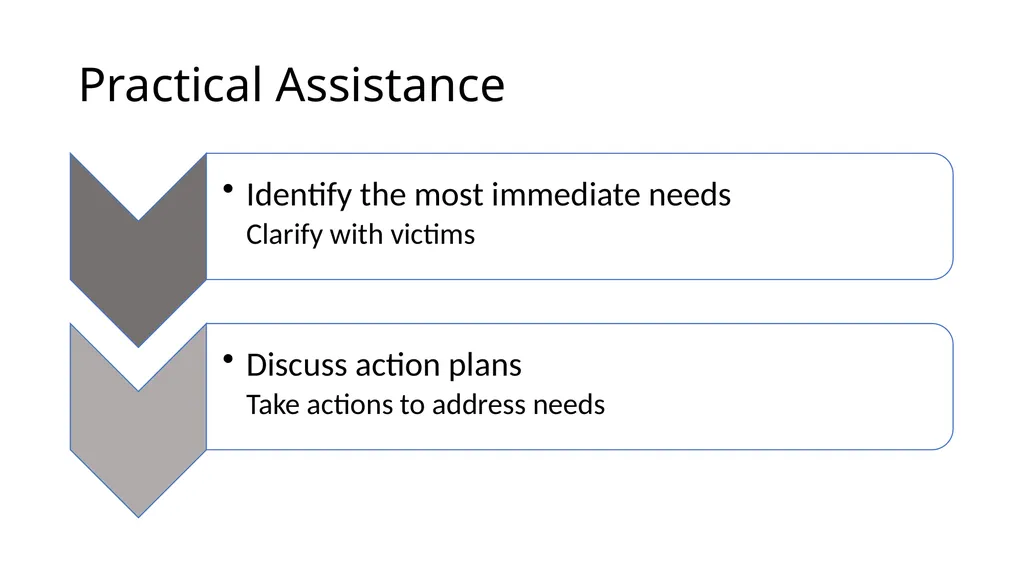
slide11. Practical Assistance<br>
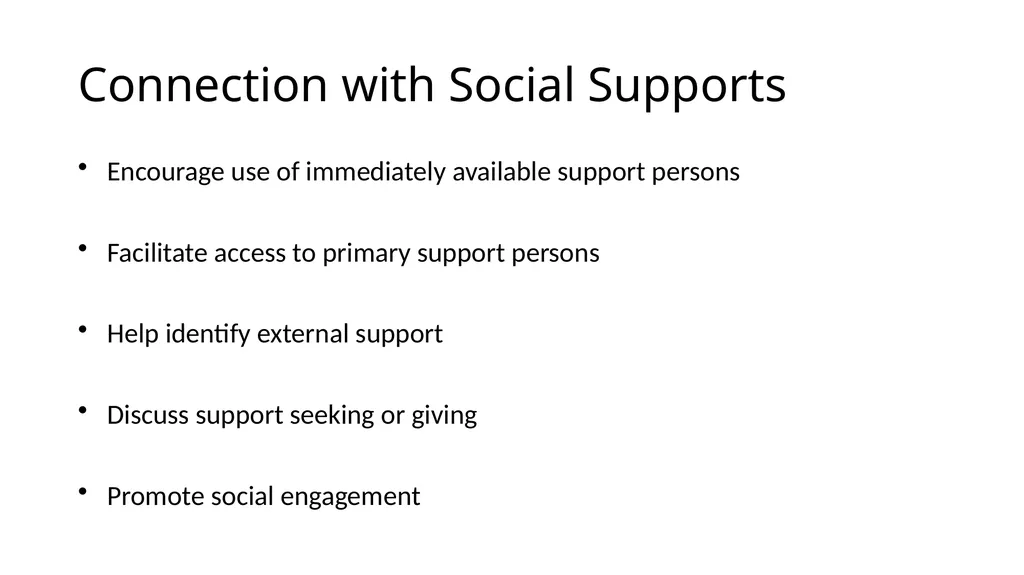
slide12. Connection with Social Supports Encourage use of immediately available support persons
Facilitate access to primary support persons
Help identify external support
Discuss support seeking or giving
Promote social engagement<br>
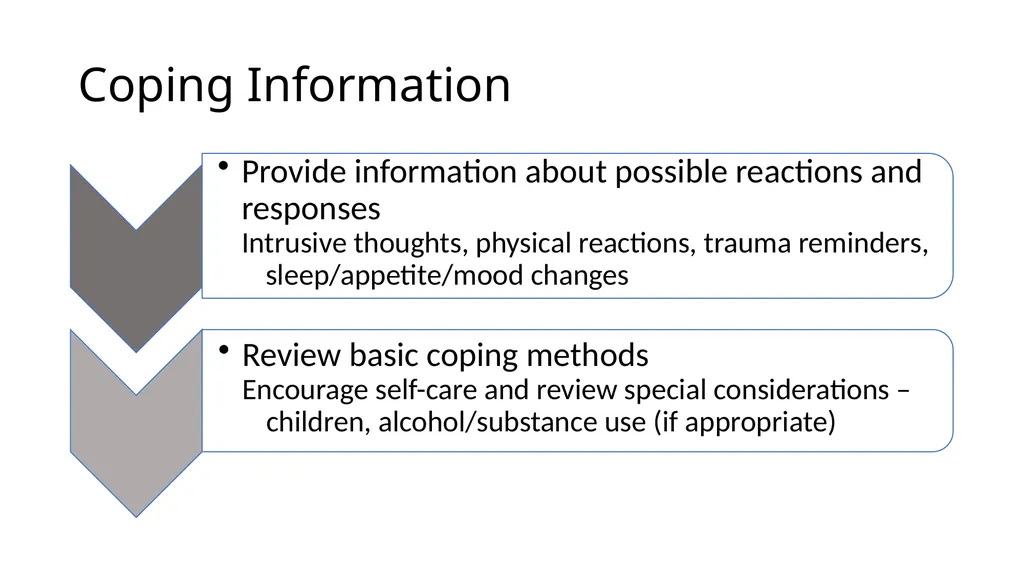
slide13. Coping Information<br>
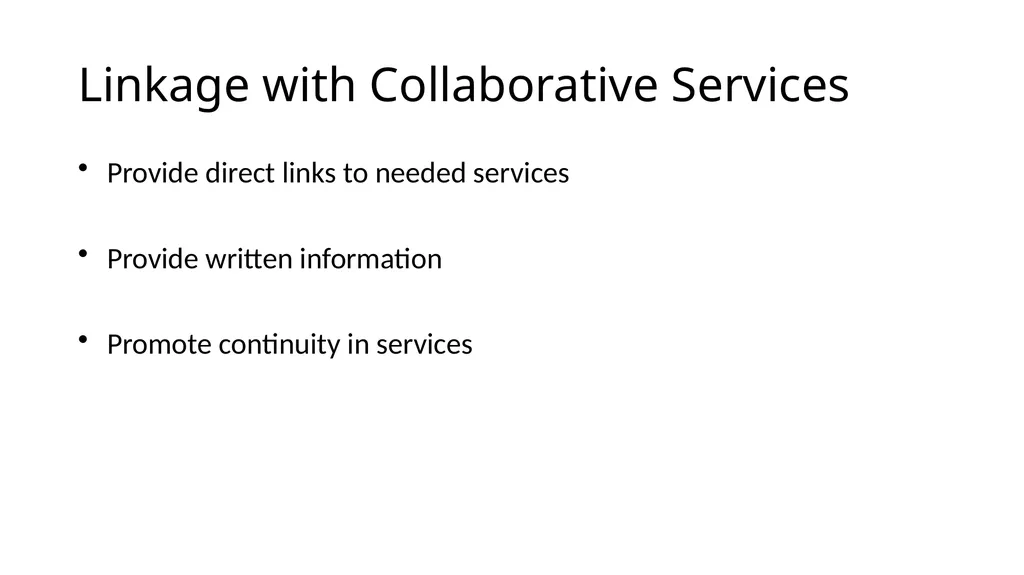
slide14. Linkage with Collaborative Services Provide direct links to needed services
Provide written information
Promote continuity in services<br>
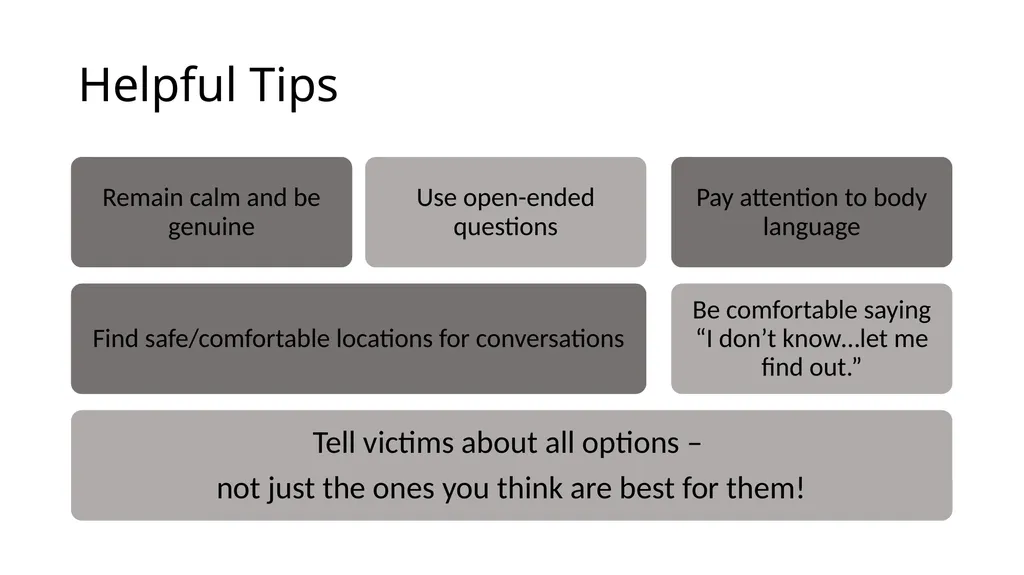
slide15. Helpful Tips<br>
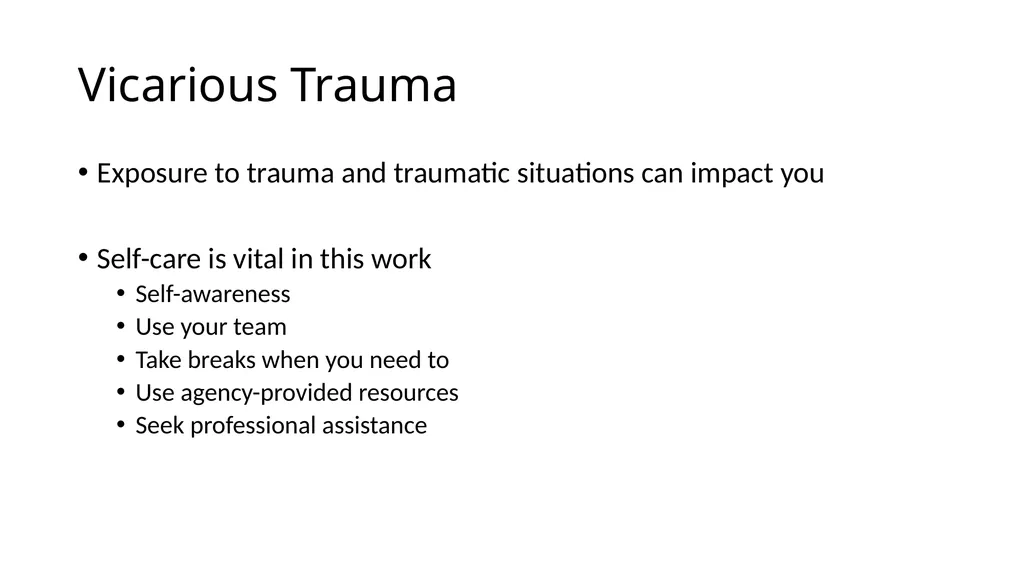
slide16. Vicarious Trauma Exposure to trauma and traumatic situations can impact you
Self-care is vital in this work
Self-awareness
Use your team
Take breaks when you need to
Use agency-provided resources
Seek professional assistance<br>
slide17. Questions<br>
slide2. Crisis – an event where a person is faced with a situation that pushes him or her beyond their capacity to cope and continue to function normally
Crisis Intervention – methods used to offer short-term, immediate help to individuals who have experienced an event that produces mental, physical, emotional, and/or behavioral distress<br>
slide3. What Is Trauma? Traumatic experiences overwhelm our capacity to
Have a sense of control over ourselves and our immediate environment
Maintain connection with others
Make meaning of our experiences
Our reactions determine whether an event is traumatic, not the severity of the event itself.
An event that is traumatic for one person might not be traumatic for another person.<br>
slide4. Goals of Crisis Intervention Reduce the intensity of the person’s physical, mental, emotional, and behavioral reactions to a crisis/traumatic event.
Help the individual return to the level of functioning they were at before the incident.
Normalize and validate – victims’ reactions are a normal attempt to cope with an abnormal situation.
Reassure victims – reactions are temporary and there is no specific timetable for recovering from a traumatic event.<br>
slide5. Crisis Intervention Steps National Child Traumatic Stress Network, National Center for PTSD, Psychological First Aid: Field Operations Guide, 2nd ed. (2006).<br>
slide6. Contact and Engagement<br>
slide7. Safety and Comfort Ensure immediate physical safety
Attend to physical comfort
Attend to children separated from parents/guardians
Protect from additional trauma or trauma reminders
Give special consideration for acutely bereaved individuals
Attend to special needs of children and adolescents
Provide simple information about response and services
Facilitate a sense of predictability and control<br>
slide8. Stabilization<br>
slide9. Information Gathering Nature/severity of experiences during the incident
Death of a family member or close friend
Concerns about immediate post-incident circumstances and/or if there is an ongoing safety threat
Separation from/or concerns about safety of loved ones (This could even include the suspect.)
Physical ailments or need for medication
Losses incurred (home, school, property, pets, documents)<br>
slide10. Information Gathering (continued) Extreme feelings of guilt or shame
Thoughts of harming self or others
Lack of adequate social support network
Prior alcohol or drug use
Prior exposure to trauma or loss
Prior psychological/mental health needs<br>
slide11. Practical Assistance<br>
slide12. Connection with Social Supports Encourage use of immediately available support persons
Facilitate access to primary support persons
Help identify external support
Discuss support seeking or giving
Promote social engagement<br>
slide13. Coping Information<br>
slide14. Linkage with Collaborative Services Provide direct links to needed services
Provide written information
Promote continuity in services<br>
slide15. Helpful Tips<br>
slide16. Vicarious Trauma Exposure to trauma and traumatic situations can impact you
Self-care is vital in this work
Self-awareness
Use your team
Take breaks when you need to
Use agency-provided resources
Seek professional assistance<br>
slide17. Questions<br>