Critical analysis www.kent.ac.ukstudent-learning-advisory-service Why be Critical? As a student in higher education, you are expected to develop a critical approach to your studies it helps: build your knowledge and understanding improve
"Critical analysis" is the property of its rightful owner. Permission is granted to
download and print the materials on this website for personal, non-commercial use only, and to display it
on your personal computer provided you do not modify the materials and that you retain all copyright
notices contained in the materials. By downloading content from our website, you accept the terms of this
agreement.
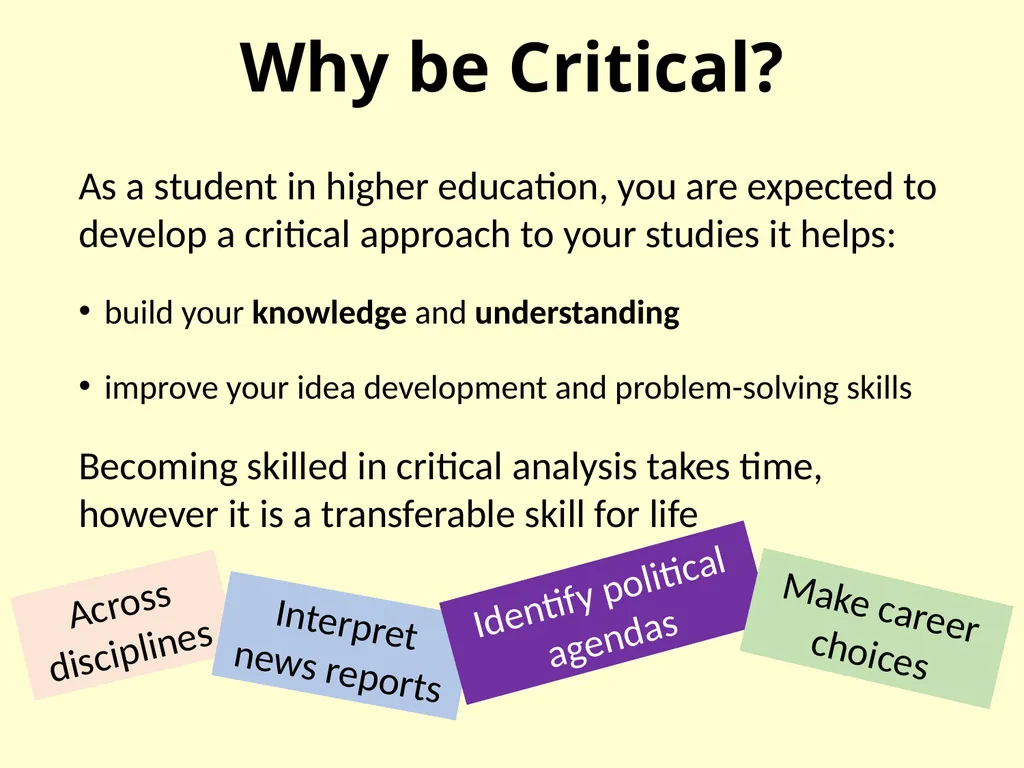
Why be Critical? As a student in higher education, you are expected to develop a critical approach to your studies it helps:
build your knowledge and understanding
improve your idea development and problem-solving skills
Becoming skilled in critical analysis takes time, however it is a transferable skill for life Across disciplines Interpret news reports Identify political agendas Make career choices<br>
03
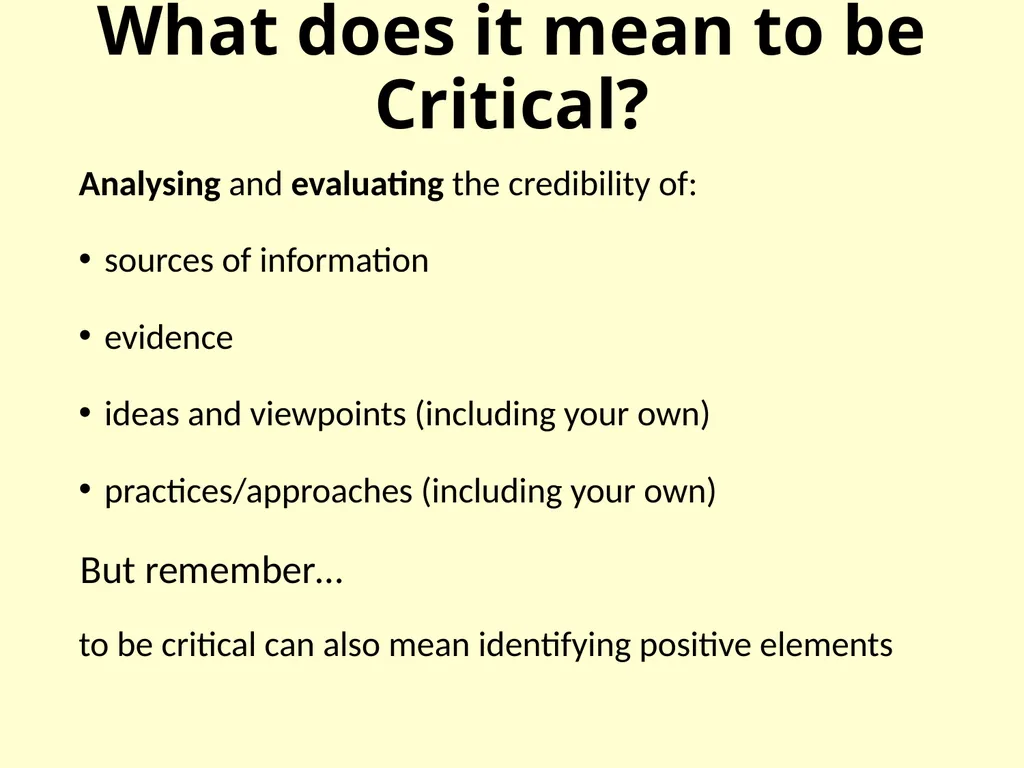
What does it mean to be Critical? Analysing and evaluating the credibility of:
sources of information
evidence
ideas and viewpoints (including your own)
practices/approaches (including your own)
to be critical can also mean identifying positive elements But remember…<br>
04
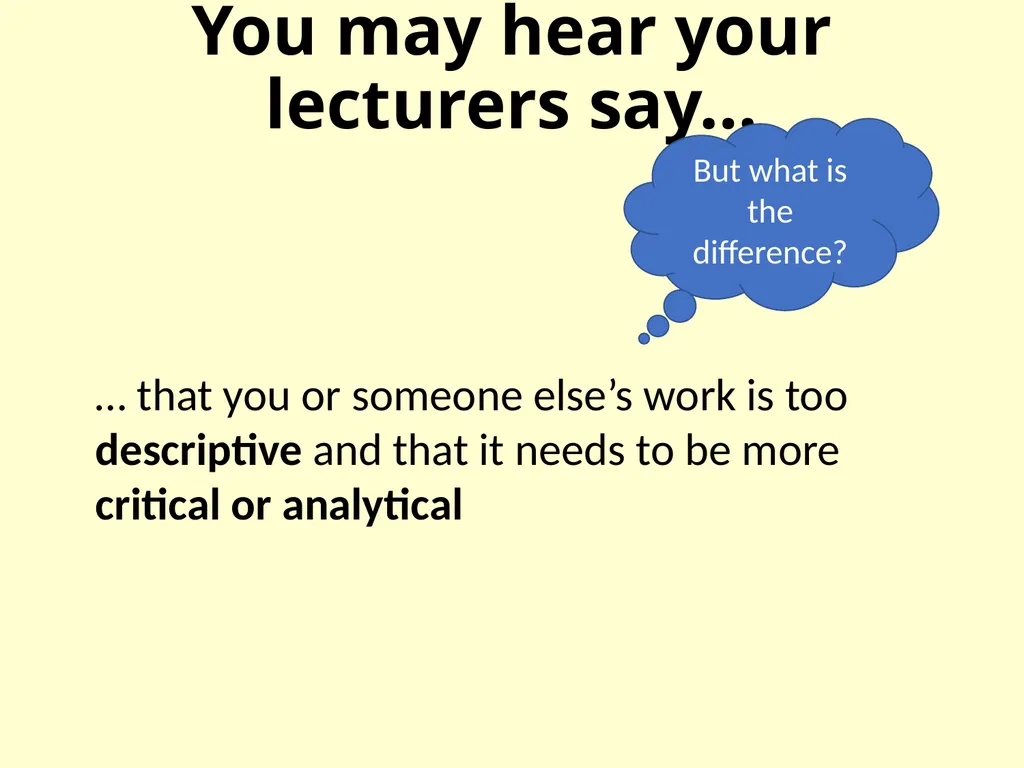
You may hear your lecturers say… … that you or someone else’s work is too descriptive and that it needs to be more critical or analytical But what is the difference?<br>
05
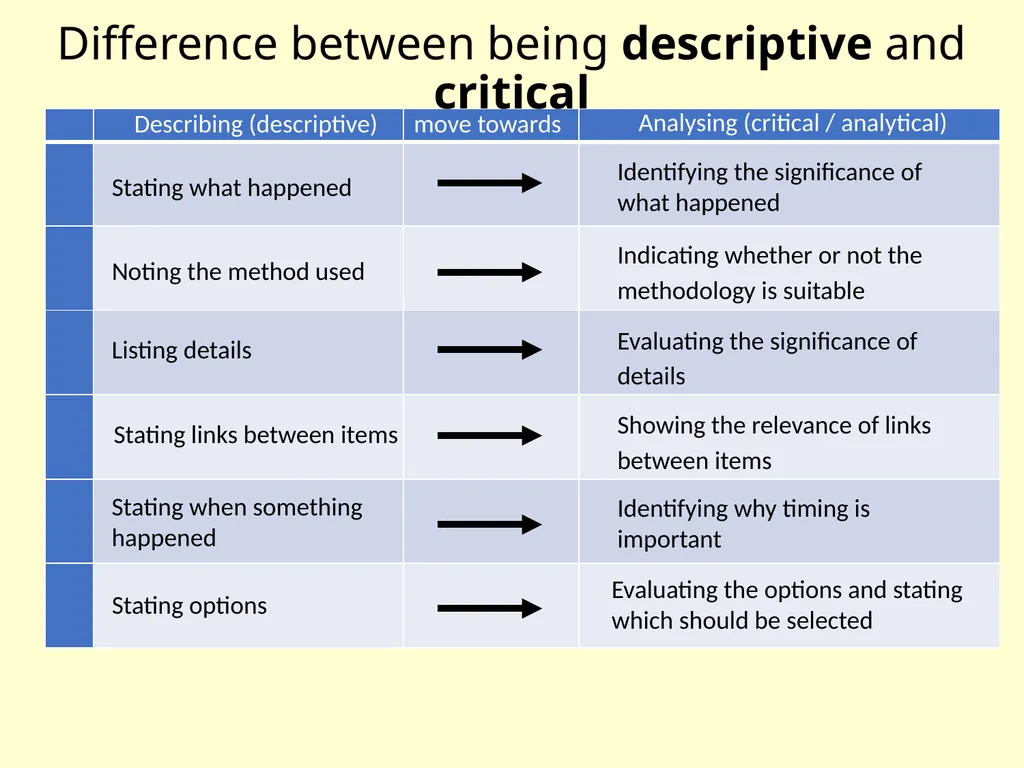
Describing (descriptive) Analysing (critical / analytical) Stating what happened Identifying the significance of what happened Noting the method used Indicating whether or not the methodology is suitable Evaluating the significance of details Stating links between items Showing the relevance of links between items Stating when something happened Identifying why timing is important Stating options Evaluating the options and stating which should be selected Listing details move towards Difference between being descriptive and critical<br>
06
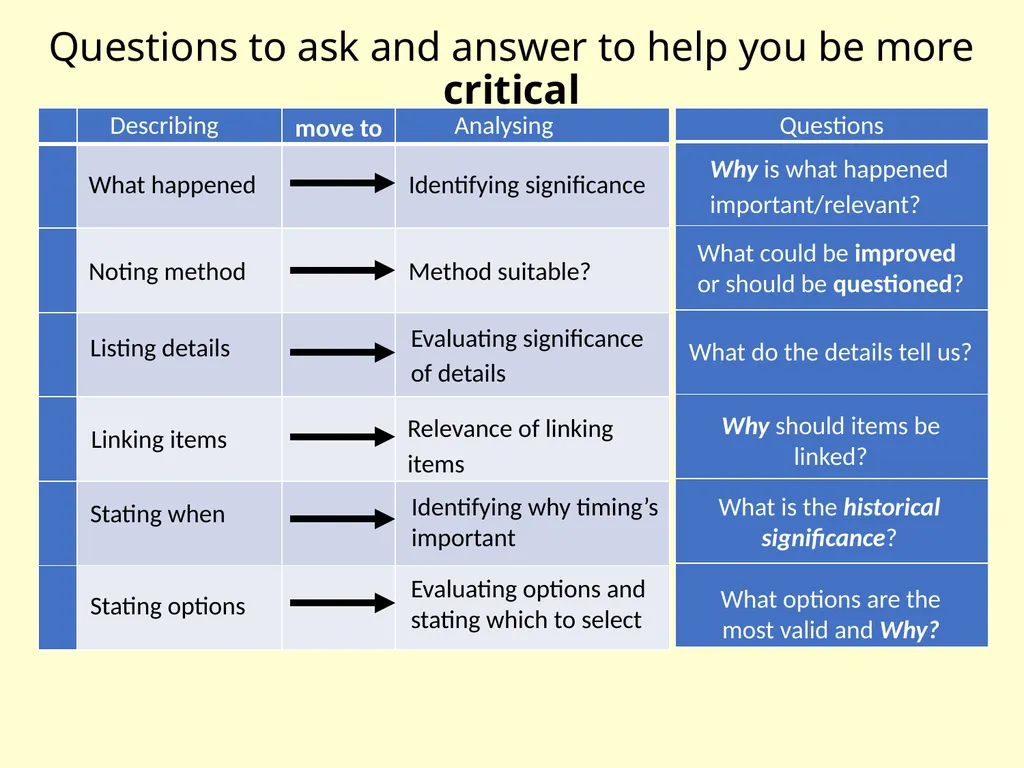
Describing Analysing What happened Identifying significance Noting method Method suitable? Evaluating significance of details Linking items Relevance of linking items Stating when Identifying why timing’s important Stating options Evaluating options and stating which to select Listing details Questions Why is what happened important/relevant? What could be improved or should be questioned? What do the details tell us? Why should items be linked? What is the historical significance? What options are the most valid and Why? Questions to ask and answer to help you be more critical<br>
07
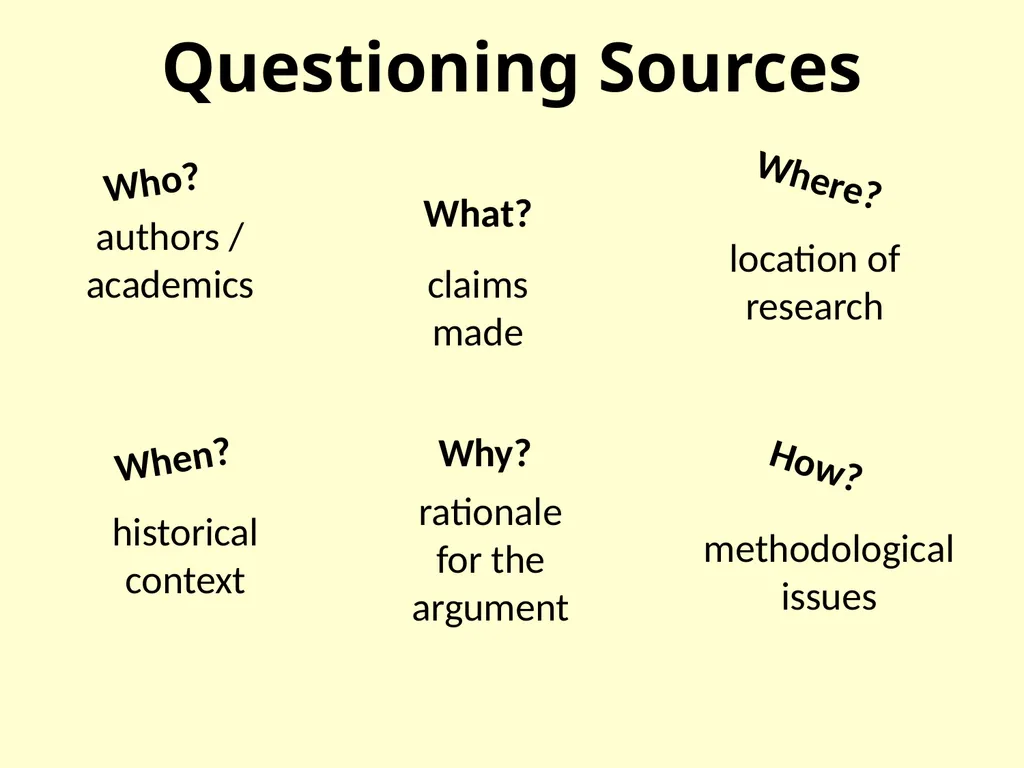
Questioning Sources Who? What? Where? When? Why? How? authors / academics claims made location of research historical context rationale for the argument methodological issues<br>
08
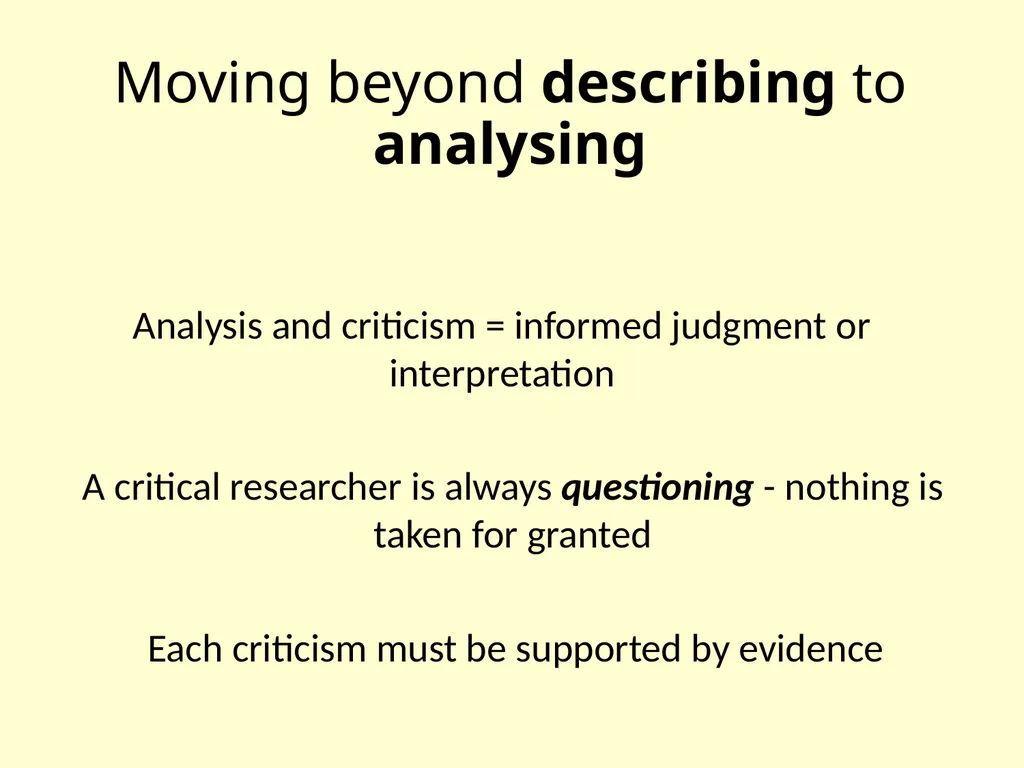
Each criticism must be supported by evidence A critical researcher is always questioning - nothing is taken for granted Analysis and criticism = informed judgment or interpretation Moving beyond describing to analysing<br>
09
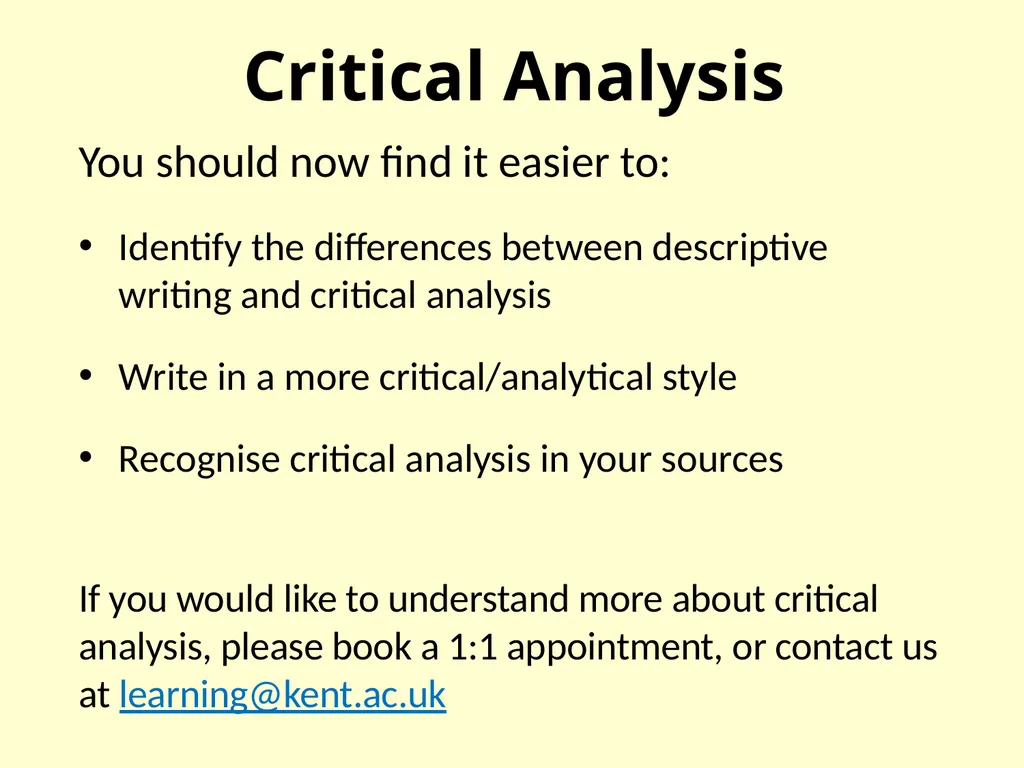
You should now find it easier to:
Identify the differences between descriptive writing and critical analysis
Write in a more critical/analytical style
Recognise critical analysis in your sources
If you would like to understand more about critical analysis, please book a 1:1 appointment, or contact us at learning@kent.ac.uk Critical Analysis<br>
10
Further resources For guidance on the broader range of academic skills that will help you succeed at university, please go to the SLAS webpages http://www.kent.ac.uk/student-learning-advisory-service where you can:
Book a one-to-one appointment with a SLAS adviser
Attend a range of Online Bitesize Skills Development sessions
Academic Phrasebank (University of Manchester) http://www.phrasebank.manchester.ac.uk/being-critical/<br>
11
www.kent.ac.uk/student-learning-advisory-service SLAS
CONNECT To book an appointment: learning@kent.ac.uk
SLASkent
KentUniSLAS
SLASkent Get in touch…<br>