Cross Examination Period Optional Subtitle!
Description: Cross Examination Period Optional Subtitle! Purpose Clarify Investigate Examine Set-up Highlight Flaws Critical thinkinglistening should be evident Prep Time for your partner Cross Examination is NOT used for: Embarrassing your opponent
Related Topics
Download Presentation
"Cross Examination Period Optional Subtitle!" is the property of its rightful owner. Permission is granted to download and print the materials on this website for personal, non-commercial use only, and to display it on your personal computer provided you do not modify the materials and that you retain all copyright notices contained in the materials. By downloading content from our website, you accept the terms of this agreement.
Presentation Transcript
slide1. Cross Examination Period Optional Subtitle!<br>
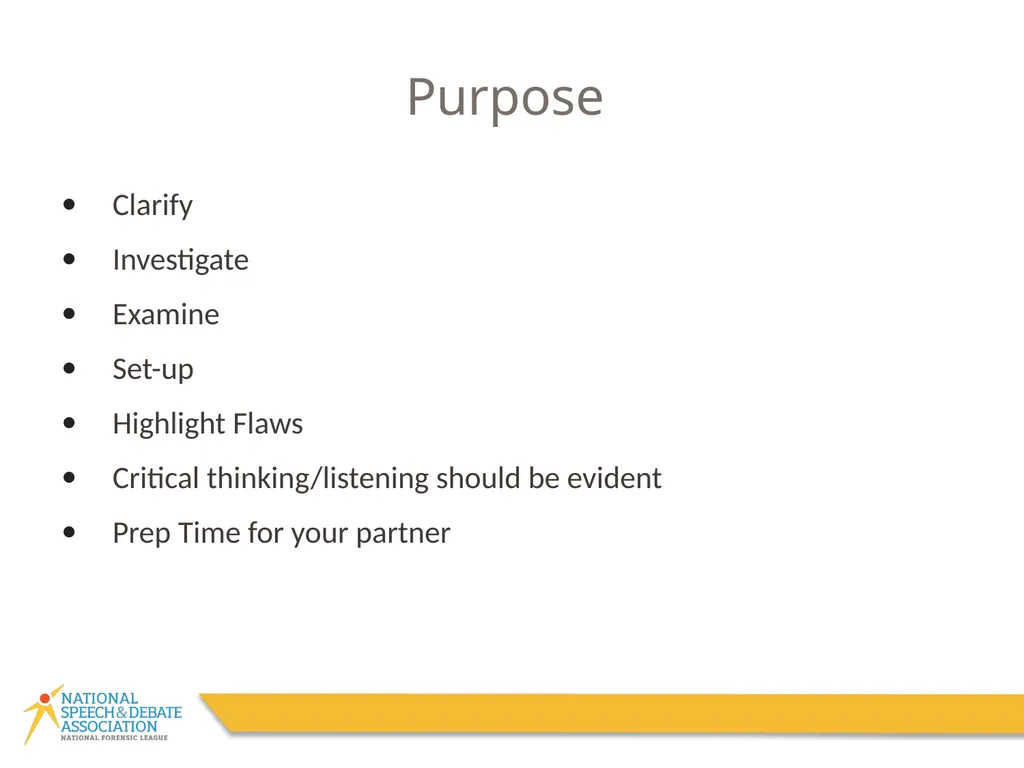
slide2. Purpose Clarify
Investigate
Examine
Set-up
Highlight Flaws
Critical thinking/listening should be evident
Prep Time for your partner<br>
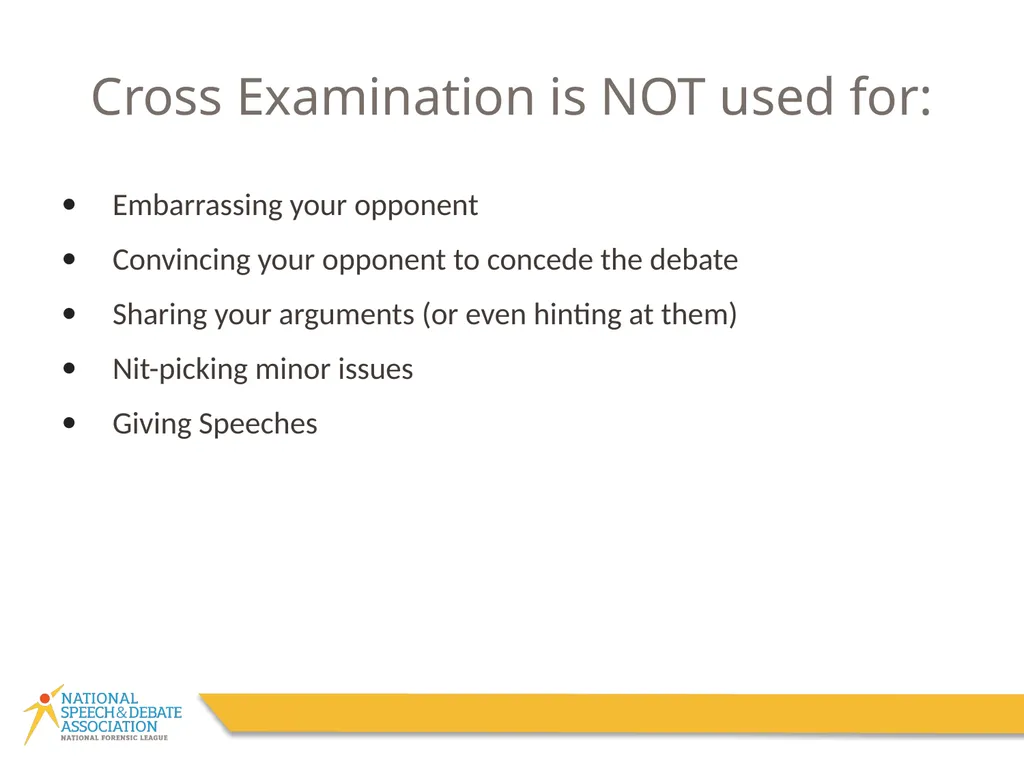
slide3. Cross Examination is NOT used for: Embarrassing your opponent
Convincing your opponent to concede the debate
Sharing your arguments (or even hinting at them)
Nit-picking minor issues
Giving Speeches<br>
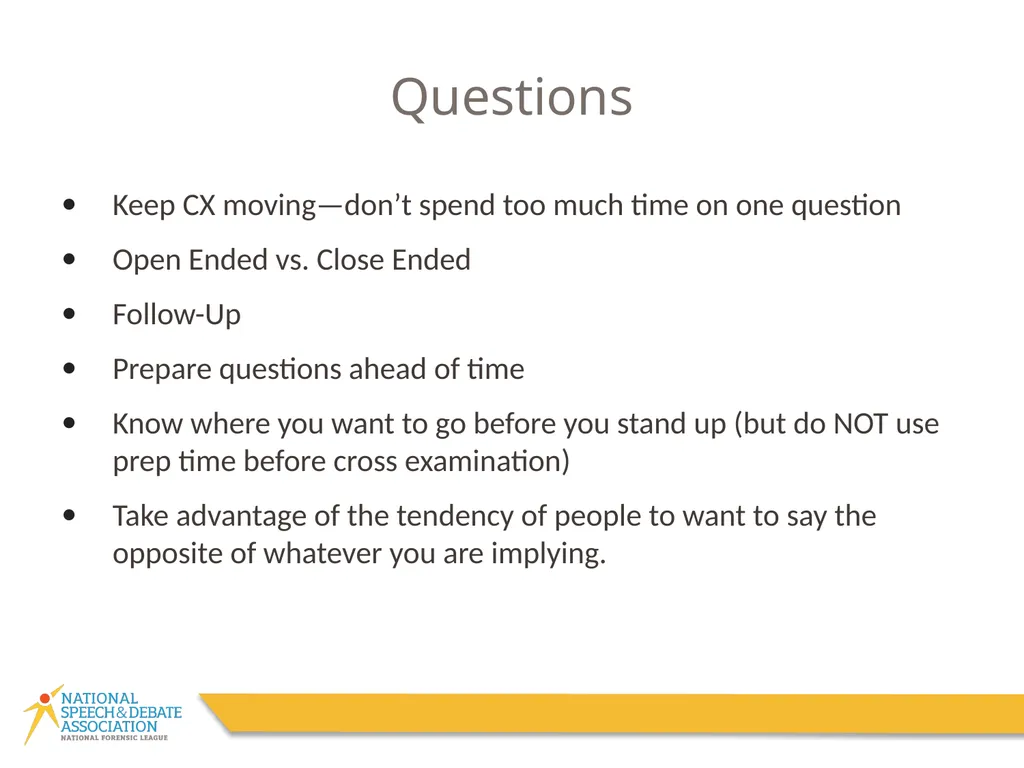
slide4. Questions Keep CX moving—don’t spend too much time on one question
Open Ended vs. Close Ended
Follow-Up
Prepare questions ahead of time
Know where you want to go before you stand up (but do NOT use prep time before cross examination)
Take advantage of the tendency of people to want to say the opposite of whatever you are implying.<br>
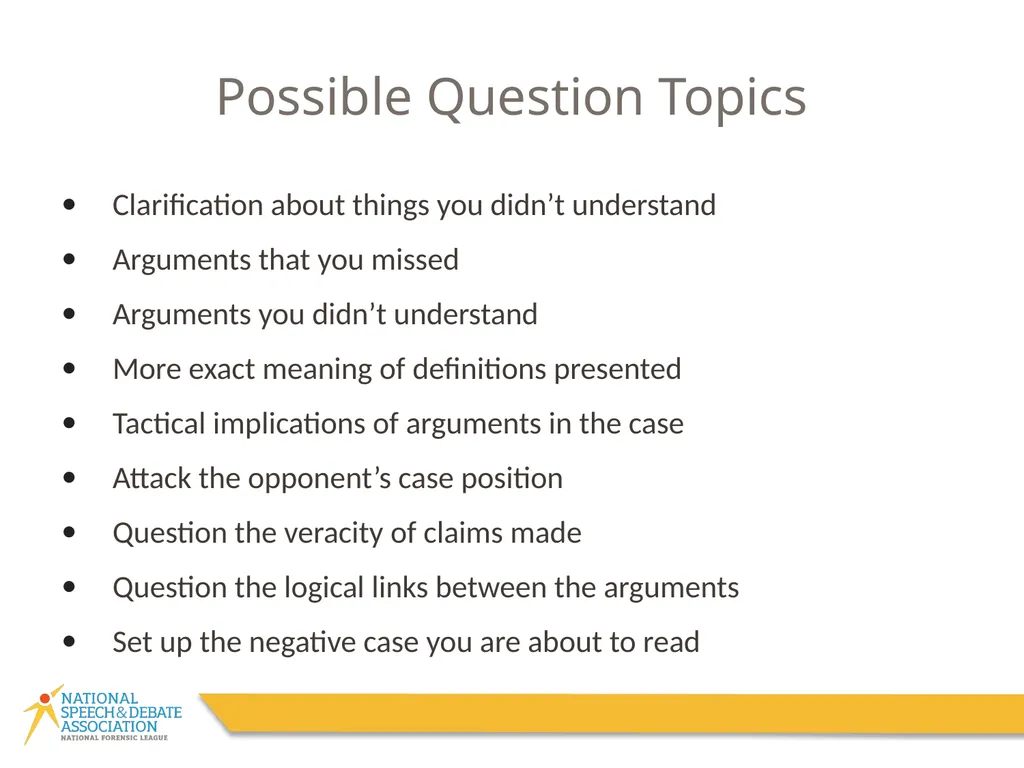
slide5. Possible Question Topics Clarification about things you didn’t understand
Arguments that you missed
Arguments you didn’t understand
More exact meaning of definitions presented
Tactical implications of arguments in the case
Attack the opponent’s case position
Question the veracity of claims made
Question the logical links between the arguments
Set up the negative case you are about to read<br>
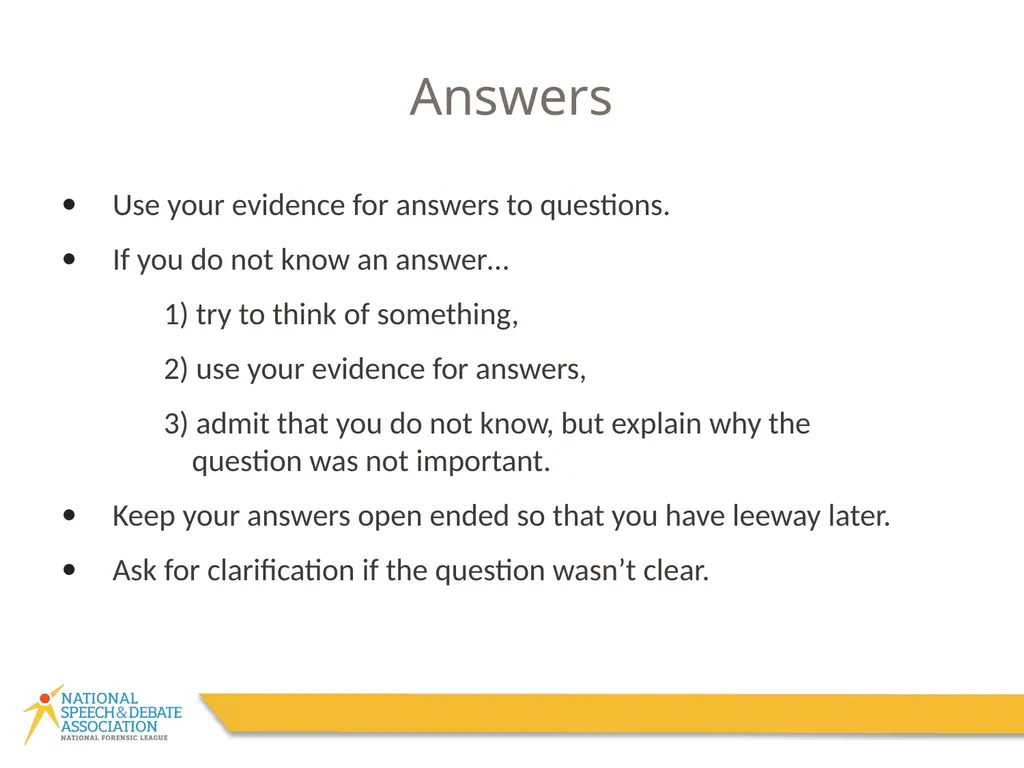
slide6. Answers Use your evidence for answers to questions.
If you do not know an answer…
1) try to think of something,
2) use your evidence for answers,
3) admit that you do not know, but explain why the question was not important.
Keep your answers open ended so that you have leeway later.
Ask for clarification if the question wasn’t clear.<br>
slide7. Delivery Politeness is key
Be friendly and calm- even if your opponent is rude.
Stand firmly, speak loudly, and look confident—polite but assertive
Face the judge, not your opponent.
Interruptions<br>
slide8. Tips Watch judges’ non-verbal signals
Watch the timer
Always remember: polite but assertive
Your audience is your JUDGE rather than your opponent<br>
slide2. Purpose Clarify
Investigate
Examine
Set-up
Highlight Flaws
Critical thinking/listening should be evident
Prep Time for your partner<br>
slide3. Cross Examination is NOT used for: Embarrassing your opponent
Convincing your opponent to concede the debate
Sharing your arguments (or even hinting at them)
Nit-picking minor issues
Giving Speeches<br>
slide4. Questions Keep CX moving—don’t spend too much time on one question
Open Ended vs. Close Ended
Follow-Up
Prepare questions ahead of time
Know where you want to go before you stand up (but do NOT use prep time before cross examination)
Take advantage of the tendency of people to want to say the opposite of whatever you are implying.<br>
slide5. Possible Question Topics Clarification about things you didn’t understand
Arguments that you missed
Arguments you didn’t understand
More exact meaning of definitions presented
Tactical implications of arguments in the case
Attack the opponent’s case position
Question the veracity of claims made
Question the logical links between the arguments
Set up the negative case you are about to read<br>
slide6. Answers Use your evidence for answers to questions.
If you do not know an answer…
1) try to think of something,
2) use your evidence for answers,
3) admit that you do not know, but explain why the question was not important.
Keep your answers open ended so that you have leeway later.
Ask for clarification if the question wasn’t clear.<br>
slide7. Delivery Politeness is key
Be friendly and calm- even if your opponent is rude.
Stand firmly, speak loudly, and look confident—polite but assertive
Face the judge, not your opponent.
Interruptions<br>
slide8. Tips Watch judges’ non-verbal signals
Watch the timer
Always remember: polite but assertive
Your audience is your JUDGE rather than your opponent<br>