Cultivation Theory Dr. Carroll, COM 415 Theories of Communication George Gerbner Hungarian media scholar (1919-2005). Emigrated to United States in 1939 Bachelors in journalism from UC Berkeley, PhD in communication from University of
"Cultivation Theory Dr. Carroll, COM 415 Theories" is the property of its rightful owner. Permission is granted to
download and print the materials on this website for personal, non-commercial use only, and to display it
on your personal computer provided you do not modify the materials and that you retain all copyright
notices contained in the materials. By downloading content from our website, you accept the terms of this
agreement.
Presentation Transcript
01
Cultivation Theory Dr. Carroll, COM 415 Theories of Communication<br>
02
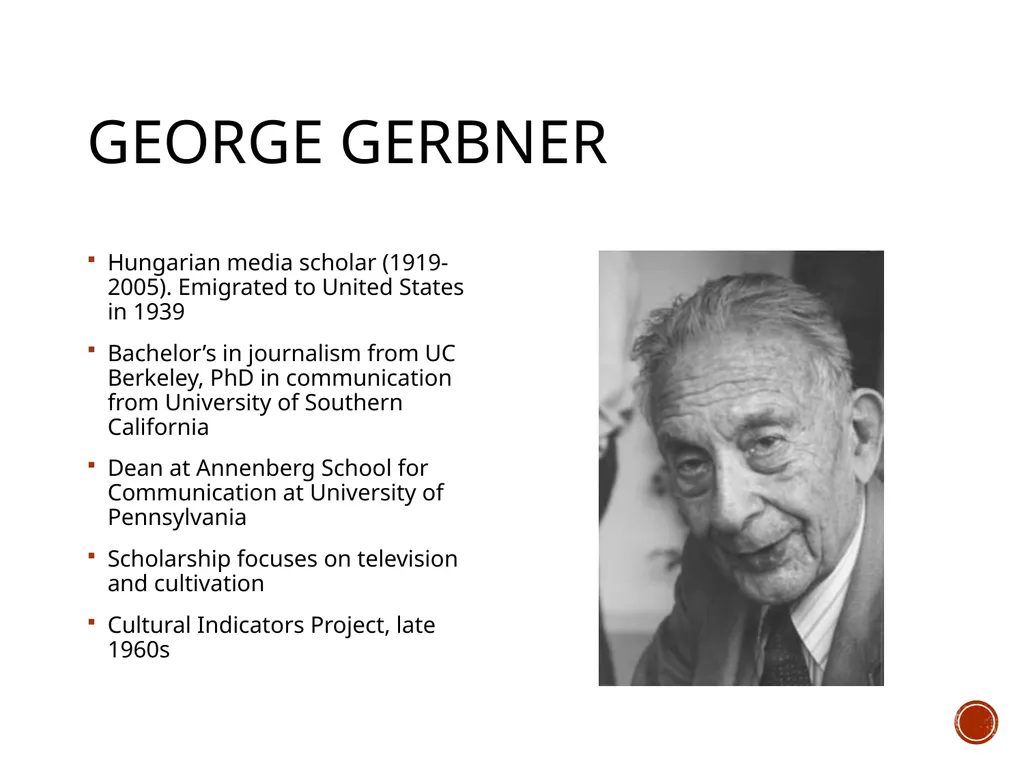
George Gerbner Hungarian media scholar (1919-2005). Emigrated to United States in 1939
Bachelor’s in journalism from UC Berkeley, PhD in communication from University of Southern California
Dean at Annenberg School for Communication at University of Pennsylvania
Scholarship focuses on television and cultivation
Cultural Indicators Project, late 1960s<br>
03
Cultivation Theory Good summary from Jason Haight:
https://www.youtube.com/watch?v=G37OqYfSSYk
Distilled: The more time people spend ‘living’ in the television world, the more likely they are to believe the reality portrayed on television
Focuses on how media impacts viewers’ beliefs rather than viewers’ behaviors
Also called Cultivation Analysis
Nexus of communication and sociology<br>
04
Cultivation Theory Cultivation focuses on systems of messages: pervasive, persistent cultural themes, images, lessons, and values that cut across many genres
Storytelling at the heart of cultivation theory: Think of a country you’ve never visited. What do you know about that country and its people? How do you know? Stories.
Stories we see on TV help shape the ways we perceive the world. This theory looks at the cumulative exposure to media and how that exposure sustains stable frameworks of perceiving the world over time.
TV is market-driven, advertiser-sponsored. This matters. Think about the Marvel business model.<br>
05
Prongs of Cultivation Analysis Institutional process analysis – looks behind the scenes of media organizations to see policies and practices
Message system analysis – content analysis of what TV content depicts (ex. different types of violence and how presented)
Cultivation analysis – looks at how TV’s content affects viewers<br>
06
How do the TV shows you watch impact your views of the world?<br>
07
Mainstreaming and Resonance More time watching TV = more likely to accept reality depicted on TV
Mainstreaming – the blurring, blending and bending of perspectives that those with heavy viewing habits undergo (“television answer” is mainstream)
Resonance – when viewers’ real life is like what they see on TV, they’re more likely to be affected by cultivation
What is most popular, by definition, tends to reflect and cultivate dominant cultural ideologies<br>
08
Mean World Syndrome Heavy exposure to violence on television results not in imitation or aggression, but in fear of others, mistrust, and insecurity
Three questions on p. 118
Sex-role stereotyping, children’s conceptions about nutrition
Meet George Gerbner, speaking on Mean World Syndrome:
https://www.youtube.com/watch?v=msfu8YCCc8Q<br>
09
The critique Definitions of terms such as ‘violent acts’
Sample sizes, reliability, validity
Viewing measures
. . . But cultivation lives on, continuing to evolve
For example, the CSI Effect (huge!): Crimes can be solved through scientific tools, quickly and convincingly<br>
10
Expanding cultivation theory Other content areas besides violence, including
Gender stereotypes and sex roles
LGBTQ stereotypes
Substance abuse
Body image
Aging
Minorities
Health, work, science, the family, the environment
Political orientations
Public perceptions of biotech
Psychosocial health
Acceptance of rape myths
Other types of media
Video games
Social media
VOD, streaming
Effects of binge watching, for example
Effects of a steady diet of very brief videos (TikTok)<br>