Data Analysis for Credit Card Fraud Detection

Published  . 0 views
↓ Download
Data Analysis for Credit Card Fraud Detection
1 / 1
Data Analysis for Credit Card Fraud Detection - slide 1 of 23 Data Analysis for Credit Card Fraud Detection - slide 2 of 23 Data Analysis for Credit Card Fraud Detection - slide 3 of 23 Data Analysis for Credit Card Fraud Detection - slide 4 of 23 Data Analysis for Credit Card Fraud Detection - slide 5 of 23 Data Analysis for Credit Card Fraud Detection - slide 6 of 23 Data Analysis for Credit Card Fraud Detection - slide 7 of 23 Data Analysis for Credit Card Fraud Detection - slide 8 of 23 Data Analysis for Credit Card Fraud Detection - slide 9 of 23 Data Analysis for Credit Card Fraud Detection - slide 10 of 23 Data Analysis for Credit Card Fraud Detection - slide 11 of 23 Data Analysis for Credit Card Fraud Detection - slide 12 of 23 Data Analysis for Credit Card Fraud Detection - slide 13 of 23 Data Analysis for Credit Card Fraud Detection - slide 14 of 23 Data Analysis for Credit Card Fraud Detection - slide 15 of 23 Data Analysis for Credit Card Fraud Detection - slide 16 of 23 Data Analysis for Credit Card Fraud Detection - slide 17 of 23 Data Analysis for Credit Card Fraud Detection - slide 18 of 23 Data Analysis for Credit Card Fraud Detection - slide 19 of 23 Data Analysis for Credit Card Fraud Detection - slide 20 of 23 Data Analysis for Credit Card Fraud Detection - slide 21 of 23 Data Analysis for Credit Card Fraud Detection - slide 22 of 23 Data Analysis for Credit Card Fraud Detection - slide 23 of 23
Description: Data Analysis for Credit Card Fraud Detection Alejandro Correa Bahnsen Luxembourg University Introduction Introduction Simplify transaction flow Fraud?? Network Introduction Database Evaluation of algorithms Logistic Regression Financial

Related Topics

Download Presentation

"Data Analysis for Credit Card Fraud Detection" is the property of its rightful owner. Permission is granted to download and print the materials on this website for personal, non-commercial use only, and to display it on your personal computer provided you do not modify the materials and that you retain all copyright notices contained in the materials. By downloading content from our website, you accept the terms of this agreement.

Presentation Transcript

slide1. Data Analysis for Credit Card Fraud Detection Alejandro Correa Bahnsen Luxembourg University<br>

slide2. Introduction<br>
slide3. Introduction<br>
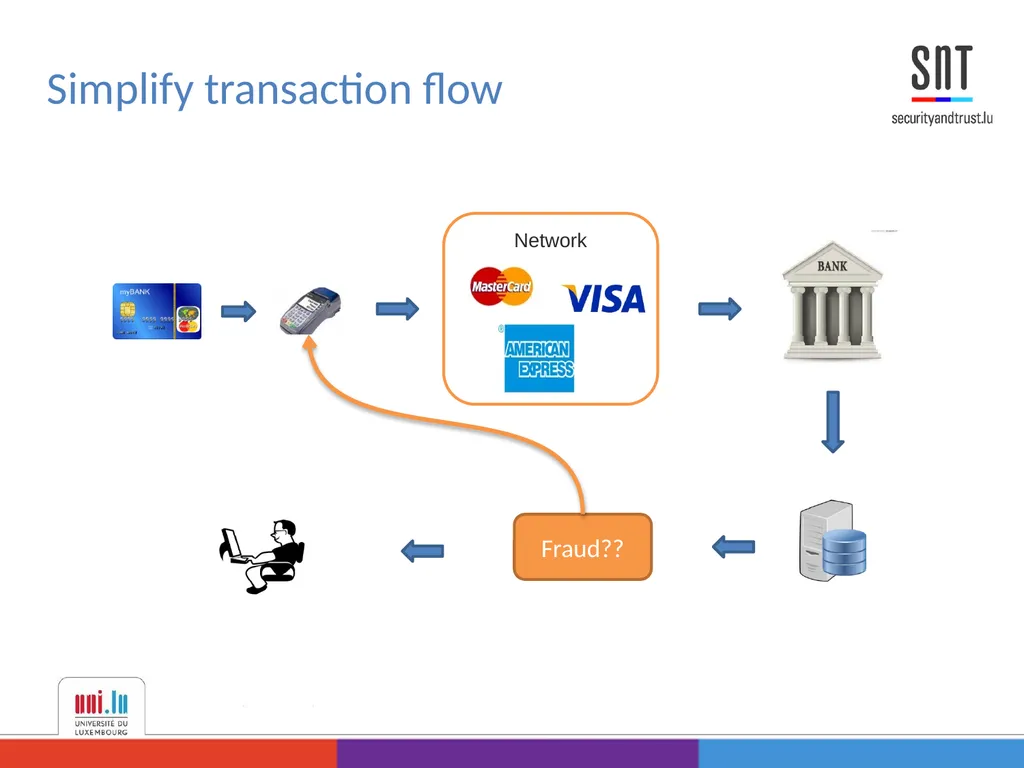
slide4. Simplify transaction flow Fraud?? Network<br>
slide5. Introduction
Database
Evaluation of algorithms
Logistic Regression
Financial measure
Cost Sensitive Logistic Regression Agenda<br>
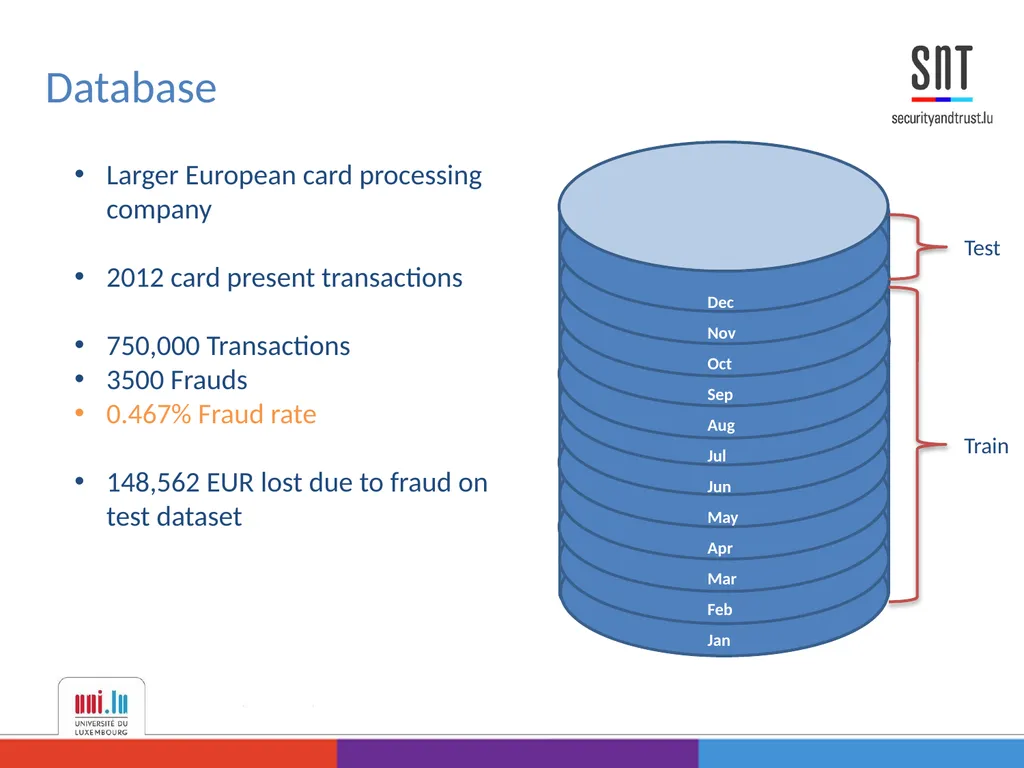
slide6. Database Larger European card processing company

2012 card present transactions

750,000 Transactions
3500 Frauds
0.467% Fraud rate

148,562 EUR lost due to fraud on test dataset Dec
Nov
Oct
Sep
Aug
Jul
Jun
May
Apr
Mar
Feb
Jan Test Train<br>
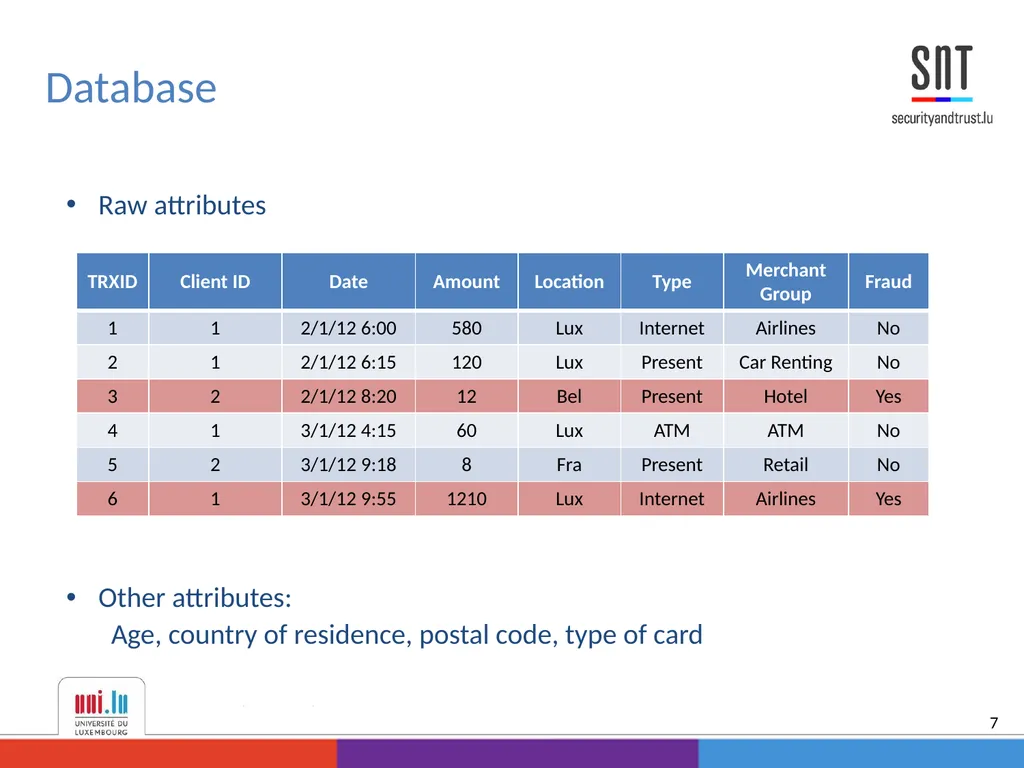
slide7. Raw attributes

Other attributes:
Age, country of residence, postal code, type of card Database 7<br>
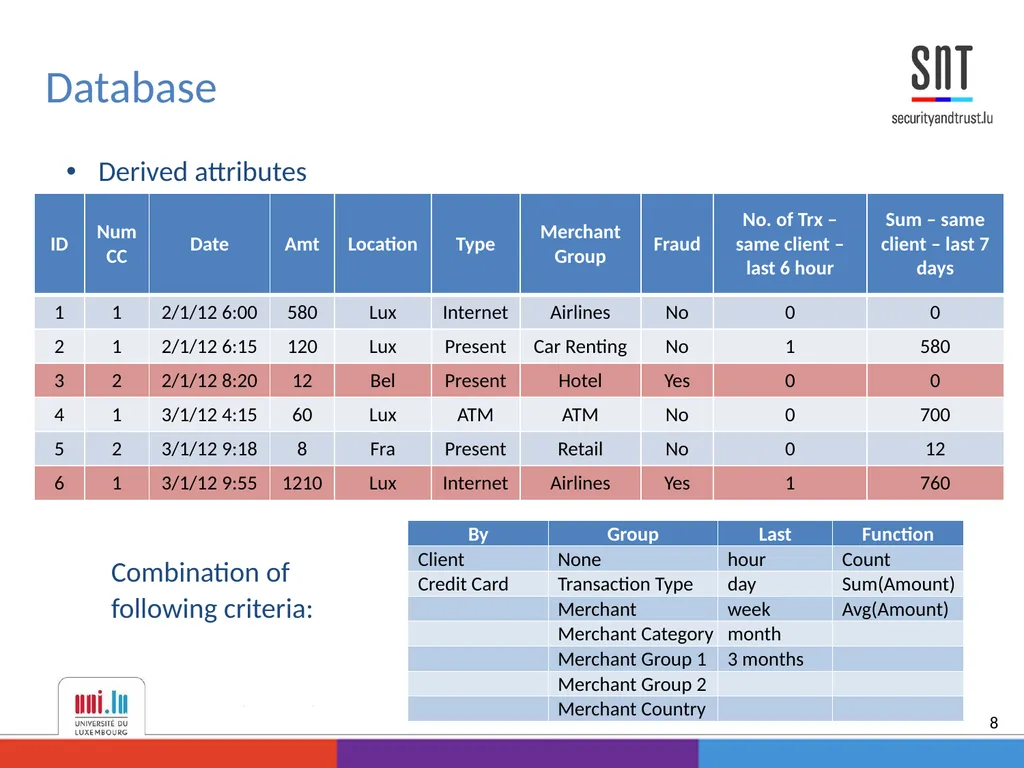
slide8. Derived attributes


Combination of
following criteria: Database 8<br>
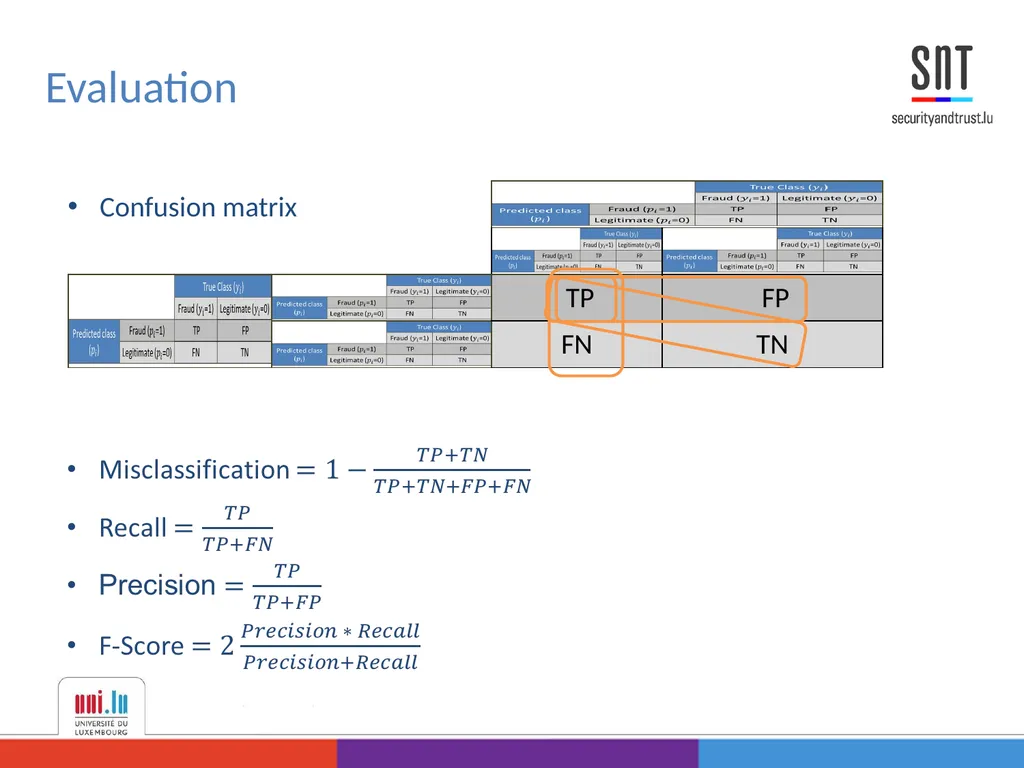
slide9. Evaluation Confusion matrix<br>
slide10. Introduction
Database
Evaluation of algorithms
Logistic Regression
Financial measure
Cost Sensitive Logistic Regression Agenda<br>
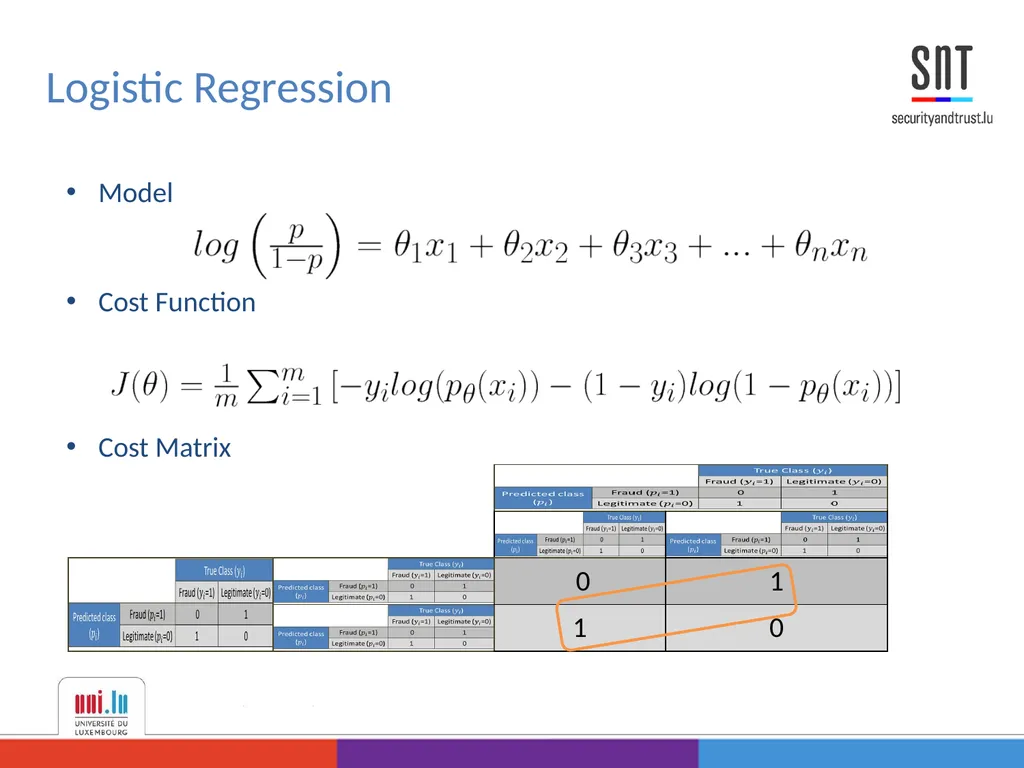
slide11. Model

Cost Function

Cost Matrix Logistic Regression<br>
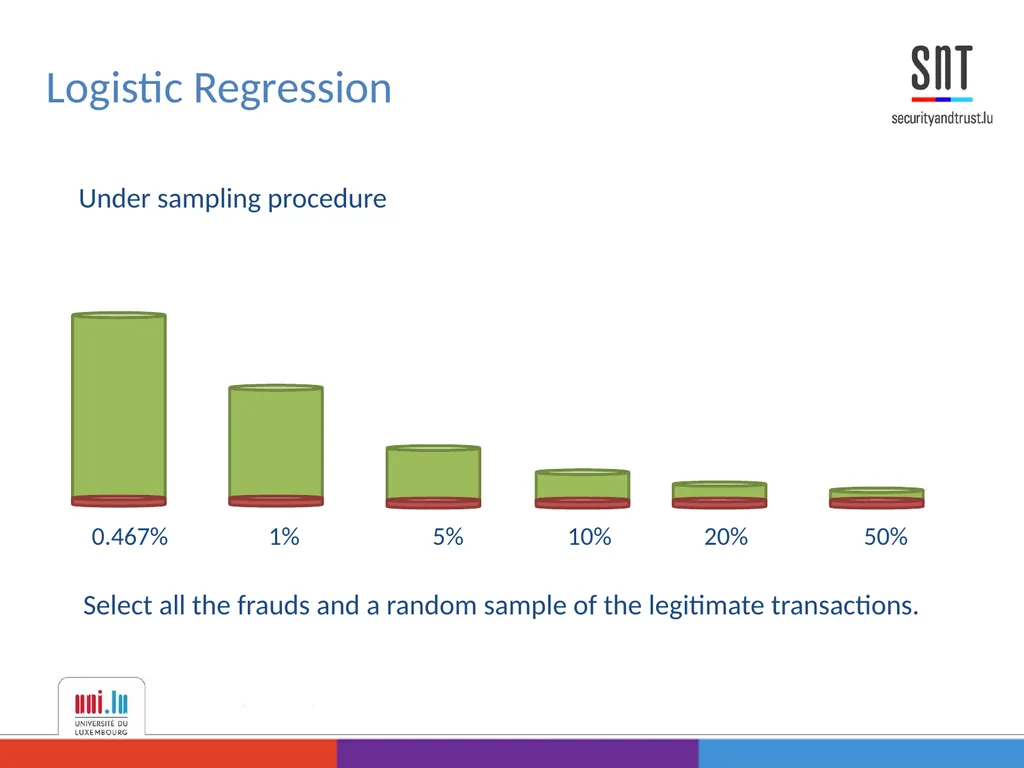
slide12. 1% 5% 10% 20% 50% Logistic Regression Under sampling procedure 0.467% Select all the frauds and a random sample of the legitimate transactions.<br>
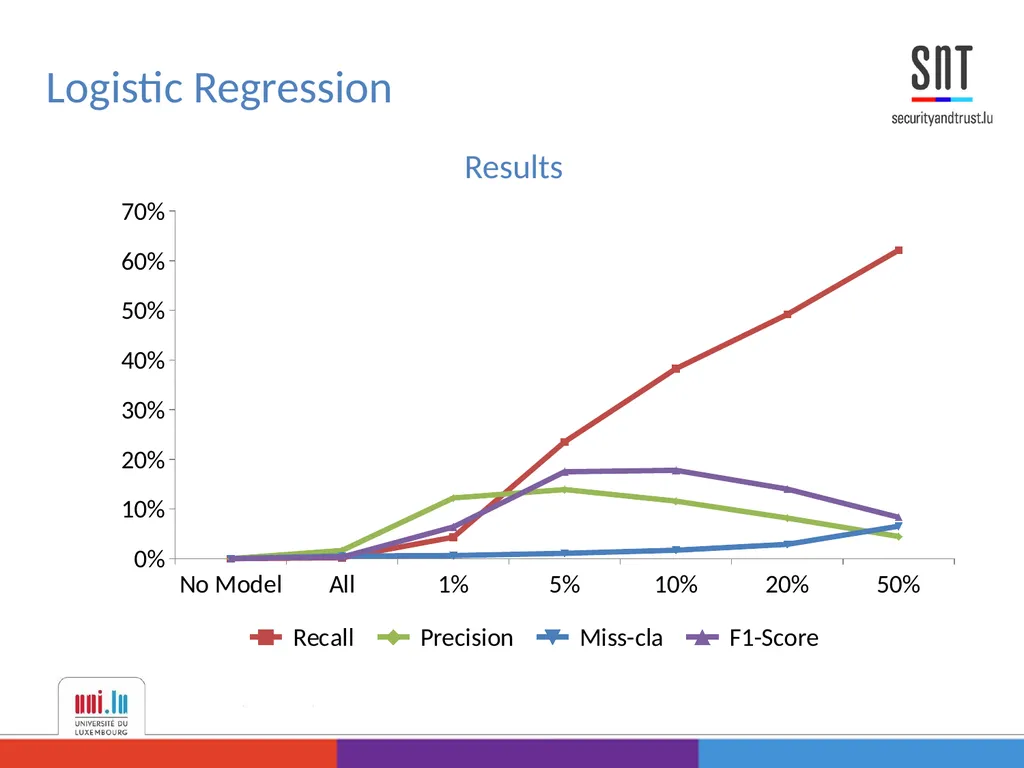
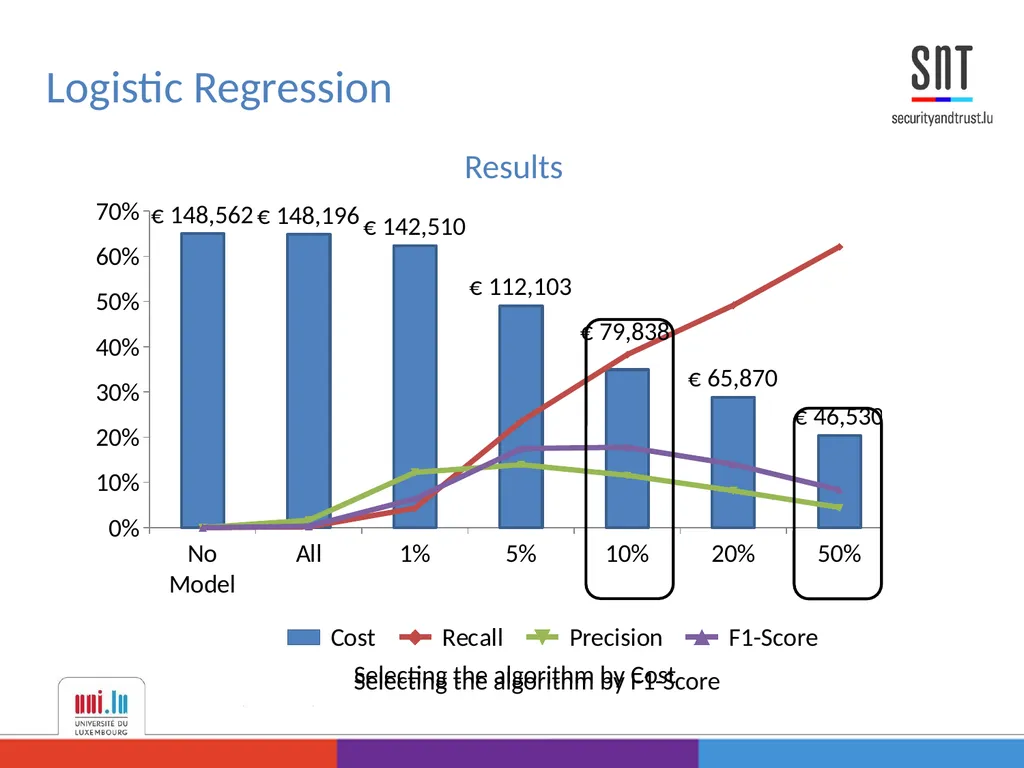
slide13. Logistic Regression Results<br>
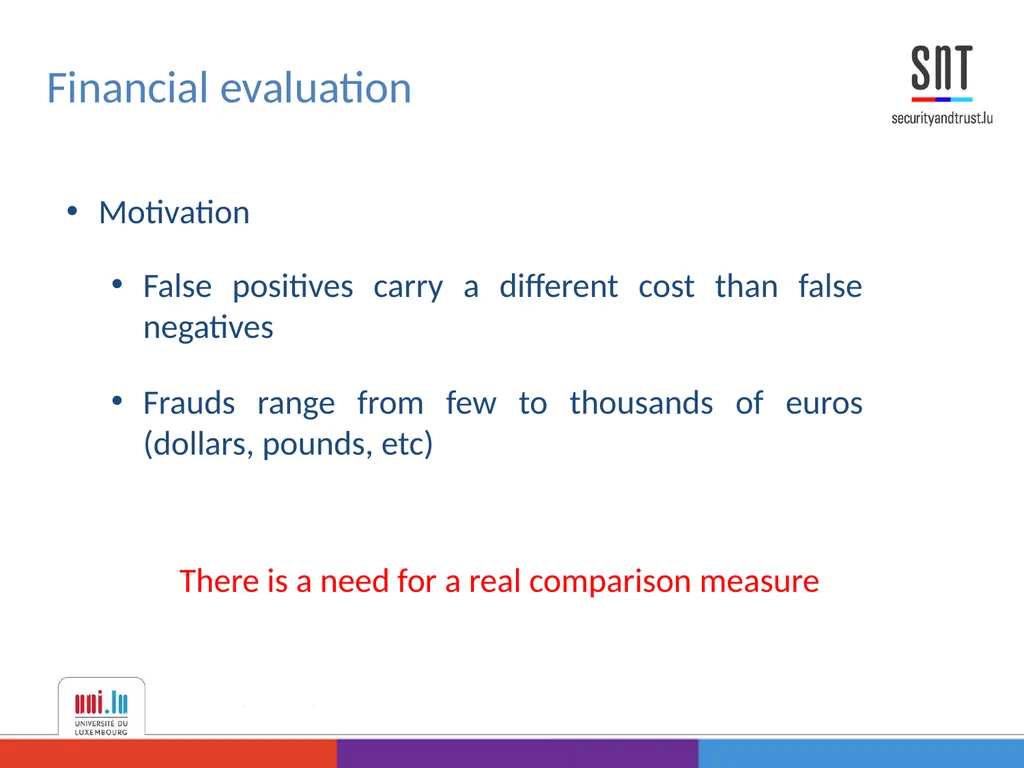
slide14. Motivation

False positives carry a different cost than false negatives

Frauds range from few to thousands of euros (dollars, pounds, etc) Financial evaluation There is a need for a real comparison measure<br>
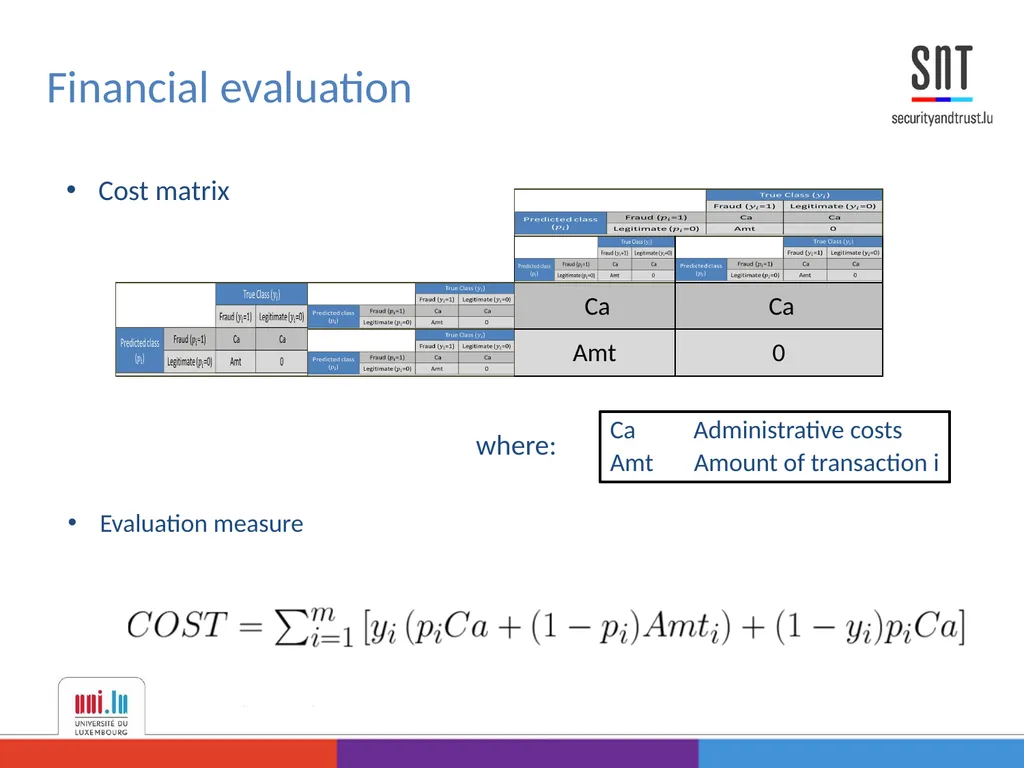
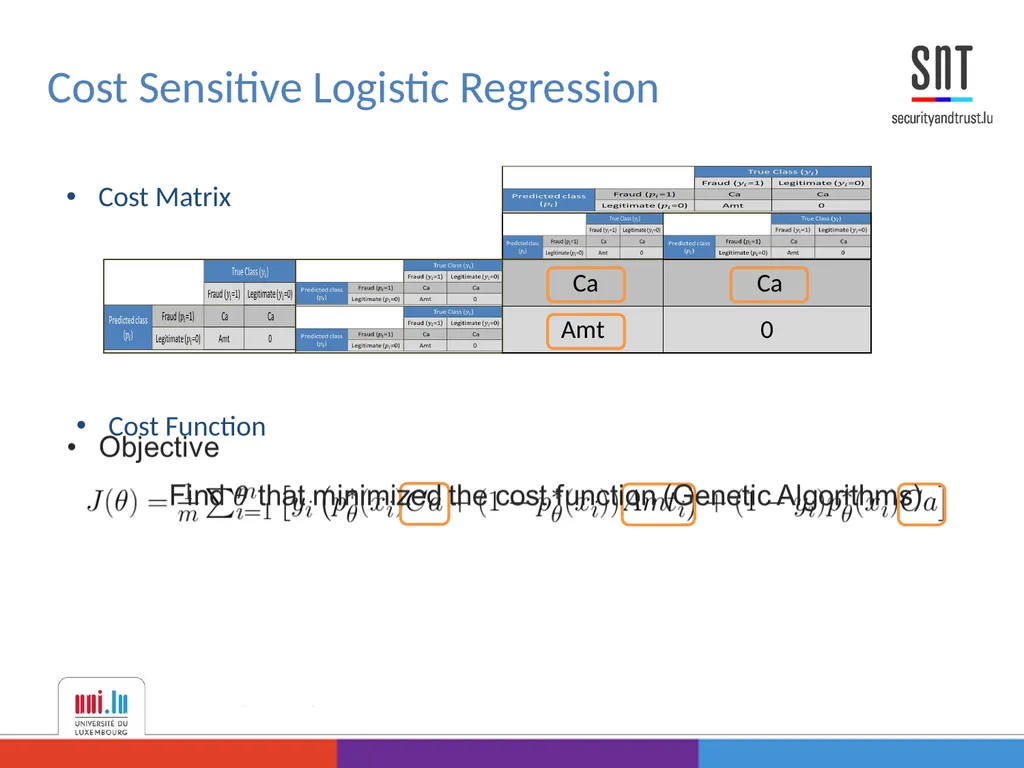
slide15. Cost matrix


where: Financial evaluation Ca Administrative costs
Amt Amount of transaction i Evaluation measure<br>
slide16. Logistic Regression Results Selecting the algorithm by F1-Score Selecting the algorithm by Cost<br>
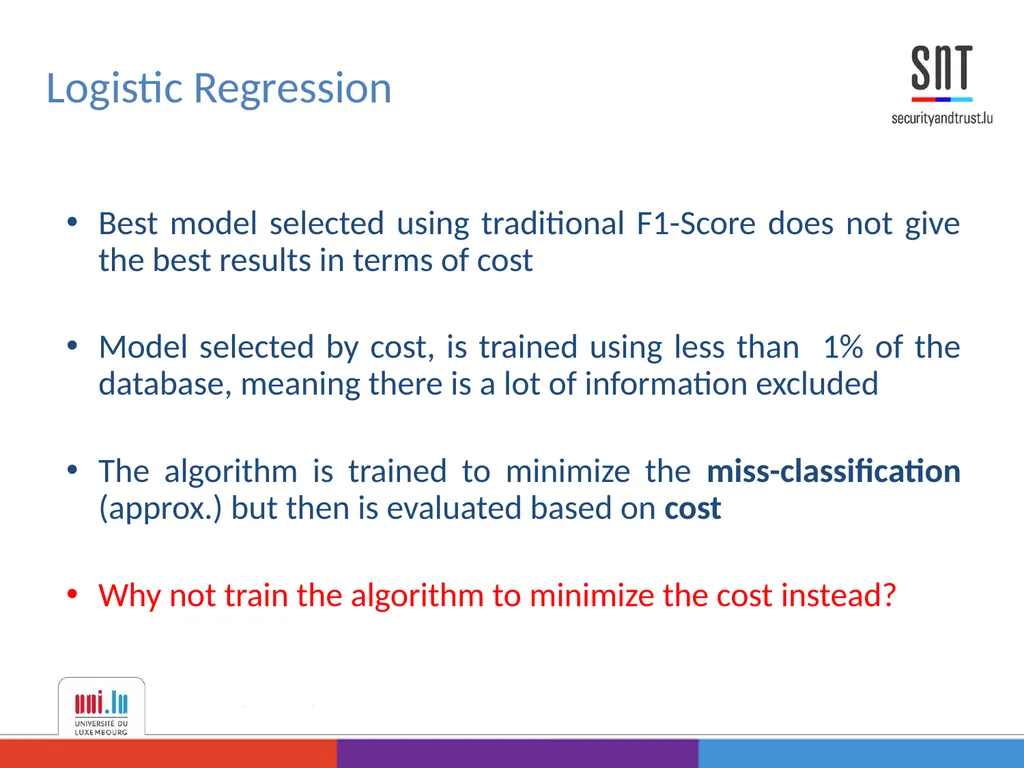
slide17. Logistic Regression Best model selected using traditional F1-Score does not give the best results in terms of cost

Model selected by cost, is trained using less than 1% of the database, meaning there is a lot of information excluded

The algorithm is trained to minimize the miss-classification (approx.) but then is evaluated based on cost

Why not train the algorithm to minimize the cost instead?<br>
slide18. Cost Matrix Cost Sensitive Logistic Regression Cost Function<br>
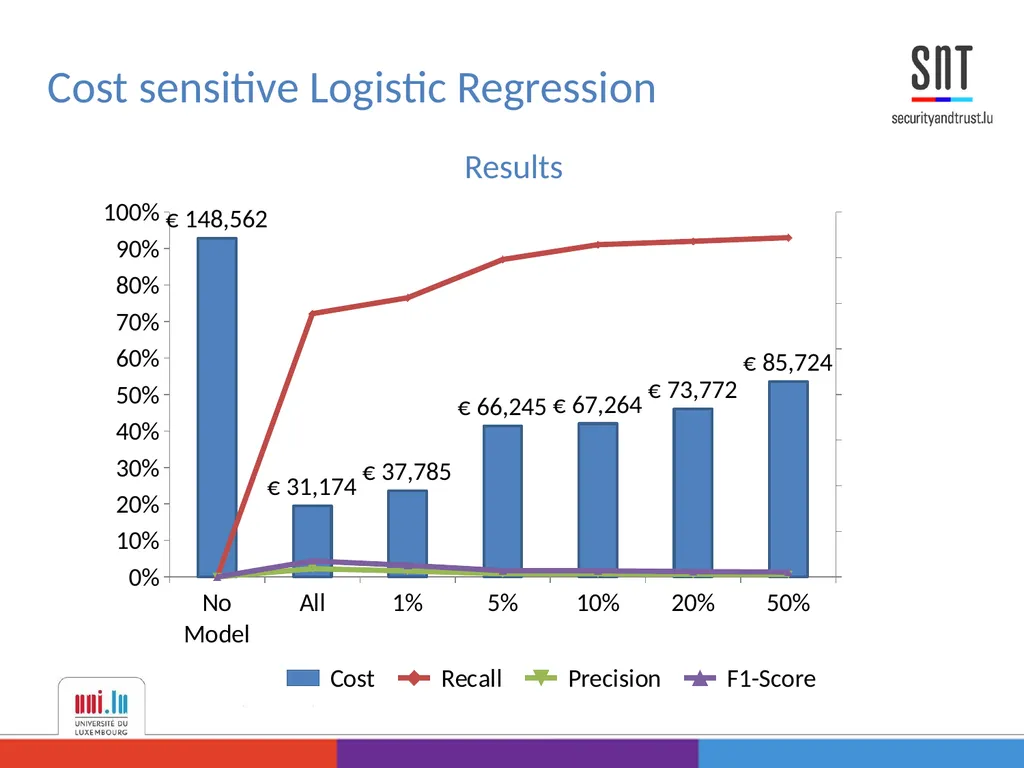
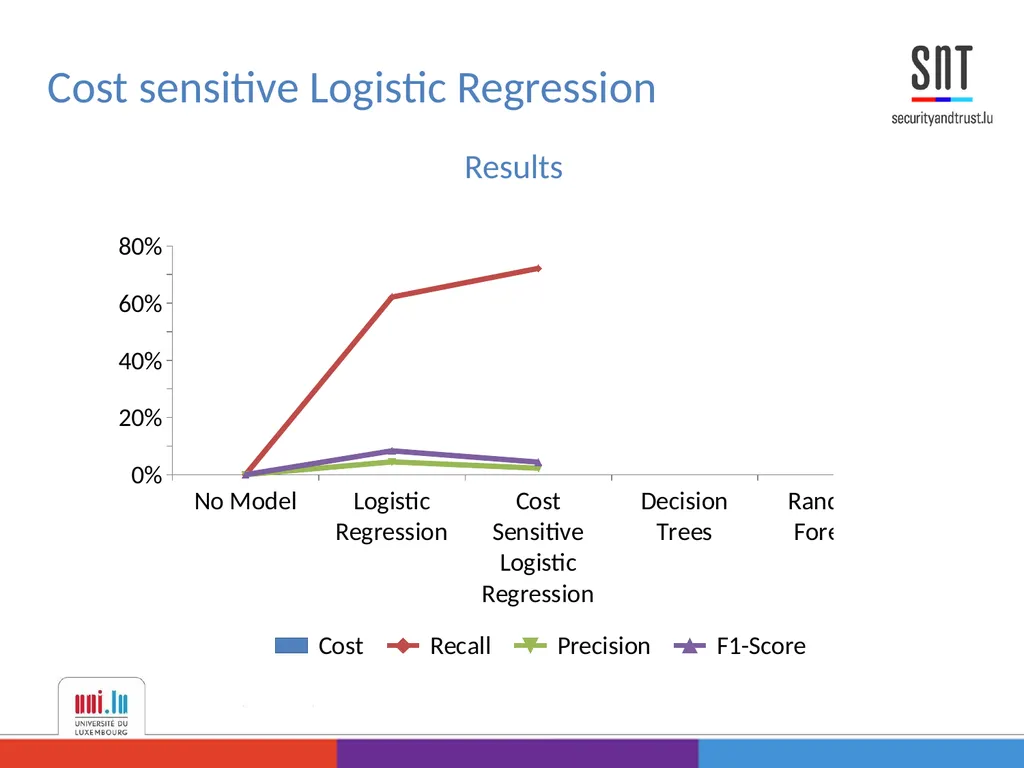
slide19. Cost sensitive Logistic Regression Results<br>
slide20. Cost sensitive Logistic Regression Results<br>
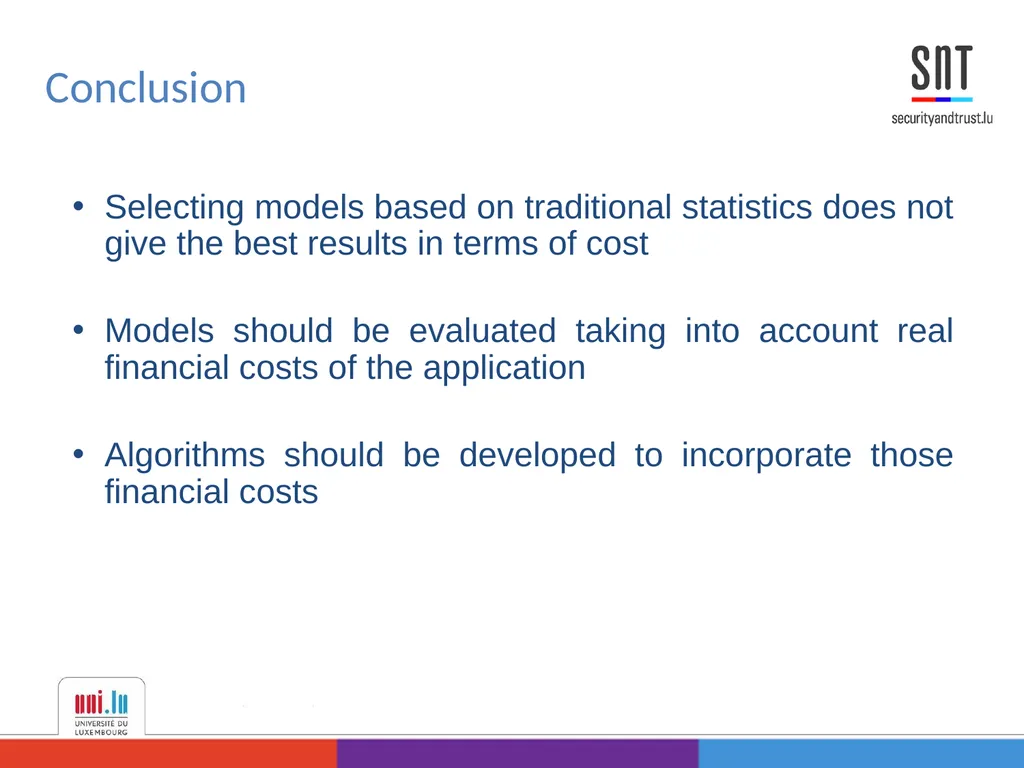
slide21. Conclusion Selecting models based on traditional statistics does not give the best results in terms of cost

Models should be evaluated taking into account real financial costs of the application

Algorithms should be developed to incorporate those financial costs<br>
slide22. Thank you!<br>
slide23. Contact information Alejandro Correa Bahnsen
University of Luxembourg
Luxembourg

al.bahnsen@gmail.com

http://www.linkedin.com/in/albahnsen

http://www.slideshare.net/albahnsen<br>