01
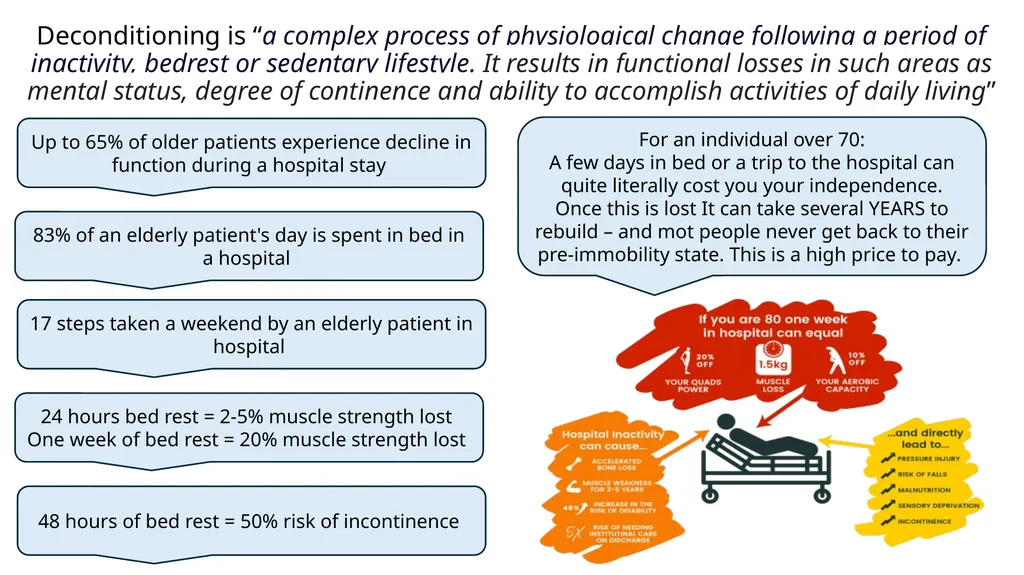
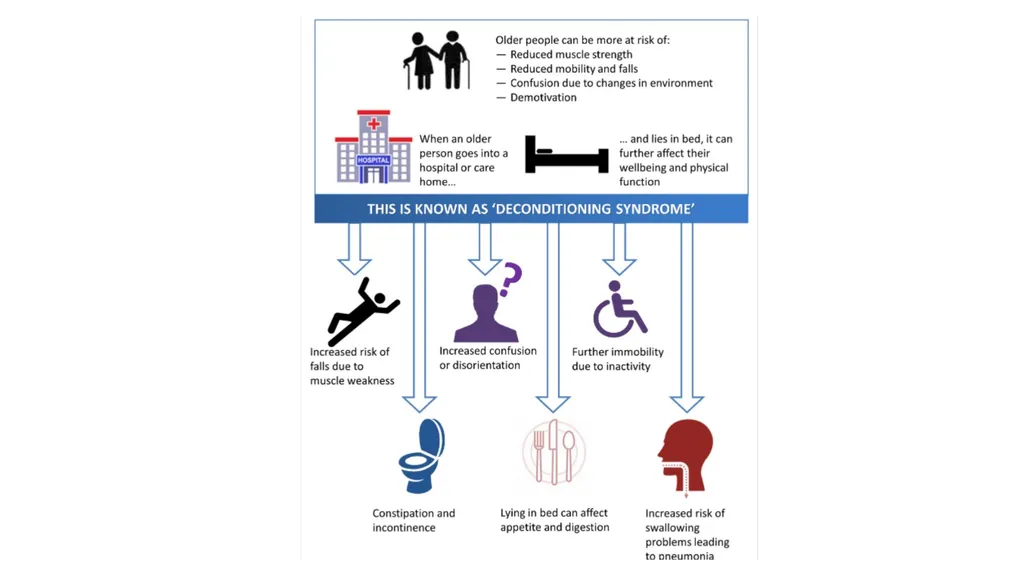
Deconditioning is “a complex process of physiological change following a period of inactivity, bedrest or sedentary lifestyle. It results in functional losses in such areas as mental status, degree of continence and ability to accomplish activities of daily living” Up to 65% of older patients experience decline in function during a hospital stay 48 hours of bed rest = 50% risk of incontinence 24 hours bed rest = 2-5% muscle strength lost
One week of bed rest = 20% muscle strength lost 17 steps taken a weekend by an elderly patient in hospital 83% of an elderly patient's day is spent in bed in a hospital For an individual over 70:
A few days in bed or a trip to the hospital can quite literally cost you your independence.
Once this is lost It can take several YEARS to rebuild – and mot people never get back to their pre-immobility state. This is a high price to pay.<br>
02
Kingston/HRCH/Your Healthcare joint priority Initially set to work until March 2025
To prevent people who live in Kingston, Richmond & Hounslow from the unintentional harm of deconditioning in hospital and in the community.
To enable people who live in Kingston, Richmond & Hounslow to engage in meaningful activities, optimising quality of life.
4 workstreams focusing on specific areas relating to deconditioning.
Our workstream set the aim of improving staff knowledge and awareness (aspect of access) of available NHS and voluntary services to reduce the impact of deconditioning across Kingston and Richmond by March 2025
Work to date;
Staff survey to establish baseline understanding of NHS and voluntary services including barriers to referral;
57.7% of staff surveyed felt they did not have good awareness of voluntary sector organisations which can prevent deconditioning
52.3% of staff surveyed felt they found it difficult to refer to voluntary sector organisations.
Created and distributed patient survey, to inform access standards
Targets beyond March 25 may include:
To improve patient/public knowledge and awareness of available NHS and voluntary services to reduce the impact of deconditioning across Kingston and Richmond beyond March 2025 (TBC)
To improve access to voluntary services supporting physical activity<br>
03
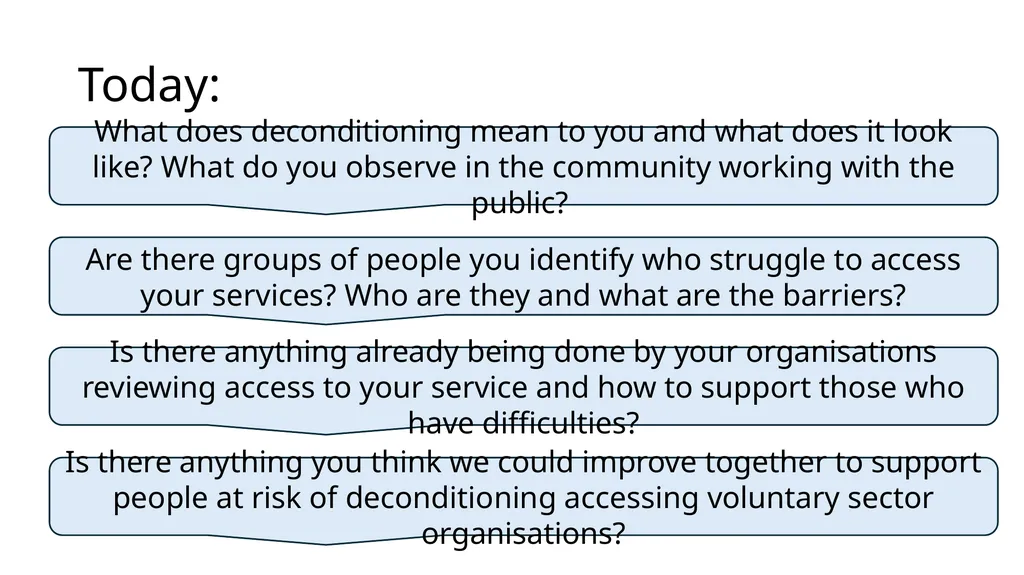
Today: What does deconditioning mean to you and what does it look like? What do you observe in the community working with the public? Is there anything already being done by your organisations reviewing access to your service and how to support those who have difficulties? Are there groups of people you identify who struggle to access your services? Who are they and what are the barriers? Is there anything you think we could improve together to support people at risk of deconditioning accessing voluntary sector organisations?<br>