Deep Code Search Xiaodong Gu Hong Kong University
Description: Deep Code Search Xiaodong Gu Hong Kong University of Science and Technology 1 Hongyu Zhang The University of Newcastle Sunghun Kim Hong Kong University of Science and Technology Programming is hard Lack of experience Unfamiliar libraries 2
Related Topics
Download Presentation
"Deep Code Search Xiaodong Gu Hong Kong University" is the property of its rightful owner. Permission is granted to download and print the materials on this website for personal, non-commercial use only, and to display it on your personal computer provided you do not modify the materials and that you retain all copyright notices contained in the materials. By downloading content from our website, you accept the terms of this agreement.
Presentation Transcript
slide1. Deep Code Search Xiaodong Gu
Hong Kong University of Science and Technology 1 Hongyu Zhang
The University of Newcastle Sunghun Kim
Hong Kong University of Science and Technology<br>
slide2. Programming is hard Lack of experience
Unfamiliar libraries 2<br>
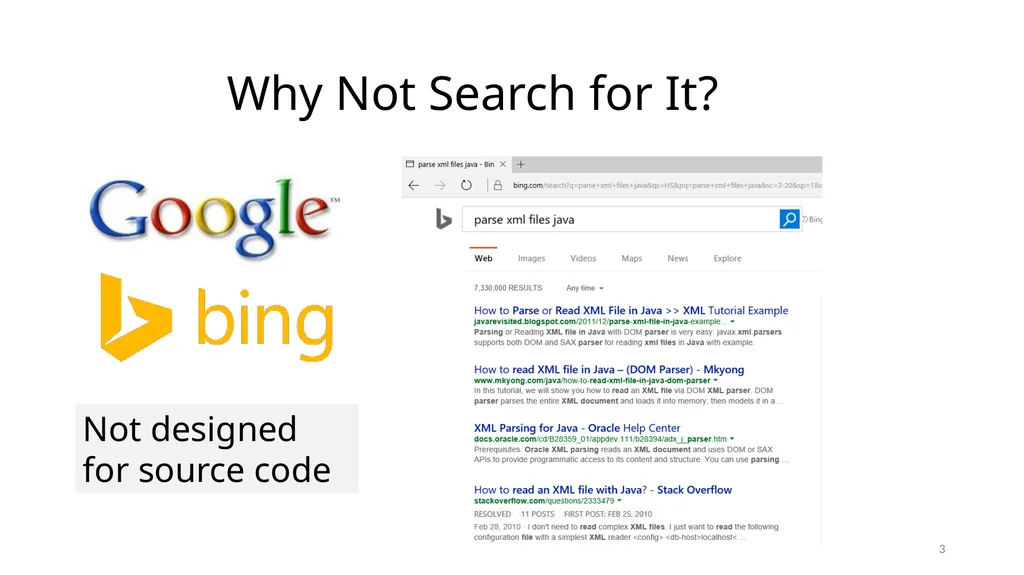
slide3. Why Not Search for It? 3 Not designed for source code<br>
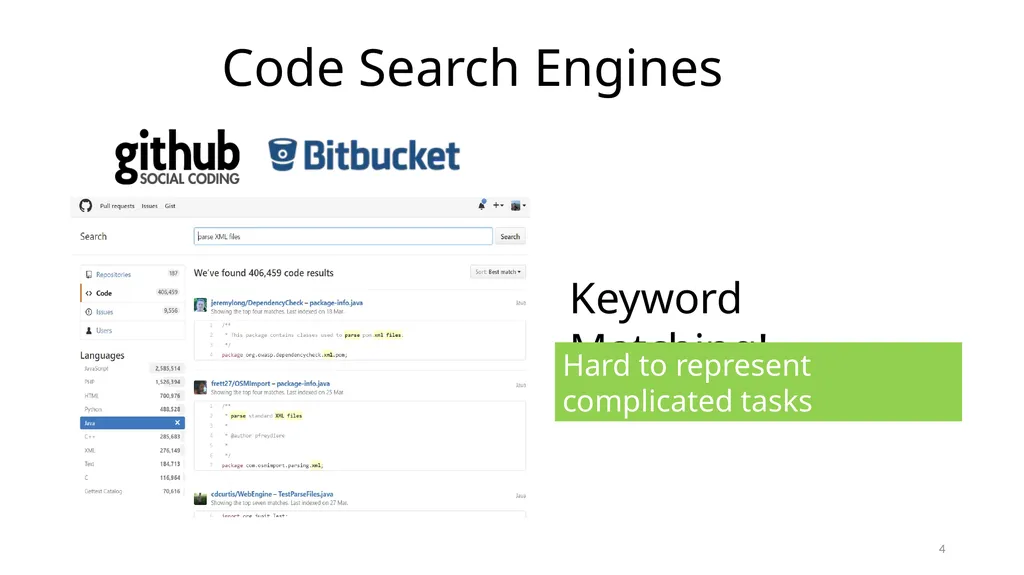
slide4. Code Search Engines Keyword Matching! Hard to represent complicated tasks 4<br>
slide5. Information Retrieval – Related Work Consider source code as plain text and apply IR techniques (e.g., Lucene)
Augment IR approaches by considering properties of source code and NL queries
Typical Techniques
Sourcerer [Linstead DMKD’09]: augments Lucene by considering method names and code popularity
Portforlio [McMillan, ICSE’11]: considers relationships between functions
[Lu et al. SANER’15]: query expansion with WordNet
CodeHow [Lv et al. ASE’15]: API matching 5<br>
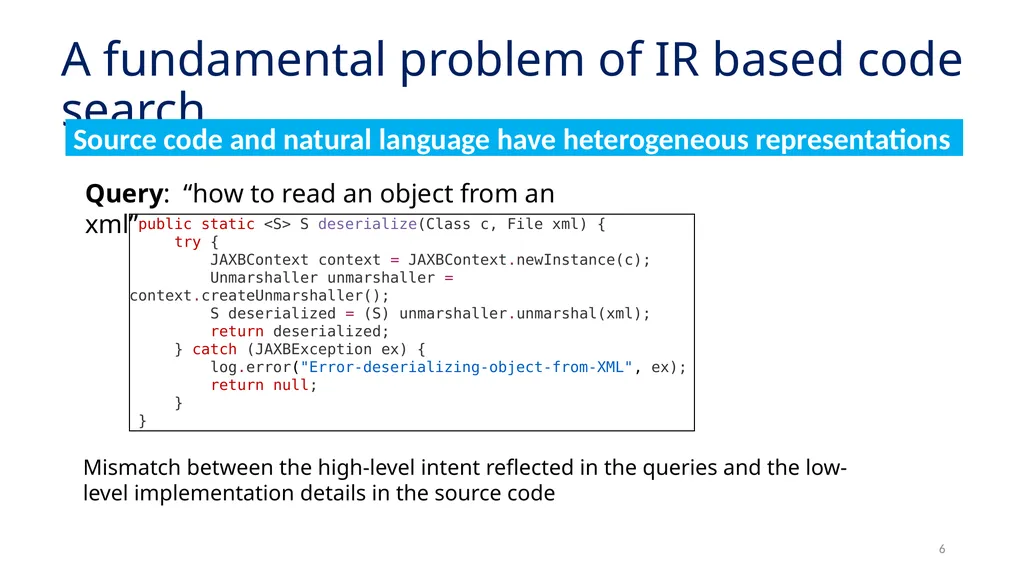
slide6. A fundamental problem of IR based code search Query: “how to read an object from an xml” Mismatch between the high-level intent reflected in the queries and the low-level implementation details in the source code Source code and natural language have heterogeneous representations 6 public static <S> S deserialize(Class c, File xml) {
try {
JAXBContext context = JAXBContext.newInstance(c);
Unmarshaller unmarshaller = context.createUnmarshaller();
S deserialized = (S) unmarshaller.unmarshal(xml);
return deserialized;
} catch (JAXBException ex) {
log.error("Error-deserializing-object-from-XML", ex);
return null;
}
}<br>
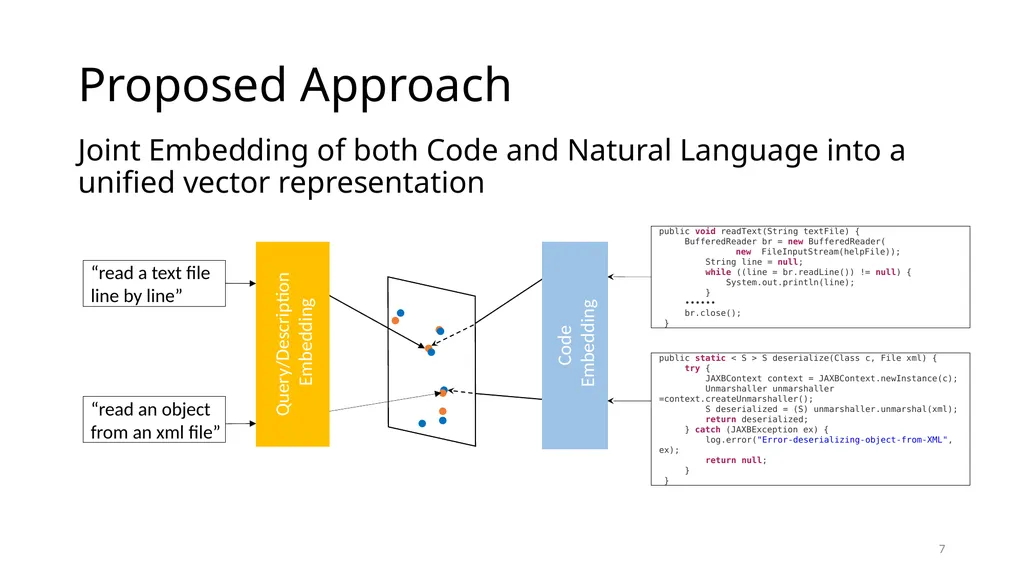
slide7. Proposed Approach Joint Embedding of both Code and Natural Language into a unified vector representation “read a text file line by line” “read an object from an xml file” Query/Description
Embedding Code
Embedding public void readText(String textFile) {
BufferedReader br = new BufferedReader(
new FileInputStream(helpFile));
String line = null;
while ((line = br.readLine()) != null) {
System.out.println(line);
}
••••••
br.close();
} public static < S > S deserialize(Class c, File xml) {
try {
JAXBContext context = JAXBContext.newInstance(c);
Unmarshaller unmarshaller =context.createUnmarshaller();
S deserialized = (S) unmarshaller.unmarshal(xml);
return deserialized;
} catch (JAXBException ex) {
log.error("Error-deserializing-object-from-XML", ex);
return null;
}
} 7<br>
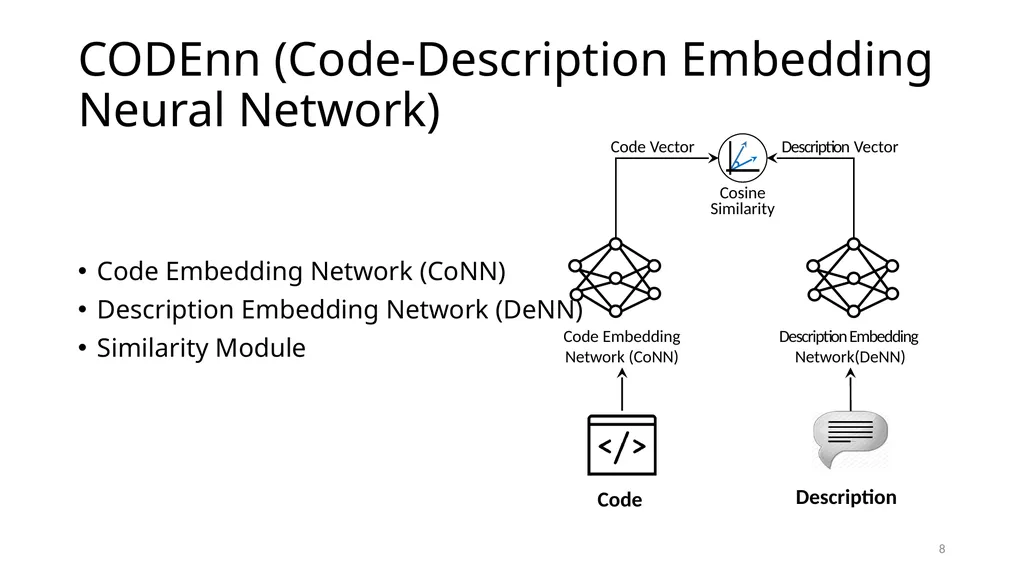
slide8. CODEnn (Code-Description Embedding Neural Network) Code Embedding Network (CoNN)
Description Embedding Network (DeNN)
Similarity Module 8 Code Embedding Network (CoNN) Description Embedding
Network(DeNN) Code Description Code Vector Description Vector Cosine Similarity<br>
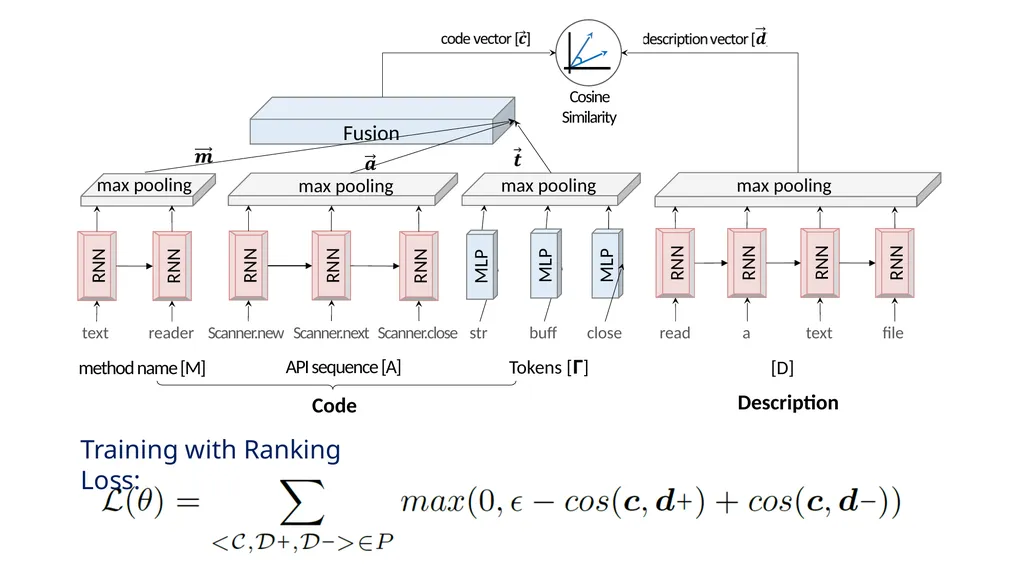
slide9. Code Description max pooling read a text file max pooling MLP text reader max pooling Scanner.new Scanner.next Scanner.close max pooling str buff close MLP Fusion MLP method name [M] API sequence [A] Tokens [Γ] [D] Cosine Similarity Training with Ranking Loss:<br>
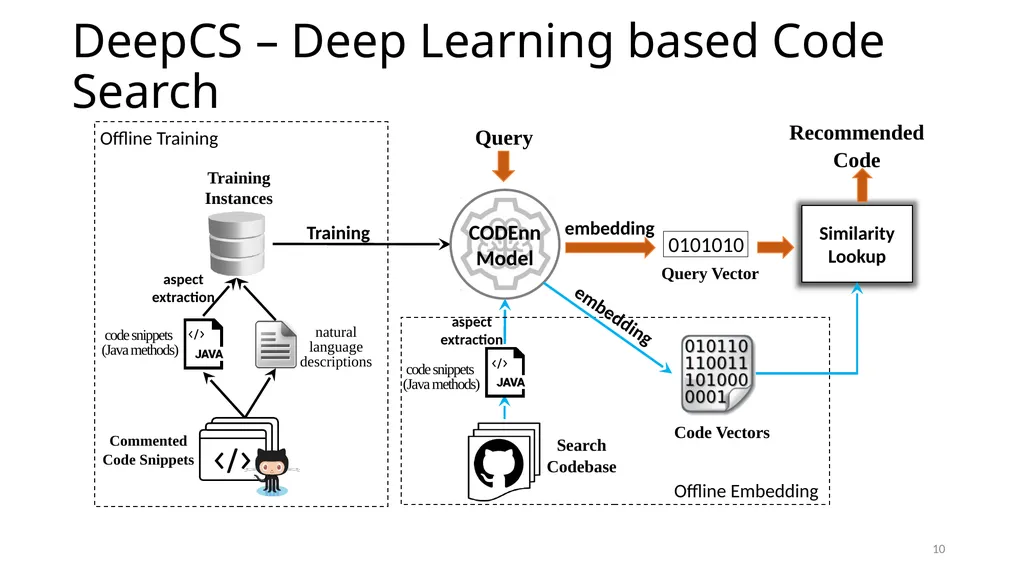
slide10. DeepCS – Deep Learning based Code Search 10 Code Vectors Recommended Code embedding Search Codebase Similarity Lookup Query Query Vector embedding 0101010 Commented Code Snippets Training
Instances Training Offline Training code snippets
(Java methods) Offline Embedding aspect extraction aspect extraction CODEnn Model natural language descriptions code snippets
(Java methods)<br>
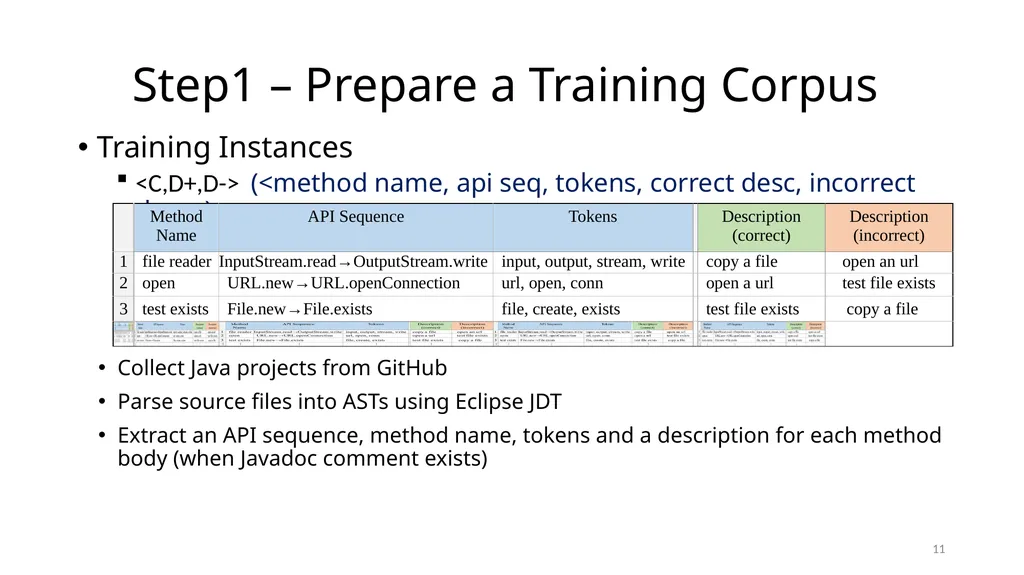
slide11. Step1 – Prepare a Training Corpus Training Instances
<C,D+,D-> (<method name, api seq, tokens, correct desc, incorrect desc>) 11 Collect Java projects from GitHub
Parse source files into ASTs using Eclipse JDT
Extract an API sequence, method name, tokens and a description for each method body (when Javadoc comment exists)<br>
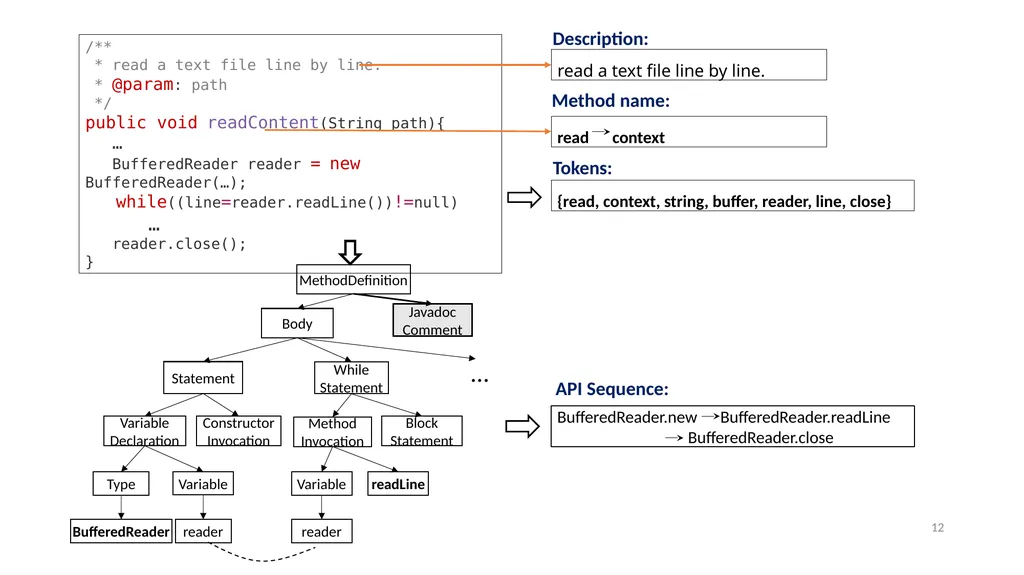
slide12. /**
* read a text file line by line.
* @param: path
*/
public void readContent(String path){
…
BufferedReader reader = new BufferedReader(…);
while((line=reader.readLine())!=null)
…
reader.close();
} Body Statement While Statement Variable Declaration Constructor Invocation Method Invocation Block Statement Type Variable BufferedReader reader readLine Variable reader BufferedReader.new BufferedReader.readLine
BufferedReader.close … 12 MethodDefinition Javadoc Comment read a text file line by line. read context {read, context, string, buffer, reader, line, close} API Sequence: Tokens: Method name: Description:<br>
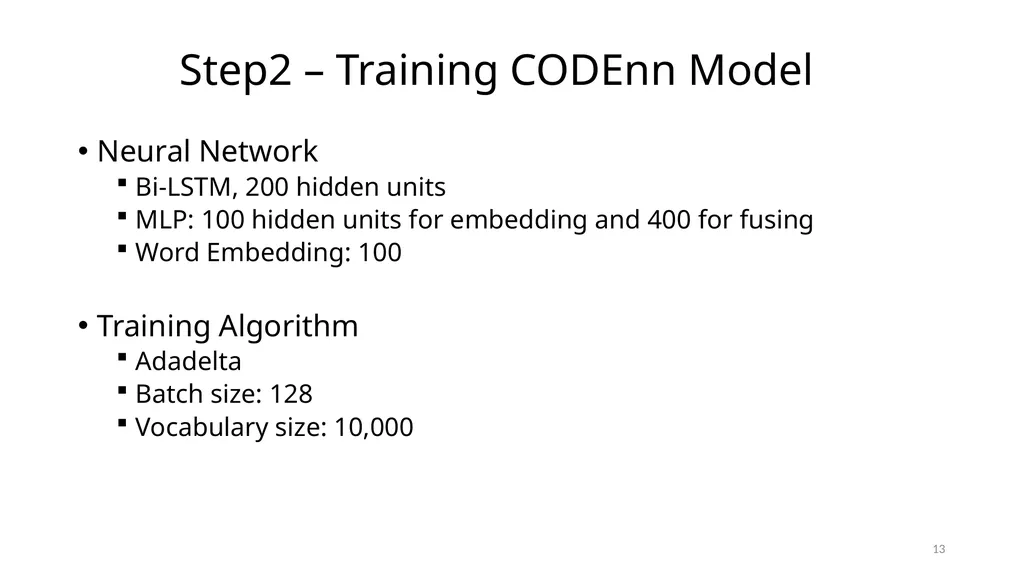
slide13. Step2 – Training CODEnn Model Neural Network
Bi-LSTM, 200 hidden units
MLP: 100 hidden units for embedding and 400 for fusing
Word Embedding: 100
Training Algorithm
Adadelta
Batch size: 128
Vocabulary size: 10,000 13<br>
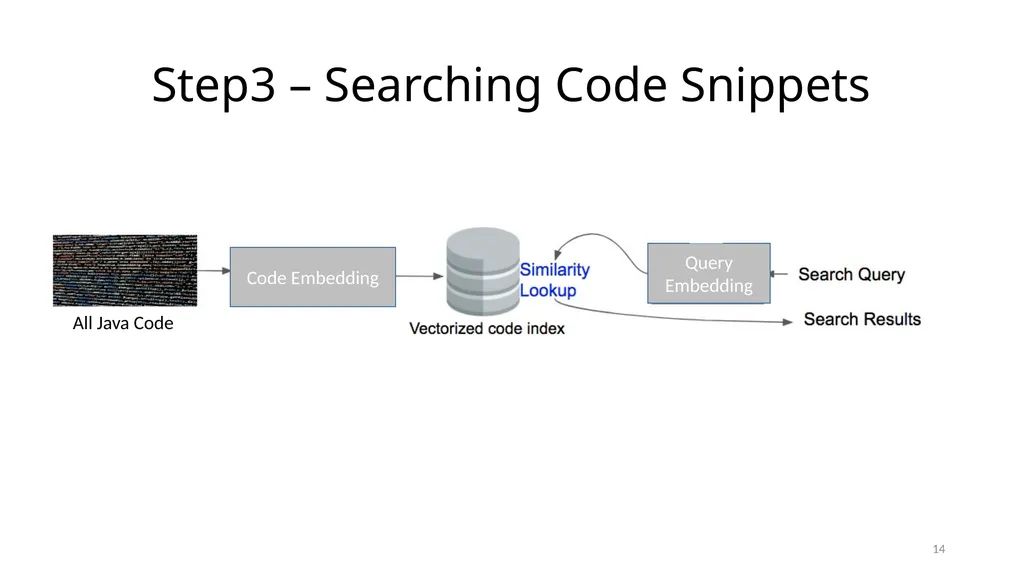
slide14. Step3 – Searching Code Snippets 14 All Java Code Code Embedding Query Embedding<br>
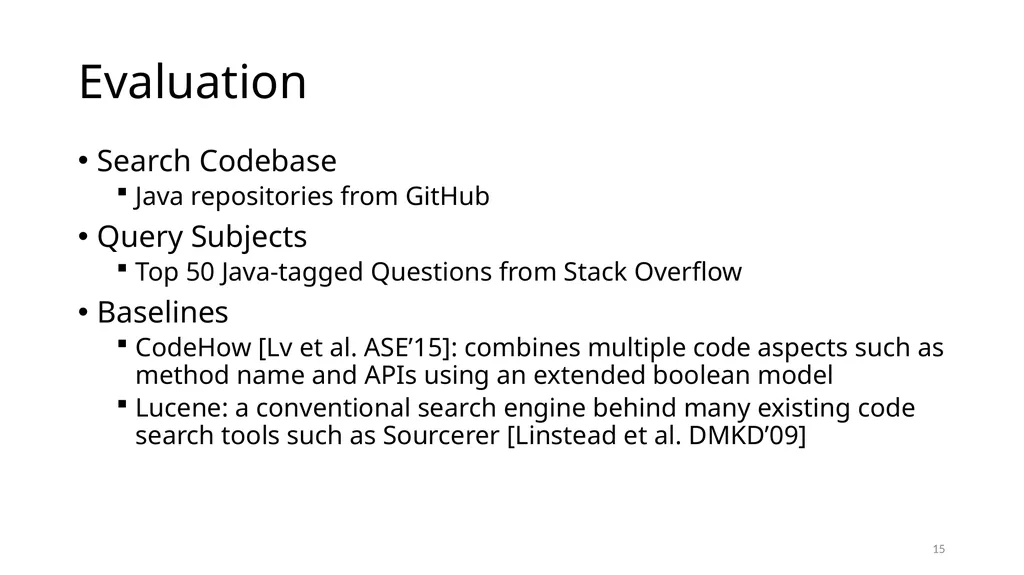
slide15. Evaluation Search Codebase
Java repositories from GitHub
Query Subjects
Top 50 Java-tagged Questions from Stack Overflow
Baselines
CodeHow [Lv et al. ASE’15]: combines multiple code aspects such as method name and APIs using an extended boolean model
Lucene: a conventional search engine behind many existing code search tools such as Sourcerer [Linstead et al. DMKD’09] 15<br>
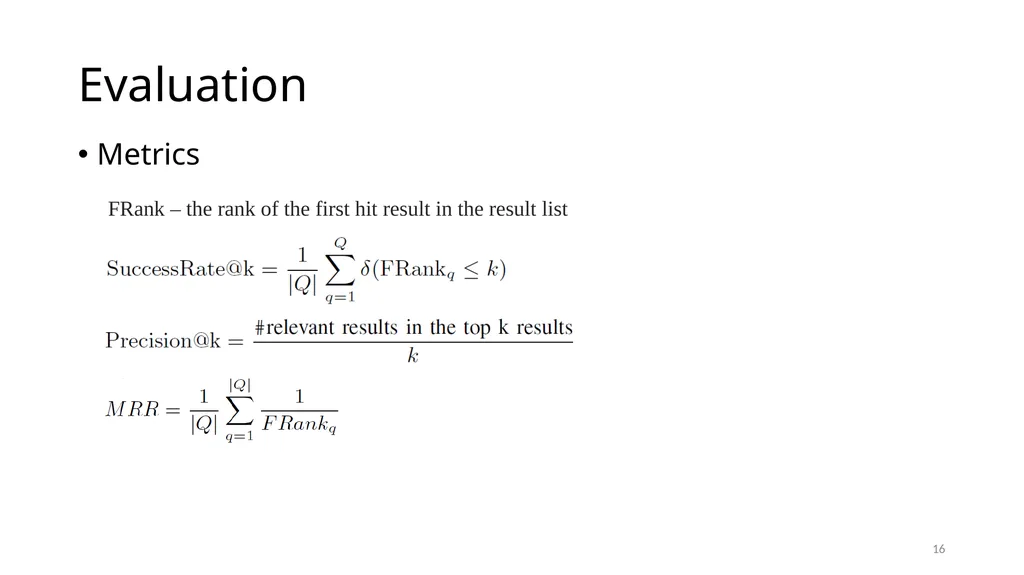
slide16. Evaluation Metrics FRank – the rank of the first hit result in the result list 16<br>
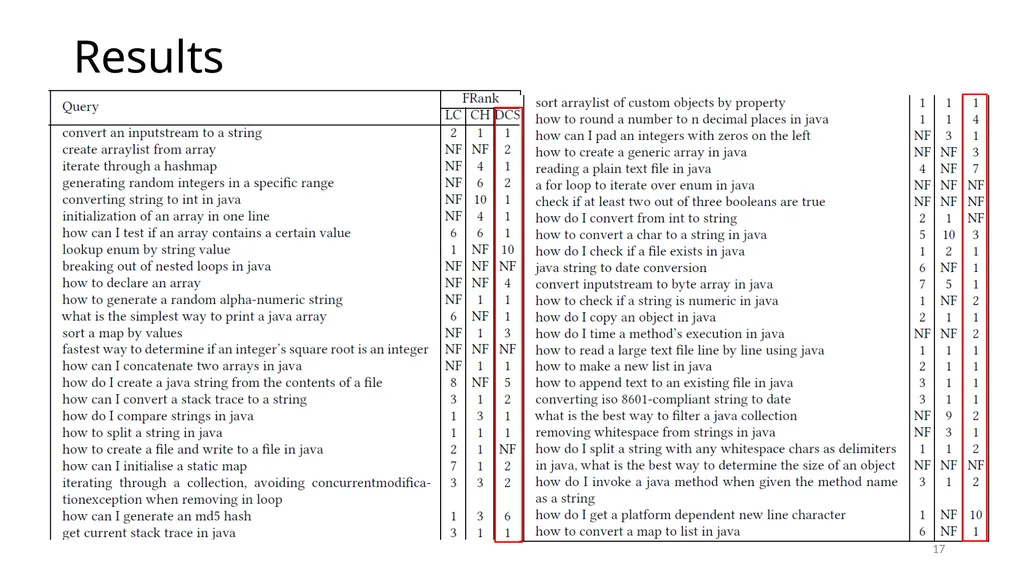
slide17. Results 17<br>
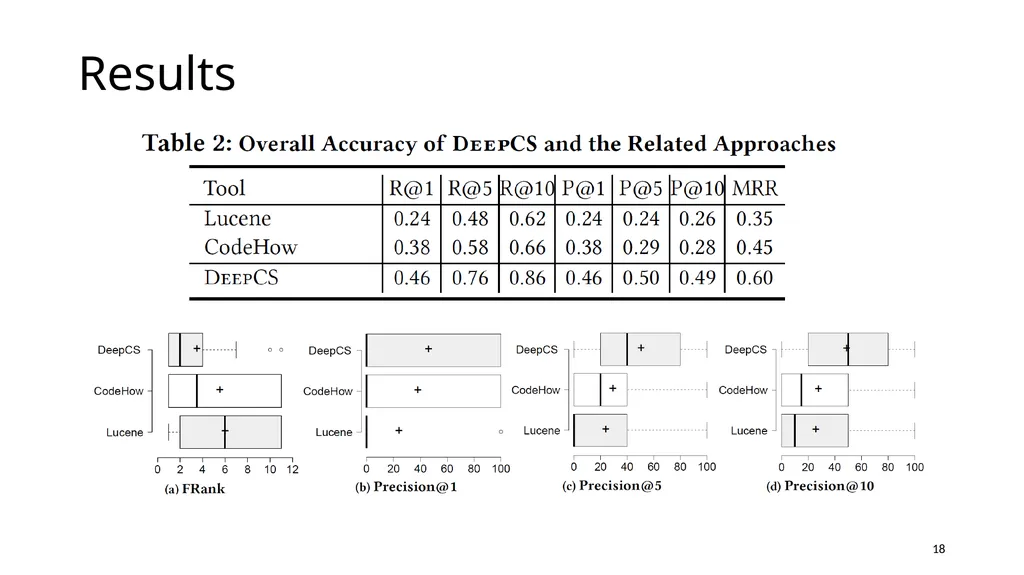
slide18. Results 18<br>
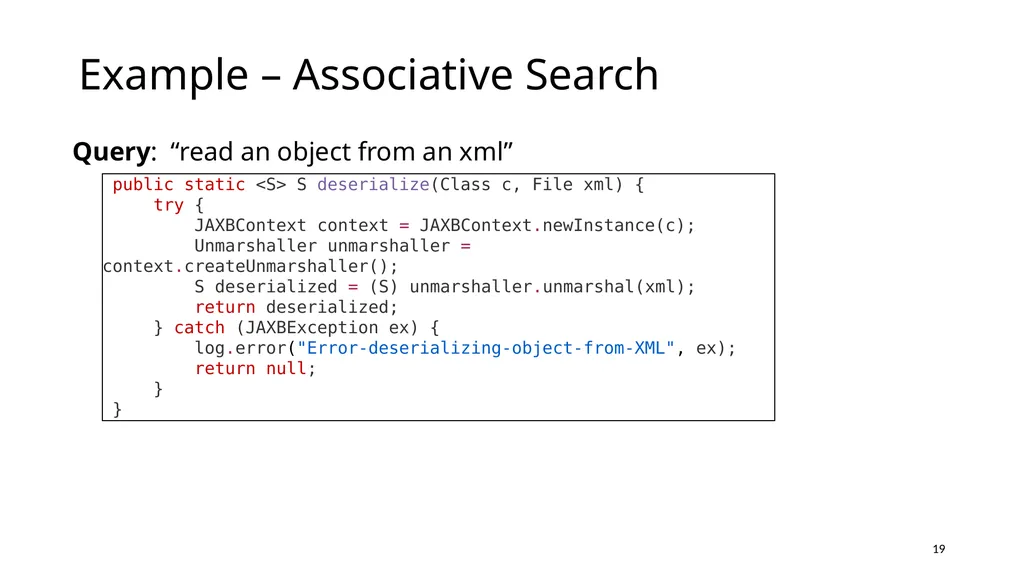
slide19. Query: “read an object from an xml” Example – Associative Search 19 public static <S> S deserialize(Class c, File xml) {
try {
JAXBContext context = JAXBContext.newInstance(c);
Unmarshaller unmarshaller = context.createUnmarshaller();
S deserialized = (S) unmarshaller.unmarshal(xml);
return deserialized;
} catch (JAXBException ex) {
log.error("Error-deserializing-object-from-XML", ex);
return null;
}
}<br>
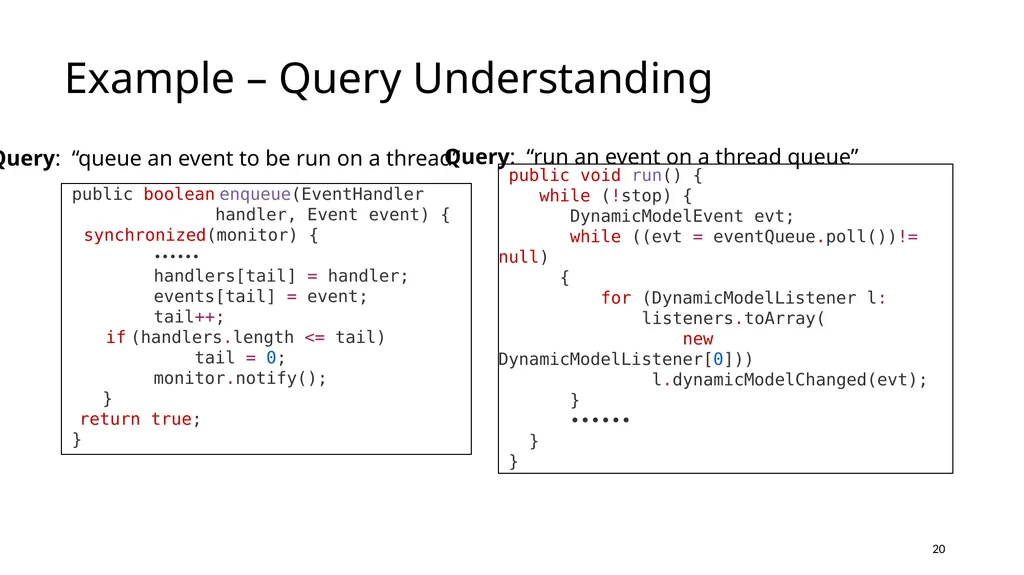
slide20. Query: “queue an event to be run on a thread” Query: “run an event on a thread queue” Example – Query Understanding 20 public boolean enqueue(EventHandler
handler, Event event) {
synchronized(monitor) {
••••••
handlers[tail] = handler;
events[tail] = event;
tail++;
if (handlers.length <= tail)
tail = 0;
monitor.notify();
}
return true;
} public void run() {
while (!stop) {
DynamicModelEvent evt;
while ((evt = eventQueue.poll())!= null)
{
for (DynamicModelListener l:
listeners.toArray(
new DynamicModelListener[0]))
l.dynamicModelChanged(evt);
}
••••••
}
}<br>
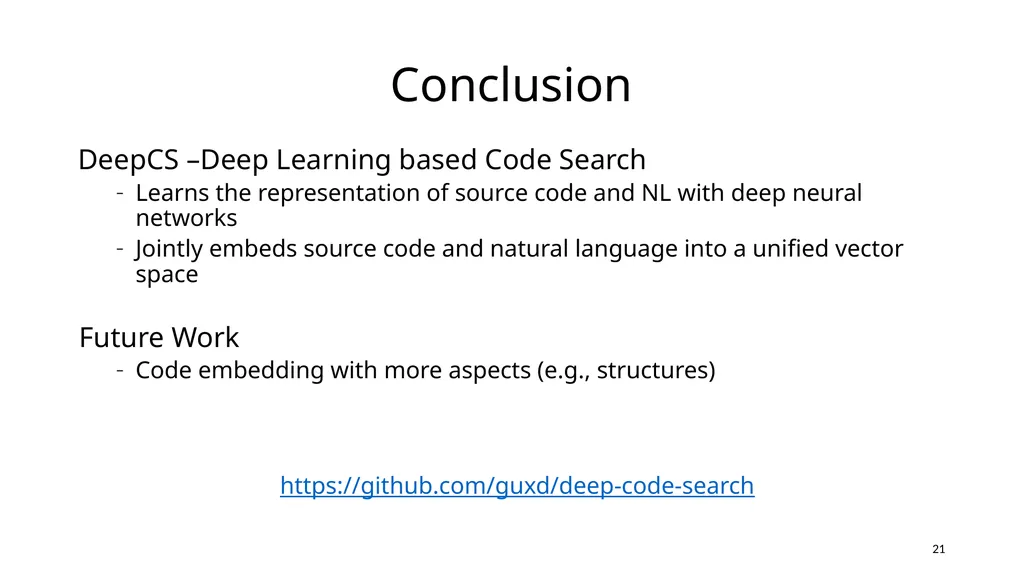
slide21. Conclusion DeepCS –Deep Learning based Code Search
Learns the representation of source code and NL with deep neural networks
Jointly embeds source code and natural language into a unified vector space
Future Work
Code embedding with more aspects (e.g., structures)

https://github.com/guxd/deep-code-search 21<br>
Hong Kong University of Science and Technology 1 Hongyu Zhang
The University of Newcastle Sunghun Kim
Hong Kong University of Science and Technology<br>
slide2. Programming is hard Lack of experience
Unfamiliar libraries 2<br>
slide3. Why Not Search for It? 3 Not designed for source code<br>
slide4. Code Search Engines Keyword Matching! Hard to represent complicated tasks 4<br>
slide5. Information Retrieval – Related Work Consider source code as plain text and apply IR techniques (e.g., Lucene)
Augment IR approaches by considering properties of source code and NL queries
Typical Techniques
Sourcerer [Linstead DMKD’09]: augments Lucene by considering method names and code popularity
Portforlio [McMillan, ICSE’11]: considers relationships between functions
[Lu et al. SANER’15]: query expansion with WordNet
CodeHow [Lv et al. ASE’15]: API matching 5<br>
slide6. A fundamental problem of IR based code search Query: “how to read an object from an xml” Mismatch between the high-level intent reflected in the queries and the low-level implementation details in the source code Source code and natural language have heterogeneous representations 6 public static <S> S deserialize(Class c, File xml) {
try {
JAXBContext context = JAXBContext.newInstance(c);
Unmarshaller unmarshaller = context.createUnmarshaller();
S deserialized = (S) unmarshaller.unmarshal(xml);
return deserialized;
} catch (JAXBException ex) {
log.error("Error-deserializing-object-from-XML", ex);
return null;
}
}<br>
slide7. Proposed Approach Joint Embedding of both Code and Natural Language into a unified vector representation “read a text file line by line” “read an object from an xml file” Query/Description
Embedding Code
Embedding public void readText(String textFile) {
BufferedReader br = new BufferedReader(
new FileInputStream(helpFile));
String line = null;
while ((line = br.readLine()) != null) {
System.out.println(line);
}
••••••
br.close();
} public static < S > S deserialize(Class c, File xml) {
try {
JAXBContext context = JAXBContext.newInstance(c);
Unmarshaller unmarshaller =context.createUnmarshaller();
S deserialized = (S) unmarshaller.unmarshal(xml);
return deserialized;
} catch (JAXBException ex) {
log.error("Error-deserializing-object-from-XML", ex);
return null;
}
} 7<br>
slide8. CODEnn (Code-Description Embedding Neural Network) Code Embedding Network (CoNN)
Description Embedding Network (DeNN)
Similarity Module 8 Code Embedding Network (CoNN) Description Embedding
Network(DeNN) Code Description Code Vector Description Vector Cosine Similarity<br>
slide9. Code Description max pooling read a text file max pooling MLP text reader max pooling Scanner.new Scanner.next Scanner.close max pooling str buff close MLP Fusion MLP method name [M] API sequence [A] Tokens [Γ] [D] Cosine Similarity Training with Ranking Loss:<br>
slide10. DeepCS – Deep Learning based Code Search 10 Code Vectors Recommended Code embedding Search Codebase Similarity Lookup Query Query Vector embedding 0101010 Commented Code Snippets Training
Instances Training Offline Training code snippets
(Java methods) Offline Embedding aspect extraction aspect extraction CODEnn Model natural language descriptions code snippets
(Java methods)<br>
slide11. Step1 – Prepare a Training Corpus Training Instances
<C,D+,D-> (<method name, api seq, tokens, correct desc, incorrect desc>) 11 Collect Java projects from GitHub
Parse source files into ASTs using Eclipse JDT
Extract an API sequence, method name, tokens and a description for each method body (when Javadoc comment exists)<br>
slide12. /**
* read a text file line by line.
* @param: path
*/
public void readContent(String path){
…
BufferedReader reader = new BufferedReader(…);
while((line=reader.readLine())!=null)
…
reader.close();
} Body Statement While Statement Variable Declaration Constructor Invocation Method Invocation Block Statement Type Variable BufferedReader reader readLine Variable reader BufferedReader.new BufferedReader.readLine
BufferedReader.close … 12 MethodDefinition Javadoc Comment read a text file line by line. read context {read, context, string, buffer, reader, line, close} API Sequence: Tokens: Method name: Description:<br>
slide13. Step2 – Training CODEnn Model Neural Network
Bi-LSTM, 200 hidden units
MLP: 100 hidden units for embedding and 400 for fusing
Word Embedding: 100
Training Algorithm
Adadelta
Batch size: 128
Vocabulary size: 10,000 13<br>
slide14. Step3 – Searching Code Snippets 14 All Java Code Code Embedding Query Embedding<br>
slide15. Evaluation Search Codebase
Java repositories from GitHub
Query Subjects
Top 50 Java-tagged Questions from Stack Overflow
Baselines
CodeHow [Lv et al. ASE’15]: combines multiple code aspects such as method name and APIs using an extended boolean model
Lucene: a conventional search engine behind many existing code search tools such as Sourcerer [Linstead et al. DMKD’09] 15<br>
slide16. Evaluation Metrics FRank – the rank of the first hit result in the result list 16<br>
slide17. Results 17<br>
slide18. Results 18<br>
slide19. Query: “read an object from an xml” Example – Associative Search 19 public static <S> S deserialize(Class c, File xml) {
try {
JAXBContext context = JAXBContext.newInstance(c);
Unmarshaller unmarshaller = context.createUnmarshaller();
S deserialized = (S) unmarshaller.unmarshal(xml);
return deserialized;
} catch (JAXBException ex) {
log.error("Error-deserializing-object-from-XML", ex);
return null;
}
}<br>
slide20. Query: “queue an event to be run on a thread” Query: “run an event on a thread queue” Example – Query Understanding 20 public boolean enqueue(EventHandler
handler, Event event) {
synchronized(monitor) {
••••••
handlers[tail] = handler;
events[tail] = event;
tail++;
if (handlers.length <= tail)
tail = 0;
monitor.notify();
}
return true;
} public void run() {
while (!stop) {
DynamicModelEvent evt;
while ((evt = eventQueue.poll())!= null)
{
for (DynamicModelListener l:
listeners.toArray(
new DynamicModelListener[0]))
l.dynamicModelChanged(evt);
}
••••••
}
}<br>
slide21. Conclusion DeepCS –Deep Learning based Code Search
Learns the representation of source code and NL with deep neural networks
Jointly embeds source code and natural language into a unified vector space
Future Work
Code embedding with more aspects (e.g., structures)
https://github.com/guxd/deep-code-search 21<br>