
DENTITION IN MAMMALS By G.ADITYA KUMAR

DENTITION IN MAMMALS By G.ADITYA KUMAR
1 / 1
DENTITION IN MAMMALS By G.ADITYA KUMAR - slide 1 of 8 DENTITION IN MAMMALS By G.ADITYA KUMAR - slide 2 of 8 DENTITION IN MAMMALS By G.ADITYA KUMAR - slide 3 of 8 DENTITION IN MAMMALS By G.ADITYA KUMAR - slide 4 of 8 DENTITION IN MAMMALS By G.ADITYA KUMAR - slide 5 of 8 DENTITION IN MAMMALS By G.ADITYA KUMAR - slide 6 of 8 DENTITION IN MAMMALS By G.ADITYA KUMAR - slide 7 of 8 DENTITION IN MAMMALS By G.ADITYA KUMAR - slide 8 of 8

DENTITION IN MAMMALS By G.ADITYA KUMAR D.N.R.COLLEGE Introduction The hard and usually pointed structures connected to the jaw bones in the buccal cavity of vertebrates are known as teeth. The structure, kind, number and arrangement of

Related Topics

Download this presentation From Below

"DENTITION IN MAMMALS By G.ADITYA KUMAR" is the property of its rightful owner. Permission is granted to download and print the materials on this website for personal, non-commercial use only, and to display it on your personal computer provided you do not modify the materials and that you retain all copyright notices contained in the materials. By downloading content from our website, you accept the terms of this agreement.

Presentation Transcript

01
DENTITION IN MAMMALS By
G.ADITYA KUMAR
D.N.R.COLLEGE<br>
02
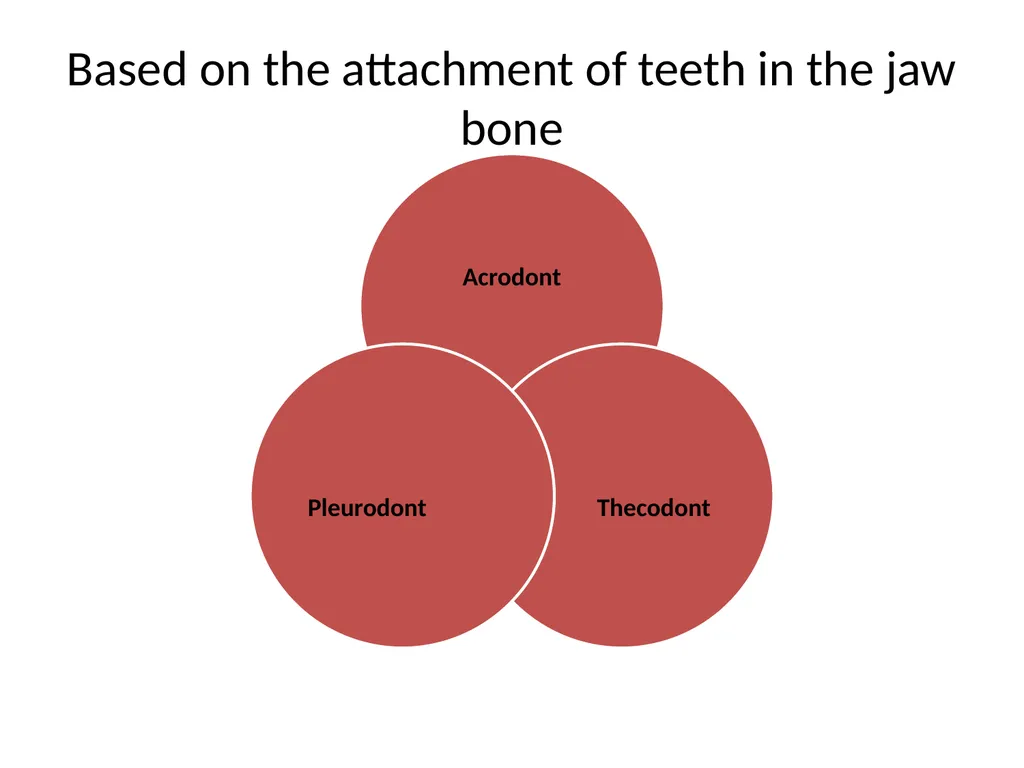
Introduction The hard and usually pointed structures connected to the jaw bones in the buccal cavity of vertebrates are known as teeth.
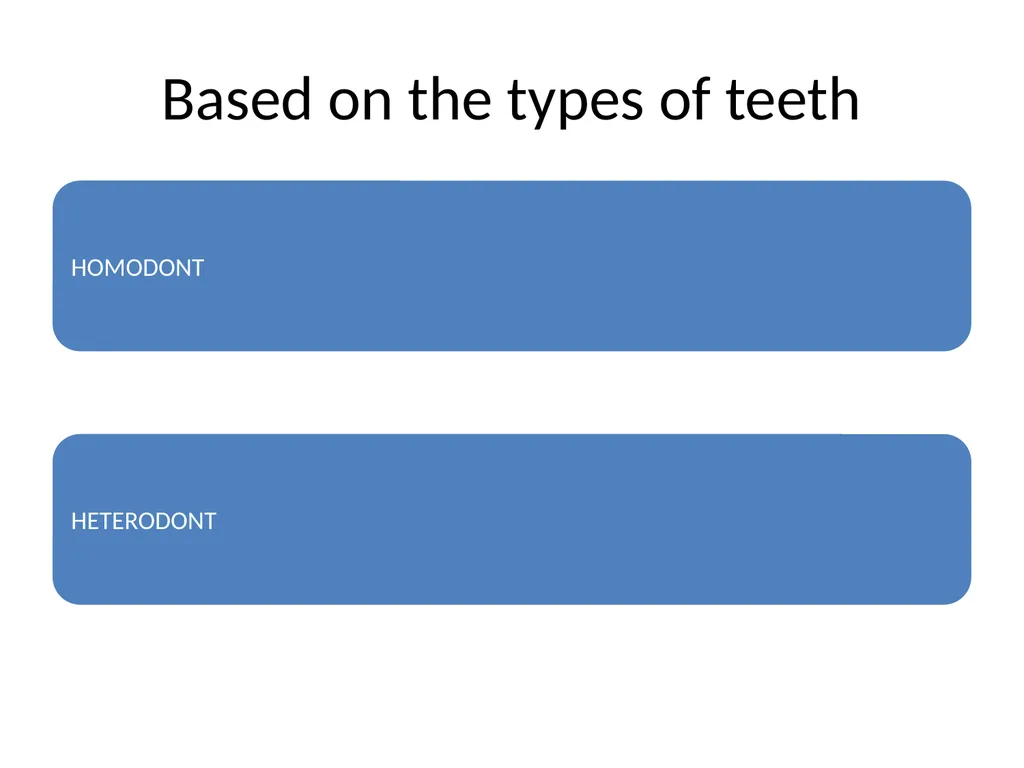
The structure, kind, number and arrangement of teeth are collectively called dentition.<br>
03
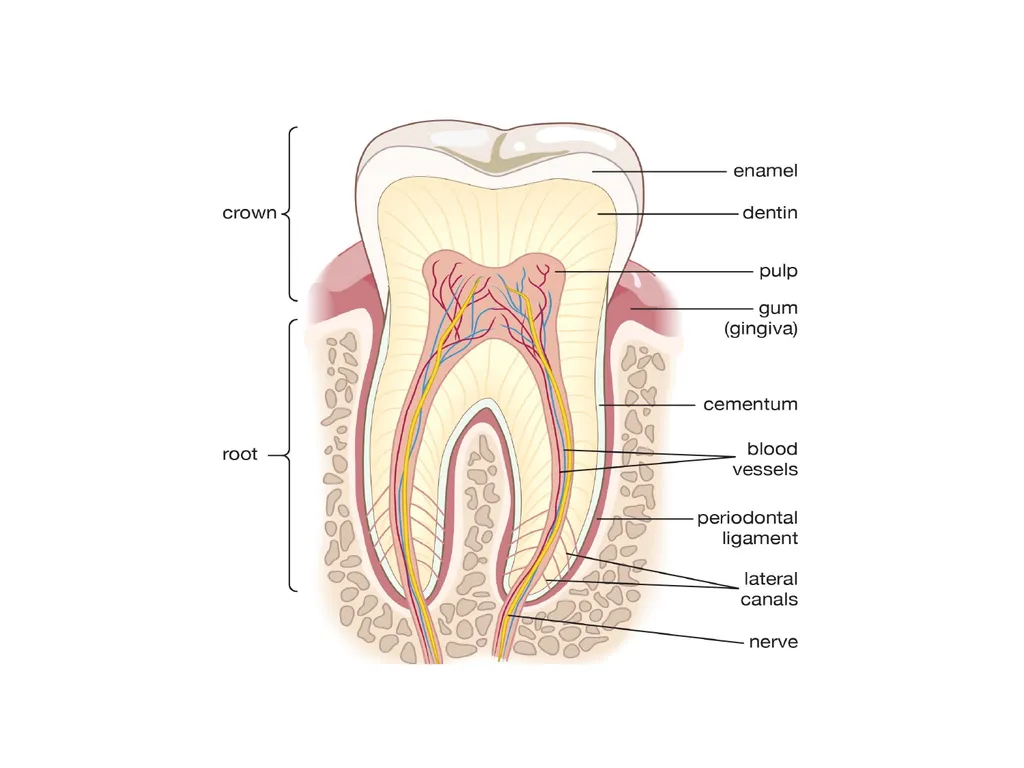
STRUCTURE OF TEETH Root - It is the basal part embedded in the bony socket of jaw.
Neck - it is the part above the root enclosed by the gum.
Crown - It is the upper part beyond the surface of the gum
I) Pulp cavity: The entire tooth encloses a central pulp cavity surrounded by a layer of odontoblast cells filled with soft pulp. It is made up of connective tissue, blood vessels and nerve fibers.
II) Dentin: A substance chemically similar to bone- dentine forms the major part of the tooth. But the dentine is permeated by numerous thin canaliculi.
III) Enamel: It is present over the de in the crown and neck regions of the tooth. It is hardest and contains only traces of living matter.
IV) Cement: It surrounds the denting of the root portion of the tooth. It is bony in nature.<br>