Developing a Compassion-Based Therapy for
Description: Developing a Compassion-Based Therapy for Trauma-Related Shame and Posttraumatic Stress Teresa M. Au, M.A. 1, 2 Brett T. Litz, Ph.D. 1, 2, 3 ACBS 2014 June 19, 2014 1 VA Boston Healthcare System 2 Boston University Department of Psychology
Related Topics
Download Presentation
"Developing a Compassion-Based Therapy for" is the property of its rightful owner. Permission is granted to download and print the materials on this website for personal, non-commercial use only, and to display it on your personal computer provided you do not modify the materials and that you retain all copyright notices contained in the materials. By downloading content from our website, you accept the terms of this agreement.
Presentation Transcript
slide1. Developing a Compassion-Based Therapy for Trauma-Related Shame and Posttraumatic Stress Teresa M. Au, M.A. 1, 2
Brett T. Litz, Ph.D. 1, 2, 3
ACBS 2014
June 19, 2014
1 VA Boston Healthcare System
2 Boston University Department of Psychology
3 Massachusetts Veterans Epidemiological Research and Information Center (MAVERIC)
Disclaimer: This work does not necessarily reflect the opinion of Boston University, VABHS, or MAVERIC<br>
slide2. Today’s Agenda Background on shame and compassion
Description of 6-session intervention
Study design
Preliminary data<br>
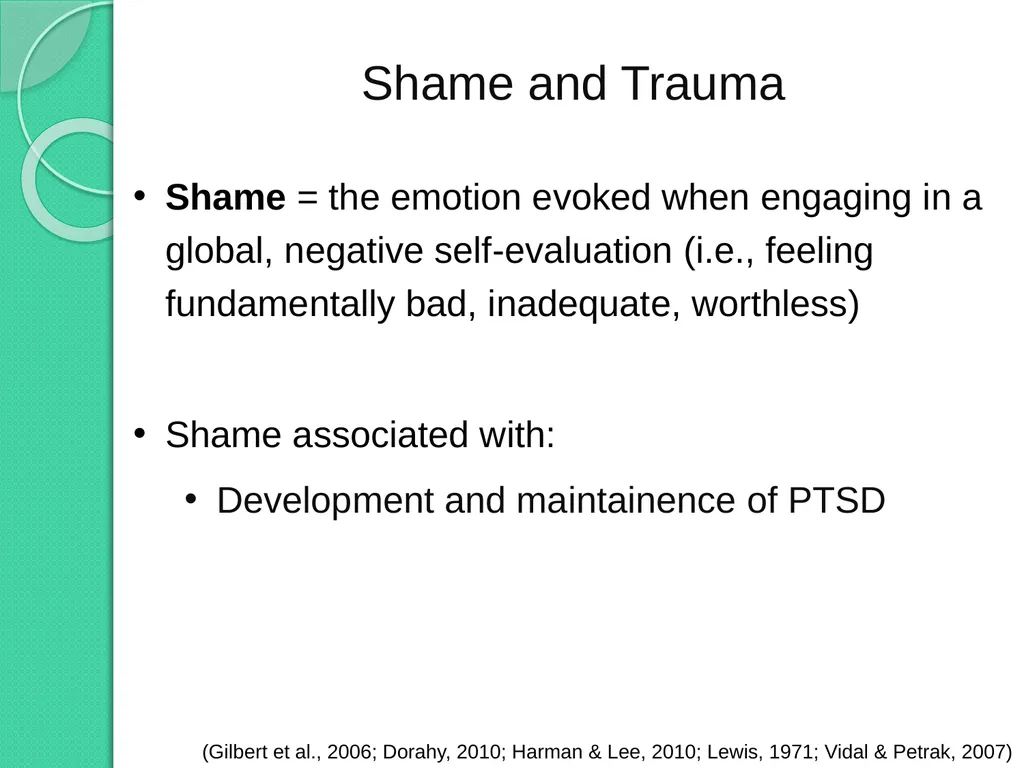
slide3. Shame and Trauma (Gilbert et al., 2006; Dorahy, 2010; Harman & Lee, 2010; Lewis, 1971; Vidal & Petrak, 2007) Shame = the emotion evoked when engaging in a global, negative self-evaluation (i.e., feeling fundamentally bad, inadequate, worthless)
Shame associated with:
Development and maintainence of PTSD<br>
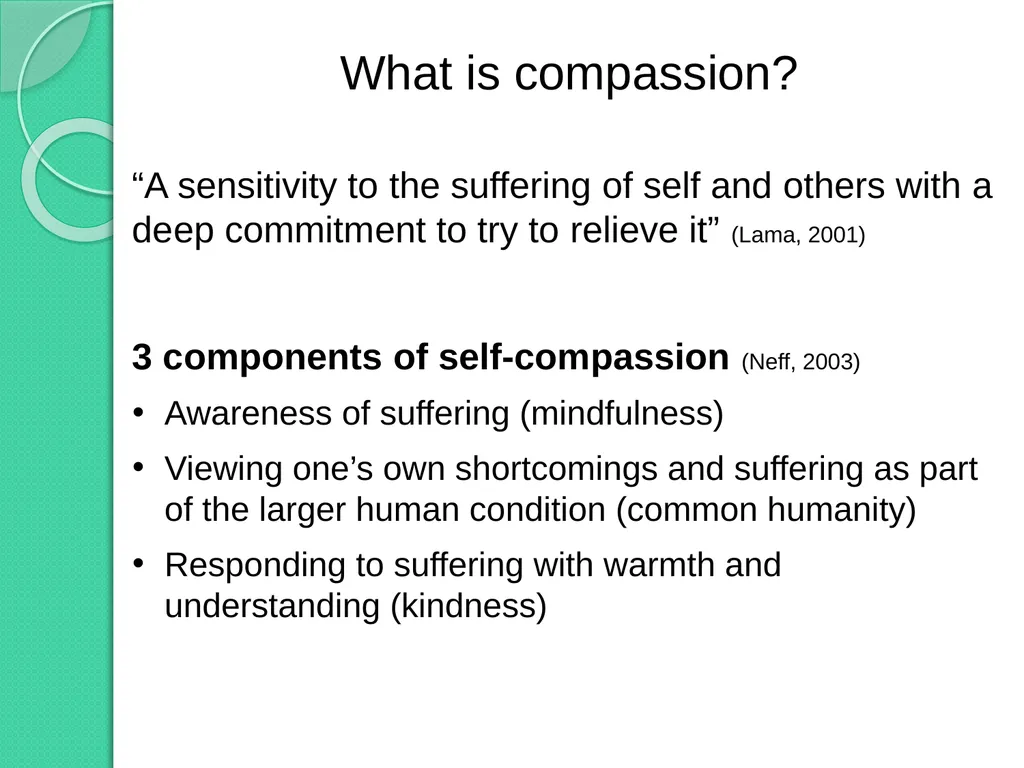
slide4. What is compassion?
“A sensitivity to the suffering of self and others with a deep commitment to try to relieve it” (Lama, 2001)
3 components of self-compassion (Neff, 2003)
Awareness of suffering (mindfulness)
Viewing one’s own shortcomings and suffering as part of the larger human condition (common humanity)
Responding to suffering with warmth and understanding (kindness)<br>
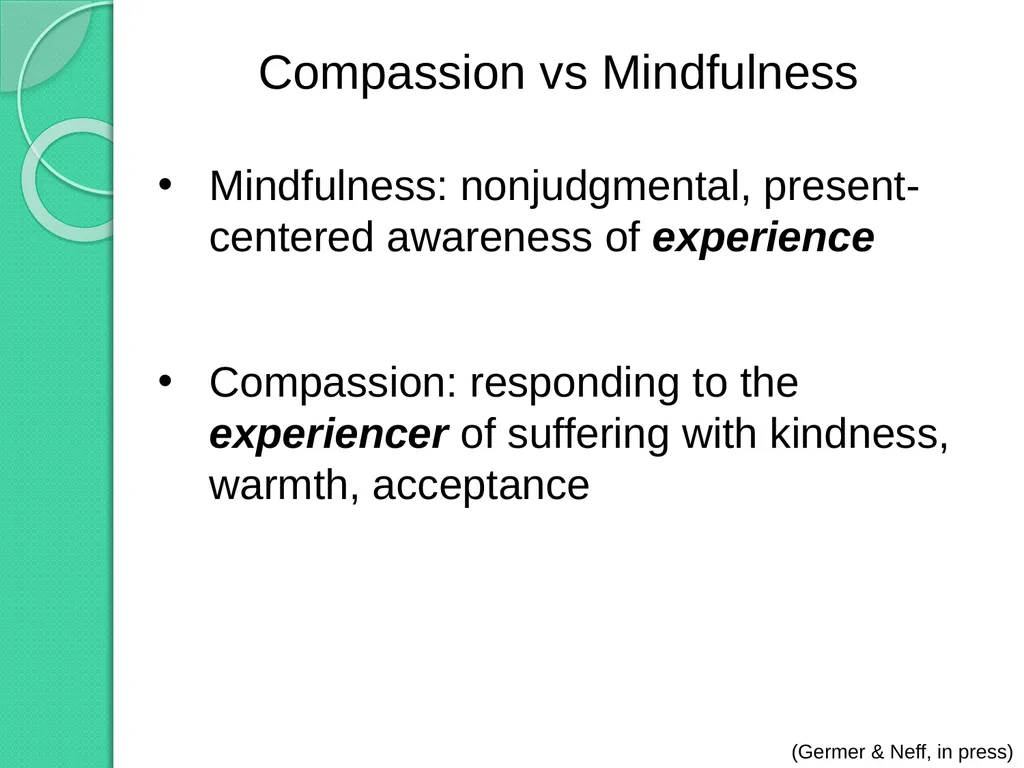
slide5. Compassion vs Mindfulness Mindfulness: nonjudgmental, present-centered awareness of experience
Compassion: responding to the experiencer of suffering with kindness, warmth, acceptance (Germer & Neff, in press)<br>
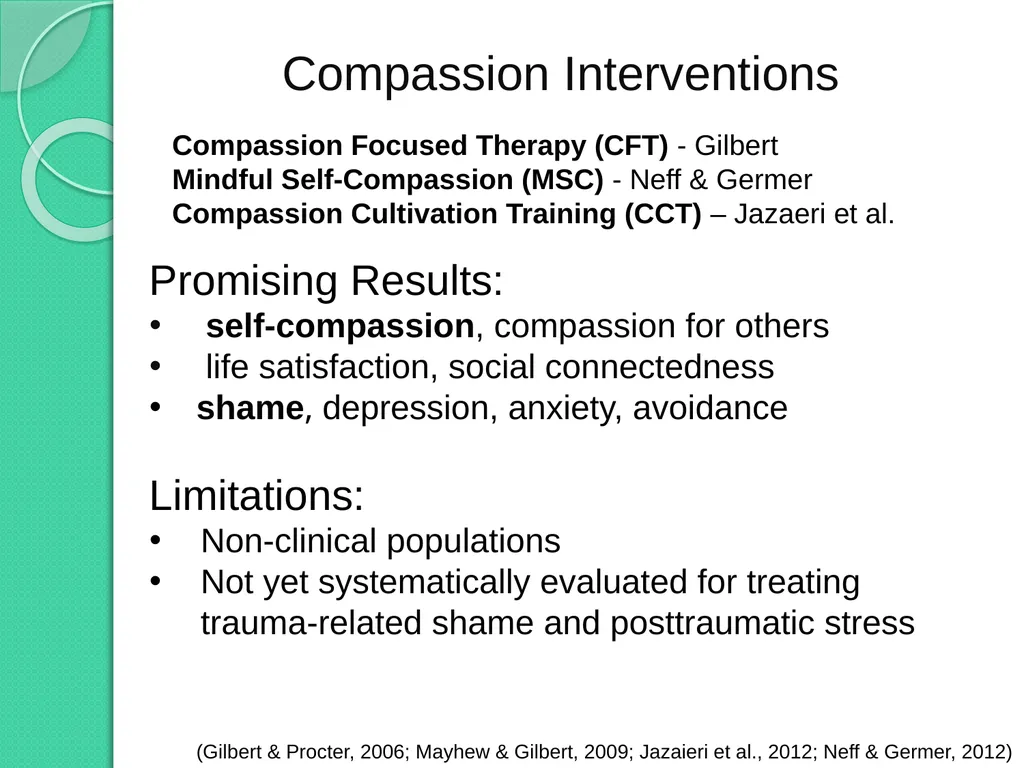
slide6. Compassion Interventions Compassion Focused Therapy (CFT) - Gilbert
Mindful Self-Compassion (MSC) - Neff & Germer
Compassion Cultivation Training (CCT) – Jazaeri et al. (Gilbert & Procter, 2006; Mayhew & Gilbert, 2009; Jazaieri et al., 2012; Neff & Germer, 2012) Promising Results:
self-compassion, compassion for others
life satisfaction, social connectedness
shame, depression, anxiety, avoidance
Limitations:
Non-clinical populations
Not yet systematically evaluated for treating trauma-related shame and posttraumatic stress<br>
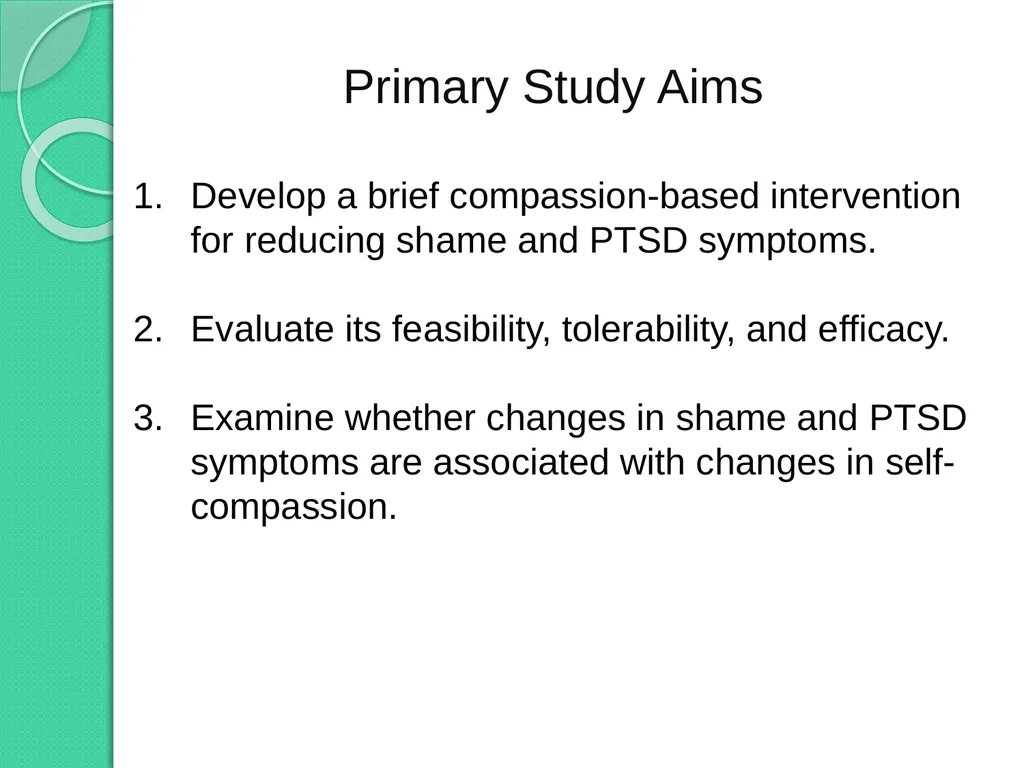
slide7. Primary Study Aims Develop a brief compassion-based intervention for reducing shame and PTSD symptoms.
Evaluate its feasibility, tolerability, and efficacy.
Examine whether changes in shame and PTSD symptoms are associated with changes in self-compassion.<br>
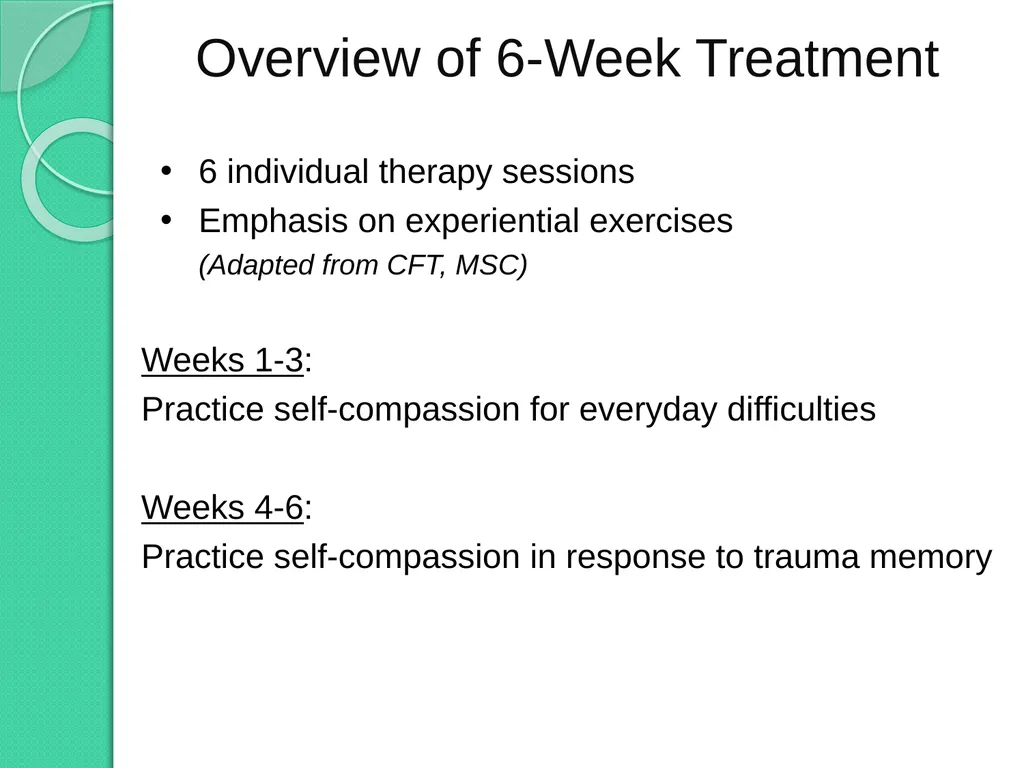
slide8. Overview of 6-Week Treatment 6 individual therapy sessions
Emphasis on experiential exercises(Adapted from CFT, MSC)
Weeks 1-3:
Practice self-compassion for everyday difficulties
Weeks 4-6:
Practice self-compassion in response to trauma memory<br>
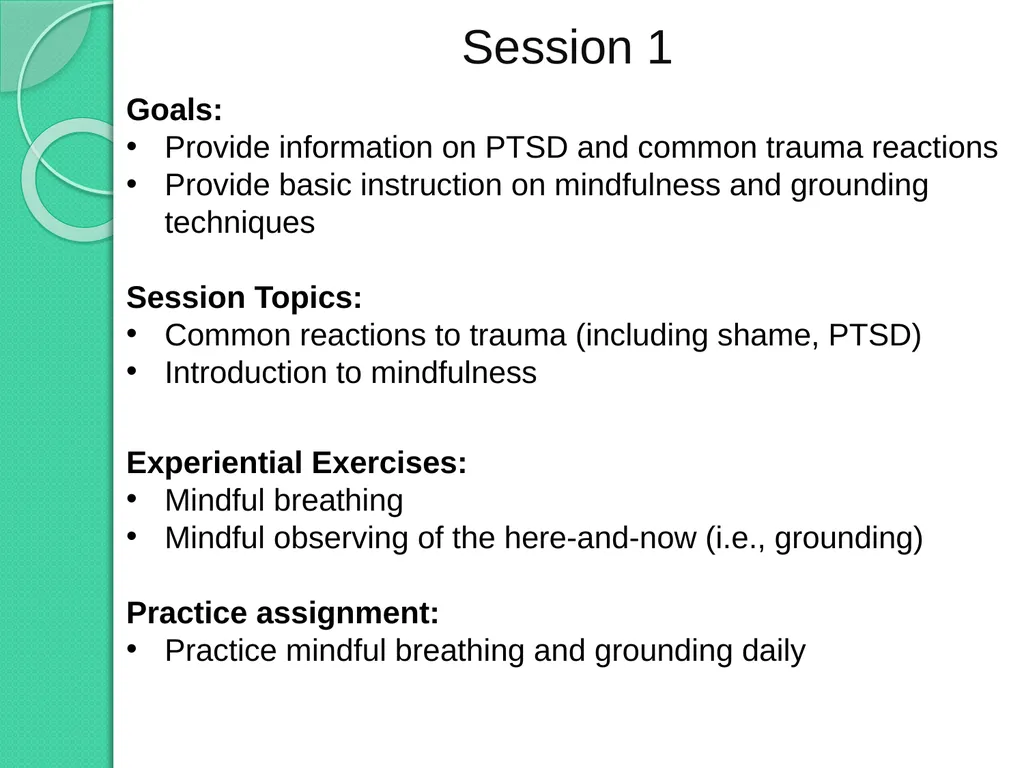
slide9. Session 1 Goals:
Provide information on PTSD and common trauma reactions
Provide basic instruction on mindfulness and grounding techniques
Session Topics:
Common reactions to trauma (including shame, PTSD)
Introduction to mindfulness
Experiential Exercises:
Mindful breathing
Mindful observing of the here-and-now (i.e., grounding)
Practice assignment:
Practice mindful breathing and grounding daily<br>
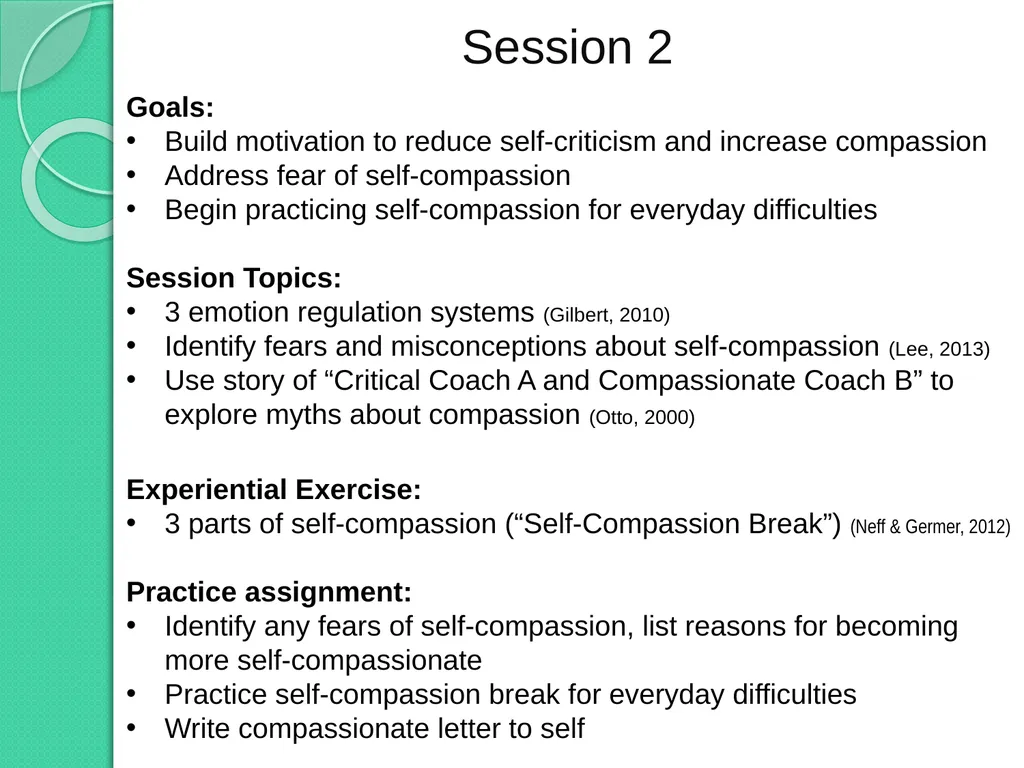
slide10. Session 2 Goals:
Build motivation to reduce self-criticism and increase compassion
Address fear of self-compassion
Begin practicing self-compassion for everyday difficulties
Session Topics:
3 emotion regulation systems (Gilbert, 2010)
Identify fears and misconceptions about self-compassion (Lee, 2013)
Use story of “Critical Coach A and Compassionate Coach B” to explore myths about compassion (Otto, 2000)
Experiential Exercise:
3 parts of self-compassion (“Self-Compassion Break”) (Neff & Germer, 2012)
Practice assignment:
Identify any fears of self-compassion, list reasons for becoming more self-compassionate
Practice self-compassion break for everyday difficulties
Write compassionate letter to self<br>
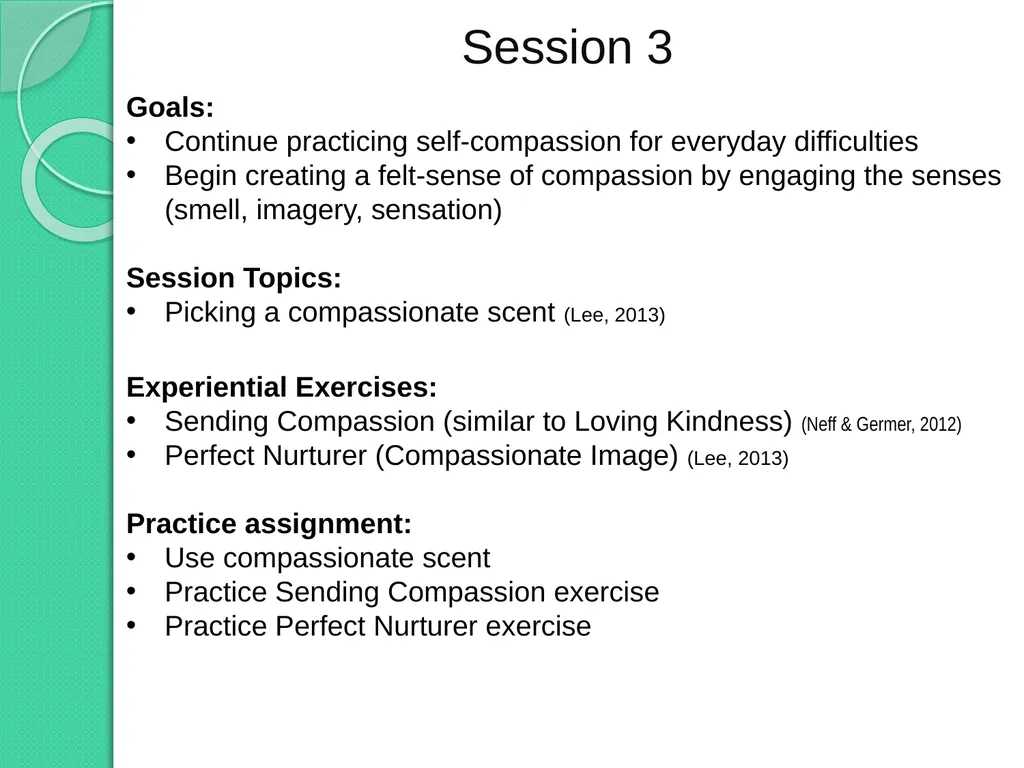
slide11. Session 3 Goals:
Continue practicing self-compassion for everyday difficulties
Begin creating a felt-sense of compassion by engaging the senses (smell, imagery, sensation)
Session Topics:
Picking a compassionate scent (Lee, 2013)
Experiential Exercises:
Sending Compassion (similar to Loving Kindness) (Neff & Germer, 2012)
Perfect Nurturer (Compassionate Image) (Lee, 2013)
Practice assignment:
Use compassionate scent
Practice Sending Compassion exercise
Practice Perfect Nurturer exercise<br>
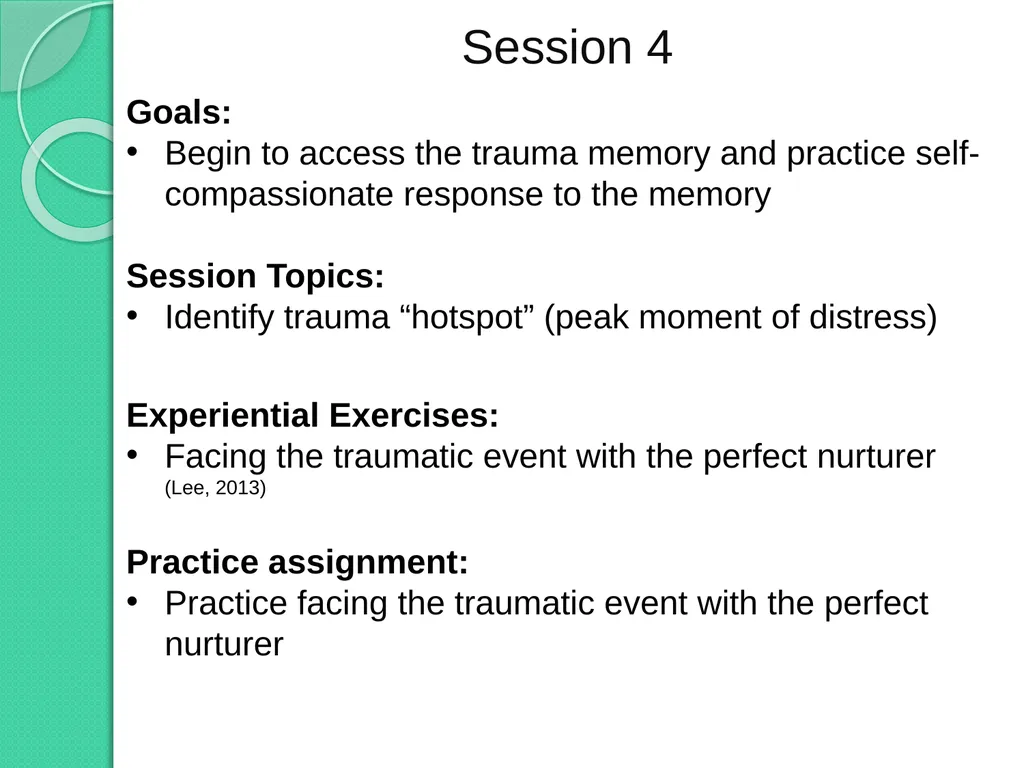
slide12. Session 4 Goals:
Begin to access the trauma memory and practice self-compassionate response to the memory
Session Topics:
Identify trauma “hotspot” (peak moment of distress)
Experiential Exercises:
Facing the traumatic event with the perfect nurturer (Lee, 2013)
Practice assignment:
Practice facing the traumatic event with the perfect nurturer<br>
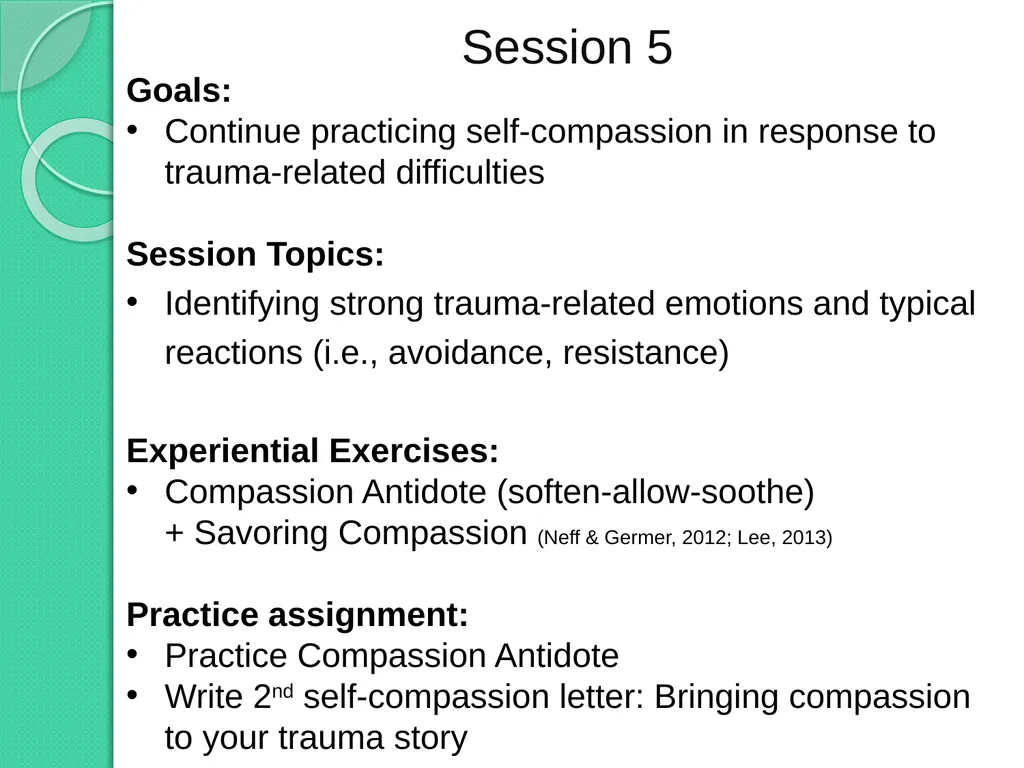
slide13. Session 5 Goals:
Continue practicing self-compassion in response to trauma-related difficulties
Session Topics:
Identifying strong trauma-related emotions and typical reactions (i.e., avoidance, resistance)
Experiential Exercises:
Compassion Antidote (soften-allow-soothe)+ Savoring Compassion (Neff & Germer, 2012; Lee, 2013)
Practice assignment:
Practice Compassion Antidote
Write 2nd self-compassion letter: Bringing compassion to your trauma story<br>
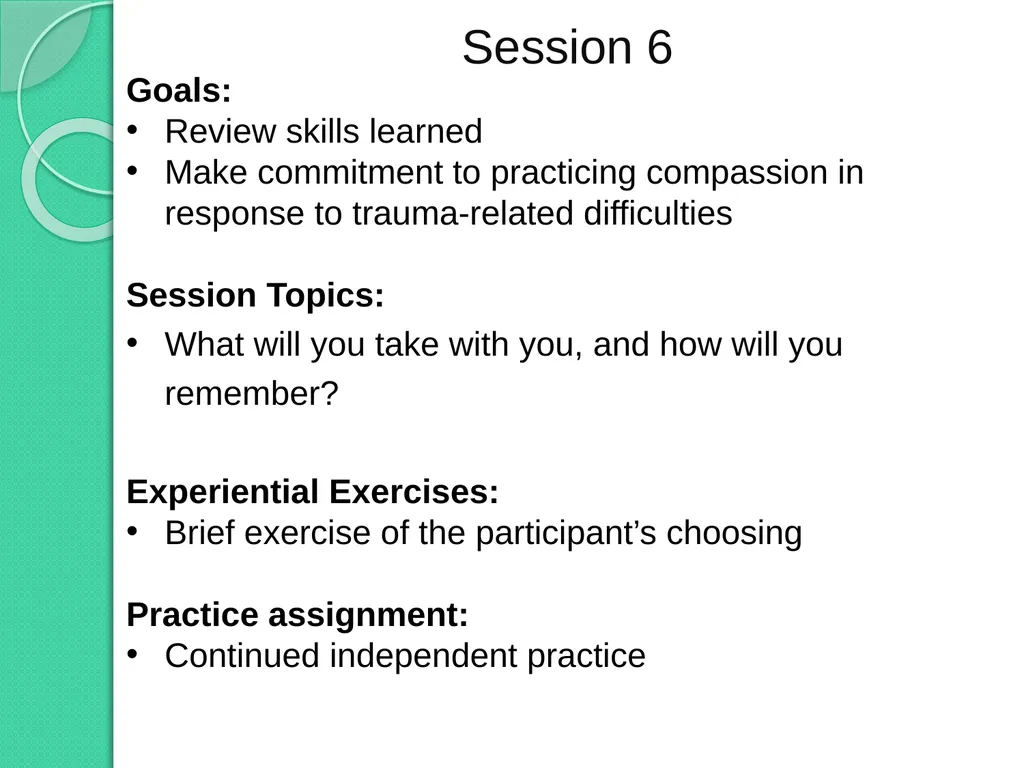
slide14. Session 6 Goals:
Review skills learned
Make commitment to practicing compassion in response to trauma-related difficulties
Session Topics:
What will you take with you, and how will you remember?
Experiential Exercises:
Brief exercise of the participant’s choosing
Practice assignment:
Continued independent practice<br>
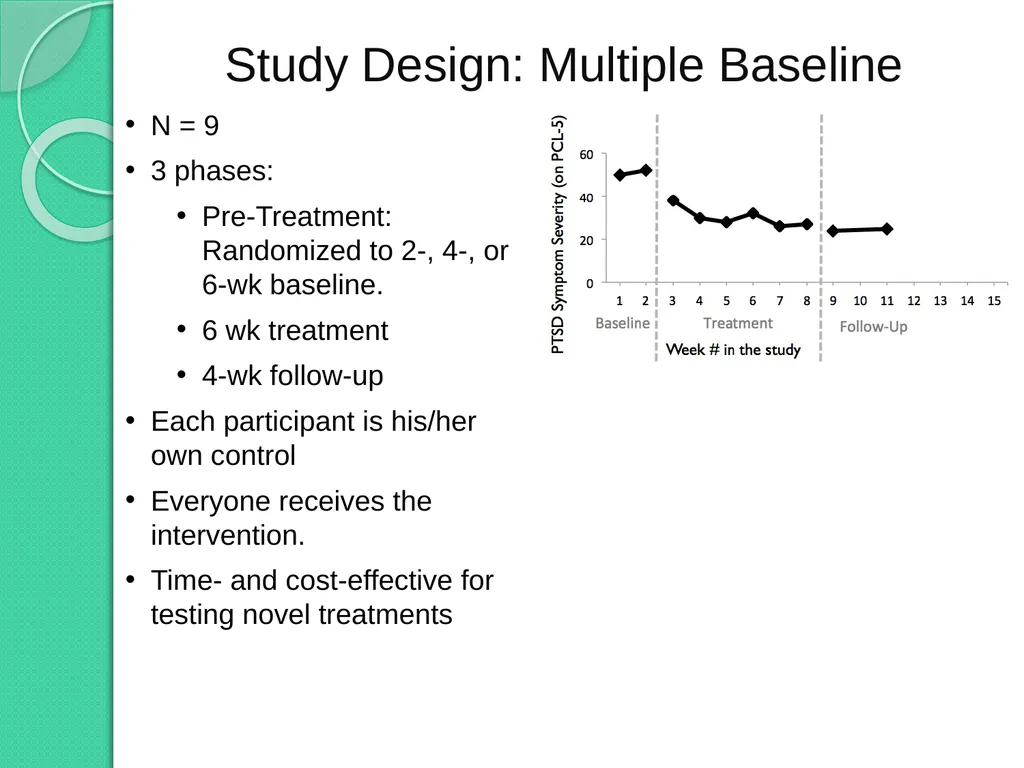
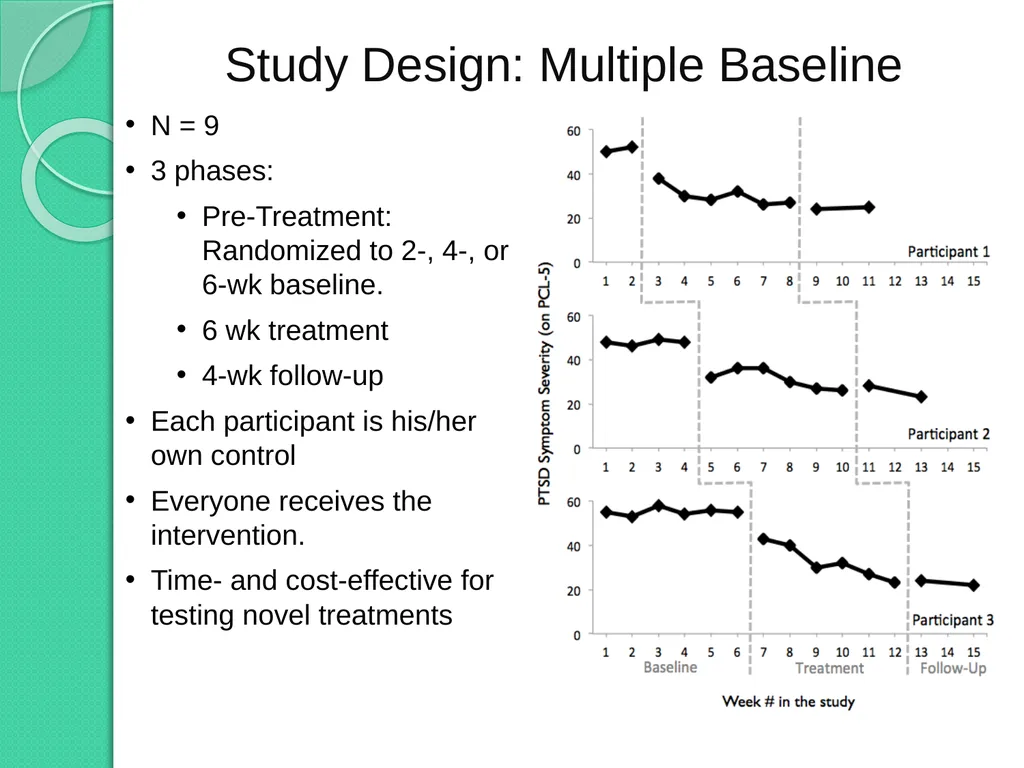
slide15. Study Design: Multiple Baseline N = 9
3 phases:
Pre-Treatment: Randomized to 2-, 4-, or 6-wk baseline.
6 wk treatment
4-wk follow-up
Each participant is his/her own control
Everyone receives the intervention.
Time- and cost-effective for testing novel treatments<br>
slide16. Study Design: Multiple Baseline N = 9
3 phases:
Pre-Treatment: Randomized to 2-, 4-, or 6-wk baseline.
6 wk treatment
4-wk follow-up
Each participant is his/her own control
Everyone receives the intervention.
Time- and cost-effective for testing novel treatments<br>
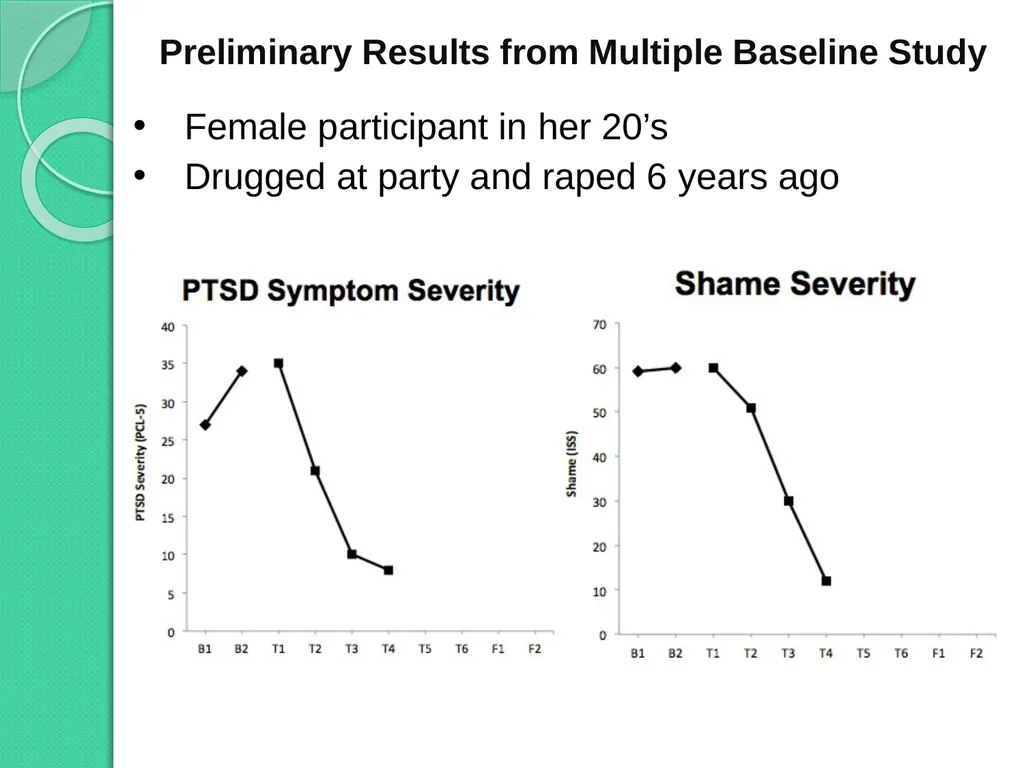
slide17. Preliminary Results from Multiple Baseline Study Female participant in her 20’s
Drugged at party and raped 6 years ago<br>
slide18. Summary
Novel treatments needed to directly address shame and self-blame after trauma
Our study evalutes a 6-week compassion-based therapy for reducing trauma-related shame and posttraumatic stress. Preliminary results and feedback from pilot testing are promising.
Multiple-baseline can be a cost-effective and efficient method for evaluating novel treatments.<br>
slide19. Thank you for your attention!
Questions?
Please feel free to contact Teresa at tau@bu.edu<br>

Brett T. Litz, Ph.D. 1, 2, 3
ACBS 2014
June 19, 2014
1 VA Boston Healthcare System
2 Boston University Department of Psychology
3 Massachusetts Veterans Epidemiological Research and Information Center (MAVERIC)
Disclaimer: This work does not necessarily reflect the opinion of Boston University, VABHS, or MAVERIC<br>
slide2. Today’s Agenda Background on shame and compassion
Description of 6-session intervention
Study design
Preliminary data<br>
slide3. Shame and Trauma (Gilbert et al., 2006; Dorahy, 2010; Harman & Lee, 2010; Lewis, 1971; Vidal & Petrak, 2007) Shame = the emotion evoked when engaging in a global, negative self-evaluation (i.e., feeling fundamentally bad, inadequate, worthless)
Shame associated with:
Development and maintainence of PTSD<br>
slide4. What is compassion?
“A sensitivity to the suffering of self and others with a deep commitment to try to relieve it” (Lama, 2001)
3 components of self-compassion (Neff, 2003)
Awareness of suffering (mindfulness)
Viewing one’s own shortcomings and suffering as part of the larger human condition (common humanity)
Responding to suffering with warmth and understanding (kindness)<br>
slide5. Compassion vs Mindfulness Mindfulness: nonjudgmental, present-centered awareness of experience
Compassion: responding to the experiencer of suffering with kindness, warmth, acceptance (Germer & Neff, in press)<br>
slide6. Compassion Interventions Compassion Focused Therapy (CFT) - Gilbert
Mindful Self-Compassion (MSC) - Neff & Germer
Compassion Cultivation Training (CCT) – Jazaeri et al. (Gilbert & Procter, 2006; Mayhew & Gilbert, 2009; Jazaieri et al., 2012; Neff & Germer, 2012) Promising Results:
self-compassion, compassion for others
life satisfaction, social connectedness
shame, depression, anxiety, avoidance
Limitations:
Non-clinical populations
Not yet systematically evaluated for treating trauma-related shame and posttraumatic stress<br>
slide7. Primary Study Aims Develop a brief compassion-based intervention for reducing shame and PTSD symptoms.
Evaluate its feasibility, tolerability, and efficacy.
Examine whether changes in shame and PTSD symptoms are associated with changes in self-compassion.<br>
slide8. Overview of 6-Week Treatment 6 individual therapy sessions
Emphasis on experiential exercises(Adapted from CFT, MSC)
Weeks 1-3:
Practice self-compassion for everyday difficulties
Weeks 4-6:
Practice self-compassion in response to trauma memory<br>
slide9. Session 1 Goals:
Provide information on PTSD and common trauma reactions
Provide basic instruction on mindfulness and grounding techniques
Session Topics:
Common reactions to trauma (including shame, PTSD)
Introduction to mindfulness
Experiential Exercises:
Mindful breathing
Mindful observing of the here-and-now (i.e., grounding)
Practice assignment:
Practice mindful breathing and grounding daily<br>
slide10. Session 2 Goals:
Build motivation to reduce self-criticism and increase compassion
Address fear of self-compassion
Begin practicing self-compassion for everyday difficulties
Session Topics:
3 emotion regulation systems (Gilbert, 2010)
Identify fears and misconceptions about self-compassion (Lee, 2013)
Use story of “Critical Coach A and Compassionate Coach B” to explore myths about compassion (Otto, 2000)
Experiential Exercise:
3 parts of self-compassion (“Self-Compassion Break”) (Neff & Germer, 2012)
Practice assignment:
Identify any fears of self-compassion, list reasons for becoming more self-compassionate
Practice self-compassion break for everyday difficulties
Write compassionate letter to self<br>
slide11. Session 3 Goals:
Continue practicing self-compassion for everyday difficulties
Begin creating a felt-sense of compassion by engaging the senses (smell, imagery, sensation)
Session Topics:
Picking a compassionate scent (Lee, 2013)
Experiential Exercises:
Sending Compassion (similar to Loving Kindness) (Neff & Germer, 2012)
Perfect Nurturer (Compassionate Image) (Lee, 2013)
Practice assignment:
Use compassionate scent
Practice Sending Compassion exercise
Practice Perfect Nurturer exercise<br>
slide12. Session 4 Goals:
Begin to access the trauma memory and practice self-compassionate response to the memory
Session Topics:
Identify trauma “hotspot” (peak moment of distress)
Experiential Exercises:
Facing the traumatic event with the perfect nurturer (Lee, 2013)
Practice assignment:
Practice facing the traumatic event with the perfect nurturer<br>
slide13. Session 5 Goals:
Continue practicing self-compassion in response to trauma-related difficulties
Session Topics:
Identifying strong trauma-related emotions and typical reactions (i.e., avoidance, resistance)
Experiential Exercises:
Compassion Antidote (soften-allow-soothe)+ Savoring Compassion (Neff & Germer, 2012; Lee, 2013)
Practice assignment:
Practice Compassion Antidote
Write 2nd self-compassion letter: Bringing compassion to your trauma story<br>
slide14. Session 6 Goals:
Review skills learned
Make commitment to practicing compassion in response to trauma-related difficulties
Session Topics:
What will you take with you, and how will you remember?
Experiential Exercises:
Brief exercise of the participant’s choosing
Practice assignment:
Continued independent practice<br>
slide15. Study Design: Multiple Baseline N = 9
3 phases:
Pre-Treatment: Randomized to 2-, 4-, or 6-wk baseline.
6 wk treatment
4-wk follow-up
Each participant is his/her own control
Everyone receives the intervention.
Time- and cost-effective for testing novel treatments<br>
slide16. Study Design: Multiple Baseline N = 9
3 phases:
Pre-Treatment: Randomized to 2-, 4-, or 6-wk baseline.
6 wk treatment
4-wk follow-up
Each participant is his/her own control
Everyone receives the intervention.
Time- and cost-effective for testing novel treatments<br>
slide17. Preliminary Results from Multiple Baseline Study Female participant in her 20’s
Drugged at party and raped 6 years ago<br>
slide18. Summary
Novel treatments needed to directly address shame and self-blame after trauma
Our study evalutes a 6-week compassion-based therapy for reducing trauma-related shame and posttraumatic stress. Preliminary results and feedback from pilot testing are promising.
Multiple-baseline can be a cost-effective and efficient method for evaluating novel treatments.<br>
slide19. Thank you for your attention!
Questions?
Please feel free to contact Teresa at tau@bu.edu<br>