DEVELOPMENT Chapter-1 Economics By-SK Shandilya MEANING OF DEVELOPMENT A branch of economics that focuses on improving the economies of developing countries. Development economics considers how to promote economic growth in such countries
"DEVELOPMENT Chapter-1 Economics By-SK Shandilya" is the property of its rightful owner. Permission is granted to
download and print the materials on this website for personal, non-commercial use only, and to display it
on your personal computer provided you do not modify the materials and that you retain all copyright
notices contained in the materials. By downloading content from our website, you accept the terms of this
agreement.
Presentation Transcript
01
DEVELOPMENT Chapter-1 Economics
By-SK Shandilya<br>
02
MEANING OF DEVELOPMENT A branch of economics that focuses on improving the economies of developing countries. Development economics considers how to promote economic growth in such countries by improving factors like health, education, working conditions, domestic and international policies and market conditions. It examines both macroeconomic and microeconomic factors relating to the structure of a developing economy and how that economy can create effective domestic and international growth.<br>
03
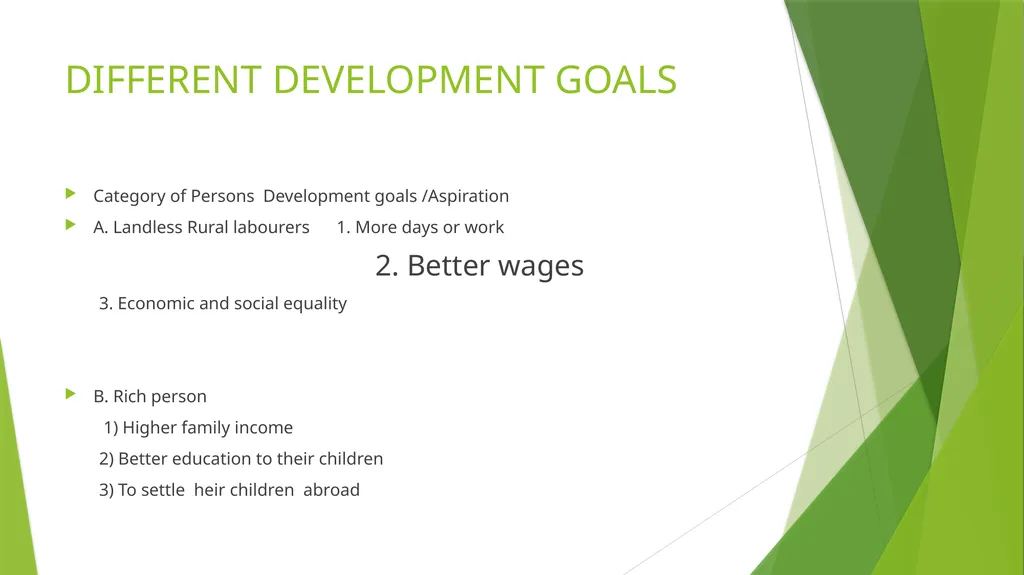
DIFFERENT DEVELOPMENT GOALS Category of Persons Development goals /Aspiration
A. Landless Rural labourers 1. More days or work
2. Better wages
3. Economic and social equality
B. Rich person
1) Higher family income
2) Better education to their children
3) To settle heir children abroad<br>
04
METHOD OF MEASURING NATIONAL DEVELOPMENT National income –it refers to the market values of all good and services which produce in financial year within the country
Average income / per capita income – it’s the ratio of total national income of a country with respect to total population
PCI = Total income /Total population<br>
05
NATIONAL DEVELOPMENT In the process of national development ,a heavy industry is set up
Or we can say that it’s a all round development of nation Like – education, health,and national income<br>
06
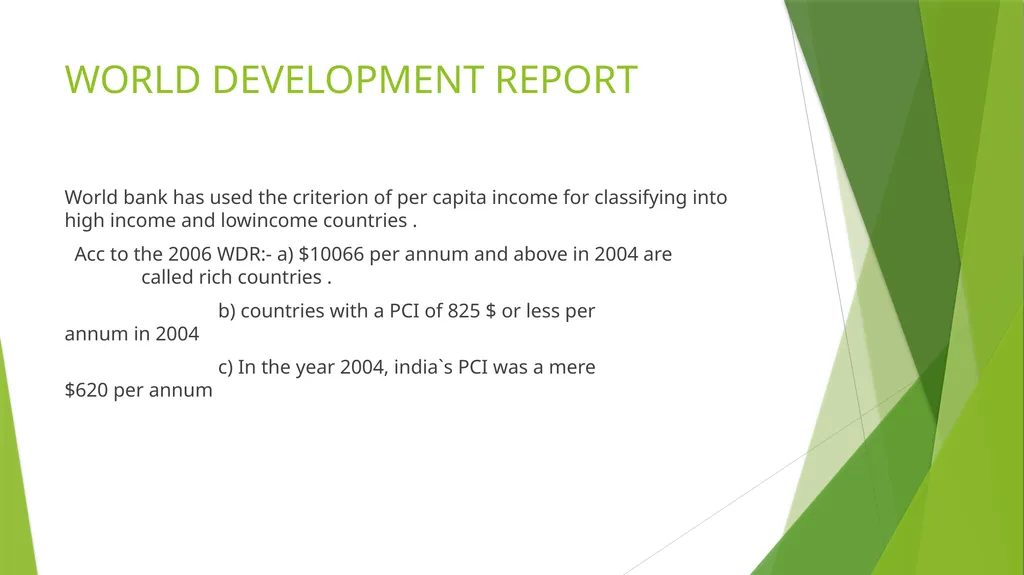
WORLD DEVELOPMENT REPORT World bank has used the criterion of per capita income for classifying into high income and lowincome countries .
Acc to the 2006 WDR:- a) $10066 per annum and above in 2004 are called rich countries .
b) countries with a PCI of 825 $ or less per annum in 2004
c) In the year 2004, india`s PCI was a mere $620 per annum<br>
07
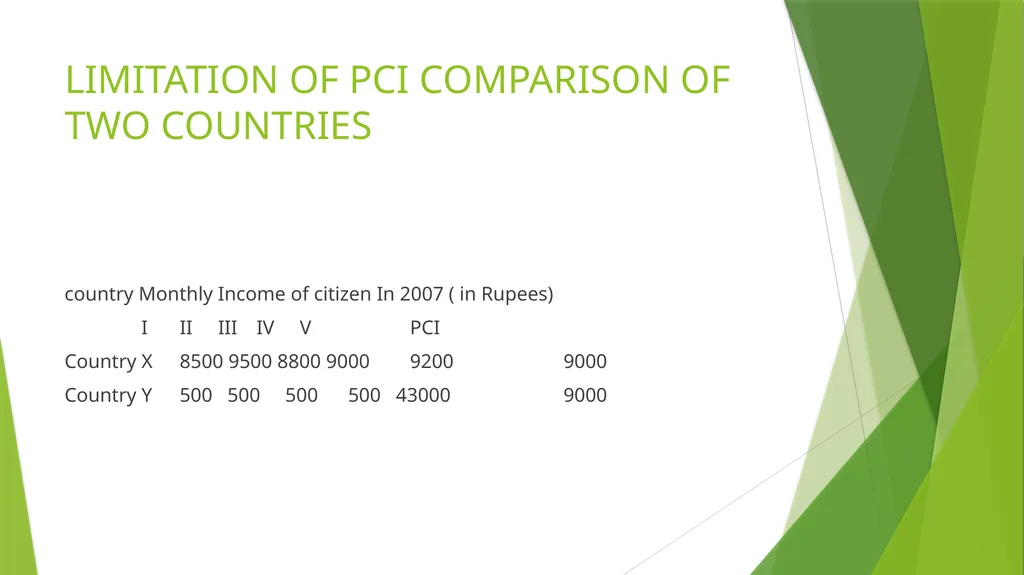
LIMITATION OF PCI COMPARISON OF TWO COUNTRIES country Monthly Income of citizen In 2007 ( in Rupees)
I II III IV V PCI
Country X 8500 9500 8800 9000 9200 9000
Country Y 500 500 500 500 43000 9000<br>
08
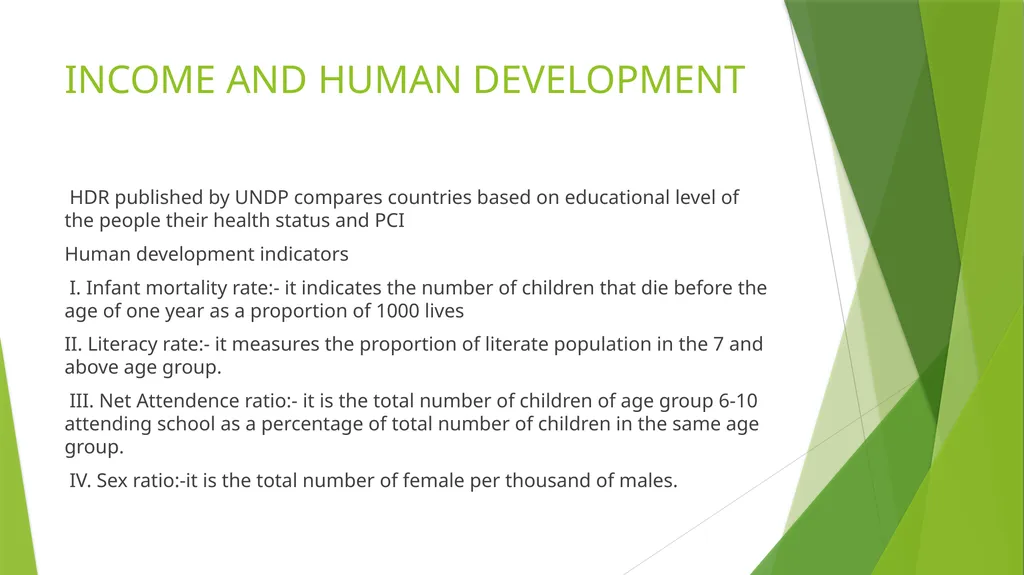
INCOME AND HUMAN DEVELOPMENT HDR published by UNDP compares countries based on educational level of the people their health status and PCI
Human development indicators
I. Infant mortality rate:- it indicates the number of children that die before the age of one year as a proportion of 1000 lives
II. Literacy rate:- it measures the proportion of literate population in the 7 and above age group.
III. Net Attendence ratio:- it is the total number of children of age group 6-10 attending school as a percentage of total number of children in the same age group.
IV. Sex ratio:-it is the total number of female per thousand of males.<br>
09
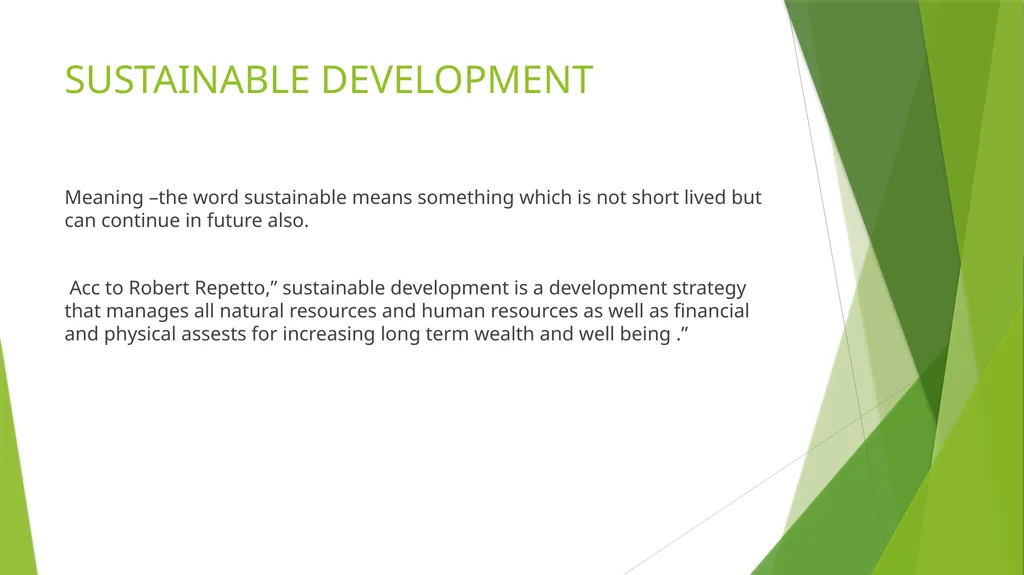
SUSTAINABLE DEVELOPMENT Meaning –the word sustainable means something which is not short lived but can continue in future also.
Acc to Robert Repetto,” sustainable development is a development strategy that manages all natural resources and human resources as well as financial and physical assests for increasing long term wealth and well being .”<br>
10
OBJECTIVE OR FEATURES OF SUSTAINABLE DEVELOPMENT 1.Sustained rise in the real PCI and quality of life
2.Reduction in pollution
3.Rational use of natural resources
4. To fulfils the requirements of future generations<br>