
Development of Balance Scorecard-based indicator


Description: Development of Balance Scorecard-based indicator system for the University of Veterinary Medicine Budapest 20 March, 2024 Balanced Scorecard as a strategic management system 2 Balanced Scorecard is a management system widely applied in
Related Topics
Download Presentation
"Development of Balance Scorecard-based indicator" is the property of its rightful owner. Permission is granted to download and print the materials on this website for personal, non-commercial use only, and to display it on your personal computer provided you do not modify the materials and that you retain all copyright notices contained in the materials. By downloading content from our website, you accept the terms of this agreement.
Presentation Transcript
slide1. Development of Balance Scorecard-based indicator system for the University of Veterinary Medicine Budapest
20 March, 2024<br>
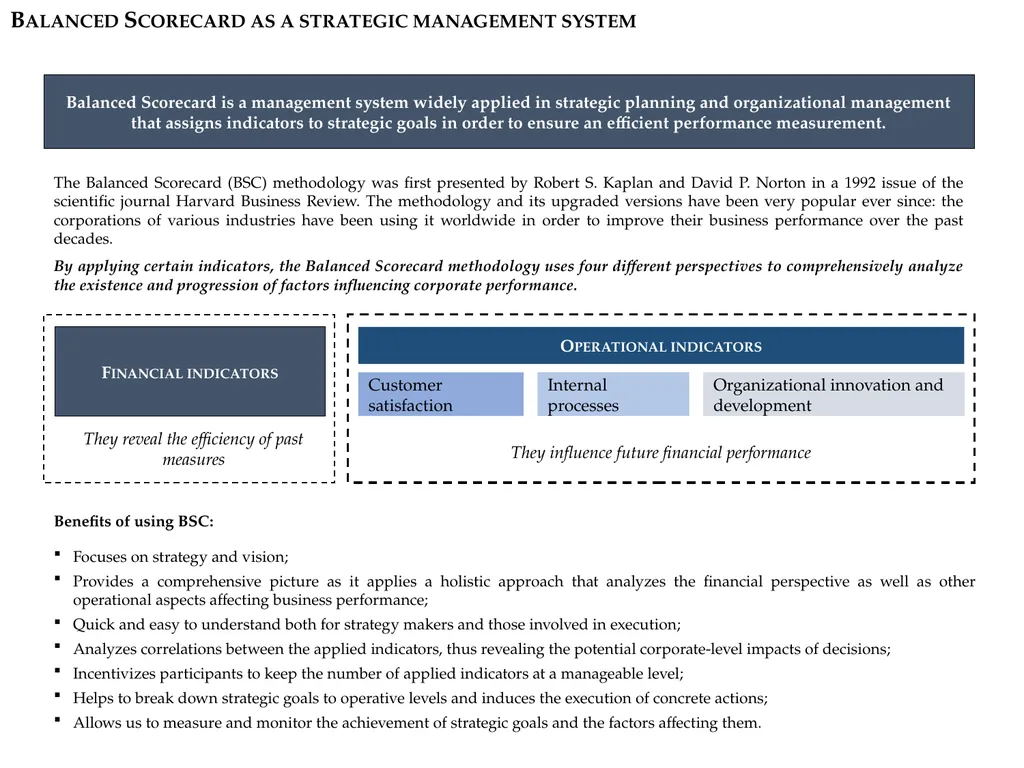
slide2. Balanced Scorecard as a strategic management system 2 Balanced Scorecard is a management system widely applied in strategic planning and organizational management that assigns indicators to strategic goals in order to ensure an efficient performance measurement. The Balanced Scorecard (BSC) methodology was first presented by Robert S. Kaplan and David P. Norton in a 1992 issue of the scientific journal Harvard Business Review. The methodology and its upgraded versions have been very popular ever since: the corporations of various industries have been using it worldwide in order to improve their business performance over the past decades.
By applying certain indicators, the Balanced Scorecard methodology uses four different perspectives to comprehensively analyze the existence and progression of factors influencing corporate performance. Financial indicators Operational indicators They reveal the efficiency of past measures Customer satisfaction Internal processes Organizational innovation and development They influence future financial performance Benefits of using BSC:
Focuses on strategy and vision;
Provides a comprehensive picture as it applies a holistic approach that analyzes the financial perspective as well as other operational aspects affecting business performance;
Quick and easy to understand both for strategy makers and those involved in execution;
Analyzes correlations between the applied indicators, thus revealing the potential corporate-level impacts of decisions;
Incentivizes participants to keep the number of applied indicators at a manageable level;
Helps to break down strategic goals to operative levels and induces the execution of concrete actions;
Allows us to measure and monitor the achievement of strategic goals and the factors affecting them.<br>
slide3. Application of BSC methodology at universities 3 The application of BSC methodology is especially justified in the University’s strategic management because the University:
Needs to adapt to the uncertain and volatile political, economic, social and technological environment as well as the socio-cultural, educational and environmental trends;
Is increasingly expected by the stakeholders of the University’s operation to ensure transparent and accountable operational and decision-making mechanisms;
Model shift – the advancement of foundation-based funding and the increasing popularity of the “university as a service provider” concept.
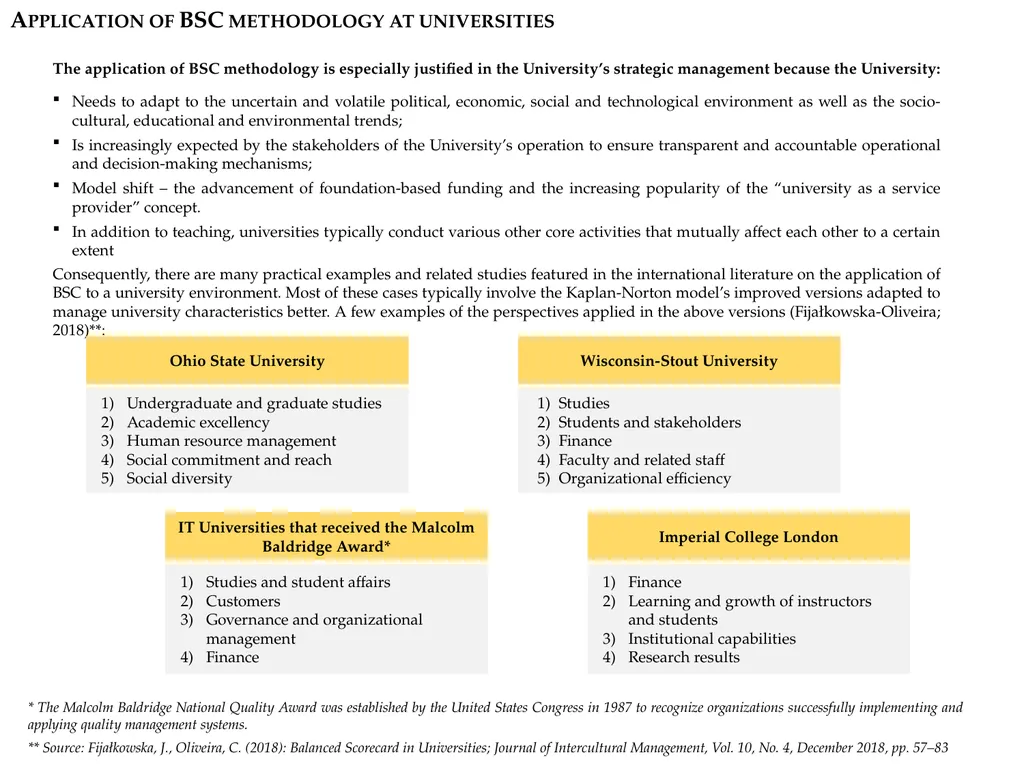
In addition to teaching, universities typically conduct various other core activities that mutually affect each other to a certain extent Consequently, there are many practical examples and related studies featured in the international literature on the application of BSC to a university environment. Most of these cases typically involve the Kaplan-Norton model’s improved versions adapted to manage university characteristics better. A few examples of the perspectives applied in the above versions (Fijałkowska-Oliveira; 2018)**: Ohio State University Undergraduate and graduate studies
Academic excellency
Human resource management
Social commitment and reach
Social diversity Wisconsin-Stout University Studies
Students and stakeholders
Finance
Faculty and related staff
Organizational efficiency Imperial College London Finance
Learning and growth of instructors and students
Institutional capabilities
Research results IT Universities that received the Malcolm Baldridge Award* Studies and student affairs
Customers
Governance and organizational management
Finance * The Malcolm Baldridge National Quality Award was established by the United States Congress in 1987 to recognize organizations successfully implementing and applying quality management systems.
** Source: Fijałkowska, J., Oliveira, C. (2018): Balanced Scorecard in Universities; Journal of Intercultural Management, Vol. 10, No. 4, December 2018, pp. 57–83<br>
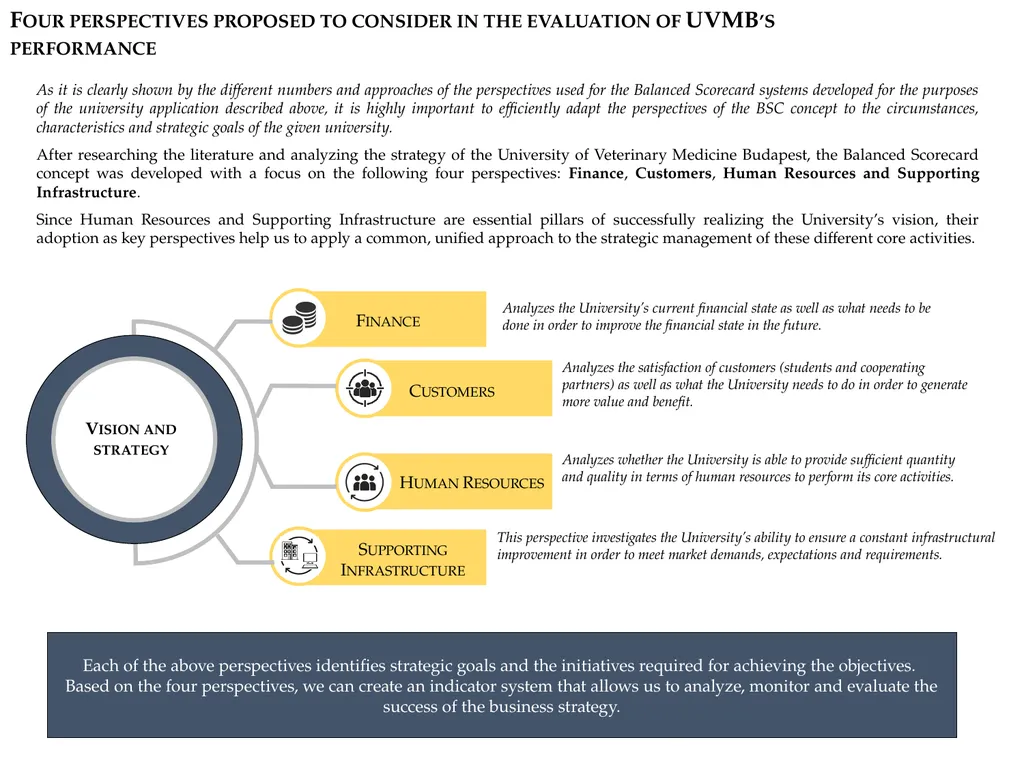
slide4. Four perspectives proposed to consider in the evaluation of UVMB’s performance 4 Human Resources Finance Customers Supporting Infrastructure Vision and strategy Analyzes the University’s current financial state as well as what needs to be done in order to improve the financial state in the future. Analyzes the satisfaction of customers (students and cooperating partners) as well as what the University needs to do in order to generate more value and benefit. Analyzes whether the University is able to provide sufficient quantity and quality in terms of human resources to perform its core activities. This perspective investigates the University’s ability to ensure a constant infrastructural improvement in order to meet market demands, expectations and requirements. Each of the above perspectives identifies strategic goals and the initiatives required for achieving the objectives.
Based on the four perspectives, we can create an indicator system that allows us to analyze, monitor and evaluate the success of the business strategy. As it is clearly shown by the different numbers and approaches of the perspectives used for the Balanced Scorecard systems developed for the purposes of the university application described above, it is highly important to efficiently adapt the perspectives of the BSC concept to the circumstances, characteristics and strategic goals of the given university.
After researching the literature and analyzing the strategy of the University of Veterinary Medicine Budapest, the Balanced Scorecard concept was developed with a focus on the following four perspectives: Finance, Customers, Human Resources and Supporting Infrastructure.
Since Human Resources and Supporting Infrastructure are essential pillars of successfully realizing the University’s vision, their adoption as key perspectives help us to apply a common, unified approach to the strategic management of these different core activities.<br>
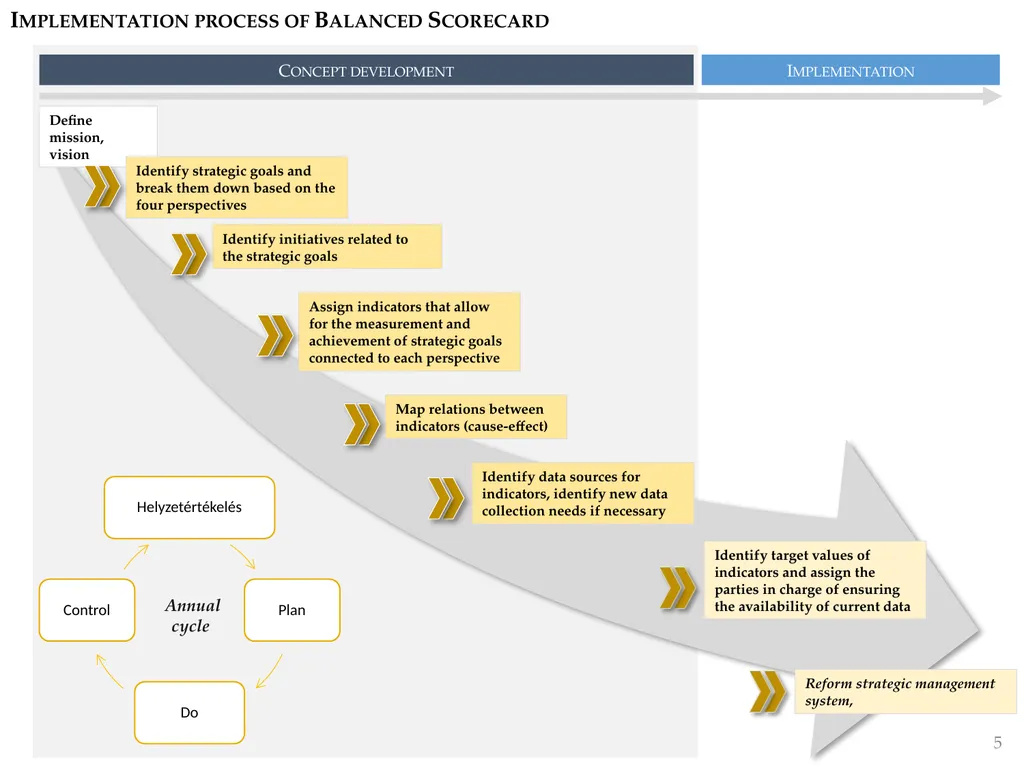
slide5. Define mission, vision Implementation process of Balanced Scorecard Assign indicators that allow for the measurement and achievement of strategic goals connected to each perspective 5 Identify strategic goals and break them down based on the four perspectives Identify initiatives related to the strategic goals Reform strategic management system, Map relations between indicators (cause-effect) Identify data sources for indicators, identify new data collection needs if necessary Identify target values of indicators and assign the parties in charge of ensuring the availability of current data Concept development Implementation Annual cycle<br>
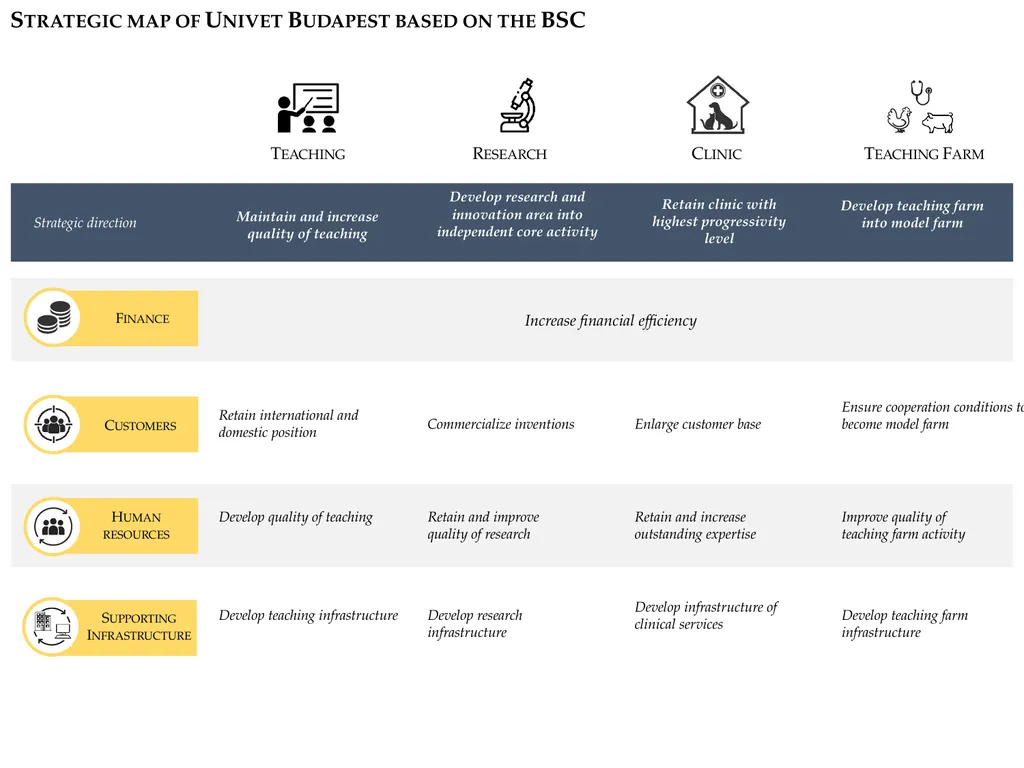
slide6. Human resources Strategic map of Univet Budapest based on the BSC Teaching Research Clinic Teaching Farm Strategic direction Maintain and increase quality of teaching Develop research and innovation area into independent core activity Retain clinic with highest progressivity level Develop teaching farm into model farm Finance Increase financial efficiency Customers Supporting Infrastructure Retain international and domestic position Develop quality of teaching Develop teaching infrastructure Commercialize inventions Retain and improve quality of research Develop research infrastructure Enlarge customer base Retain and increase outstanding expertise Develop infrastructure of clinical services Ensure cooperation conditions to become model farm Improve quality of teaching farm activity Develop teaching farm infrastructure 6<br>
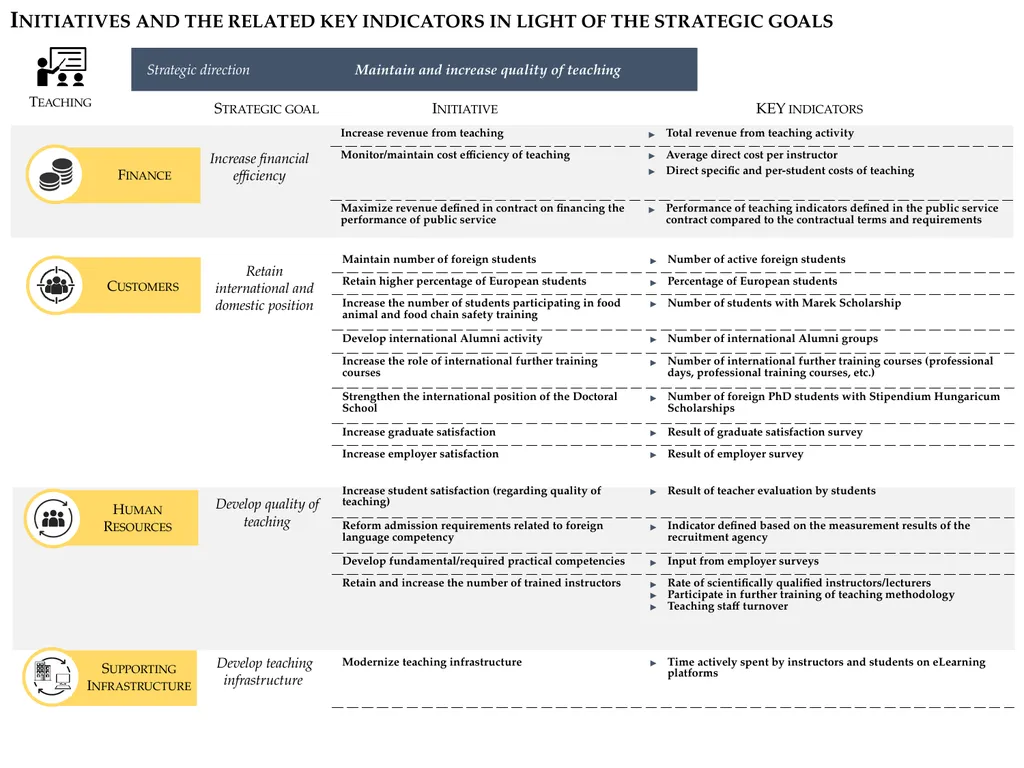
slide7. Human Resources Initiatives and the related key indicators in light of the strategic goals Teaching Strategic direction Maintain and increase quality of teaching Finance Increase financial efficiency Customers Supporting Infrastructure Retain international and domestic position Develop quality of teaching Develop teaching infrastructure Strategic goal Initiative KEY indicators 7<br>
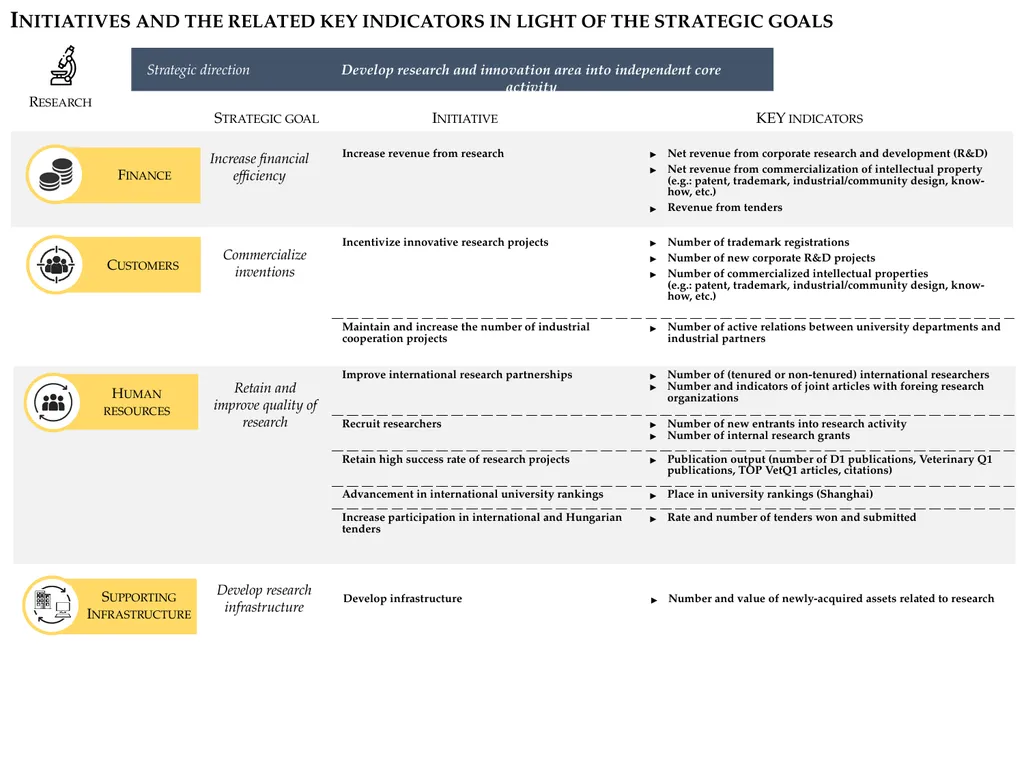
slide8. Human resources Initiatives and the related key indicators in light of the strategic goals Research Strategic direction Develop research and innovation area into independent core activity Finance Increase financial efficiency Customers Supporting Infrastructure Commercialize inventions Develop research infrastructure Retain and improve quality of research Strategic goal Initiative KEY indicators 8<br>
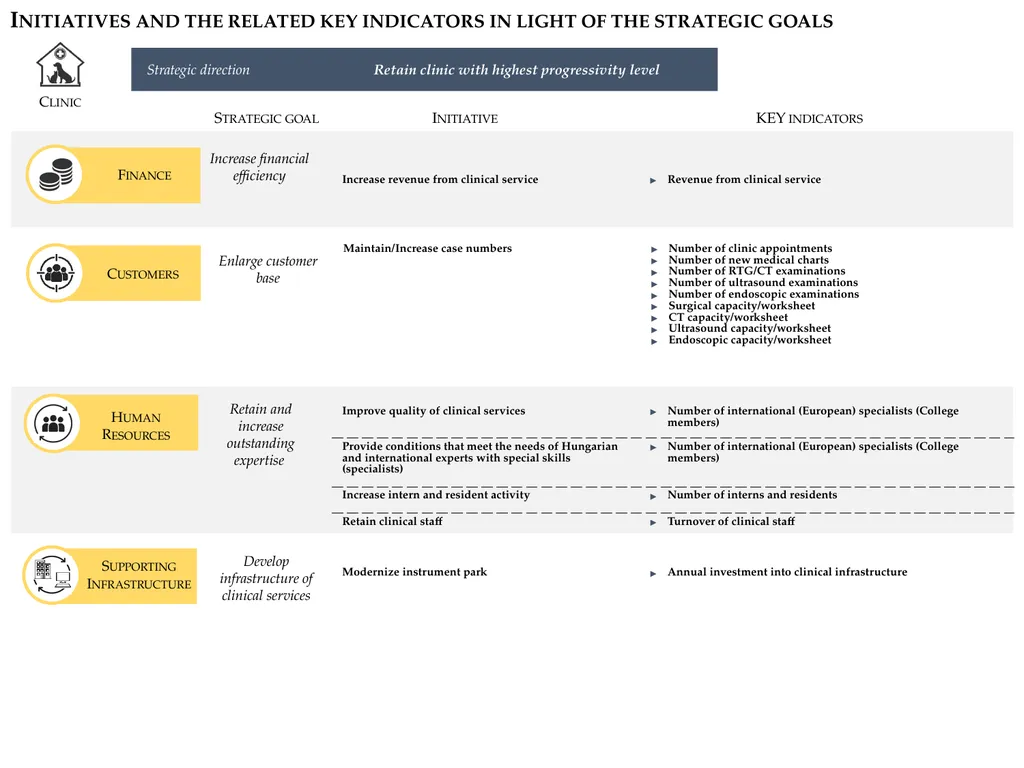
slide9. Human Resources Initiatives and the related key indicators in light of the strategic goals Clinic Strategic direction Retain clinic with highest progressivity level Finance Increase financial efficiency Customers Supporting Infrastructure Enlarge customer base Retain and increase outstanding expertise Develop infrastructure of clinical services Strategic goal Initiative KEY indicators 9<br>
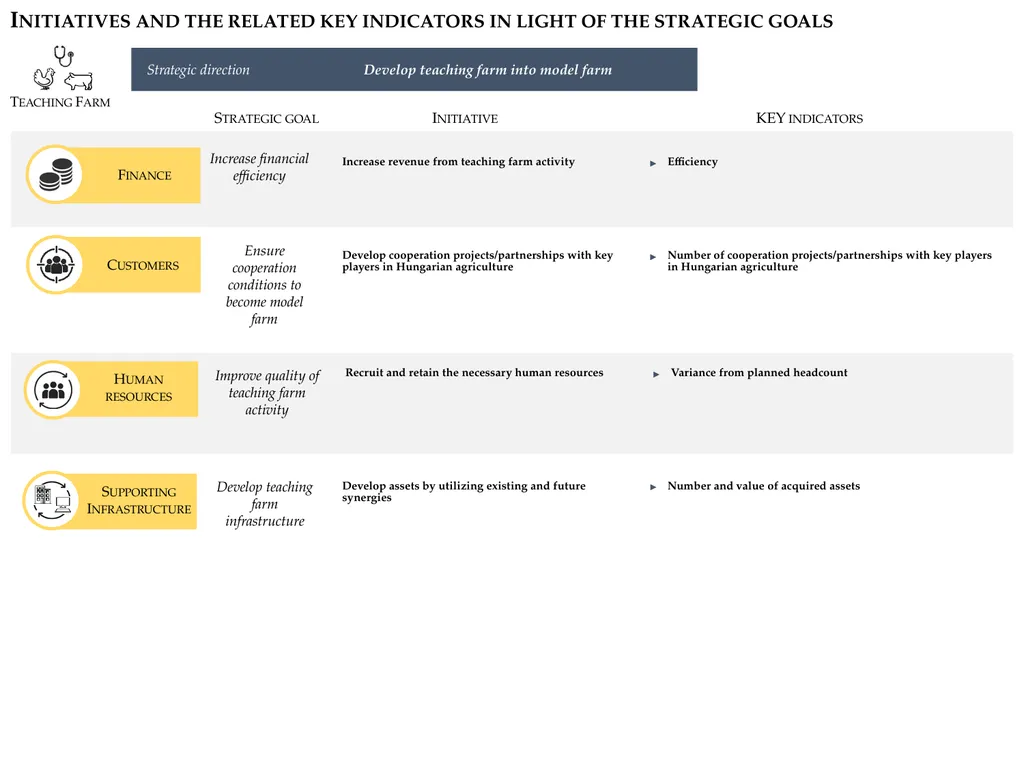
slide10. Human resources Initiatives and the related key indicators in light of the strategic goals Teaching Farm Strategic direction Develop teaching farm into model farm Finance Increase financial efficiency Customers Supporting Infrastructure Ensure cooperation conditions to become model farm Improve quality of teaching farm activity Develop teaching farm infrastructure Strategic goal Initiative KEY indicators 10<br>
20 March, 2024<br>
slide2. Balanced Scorecard as a strategic management system 2 Balanced Scorecard is a management system widely applied in strategic planning and organizational management that assigns indicators to strategic goals in order to ensure an efficient performance measurement. The Balanced Scorecard (BSC) methodology was first presented by Robert S. Kaplan and David P. Norton in a 1992 issue of the scientific journal Harvard Business Review. The methodology and its upgraded versions have been very popular ever since: the corporations of various industries have been using it worldwide in order to improve their business performance over the past decades.
By applying certain indicators, the Balanced Scorecard methodology uses four different perspectives to comprehensively analyze the existence and progression of factors influencing corporate performance. Financial indicators Operational indicators They reveal the efficiency of past measures Customer satisfaction Internal processes Organizational innovation and development They influence future financial performance Benefits of using BSC:
Focuses on strategy and vision;
Provides a comprehensive picture as it applies a holistic approach that analyzes the financial perspective as well as other operational aspects affecting business performance;
Quick and easy to understand both for strategy makers and those involved in execution;
Analyzes correlations between the applied indicators, thus revealing the potential corporate-level impacts of decisions;
Incentivizes participants to keep the number of applied indicators at a manageable level;
Helps to break down strategic goals to operative levels and induces the execution of concrete actions;
Allows us to measure and monitor the achievement of strategic goals and the factors affecting them.<br>
slide3. Application of BSC methodology at universities 3 The application of BSC methodology is especially justified in the University’s strategic management because the University:
Needs to adapt to the uncertain and volatile political, economic, social and technological environment as well as the socio-cultural, educational and environmental trends;
Is increasingly expected by the stakeholders of the University’s operation to ensure transparent and accountable operational and decision-making mechanisms;
Model shift – the advancement of foundation-based funding and the increasing popularity of the “university as a service provider” concept.
In addition to teaching, universities typically conduct various other core activities that mutually affect each other to a certain extent Consequently, there are many practical examples and related studies featured in the international literature on the application of BSC to a university environment. Most of these cases typically involve the Kaplan-Norton model’s improved versions adapted to manage university characteristics better. A few examples of the perspectives applied in the above versions (Fijałkowska-Oliveira; 2018)**: Ohio State University Undergraduate and graduate studies
Academic excellency
Human resource management
Social commitment and reach
Social diversity Wisconsin-Stout University Studies
Students and stakeholders
Finance
Faculty and related staff
Organizational efficiency Imperial College London Finance
Learning and growth of instructors and students
Institutional capabilities
Research results IT Universities that received the Malcolm Baldridge Award* Studies and student affairs
Customers
Governance and organizational management
Finance * The Malcolm Baldridge National Quality Award was established by the United States Congress in 1987 to recognize organizations successfully implementing and applying quality management systems.
** Source: Fijałkowska, J., Oliveira, C. (2018): Balanced Scorecard in Universities; Journal of Intercultural Management, Vol. 10, No. 4, December 2018, pp. 57–83<br>
slide4. Four perspectives proposed to consider in the evaluation of UVMB’s performance 4 Human Resources Finance Customers Supporting Infrastructure Vision and strategy Analyzes the University’s current financial state as well as what needs to be done in order to improve the financial state in the future. Analyzes the satisfaction of customers (students and cooperating partners) as well as what the University needs to do in order to generate more value and benefit. Analyzes whether the University is able to provide sufficient quantity and quality in terms of human resources to perform its core activities. This perspective investigates the University’s ability to ensure a constant infrastructural improvement in order to meet market demands, expectations and requirements. Each of the above perspectives identifies strategic goals and the initiatives required for achieving the objectives.
Based on the four perspectives, we can create an indicator system that allows us to analyze, monitor and evaluate the success of the business strategy. As it is clearly shown by the different numbers and approaches of the perspectives used for the Balanced Scorecard systems developed for the purposes of the university application described above, it is highly important to efficiently adapt the perspectives of the BSC concept to the circumstances, characteristics and strategic goals of the given university.
After researching the literature and analyzing the strategy of the University of Veterinary Medicine Budapest, the Balanced Scorecard concept was developed with a focus on the following four perspectives: Finance, Customers, Human Resources and Supporting Infrastructure.
Since Human Resources and Supporting Infrastructure are essential pillars of successfully realizing the University’s vision, their adoption as key perspectives help us to apply a common, unified approach to the strategic management of these different core activities.<br>
slide5. Define mission, vision Implementation process of Balanced Scorecard Assign indicators that allow for the measurement and achievement of strategic goals connected to each perspective 5 Identify strategic goals and break them down based on the four perspectives Identify initiatives related to the strategic goals Reform strategic management system, Map relations between indicators (cause-effect) Identify data sources for indicators, identify new data collection needs if necessary Identify target values of indicators and assign the parties in charge of ensuring the availability of current data Concept development Implementation Annual cycle<br>
slide6. Human resources Strategic map of Univet Budapest based on the BSC Teaching Research Clinic Teaching Farm Strategic direction Maintain and increase quality of teaching Develop research and innovation area into independent core activity Retain clinic with highest progressivity level Develop teaching farm into model farm Finance Increase financial efficiency Customers Supporting Infrastructure Retain international and domestic position Develop quality of teaching Develop teaching infrastructure Commercialize inventions Retain and improve quality of research Develop research infrastructure Enlarge customer base Retain and increase outstanding expertise Develop infrastructure of clinical services Ensure cooperation conditions to become model farm Improve quality of teaching farm activity Develop teaching farm infrastructure 6<br>
slide7. Human Resources Initiatives and the related key indicators in light of the strategic goals Teaching Strategic direction Maintain and increase quality of teaching Finance Increase financial efficiency Customers Supporting Infrastructure Retain international and domestic position Develop quality of teaching Develop teaching infrastructure Strategic goal Initiative KEY indicators 7<br>
slide8. Human resources Initiatives and the related key indicators in light of the strategic goals Research Strategic direction Develop research and innovation area into independent core activity Finance Increase financial efficiency Customers Supporting Infrastructure Commercialize inventions Develop research infrastructure Retain and improve quality of research Strategic goal Initiative KEY indicators 8<br>
slide9. Human Resources Initiatives and the related key indicators in light of the strategic goals Clinic Strategic direction Retain clinic with highest progressivity level Finance Increase financial efficiency Customers Supporting Infrastructure Enlarge customer base Retain and increase outstanding expertise Develop infrastructure of clinical services Strategic goal Initiative KEY indicators 9<br>
slide10. Human resources Initiatives and the related key indicators in light of the strategic goals Teaching Farm Strategic direction Develop teaching farm into model farm Finance Increase financial efficiency Customers Supporting Infrastructure Ensure cooperation conditions to become model farm Improve quality of teaching farm activity Develop teaching farm infrastructure Strategic goal Initiative KEY indicators 10<br>