Difference Between Syllabus and Curriculum P-09 Unit-I Definition of Syllabus The syllabus is defined as the documents that consist of topics or portion covered in a particular subject. It is determined by the examination board and created
"Difference Between Syllabus and Curriculum P-09" is the property of its rightful owner. Permission is granted to
download and print the materials on this website for personal, non-commercial use only, and to display it
on your personal computer provided you do not modify the materials and that you retain all copyright
notices contained in the materials. By downloading content from our website, you accept the terms of this
agreement.
Presentation Transcript
01
Difference Between Syllabus and Curriculum P-09
Unit-I<br>
02
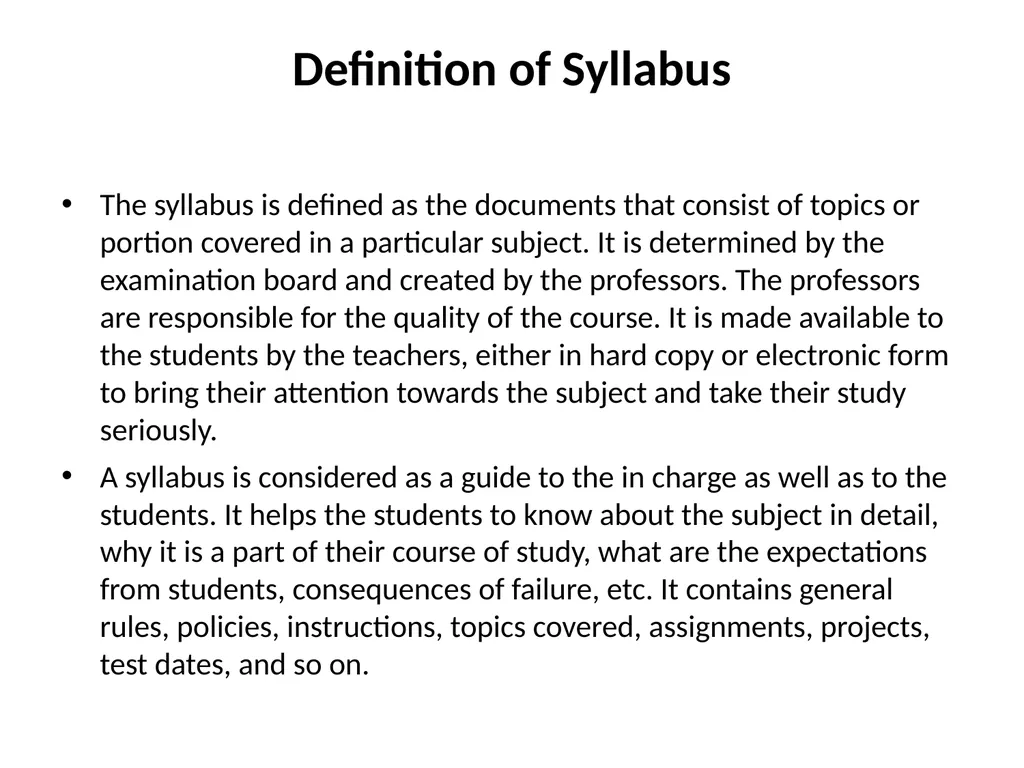
Definition of Syllabus The syllabus is defined as the documents that consist of topics or portion covered in a particular subject. It is determined by the examination board and created by the professors. The professors are responsible for the quality of the course. It is made available to the students by the teachers, either in hard copy or electronic form to bring their attention towards the subject and take their study seriously.
A syllabus is considered as a guide to the in charge as well as to the students. It helps the students to know about the subject in detail, why it is a part of their course of study, what are the expectations from students, consequences of failure, etc. It contains general rules, policies, instructions, topics covered, assignments, projects, test dates, and so on.<br>
03
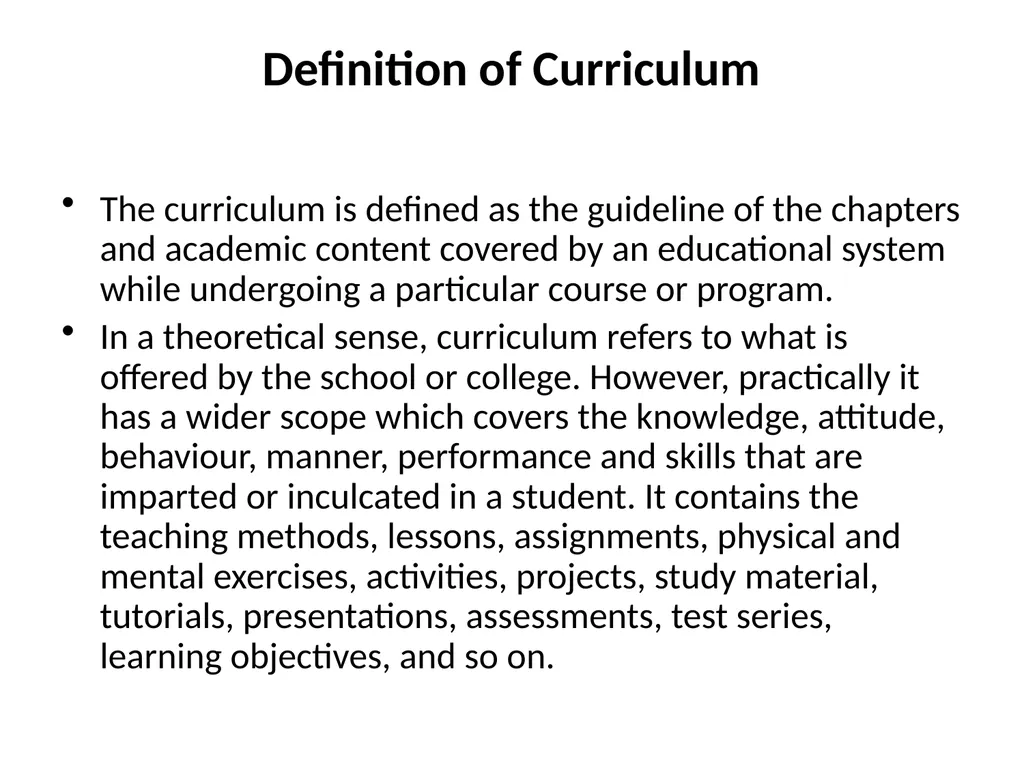
Definition of Curriculum The curriculum is defined as the guideline of the chapters and academic content covered by an educational system while undergoing a particular course or program.
In a theoretical sense, curriculum refers to what is offered by the school or college. However, practically it has a wider scope which covers the knowledge, attitude, behaviour, manner, performance and skills that are imparted or inculcated in a student. It contains the teaching methods, lessons, assignments, physical and mental exercises, activities, projects, study material, tutorials, presentations, assessments, test series, learning objectives, and so on.<br>
04
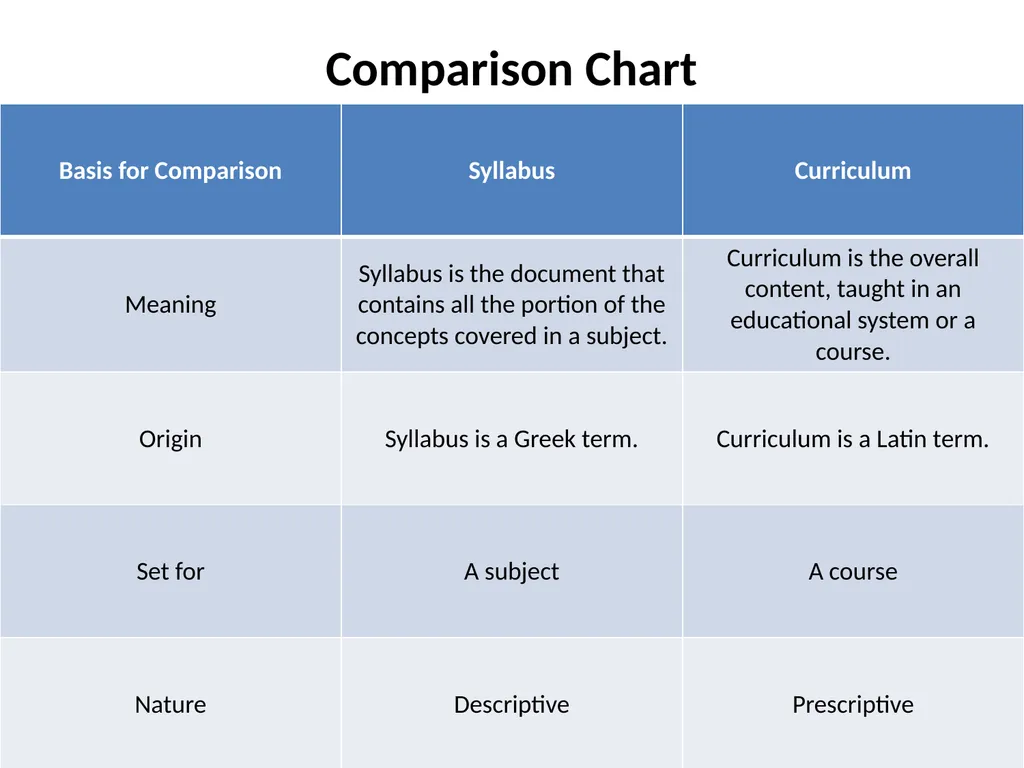
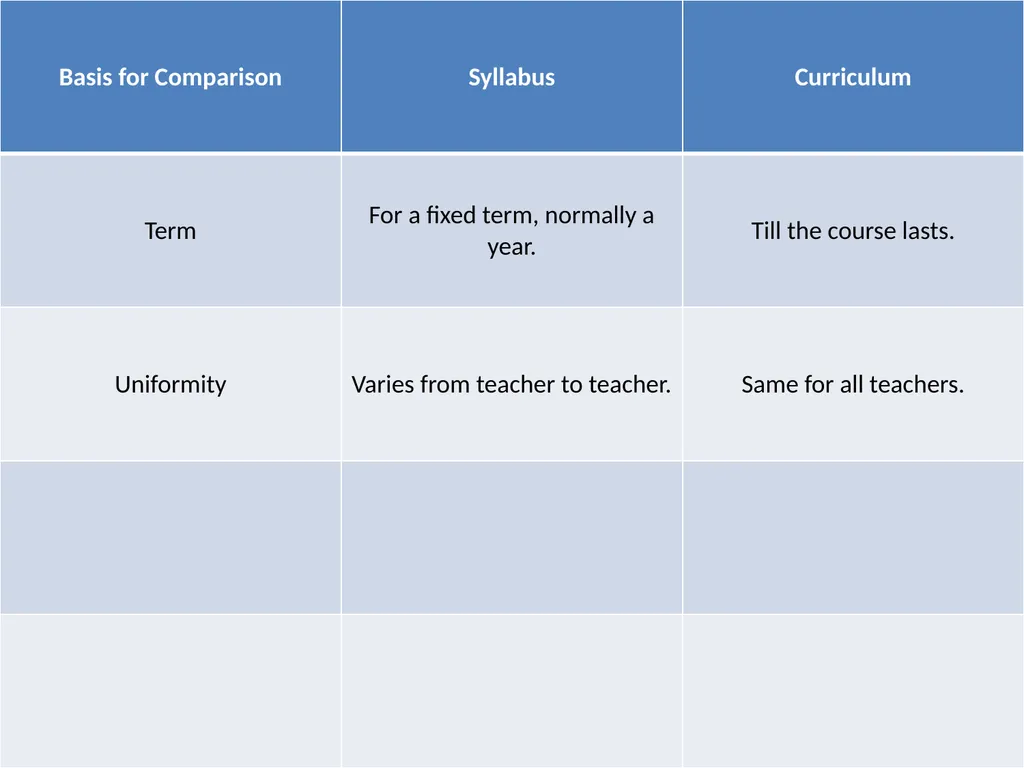
Comparison Chart<br>
05
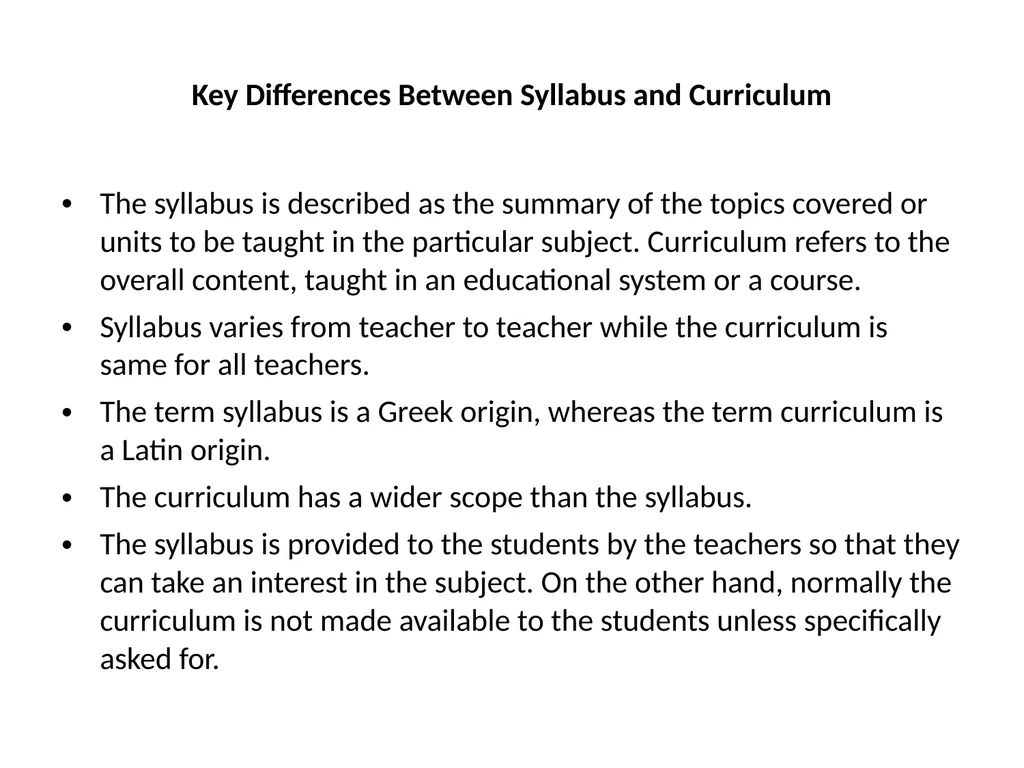
Key Differences Between Syllabus and Curriculum The syllabus is described as the summary of the topics covered or units to be taught in the particular subject. Curriculum refers to the overall content, taught in an educational system or a course.
Syllabus varies from teacher to teacher while the curriculum is same for all teachers.
The term syllabus is a Greek origin, whereas the term curriculum is a Latin origin.
The curriculum has a wider scope than the syllabus.
The syllabus is provided to the students by the teachers so that they can take an interest in the subject. On the other hand, normally the curriculum is not made available to the students unless specifically asked for.<br>
06
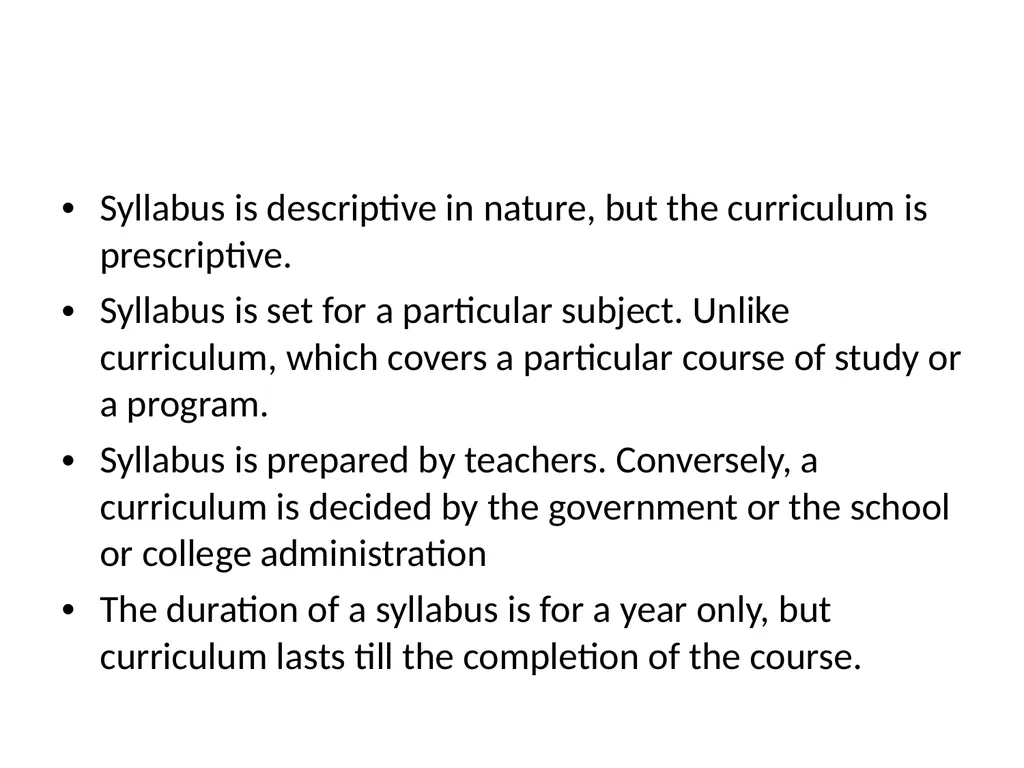
Syllabus is descriptive in nature, but the curriculum is prescriptive.
Syllabus is set for a particular subject. Unlike curriculum, which covers a particular course of study or a program.
Syllabus is prepared by teachers. Conversely, a curriculum is decided by the government or the school or college administration
The duration of a syllabus is for a year only, but curriculum lasts till the completion of the course.<br>