Diffraction and Interference Physics 2212 Light Light has Wave properties Light can Diffract Light can Interfere Constructively Destructively Wave Fronts Lines that are perpendicular to the motion of the wave, indicate the location of the
"Diffraction and Interference Physics 2212 Light" is the property of its rightful owner. Permission is granted to
download and print the materials on this website for personal, non-commercial use only, and to display it
on your personal computer provided you do not modify the materials and that you retain all copyright
notices contained in the materials. By downloading content from our website, you accept the terms of this
agreement.
Presentation Transcript
01
Diffraction and Interference Physics 2212<br>
02
Light Light has Wave properties
Light can Diffract
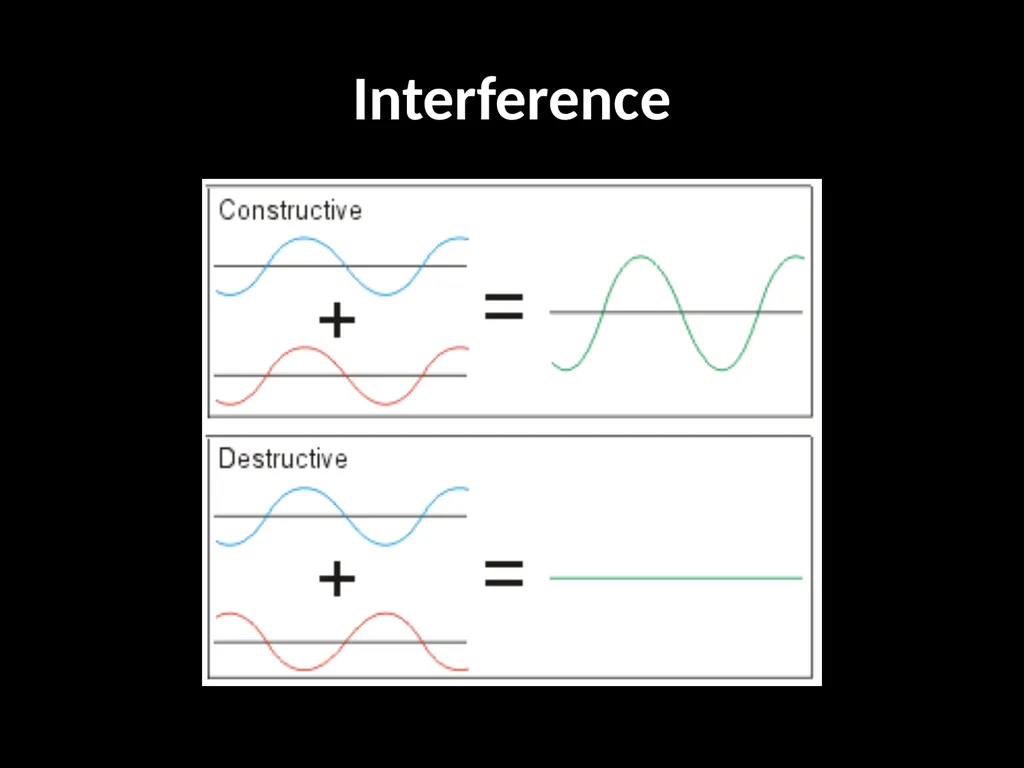
Light can Interfere
Constructively
Destructively<br>
03
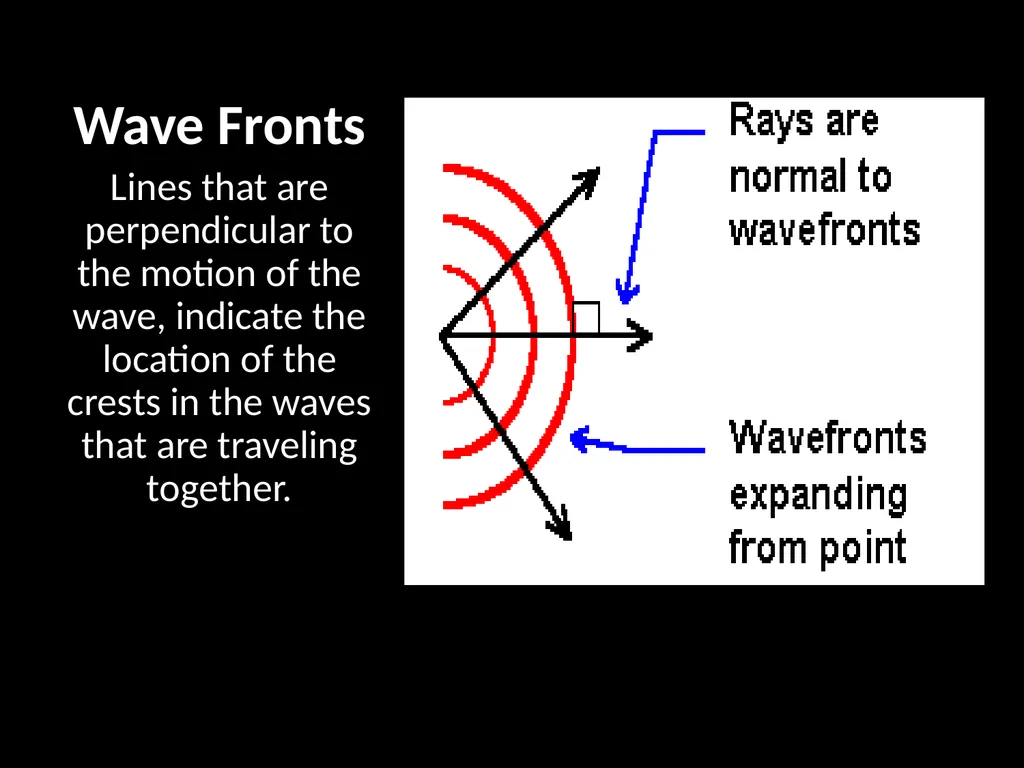
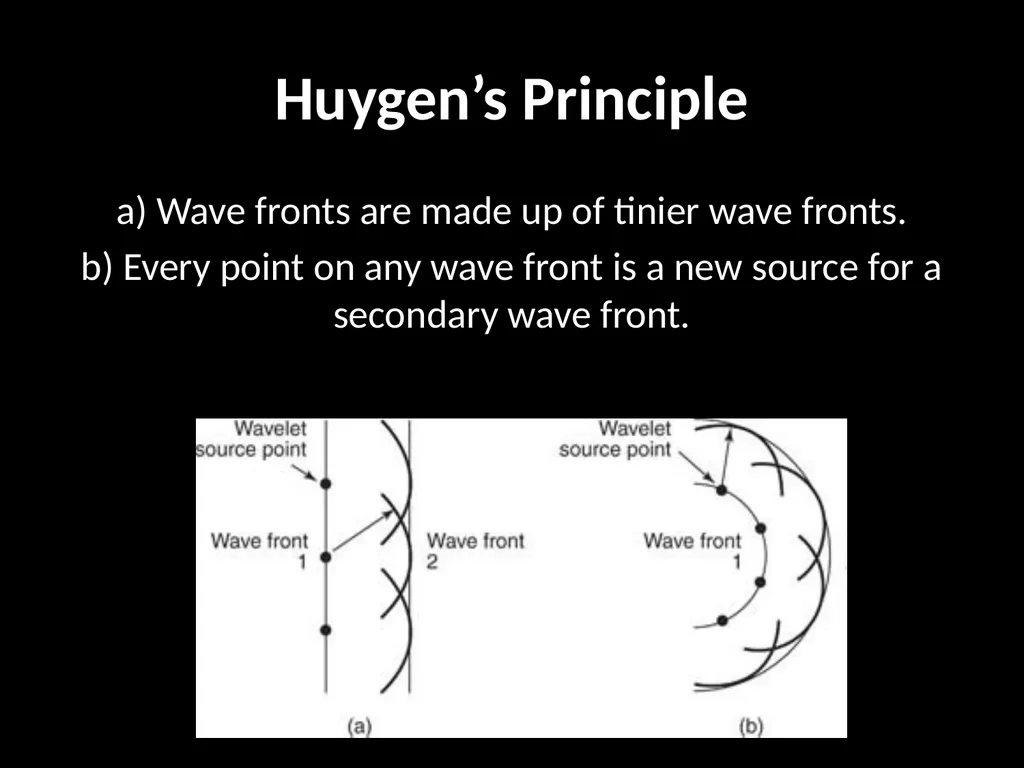
Wave Fronts Lines that are perpendicular to the motion of the wave, indicate the location of the crests in the waves that are traveling together.<br>
04
Huygen’s Principle a) Wave fronts are made up of tinier wave fronts.
b) Every point on any wave front is a new source for a secondary wave front.<br>
05
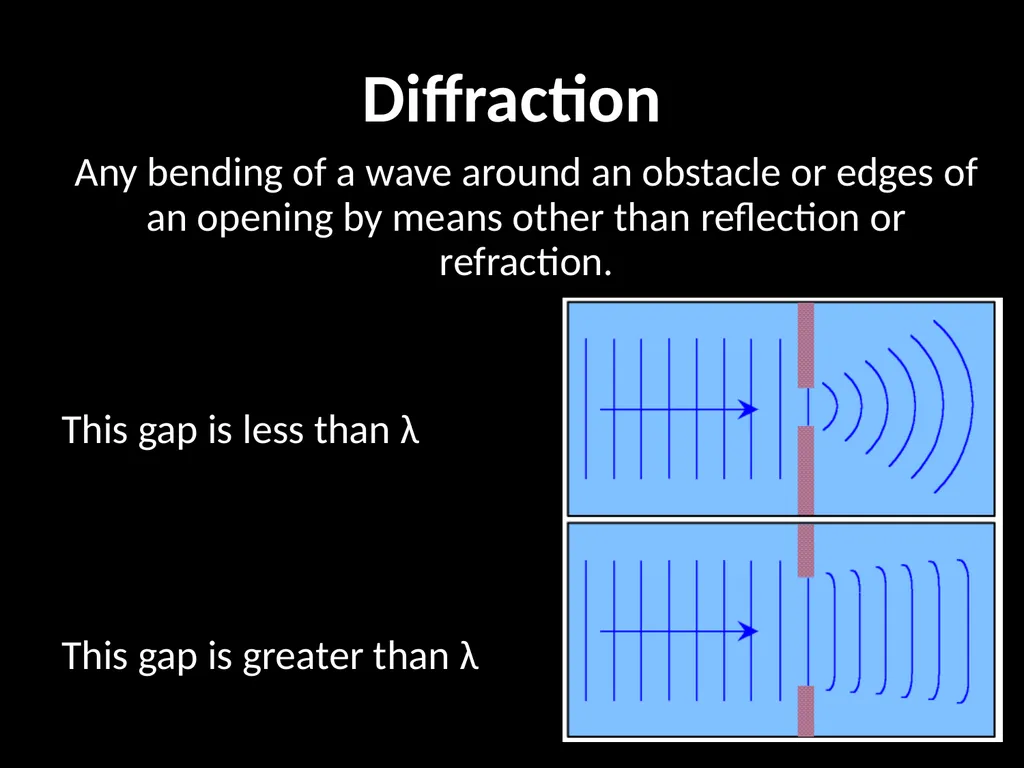
Diffraction Any bending of a wave around an obstacle or edges of an opening by means other than reflection or refraction.
This gap is less than λ
This gap is greater than λ<br>
06
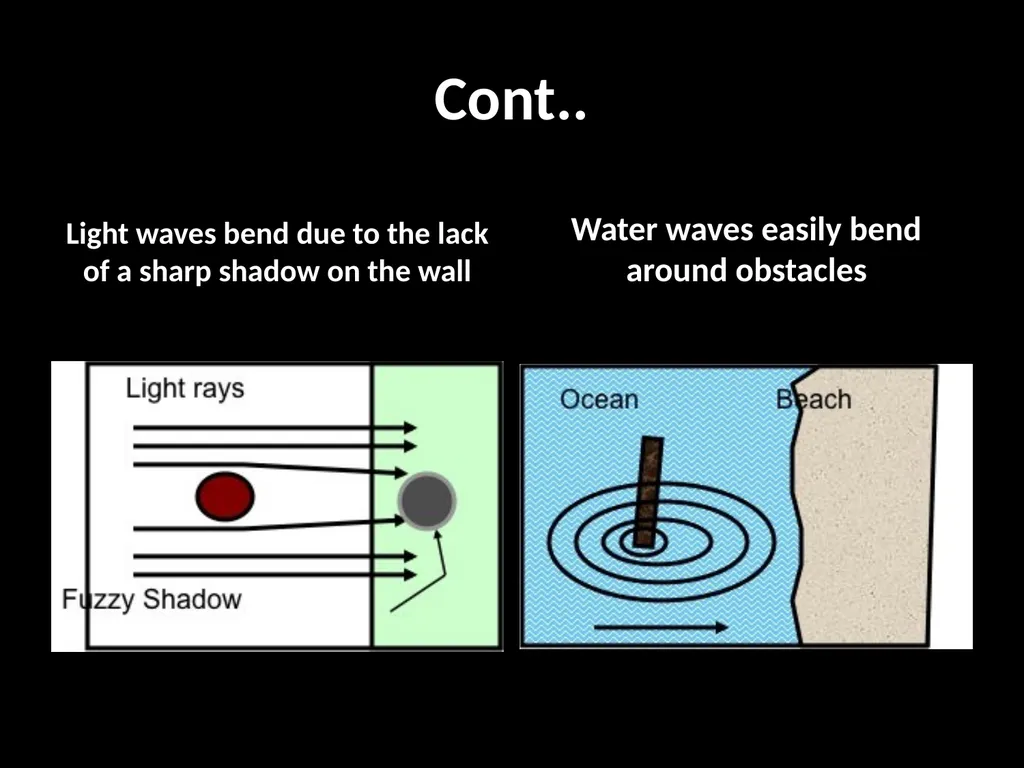
Cont.. Light waves bend due to the lack of a sharp shadow on the wall Water waves easily bend around obstacles<br>
07
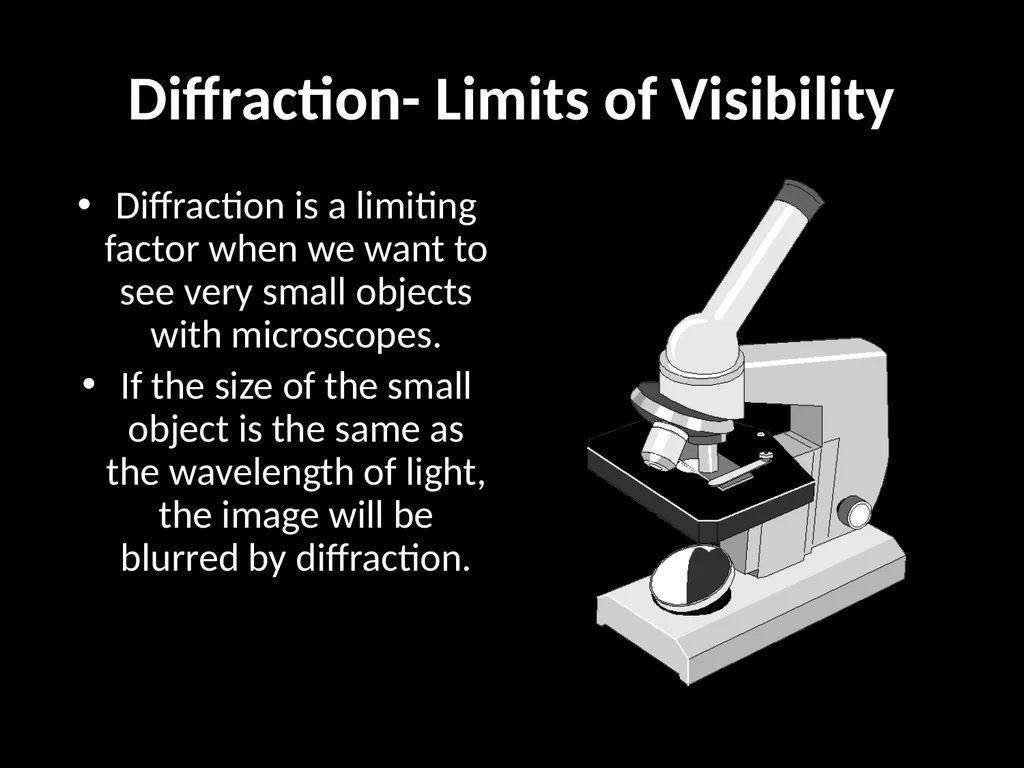
Diffraction- Limits of Visibility Diffraction is a limiting factor when we want to see very small objects with microscopes.
If the size of the small object is the same as the wavelength of light, the image will be blurred by diffraction.<br>
08
Interference<br>
09
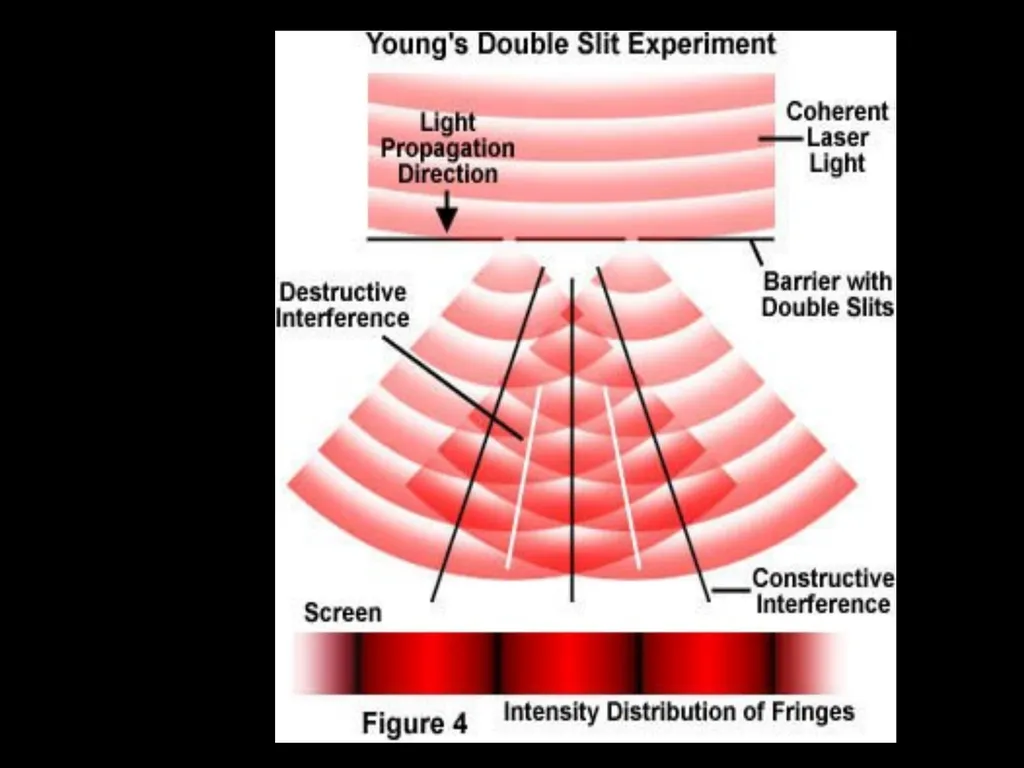
Young’s Interference Experiment Bright fringes = constructive interference
Waves arrive at the screen in phase
Dark fringes = destructive interference
Waves arrive at the screen out of phase<br>
10
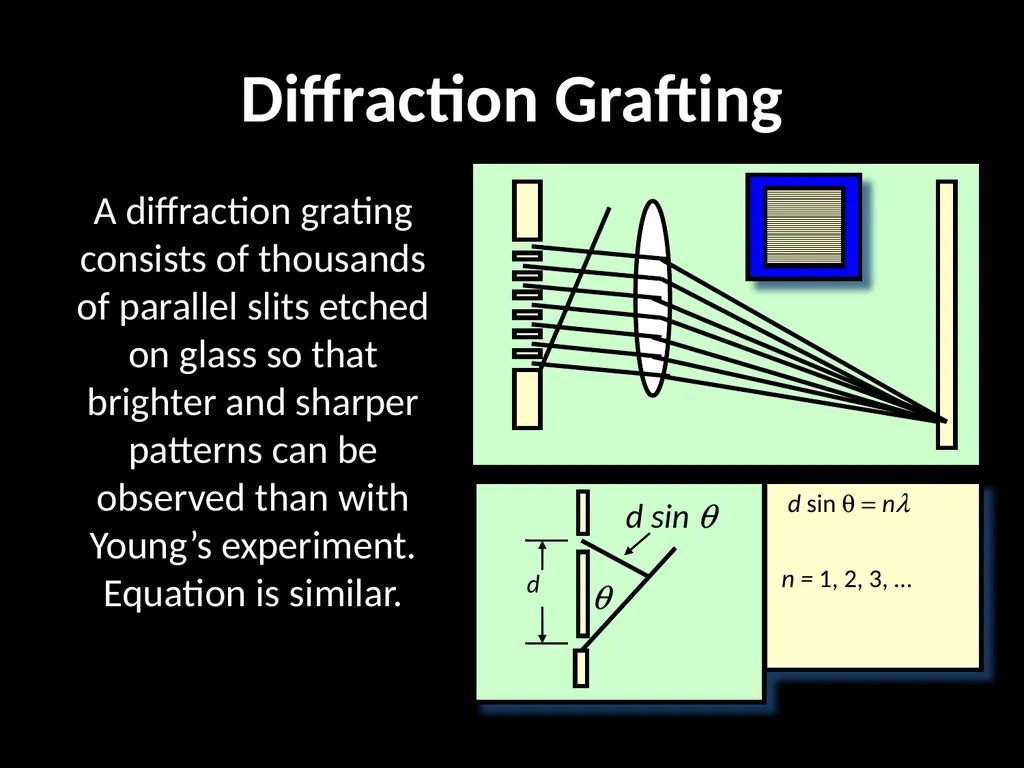
Diffraction Grafting A diffraction grating consists of thousands of parallel slits etched on glass so that brighter and sharper patterns can be observed than with Young’s experiment. Equation is similar.<br>
11
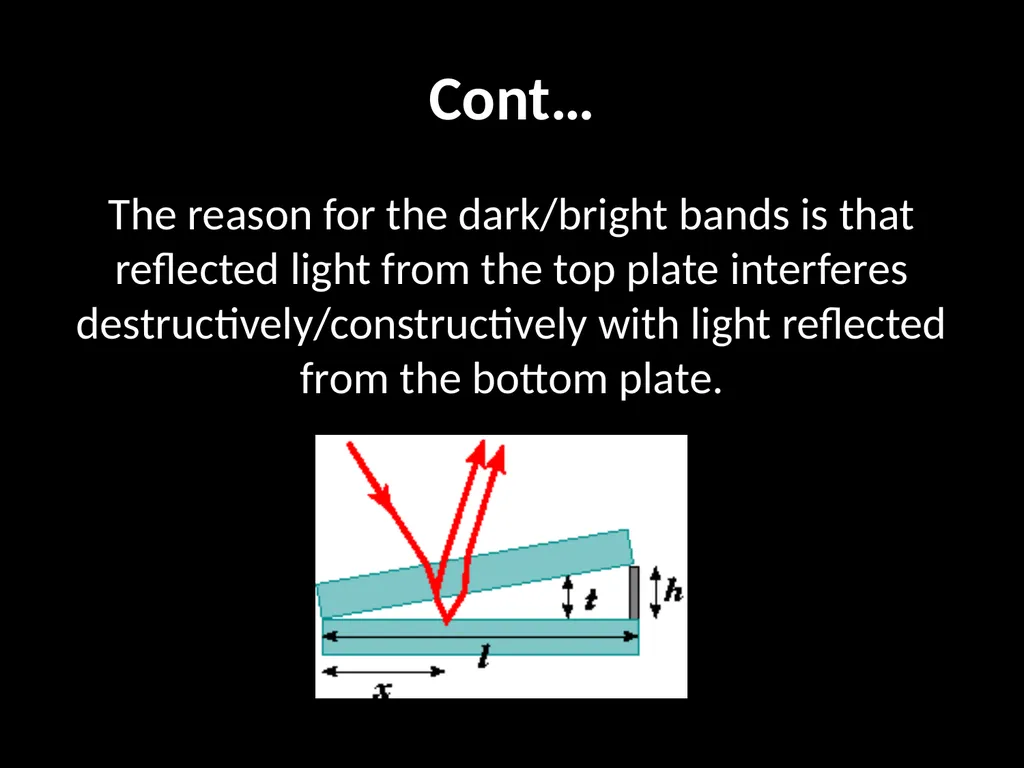
Single-Color Interference from Thin Films Interference fringes can be produced by the reflection of light from two surfaces that are very close together.
If you shine a single-color (monochromatic) light onto stacked (with an air wedge) plates of glass, you’ll see dark and bright bands.<br>
12
Cont… The reason for the dark/bright bands is that reflected light from the top plate interferes destructively/constructively with light reflected from the bottom plate.<br>
13
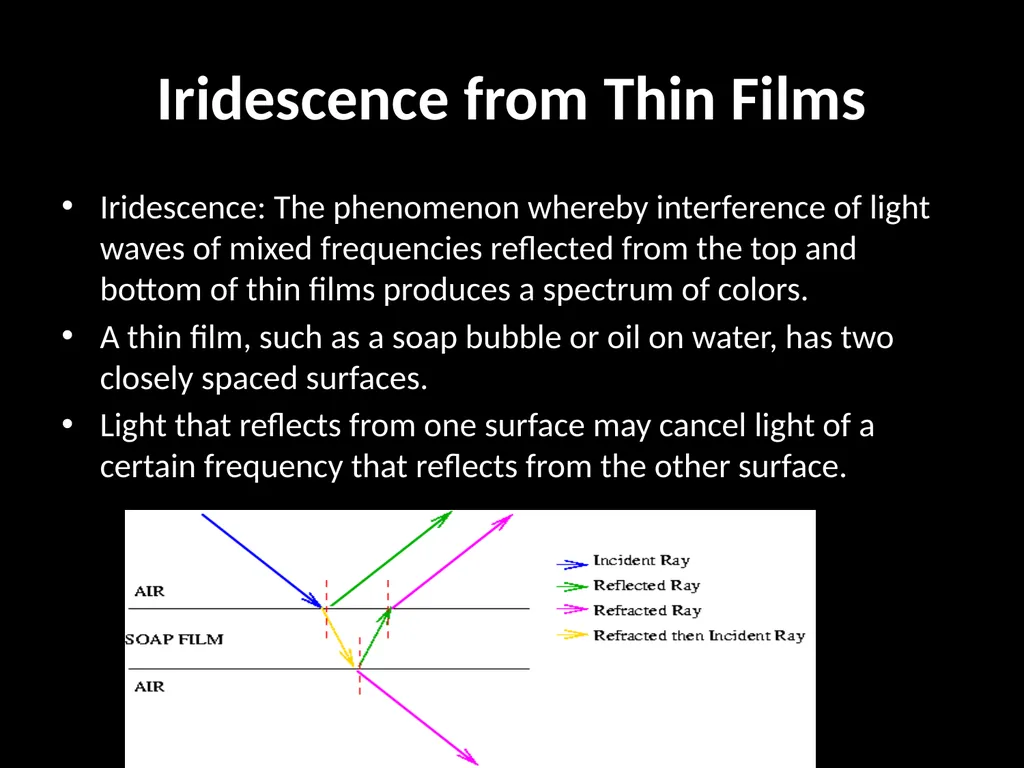
Iridescence from Thin Films Iridescence: The phenomenon whereby interference of light waves of mixed frequencies reflected from the top and bottom of thin films produces a spectrum of colors.
A thin film, such as a soap bubble or oil on water, has two closely spaced surfaces.
Light that reflects from one surface may cancel light of a certain frequency that reflects from the other surface.<br>
14
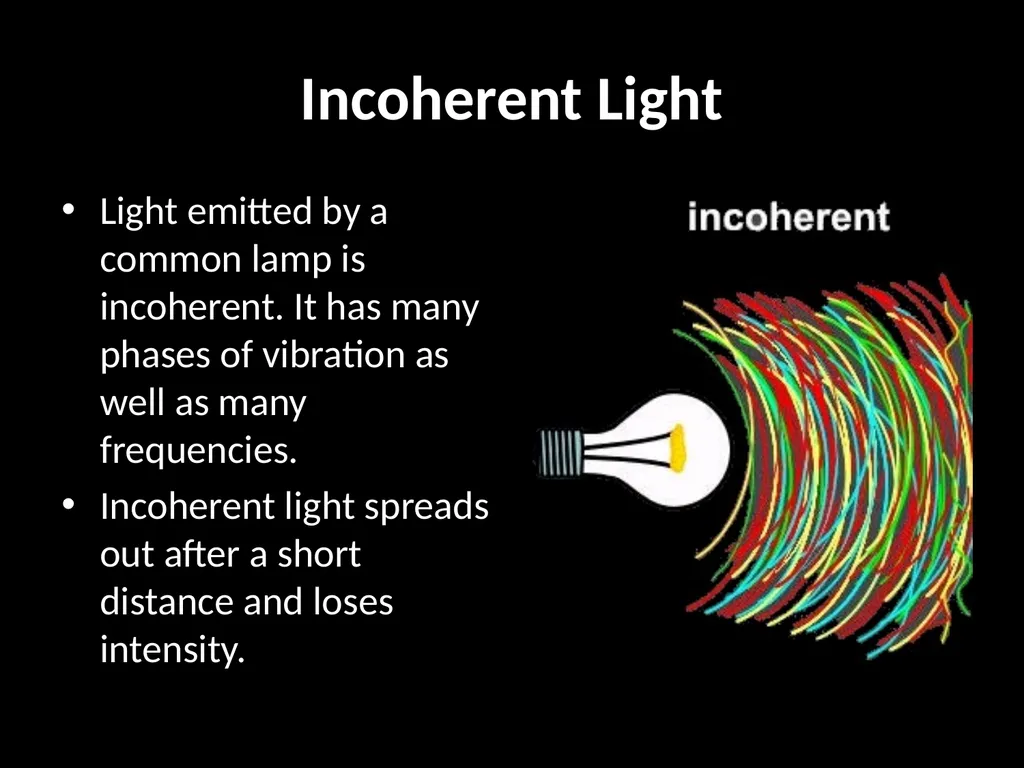
Incoherent Light Light emitted by a common lamp is incoherent. It has many phases of vibration as well as many frequencies.
Incoherent light spreads out after a short distance and loses intensity.<br>
15
Coherent Light A beam of light that has the same frequency, wavelength, phase, and direction is called coherent.
There is no interference of waves within the beam and the beam will not spread out and diffuse.<br>
16
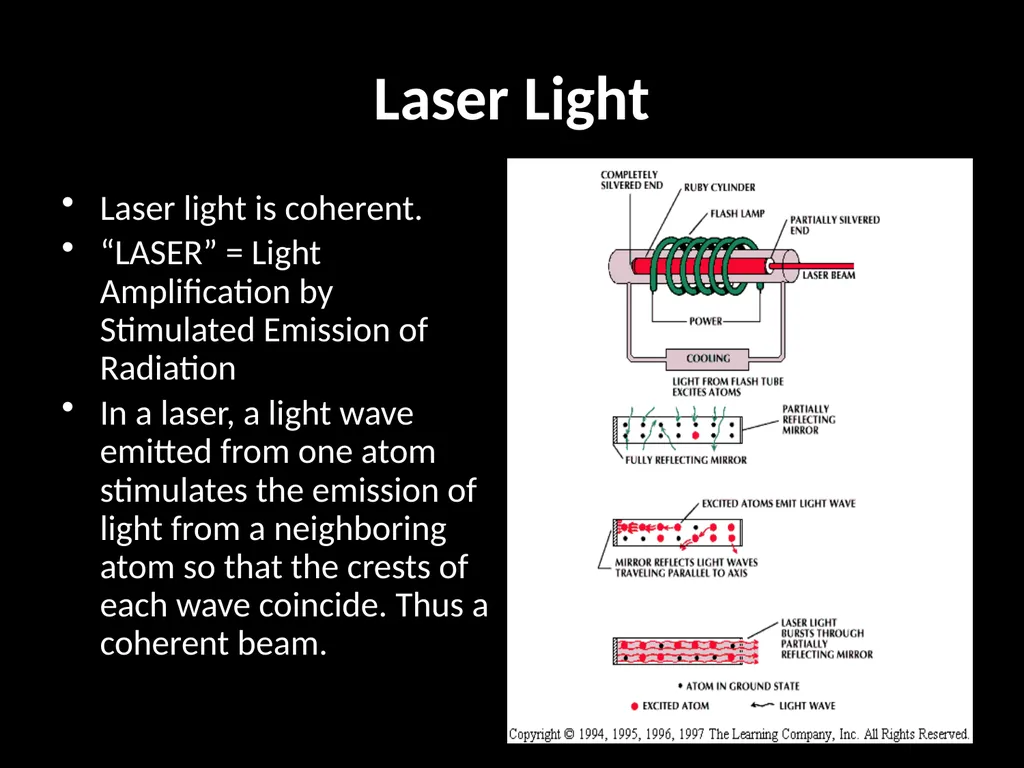
Laser Light Laser light is coherent.
“LASER” = Light Amplification by Stimulated Emission of Radiation
In a laser, a light wave emitted from one atom stimulates the emission of light from a neighboring atom so that the crests of each wave coincide. Thus a coherent beam.<br>
17
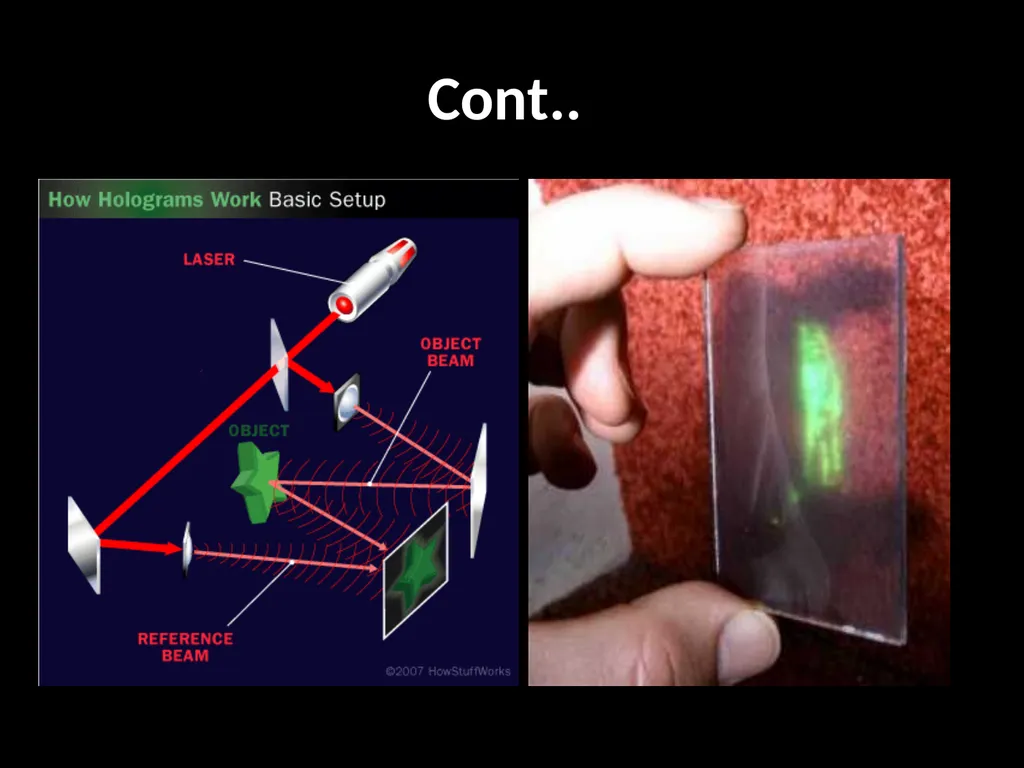
The Hologram The three-dimensional version of a photograph produced by interference patterns of laser beams.
The interference of the laser beams produces fringe patterns on the photographic plate that record the depth of the surface of an object.
The fringe pattern of a hologram diffracts light to produce wave fronts identical to the wave fronts given by the object.<br>