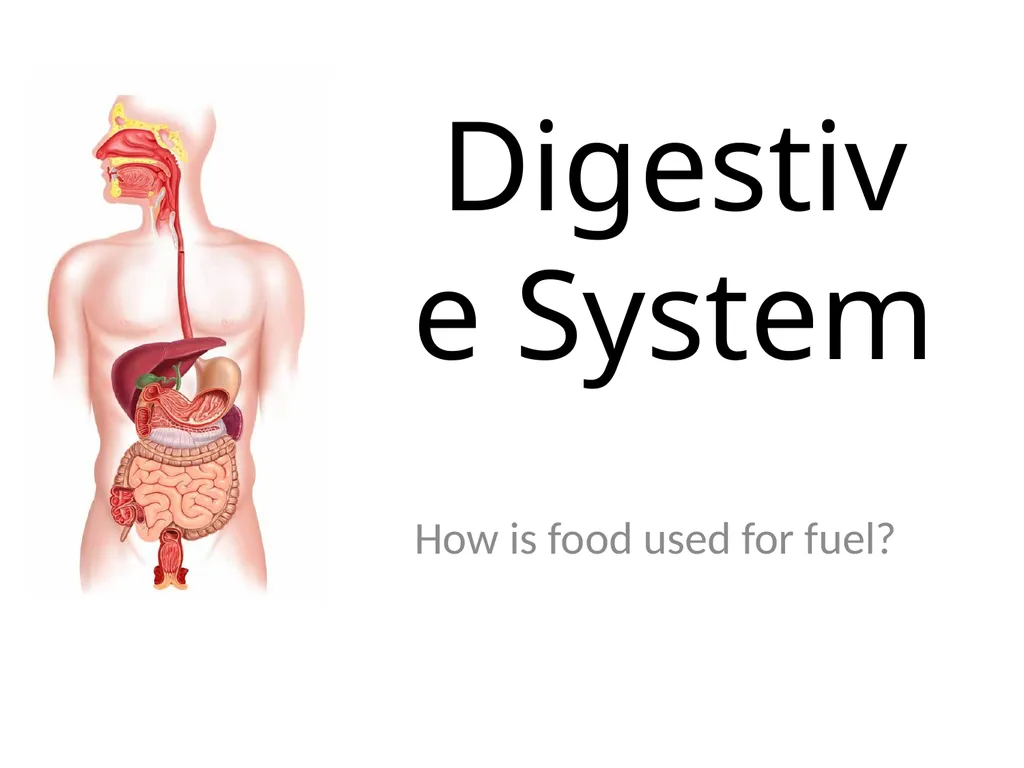
Digestive System How is food used for fuel? Functions of the Digestive System 1. Ingestiongetting food into the mouth 2. Propulsionmoving foods from one region of the digestive system to another Peristalsisalternating contraction and
"Digestive System How is food used for fuel?" is the property of its rightful owner. Permission is granted to
download and print the materials on this website for personal, non-commercial use only, and to display it
on your personal computer provided you do not modify the materials and that you retain all copyright
notices contained in the materials. By downloading content from our website, you accept the terms of this
agreement.
Presentation Transcript
01
Digestive System How is food used for fuel?<br>
02
Functions of the Digestive System 1. Ingestion—getting food into the mouth
2. Propulsion—moving foods from one region of the digestive system to another
Peristalsis—alternating contraction and relaxation that squeezes food along the GI tract
Segmentation—moving materials back and forth to aid with mixing in the small intestine<br>
03
Functions of the Digestive System Food breakdown as mechanical digestion and chemical digestion
mechanical- prepares food for further degradation of enzymes
chemical- Enzymes break down food molecules into their building blocks<br>
04
Functions of the Digestive System 4. Absorption
End products of digestion are absorbed in the blood or lymph
Food must enter mucosal cells and then into blood or lymph capillaries
Mainly in small intestine.
5. Defecation
Elimination of indigestible substances from the GI tract in the form of feces<br>
05
Organs of the Digestive System Two main groups
Alimentary canal (gastrointestinal or GI tract)—continuous coiled hollow tube
Accessory digestive organs<br>
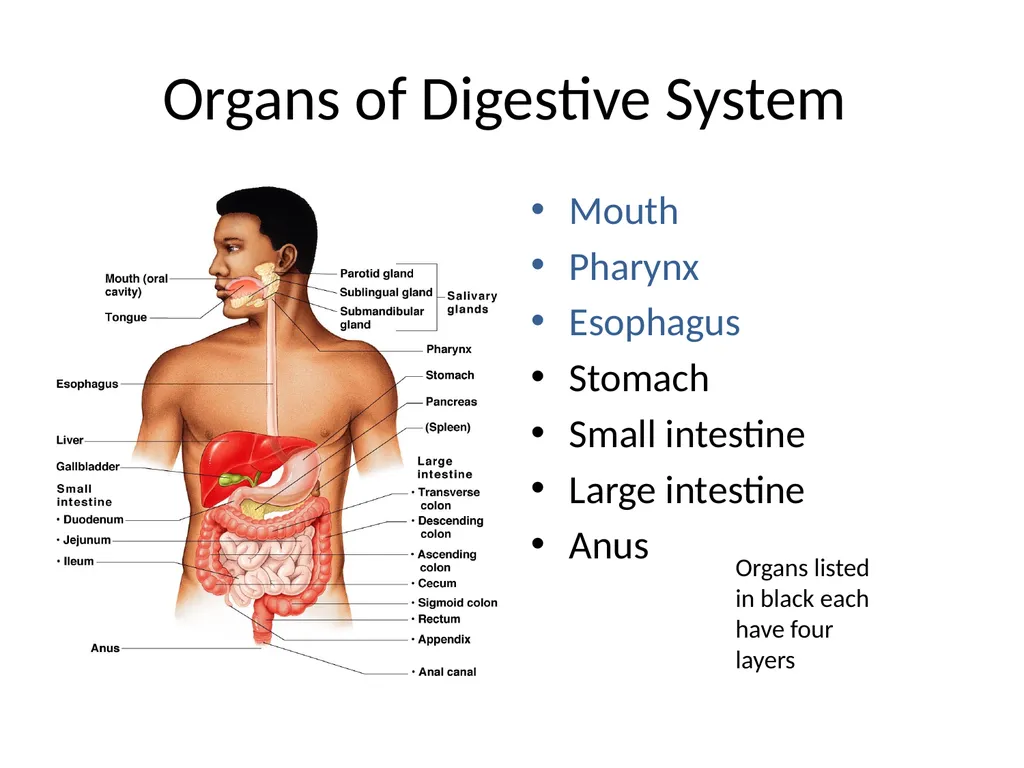
06
Organs of Digestive System Mouth
Pharynx
Esophagus
Stomach
Small intestine
Large intestine
Anus Organs listed in black each have four layers<br>
07
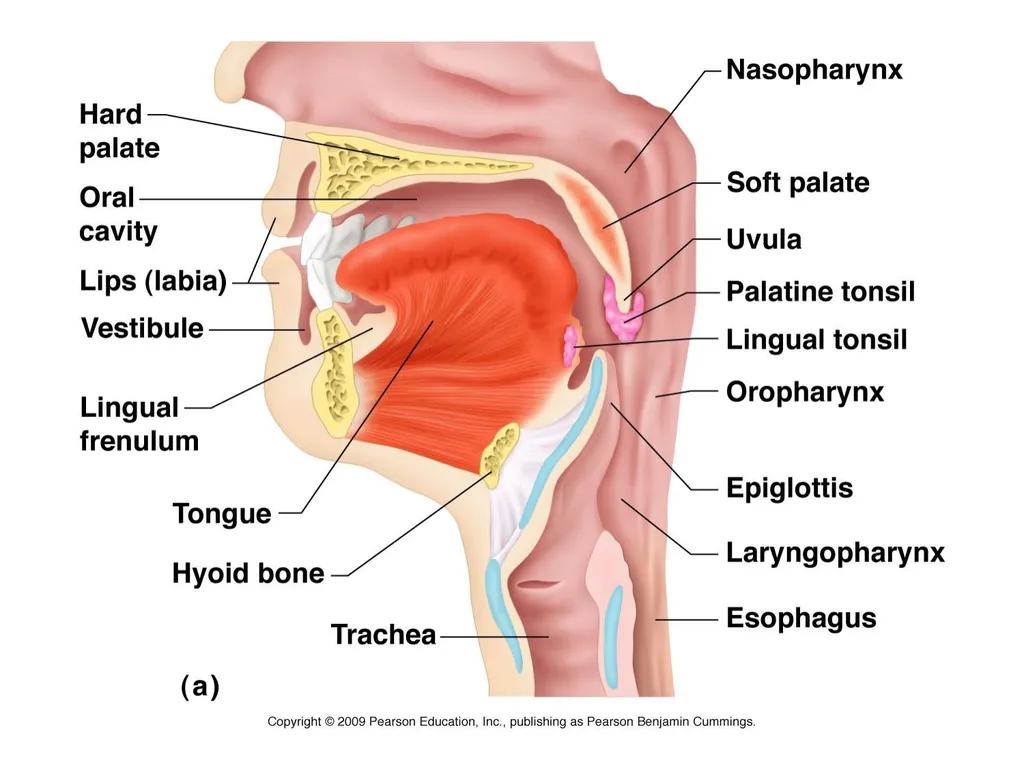
Mouth Houses cheeks, palate, uvula, tongue, and teeth
Mouth Physiology:
Mastication (chewing) of food
Mixing masticated food with saliva
Initiation of swallowing by the tongue
Allows for the sense of taste<br>
08
Pharynx Serves as a passageway for air and food
No digestive function
Pharynx Physiology:
Food movement is by alternating contractions of the muscle layers (peristalsis)<br>
09
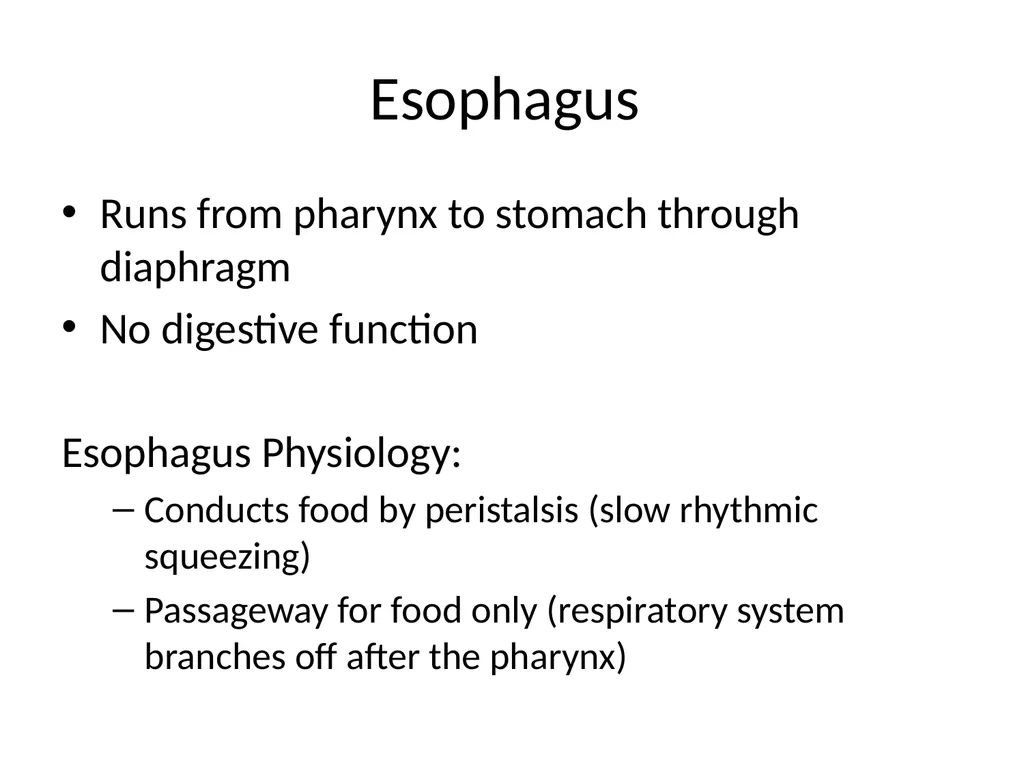
Esophagus Runs from pharynx to stomach through diaphragm
No digestive function
Esophagus Physiology:
Conducts food by peristalsis (slow rhythmic squeezing)
Passageway for food only (respiratory system branches off after the pharynx)<br>
10
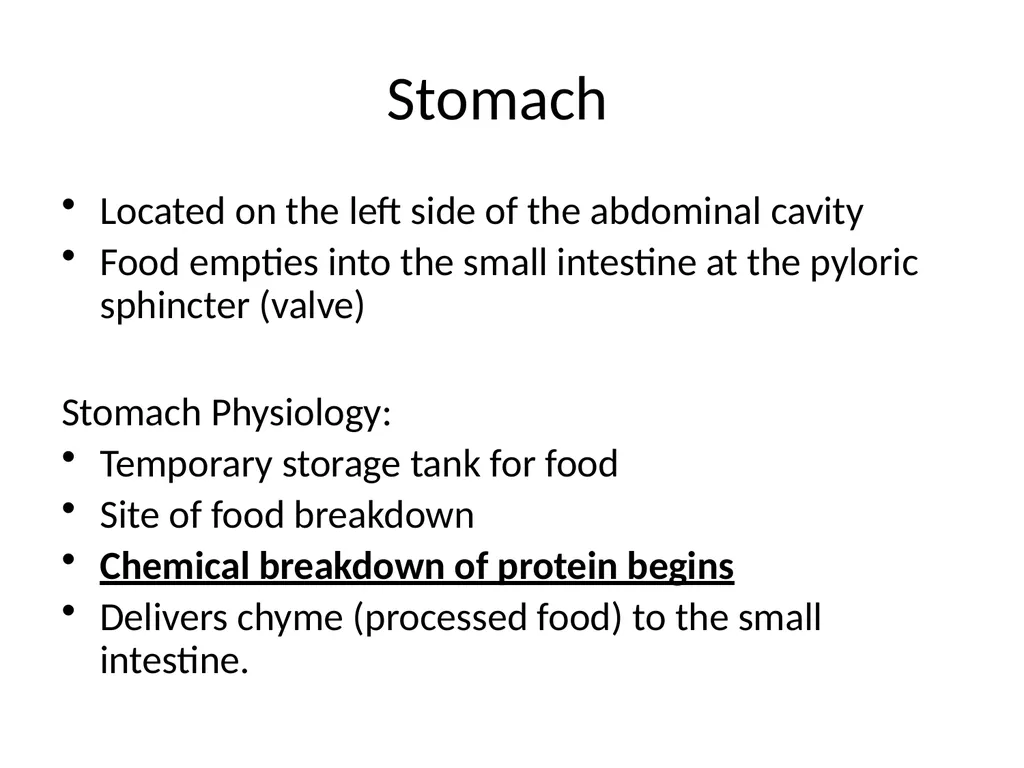
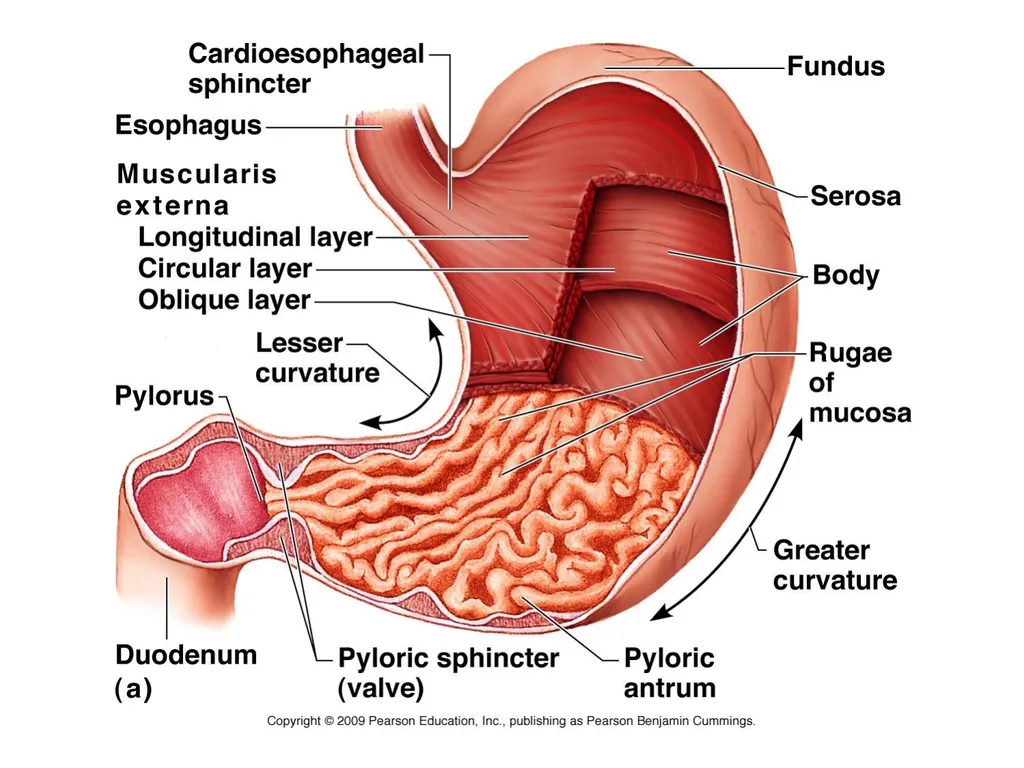
Stomach Located on the left side of the abdominal cavity
Food empties into the small intestine at the pyloric sphincter (valve)
Stomach Physiology:
Temporary storage tank for food
Site of food breakdown
Chemical breakdown of protein begins
Delivers chyme (processed food) to the small intestine.<br>
11
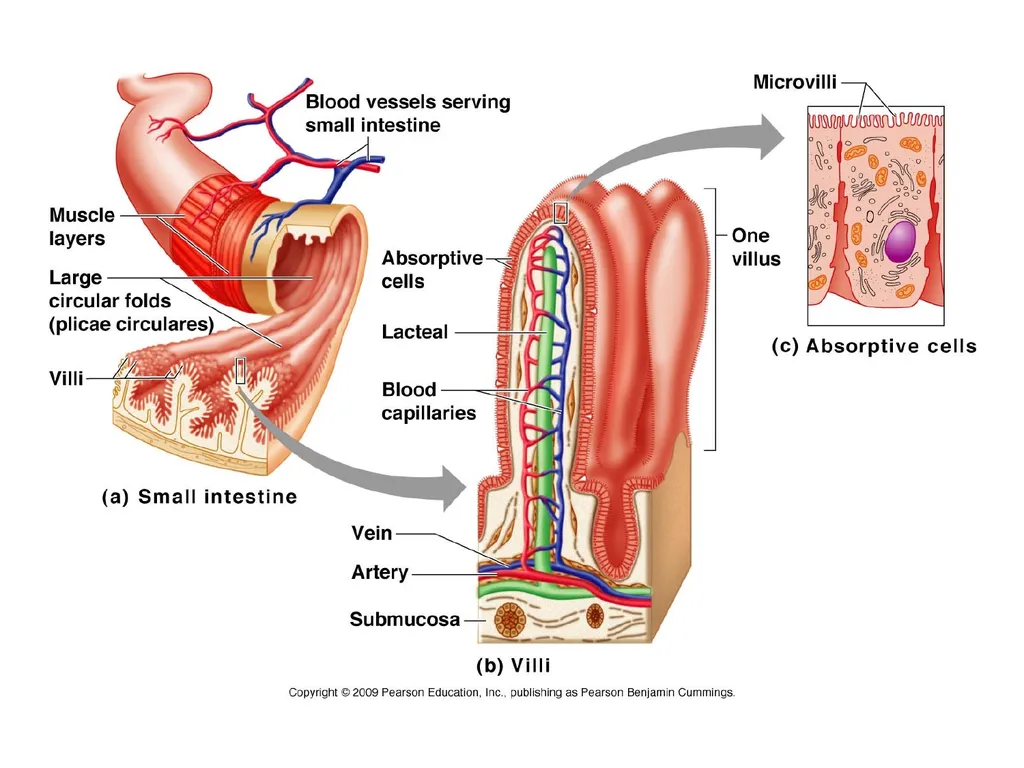
Small Intestine The body’s major digestive organ
Site of nutrient absorption into the blood
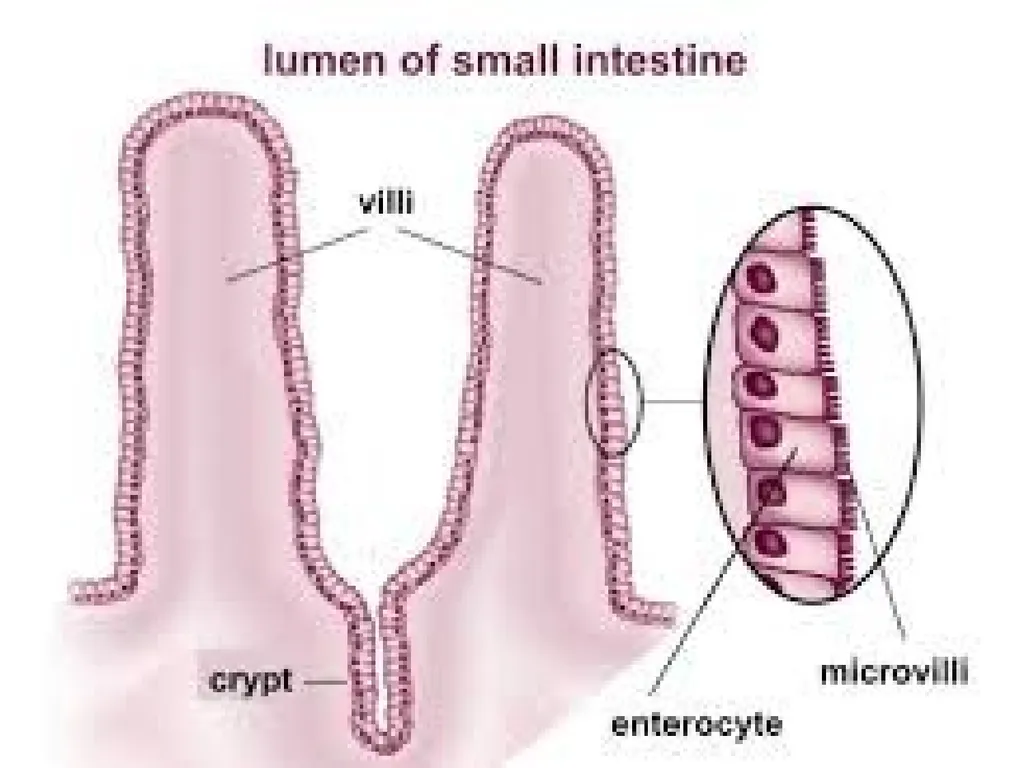
Structural modifications that increase surface area
Microvilli—tiny projections of the plasma membrane (create a brush border appearance)
Villi—fingerlike structures formed by the mucosa<br>
12
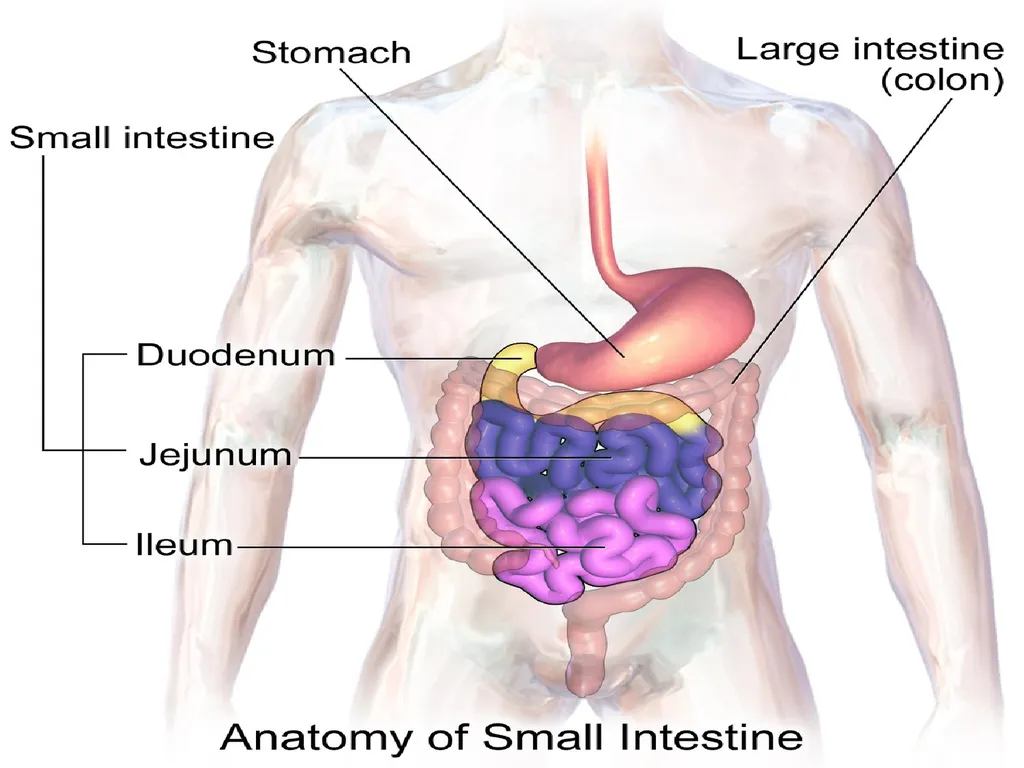
Portions of the small intestine. 3 Parts..
In order:
Duodenum
Jejunum
Ileum<br>
13
Small Intestine Small intestine Physiology:
Chemical digestion
Enzymes are produced by
Intestinal cells
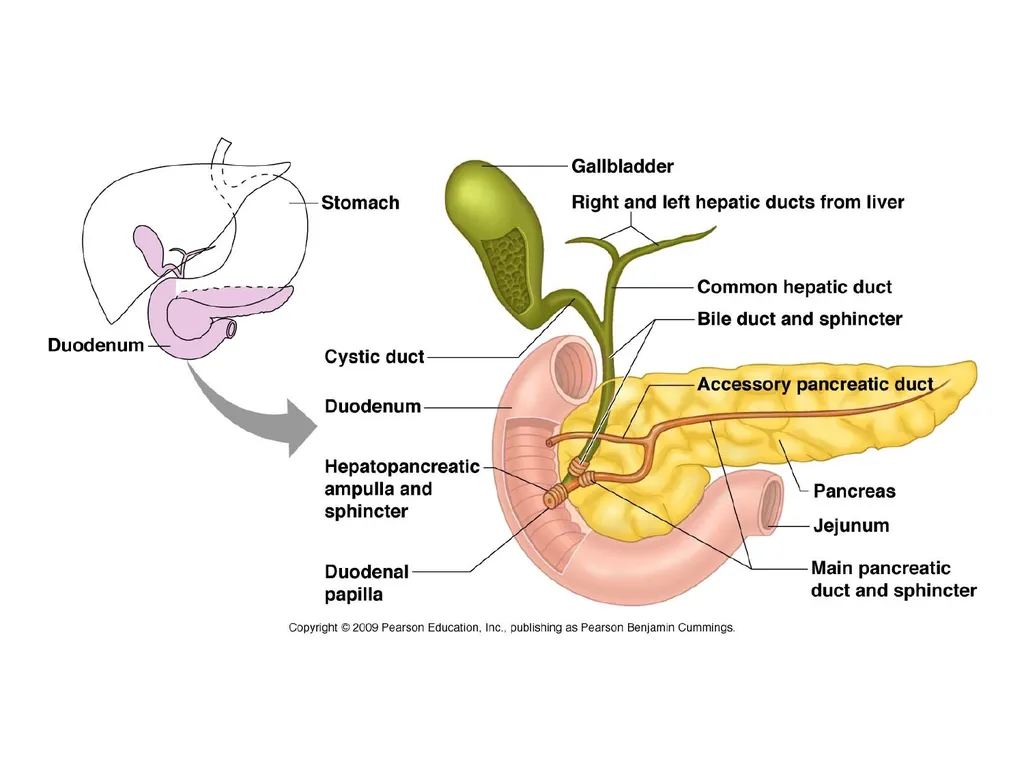
Pancreas
Pancreatic ducts carry enzymes to the small intestine
Bile, formed by the liver, enters via the bile duct<br>
14
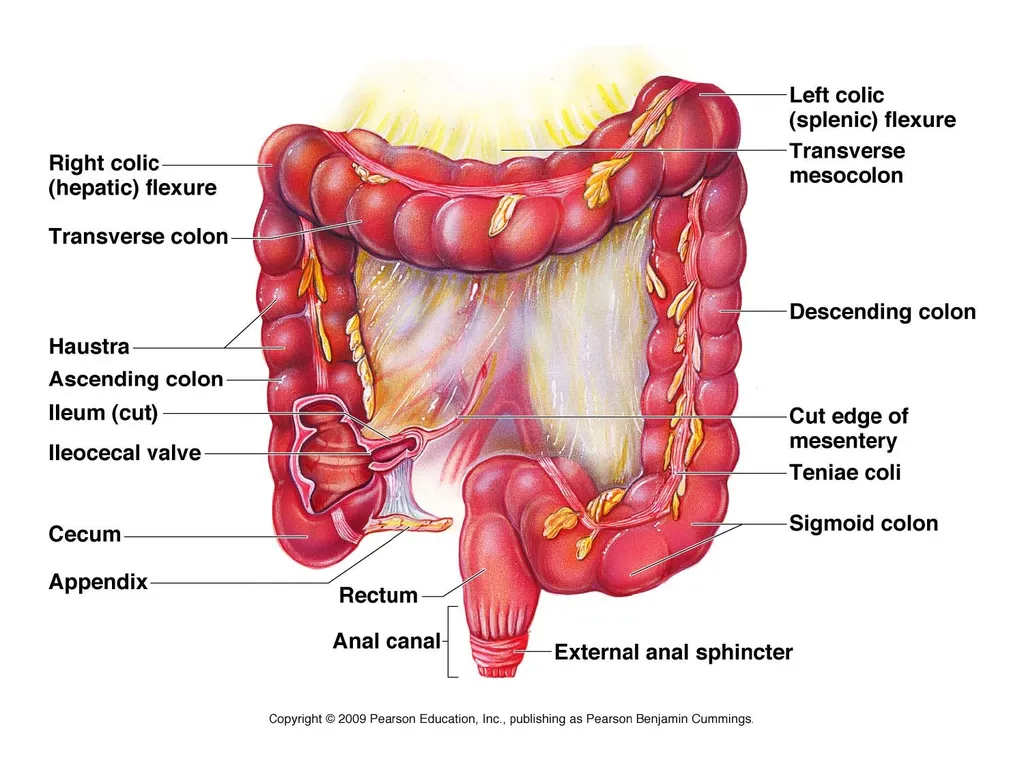
Large Intestine Larger in diameter, but shorter in length, than the small intestine
Ileocecal valve- Where small intestine meets large intestine.
Cecum—saclike first part of the large intestine
Appendix
Colon
Rectum<br>
15
Large Intestine 3 main parts.
Ascending Colon
Transverse Colon
Descending Colon.
All 3 used for Peristalsis.<br>
16
Anus Opening of the large intestine<br>
17
Activity Model the entire tract of the Digestive system.
For each structure, make sure you include one or two functions for each structure.
There will be a quiz on the structures on Wednesday.<br>
18
Questions… 1. Protein digestion begins in the:
2. Which of the following modifications increases surface area in the small intestine with fingerlike extensions of the mucosa?
3. The primary function of the small intestine is?
4. The main organ responsible for using bile for breaking down fats and the elimination of feces is the..?<br>
19
Accessory Organs 1. Teeth
Baby teeth (milk teeth)
Permanent teeth- A full set is 32 teeth, but some people do not have wisdom teeth (third molars)<br>
20
Accessory Organs Pancreas
Extends across the abdomen from spleen to duodenum
Produces a wide spectrum of digestive enzymes that break down all categories of food
Enzymes are secreted into the duodenum<br>
21
Accessory Organs Liver
Liver produces bile
Function—emulsify fats by physically breaking large fat globules into smaller ones
Produced in the liver but stored in the gallbladder<br>
22
Accessory Organs Gallbladder
When no digestion is occurring, bile backs up the cystic duct for storage in the gallbladder
When digestion of fatty food is occurring, bile is introduced into the duodenum from the gallbladder<br>
23
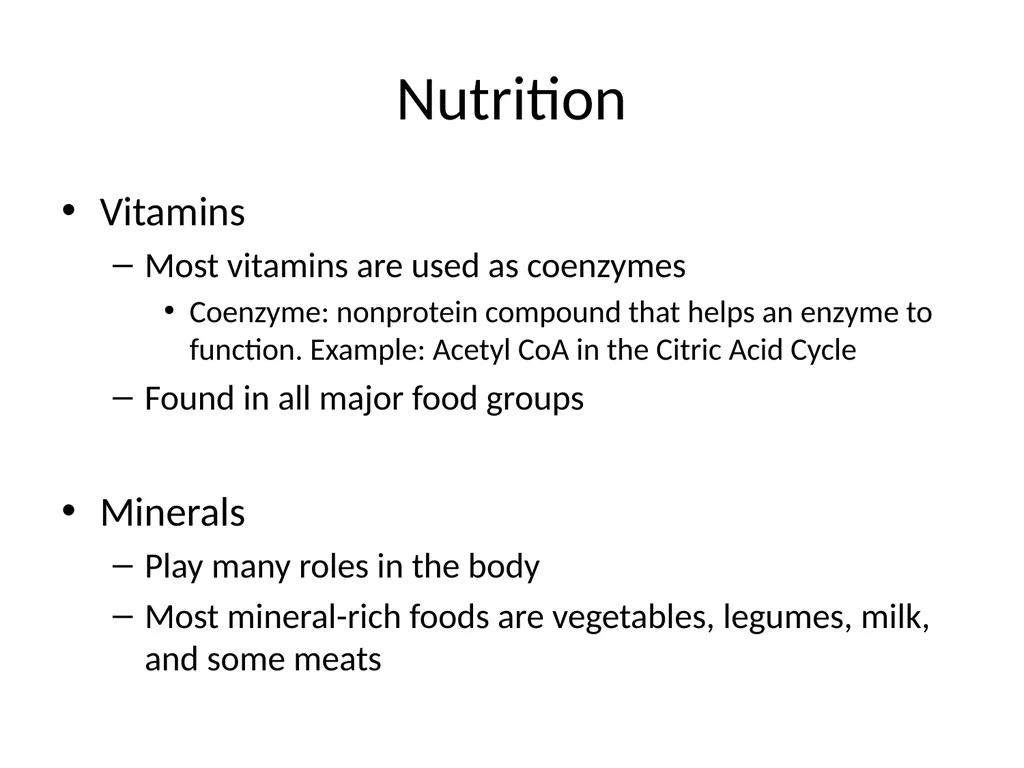
Nutrition Vitamins
Most vitamins are used as coenzymes
Coenzyme: nonprotein compound that helps an enzyme to function. Example: Acetyl CoA in the Citric Acid Cycle
Found in all major food groups
Minerals
Play many roles in the body
Most mineral-rich foods are vegetables, legumes, milk, and some meats<br>
24
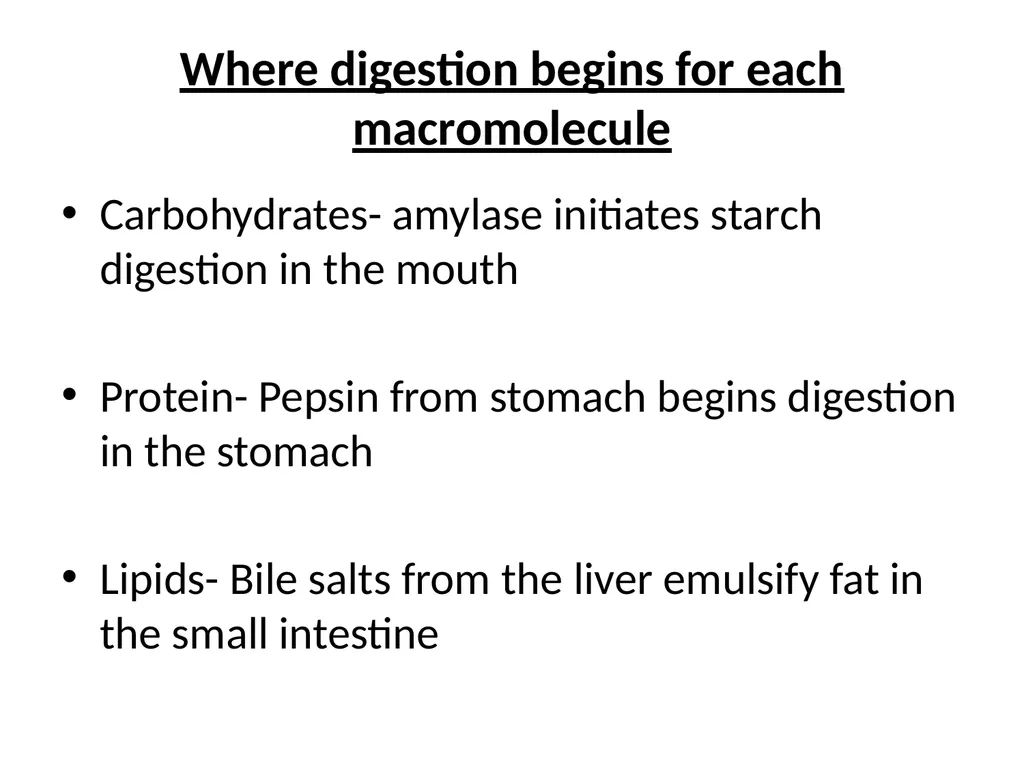
Where digestion begins for each macromolecule Carbohydrates- amylase initiates starch digestion in the mouth
Protein- Pepsin from stomach begins digestion in the stomach
Lipids- Bile salts from the liver emulsify fat in the small intestine<br>
25
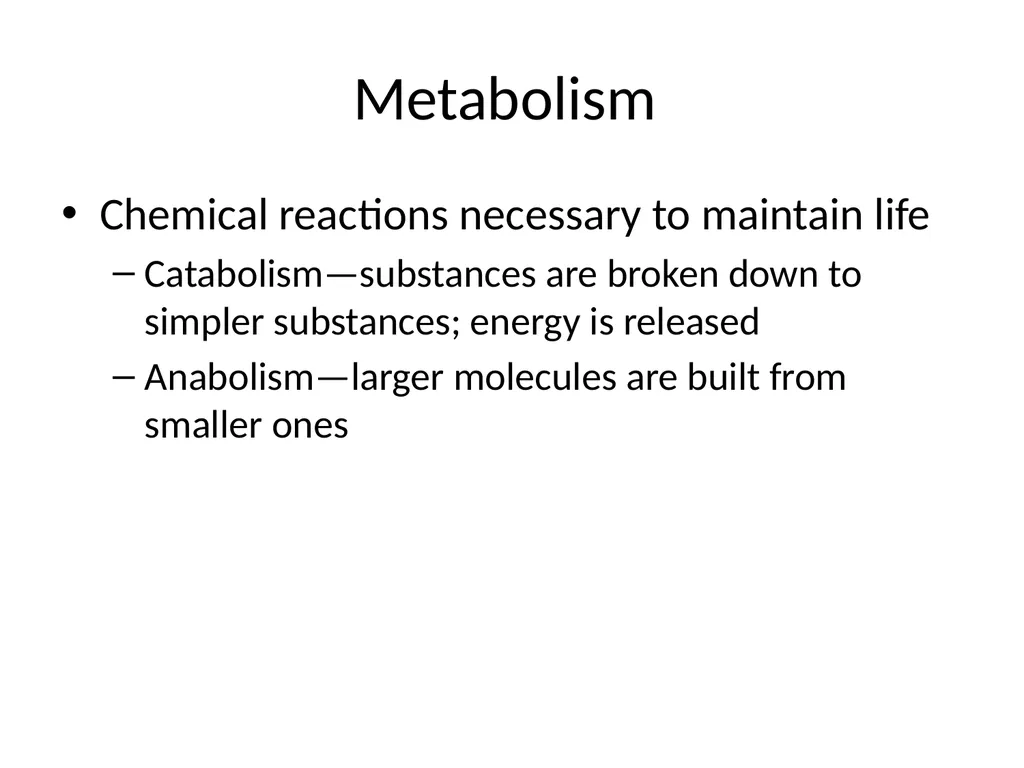
Metabolism Chemical reactions necessary to maintain life
Catabolism—substances are broken down to simpler substances; energy is released
Anabolism—larger molecules are built from smaller ones<br>
26
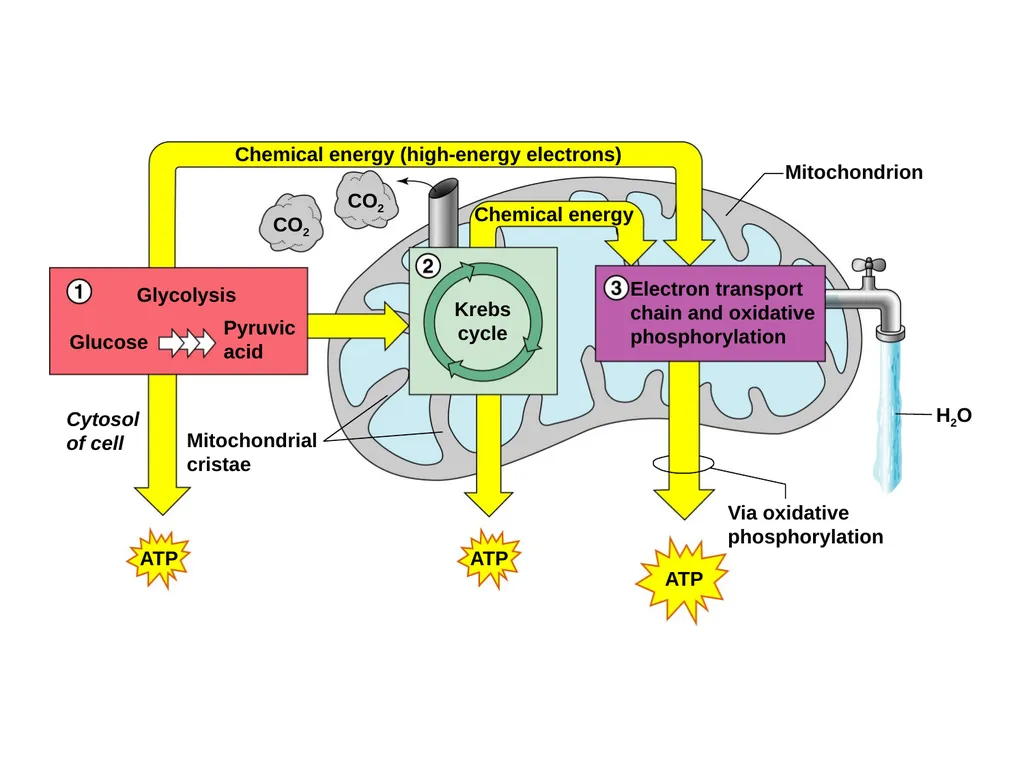
Cellular Respiration Oxygen-using events take place within the cell to create ATP from ADP
Carbon leaves cells as carbon dioxide (CO2)
Hydrogen atoms are combined with oxygen to form water
Energy produced by these reactions adds a phosphorus to ADP to produce ATP
ATP can be broken down to release energy for cellular use<br>