Dispatchable Standby Generation
Description: Dispatchable Standby Generation portlandgeneral.comstandbygenerator Put your backup generators to work and save. How does DSG work? During installation, PGE contributes capital to the cost of the generator and grid integration equipment
Related Topics
Download Presentation
"Dispatchable Standby Generation" is the property of its rightful owner. Permission is granted to download and print the materials on this website for personal, non-commercial use only, and to display it on your personal computer provided you do not modify the materials and that you retain all copyright notices contained in the materials. By downloading content from our website, you accept the terms of this agreement.
Presentation Transcript
slide1. Dispatchable Standby Generation portlandgeneral.com/standbygenerator Put your backup generators to work and save. How does DSG work?
During installation, PGE contributes capital to the cost of the generator and grid integration equipment that allows for remote activation and monitoring of the generator and key components for health and performance.
During a critical grid need, the customer’s onsite generator can be called upon to produce electricity that is fed into the electric system. After the critical need for power has passed, we remotely shut off the customer’s generator. In exchange for this access, PGE assumes responsibility for fuel costs, routinely testing the generator, most of the generator’s annual maintenance and operating costs including upgrades to select generator components.
In the past, this the DSG program has generally been limited to diesel fueled generators. However, state and national rules and regulations have changed, and now customers can partner with us when their onsite generators are powered by other sources, such as natural gas, propane, E99 (renewable diesel), ethanol, and even battery energy storage.
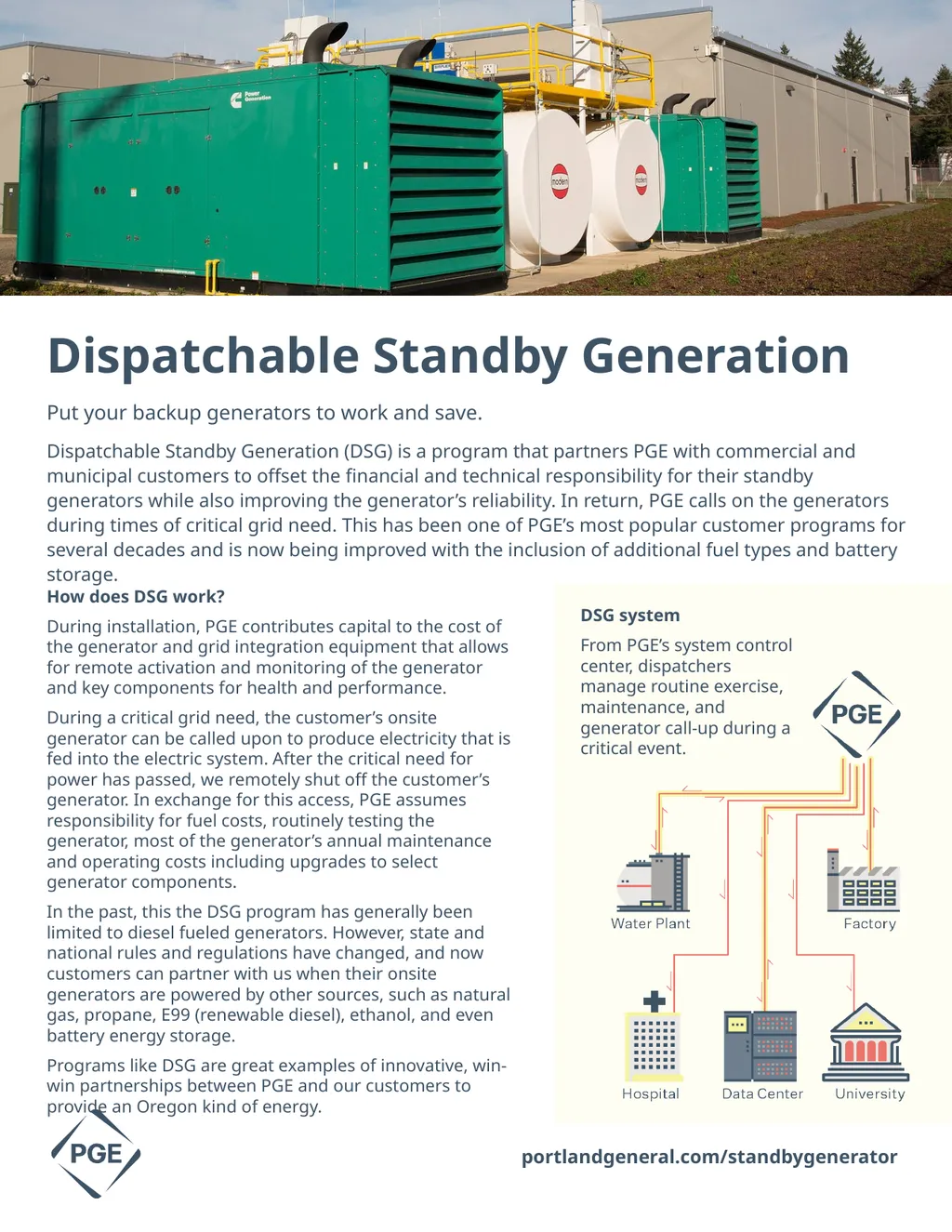
Programs like DSG are great examples of innovative, win-win partnerships between PGE and our customers to provide an Oregon kind of energy. Dispatchable Standby Generation (DSG) is a program that partners PGE with commercial and municipal customers to offset the financial and technical responsibility for their standby generators while also improving the generator’s reliability. In return, PGE calls on the generators during times of critical grid need. This has been one of PGE’s most popular customer programs for several decades and is now being improved with the inclusion of additional fuel types and battery storage. DSG system
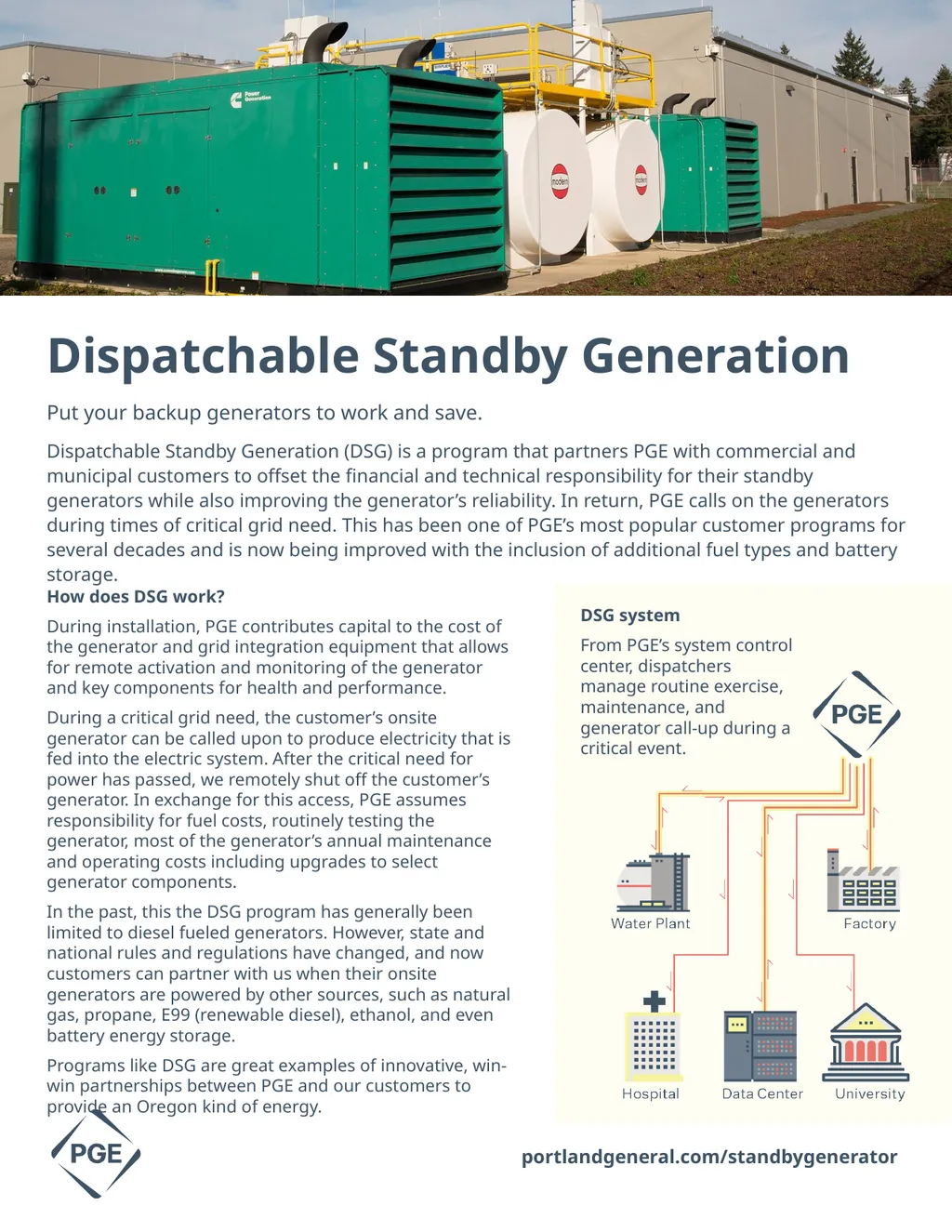
From PGE’s system control center, dispatchers manage routine exercise, maintenance, and generator call-up during a critical event.<br>
slide2. Dispatchable Standby Generation What are the benefits of PGE’s DSG program for participating customers?
PGE’s involvement saves customers money, improves generator reliability, and helps to modernize backup generator systems. Specific highlights include:
Financial assistance for generator installation during construction.
PGE pays for the fuel consumed by the standby generator.
PGE pays to install the connecting switchgear allowing onsite generators to synch with PGE’s distribution system. (There are federal performance requirements, contact PGE for details.)
PGE pays for most standby generator routine maintenance and operating costs.
PGE conducts monthly testing of standby generators under full load to verify reliability and identify potential problems. These monthly tests often extend generator life and improve reliability.
Some additional points to keep in mind:
Participation in DSG does not impact generator’s ability to supply power to customer’s needs in an emergency.
The current DSG tariff allows for a variety of fuel options such as R99 diesel, natural gas, propane, and battery energy storage.
PGE manages the necessary requirements for ensuring the generator’s ability to sync with the electric system for critical events.
Due to state emissions requirements, new construction with onsite backup generators powered by diesel may not be eligible to participate in DSG. portlandgeneral.com/standbygenerator Interested in learning more?
Call 503-464-7893 or visitportlandgeneral.com/standbygenerator for more information.<br>
During installation, PGE contributes capital to the cost of the generator and grid integration equipment that allows for remote activation and monitoring of the generator and key components for health and performance.
During a critical grid need, the customer’s onsite generator can be called upon to produce electricity that is fed into the electric system. After the critical need for power has passed, we remotely shut off the customer’s generator. In exchange for this access, PGE assumes responsibility for fuel costs, routinely testing the generator, most of the generator’s annual maintenance and operating costs including upgrades to select generator components.
In the past, this the DSG program has generally been limited to diesel fueled generators. However, state and national rules and regulations have changed, and now customers can partner with us when their onsite generators are powered by other sources, such as natural gas, propane, E99 (renewable diesel), ethanol, and even battery energy storage.
Programs like DSG are great examples of innovative, win-win partnerships between PGE and our customers to provide an Oregon kind of energy. Dispatchable Standby Generation (DSG) is a program that partners PGE with commercial and municipal customers to offset the financial and technical responsibility for their standby generators while also improving the generator’s reliability. In return, PGE calls on the generators during times of critical grid need. This has been one of PGE’s most popular customer programs for several decades and is now being improved with the inclusion of additional fuel types and battery storage. DSG system
From PGE’s system control center, dispatchers manage routine exercise, maintenance, and generator call-up during a critical event.<br>
slide2. Dispatchable Standby Generation What are the benefits of PGE’s DSG program for participating customers?
PGE’s involvement saves customers money, improves generator reliability, and helps to modernize backup generator systems. Specific highlights include:
Financial assistance for generator installation during construction.
PGE pays for the fuel consumed by the standby generator.
PGE pays to install the connecting switchgear allowing onsite generators to synch with PGE’s distribution system. (There are federal performance requirements, contact PGE for details.)
PGE pays for most standby generator routine maintenance and operating costs.
PGE conducts monthly testing of standby generators under full load to verify reliability and identify potential problems. These monthly tests often extend generator life and improve reliability.
Some additional points to keep in mind:
Participation in DSG does not impact generator’s ability to supply power to customer’s needs in an emergency.
The current DSG tariff allows for a variety of fuel options such as R99 diesel, natural gas, propane, and battery energy storage.
PGE manages the necessary requirements for ensuring the generator’s ability to sync with the electric system for critical events.
Due to state emissions requirements, new construction with onsite backup generators powered by diesel may not be eligible to participate in DSG. portlandgeneral.com/standbygenerator Interested in learning more?
Call 503-464-7893 or visitportlandgeneral.com/standbygenerator for more information.<br>