Disruptive Behavior in the Classroom UNCG Dean of Students Office, 2020 AGENDA 1. Distress in Students 2. Disruptive Behavior Policy 3. Safety 4. Reporting Disruptive Behavior What might distress look like? A drop in gradesmissed
"Disruptive Behavior in the Classroom UNCG Dean of" is the property of its rightful owner. Permission is granted to
download and print the materials on this website for personal, non-commercial use only, and to display it
on your personal computer provided you do not modify the materials and that you retain all copyright
notices contained in the materials. By downloading content from our website, you accept the terms of this
agreement.
Presentation Transcript
01
Disruptive Behavior in the Classroom UNCG Dean of Students Office, 2020<br>
02
AGENDA 1. Distress in Students
2. Disruptive Behavior Policy
3. Safety
4. Reporting Disruptive Behavior<br>
03
What might distress look like? A drop in grades/missed assignments
Repeated absences
Erratic performance
Asking for help/accommodations
Lack of engagement
Change in personal hygiene
Hyperactivity
Essays or creative work that indicate extremes of hopelessness, social isolation, rage, or fear
**keep in mind what is typical for the student<br>
04
What should you do? Pay attention and take signs seriously
Meet privately with the student
Do not call the student out publicly
Be specific about what you have observed
Listen and give the student space to respond
Refer the student to needed resources
Non-emergency: Dean of Students Office or Counseling Center
Emergency: Walk to Counseling Center (in-person) OR Call UNCG PD<br>
05
Disruptive Behavior Policy<br>
06
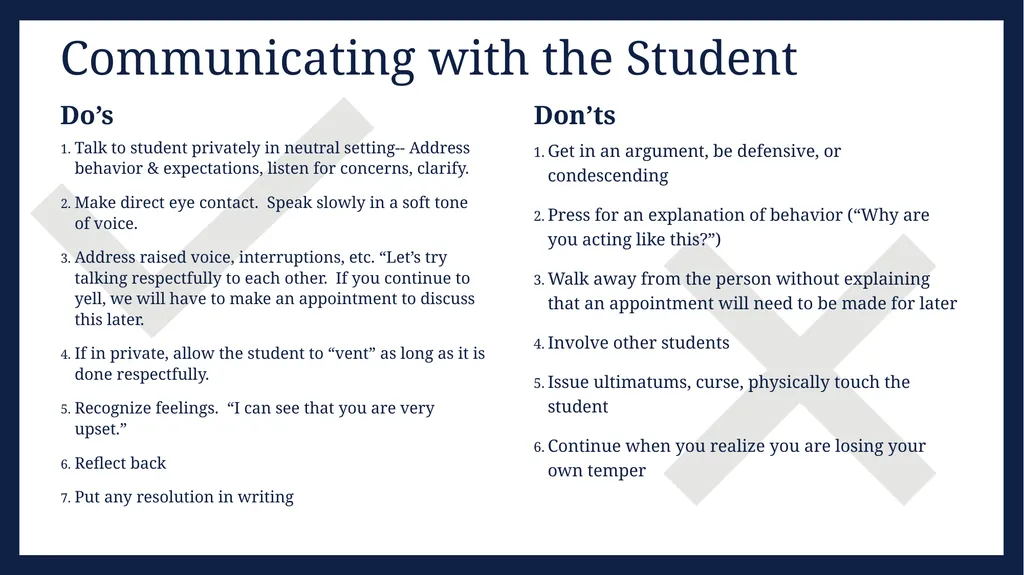
Communicating with the Student Do’s Talk to student privately in neutral setting-- Address behavior & expectations, listen for concerns, clarify.
Make direct eye contact. Speak slowly in a soft tone of voice.
Address raised voice, interruptions, etc. “Let’s try talking respectfully to each other. If you continue to yell, we will have to make an appointment to discuss this later.
If in private, allow the student to “vent” as long as it is done respectfully.
Recognize feelings. “I can see that you are very upset.”
Reflect back
Put any resolution in writing Don’ts Get in an argument, be defensive, or condescending
Press for an explanation of behavior (“Why are you acting like this?”)
Walk away from the person without explaining that an appointment will need to be made for later
Involve other students
Issue ultimatums, curse, physically touch the student
Continue when you realize you are losing your own temper<br>
07
Safety<br>
08
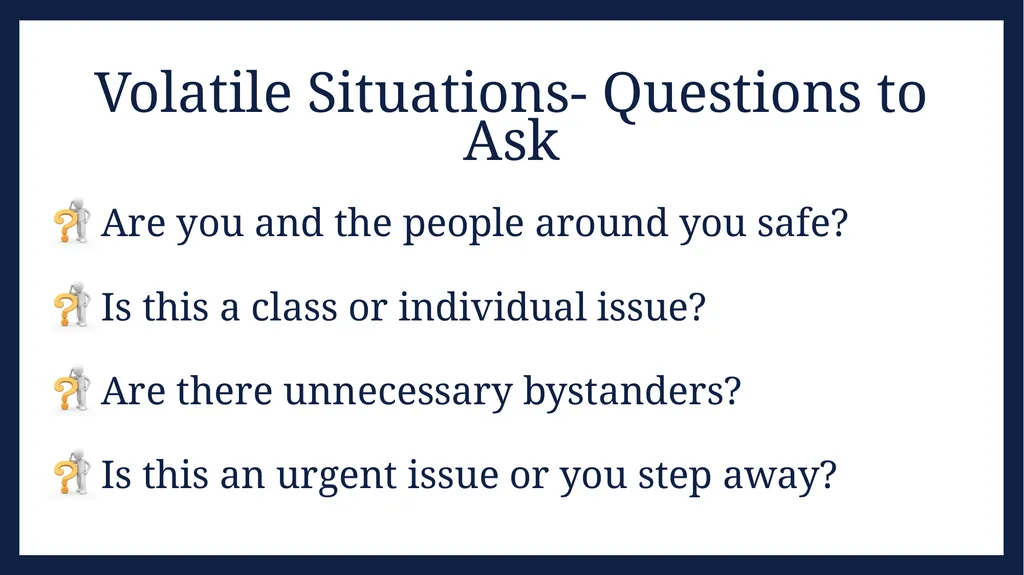
Volatile Situations- Questions to Ask Are you and the people around you safe?
Is this a class or individual issue?
Are there unnecessary bystanders?
Is this an urgent issue or you step away?<br>
09
Safety Considerations UNCG PD
Communicate with Department Head about interactions<br>