
Dosage Form Design Chapter 1 Dr. Athmar Dhahir














Description: Dosage Form Design Chapter 1 Dr. Athmar Dhahir Habeeb PhD in Industrial pharmacy and drug delivery athmar1978uomustansiriyah.edu.iq athmar1978yahoo.com athmar.habeeb.12ucl.ac.uk Topics covered through the course New drug development and
Related Topics
Download Presentation
"Dosage Form Design Chapter 1 Dr. Athmar Dhahir" is the property of its rightful owner. Permission is granted to download and print the materials on this website for personal, non-commercial use only, and to display it on your personal computer provided you do not modify the materials and that you retain all copyright notices contained in the materials. By downloading content from our website, you accept the terms of this agreement.
Presentation Transcript
slide1. Dosage Form Design
Chapter 1
Dr. Athmar Dhahir Habeeb
PhD in Industrial pharmacy and drug delivery
athmar1978@uomustansiriyah.edu.iq
athmar1978@yahoo.com
athmar.habeeb.12@ucl.ac.uk<br>
slide2. Topics covered through the course
New drug development and approval process
Current good manufacturing practices
Dosage form design pharmaceutical and formulation consideration
Dosage form design Biopharmaceutical and pharmacokinetic consideration<br>
slide3. New Drug Development and Approval Process To gain approval for marketing, a drug’s sponsor (e.g., a pharmaceutical company) must demonstrate, through supporting scientific evidence, that
The new drug or drug product is safe and effective for its proposed use.
The various processes and controls used in producing the drug substance and in manufacturing, packaging, and labeling are properly controlled and validated to ensure that the product meets the established standards of quality.
The process and time course from drug discovery to approval for marketing can be lengthy and tedious<br>
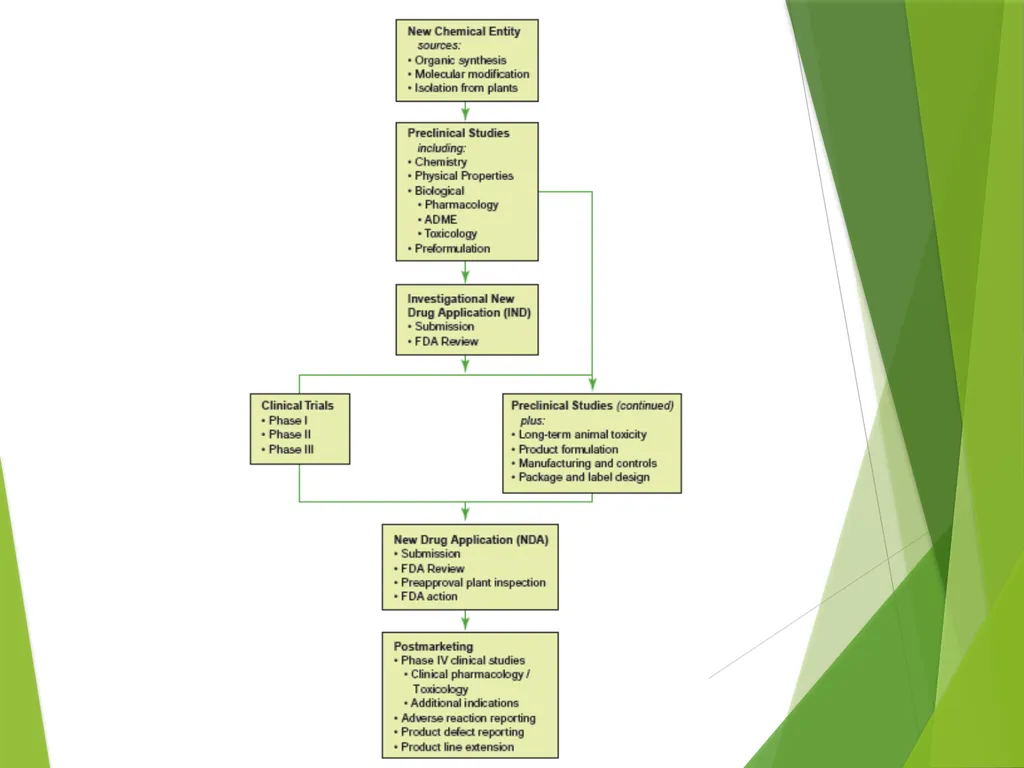
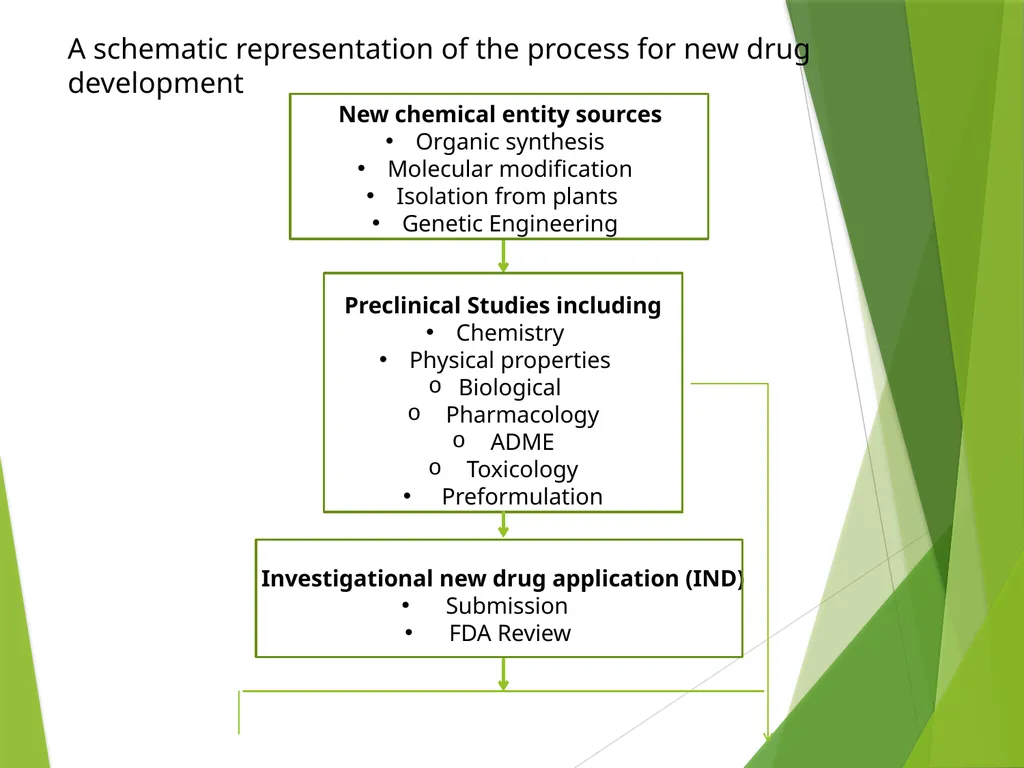
slide5. New chemical entity sources
Organic synthesis
Molecular modification
Isolation from plants
Genetic Engineering
Preclinical Studies including
Chemistry
Physical properties
Biological
Pharmacology
ADME
Toxicology
Preformulation
Investigational new drug application (IND)
Submission
FDA Review A schematic representation of the process for new drug development<br>
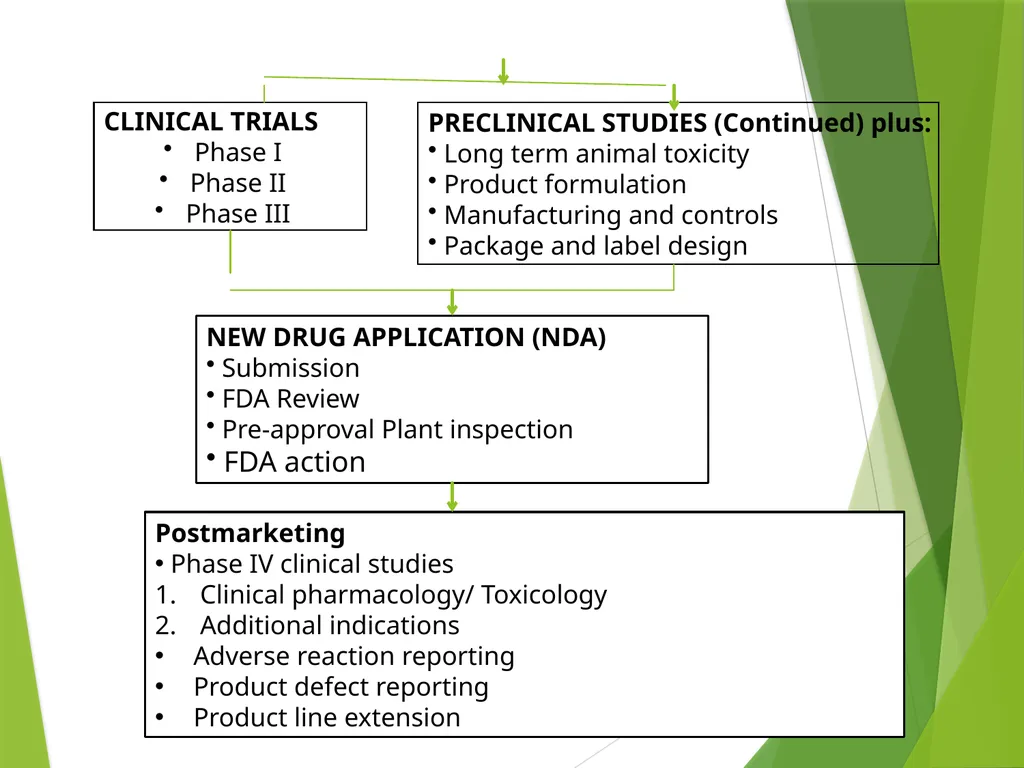
slide6. CLINICAL TRIALS
Phase I
Phase II
Phase III PRECLINICAL STUDIES (Continued) plus:
Long term animal toxicity
Product formulation
Manufacturing and controls
Package and label design NEW DRUG APPLICATION (NDA)
Submission
FDA Review
Pre-approval Plant inspection
FDA action Postmarketing
Phase IV clinical studies
Clinical pharmacology/ Toxicology
Additional indications
Adverse reaction reporting
Product defect reporting
Product line extension<br>
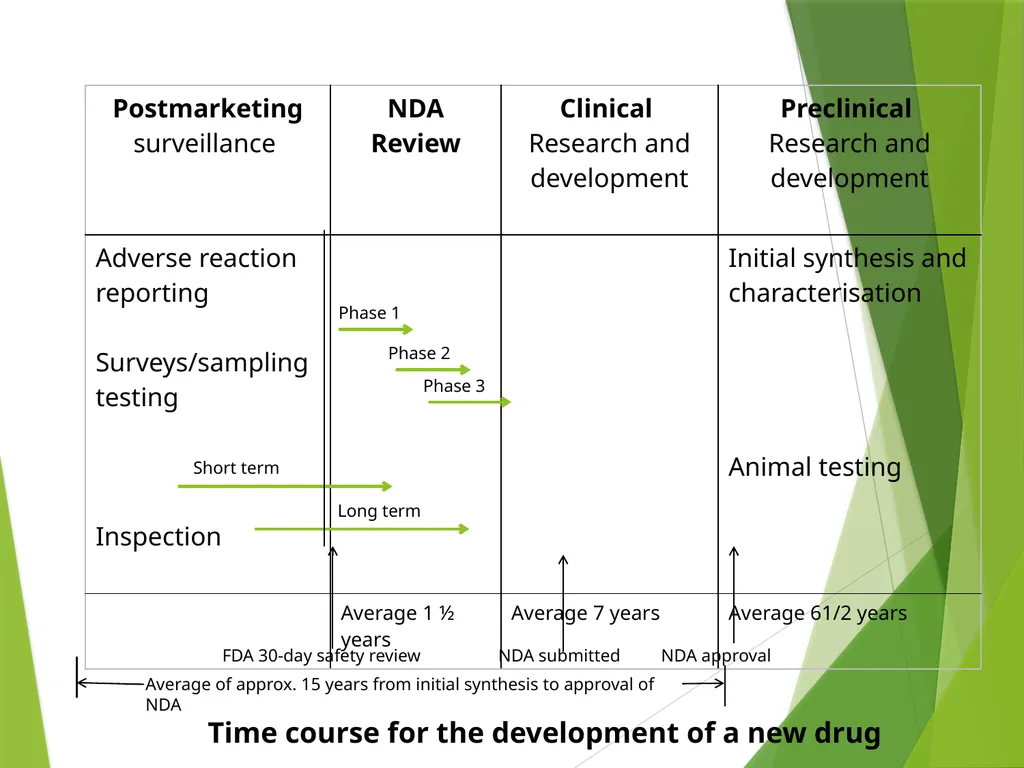
slide7. Time course for the development of a new drug<br>
slide8. What will happen after the discovery (e.g., synthesis) of a proposed new drug agent ???
Preclinical studies
File an IND (Investigational New Drug) application with the FDA for initial testing in humans clinical trials. Phase 1, Phases 2 and 3
Laboratory work continues
At the completion of the carefully designed preclinical and clinical studies, the drug’s sponsor may file an NDA (new drug application) seeking approval to market the new product.
The FDA approval of a NDA indicates that the body of scientific evidence submitted sufficiently demonstrates that the drug or the drug product is safe and effective for the proposed clinical indication, that there is adequate assurance of its proper manufacture and control, and that the final labelling accurately presents the necessary information for its proper use.
The content of a product’s approved labeling represented by the package insert<br>
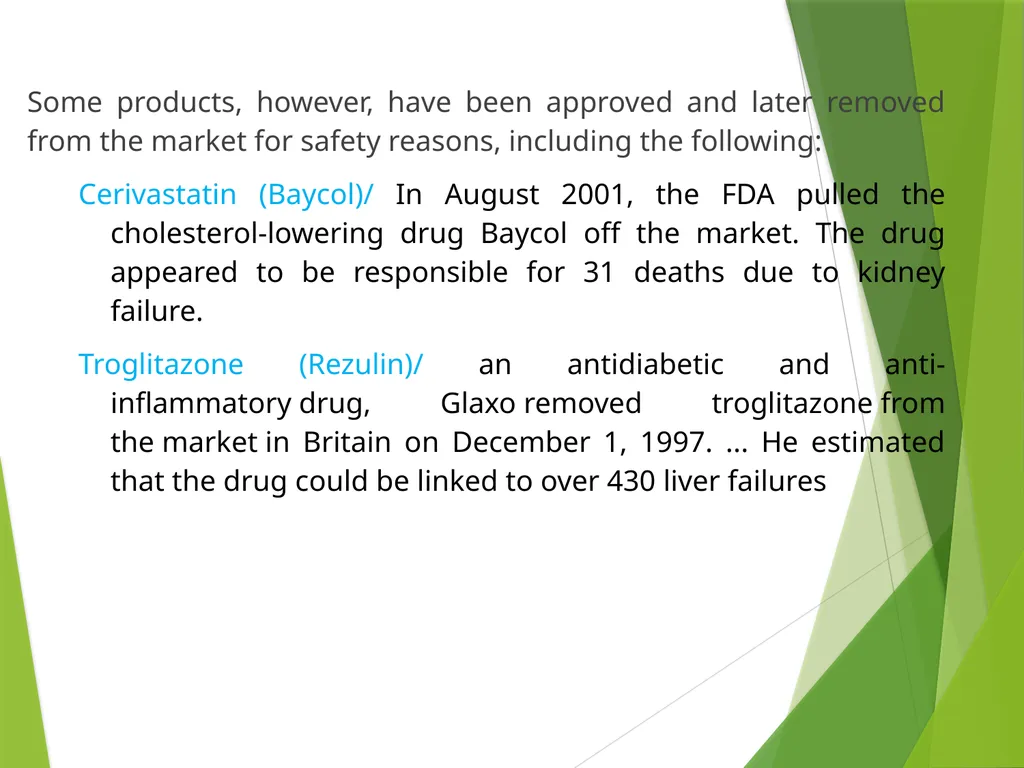
slide9. Some products, however, have been approved and later removed from the market for safety reasons, including the following:
Cerivastatin (Baycol)/ In August 2001, the FDA pulled the cholesterol-lowering drug Baycol off the market. The drug appeared to be responsible for 31 deaths due to kidney failure.
Troglitazone (Rezulin)/ an antidiabetic and anti-inflammatory drug, Glaxo removed troglitazone from the market in Britain on December 1, 1997. ... He estimated that the drug could be linked to over 430 liver failures<br>
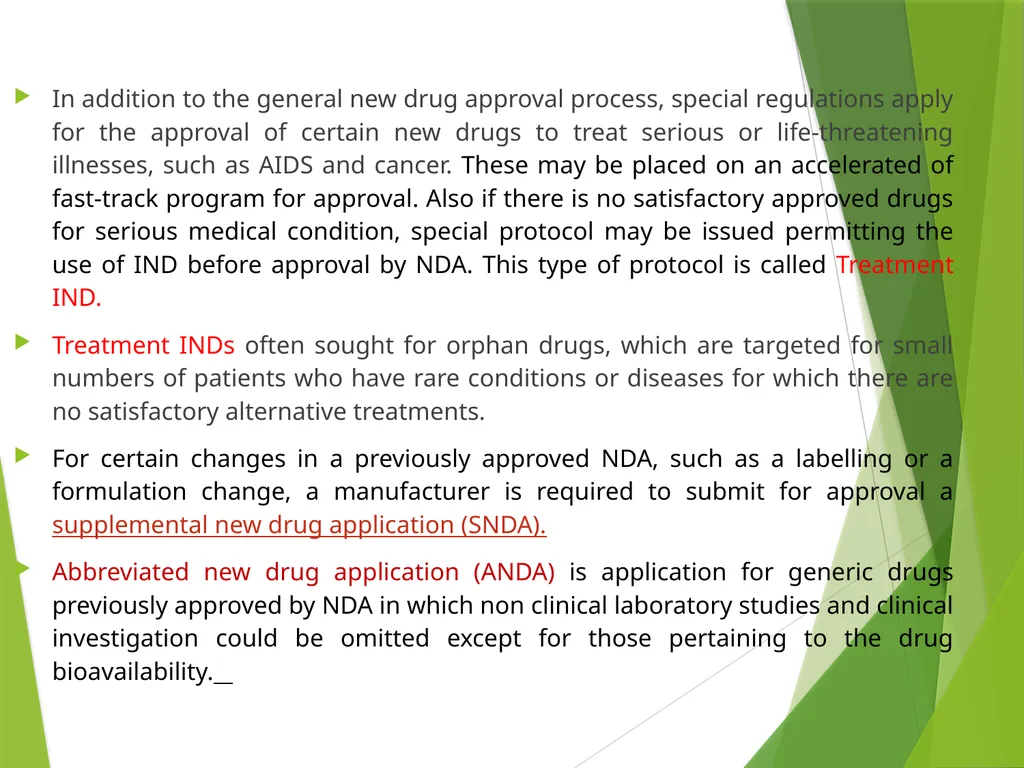
slide10. In addition to the general new drug approval process, special regulations apply for the approval of certain new drugs to treat serious or life-threatening illnesses, such as AIDS and cancer. These may be placed on an accelerated of fast-track program for approval. Also if there is no satisfactory approved drugs for serious medical condition, special protocol may be issued permitting the use of IND before approval by NDA. This type of protocol is called Treatment IND.
Treatment INDs often sought for orphan drugs, which are targeted for small numbers of patients who have rare conditions or diseases for which there are no satisfactory alternative treatments.
For certain changes in a previously approved NDA, such as a labelling or a formulation change, a manufacturer is required to submit for approval a supplemental new drug application (SNDA).
Abbreviated new drug application (ANDA) is application for generic drugs previously approved by NDA in which non clinical laboratory studies and clinical investigation could be omitted except for those pertaining to the drug bioavailability.<br>
slide11. Drug discovery and drug design The discovery of new drugs and their development into commercial products take place across the broad scope of pharmaceutical industry.
The basic underpinning for this effort is the cumulative body of scientific and biomedical information generated worldwide in research institutes, academic centers, and industry. (The combined efforts of chemists, biologists, molecular biologists, pharmacologists, toxicologists, statisticians, physicians, pharmacists and pharmaceutical scientists, engineers, and many others participate in drug discovery and development.)
The pharmaceutical industry in the United States grew rapidly during World War II and in the years immediately following the upsurge in production is due to:
wartime hazards
consequent undependability of overseas shipping
the unavailability of drugs from previous sources
the increased need of drugs of all kinds.<br>
slide12. Penicillin, antibiotic that became commercially available in 1944, 15 years after its discovery in England by Sir Alexander Fleming and 1 year before the end of the war.
The post war boom in drug discovery continued with the development of many new agents, such as vaccines to protect against poliomyelitis, measles, and influenza, and new pharmacologic categories of drugs including oral hypoglycaemic drugs effective against certain types of diabetes mellitus, antineoplastic or anticancer drugs, immunosuppressive agents to assist the body’s acceptance of organ transplants. Oral contraceptives to prevent pregnancy, and a host of tranquilizers and antidepressant drugs to treat the emotionally distressed.
Annually, approximately 40 new molecular entities receive FDA approval for marketing. In addition, many new dosage strength and dosage forms of previously approved drugs, new generic products, and new biologics are approved each year.<br>
slide13. Source of new drugs natural sources (Plant materials)
synthesized in the laboratory (some by accident, mostly by many years of work).
Biotechnology (engineered biologic material resulting from research that is more targeted; that is, directed specifically toward the identified physiologic/metabolic process or biomolecular target of a disease<br>
slide14. Throughout history, plant materials have served as a reservoir of potential new drugs.
Yet, only a small portion of the approximately 270,000 known plants thus far have been investigated for medicinal activity.
Certain major contributions to modern drug therapy may be attributed to the successful conversion of botanic folklore remedies into modern wonder drugs.
EX: Reserpine a tranquilizers and a hypotensive agent, is an example of medicinal chemical isolated from plant Rauwolfia serpentina.
Plant extracts from V. rosea yield two potent drugs that, when screened for pharmacologic activity, surprisingly exhibited antitumor capabilities. These two materials, vinblastine and vincristine, since have been used successfully in the treatment of certain types of cancer, including acute leukemia, Hodgkin disease, lymphocytic lymphoma, and other malignancies Natural sources<br>
slide15. After the isolation and structural identification of active plant constituents, organic chemists may recreate them by
total synthesis in the laboratory
more importantly, use the natural chemical as the starting material in the creation of slightly different chemical structures through molecular manipulation.
The new structures, termed semisynthetic drugs, may have a slightly or vastly different pharmacologic activity from that of the starting substance, depending on the nature and extent of chemical alteration.<br>
slide16. techniques that influence cells' ability to produce proteins.
The two basic technologies that drive the genetic field of drug development are:
Recombinant DNA (It has the potential to produce almost any protein) Monoclonal antibody production. The technique exploits the ability of cells with the potential to produce a desired antibody and stimulates an unending stream of pure antibody production in higher animals. These antibodies have the capacity to combat the specific target.
Common to each technique is the ability to manipulate and produce proteins, the building blocks of living matter. Biotechnology<br>
slide17. Genetic material can be transplanted from higher species, such as humans, into a lowly bacterium.
This so-called gene splicing can induce the lower organism to make proteins it would not otherwise have made.
Such drug products as human insulin, human growth hormone, hepatitis B vaccine, epoetin alfa, and interferon are being produced in this manner.
Human insulin was the first recombinant biopharmaceutical approved in the United States, in 1982.
involve the manipulation of proteins within the cells of lower animals Recombinant DNA<br>
slide18. Whereas recombinant DNA techniques involve the manipulation of proteins within the cells of lower animals, monoclonal antibody production is conducted entirely within the cells of higher animals, including the patient.
mAb production is conducted entirely within the cells of higher animals, including the patient.
The technique exploits the ability of cells with the potential to produce a desired antibody and stimulates an unending stream of pure antibody production.
These antibodies have the capacity to combat the specific target.
The development and use of monoclonal antibodies is having a profound impact in both diagnostic medicine and in the treatment of disease Monoclonal antibody<br>
slide19. Diagnostically: home pregnancy testing products Example on Monoclonal antibodies application (home pregnancy testing products). Their use ensures that a women can perform the test easily in a short period with high reproducibility and in an inexpensive manner.
In these tests, the mAb is highly sensitive to binding on one site on the human chorionic gonadotropin (HCG) molecule, a specific marker to pregnancy because in healthy women, HCG is synthesized exclusively by the placenta.
The first FDA-approved therapeutic mAb was muromonab, a transplant rejection drug, approved in 1986.
In medicine, monoclonal antibodies are being used to stage and to localize malignant cells of cancer, and it is anticipated that they will be used in the future to combat diseases such as lupus erythematosus, juvenile-onset diabetes, and myasthenia gravis<br>
slide20. Used to prevent, treat, cure, diagnose, or mitigate human disease caused by genetic disorders, is another promising new technology When a gene is expressed, a specific type of protein is produced.
Gene therapy is a medicinal intervention based on the modification of the genetic material of living cells. gene therapy entails the transfer of new genetic material to the cells of a patient with a genetic disease.
(modified outside the body (ex vivo))
(modified within the body (in vivo)) by gene therapy products given directly to the patient.
The first human gene therapy used was to treat adnosine deaminase (ADA) deficiency, a condition that results in abnormal functioning of immune system. Therapy consisted of the administration of genetically modified cells capable of producing ADA.
The human body contains up to 100,000 genes. Genes that are aligned on a double strand of DNA in the nucleus of every cell control all of the body’s functions.
Base pairs of adenine and thymine (A and T, respectively) and cytosine and guanine (C and G, respectively) constitute the instructions on a gene. Only genes necessary for a specific cell’s function are active or expressed Human Gene Therapy<br>
slide21. Animals have served humans in their search for drugs in a number of ways. They not only have yielded to drug testing and biologic assay but also have provided drugs that are mannered from their tissues or through their biologic processes examples:
Hormonal substances (thyroid extract, insulin, pituitary hormone) obtained from the endocrine glands of cattle, sheep, and swine.
The urine of pregnant mares is a rich source of estrogens.
Today the poliomyelitis vaccine is prepared in cultures of renal monkey tissue, the mumps and influenza vaccines in fluids of chick embryo, the rubella (German measles) vaccine in duck embryo, and the smallpox vaccine from the skin of bovine calves inoculated with vaccinia virus.
New vaccines for diseases such as AIDS and cancer are being developed through the use of cell and tissue cultures.
Knowledge of the structural architecture of the individual hormonal substances has produced a variety of synthetic and semisynthetic compounds with hormone-like activity. The synthetic chemicals used as oral contraceptives are notable examples. Animals<br>
slide22. In theory, a goal drug
Would produce the specifically desired effect
Be administered by the most desired route (generally oral)
minimal dosage and dosing frequency
Have optimal onset and duration of activity
Exhibit no side effects and
Following its desired effect would be eliminated from the body efficiently and completely and without residual effect
It would be easily produced at low cost
Be pharmaceutically elegant
Physically and chemically stable under various conditions of use and storage. A goal drug<br>
slide23. Random or untargeted screening:
involves the testing of large numbers of synthetic organic compounds or substances of natural origin for biologic activity
Purposes: random screens may be use initially
to detect an unknown activity of the test compound or substance
to identify the most promising compounds to be studied by more sophisticated nonrandom
targeted screens to determine a specific activity
sometimes promising compounds may be overlooked if the screening models are not sensitive enough to reflect accurately the specific disease against which the agent or its metabolites may be useful. Methods of drug discovery<br>
slide24. Bioassays are used to differentiate the effect and potency (strength of effect) of test agent from those of controls of known action and effect.
The initial bioassays may be performed in vitro using cell cultures to test the new agent’s effect against enzyme systems or tumor cells
whereas subsequent bioassays may be performed in vivo and may use more expensive and disease-specific animal models.
Newer method, such as (combinatorial chemistry) are capable of examining 15,000 chemical compounds a week using 10 to 20 biologic assays.<br>
slide25. Molecular modification:
is chemical alteration of a known and previously characterized organic compound (frequently a lead compound) for the purpose of enhancing its useful as a drug by:
Enhancing its specificity for a particular body target site
Increasing its potency
Improving its rate and extent of absorption
Modifying to the advantage its time-course in the body
Reducing its toxicity
Changing its physical and chemical properties (e.g., solubility) to provide desired features.
The molecular modifications may be slight or substantial involving changes in functional groups, ring structures, or configuration.
Knowledge of chemical structure-pharmacologic activity relationships plays an important role in designing new drug molecules.
Molecular modification produces new chemical entities and improved therapeutic agents.<br>
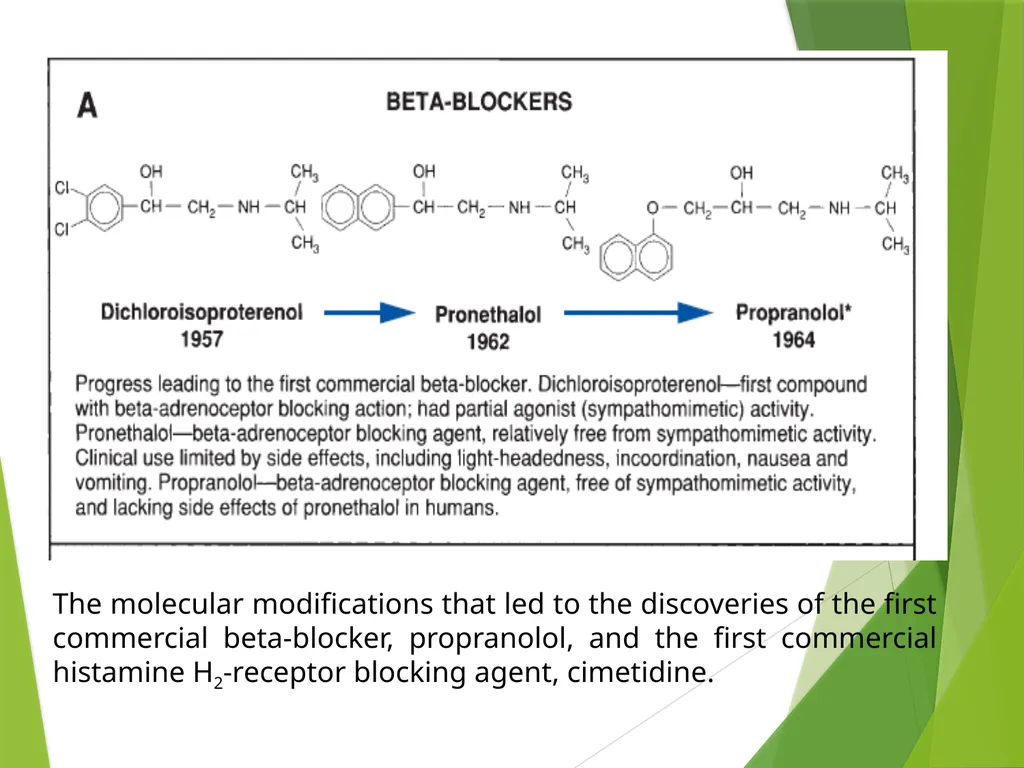
slide26. The molecular modifications that led to the discoveries of the first commercial beta-blocker, propranolol, and the first commercial histamine H2-receptor blocking agent, cimetidine.<br>
slide27. Mechanism-based drug design:
is a molecular modification to design a drug that interferes specifically with the known or suspected biochemical pathway or mechanism of a disease process. Purpose: The intention is the interaction of the drug with specific cell receptors, enzymes systems, or metabolic process of pathogens or tumor cells, resulting in blocking, disruption, or reversal of the disease process.
Molecular graphics
the use of computer graphics to represent the structure of drug molecule to fit the simulated molecular structure of the receptor site, is a useful complementary tool in drug molecule design.
Example of Mechanism-based drug design
Enalaprilat (Vasotec), which inhibits the angiotensin-converting enzyme (ACE) that catalyzes the conversion of angiotensin I to the vasoconstrictor substance angiotensin II. Inhibition of the enzyme results in decreased plasma angiotensin II, leading to decrease vasopressor effects and lower blood pressure.<br>
slide28. Another example is ranitidine (Zantac), inhibitor of histamine at histamine H2-receptors. This inhibits gastric acid secretion, making the drug effective in the treatment of gastric ulcers.
A third example is sertraline which inhibits the central nervous system's neuronal uptake of serotonin, making drug useful in treatment of depression.<br>
slide29. Lead compound: is a prototype chemical compound that has a fundamental desired biologic or pharmacologic activity. The synthesis of derivatives of chemical may lead to successive generations of new compounds of same pharmacologic type.
Although active, the lead compound may not possess all of the features desired, such as potency, absorbability, solubility, low toxicity, and so forth.
the medicinal chemist ma seek to modify the lead compound’s chemical structure to achieve the desired feature while reducing the undesired ones.
The chemical modifications produce analogs with
additional or different functional groups
Altered ring structures
Different chemical configurations.
The results are modified chemical compounds capable of having different interactions with the body’s receptors, thereby eliciting different actions and intensities of action<br>
slide30. The synthesis of derivatives of the prototype chemical may ultimately lead to successive generations of new compounds of the same pharmacologic type.
This may be exemplified by
The development of new generations of cephalosporin antibiotics,
Additional H2 antagonists from the pioneer drug Cimetidine.
The large series of antianxiety drugs derived from Benzodiazepine structure and the innovator drug chlordiazepine (Librium).
Most drugs exhibit activities secondary to their primary pharmacologic action. It is fairly common to take advantage of a secondary activity by using molecular modification to develop new compounds that amplify the secondary use of the drug or by gaining approval to market the drug for a secondary indication
Example: Finasteride (Proscar) was originally developed and approved to treat benign prostatic hyperplasia. Later, the same drug as (Propecia) was approved at lower recommended dosage to treat male pattern baldness.<br>
slide31. Prodrugs:
is a term used to described a compound that requires metabolic biotransformation following administration to produce the desired pharmacologically active compound.
The conversion of an inactive prodrug to an active compound occurs primarily through enzymatic biochemical cleavage. Biotransformation occur at body where enzymes are present.
Example of Prodrug:
Enalapril maleate (Vasotec) which, after oral administration, is bioactivated by hydrolysis to enalaprilat, an ACE inhibitor used in the treatment of hypertension.
Prodrug may be design preferentially for
solubility,
absorption,
prolonged release
biostability<br>
slide32. A prodrug may be designed to possess solubility advantages over the active drug, enabling the use of specifically desired dosage forms and routes of administration.
For example, if an active drug is insufficiently soluble in water to prepare a desired intravenous injection, a water-soluble prodrug, for example, hydrocortisone sodium succinate, could be prepared through the addition of a functional group that later would be detached by the metabolic process to yield, once again, the active drug molecule. Solubility<br>
slide33. A drug may be made more water or lipid soluble, as desired, to facilitate absorption via the intended route of administration.
the addition of the decanoate ester to the haloperidol molecule makes the molecule less water soluble. Subsequently, when it is administered by a deep IM provides a sustained effect 4 Weeks.
Depending on a prodrug's rate of metabolic conversion to an active drug, it may provide prolonged drug release and extended therapeutic activity Absorption Prolonged release<br>
slide34. If an active drug is prematurely destroyed by biochemical or enzymatic process, the design of a prodrug may protect the drug during its transport in the body.
valacyclovir is a prodrug of acyclovir. Normally, the bioavailability of acyclovir is 10% to 20% after oral administration. Valacyclovir is converted to acyclovir by liver esterase via the first pass metabolism resulting in a 55% bioavailability.
In addition, the use of a prodrug could result in site-specific action of greater potency.
For example, dopamine in the treatment of parkinson disease is unable to cross the blood-brain barrier. However, its prodrug, levodopa, is able to cross the blood-brain barrier and then is converted to dopamine Biostability<br>
slide35. A New Molecular Entity (NME)
is defined by the FDA as an active ingredient that has never before been marketed in the United States in any form
According to the FDA, a new drug is any drug that is not recognized as being safe and effective in the conditions recommended for its use in the labeling among experts who are qualified by scientific training and experience. FDA’s Definition of a New Drug<br>
slide36. Note: A drug need not be a new chemical entity to be considered new.
A change in a previously approved drug product’s formulation or method of manufacture constitutes newness under the law since such changes can alter the therapeutic efficacy and/or safety of a product
A combination of two or more old drugs or a change in the usual proportions of drugs in an established combination product
A proposed new use for an established drug, a new dosage schedule or regimen, a new route of administration, or new dosage form makes a drug or a drug product’s status new and triggers reconsideration for safety and efficacy.<br>
slide37. Drug Nomenclature When first synthesized or identified the drug is represented by an empirical formula, for example, C16H19N3O5S.3H2O for amoxicillin,
As knowledge of the relative locations of these atoms increases, the compound receives a systematic chemical name, such as 4-Thia-1-azabicylco[3.2.0]heptane-2-carboxylic acid, 6-[amino(4-hydroxyphenyl)acetyl]amino-3,3-dimethyl-7—oxo, trihydrate 2S[2[alpha],[5[alpha].6[beta](S*)]].
To be adequate and fully specific, name must reveal every part of the compound’s molecular structure, so that it describes only that compound and no other.
The systematic name is generally so formidable that it soon is replaced in scientific communication by a shortened name, which, although less descriptive chemically, is understood to refer only to that chemical compound.
This shortened name is the chemical’s nonproprietary (or generic) name (e.g., amoxicillin). And sometimes code number (e.g., SQ 14,225, the investigational code number for the drug captopril, initially developed by Squibb).
The code number frequently stays with a compound from its initial preclinical laboratory investigation through human clinical trials.<br>
slide38. The sponsor may formally propose a nonproprietary name to the U.S. Adopted Names (USAN) Council in association with the USP Expert Committee on Nomenclature, the FDA, and the U.S. Patent and Trademark Office (and foreign agencies as well) for a proprietary or trademark name.
Nonproprietary names are issued only for single agents, whereas proprietary names may be associated with a single chemical entity or with a mixture of chemicals constituting a specific proprietary product.
The official name for a drug is referred to as the drug nonproprietary or public name.
In contrast to the proprietary or brand names or trademark names given by the specific manufacturers or distributors of the drug, the term generic name, has been used extensively in referring to the nonproprietary names of the drugs.
paracetamol/acetaminophen is the non-proprietary name (generic name) while Crocin/Metacin/Meftal/Tylenol etc. are brand names<br>
slide39. Biologic Characterization Drug substances undergo preclinical testing for biologic activity to assess their therapeutic activity.
These studies, fall into areas of pharmacology, drug metabolism, and toxicology
It involves many types of scientists, including general biologists, microbiologists, molecular biologists, biochemists, geneticists, pharmacologists, physiologists, pharmacokineticists, pathologists, toxicologists, statistician, and others.
Their work leads to the determination of whether a chemical agent possesses adequate features of safety and sufficient promise of usefulness to pursue as a prospective new drug.
To judge whether a drug is safe and effective, information must be gained on how it is absorbed, distributed throughout the body, stored, metabolized, and excreted and how it affects the action of body’s cells, tissues, and organs.<br>
slide40. Biologic Characterization Scientists have developed studies conducted outside living body using cell and tissue culture and computer programs that simulate human and animal systems.
Cell cultures are being used increasingly to screen for toxicity before progressing to whole-animal testing.
Computer models help to predict the properties of substances and their probable actions in living systems.<br>
slide41. Pharmacology is the science concerned with drugs, their sources, appearance, chemistry, actions, and uses.
The term in general can be expanded to include
1. Properties
2. Biochemical and physiologic effects
3. Mechanism of actions
4. Absorption, distribution, biotransformation, and excretion.
From this basic field of study come subareas as
Pharmacodynamics, the study of the biochemical and physiologic effects of drugs and their mechanisms of action.
Pharmacokinetics, which deals with the absorption, distribution, metabolism or biotransformation, and excretion (ADME) of drugs; and
Clinical Pharmacology, which applies pharmacologic principles to the study of the effects and actions of drugs in humans<br>
slide42. Receptors
Although receptors for many drugs have yet to be identified, like the active centers of enzymes, they are considered to be carboxyl, amino, sulfhydryl, phosphate, and similar reactive groups oriented on or in the cell in a pattern complementary to that of the drugs with which they react.
The binding of a drug to the receptor is thought to be accomplished mainly by ionic, covalent, and other relative weak reversible bonds. Occasionally, firm covalent bonding is involved, and the drug effect is then slowly reversible.
There is a relationship between the quantity of drug molecules available for interaction and the capacity of the specific receptor site.
For instance, after a dose of drug and its transit to the site of action, the cell’s receptors may or may not become fully saturated with the interacting drug.
When the receptors are saturated, the effects of the specific interaction are maximized. Any additional drug present (as in the circulation) and not participating in the interaction may serve as a reservoir to replace the drug molecules released from complex.<br>
slide43. Two drugs in a biologic system may compete for the same binding sites, with the drug having the stronger bonding attraction for the site generally prevailing.
Already bound molecules of the more weakly bound drug may be displaced from the binding site and left free in the circulation.
Certain cells within the body are capable of binding drugs without eliciting a drug effect. These cells act as carriers and may be important to a drug’s transport to active sites or to sites of the drug’s biotransformation and elimination.<br>
slide44. General steps for pharmacologic studies
1- Cell culture
Among the early studies are the determination of compound’s selectivity for various receptors and its activity against select enzyme systems. Studies of the compound’s effect on cell function are then performed to detect evidence of efficacy and to determine whether the compound is an agonist or antagonist.
2- Studies with isolated animal tissues to define further the compound activity and selectivity.
3- Whole-animal studies are used to evaluate the pharmacologic effects of the agent on specific organ systems.
4- Studies are undertaken using animal models of human disease for which the compound is considered a drug candidate. To define a pharmacologic profile<br>
slide45. Most animal testing is done on small animals, usually rodents (mouse, rats) for a number of reasons including
cost,
availability,
the small amount of drug required for a study,
the ease of administration by various routes (oral, inhalation, intravenous)
experience with drug testing in these species.
However, in final pharmacologic and toxicologic studies, two or more animal species are used as required by the FDA, including a rodent and an animal from another order.
Drug are studied at various dose levels to determine the effect, potency, and toxicity.
The primary objective of the animal studies is to obtain basic information on the drug’s effects that may be used to predict safe and effective use in humans.
This is a difficult task because of species variation and the fact that animals are not absolute predictors of human response.<br>
slide46. However, a number of animal models have been developed to mimic certain human diseases, and these are used effectively.
For instance, there are animal models for type I diabetes and hypertension, using genetically diabetic and hypertensive animals, respectively, and for tumor growth, using tumor transplants in various species.
final pharmacologic and toxicologic studies, two or more animal species are used as required by the FDA.
Certain animal species have been determined to be the best for certain studies of organ systems, or as human disease models, including
dogs or rats for hypertension,
dogs and guinea pigs for respiratory effects
dogs for diuretic activity;
rabbits for blood coagulation;
mice and rats for CNS studies.
Unfortunately, useful animal models are not available for every human disease. As a drug candidate progresses in its preclinical pharmacologic evaluation, drug metabolism and toxicity tests are initiated.<br>
slide47. Drug metabolism A series of animal studies of a proposed drug’s ADME are undertaken to
The extent and rate of drug absorption from various routes of administration, including the one intended for human use
The rate of distribution of the drug through the body and the site or sites and duration of the drug’s residence.
The rate, primary and secondary sites, and mechanism of the drug’s metabolism in the body and the chemistry and pharmacology of any metabolites
The proportion of administered dose eliminated from the body and its rate and route of elimination.
In these studies, a minimum of two animal species are employed (generally the same as used in the pharmacologic and toxicologic studies), rodent and one other, usually a dog.
The biochemical transformation or metabolism of drug substances is the body’s means of transforming non polar drug molecules into polar compounds, which are more readily eliminated.
Enzymes: Liver, kidneys, lungs, and GIT.
Determine whether a drug's metabolic products are toxic or nontoxic to the animal and later to the human.<br>
slide48. Toxicology Deals with the adverse or undesired effects of drugs.
Initial toxicology studies are conducted on rodents. Another animal, dog is added
Not all side effects of new drugs to be tested in animals will be detected but the greater the likelihood the effect will also be seen in humans Example: headache
Purpose of Safety Evaluation and Toxicity Studies
The substance’s potential for toxicity with short-term (acute effects) or long- term use (chronic effects)
The substance’s potential for specific organ toxicity
The mode, site, and degree of toxicity.
Dose-response relationships for low, high, and intermediate doses over a specified time
Gender, reproductive, or teratogenic toxicities
6. The substance’s carcinogenic and genotoxic potential<br>
slide49. Acute or Short-Term Toxicity Studies
These studies are designed to determine the toxic effects of a test compound when administered in a single dose and/or in multiple dose doses over a short period, usually a single day.
Test compound administered at various dose levels, with toxic signs observed for:
Onset.
Progression or reversal.
Severity,
Mortality.
Rates of incidence.
Doses are ranged to find;
Largest single dose of test compound that will not produce toxic effect.
Dose level at which severe toxicity occurs.
Intermediate toxicity levels.<br>
slide50. Animals are observed and compared with the controls for eating and drinking habits, weight changes, toxic effects, psychomotor changes, and any other sign of untoward effects, usually over a 30-day postdose period.
feces and urine are collected and clinical laboratory test performed to detect changes in clinical chemistry and other changes that could indicate toxicity.
Animal death: recorded; study on histology; pathology and statistically evaluated on the basis of dose response gender, age, intra species and interspecies findings, and against laboratory controls.
Subacute or Subchronic Studies
Animal toxicity studies of a minimum of 2 weeks of daily drug administration at three or more dosage levels to two animal species are required to support the initial ad ministration of a single dose in human clinical testing.<br>
slide51. Chronic toxicity studies
The initial human dose is usually one-tenth of the highest nontoxic dose (in milligrams per kilogram of subject’s weight) shown during the animal studies.
For drugs intended to be given to humans for a week or more, animal studies of 90 to 180 days must demonstrate safety.
If the drug is to be used for a chronic human illness, animal studies 1 year or longer must be undertaken to support human use. Some animal toxicity studies last 2 years or longer.
Compare the strain, sex, age, dose levels and ranges, routes of administration, duration of treatment, observed effects, mortality, body weight changes, food and water consumption, physical examination (electrocardiography, ophthalmic, examination), hematology, clinical chemistry, organ weights, gross pathology, neoplastic pathology, histopathology, urinalysis, ADME data<br>
slide52. Carcinogenicity Studies
Carcinogenicity testing is usually component of chronic testing and is undertaken when compound has shown sufficient promise as a drug to enter human clinical trials.
Carcinogenicity studies carried out in limited number of rat and mouse strains when there is information on spontaneous tumor incidence.
Dose-ranging studies are done with female and male animals using high, intermediate, and low doses over a 90-day period.
Carcinogenicity studies are long term (18-24 months), with surviving animals killed and studied at defined weeks during the test period.
Data on the causes of animal death, tumor incidence, type and site, and necropsy findings are collected and evaluated.
Any preneoplastic lesions and/or tissue-specific proliferation effects are important findings<br>
slide53. Reproduction Studies
Reproduction studies are undertaken to reveal any effect of an active ingredient on mammalian reproduction. Included in these studies are fertility and mating behavior; early embryonic, prenatal, and postnatal development, multigenerational effects, and teratology.
In these studies, the maternal parent, fetus, neonates, and weaning offspring are evaluated for anatomic abnormalities, growth, and development.
The animal used in other toxicity studies in reproductive studies, usually the rats.
In embryotoxicity studies only, a second mammalian species traditionally has been required. The rabbit is the preferred choice for practically and the extensive background knowledge accumulated on this species.
Genotoxicity or Mutagenicity Studies
Performed to determine whether the test compound can affect gene mutation or cause chromosome or DNA damage. Strains Salmonella typhimurium are routinely used in assays to detect mutations.<br>
slide54. As a promising compound is characterized for biological activity, it is also evaluated with regard to chemical and physical properties that have bearing on its ultimate and successful formulation into stable and effective pharmaceutical product.
This is the area of responsibility of pharmaceutical scientists and formulation pharmacists trained in pharmaceutics.
Preformulation Studies
Each drug substance has intrinsic chemical and physical characteristic that must be considered before the development of a pharmaceutical formulation.
Among these are the drug’s solubility, partition coefficient, dissolution rate, physical form, and stability Preformulation studies<br>
slide55. Drug Solubility
- A drug substance administered by any route must posses some aqueous solubility for systemic absorption and therapeutic response.
Poorly soluble compounds (example less than 10 mg/ml aqueous solubility) may exhibit incomplete, erratic, and or slow absorption and thus produce a minimal response at desired dosage.
Increase aqueous solubility by:
Prepare more soluble compound, such as salt or esters,
By chemical complexation
By reducing particle size
Partition Coefficient
to produce a pharmacologic response, a drug molecule must cross biologic membrane of protein and lipid, which as lipophilic barrier to many drugs.
The ability of a drug to penetrate this barrier based on lipids solubility (lipophilic) versus aqueous phase (hydrophilic).
Partition coefficient is measure of distribution in lipophilic-hydrophilic phase system and indicates its ability to penetrate biologic multiphase system.<br>
slide56. Dissolution Rate
Is the speed at which a drug substance dissolves in a medium. Dissolution constant, and partition coefficient, can provide indication of drug’s absorption potential.
For a chemical entity, its acid, base, or salt forms, as well as its physical form (e.g., particle size), may result in differences in dissolution rate.
Physical Form
The crystal or amorphous forms and/ or the particle size of a powdered drug can affect the dissolution rate, thus the rate and extent of absorption, for a number of drugs.
Reducing particle size increase surface area of poorly soluble drug and its dissolution rate in the gut is enhanced.<br>
slide57. Stability
The chemical and physical stability of a drug substance alone, and when combined with formulation components, is a critical to preparing a successful pharmaceutical product.
For drugs susceptible to oxidative decomposition, the addition of antioxidant stabilizing agents to the formulation may required to protect the potency.
Drugs destroyed by hydrolysis, protection against moisture in formulation, processing, and packaging may be required to prevent decomposition.
In every case, drug stability testing at various temperatures, conditions of relative humidity (RH)-as 40°C 75% RH/ 30°C 60% RH-durations, and environments of light, air, and packaging is essential in assessing drug and drug product stability.
Such information is vital in developing label instruction for use and storage. Assigning product expiration dating, and packaging and shipping.<br>
slide58. Initial Product Formulation and Clinical Trial Materials
- Prepared for Phase 1 and Phase 2 for clinical trials
During Phase 1 studies, for orally administered drugs, capsules are employed containing the active ingredient alone, without pharmaceutical excipients. Excipient included in the formulation for Phase 2.
Studies drug’s ADME undertaken.
During Phase 2, the final dosage form is selected and developed for Phase 3 trials; this is the formulation that is submitted to the FDA for marketing approval
Clinical Supplies or Clinical Trial Materials:
Comprise all dosage formulations used in the clinical evaluation of a new drug. This includes the proposed new drug, placebos (inert substances for controlled studies) and drug products against which the new drug is to be compared (compactor drugs or drug products).<br>
slide59. Drug effect in a population sample.
Certain drugs may produce more than one effect, depending on dose. For example, a low dose of barbiturate produces sedation, whereas a larger dose produces hypnotic effects.
Some factors of patients considered in determining a drug’s dose in clinical investigations and in medical practice include the following:
1. Age:
Newborns and those born prematurely, have immature hepatic and renal function, the means by which drugs are normally inactivated and eliminated from the body.
In those cases dose based on age or weight. However, it is not enough in determine pediatric dose so many pediatric doses based on body weight or body surface area (BSA).<br>
slide60. Elderly persons:
physiologic functions decrease after 30 years. Cardiac output decrease 1% /year from age 20 to 80. GFR falls progressively until age 80; at time it is only half of what it was at age 20’
Vital capacity, immune capacity, and liver enzyme function also decrease.
The decrease in renal and hepatic function in elderly slows drug clearance rate which leads to accumulation and toxicity
Chronic disorder in old patients require concomitant drug therapy, increasing drug-drug interaction and adverse effects.
2. Pharmacogenetics
varying effects among different racial and ethnic populations.
Common genetic polymorphisms: multiple forms of enzymes governing drug metabolism, affect clearance from blood of many drug used in large patient population.<br>
slide61. 3. Body Weight:
Usual doses for drugs are suitable for 70-kg (150 lb) individuals.
Body weight is more dependable than age
The ratio between amount of drug administered and the size of the body influences drug concentration in body fluids. Therefore, drug dosage require adjustment heavy patients.
Mg (drug) /kg (body weight) basis (e.g., 1 mg/kg).
In some instances, pediatric dose based on a combination age and weight (e.g., 6 months to 2 years of age: 3 mg/kg/day).
4. Body Surface Area:
Many pediatric doses based on body weight or body surface area (BSA).
The BSA for child or adult determined using nomogram. The BSA determined at intercept of straight line drawn to connect an individual’s height and weight.
For example, an adult measuring 67 inch in height and weighing 132 Ib would have a BSA of approximately 1.7 m2<br>
slide62. 5. Sex:
pharmacokinetic differences between women and men important for narrow therapeutic index. Drug with narrow therapeutic risk increase to toxic levels or decrease to ineffective levels with minimal dosing changes.
Great caution is advised for use of most drugs during pregnancy and in women of childbearing age.
Similar caution is applicable to drug use in nursing mothers because transfer mother’s milk to an infant is well documented for a variety of drugs.
6. Pathologic state:
example, if drugs in presence of renal impairment, excessive systemic accumulation occur, risking toxicity.
In such condition, lower doses are indicated, and if therapy is prolonged, blood levels should be assessed and the patient monitored at regular intervals to ensure the maintenance of nontoxic levels of the drug.<br>
slide63. 7. Tolerance:
The ability to endure the influence of a drug particularly during continues use.
it is common with antihistamines and narcotic analgesics. After tolerance, normal response may be regained by suspending the drug’s administration for a while.
8. Concomitant drug therapy:
The effects of a drug may be modified by the prior or concurrent administration of another drug. Such interference, a drug–drug interaction, may be due to a chemical or physical interaction between the drugs or to an alteration of ADME patterns of one of the drugs.
absorption rapid if stomach and upper part of intestine are empty. A dose of drug that is effective when taken before a meal less effective if administered during or after eating. Drug-food interactions can affect a drug’s absorption.
9. Dosage form and route of administration:
varying rates and degrees of absorption occur from drug administration in rectum, GIT, under tongue, via skin, and to other sites.
Therefore, for a given drug, different dosage forms and routes of administration are considered new by the FDA and must be evaluated individually through clinical studies to determine the effective doses.<br>
slide64. DRUG PRODUCT LABELING Drug labeling includes not only the labels placed on an immediate container but also the information on
the packaging,
in package inserts, and
in company literature,
advertising, and promotional materials.
Blister packaging:
Is commonly used in clinical studies, with intermediate labels containing the clinical study or protocol number, patient identification number, sponsor number, directions for use, code number to distinguish between investigational drug, placebo, and or compactor product, and other relevant information<br>
slide65. Drug Product Labeling (Package Inserts)
The labeling of all drug products distributed in the United States must meet the specific labeling requirements set forth in the CFR (Code of Federal Regulations) and approved for each product by the FDA .
Specific labeling requirements differ for prescription drugs, nonprescription drugs, and animal drugs. In each instance, however, the objective is the same—to ensure the appropriate and safe use of the approved product.
Description of the product
Clinical Pharmacology
Indications and usage
Contraindications
Warnings
Precautions
Adverse reactions
Drug abuse and Dependence
Over dosage
Dosage and Administration
How supplied<br>
slide66. FDA review and action letters
The completed NDA is carefully reviewed by the FDA, which decides whether to allow the sponsor to market the drug, to disallow marketing, or to require additional data before rendering a judgment.
Phase 4 Studies and Postmarketing Surveillance
The receipt of marketing status for a new drug product does not necessarily end a sponsor’s investigation of the drug. Continued clinical investigations, often called Phase 4 studies,
may contribute to the understanding of the drug’s mechanism or scope of action
may indicate possible new therapeutic uses for the drug, and/or may demonstrate the need for additional dosage strengths, dosage forms, or routes of administration.
may also reveal additional side effects, serious and unexpected adverse effects, and/ or drug interactions.
Postmarketing reporting of adverse drug experience, Annual reports: failure to make required reports may lead to FDA withdrawal of approval for marketing.<br>
slide67. INVESTIGATIONAL NEW DRUG APPLICATION (IND)
According to FDA the sponsor of a new drug is required to file with the FDA an IND before the drug may be given to human subjects.
This is to protect the rights and safety of the subjects and to ensure that the investigational plan is sound and is designed to achieve the stated objectives.
The sponsor of an IND takes responsibility for and initiates a clinical investigation.
Full description of new drug
Where and how it is manufactured
All quality control information and standards
Stability.
5. Analytical method
Pharmacology
Toxicology
Efficacy in animals
9. Persons who will do the clinical studies<br>
slide68. Treatment IND A treatment IND or a treatment protocol permits the use of an investigational drug in the treatment of patients who are not enrolled in the clinical study but who have a serious or immediately life-threatening disease for which there is no satisfactory alternative therapy.
The objective is to make promising new drugs available to desperately ill patients as early as possible in the drug development
For products to be considered for a treatment IND, the drug must be under active process. investigation in a controlled clinical trial with sufficient evidence of its safety and efficacy demonstrated to support its use in the intended patients IND for an Orphan Drug an orphan disease is defined as a rare disease or condition that affects fewer than 200,000 people in the United States and for which there is no reasonable expectation that costs of R&D for the indication can be recovered by sales of the product in the United States.<br>
slide69. Supplemental new drug application SNDA
A sponsor of an approved NDA may make changes in that application through the filing of an SNDA. Depending on the changes proposed, some require FDA approval before implementing; others do not.
Among the changes requiring prior approval are:
A change in the method of synthesis of the drug substance
Use of a different facility to manufacture the drug substance where the facility has not been approved through inspection for Current Good Manufacturing Practice standards within the previous 2 years
Change in the formulation, analytical standards, method of manufacture, or in-process controls of the drug product
Use of a different facility or contractor to manufacture, process, or package the drug product
Change in the container and closure system for a drug product
Extension of the expiration date for a drug product based on new stability data
Any labeling change that does not add to or strengthen a previously approved label statement<br>
slide70. Abbreviated New Drug Application ANDA
An ANDA is one in which nonclinical laboratory studies and clinical investigations may be omitted, except those pertaining to the drug’s bioavailability.
These applications are usually filed for duplicates (generic copies) of drug products previously approved under a full NDA and for which the FDA has determined that information on the exempted nonclinical and clinical studies is already available at the agency<br>
slide71. Reference Ansel’s pharmaceutical dosage forms and drug delivery systems , tenth edition<br>
Chapter 1
Dr. Athmar Dhahir Habeeb
PhD in Industrial pharmacy and drug delivery
athmar1978@uomustansiriyah.edu.iq
athmar1978@yahoo.com
athmar.habeeb.12@ucl.ac.uk<br>
slide2. Topics covered through the course
New drug development and approval process
Current good manufacturing practices
Dosage form design pharmaceutical and formulation consideration
Dosage form design Biopharmaceutical and pharmacokinetic consideration<br>
slide3. New Drug Development and Approval Process To gain approval for marketing, a drug’s sponsor (e.g., a pharmaceutical company) must demonstrate, through supporting scientific evidence, that
The new drug or drug product is safe and effective for its proposed use.
The various processes and controls used in producing the drug substance and in manufacturing, packaging, and labeling are properly controlled and validated to ensure that the product meets the established standards of quality.
The process and time course from drug discovery to approval for marketing can be lengthy and tedious<br>
slide5. New chemical entity sources
Organic synthesis
Molecular modification
Isolation from plants
Genetic Engineering
Preclinical Studies including
Chemistry
Physical properties
Biological
Pharmacology
ADME
Toxicology
Preformulation
Investigational new drug application (IND)
Submission
FDA Review A schematic representation of the process for new drug development<br>
slide6. CLINICAL TRIALS
Phase I
Phase II
Phase III PRECLINICAL STUDIES (Continued) plus:
Long term animal toxicity
Product formulation
Manufacturing and controls
Package and label design NEW DRUG APPLICATION (NDA)
Submission
FDA Review
Pre-approval Plant inspection
FDA action Postmarketing
Phase IV clinical studies
Clinical pharmacology/ Toxicology
Additional indications
Adverse reaction reporting
Product defect reporting
Product line extension<br>
slide7. Time course for the development of a new drug<br>
slide8. What will happen after the discovery (e.g., synthesis) of a proposed new drug agent ???
Preclinical studies
File an IND (Investigational New Drug) application with the FDA for initial testing in humans clinical trials. Phase 1, Phases 2 and 3
Laboratory work continues
At the completion of the carefully designed preclinical and clinical studies, the drug’s sponsor may file an NDA (new drug application) seeking approval to market the new product.
The FDA approval of a NDA indicates that the body of scientific evidence submitted sufficiently demonstrates that the drug or the drug product is safe and effective for the proposed clinical indication, that there is adequate assurance of its proper manufacture and control, and that the final labelling accurately presents the necessary information for its proper use.
The content of a product’s approved labeling represented by the package insert<br>
slide9. Some products, however, have been approved and later removed from the market for safety reasons, including the following:
Cerivastatin (Baycol)/ In August 2001, the FDA pulled the cholesterol-lowering drug Baycol off the market. The drug appeared to be responsible for 31 deaths due to kidney failure.
Troglitazone (Rezulin)/ an antidiabetic and anti-inflammatory drug, Glaxo removed troglitazone from the market in Britain on December 1, 1997. ... He estimated that the drug could be linked to over 430 liver failures<br>
slide10. In addition to the general new drug approval process, special regulations apply for the approval of certain new drugs to treat serious or life-threatening illnesses, such as AIDS and cancer. These may be placed on an accelerated of fast-track program for approval. Also if there is no satisfactory approved drugs for serious medical condition, special protocol may be issued permitting the use of IND before approval by NDA. This type of protocol is called Treatment IND.
Treatment INDs often sought for orphan drugs, which are targeted for small numbers of patients who have rare conditions or diseases for which there are no satisfactory alternative treatments.
For certain changes in a previously approved NDA, such as a labelling or a formulation change, a manufacturer is required to submit for approval a supplemental new drug application (SNDA).
Abbreviated new drug application (ANDA) is application for generic drugs previously approved by NDA in which non clinical laboratory studies and clinical investigation could be omitted except for those pertaining to the drug bioavailability.<br>
slide11. Drug discovery and drug design The discovery of new drugs and their development into commercial products take place across the broad scope of pharmaceutical industry.
The basic underpinning for this effort is the cumulative body of scientific and biomedical information generated worldwide in research institutes, academic centers, and industry. (The combined efforts of chemists, biologists, molecular biologists, pharmacologists, toxicologists, statisticians, physicians, pharmacists and pharmaceutical scientists, engineers, and many others participate in drug discovery and development.)
The pharmaceutical industry in the United States grew rapidly during World War II and in the years immediately following the upsurge in production is due to:
wartime hazards
consequent undependability of overseas shipping
the unavailability of drugs from previous sources
the increased need of drugs of all kinds.<br>
slide12. Penicillin, antibiotic that became commercially available in 1944, 15 years after its discovery in England by Sir Alexander Fleming and 1 year before the end of the war.
The post war boom in drug discovery continued with the development of many new agents, such as vaccines to protect against poliomyelitis, measles, and influenza, and new pharmacologic categories of drugs including oral hypoglycaemic drugs effective against certain types of diabetes mellitus, antineoplastic or anticancer drugs, immunosuppressive agents to assist the body’s acceptance of organ transplants. Oral contraceptives to prevent pregnancy, and a host of tranquilizers and antidepressant drugs to treat the emotionally distressed.
Annually, approximately 40 new molecular entities receive FDA approval for marketing. In addition, many new dosage strength and dosage forms of previously approved drugs, new generic products, and new biologics are approved each year.<br>
slide13. Source of new drugs natural sources (Plant materials)
synthesized in the laboratory (some by accident, mostly by many years of work).
Biotechnology (engineered biologic material resulting from research that is more targeted; that is, directed specifically toward the identified physiologic/metabolic process or biomolecular target of a disease<br>
slide14. Throughout history, plant materials have served as a reservoir of potential new drugs.
Yet, only a small portion of the approximately 270,000 known plants thus far have been investigated for medicinal activity.
Certain major contributions to modern drug therapy may be attributed to the successful conversion of botanic folklore remedies into modern wonder drugs.
EX: Reserpine a tranquilizers and a hypotensive agent, is an example of medicinal chemical isolated from plant Rauwolfia serpentina.
Plant extracts from V. rosea yield two potent drugs that, when screened for pharmacologic activity, surprisingly exhibited antitumor capabilities. These two materials, vinblastine and vincristine, since have been used successfully in the treatment of certain types of cancer, including acute leukemia, Hodgkin disease, lymphocytic lymphoma, and other malignancies Natural sources<br>
slide15. After the isolation and structural identification of active plant constituents, organic chemists may recreate them by
total synthesis in the laboratory
more importantly, use the natural chemical as the starting material in the creation of slightly different chemical structures through molecular manipulation.
The new structures, termed semisynthetic drugs, may have a slightly or vastly different pharmacologic activity from that of the starting substance, depending on the nature and extent of chemical alteration.<br>
slide16. techniques that influence cells' ability to produce proteins.
The two basic technologies that drive the genetic field of drug development are:
Recombinant DNA (It has the potential to produce almost any protein) Monoclonal antibody production. The technique exploits the ability of cells with the potential to produce a desired antibody and stimulates an unending stream of pure antibody production in higher animals. These antibodies have the capacity to combat the specific target.
Common to each technique is the ability to manipulate and produce proteins, the building blocks of living matter. Biotechnology<br>
slide17. Genetic material can be transplanted from higher species, such as humans, into a lowly bacterium.
This so-called gene splicing can induce the lower organism to make proteins it would not otherwise have made.
Such drug products as human insulin, human growth hormone, hepatitis B vaccine, epoetin alfa, and interferon are being produced in this manner.
Human insulin was the first recombinant biopharmaceutical approved in the United States, in 1982.
involve the manipulation of proteins within the cells of lower animals Recombinant DNA<br>
slide18. Whereas recombinant DNA techniques involve the manipulation of proteins within the cells of lower animals, monoclonal antibody production is conducted entirely within the cells of higher animals, including the patient.
mAb production is conducted entirely within the cells of higher animals, including the patient.
The technique exploits the ability of cells with the potential to produce a desired antibody and stimulates an unending stream of pure antibody production.
These antibodies have the capacity to combat the specific target.
The development and use of monoclonal antibodies is having a profound impact in both diagnostic medicine and in the treatment of disease Monoclonal antibody<br>
slide19. Diagnostically: home pregnancy testing products Example on Monoclonal antibodies application (home pregnancy testing products). Their use ensures that a women can perform the test easily in a short period with high reproducibility and in an inexpensive manner.
In these tests, the mAb is highly sensitive to binding on one site on the human chorionic gonadotropin (HCG) molecule, a specific marker to pregnancy because in healthy women, HCG is synthesized exclusively by the placenta.
The first FDA-approved therapeutic mAb was muromonab, a transplant rejection drug, approved in 1986.
In medicine, monoclonal antibodies are being used to stage and to localize malignant cells of cancer, and it is anticipated that they will be used in the future to combat diseases such as lupus erythematosus, juvenile-onset diabetes, and myasthenia gravis<br>
slide20. Used to prevent, treat, cure, diagnose, or mitigate human disease caused by genetic disorders, is another promising new technology When a gene is expressed, a specific type of protein is produced.
Gene therapy is a medicinal intervention based on the modification of the genetic material of living cells. gene therapy entails the transfer of new genetic material to the cells of a patient with a genetic disease.
(modified outside the body (ex vivo))
(modified within the body (in vivo)) by gene therapy products given directly to the patient.
The first human gene therapy used was to treat adnosine deaminase (ADA) deficiency, a condition that results in abnormal functioning of immune system. Therapy consisted of the administration of genetically modified cells capable of producing ADA.
The human body contains up to 100,000 genes. Genes that are aligned on a double strand of DNA in the nucleus of every cell control all of the body’s functions.
Base pairs of adenine and thymine (A and T, respectively) and cytosine and guanine (C and G, respectively) constitute the instructions on a gene. Only genes necessary for a specific cell’s function are active or expressed Human Gene Therapy<br>
slide21. Animals have served humans in their search for drugs in a number of ways. They not only have yielded to drug testing and biologic assay but also have provided drugs that are mannered from their tissues or through their biologic processes examples:
Hormonal substances (thyroid extract, insulin, pituitary hormone) obtained from the endocrine glands of cattle, sheep, and swine.
The urine of pregnant mares is a rich source of estrogens.
Today the poliomyelitis vaccine is prepared in cultures of renal monkey tissue, the mumps and influenza vaccines in fluids of chick embryo, the rubella (German measles) vaccine in duck embryo, and the smallpox vaccine from the skin of bovine calves inoculated with vaccinia virus.
New vaccines for diseases such as AIDS and cancer are being developed through the use of cell and tissue cultures.
Knowledge of the structural architecture of the individual hormonal substances has produced a variety of synthetic and semisynthetic compounds with hormone-like activity. The synthetic chemicals used as oral contraceptives are notable examples. Animals<br>
slide22. In theory, a goal drug
Would produce the specifically desired effect
Be administered by the most desired route (generally oral)
minimal dosage and dosing frequency
Have optimal onset and duration of activity
Exhibit no side effects and
Following its desired effect would be eliminated from the body efficiently and completely and without residual effect
It would be easily produced at low cost
Be pharmaceutically elegant
Physically and chemically stable under various conditions of use and storage. A goal drug<br>
slide23. Random or untargeted screening:
involves the testing of large numbers of synthetic organic compounds or substances of natural origin for biologic activity
Purposes: random screens may be use initially
to detect an unknown activity of the test compound or substance
to identify the most promising compounds to be studied by more sophisticated nonrandom
targeted screens to determine a specific activity
sometimes promising compounds may be overlooked if the screening models are not sensitive enough to reflect accurately the specific disease against which the agent or its metabolites may be useful. Methods of drug discovery<br>
slide24. Bioassays are used to differentiate the effect and potency (strength of effect) of test agent from those of controls of known action and effect.
The initial bioassays may be performed in vitro using cell cultures to test the new agent’s effect against enzyme systems or tumor cells
whereas subsequent bioassays may be performed in vivo and may use more expensive and disease-specific animal models.
Newer method, such as (combinatorial chemistry) are capable of examining 15,000 chemical compounds a week using 10 to 20 biologic assays.<br>
slide25. Molecular modification:
is chemical alteration of a known and previously characterized organic compound (frequently a lead compound) for the purpose of enhancing its useful as a drug by:
Enhancing its specificity for a particular body target site
Increasing its potency
Improving its rate and extent of absorption
Modifying to the advantage its time-course in the body
Reducing its toxicity
Changing its physical and chemical properties (e.g., solubility) to provide desired features.
The molecular modifications may be slight or substantial involving changes in functional groups, ring structures, or configuration.
Knowledge of chemical structure-pharmacologic activity relationships plays an important role in designing new drug molecules.
Molecular modification produces new chemical entities and improved therapeutic agents.<br>
slide26. The molecular modifications that led to the discoveries of the first commercial beta-blocker, propranolol, and the first commercial histamine H2-receptor blocking agent, cimetidine.<br>
slide27. Mechanism-based drug design:
is a molecular modification to design a drug that interferes specifically with the known or suspected biochemical pathway or mechanism of a disease process. Purpose: The intention is the interaction of the drug with specific cell receptors, enzymes systems, or metabolic process of pathogens or tumor cells, resulting in blocking, disruption, or reversal of the disease process.
Molecular graphics
the use of computer graphics to represent the structure of drug molecule to fit the simulated molecular structure of the receptor site, is a useful complementary tool in drug molecule design.
Example of Mechanism-based drug design
Enalaprilat (Vasotec), which inhibits the angiotensin-converting enzyme (ACE) that catalyzes the conversion of angiotensin I to the vasoconstrictor substance angiotensin II. Inhibition of the enzyme results in decreased plasma angiotensin II, leading to decrease vasopressor effects and lower blood pressure.<br>
slide28. Another example is ranitidine (Zantac), inhibitor of histamine at histamine H2-receptors. This inhibits gastric acid secretion, making the drug effective in the treatment of gastric ulcers.
A third example is sertraline which inhibits the central nervous system's neuronal uptake of serotonin, making drug useful in treatment of depression.<br>
slide29. Lead compound: is a prototype chemical compound that has a fundamental desired biologic or pharmacologic activity. The synthesis of derivatives of chemical may lead to successive generations of new compounds of same pharmacologic type.
Although active, the lead compound may not possess all of the features desired, such as potency, absorbability, solubility, low toxicity, and so forth.
the medicinal chemist ma seek to modify the lead compound’s chemical structure to achieve the desired feature while reducing the undesired ones.
The chemical modifications produce analogs with
additional or different functional groups
Altered ring structures
Different chemical configurations.
The results are modified chemical compounds capable of having different interactions with the body’s receptors, thereby eliciting different actions and intensities of action<br>
slide30. The synthesis of derivatives of the prototype chemical may ultimately lead to successive generations of new compounds of the same pharmacologic type.
This may be exemplified by
The development of new generations of cephalosporin antibiotics,
Additional H2 antagonists from the pioneer drug Cimetidine.
The large series of antianxiety drugs derived from Benzodiazepine structure and the innovator drug chlordiazepine (Librium).
Most drugs exhibit activities secondary to their primary pharmacologic action. It is fairly common to take advantage of a secondary activity by using molecular modification to develop new compounds that amplify the secondary use of the drug or by gaining approval to market the drug for a secondary indication
Example: Finasteride (Proscar) was originally developed and approved to treat benign prostatic hyperplasia. Later, the same drug as (Propecia) was approved at lower recommended dosage to treat male pattern baldness.<br>
slide31. Prodrugs:
is a term used to described a compound that requires metabolic biotransformation following administration to produce the desired pharmacologically active compound.
The conversion of an inactive prodrug to an active compound occurs primarily through enzymatic biochemical cleavage. Biotransformation occur at body where enzymes are present.
Example of Prodrug:
Enalapril maleate (Vasotec) which, after oral administration, is bioactivated by hydrolysis to enalaprilat, an ACE inhibitor used in the treatment of hypertension.
Prodrug may be design preferentially for
solubility,
absorption,
prolonged release
biostability<br>
slide32. A prodrug may be designed to possess solubility advantages over the active drug, enabling the use of specifically desired dosage forms and routes of administration.
For example, if an active drug is insufficiently soluble in water to prepare a desired intravenous injection, a water-soluble prodrug, for example, hydrocortisone sodium succinate, could be prepared through the addition of a functional group that later would be detached by the metabolic process to yield, once again, the active drug molecule. Solubility<br>
slide33. A drug may be made more water or lipid soluble, as desired, to facilitate absorption via the intended route of administration.
the addition of the decanoate ester to the haloperidol molecule makes the molecule less water soluble. Subsequently, when it is administered by a deep IM provides a sustained effect 4 Weeks.
Depending on a prodrug's rate of metabolic conversion to an active drug, it may provide prolonged drug release and extended therapeutic activity Absorption Prolonged release<br>
slide34. If an active drug is prematurely destroyed by biochemical or enzymatic process, the design of a prodrug may protect the drug during its transport in the body.
valacyclovir is a prodrug of acyclovir. Normally, the bioavailability of acyclovir is 10% to 20% after oral administration. Valacyclovir is converted to acyclovir by liver esterase via the first pass metabolism resulting in a 55% bioavailability.
In addition, the use of a prodrug could result in site-specific action of greater potency.
For example, dopamine in the treatment of parkinson disease is unable to cross the blood-brain barrier. However, its prodrug, levodopa, is able to cross the blood-brain barrier and then is converted to dopamine Biostability<br>
slide35. A New Molecular Entity (NME)
is defined by the FDA as an active ingredient that has never before been marketed in the United States in any form
According to the FDA, a new drug is any drug that is not recognized as being safe and effective in the conditions recommended for its use in the labeling among experts who are qualified by scientific training and experience. FDA’s Definition of a New Drug<br>
slide36. Note: A drug need not be a new chemical entity to be considered new.
A change in a previously approved drug product’s formulation or method of manufacture constitutes newness under the law since such changes can alter the therapeutic efficacy and/or safety of a product
A combination of two or more old drugs or a change in the usual proportions of drugs in an established combination product
A proposed new use for an established drug, a new dosage schedule or regimen, a new route of administration, or new dosage form makes a drug or a drug product’s status new and triggers reconsideration for safety and efficacy.<br>
slide37. Drug Nomenclature When first synthesized or identified the drug is represented by an empirical formula, for example, C16H19N3O5S.3H2O for amoxicillin,
As knowledge of the relative locations of these atoms increases, the compound receives a systematic chemical name, such as 4-Thia-1-azabicylco[3.2.0]heptane-2-carboxylic acid, 6-[amino(4-hydroxyphenyl)acetyl]amino-3,3-dimethyl-7—oxo, trihydrate 2S[2[alpha],[5[alpha].6[beta](S*)]].
To be adequate and fully specific, name must reveal every part of the compound’s molecular structure, so that it describes only that compound and no other.
The systematic name is generally so formidable that it soon is replaced in scientific communication by a shortened name, which, although less descriptive chemically, is understood to refer only to that chemical compound.
This shortened name is the chemical’s nonproprietary (or generic) name (e.g., amoxicillin). And sometimes code number (e.g., SQ 14,225, the investigational code number for the drug captopril, initially developed by Squibb).
The code number frequently stays with a compound from its initial preclinical laboratory investigation through human clinical trials.<br>
slide38. The sponsor may formally propose a nonproprietary name to the U.S. Adopted Names (USAN) Council in association with the USP Expert Committee on Nomenclature, the FDA, and the U.S. Patent and Trademark Office (and foreign agencies as well) for a proprietary or trademark name.
Nonproprietary names are issued only for single agents, whereas proprietary names may be associated with a single chemical entity or with a mixture of chemicals constituting a specific proprietary product.
The official name for a drug is referred to as the drug nonproprietary or public name.
In contrast to the proprietary or brand names or trademark names given by the specific manufacturers or distributors of the drug, the term generic name, has been used extensively in referring to the nonproprietary names of the drugs.
paracetamol/acetaminophen is the non-proprietary name (generic name) while Crocin/Metacin/Meftal/Tylenol etc. are brand names<br>
slide39. Biologic Characterization Drug substances undergo preclinical testing for biologic activity to assess their therapeutic activity.
These studies, fall into areas of pharmacology, drug metabolism, and toxicology
It involves many types of scientists, including general biologists, microbiologists, molecular biologists, biochemists, geneticists, pharmacologists, physiologists, pharmacokineticists, pathologists, toxicologists, statistician, and others.
Their work leads to the determination of whether a chemical agent possesses adequate features of safety and sufficient promise of usefulness to pursue as a prospective new drug.
To judge whether a drug is safe and effective, information must be gained on how it is absorbed, distributed throughout the body, stored, metabolized, and excreted and how it affects the action of body’s cells, tissues, and organs.<br>
slide40. Biologic Characterization Scientists have developed studies conducted outside living body using cell and tissue culture and computer programs that simulate human and animal systems.
Cell cultures are being used increasingly to screen for toxicity before progressing to whole-animal testing.
Computer models help to predict the properties of substances and their probable actions in living systems.<br>
slide41. Pharmacology is the science concerned with drugs, their sources, appearance, chemistry, actions, and uses.
The term in general can be expanded to include
1. Properties
2. Biochemical and physiologic effects
3. Mechanism of actions
4. Absorption, distribution, biotransformation, and excretion.
From this basic field of study come subareas as
Pharmacodynamics, the study of the biochemical and physiologic effects of drugs and their mechanisms of action.
Pharmacokinetics, which deals with the absorption, distribution, metabolism or biotransformation, and excretion (ADME) of drugs; and
Clinical Pharmacology, which applies pharmacologic principles to the study of the effects and actions of drugs in humans<br>
slide42. Receptors
Although receptors for many drugs have yet to be identified, like the active centers of enzymes, they are considered to be carboxyl, amino, sulfhydryl, phosphate, and similar reactive groups oriented on or in the cell in a pattern complementary to that of the drugs with which they react.
The binding of a drug to the receptor is thought to be accomplished mainly by ionic, covalent, and other relative weak reversible bonds. Occasionally, firm covalent bonding is involved, and the drug effect is then slowly reversible.
There is a relationship between the quantity of drug molecules available for interaction and the capacity of the specific receptor site.
For instance, after a dose of drug and its transit to the site of action, the cell’s receptors may or may not become fully saturated with the interacting drug.
When the receptors are saturated, the effects of the specific interaction are maximized. Any additional drug present (as in the circulation) and not participating in the interaction may serve as a reservoir to replace the drug molecules released from complex.<br>
slide43. Two drugs in a biologic system may compete for the same binding sites, with the drug having the stronger bonding attraction for the site generally prevailing.
Already bound molecules of the more weakly bound drug may be displaced from the binding site and left free in the circulation.
Certain cells within the body are capable of binding drugs without eliciting a drug effect. These cells act as carriers and may be important to a drug’s transport to active sites or to sites of the drug’s biotransformation and elimination.<br>
slide44. General steps for pharmacologic studies
1- Cell culture
Among the early studies are the determination of compound’s selectivity for various receptors and its activity against select enzyme systems. Studies of the compound’s effect on cell function are then performed to detect evidence of efficacy and to determine whether the compound is an agonist or antagonist.
2- Studies with isolated animal tissues to define further the compound activity and selectivity.
3- Whole-animal studies are used to evaluate the pharmacologic effects of the agent on specific organ systems.
4- Studies are undertaken using animal models of human disease for which the compound is considered a drug candidate. To define a pharmacologic profile<br>
slide45. Most animal testing is done on small animals, usually rodents (mouse, rats) for a number of reasons including
cost,
availability,
the small amount of drug required for a study,
the ease of administration by various routes (oral, inhalation, intravenous)
experience with drug testing in these species.
However, in final pharmacologic and toxicologic studies, two or more animal species are used as required by the FDA, including a rodent and an animal from another order.
Drug are studied at various dose levels to determine the effect, potency, and toxicity.
The primary objective of the animal studies is to obtain basic information on the drug’s effects that may be used to predict safe and effective use in humans.
This is a difficult task because of species variation and the fact that animals are not absolute predictors of human response.<br>
slide46. However, a number of animal models have been developed to mimic certain human diseases, and these are used effectively.
For instance, there are animal models for type I diabetes and hypertension, using genetically diabetic and hypertensive animals, respectively, and for tumor growth, using tumor transplants in various species.
final pharmacologic and toxicologic studies, two or more animal species are used as required by the FDA.
Certain animal species have been determined to be the best for certain studies of organ systems, or as human disease models, including
dogs or rats for hypertension,
dogs and guinea pigs for respiratory effects
dogs for diuretic activity;
rabbits for blood coagulation;
mice and rats for CNS studies.
Unfortunately, useful animal models are not available for every human disease. As a drug candidate progresses in its preclinical pharmacologic evaluation, drug metabolism and toxicity tests are initiated.<br>
slide47. Drug metabolism A series of animal studies of a proposed drug’s ADME are undertaken to
The extent and rate of drug absorption from various routes of administration, including the one intended for human use
The rate of distribution of the drug through the body and the site or sites and duration of the drug’s residence.
The rate, primary and secondary sites, and mechanism of the drug’s metabolism in the body and the chemistry and pharmacology of any metabolites
The proportion of administered dose eliminated from the body and its rate and route of elimination.
In these studies, a minimum of two animal species are employed (generally the same as used in the pharmacologic and toxicologic studies), rodent and one other, usually a dog.
The biochemical transformation or metabolism of drug substances is the body’s means of transforming non polar drug molecules into polar compounds, which are more readily eliminated.
Enzymes: Liver, kidneys, lungs, and GIT.
Determine whether a drug's metabolic products are toxic or nontoxic to the animal and later to the human.<br>
slide48. Toxicology Deals with the adverse or undesired effects of drugs.
Initial toxicology studies are conducted on rodents. Another animal, dog is added
Not all side effects of new drugs to be tested in animals will be detected but the greater the likelihood the effect will also be seen in humans Example: headache
Purpose of Safety Evaluation and Toxicity Studies
The substance’s potential for toxicity with short-term (acute effects) or long- term use (chronic effects)
The substance’s potential for specific organ toxicity
The mode, site, and degree of toxicity.
Dose-response relationships for low, high, and intermediate doses over a specified time
Gender, reproductive, or teratogenic toxicities
6. The substance’s carcinogenic and genotoxic potential<br>
slide49. Acute or Short-Term Toxicity Studies
These studies are designed to determine the toxic effects of a test compound when administered in a single dose and/or in multiple dose doses over a short period, usually a single day.
Test compound administered at various dose levels, with toxic signs observed for:
Onset.
Progression or reversal.
Severity,
Mortality.
Rates of incidence.
Doses are ranged to find;
Largest single dose of test compound that will not produce toxic effect.
Dose level at which severe toxicity occurs.
Intermediate toxicity levels.<br>
slide50. Animals are observed and compared with the controls for eating and drinking habits, weight changes, toxic effects, psychomotor changes, and any other sign of untoward effects, usually over a 30-day postdose period.
feces and urine are collected and clinical laboratory test performed to detect changes in clinical chemistry and other changes that could indicate toxicity.
Animal death: recorded; study on histology; pathology and statistically evaluated on the basis of dose response gender, age, intra species and interspecies findings, and against laboratory controls.
Subacute or Subchronic Studies
Animal toxicity studies of a minimum of 2 weeks of daily drug administration at three or more dosage levels to two animal species are required to support the initial ad ministration of a single dose in human clinical testing.<br>
slide51. Chronic toxicity studies
The initial human dose is usually one-tenth of the highest nontoxic dose (in milligrams per kilogram of subject’s weight) shown during the animal studies.
For drugs intended to be given to humans for a week or more, animal studies of 90 to 180 days must demonstrate safety.
If the drug is to be used for a chronic human illness, animal studies 1 year or longer must be undertaken to support human use. Some animal toxicity studies last 2 years or longer.
Compare the strain, sex, age, dose levels and ranges, routes of administration, duration of treatment, observed effects, mortality, body weight changes, food and water consumption, physical examination (electrocardiography, ophthalmic, examination), hematology, clinical chemistry, organ weights, gross pathology, neoplastic pathology, histopathology, urinalysis, ADME data<br>
slide52. Carcinogenicity Studies
Carcinogenicity testing is usually component of chronic testing and is undertaken when compound has shown sufficient promise as a drug to enter human clinical trials.
Carcinogenicity studies carried out in limited number of rat and mouse strains when there is information on spontaneous tumor incidence.
Dose-ranging studies are done with female and male animals using high, intermediate, and low doses over a 90-day period.
Carcinogenicity studies are long term (18-24 months), with surviving animals killed and studied at defined weeks during the test period.
Data on the causes of animal death, tumor incidence, type and site, and necropsy findings are collected and evaluated.
Any preneoplastic lesions and/or tissue-specific proliferation effects are important findings<br>
slide53. Reproduction Studies
Reproduction studies are undertaken to reveal any effect of an active ingredient on mammalian reproduction. Included in these studies are fertility and mating behavior; early embryonic, prenatal, and postnatal development, multigenerational effects, and teratology.
In these studies, the maternal parent, fetus, neonates, and weaning offspring are evaluated for anatomic abnormalities, growth, and development.
The animal used in other toxicity studies in reproductive studies, usually the rats.
In embryotoxicity studies only, a second mammalian species traditionally has been required. The rabbit is the preferred choice for practically and the extensive background knowledge accumulated on this species.
Genotoxicity or Mutagenicity Studies
Performed to determine whether the test compound can affect gene mutation or cause chromosome or DNA damage. Strains Salmonella typhimurium are routinely used in assays to detect mutations.<br>
slide54. As a promising compound is characterized for biological activity, it is also evaluated with regard to chemical and physical properties that have bearing on its ultimate and successful formulation into stable and effective pharmaceutical product.
This is the area of responsibility of pharmaceutical scientists and formulation pharmacists trained in pharmaceutics.
Preformulation Studies
Each drug substance has intrinsic chemical and physical characteristic that must be considered before the development of a pharmaceutical formulation.
Among these are the drug’s solubility, partition coefficient, dissolution rate, physical form, and stability Preformulation studies<br>
slide55. Drug Solubility
- A drug substance administered by any route must posses some aqueous solubility for systemic absorption and therapeutic response.
Poorly soluble compounds (example less than 10 mg/ml aqueous solubility) may exhibit incomplete, erratic, and or slow absorption and thus produce a minimal response at desired dosage.
Increase aqueous solubility by:
Prepare more soluble compound, such as salt or esters,
By chemical complexation
By reducing particle size
Partition Coefficient
to produce a pharmacologic response, a drug molecule must cross biologic membrane of protein and lipid, which as lipophilic barrier to many drugs.
The ability of a drug to penetrate this barrier based on lipids solubility (lipophilic) versus aqueous phase (hydrophilic).
Partition coefficient is measure of distribution in lipophilic-hydrophilic phase system and indicates its ability to penetrate biologic multiphase system.<br>
slide56. Dissolution Rate
Is the speed at which a drug substance dissolves in a medium. Dissolution constant, and partition coefficient, can provide indication of drug’s absorption potential.
For a chemical entity, its acid, base, or salt forms, as well as its physical form (e.g., particle size), may result in differences in dissolution rate.
Physical Form
The crystal or amorphous forms and/ or the particle size of a powdered drug can affect the dissolution rate, thus the rate and extent of absorption, for a number of drugs.
Reducing particle size increase surface area of poorly soluble drug and its dissolution rate in the gut is enhanced.<br>
slide57. Stability
The chemical and physical stability of a drug substance alone, and when combined with formulation components, is a critical to preparing a successful pharmaceutical product.
For drugs susceptible to oxidative decomposition, the addition of antioxidant stabilizing agents to the formulation may required to protect the potency.
Drugs destroyed by hydrolysis, protection against moisture in formulation, processing, and packaging may be required to prevent decomposition.
In every case, drug stability testing at various temperatures, conditions of relative humidity (RH)-as 40°C 75% RH/ 30°C 60% RH-durations, and environments of light, air, and packaging is essential in assessing drug and drug product stability.
Such information is vital in developing label instruction for use and storage. Assigning product expiration dating, and packaging and shipping.<br>
slide58. Initial Product Formulation and Clinical Trial Materials
- Prepared for Phase 1 and Phase 2 for clinical trials
During Phase 1 studies, for orally administered drugs, capsules are employed containing the active ingredient alone, without pharmaceutical excipients. Excipient included in the formulation for Phase 2.
Studies drug’s ADME undertaken.
During Phase 2, the final dosage form is selected and developed for Phase 3 trials; this is the formulation that is submitted to the FDA for marketing approval
Clinical Supplies or Clinical Trial Materials:
Comprise all dosage formulations used in the clinical evaluation of a new drug. This includes the proposed new drug, placebos (inert substances for controlled studies) and drug products against which the new drug is to be compared (compactor drugs or drug products).<br>
slide59. Drug effect in a population sample.
Certain drugs may produce more than one effect, depending on dose. For example, a low dose of barbiturate produces sedation, whereas a larger dose produces hypnotic effects.
Some factors of patients considered in determining a drug’s dose in clinical investigations and in medical practice include the following:
1. Age:
Newborns and those born prematurely, have immature hepatic and renal function, the means by which drugs are normally inactivated and eliminated from the body.
In those cases dose based on age or weight. However, it is not enough in determine pediatric dose so many pediatric doses based on body weight or body surface area (BSA).<br>
slide60. Elderly persons:
physiologic functions decrease after 30 years. Cardiac output decrease 1% /year from age 20 to 80. GFR falls progressively until age 80; at time it is only half of what it was at age 20’
Vital capacity, immune capacity, and liver enzyme function also decrease.
The decrease in renal and hepatic function in elderly slows drug clearance rate which leads to accumulation and toxicity
Chronic disorder in old patients require concomitant drug therapy, increasing drug-drug interaction and adverse effects.
2. Pharmacogenetics
varying effects among different racial and ethnic populations.
Common genetic polymorphisms: multiple forms of enzymes governing drug metabolism, affect clearance from blood of many drug used in large patient population.<br>
slide61. 3. Body Weight:
Usual doses for drugs are suitable for 70-kg (150 lb) individuals.
Body weight is more dependable than age
The ratio between amount of drug administered and the size of the body influences drug concentration in body fluids. Therefore, drug dosage require adjustment heavy patients.
Mg (drug) /kg (body weight) basis (e.g., 1 mg/kg).
In some instances, pediatric dose based on a combination age and weight (e.g., 6 months to 2 years of age: 3 mg/kg/day).
4. Body Surface Area:
Many pediatric doses based on body weight or body surface area (BSA).
The BSA for child or adult determined using nomogram. The BSA determined at intercept of straight line drawn to connect an individual’s height and weight.
For example, an adult measuring 67 inch in height and weighing 132 Ib would have a BSA of approximately 1.7 m2<br>
slide62. 5. Sex:
pharmacokinetic differences between women and men important for narrow therapeutic index. Drug with narrow therapeutic risk increase to toxic levels or decrease to ineffective levels with minimal dosing changes.
Great caution is advised for use of most drugs during pregnancy and in women of childbearing age.
Similar caution is applicable to drug use in nursing mothers because transfer mother’s milk to an infant is well documented for a variety of drugs.
6. Pathologic state:
example, if drugs in presence of renal impairment, excessive systemic accumulation occur, risking toxicity.
In such condition, lower doses are indicated, and if therapy is prolonged, blood levels should be assessed and the patient monitored at regular intervals to ensure the maintenance of nontoxic levels of the drug.<br>
slide63. 7. Tolerance:
The ability to endure the influence of a drug particularly during continues use.
it is common with antihistamines and narcotic analgesics. After tolerance, normal response may be regained by suspending the drug’s administration for a while.
8. Concomitant drug therapy:
The effects of a drug may be modified by the prior or concurrent administration of another drug. Such interference, a drug–drug interaction, may be due to a chemical or physical interaction between the drugs or to an alteration of ADME patterns of one of the drugs.
absorption rapid if stomach and upper part of intestine are empty. A dose of drug that is effective when taken before a meal less effective if administered during or after eating. Drug-food interactions can affect a drug’s absorption.
9. Dosage form and route of administration:
varying rates and degrees of absorption occur from drug administration in rectum, GIT, under tongue, via skin, and to other sites.
Therefore, for a given drug, different dosage forms and routes of administration are considered new by the FDA and must be evaluated individually through clinical studies to determine the effective doses.<br>
slide64. DRUG PRODUCT LABELING Drug labeling includes not only the labels placed on an immediate container but also the information on
the packaging,
in package inserts, and
in company literature,
advertising, and promotional materials.
Blister packaging:
Is commonly used in clinical studies, with intermediate labels containing the clinical study or protocol number, patient identification number, sponsor number, directions for use, code number to distinguish between investigational drug, placebo, and or compactor product, and other relevant information<br>
slide65. Drug Product Labeling (Package Inserts)
The labeling of all drug products distributed in the United States must meet the specific labeling requirements set forth in the CFR (Code of Federal Regulations) and approved for each product by the FDA .
Specific labeling requirements differ for prescription drugs, nonprescription drugs, and animal drugs. In each instance, however, the objective is the same—to ensure the appropriate and safe use of the approved product.
Description of the product
Clinical Pharmacology
Indications and usage
Contraindications
Warnings
Precautions
Adverse reactions
Drug abuse and Dependence
Over dosage
Dosage and Administration
How supplied<br>
slide66. FDA review and action letters
The completed NDA is carefully reviewed by the FDA, which decides whether to allow the sponsor to market the drug, to disallow marketing, or to require additional data before rendering a judgment.
Phase 4 Studies and Postmarketing Surveillance
The receipt of marketing status for a new drug product does not necessarily end a sponsor’s investigation of the drug. Continued clinical investigations, often called Phase 4 studies,
may contribute to the understanding of the drug’s mechanism or scope of action
may indicate possible new therapeutic uses for the drug, and/or may demonstrate the need for additional dosage strengths, dosage forms, or routes of administration.
may also reveal additional side effects, serious and unexpected adverse effects, and/ or drug interactions.
Postmarketing reporting of adverse drug experience, Annual reports: failure to make required reports may lead to FDA withdrawal of approval for marketing.<br>
slide67. INVESTIGATIONAL NEW DRUG APPLICATION (IND)
According to FDA the sponsor of a new drug is required to file with the FDA an IND before the drug may be given to human subjects.
This is to protect the rights and safety of the subjects and to ensure that the investigational plan is sound and is designed to achieve the stated objectives.
The sponsor of an IND takes responsibility for and initiates a clinical investigation.
Full description of new drug
Where and how it is manufactured
All quality control information and standards
Stability.
5. Analytical method
Pharmacology
Toxicology
Efficacy in animals
9. Persons who will do the clinical studies<br>
slide68. Treatment IND A treatment IND or a treatment protocol permits the use of an investigational drug in the treatment of patients who are not enrolled in the clinical study but who have a serious or immediately life-threatening disease for which there is no satisfactory alternative therapy.
The objective is to make promising new drugs available to desperately ill patients as early as possible in the drug development
For products to be considered for a treatment IND, the drug must be under active process. investigation in a controlled clinical trial with sufficient evidence of its safety and efficacy demonstrated to support its use in the intended patients IND for an Orphan Drug an orphan disease is defined as a rare disease or condition that affects fewer than 200,000 people in the United States and for which there is no reasonable expectation that costs of R&D for the indication can be recovered by sales of the product in the United States.<br>
slide69. Supplemental new drug application SNDA
A sponsor of an approved NDA may make changes in that application through the filing of an SNDA. Depending on the changes proposed, some require FDA approval before implementing; others do not.
Among the changes requiring prior approval are:
A change in the method of synthesis of the drug substance
Use of a different facility to manufacture the drug substance where the facility has not been approved through inspection for Current Good Manufacturing Practice standards within the previous 2 years
Change in the formulation, analytical standards, method of manufacture, or in-process controls of the drug product
Use of a different facility or contractor to manufacture, process, or package the drug product
Change in the container and closure system for a drug product
Extension of the expiration date for a drug product based on new stability data
Any labeling change that does not add to or strengthen a previously approved label statement<br>
slide70. Abbreviated New Drug Application ANDA
An ANDA is one in which nonclinical laboratory studies and clinical investigations may be omitted, except those pertaining to the drug’s bioavailability.
These applications are usually filed for duplicates (generic copies) of drug products previously approved under a full NDA and for which the FDA has determined that information on the exempted nonclinical and clinical studies is already available at the agency<br>
slide71. Reference Ansel’s pharmaceutical dosage forms and drug delivery systems , tenth edition<br>