03
A rock is a solid cumulative of minerals located in the earth's lithosphere.
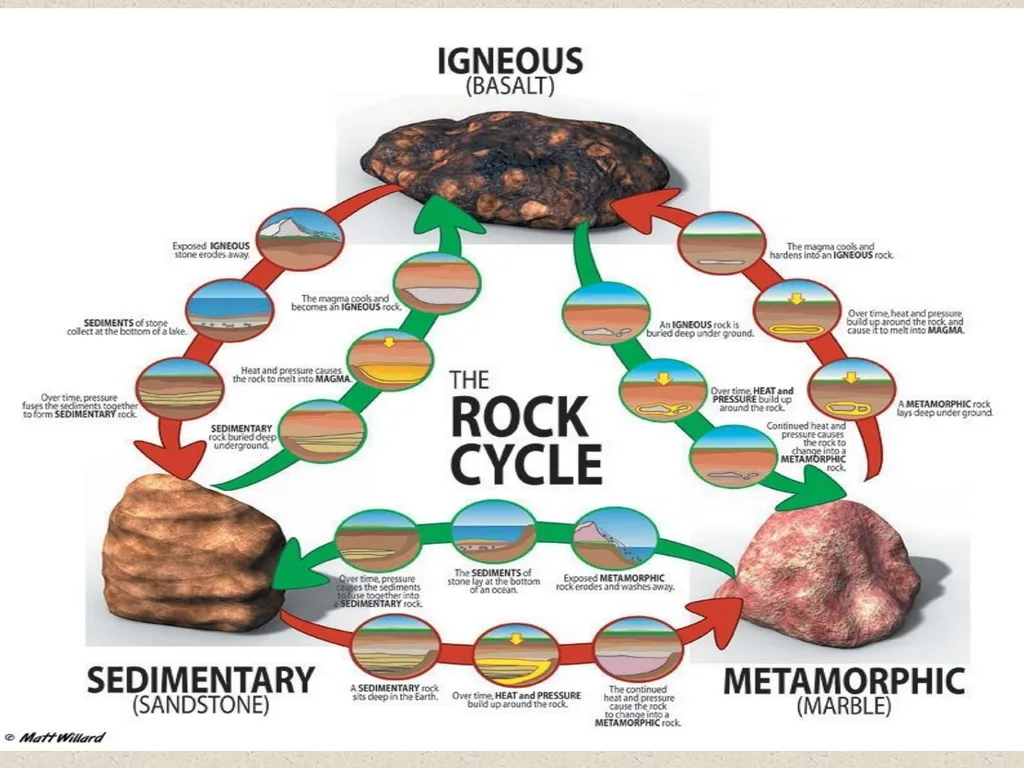
Rocks are generally classified into igneous, sedimentary and metamorphic rocks.
Rocks consist of mixtures of minerals, fragments of other rocks and organic matter.
These are classified on the basis of their mineral, chemical and textural composition.
Rocks are essentially mixtures and therefore it is not possible to determine detailed physical and chemical properties.
Asst.Prof. Baviskar R.M.<br>
04
Rocks are extremely important in terms of their properties of stability and strength as a geological material on which construction foundations are made and historically as building material from which important and monumental buildings are made.
Stone used for wall , building, and bridge construction over history until
recent times is generally cut from natural rocks.
The building stones are normally extracted by surface quarrying, drilled and split using diamond saws or iron wedges, and then shaped and polished according to their requirements.
Asst.Prof. Baviskar R.M.<br>
05
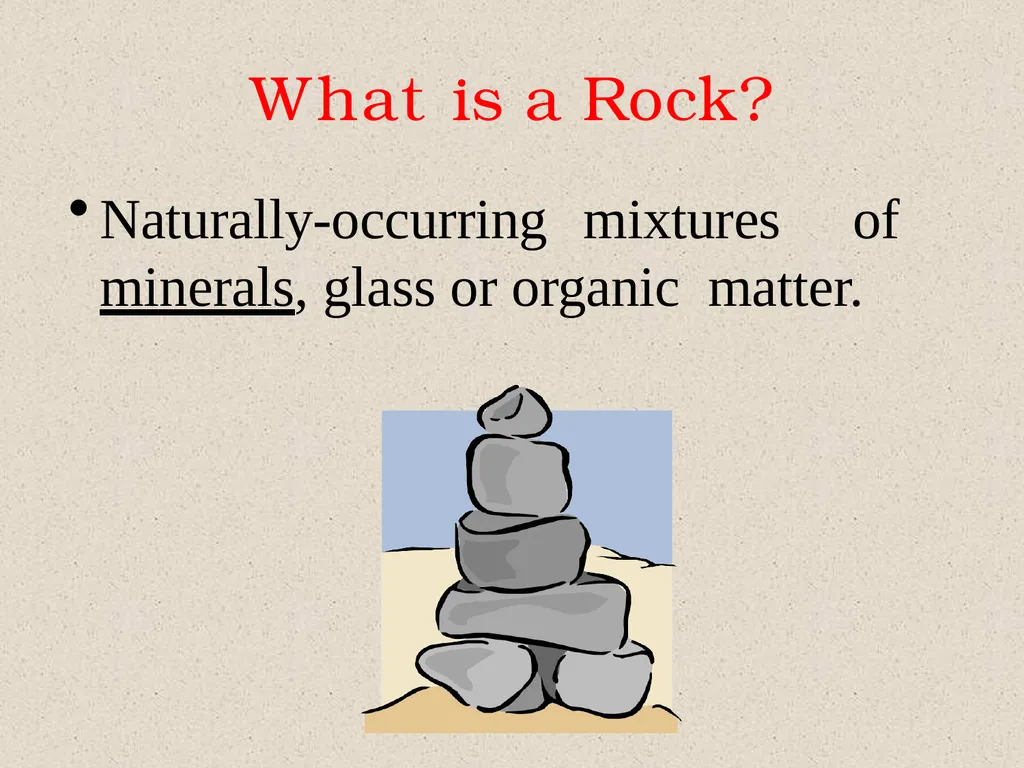
What is a Rock? Naturally-occurring mixtures of minerals, glass or organic matter.<br>
06
Rocks are a mixture of different minerals formed by natural processes in the lithosphere.
The properties of rocks depend on the constituent minerals and their proportion.
Silica , aluminum, magnesium and iron are the major rock-forming minerals.<br>
07
What is a Rock? Rocks are divided into 3 groups based on how they were formed:
IGNEOUS
SEDIMENTARY
METAMORPHIC<br>
08
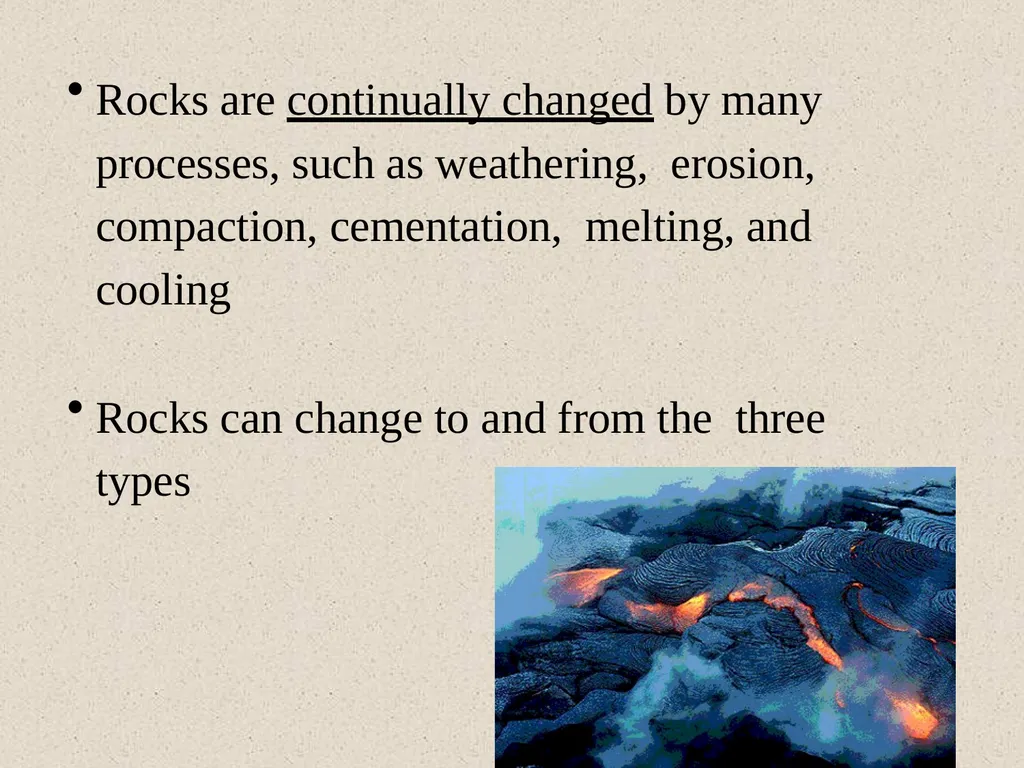
Rocks are continually changed by many processes, such as weathering, erosion, compaction, cementation, melting, and cooling
Rocks can change to and from the three types<br>
10
“Ignis” = Latin for “fire”
Formed from the cooling of either magma or lava
The most abundant type of rock
Classified according to their origin and composition<br>
11
Igneous rocks are created when molten magma cools down and is split into two main types.
These are mainly plutonic and volcanic rocks.
The upper 10 miles of the earth's crust comprises almost entirely of igneous rocks.
Asst.Prof. Baviskar R.M.<br>
12
Plutonic or intrusive rocks come into being when magma cools and crystallizes gradually within the earth's crust.
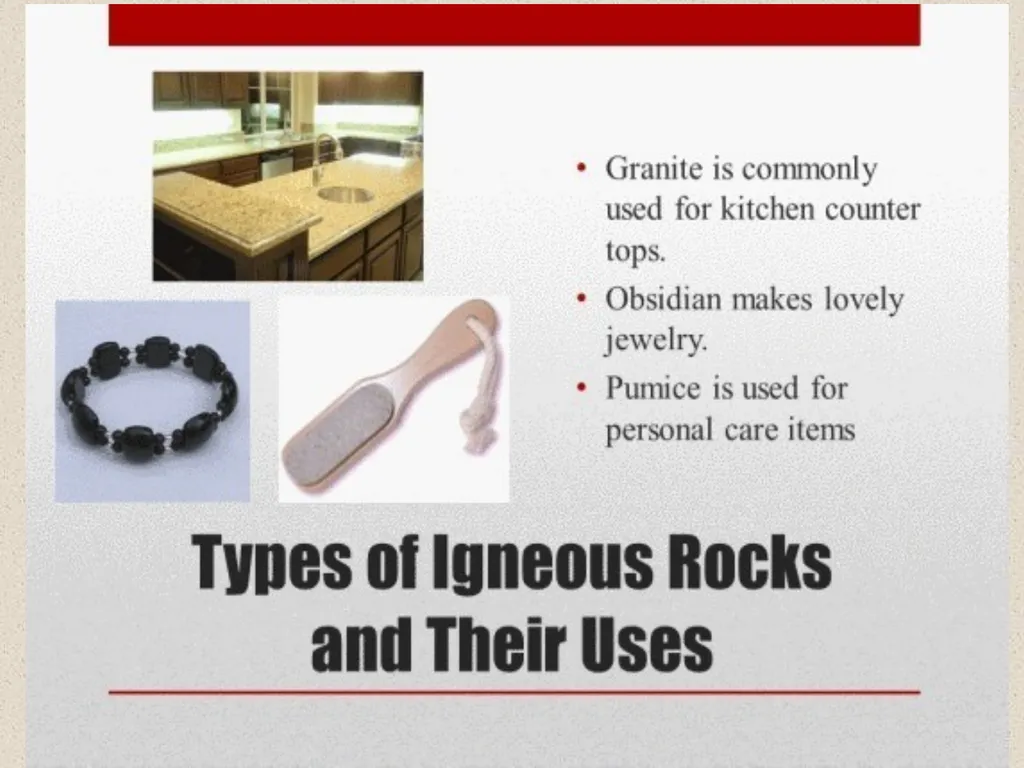
Granite is a typical plutonic rock. Volcanic or extrusive rocks results from magma reaching the surface either as lava or as fragmental missiles.
Basalt and pumice are examples of volcanic / extrusive rocks. There are more than 700 types of
igneous rocks.
The two important factors used for the classification of igneous rocks are the particle size, and the mineral composition of the rock.
Asst.Prof. Baviskar R.M.<br>
13
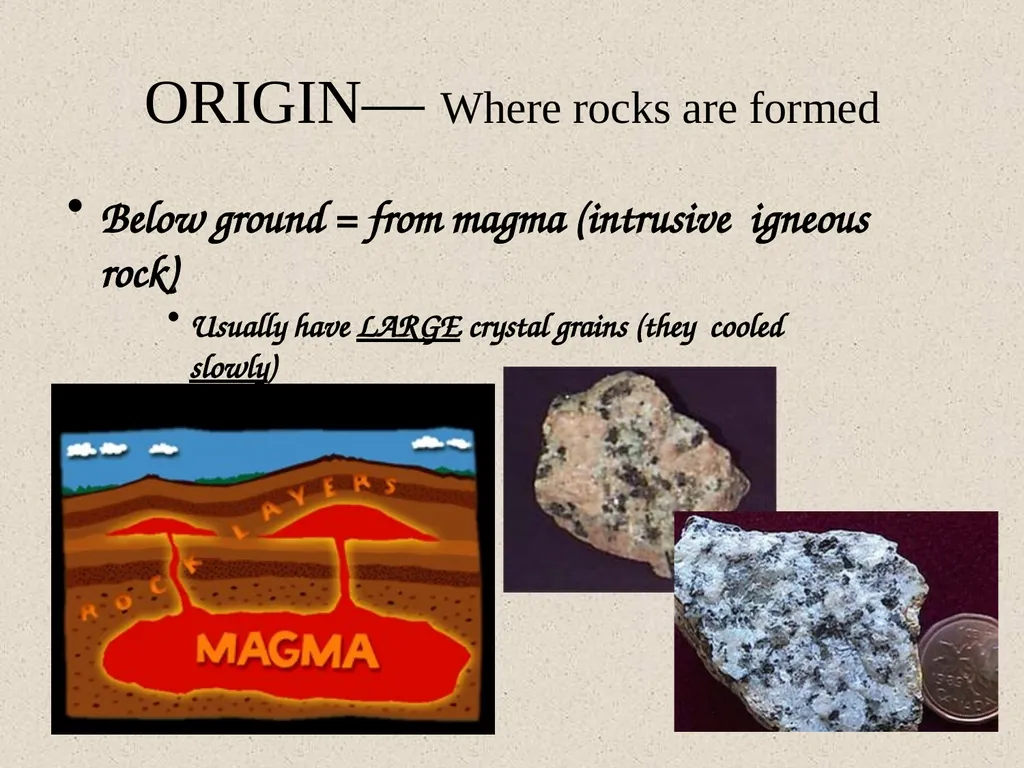
ORIGIN— Where rocks are formed Below ground = from magma (intrusive igneous rock)
Usually have LARGE crystal grains (they cooled slowly)<br>
14
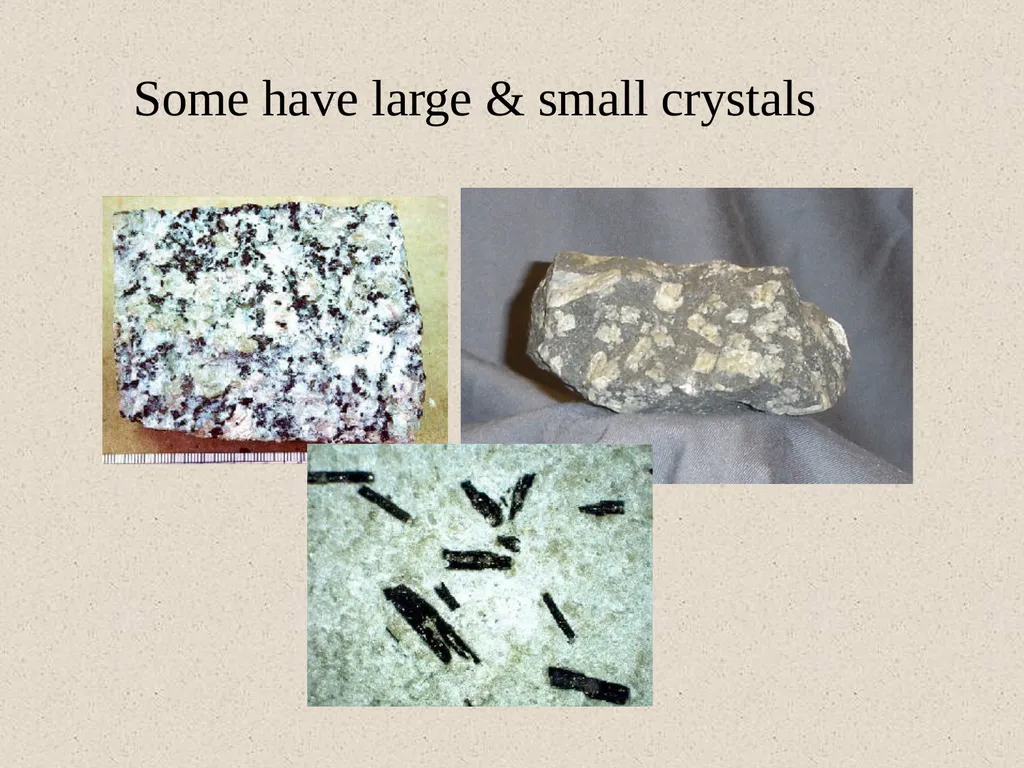
Some have large & small crystals<br>
15
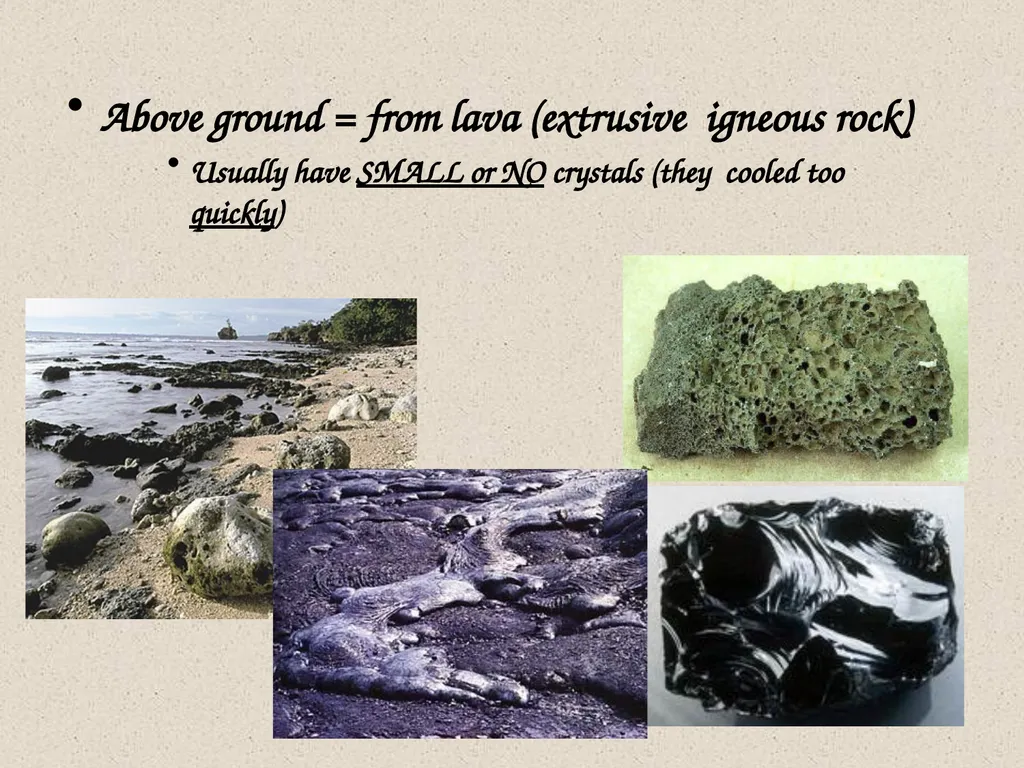
Above ground = from lava (extrusive igneous rock)
Usually have SMALL or NO crystals (they cooled too quickly)<br>
16
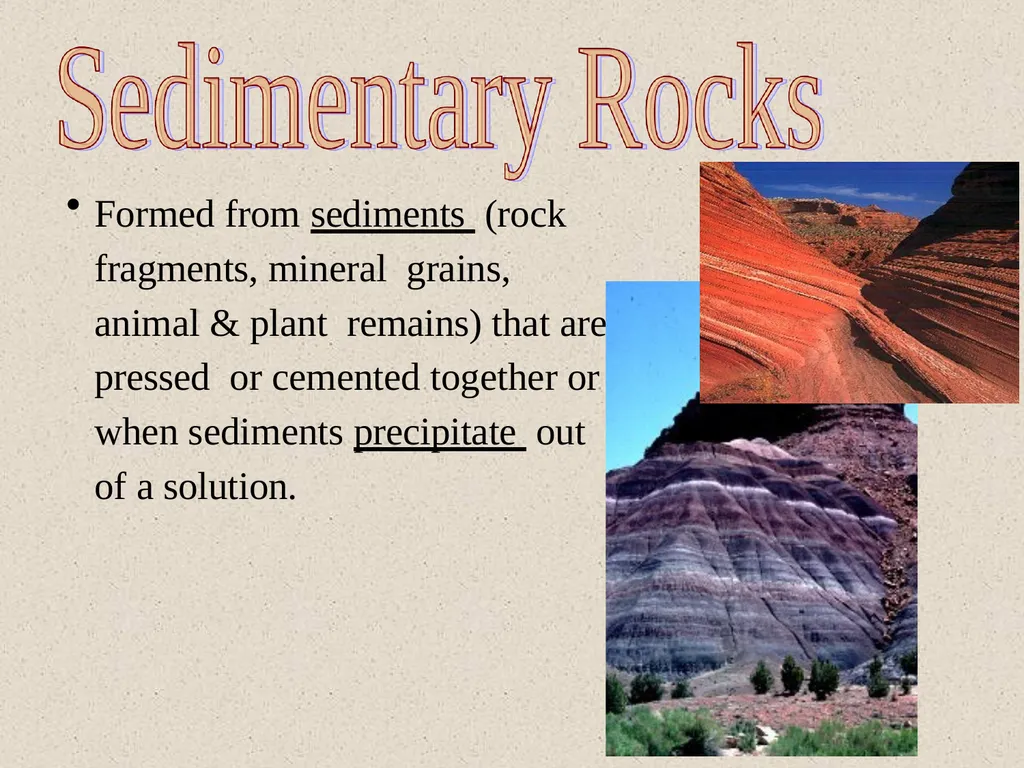
Formed from sediments (rock fragments, mineral grains, animal & plant remains) that are pressed or cemented together or when sediments precipitate out of a solution.<br>
17
These sediments are moved by wind, water, ice or gravity.
Sedimentary rocks represent 7% of the Earth’s crust, but they cover 70% of the Earth’s surface. Sedimentary rocks are fossil-carrying rocks.<br>
18
Sedimentary rock formation results from the sedimentation of material in the earth's surface and within collections of water .
They are extensive in their spread over the earth's crust, covering 70% to 80% of the land
area, but they comprise only about 5% of the earth's total crust.
The study of sedimentary rock provides much information as to the evolution of life on earth.
Asst.Prof. Baviskar R.M.<br>
19
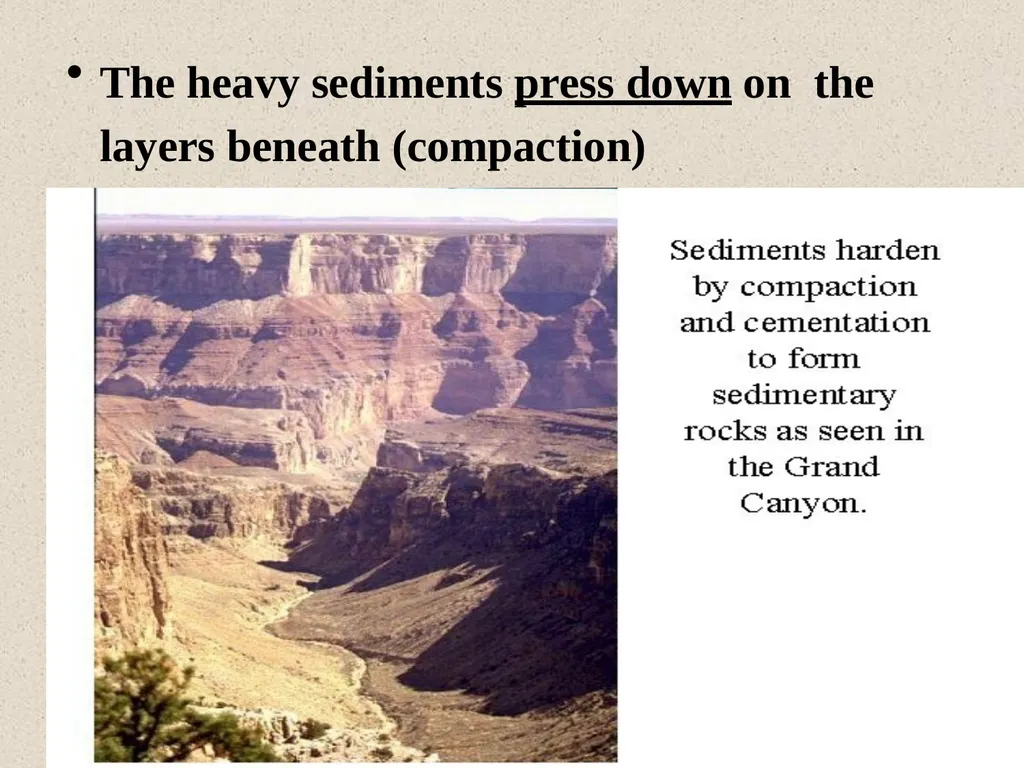
The heavy sediments press down on the layers beneath (compaction)<br>
20
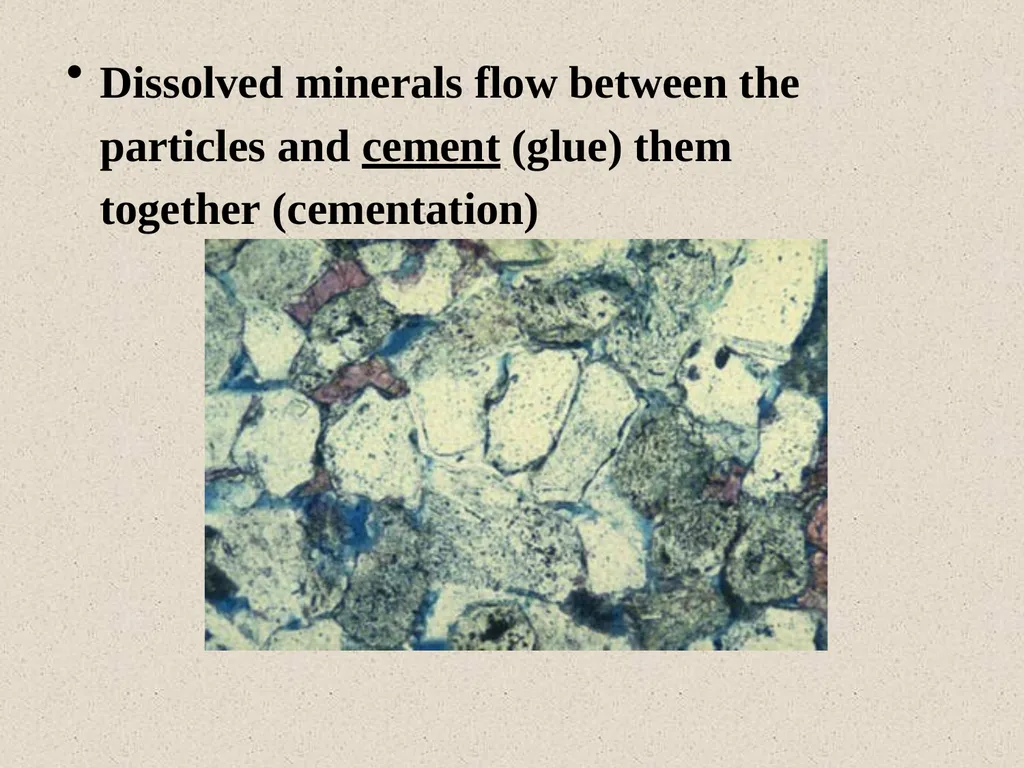
Dissolved minerals flow between the particles and cement (glue) them together (cementation)<br>
21
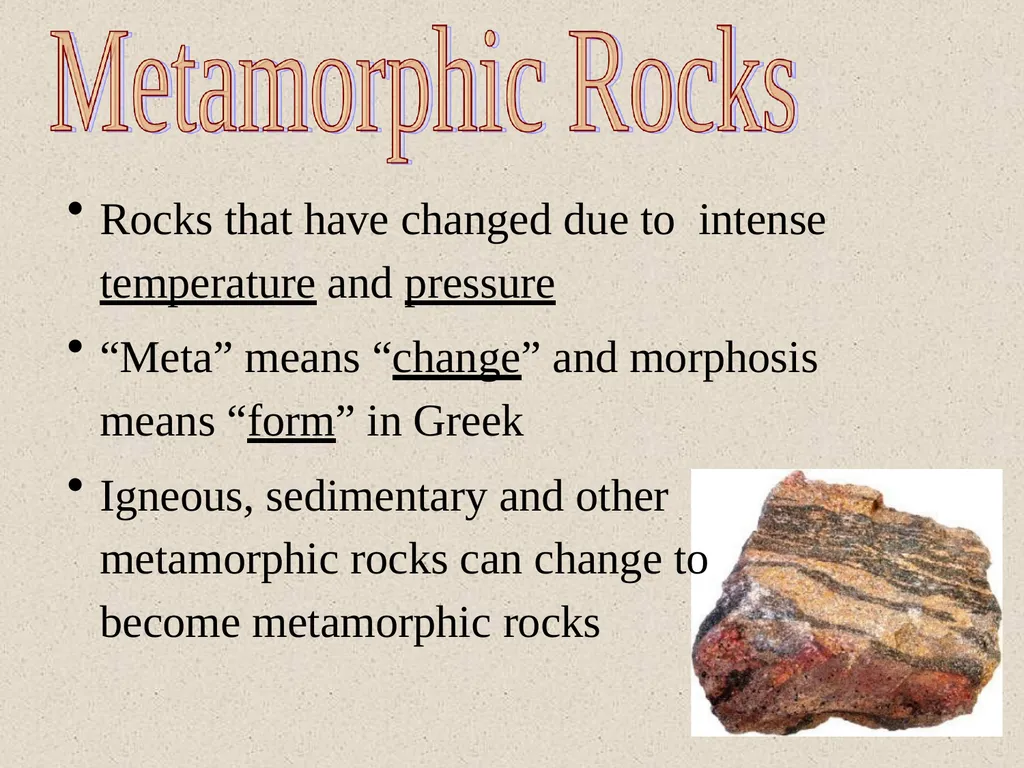
Rocks that have changed due to intense temperature and pressure
“Meta” means “change” and morphosis means “form” in Greek
Igneous, sedimentary and other metamorphic rocks can change to become metamorphic rocks<br>
22
*Metamorphic rocks form when rocks undergo metamorphosis/changes due to heat and
pressure.
* Igneous and sedimentary rocks mainly undergo this change and become metamorphic rocks.
* Gneiss, marble, slate, schist and quartzite are some of the different types of metamorphic rocks.<br>
23
*The major types of metamorphism are contact and regional.
*The former takes place when magma is injected into the surrounding solid rocks while, the latter is primarily associated with large masses of rock spread over a very wide area.
* This regional metamorphosis is caused mainly by temperature and pressure.<br>
24
What occurs in the Earth to change these rocks? Pressure from overlying rock layers
High heat, but not enough to melt the rock
Rocks may be flattened or bent or atoms may be exchanged to form new minerals.<br>
25
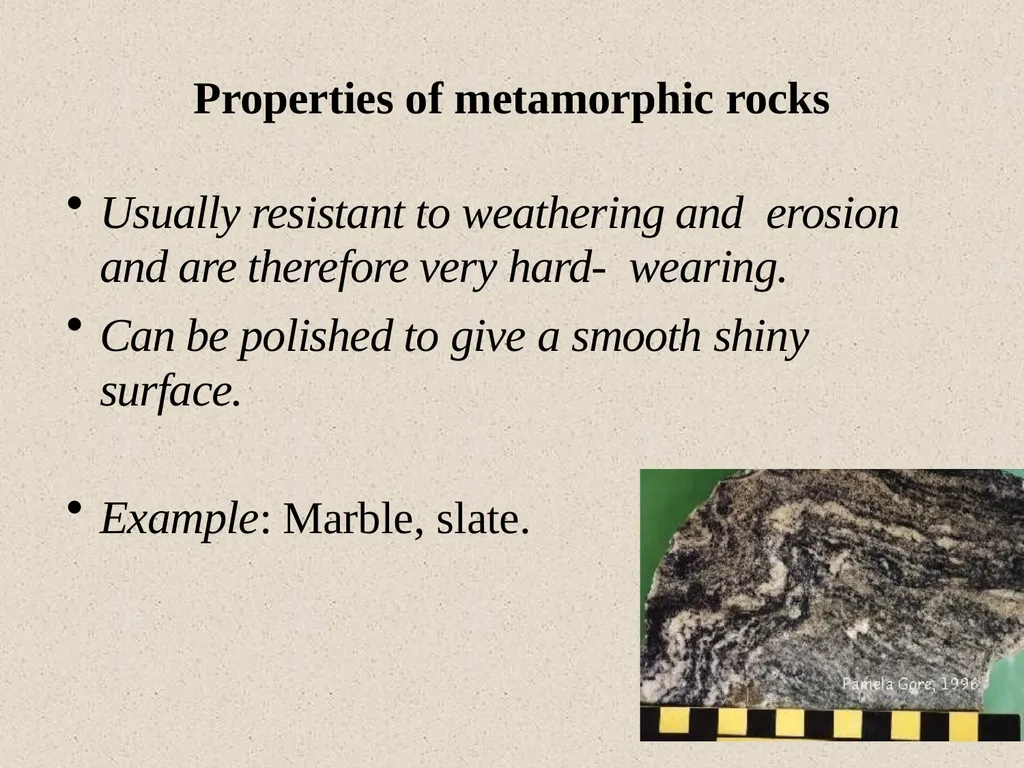
Properties of metamorphic rocks Usually resistant to weathering and erosion and are therefore very hard- wearing.
Can be polished to give a smooth shiny surface.
Example: Marble, slate.<br>
26
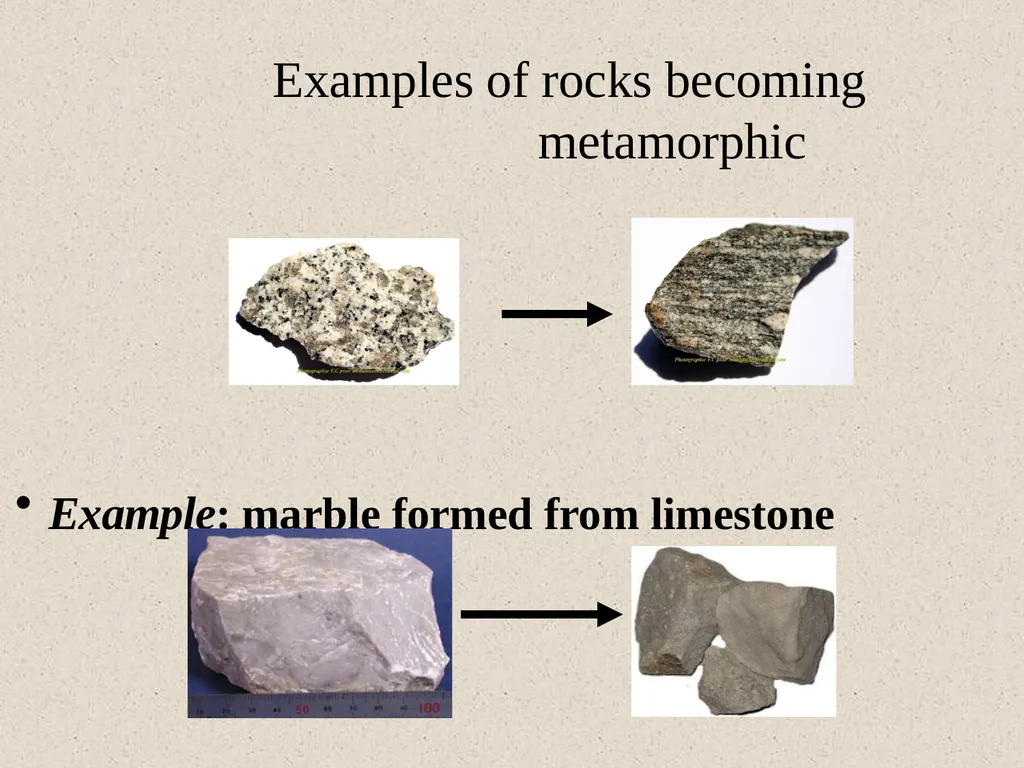
Examples of rocks becoming metamorphic Example: marble formed from limestone<br>
27
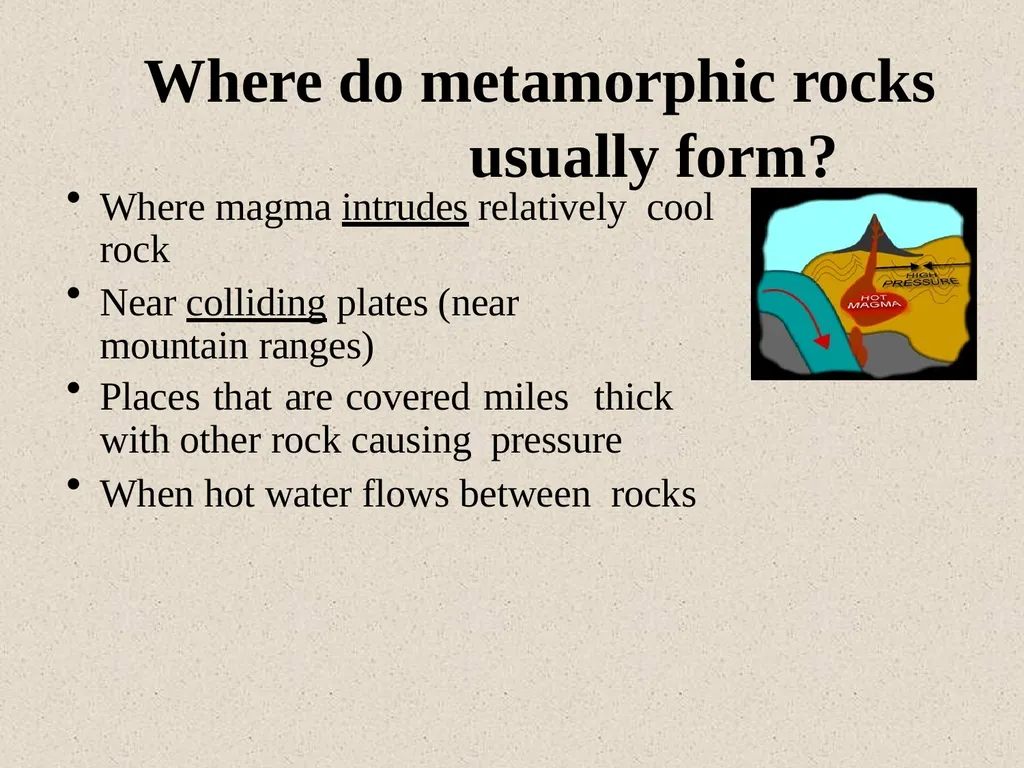
Where do metamorphic rocks usually form? Where magma intrudes relatively cool rock
Near colliding plates (near mountain ranges)
Places that are covered miles thick with other rock causing pressure
When hot water flows between rocks<br>