Dr Padma Nibash Panigrahi Assistant Professor Department of Veterinary Medicine DUVASU, Mathura MALIGNANT CATARRHAL FEVER MALIGNANT CATARRHAL FEVER (BOVINE MALIGNANT CATARRH, MALIGNANT HEAD CATARRH Etiology : Really two diseases (clinically
"Dr Padma Nibash Panigrahi Assistant Professor" is the property of its rightful owner. Permission is granted to
download and print the materials on this website for personal, non-commercial use only, and to display it
on your personal computer provided you do not modify the materials and that you retain all copyright
notices contained in the materials. By downloading content from our website, you accept the terms of this
agreement.
Presentation Transcript
01
Dr Padma Nibash Panigrahi
Assistant Professor
Department of Veterinary Medicine
DUVASU, Mathura MALIGNANT CATARRHAL FEVER<br>
02
MALIGNANT CATARRHAL FEVER (BOVINE MALIGNANT CATARRH, MALIGNANT HEAD CATARRH Etiology :
Really two diseases (clinically and pathologically indistinguishable) associated with two different infectious agents with different ecologies
Alcelaphine herpesvirus-1 (AHV-l)
wildebeest-associated MCF virus, transmitted to cattle from blue wildebeest
Ovine herpesvirus- 2 (OvHV-2)
sheep-associated MCF virus transmitted to cattle from sheep
Neither agent transmit from cattle to cattle
neither of the viruses cause any disease in their principal host, the wildebeest and the sheep<br>
03
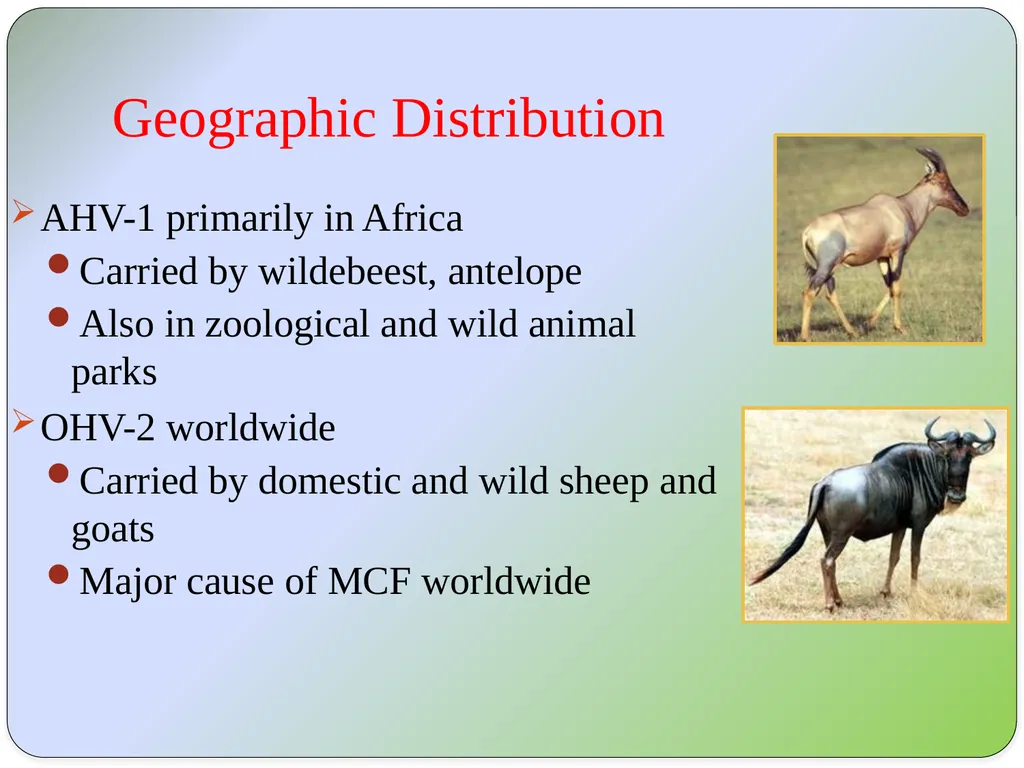
Geographic Distribution AHV-1 primarily in Africa
Carried by wildebeest, antelope
Also in zoological and wild animal parks
OHV-2 worldwide
Carried by domestic and wild sheep and goats
Major cause of MCF worldwide<br>
04
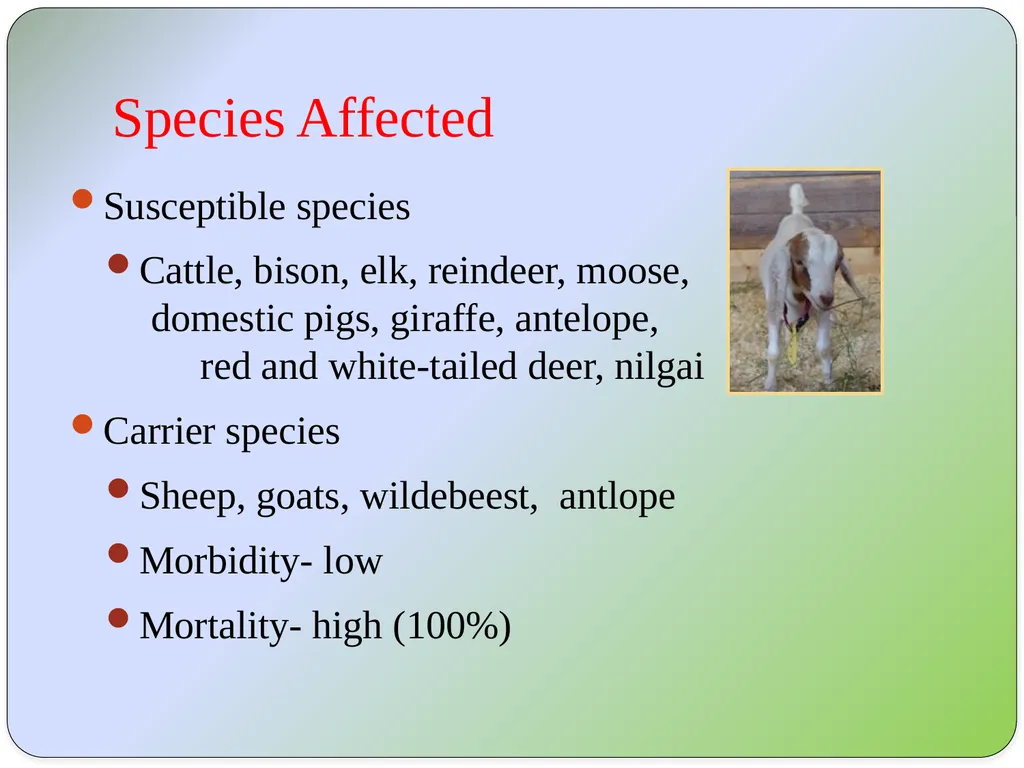
Species Affected Susceptible species
Cattle, bison, elk, reindeer, moose, domestic pigs, giraffe, antelope, red and white-tailed deer, nilgai
Carrier species
Sheep, goats, wildebeest, antlope
Morbidity- low
Mortality- high (100%)<br>
05
Transmission AHV-1
Inutero
Contact with nasal and ocular secretions
Aerosols during close contact
OHV-2
Respiratory (aerosol)
Transplacental rare
Contact with nasal secretions<br>
06
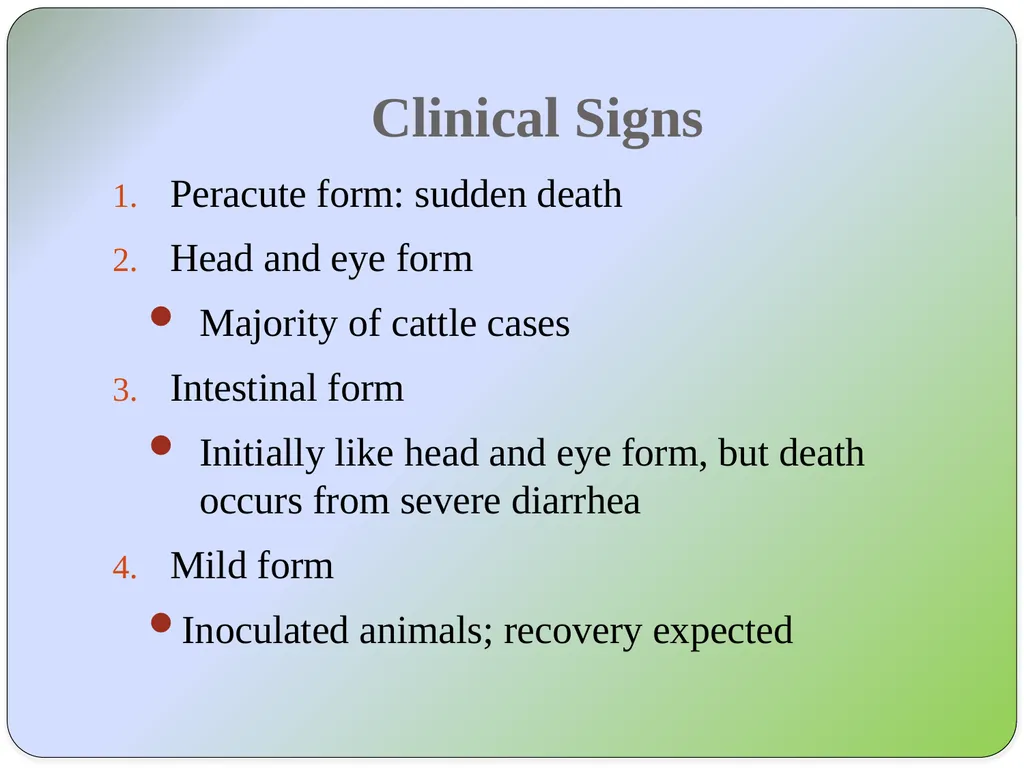
Clinical Signs Peracute form: sudden death
Head and eye form
Majority of cattle cases
Intestinal form
Initially like head and eye form, but death occurs from severe diarrhea
Mild form
Inoculated animals; recovery expected<br>
07
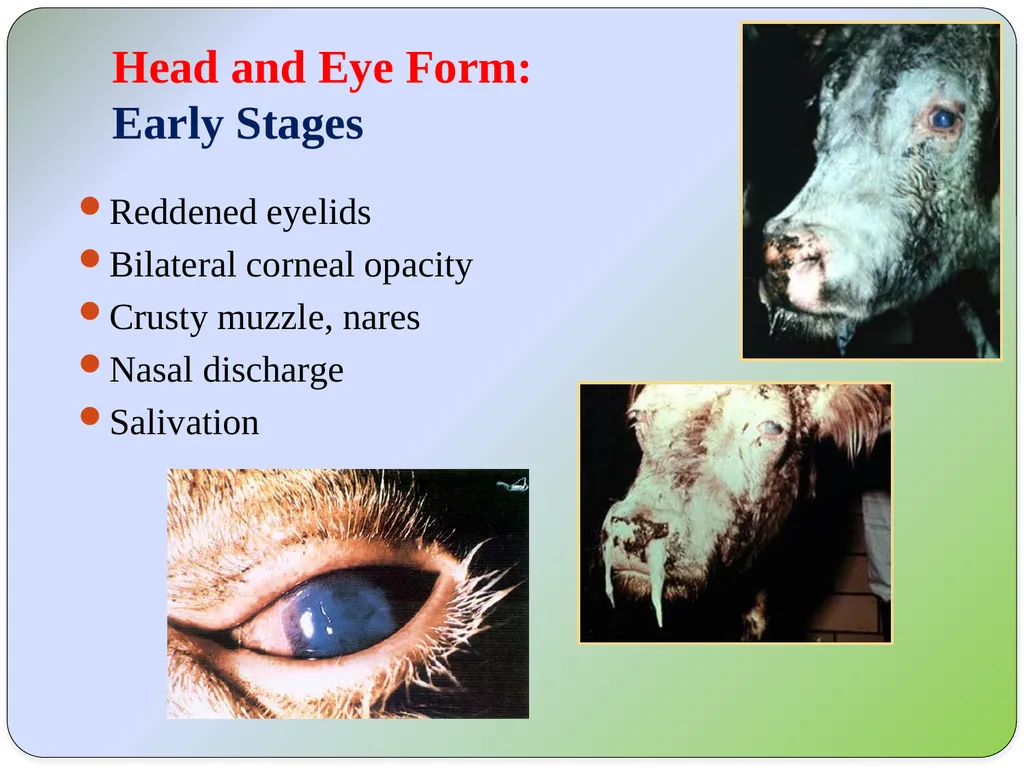
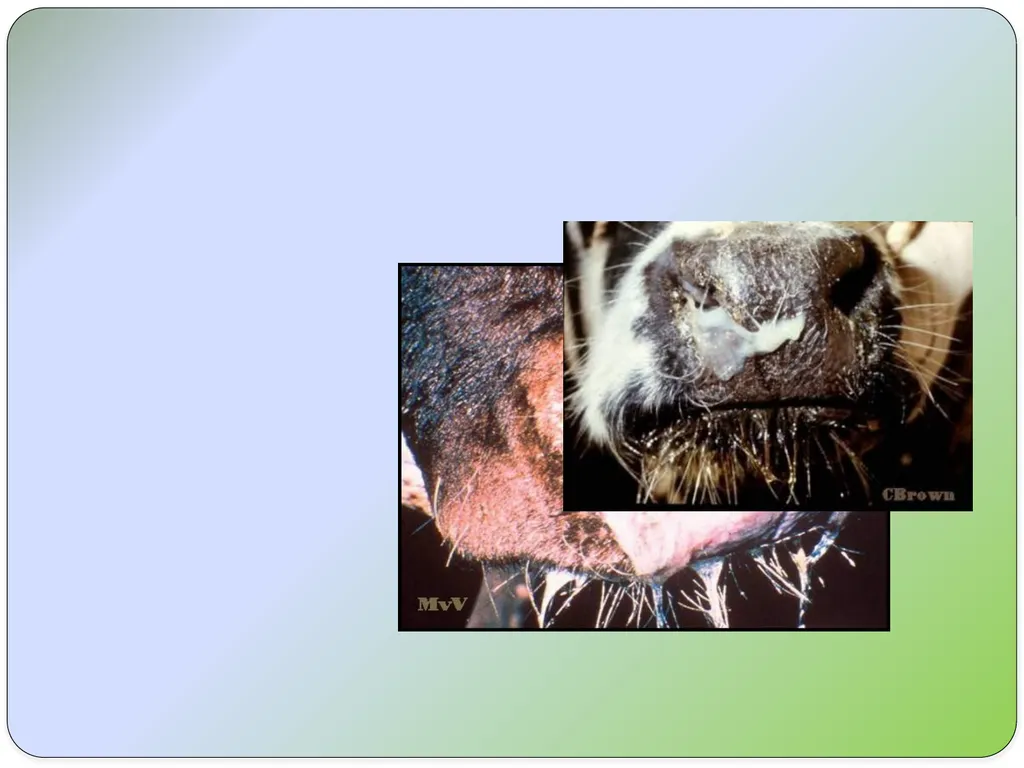
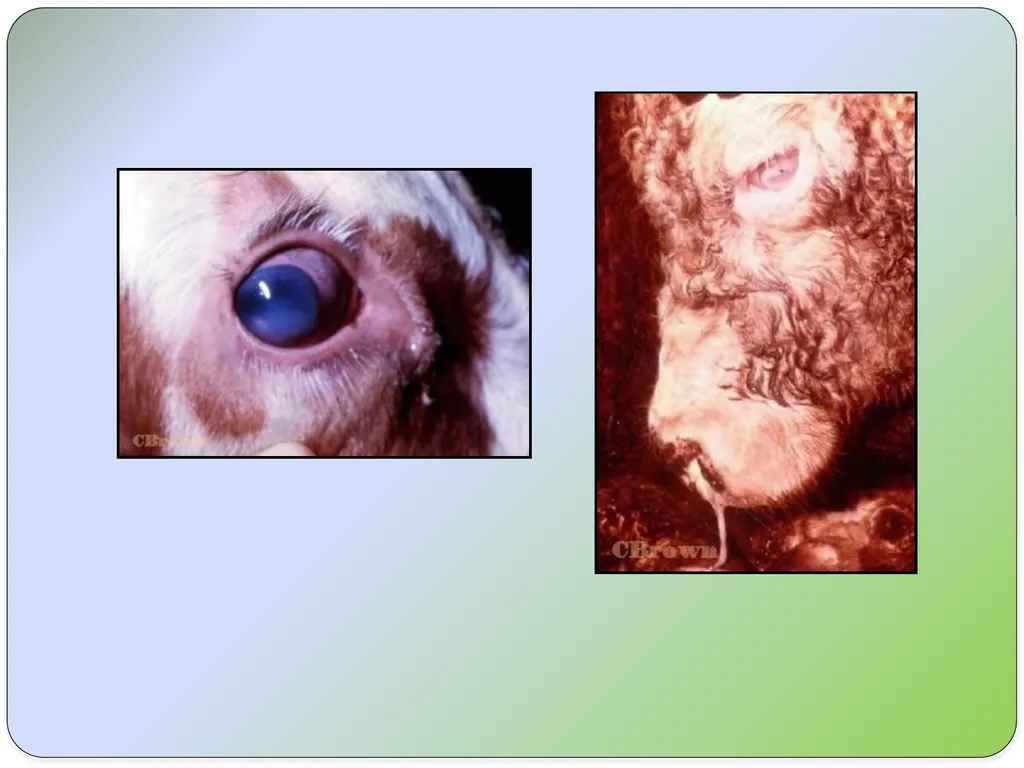
Head and Eye Form: Early Stages Reddened eyelids
Bilateral corneal opacity
Crusty muzzle, nares
Nasal discharge
Salivation<br>
08
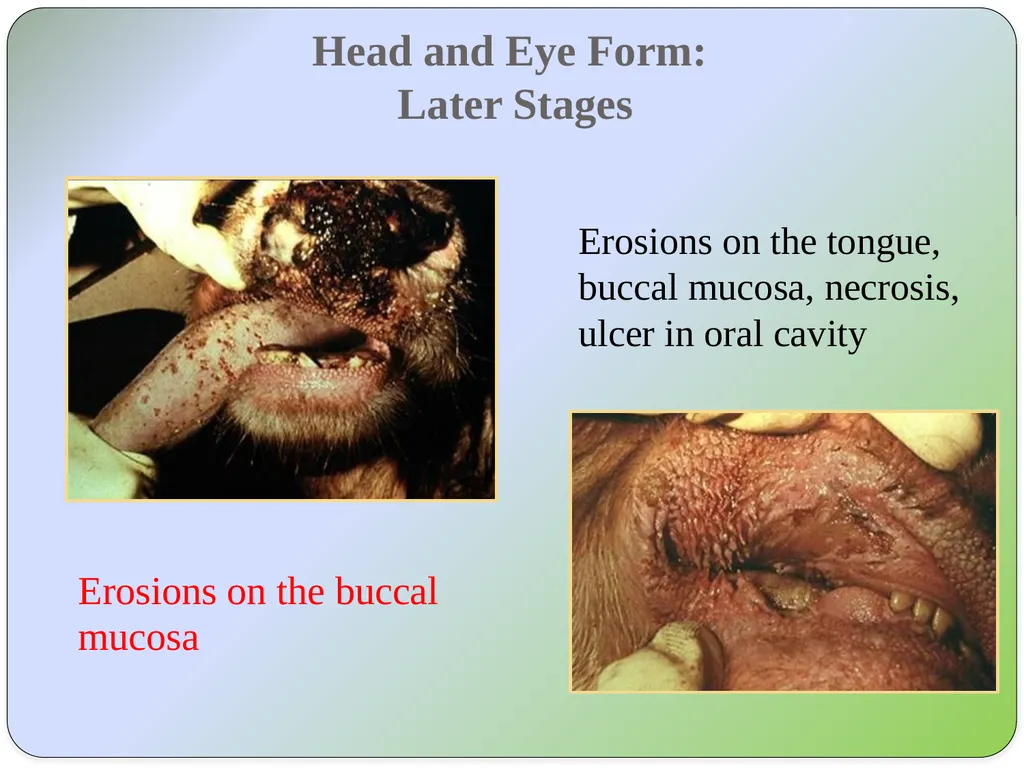
Head and Eye Form: Later Stages Erosions on the tongue, buccal mucosa, necrosis, ulcer in oral cavity Erosions on the buccal mucosa<br>
09
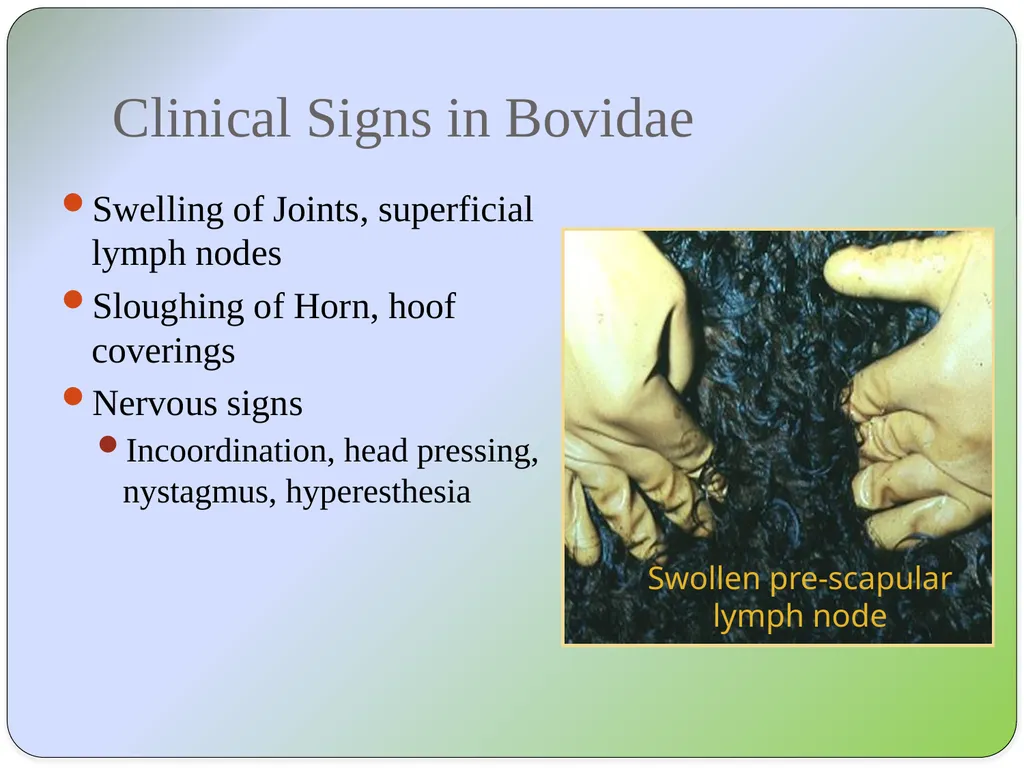
Clinical Signs in Bovidae Swelling of Joints, superficial lymph nodes
Sloughing of Horn, hoof coverings
Nervous signs
Incoordination, head pressing, nystagmus, hyperesthesia Swollen pre-scapular lymph node<br>
10
Peracute and alimentary tract forms short course of 1-3 d
high fever
dyspnoea
acute gastroenteritis
resembles the 'head and eye' form except that there is marked diarrhoea
Mild form
transient fever
mild erosions -oral and nasal mucosa.
may be followed by complete recovery<br>
11
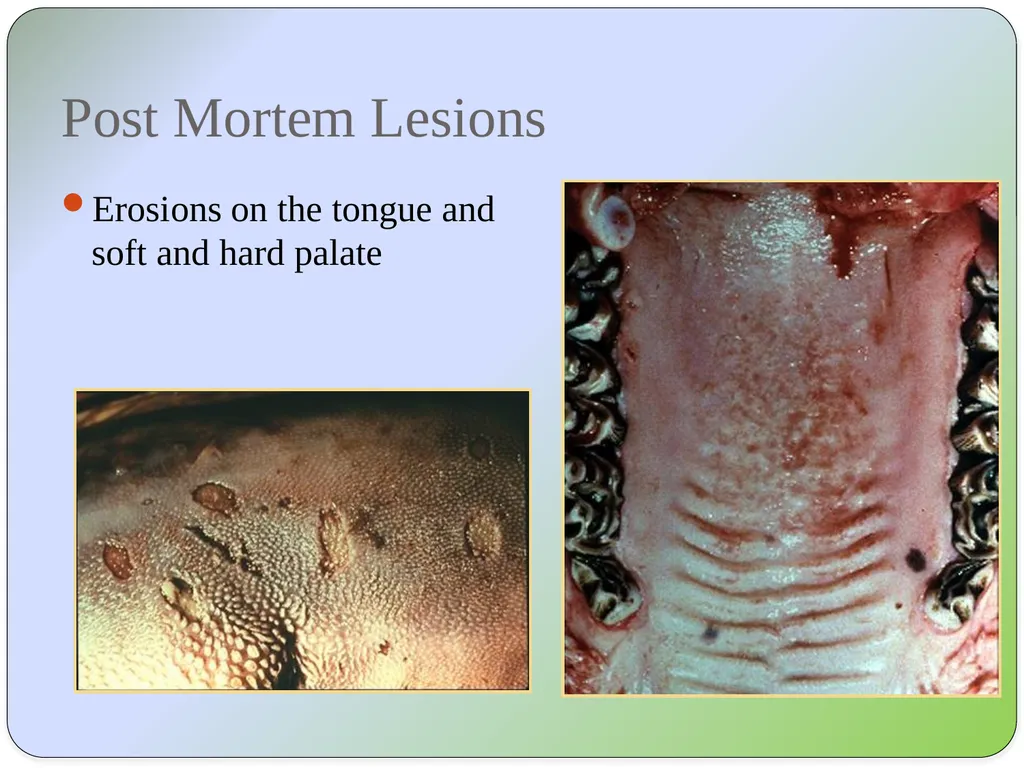
Post Mortem Lesions Erosions on the tongue and soft and hard palate<br>
12
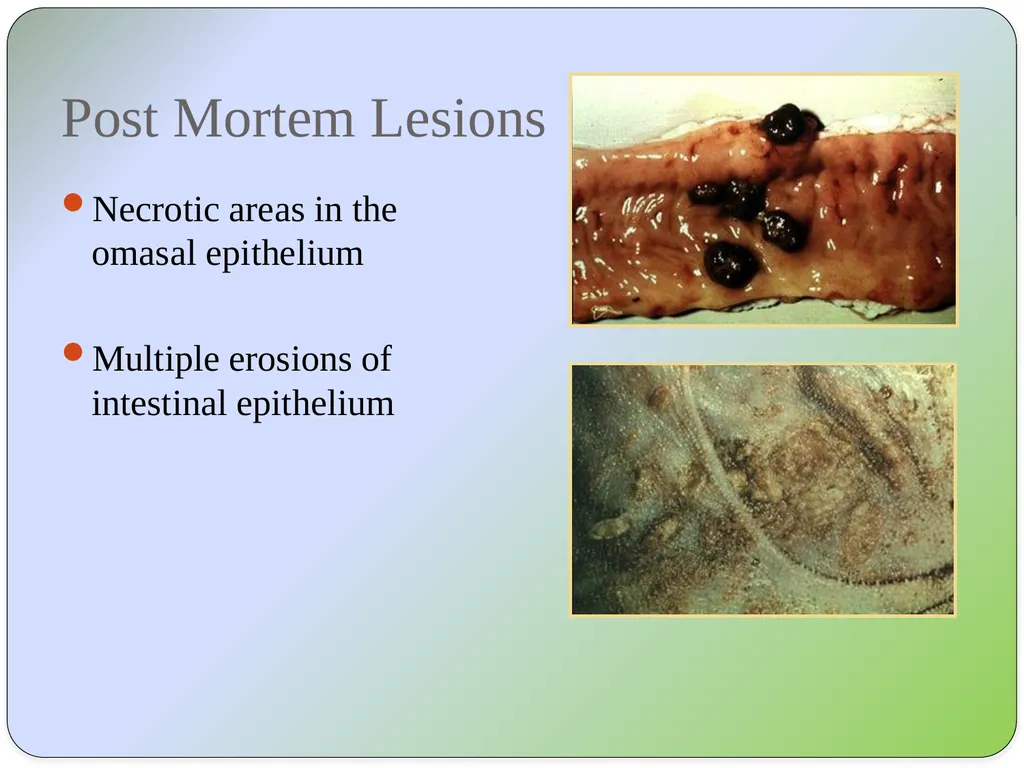
Post Mortem Lesions Necrotic areas in the omasal epithelium
Multiple erosions of intestinal epithelium<br>
13
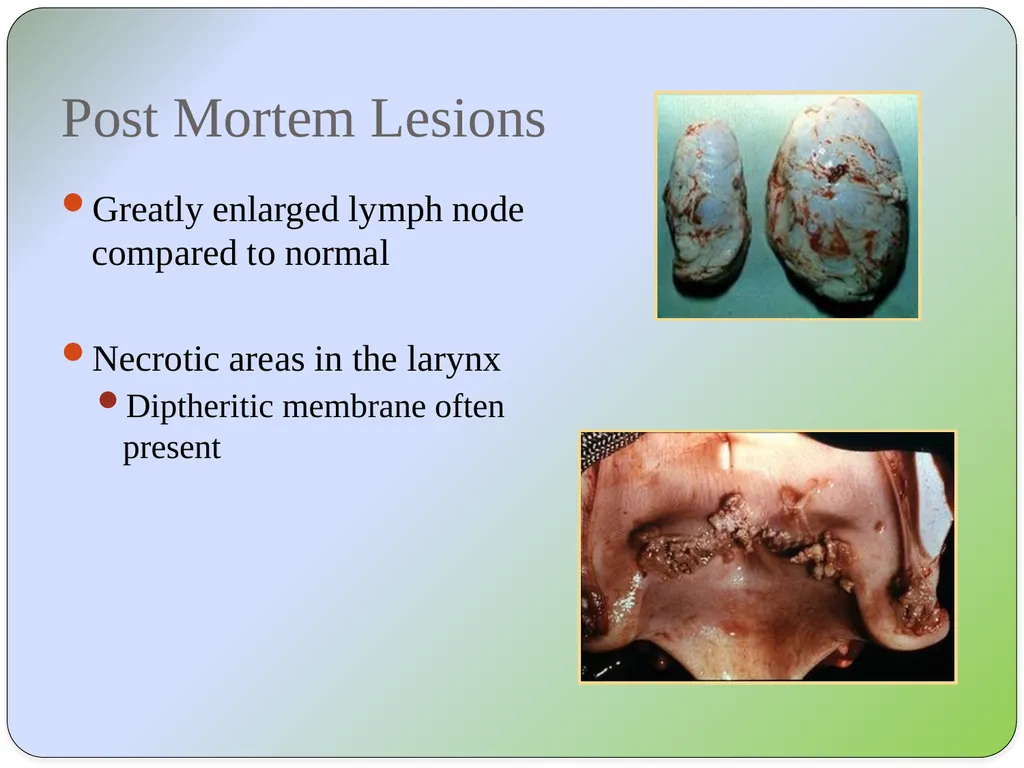
Post Mortem Lesions Greatly enlarged lymph node compared to normal
Necrotic areas in the larynx
Diptheritic membrane often present<br>
14
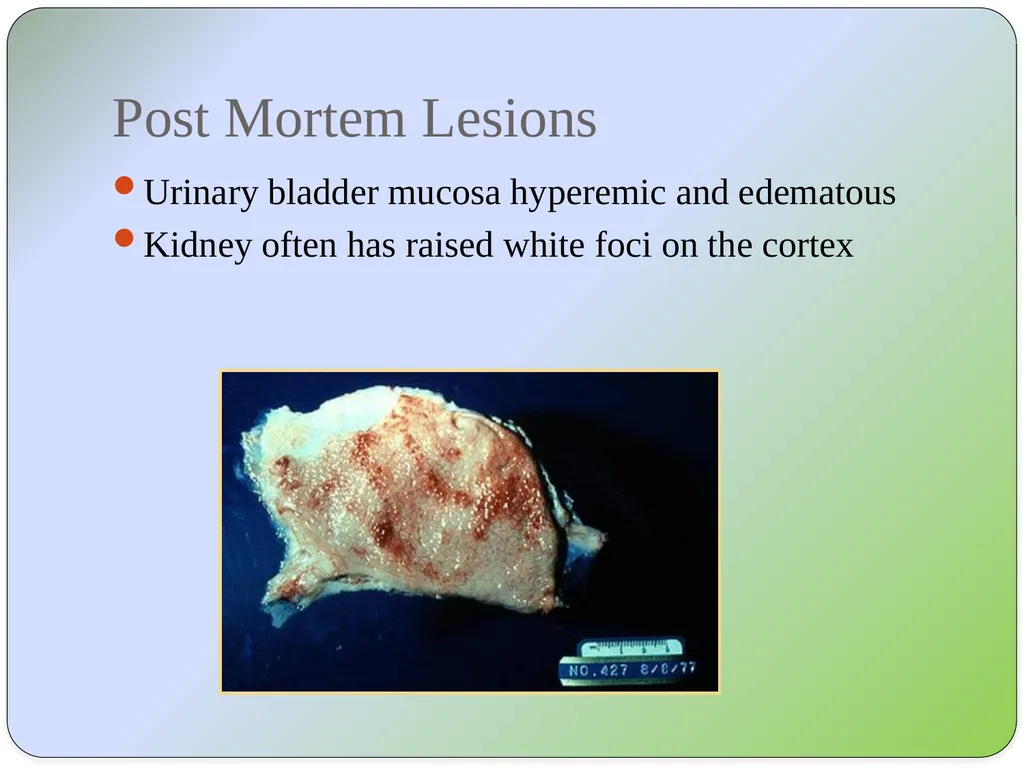
Post Mortem Lesions Urinary bladder mucosa hyperemic and edematous
Kidney often has raised white foci on the cortex<br>
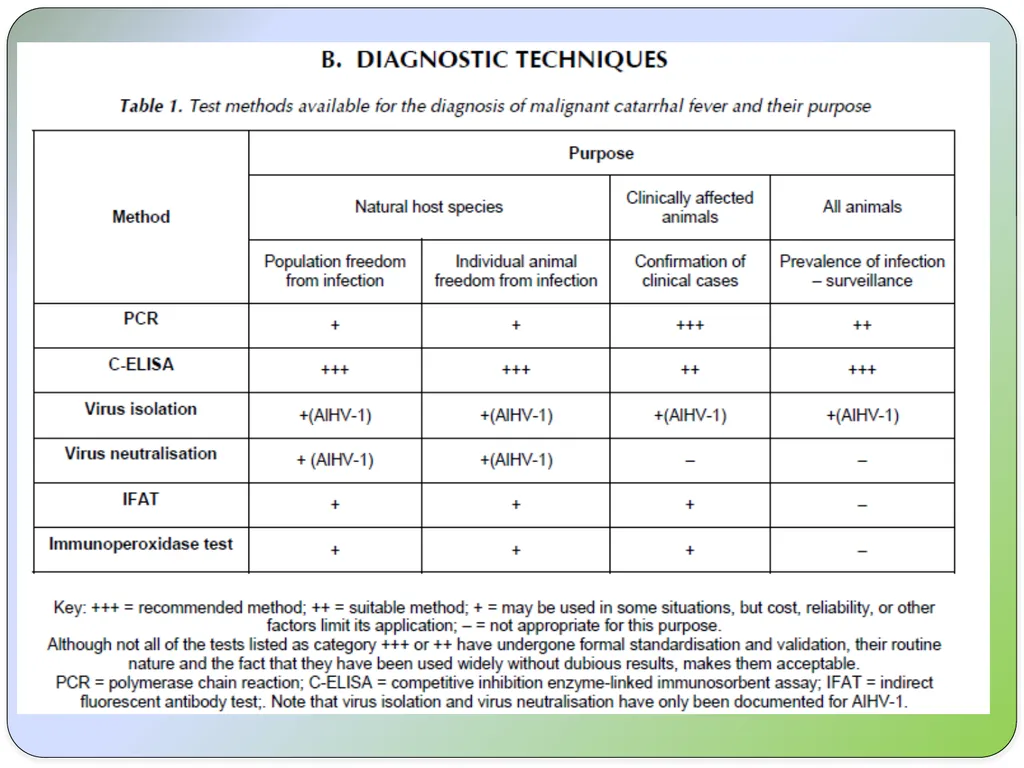
Laboratory Diagnosis Histopathology
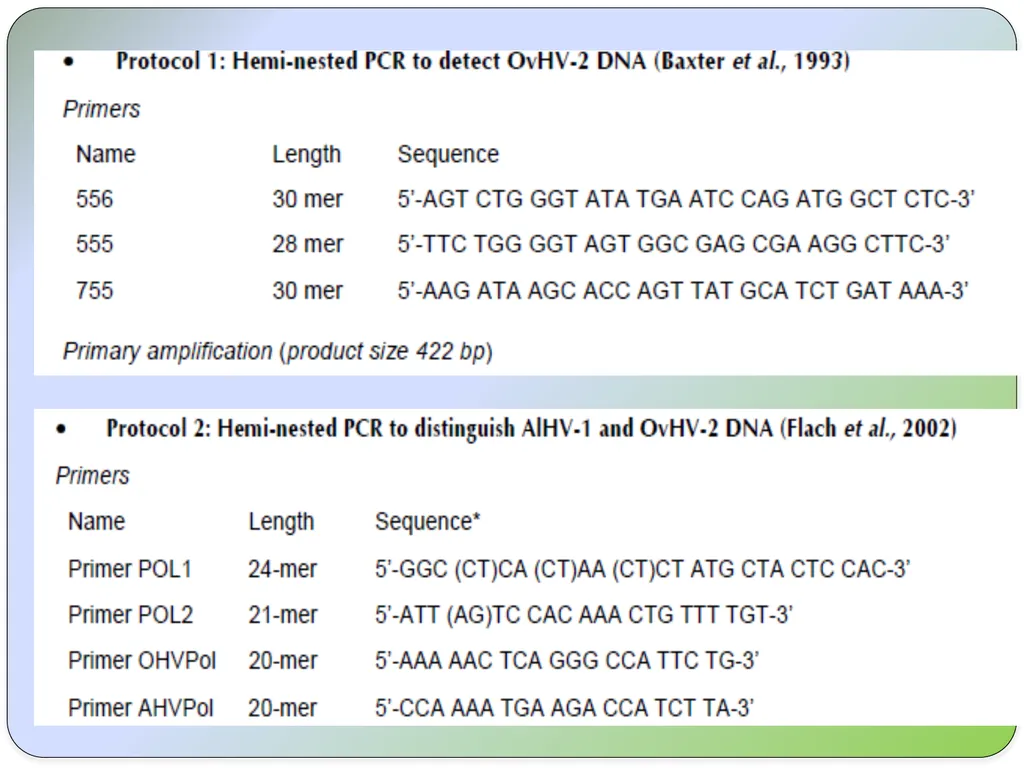
PCR
Virus isolation (AHV-1)- Madin–Darby bovine kidney cell line (MDBK)
Serology
AHV-1 antibodies in wildebeest
Immunofluorescence, immunoblot, VN, ELISA, immunocytochemistry
OHV-2 antibodies in sheep
Immunofluorescence, immunoblot<br>
18
mcf<br>
19
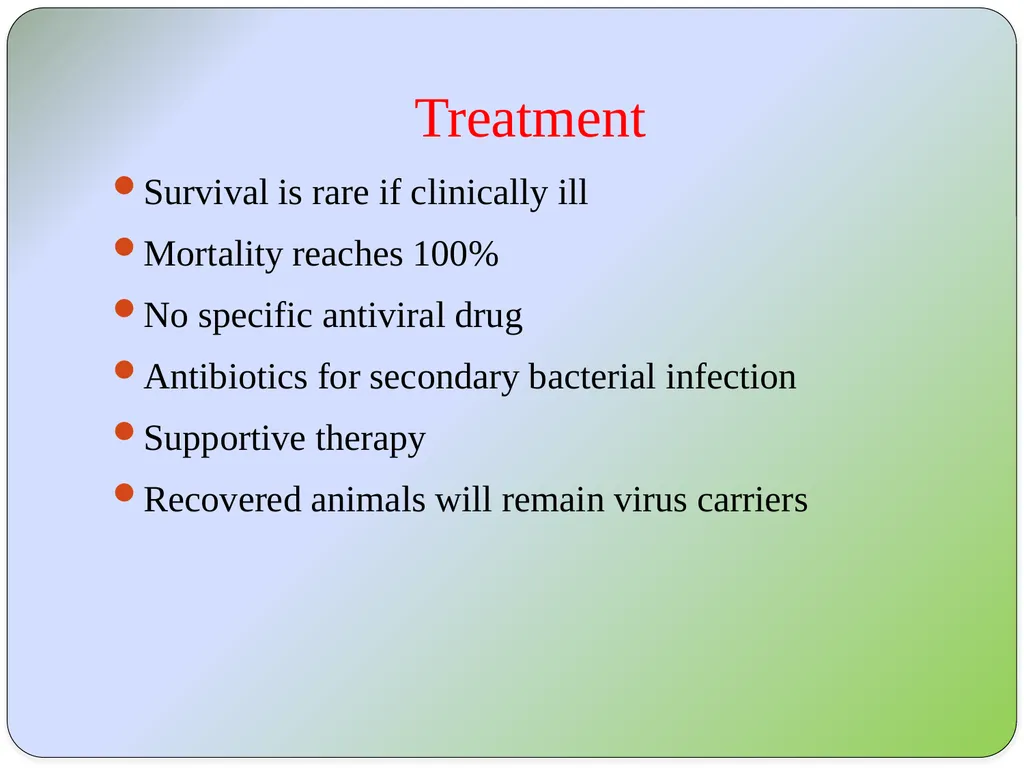
Treatment Survival is rare if clinically ill
Mortality reaches 100%
No specific antiviral drug
Antibiotics for secondary bacterial infection
Supportive therapy
Recovered animals will remain virus carriers<br>
20
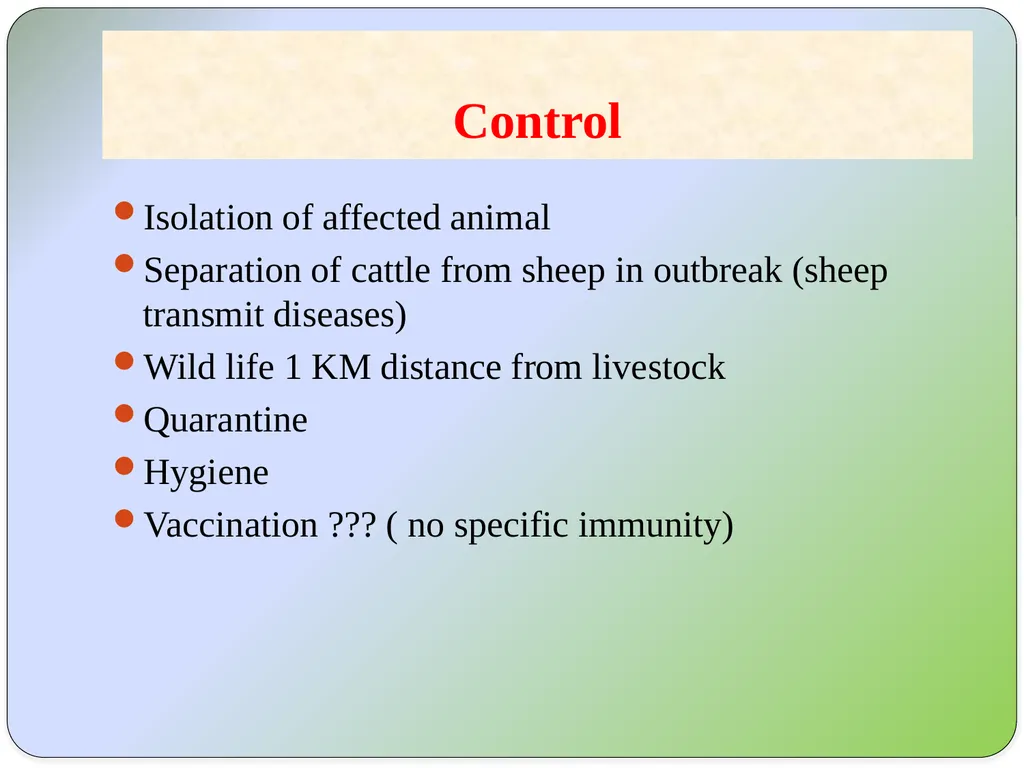
Control Isolation of affected animal
Separation of cattle from sheep in outbreak (sheep transmit diseases)
Wild life 1 KM distance from livestock
Quarantine
Hygiene
Vaccination ??? ( no specific immunity)<br>