
DRONES: Reaching New Heights in Environmental

Description: DRONES: Reaching New Heights in Environmental Consulting Presented By: Anna H. Long 407.841.1200 alongdeanmead.com What is a drone? Drones are more formally known as unmanned aerial vehicles (UAV). Essentially, a drone is a flying
Related Topics
Download Presentation
"DRONES: Reaching New Heights in Environmental" is the property of its rightful owner. Permission is granted to download and print the materials on this website for personal, non-commercial use only, and to display it on your personal computer provided you do not modify the materials and that you retain all copyright notices contained in the materials. By downloading content from our website, you accept the terms of this agreement.
Presentation Transcript
slide1. DRONES:
Reaching New Heights in Environmental Consulting Presented By: Anna H. Long
407.841.1200
along@deanmead.com<br>
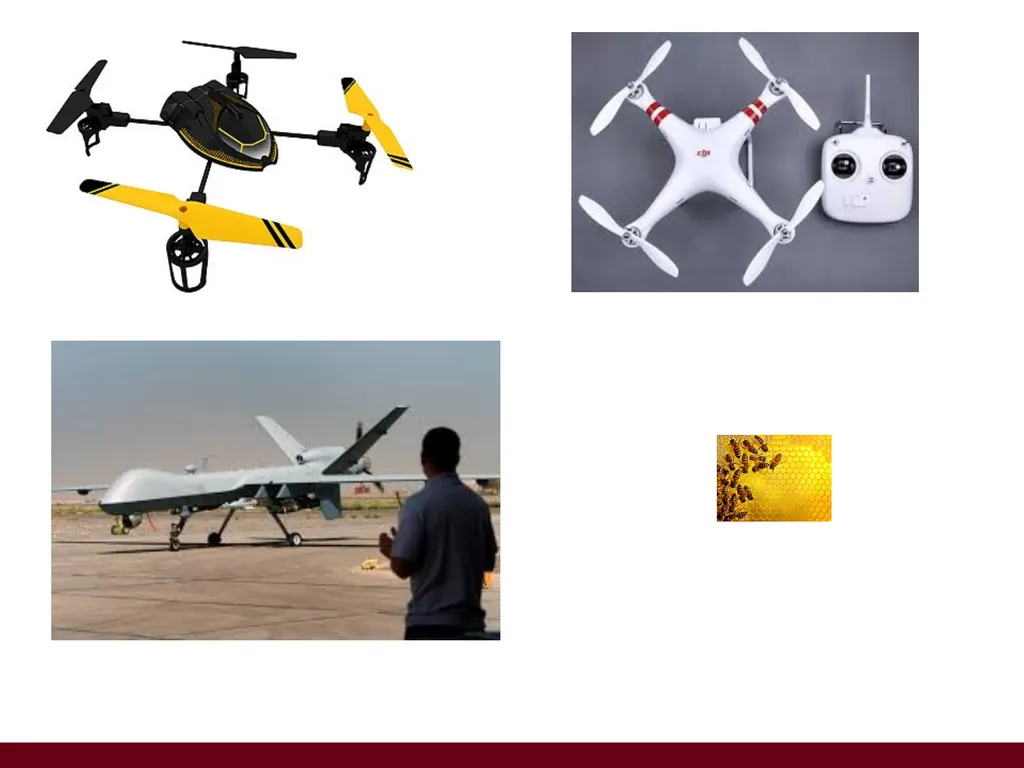
slide2. What is a “drone?” Drones are more formally known as unmanned aerial vehicles (UAV).
Essentially, a drone is a flying “robot.” Drones can be remotely controlled flown by a pilot via a ground control system, or autonomously through use of an on-board computer, communication links and any additional equipment that is necessary for the UAV to operate safely.
An UAS is the UAV and anything else necessary for its operation.<br>
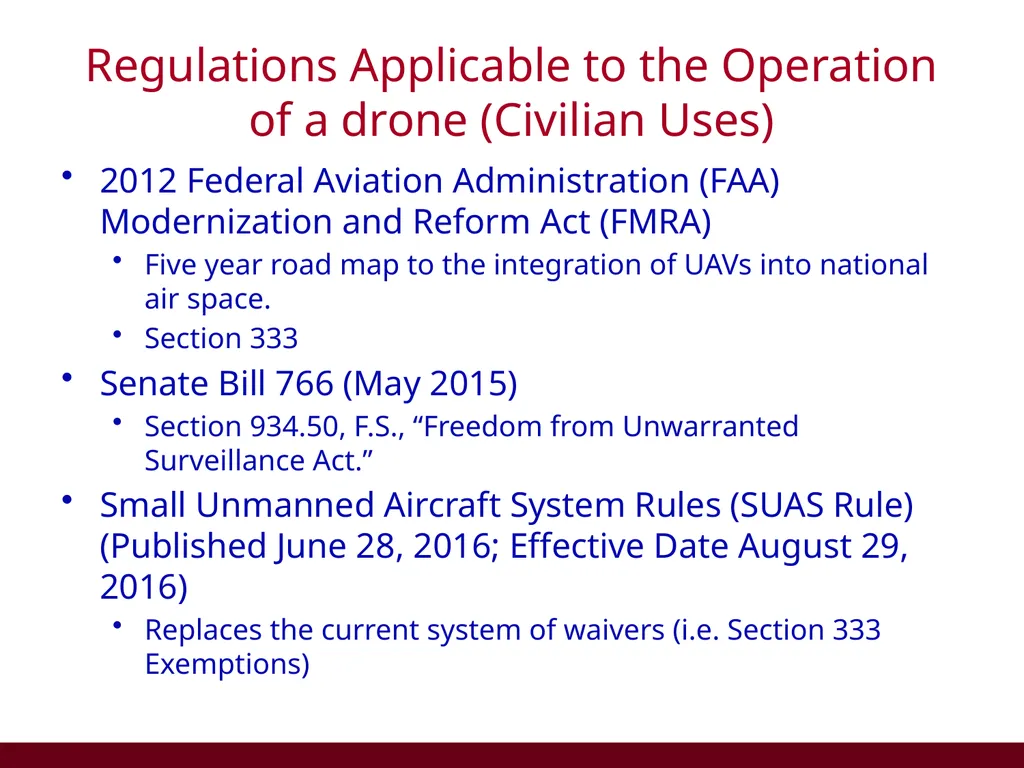
slide4. Regulations Applicable to the Operation of a drone (Civilian Uses) 2012 Federal Aviation Administration (FAA) Modernization and Reform Act (FMRA)
Five year road map to the integration of UAVs into national air space.
Section 333
Senate Bill 766 (May 2015)
Section 934.50, F.S., “Freedom from Unwarranted Surveillance Act.”
Small Unmanned Aircraft System Rules (SUAS Rule) (Published June 28, 2016; Effective Date August 29, 2016)
Replaces the current system of waivers (i.e. Section 333 Exemptions)<br>
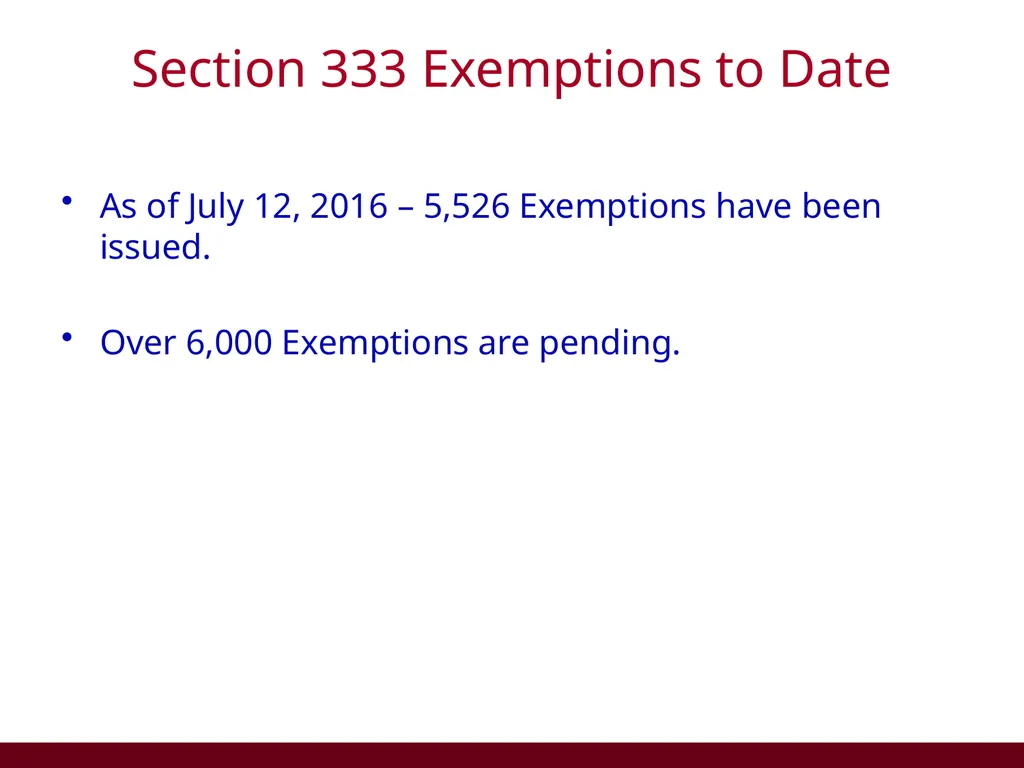
slide5. Section 333 Exemptions to Date As of July 12, 2016 – 5,526 Exemptions have been issued.
Over 6,000 Exemptions are pending.<br>
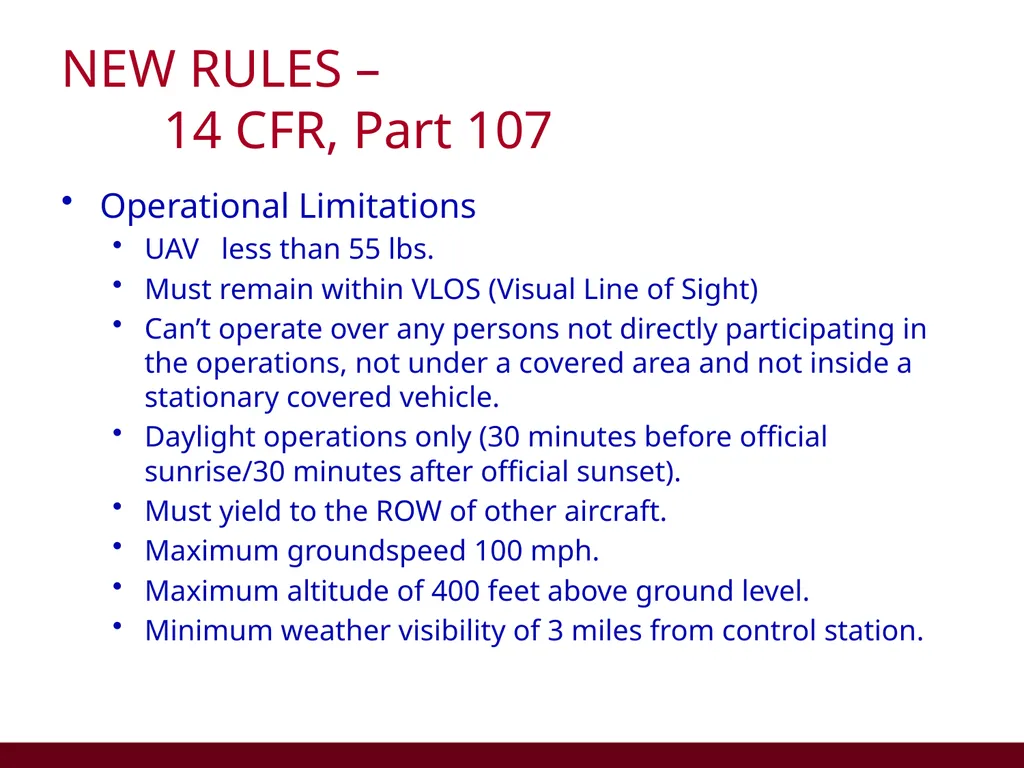
slide6. NEW RULES – 14 CFR, Part 107 Operational Limitations
UAV less than 55 lbs.
Must remain within VLOS (Visual Line of Sight)
Can’t operate over any persons not directly participating in the operations, not under a covered area and not inside a stationary covered vehicle.
Daylight operations only (30 minutes before official sunrise/30 minutes after official sunset).
Must yield to the ROW of other aircraft.
Maximum groundspeed 100 mph.
Maximum altitude of 400 feet above ground level.
Minimum weather visibility of 3 miles from control station.<br>
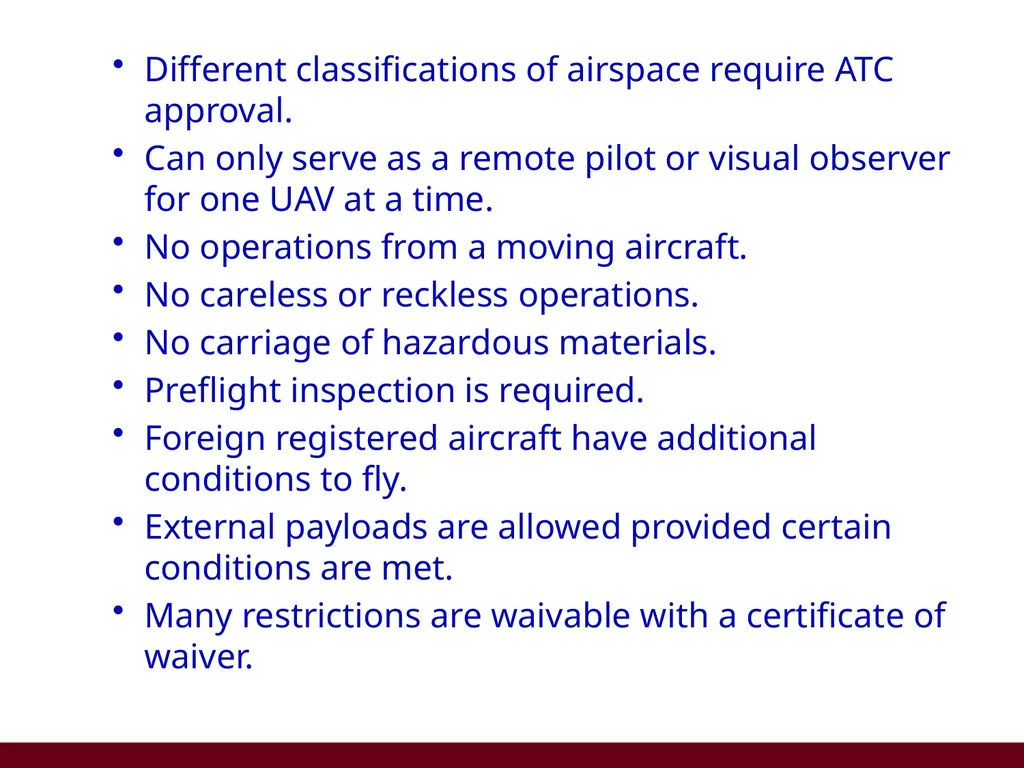
slide7. Different classifications of airspace require ATC approval.
Can only serve as a remote pilot or visual observer for one UAV at a time.
No operations from a moving aircraft.
No careless or reckless operations.
No carriage of hazardous materials.
Preflight inspection is required.
Foreign registered aircraft have additional conditions to fly.
External payloads are allowed provided certain conditions are met.
Many restrictions are waivable with a certificate of waiver.<br>
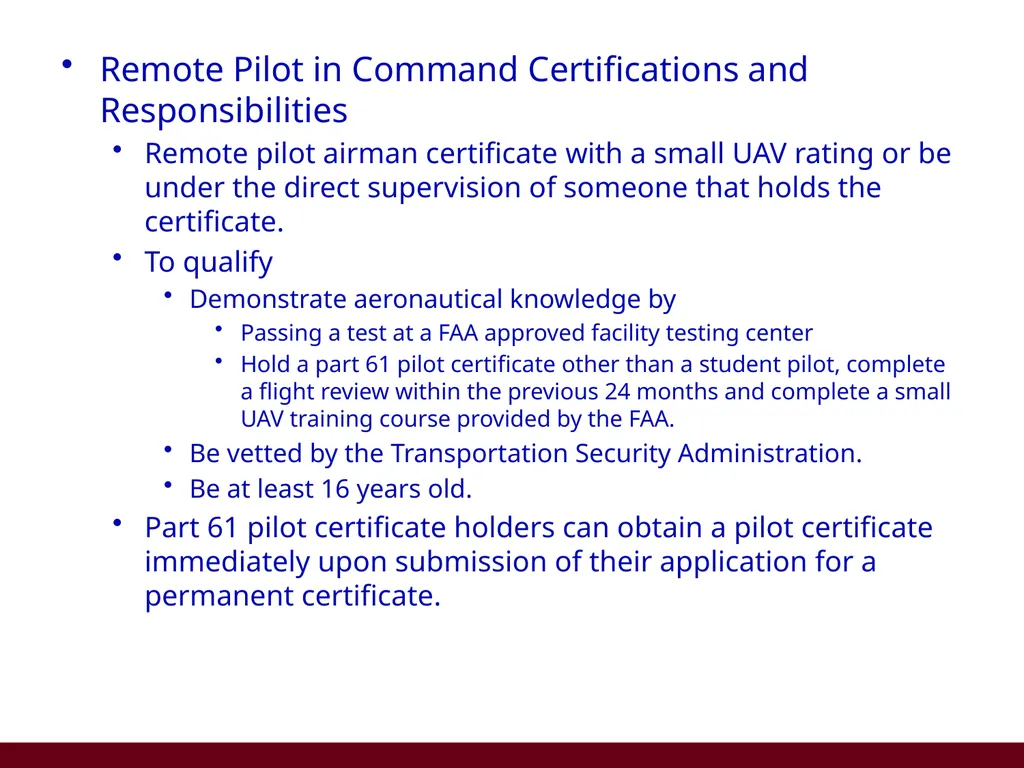
slide8. Remote Pilot in Command Certifications and Responsibilities
Remote pilot airman certificate with a small UAV rating or be under the direct supervision of someone that holds the certificate.
To qualify
Demonstrate aeronautical knowledge by
Passing a test at a FAA approved facility testing center
Hold a part 61 pilot certificate other than a student pilot, complete a flight review within the previous 24 months and complete a small UAV training course provided by the FAA.
Be vetted by the Transportation Security Administration.
Be at least 16 years old.
Part 61 pilot certificate holders can obtain a pilot certificate immediately upon submission of their application for a permanent certificate.<br>
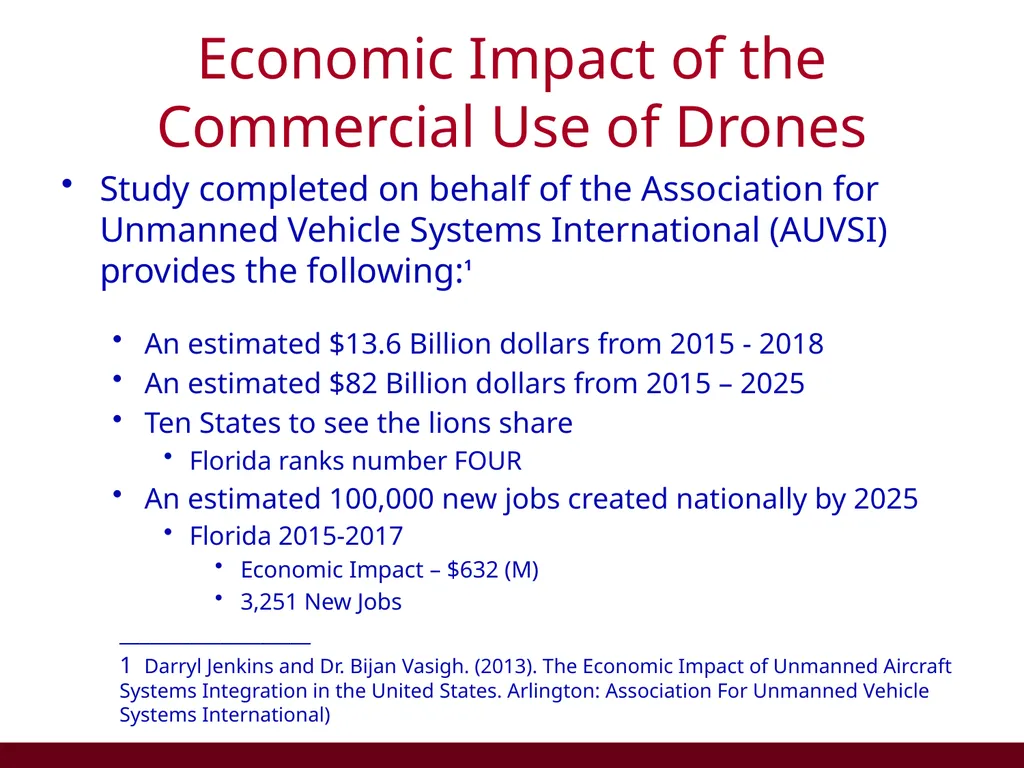
slide9. Study completed on behalf of the Association for Unmanned Vehicle Systems International (AUVSI) provides the following:1
An estimated $13.6 Billion dollars from 2015 - 2018
An estimated $82 Billion dollars from 2015 – 2025
Ten States to see the lions share
Florida ranks number FOUR
An estimated 100,000 new jobs created nationally by 2025
Florida 2015-2017
Economic Impact – $632 (M)
3,251 New Jobs
___________________
1 Darryl Jenkins and Dr. Bijan Vasigh. (2013). The Economic Impact of Unmanned Aircraft Systems Integration in the United States. Arlington: Association For Unmanned Vehicle Systems International) Economic Impact of the Commercial Use of Drones<br>
slide10. Drones in Environmental Consulting Environmental Site Assessments
Access Constraints
Habitat Surveys
Remote presentations
Development potential
Regulatory Inspections<br>
slide11. Is An Aerial Video Worth 1,000 Words? You be the judge.<br>
slide12. Anna H. Long, Esq. 407.841.1200
along@deanmead.com<br>
407.841.1200
along@deanmead.com<br>
slide2. What is a “drone?” Drones are more formally known as unmanned aerial vehicles (UAV).
Essentially, a drone is a flying “robot.” Drones can be remotely controlled flown by a pilot via a ground control system, or autonomously through use of an on-board computer, communication links and any additional equipment that is necessary for the UAV to operate safely.
An UAS is the UAV and anything else necessary for its operation.<br>
slide4. Regulations Applicable to the Operation of a drone (Civilian Uses) 2012 Federal Aviation Administration (FAA) Modernization and Reform Act (FMRA)
Five year road map to the integration of UAVs into national air space.
Section 333
Senate Bill 766 (May 2015)
Section 934.50, F.S., “Freedom from Unwarranted Surveillance Act.”
Small Unmanned Aircraft System Rules (SUAS Rule) (Published June 28, 2016; Effective Date August 29, 2016)
Replaces the current system of waivers (i.e. Section 333 Exemptions)<br>
slide5. Section 333 Exemptions to Date As of July 12, 2016 – 5,526 Exemptions have been issued.
Over 6,000 Exemptions are pending.<br>
slide6. NEW RULES – 14 CFR, Part 107 Operational Limitations
UAV less than 55 lbs.
Must remain within VLOS (Visual Line of Sight)
Can’t operate over any persons not directly participating in the operations, not under a covered area and not inside a stationary covered vehicle.
Daylight operations only (30 minutes before official sunrise/30 minutes after official sunset).
Must yield to the ROW of other aircraft.
Maximum groundspeed 100 mph.
Maximum altitude of 400 feet above ground level.
Minimum weather visibility of 3 miles from control station.<br>
slide7. Different classifications of airspace require ATC approval.
Can only serve as a remote pilot or visual observer for one UAV at a time.
No operations from a moving aircraft.
No careless or reckless operations.
No carriage of hazardous materials.
Preflight inspection is required.
Foreign registered aircraft have additional conditions to fly.
External payloads are allowed provided certain conditions are met.
Many restrictions are waivable with a certificate of waiver.<br>
slide8. Remote Pilot in Command Certifications and Responsibilities
Remote pilot airman certificate with a small UAV rating or be under the direct supervision of someone that holds the certificate.
To qualify
Demonstrate aeronautical knowledge by
Passing a test at a FAA approved facility testing center
Hold a part 61 pilot certificate other than a student pilot, complete a flight review within the previous 24 months and complete a small UAV training course provided by the FAA.
Be vetted by the Transportation Security Administration.
Be at least 16 years old.
Part 61 pilot certificate holders can obtain a pilot certificate immediately upon submission of their application for a permanent certificate.<br>
slide9. Study completed on behalf of the Association for Unmanned Vehicle Systems International (AUVSI) provides the following:1
An estimated $13.6 Billion dollars from 2015 - 2018
An estimated $82 Billion dollars from 2015 – 2025
Ten States to see the lions share
Florida ranks number FOUR
An estimated 100,000 new jobs created nationally by 2025
Florida 2015-2017
Economic Impact – $632 (M)
3,251 New Jobs
___________________
1 Darryl Jenkins and Dr. Bijan Vasigh. (2013). The Economic Impact of Unmanned Aircraft Systems Integration in the United States. Arlington: Association For Unmanned Vehicle Systems International) Economic Impact of the Commercial Use of Drones<br>
slide10. Drones in Environmental Consulting Environmental Site Assessments
Access Constraints
Habitat Surveys
Remote presentations
Development potential
Regulatory Inspections<br>
slide11. Is An Aerial Video Worth 1,000 Words? You be the judge.<br>
slide12. Anna H. Long, Esq. 407.841.1200
along@deanmead.com<br>