Dry heat Toasting bread What happens when bread is
Description: Dry heat Toasting bread What happens when bread is toasted? Heating foods Foods which are baked, grilled or roasted undergo colour, aroma and flavour changes. This is a result of different reactions, including dextrinisation and the
Related Topics
Download Presentation
"Dry heat Toasting bread What happens when bread is" is the property of its rightful owner. Permission is granted to download and print the materials on this website for personal, non-commercial use only, and to display it on your personal computer provided you do not modify the materials and that you retain all copyright notices contained in the materials. By downloading content from our website, you accept the terms of this agreement.
Presentation Transcript
slide1. Dry heat<br>
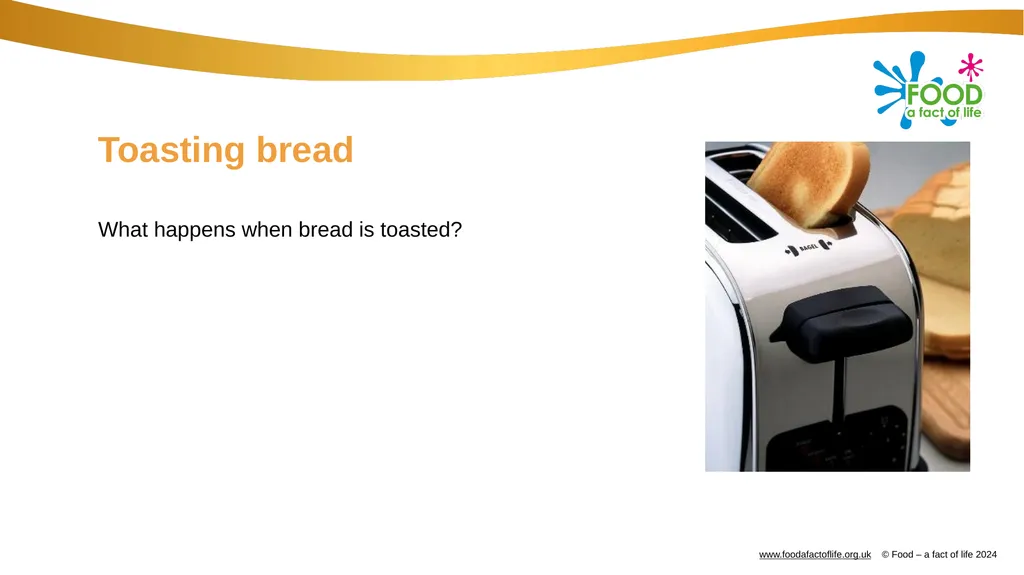
slide2. Toasting bread What happens when bread is toasted?<br>
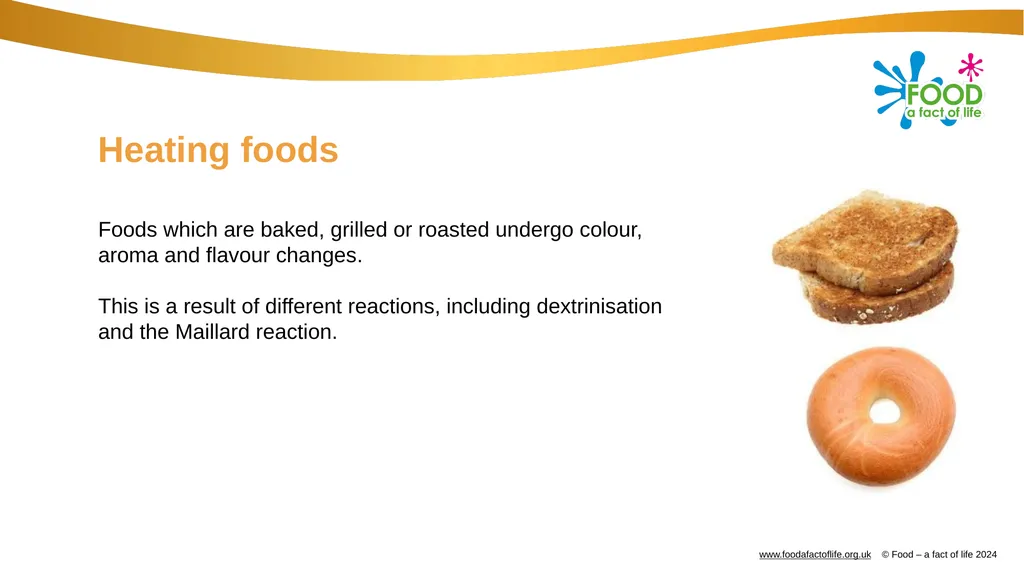
slide3. Heating foods Foods which are baked, grilled or roasted undergo colour, aroma and flavour changes.
This is a result of different reactions, including dextrinisation and the Maillard reaction.<br>
slide4. What other dishes change colour this way? What is the connection between this food? Heating foods<br>
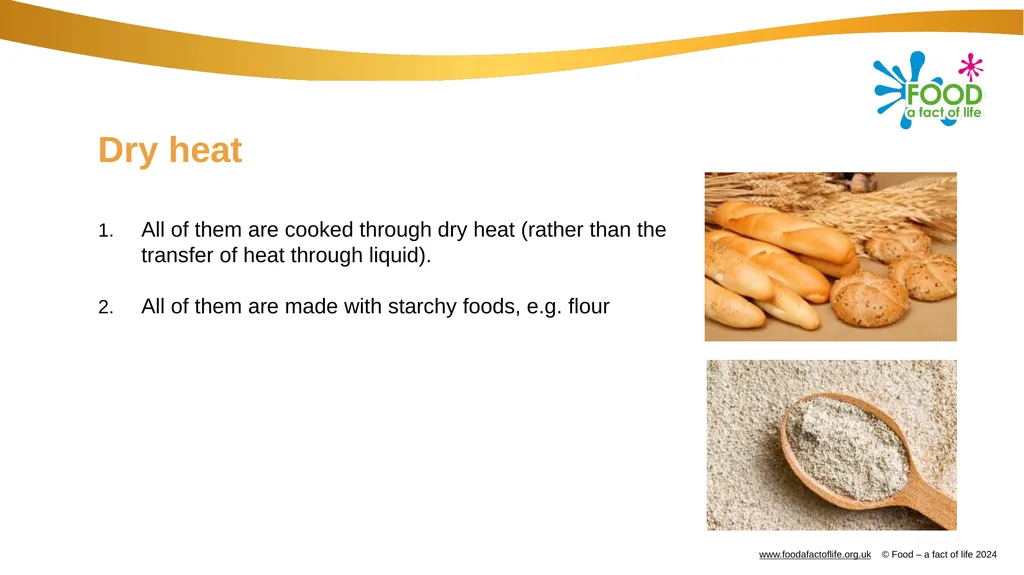
slide5. Dry heat All of them are cooked through dry heat (rather than the transfer of heat through liquid).
All of them are made with starchy foods, e.g. flour<br>
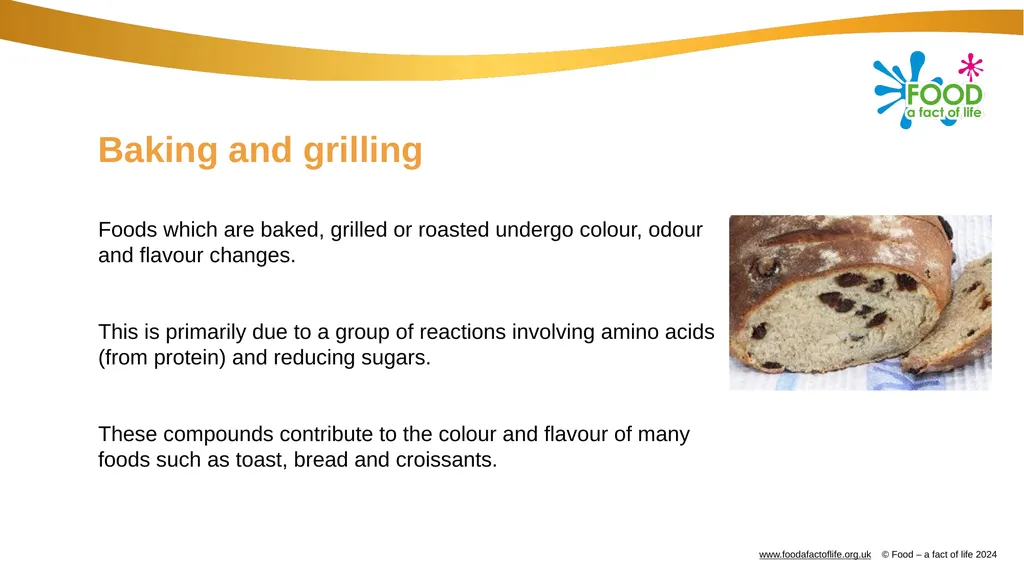
slide6. Baking and grilling Foods which are baked, grilled or roasted undergo colour, odour and flavour changes.
This is primarily due to a group of reactions involving amino acids (from protein) and reducing sugars.
These compounds contribute to the colour and flavour of many foods such as toast, bread and croissants.<br>
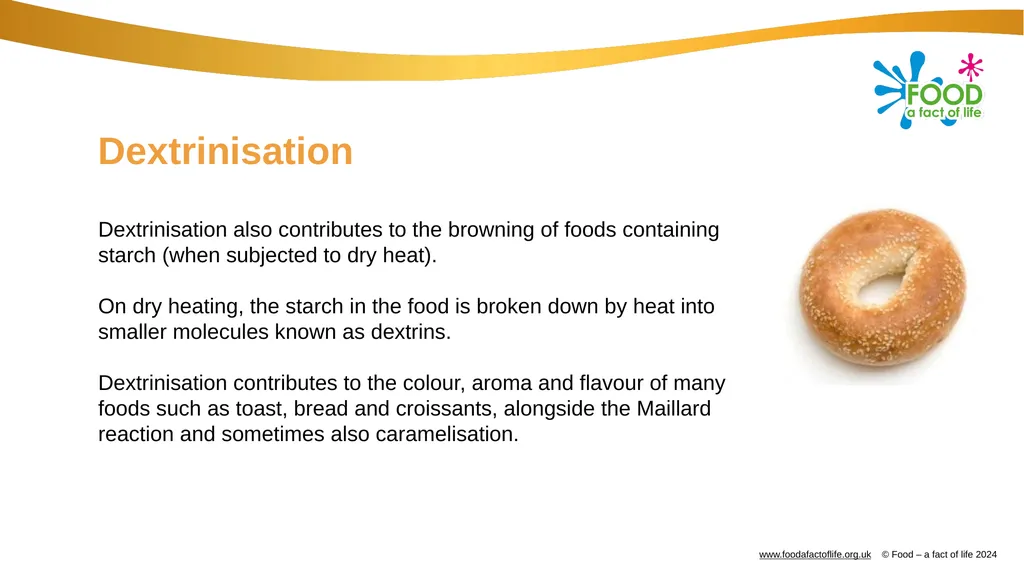
slide7. Dextrinisation Dextrinisation also contributes to the browning of foods containing starch (when subjected to dry heat).
On dry heating, the starch in the food is broken down by heat into smaller molecules known as dextrins.
Dextrinisation contributes to the colour, aroma and flavour of many foods such as toast, bread and croissants, alongside the Maillard reaction and sometimes also caramelisation.<br>
slide8. Dry heat For further information, go to:
www.foodafactoflife.org.uk This resource meets the Guidelines for producers and users of school education resources about food.<br>
slide2. Toasting bread What happens when bread is toasted?<br>
slide3. Heating foods Foods which are baked, grilled or roasted undergo colour, aroma and flavour changes.
This is a result of different reactions, including dextrinisation and the Maillard reaction.<br>
slide4. What other dishes change colour this way? What is the connection between this food? Heating foods<br>
slide5. Dry heat All of them are cooked through dry heat (rather than the transfer of heat through liquid).
All of them are made with starchy foods, e.g. flour<br>
slide6. Baking and grilling Foods which are baked, grilled or roasted undergo colour, odour and flavour changes.
This is primarily due to a group of reactions involving amino acids (from protein) and reducing sugars.
These compounds contribute to the colour and flavour of many foods such as toast, bread and croissants.<br>
slide7. Dextrinisation Dextrinisation also contributes to the browning of foods containing starch (when subjected to dry heat).
On dry heating, the starch in the food is broken down by heat into smaller molecules known as dextrins.
Dextrinisation contributes to the colour, aroma and flavour of many foods such as toast, bread and croissants, alongside the Maillard reaction and sometimes also caramelisation.<br>
slide8. Dry heat For further information, go to:
www.foodafactoflife.org.uk This resource meets the Guidelines for producers and users of school education resources about food.<br>