Earth, Moon Sun Relationship Earth and Sun Relationship Earth completes one revolution around the sun every 365 ¼ days. Revolution the time it takes for the Earth to complete 1 orbit around the sun. What is Rotation? Rotation the
"Earth, Moon & Sun Relationship Earth and Sun" is the property of its rightful owner. Permission is granted to
download and print the materials on this website for personal, non-commercial use only, and to display it
on your personal computer provided you do not modify the materials and that you retain all copyright
notices contained in the materials. By downloading content from our website, you accept the terms of this
agreement.
Presentation Transcript
01
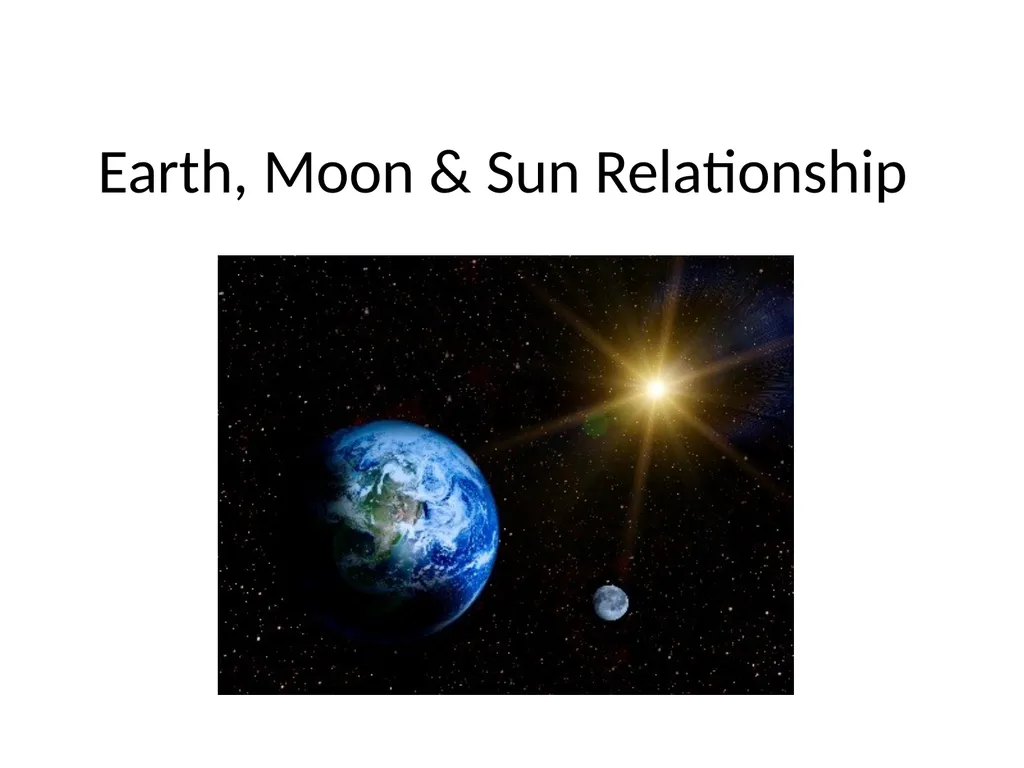
Earth, Moon & Sun Relationship<br>
02
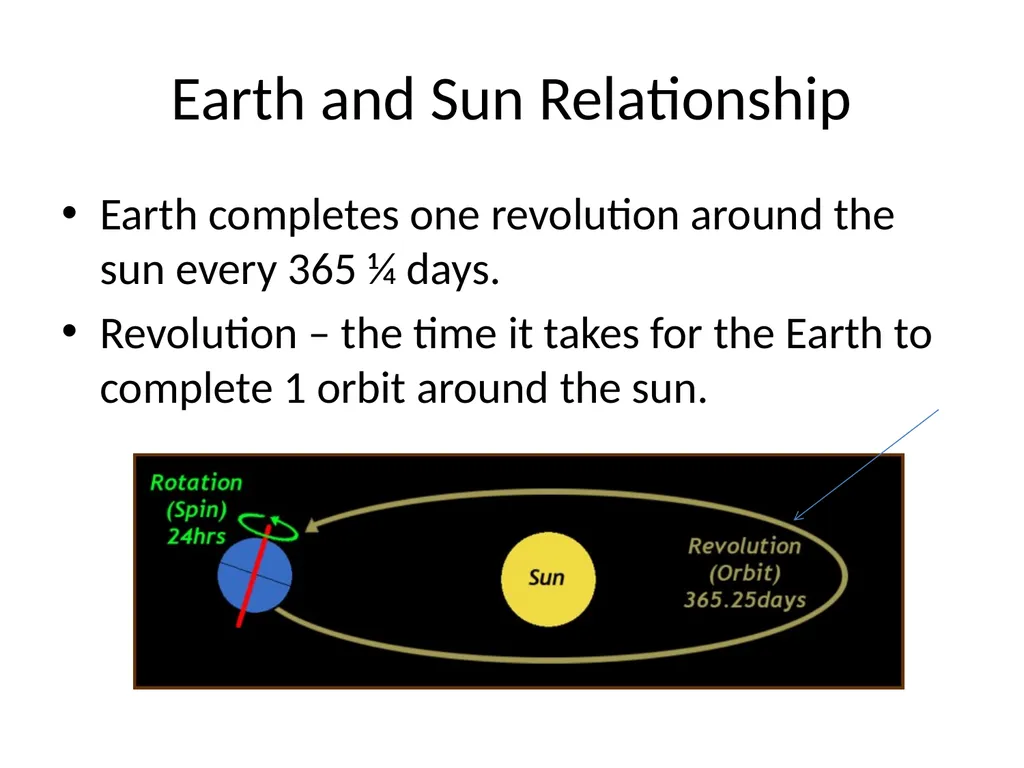
Earth and Sun Relationship Earth completes one revolution around the sun every 365 ¼ days.
Revolution – the time it takes for the Earth to complete 1 orbit around the sun.<br>
03
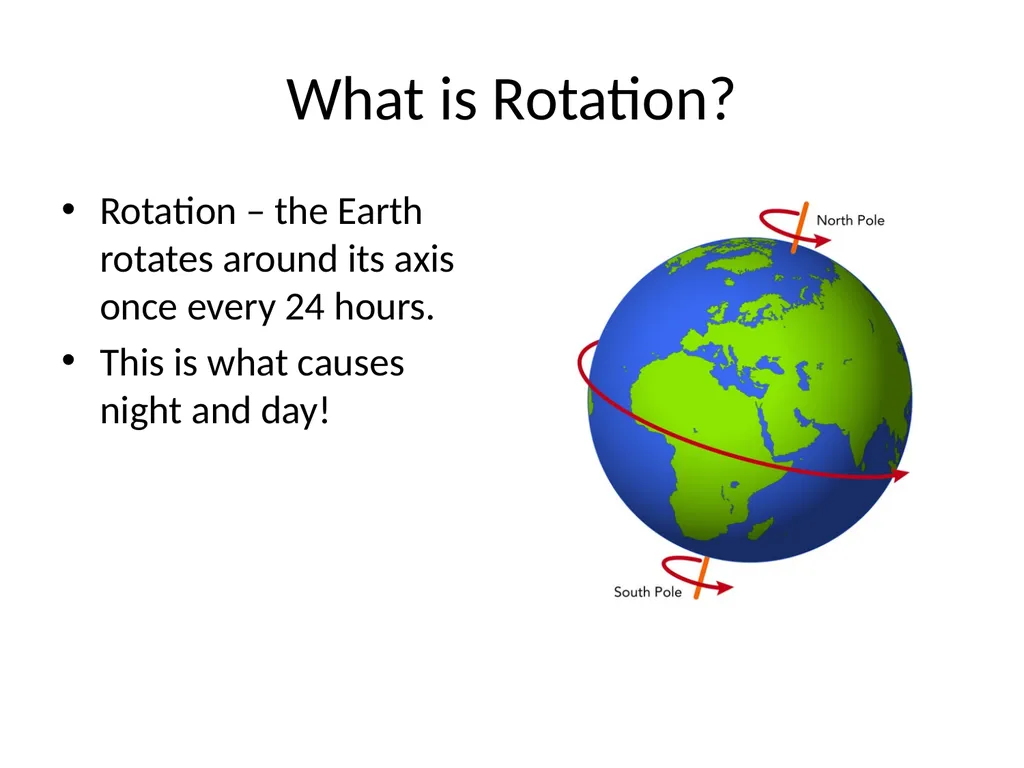
What is Rotation? Rotation – the Earth rotates around its axis once every 24 hours.
This is what causes night and day!<br>
04
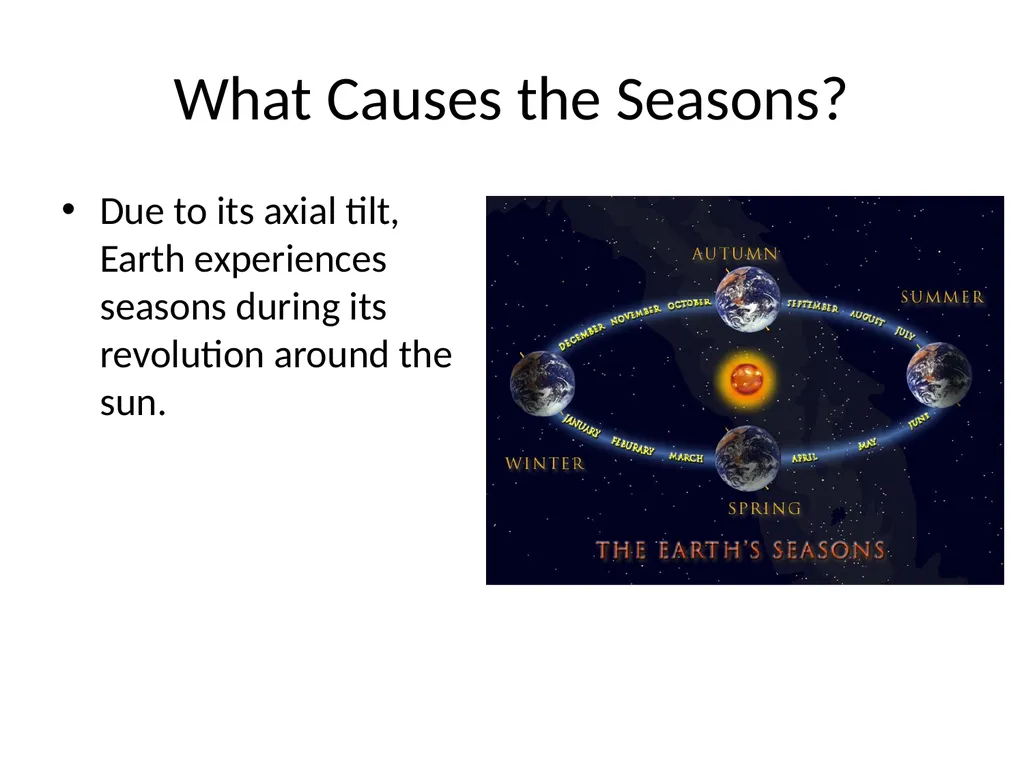
What Causes the Seasons? Due to its axial tilt, Earth experiences seasons during its revolution around the sun.<br>
05
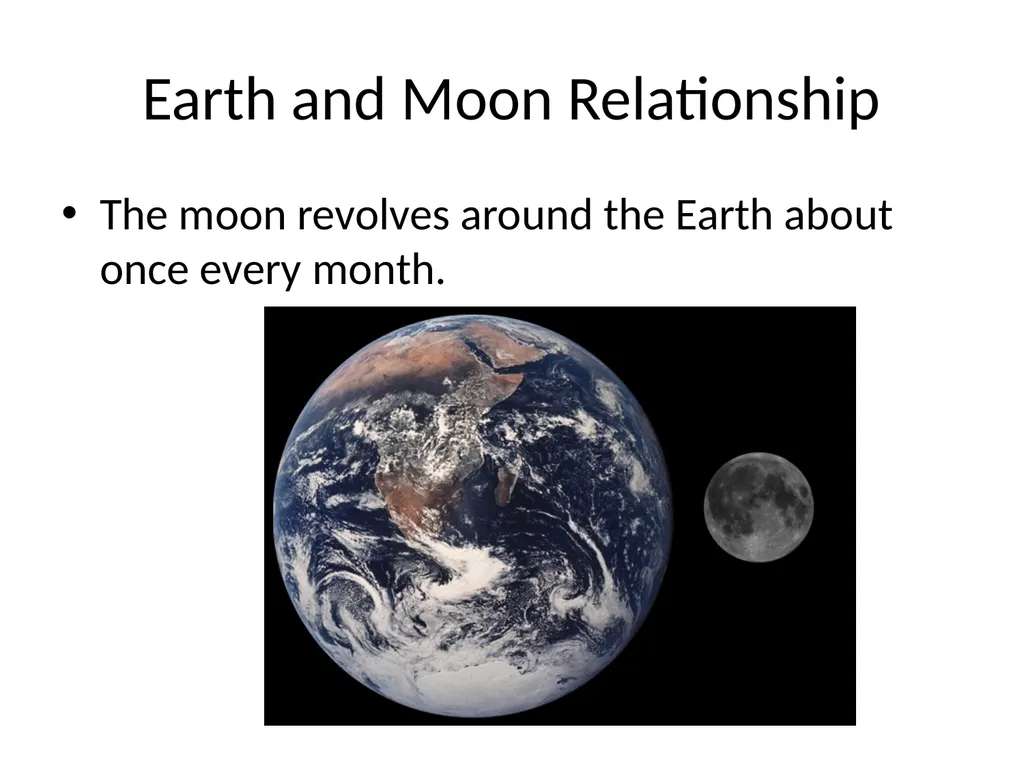
Earth and Moon Relationship The moon revolves around the Earth about once every month.<br>
06
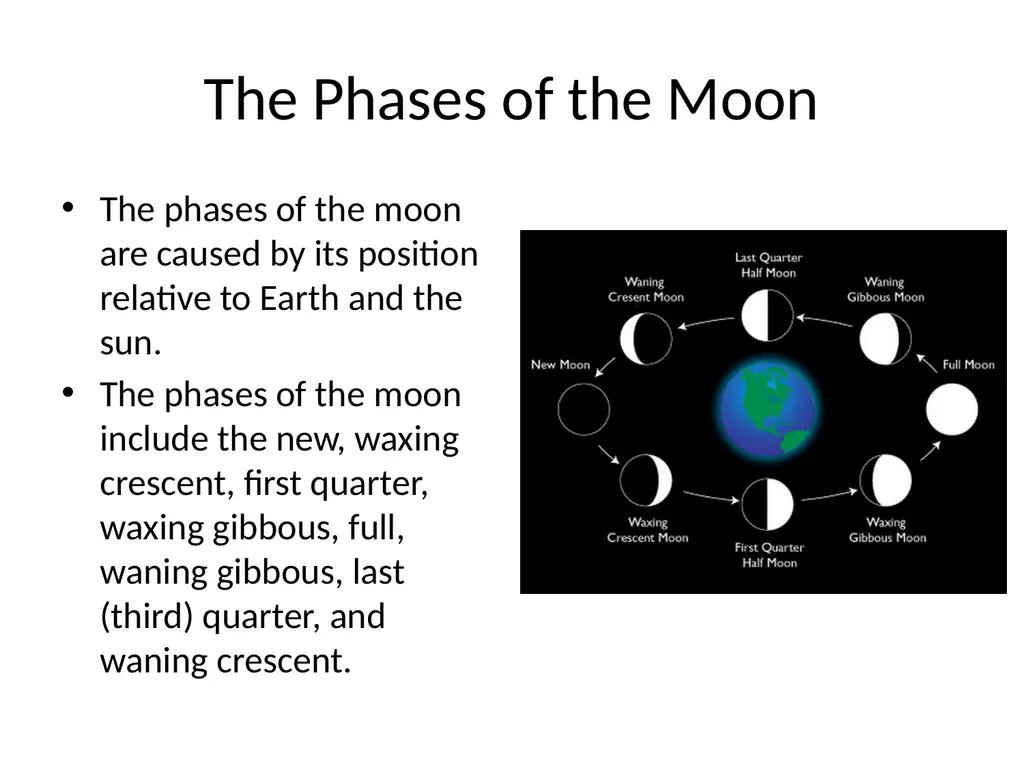
The Phases of the Moon The phases of the moon are caused by its position relative to Earth and the sun.
The phases of the moon include the new, waxing crescent, first quarter, waxing gibbous, full, waning gibbous, last (third) quarter, and waning crescent.<br>
07
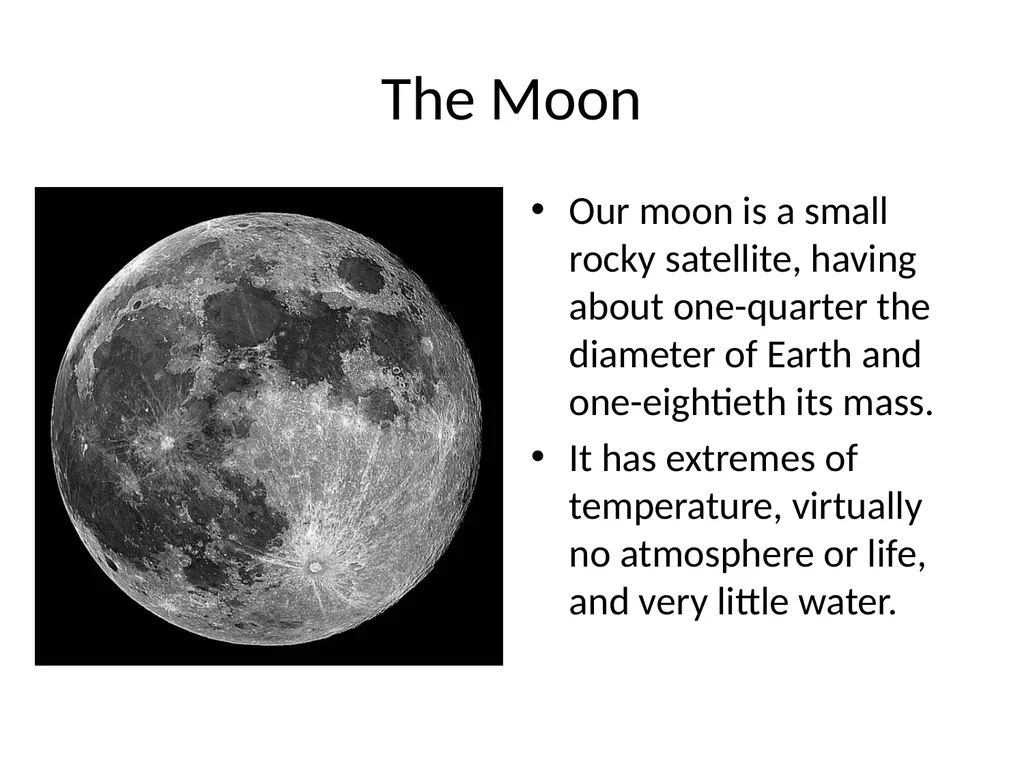
The Moon Our moon is a small rocky satellite, having about one-quarter the diameter of Earth and one-eightieth its mass.
It has extremes of temperature, virtually no atmosphere or life, and very little water.<br>
08
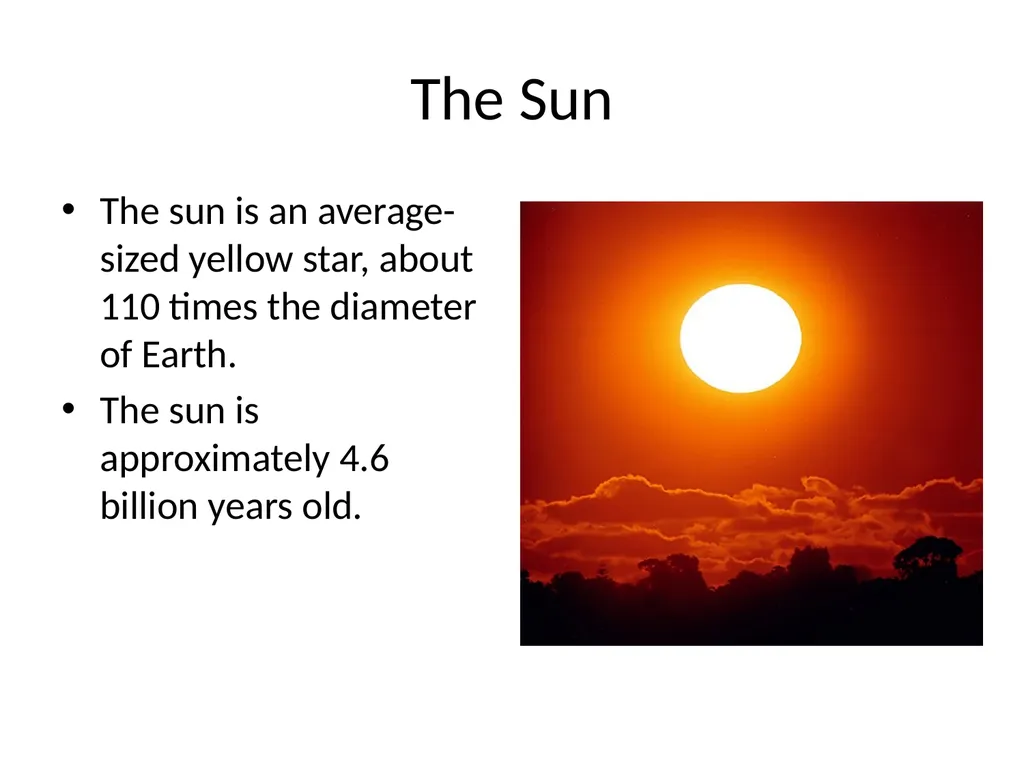
The Sun The sun is an average-sized yellow star, about 110 times the diameter of Earth.
The sun is approximately 4.6 billion years old.<br>
09
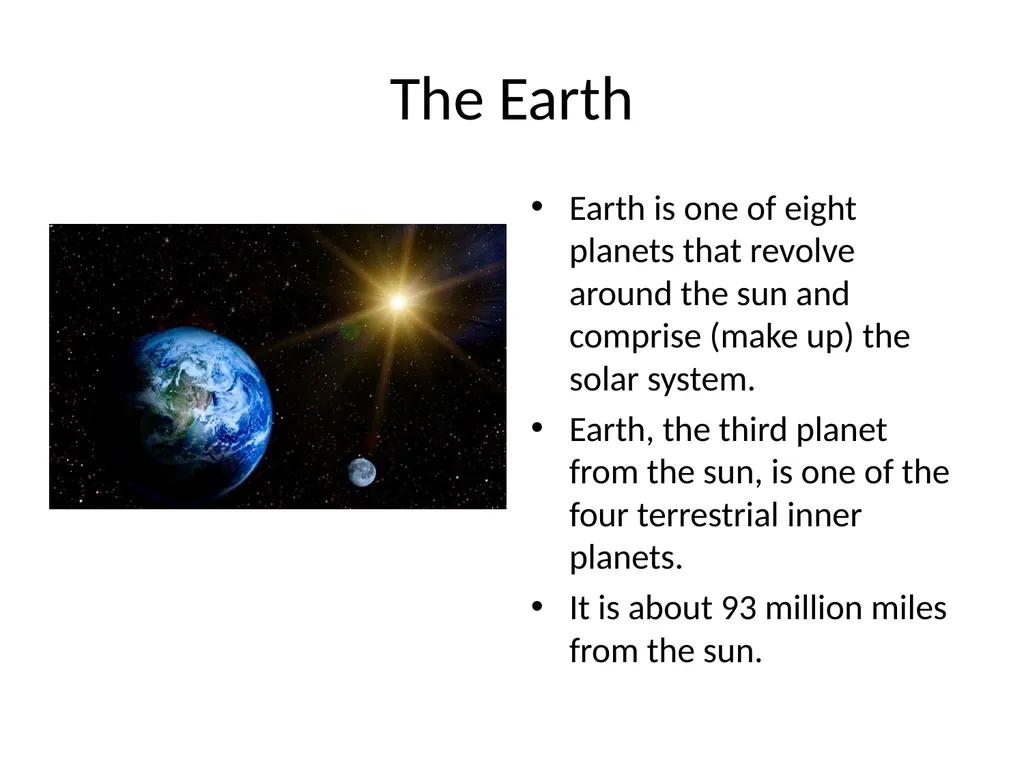
The Earth Earth is one of eight planets that revolve around the sun and comprise (make up) the solar system.
Earth, the third planet from the sun, is one of the four terrestrial inner planets.
It is about 93 million miles from the sun.<br>
10
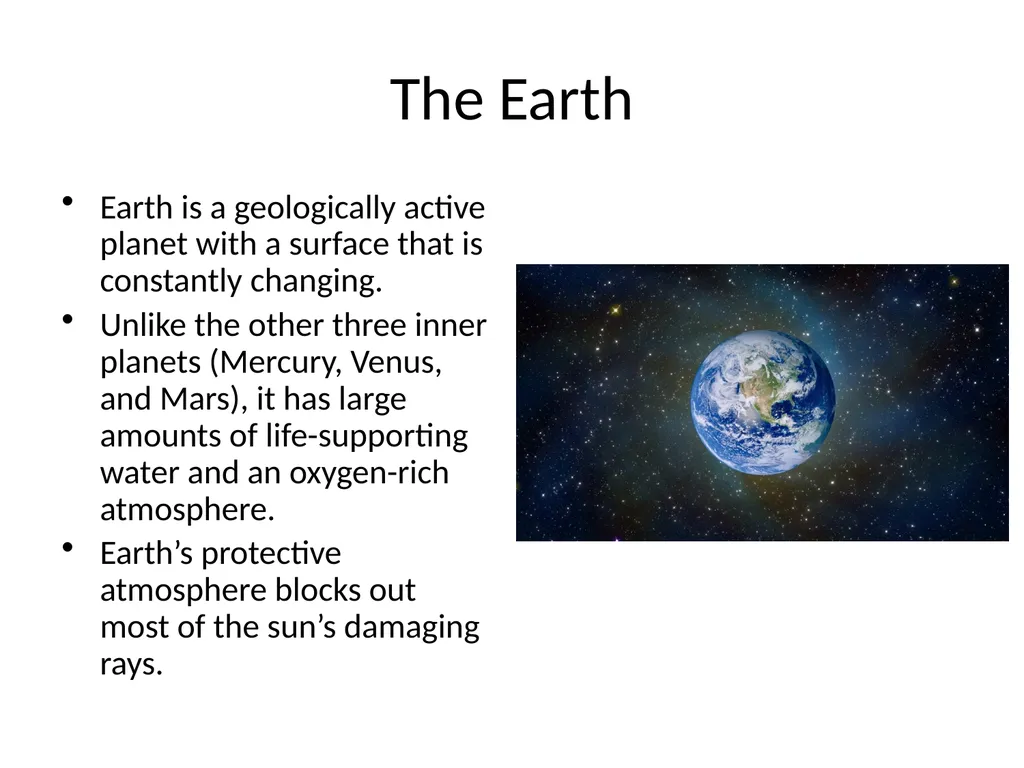
The Earth Earth is a geologically active planet with a surface that is constantly changing.
Unlike the other three inner planets (Mercury, Venus, and Mars), it has large amounts of life-supporting water and an oxygen-rich atmosphere.
Earth’s protective atmosphere blocks out most of the sun’s damaging rays.<br>
11
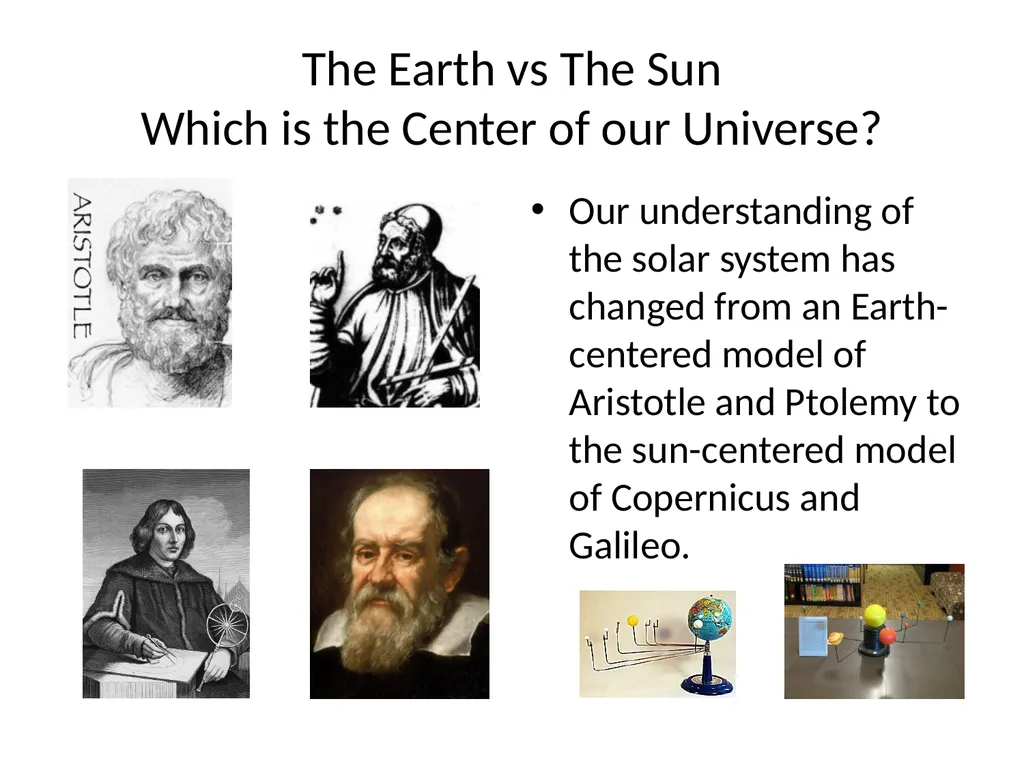
The Earth vs The Sun Which is the Center of our Universe? Our understanding of the solar system has changed from an Earth-centered model of Aristotle and Ptolemy to the sun-centered model of Copernicus and Galileo.<br>
12
NASA – What’s That? NASA - National Aeronautics and Space Administration.
It was started in 1958 by the United States Government.
The NASA Apollo missions added greatly to our understanding of the moon.
Our understanding of the sun, moon, and the solar system continues to change with new scientific discoveries.<br>