Eastern Elementary/Middle School K-2 Teachers Word
Description: Eastern ElementaryMiddle School K-2 Teachers Word study: Session four Within word pattern stage Tiers of development Meaning Pattern Alphabet Syllables and Affixes Derivational Relations Within Word Pattern Emergent Letter Name Transition
Related Topics
Download Presentation
"Eastern Elementary/Middle School K-2 Teachers Word" is the property of its rightful owner. Permission is granted to download and print the materials on this website for personal, non-commercial use only, and to display it on your personal computer provided you do not modify the materials and that you retain all copyright notices contained in the materials. By downloading content from our website, you accept the terms of this agreement.
Presentation Transcript
slide1. Eastern Elementary/Middle School
K-2 Teachers Word study: Session fourWithin word pattern stage<br>
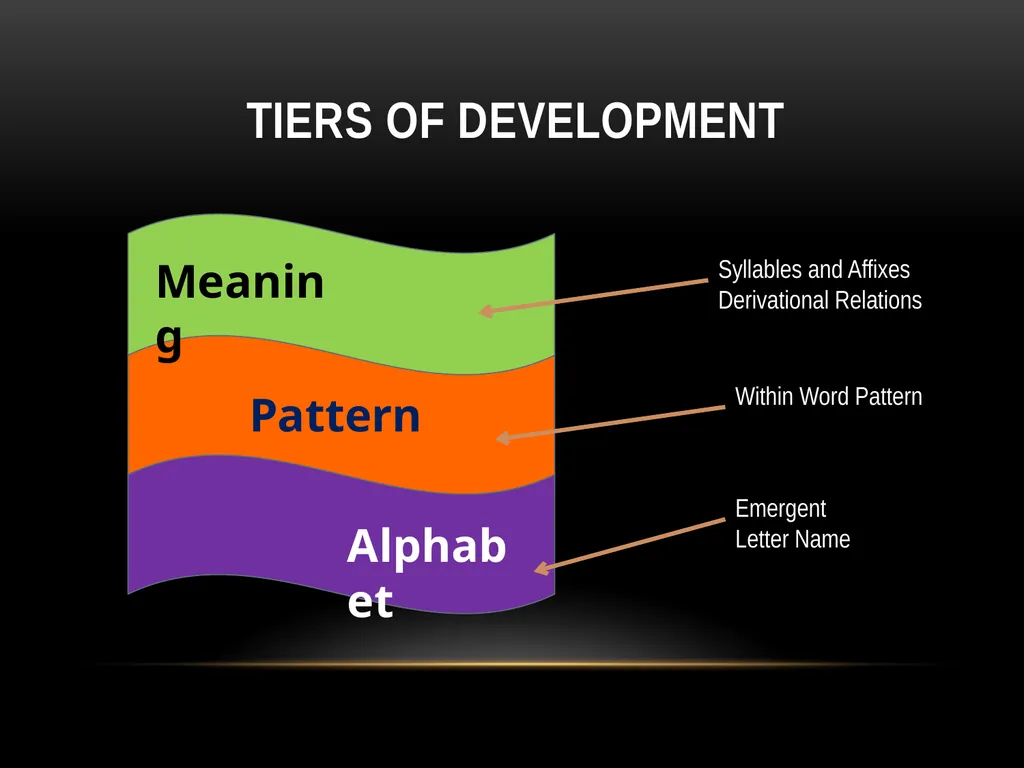
slide2. Tiers of development Meaning Pattern Alphabet Syllables and Affixes
Derivational Relations Within Word Pattern Emergent
Letter Name<br>
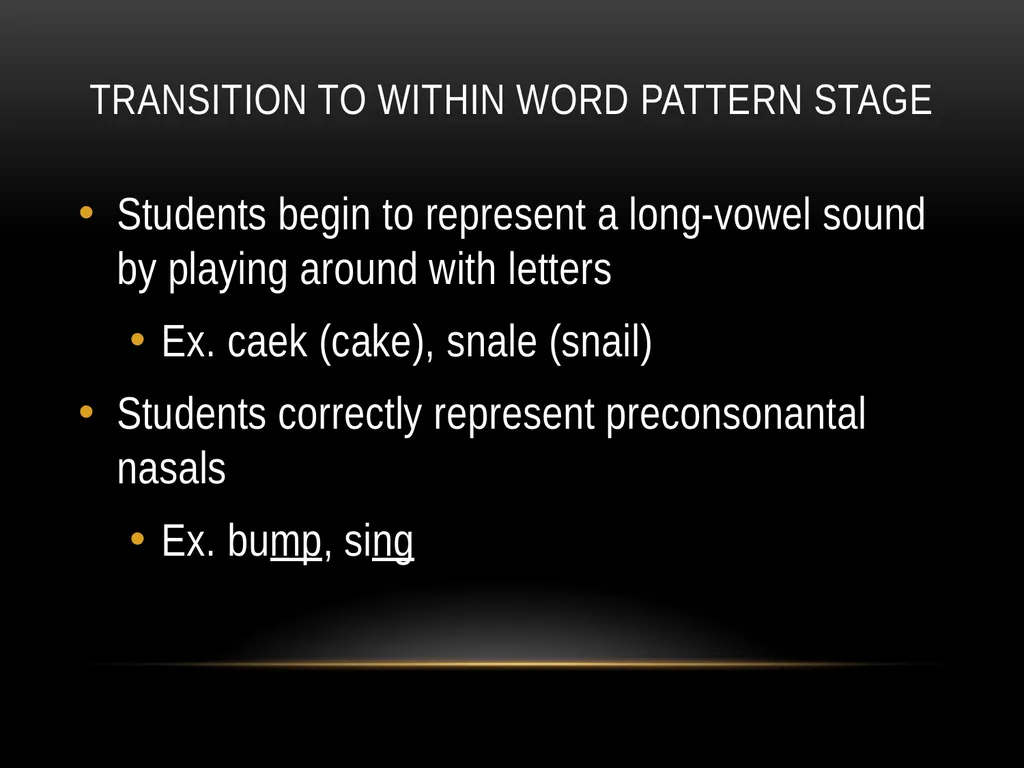
slide3. Transition to within word pattern stage Students begin to represent a long-vowel sound by playing around with letters
Ex. caek (cake), snale (snail)
Students correctly represent preconsonantal nasals
Ex. bump, sing<br>
slide4. Current theory suggests that the brain is a
pattern detector, not a rule applier.
Decoding a word occurs when the brain
recognizes a familiar spelling pattern or, if
the pattern itself is not familiar, searches
through its store of words with similar
patterns.
(Adams, 1990)<br>
slide5. The paomnnehil pweor of the hmuan mnind.
Aoccdrnig to a rscheearch at Cmabrigde
Uinervtisy, it deosn’t mttear in waht oredr
the ltteers in a wrod are, the olny iprmoetnt
tihng is taht the frist and lsat ltteer be at the
rghit pclae. The rset can be a taotl mses
and you can sitll raed it wouthit porbelm.
Tish is bcuseau the huamn mnid deos not
raed ervey lteter by istlef, but the wrod as a
wlohe.
Amzanig, huh?<br>
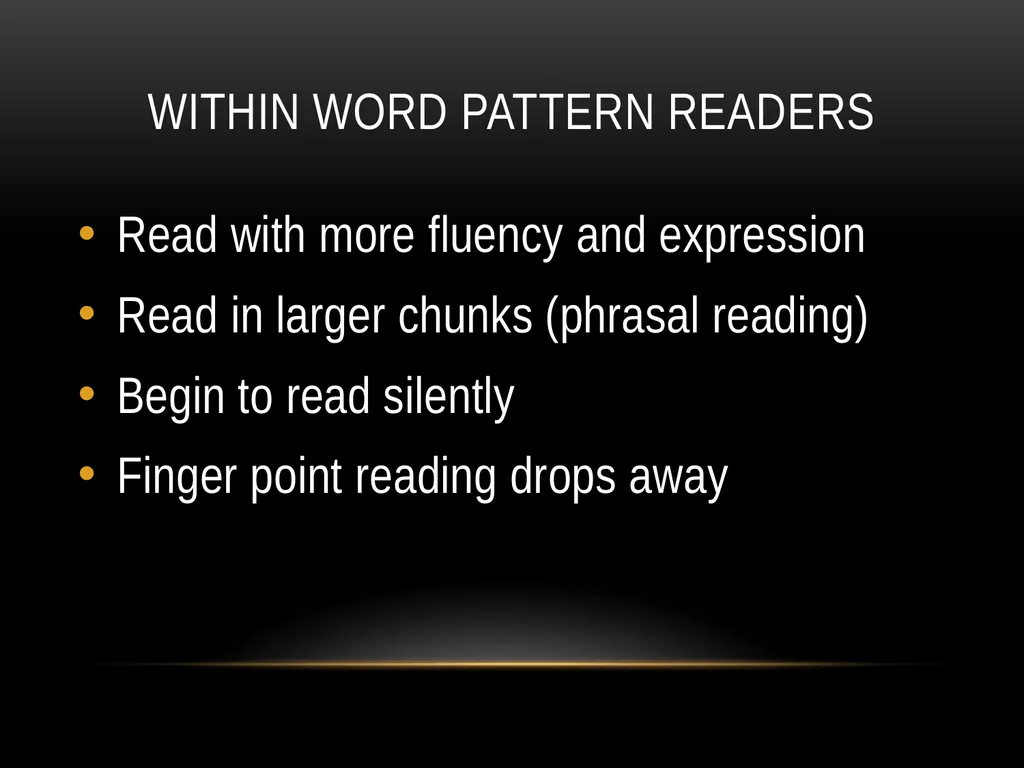
slide6. Within word pattern readers Read with more fluency and expression
Read in larger chunks (phrasal reading)
Begin to read silently
Finger point reading drops away<br>
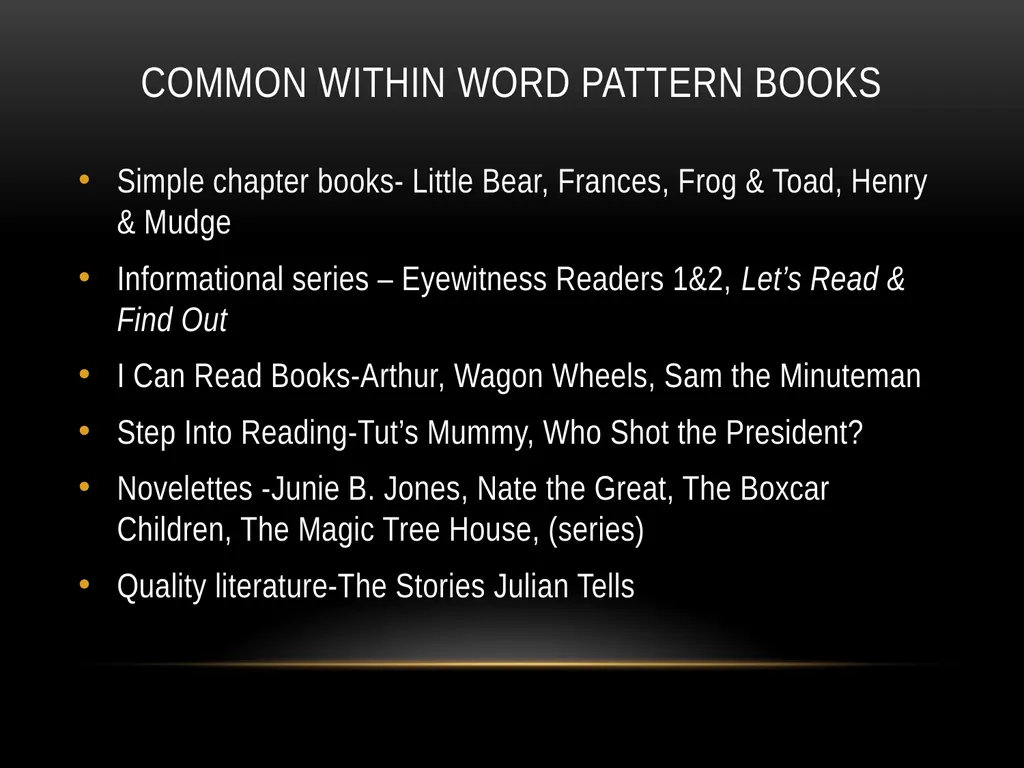
slide7. Common within word pattern books Simple chapter books- Little Bear, Frances, Frog & Toad, Henry & Mudge
Informational series – Eyewitness Readers 1&2, Let’s Read & Find Out
I Can Read Books-Arthur, Wagon Wheels, Sam the Minuteman
Step Into Reading-Tut’s Mummy, Who Shot the President?
Novelettes -Junie B. Jones, Nate the Great, The Boxcar Children, The Magic Tree House, (series)
Quality literature-The Stories Julian Tells<br>
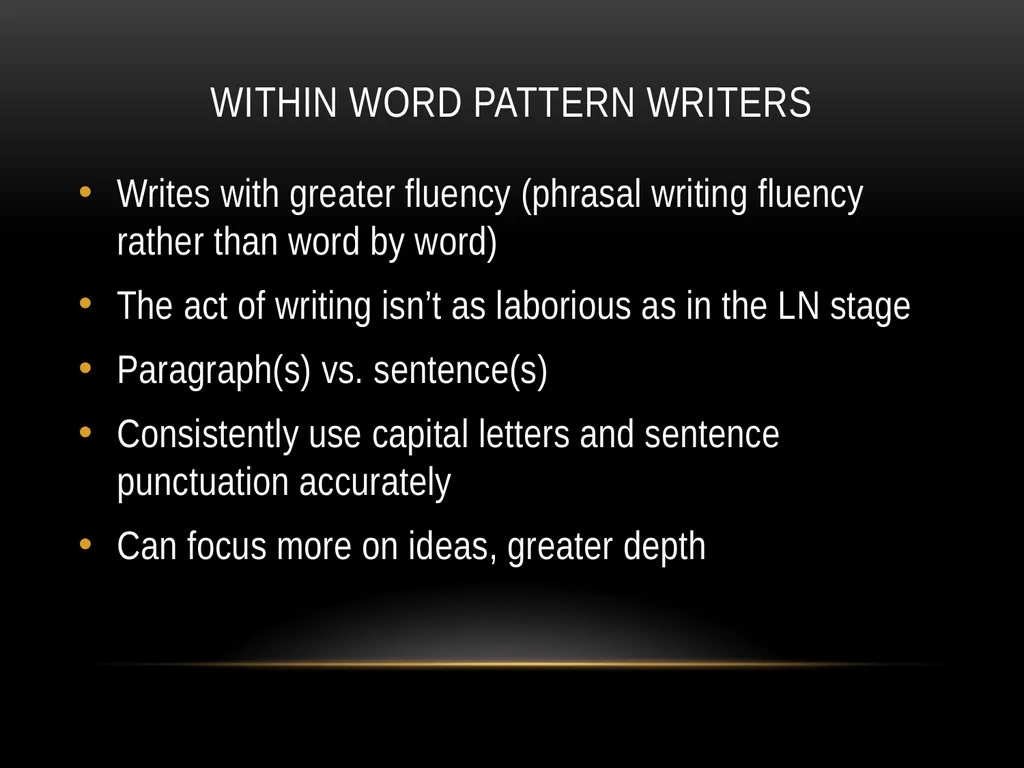
slide8. Within word pattern writers Writes with greater fluency (phrasal writing fluency rather than word by word)
The act of writing isn’t as laborious as in the LN stage
Paragraph(s) vs. sentence(s)
Consistently use capital letters and sentence punctuation accurately
Can focus more on ideas, greater depth<br>
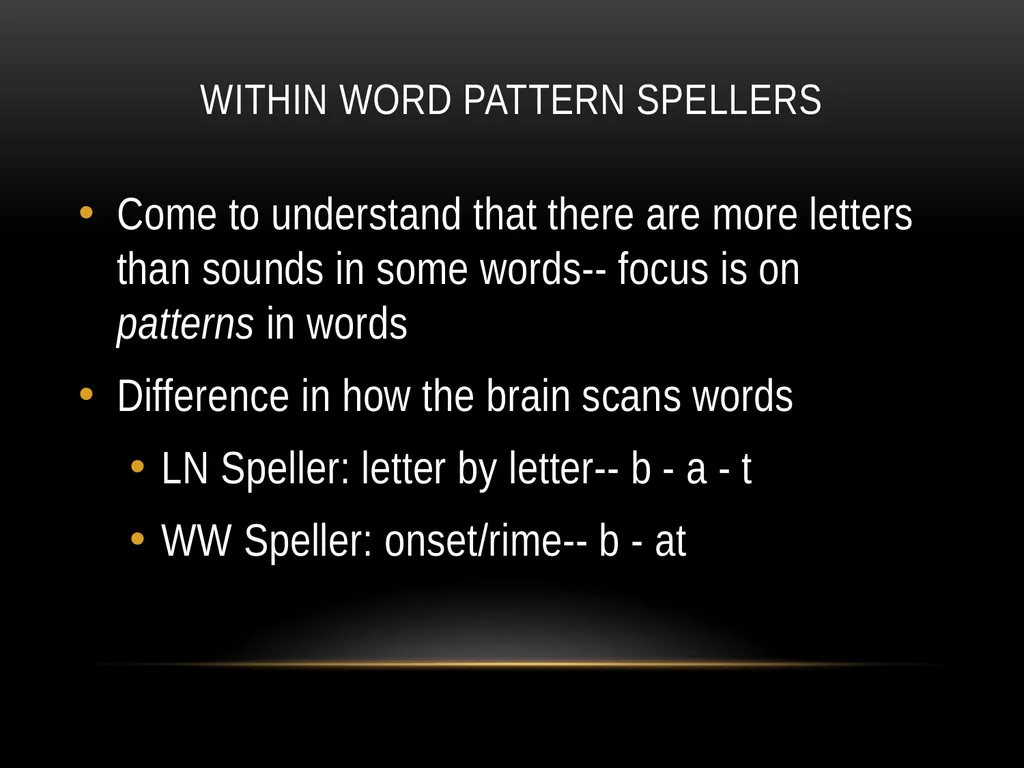
slide9. Within word pattern spellers Come to understand that there are more letters than sounds in some words-- focus is on patterns in words
Difference in how the brain scans words
LN Speller: letter by letter-- b - a - t
WW Speller: onset/rime-- b - at<br>
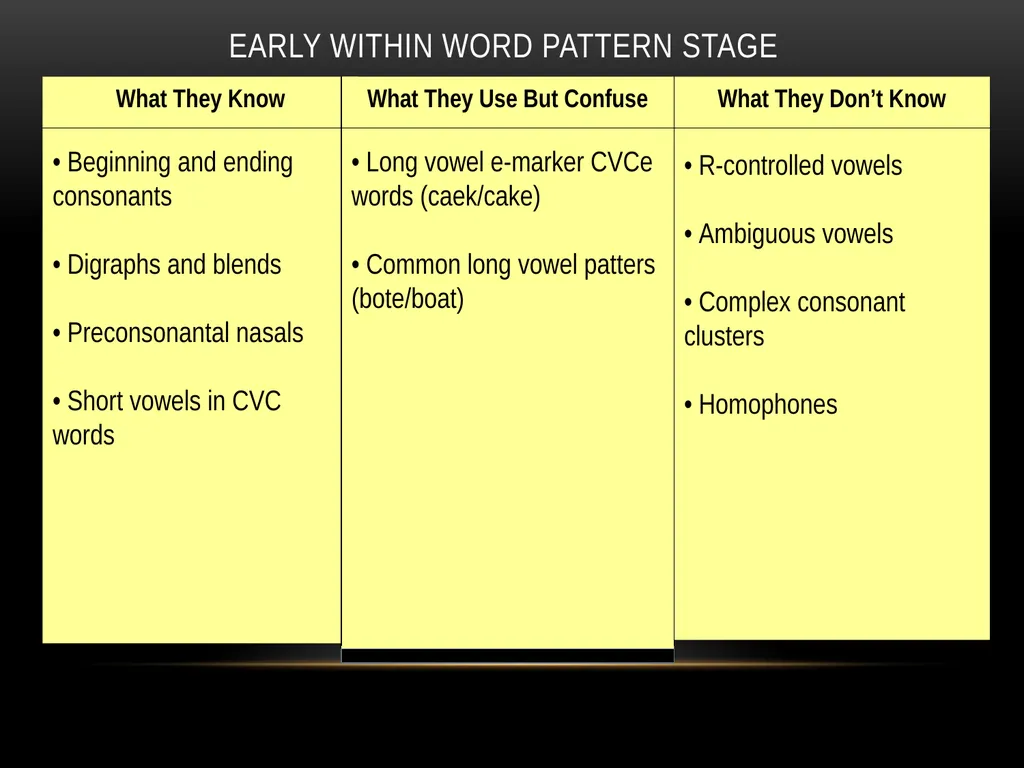
slide10. Early within word pattern stage What They Know
• Beginning and ending
consonants
• Digraphs and blends
• Preconsonantal nasals
• Short vowels in CVC words What They Use But Confuse
• Long vowel e-marker CVCe
words (caek/cake)
• Common long vowel patters
(bote/boat) What They Don’t Know
• R-controlled vowels
• Ambiguous vowels
• Complex consonant clusters
• Homophones<br>
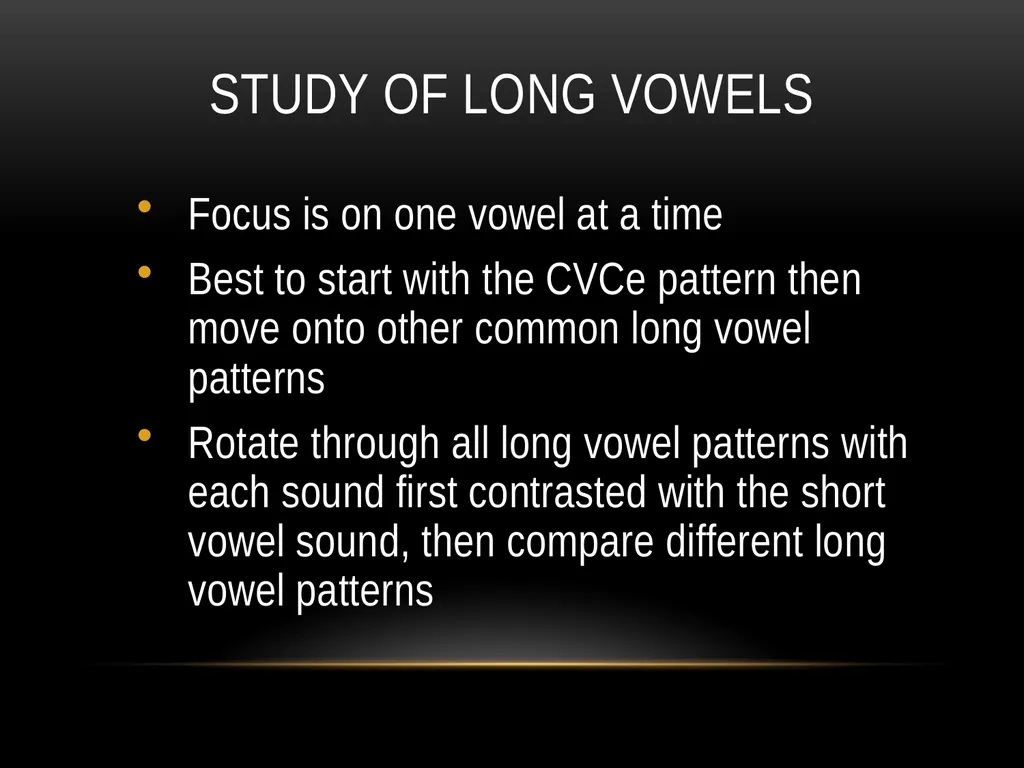
slide11. Study of long vowels Focus is on one vowel at a time
Best to start with the CVCe pattern then move onto other common long vowel patterns
Rotate through all long vowel patterns with each sound first contrasted with the short vowel sound, then compare different long vowel patterns<br>
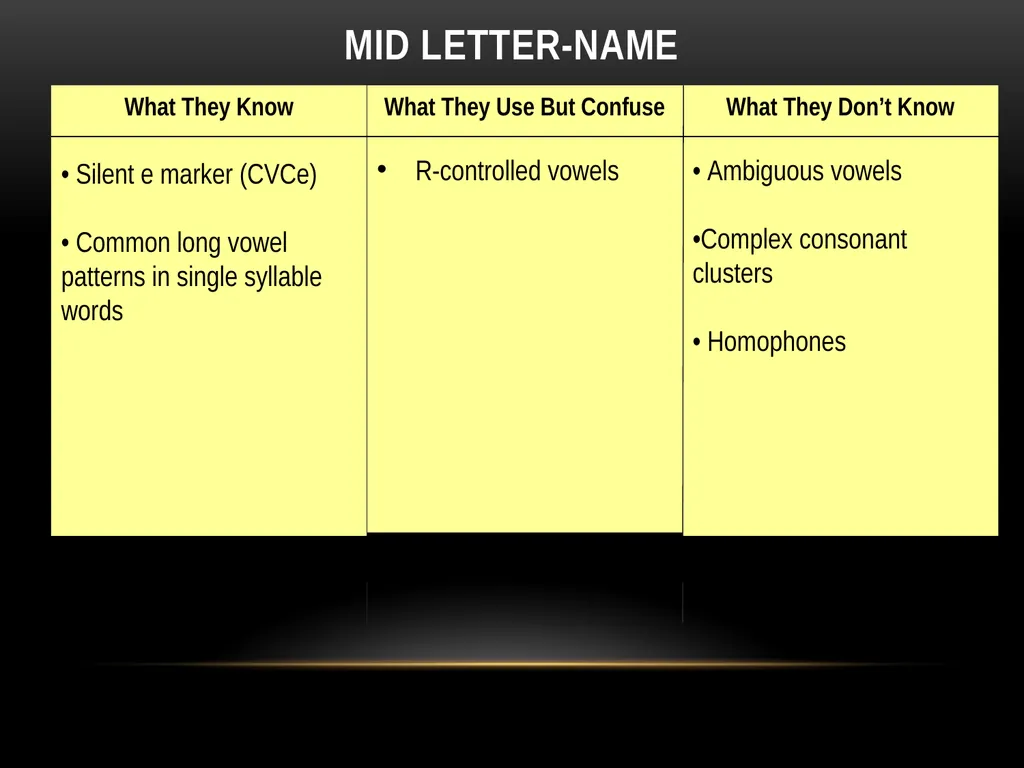
slide12. Mid letter-Name What They Know
• Silent e marker (CVCe)
• Common long vowel
patterns in single syllable
words What They Use But Confuse
R-controlled vowels What They Don’t Know
• Ambiguous vowels
•Complex consonant clusters
• Homophones<br>
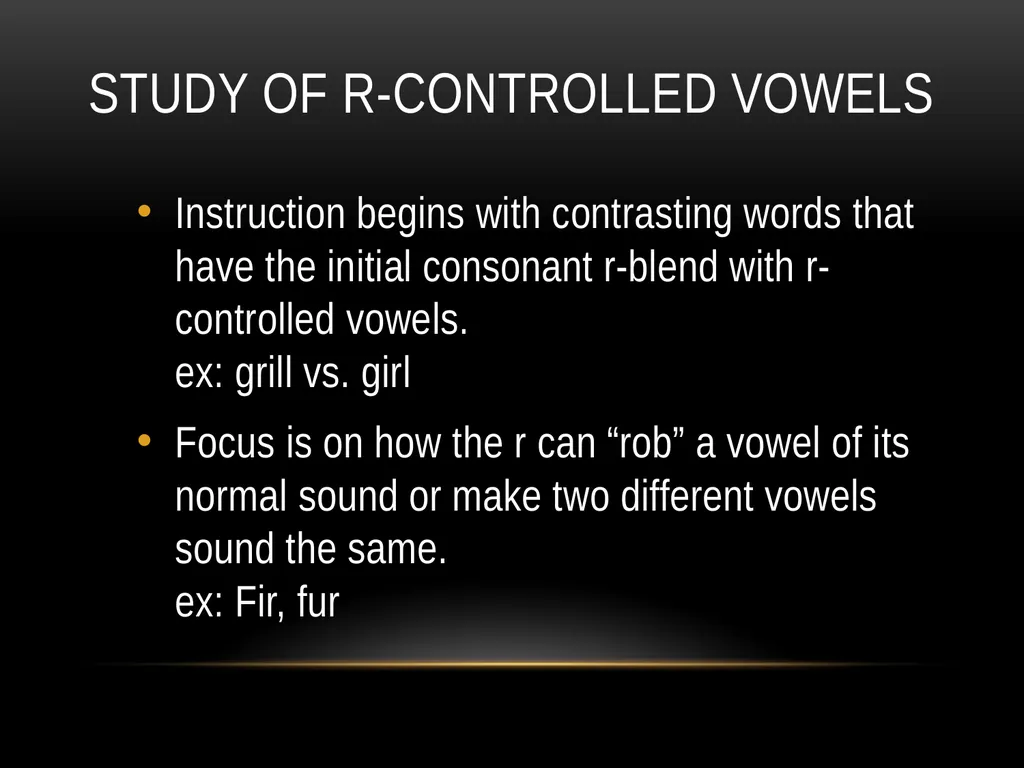
slide13. Study of R-controlled vowels Instruction begins with contrasting words that have the initial consonant r-blend with r-controlled vowels. ex: grill vs. girl
Focus is on how the r can “rob” a vowel of its normal sound or make two different vowels sound the same. ex: Fir, fur<br>
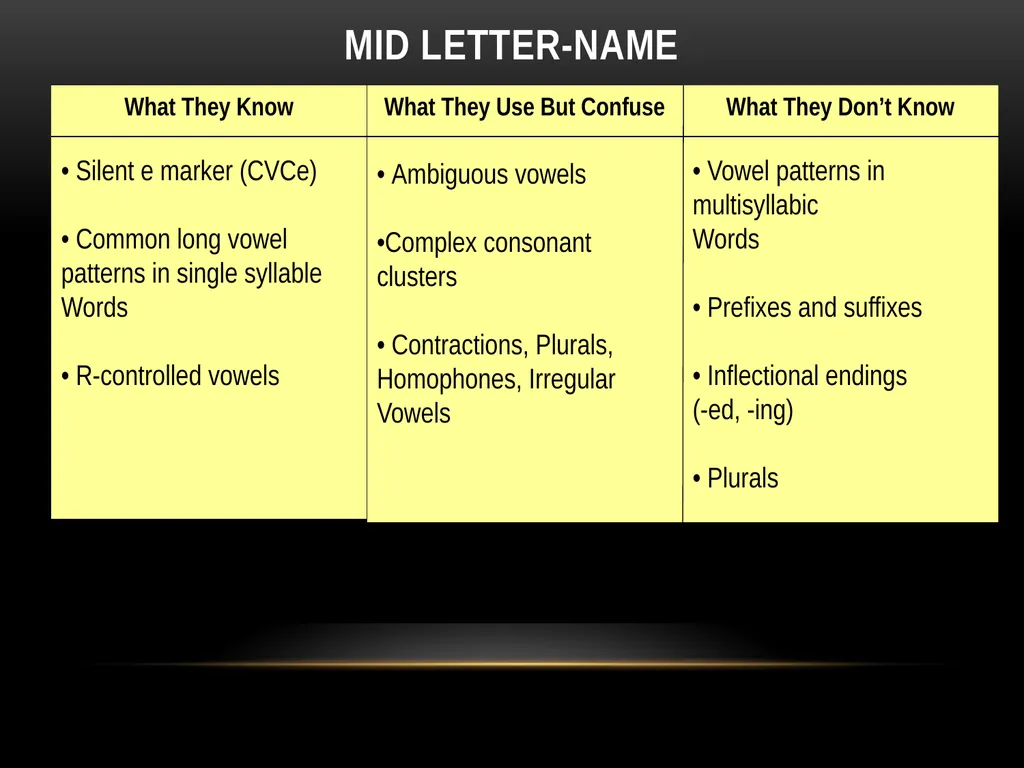
slide14. Mid letter-Name What They Know
• Silent e marker (CVCe)
• Common long vowel
patterns in single syllable
Words
• R-controlled vowels What They Use But Confuse
• Ambiguous vowels
•Complex consonant clusters
• Contractions, Plurals, Homophones, Irregular Vowels What They Don’t Know
• Vowel patterns in multisyllabic
Words
• Prefixes and suffixes
• Inflectional endings
(-ed, -ing)
• Plurals<br>
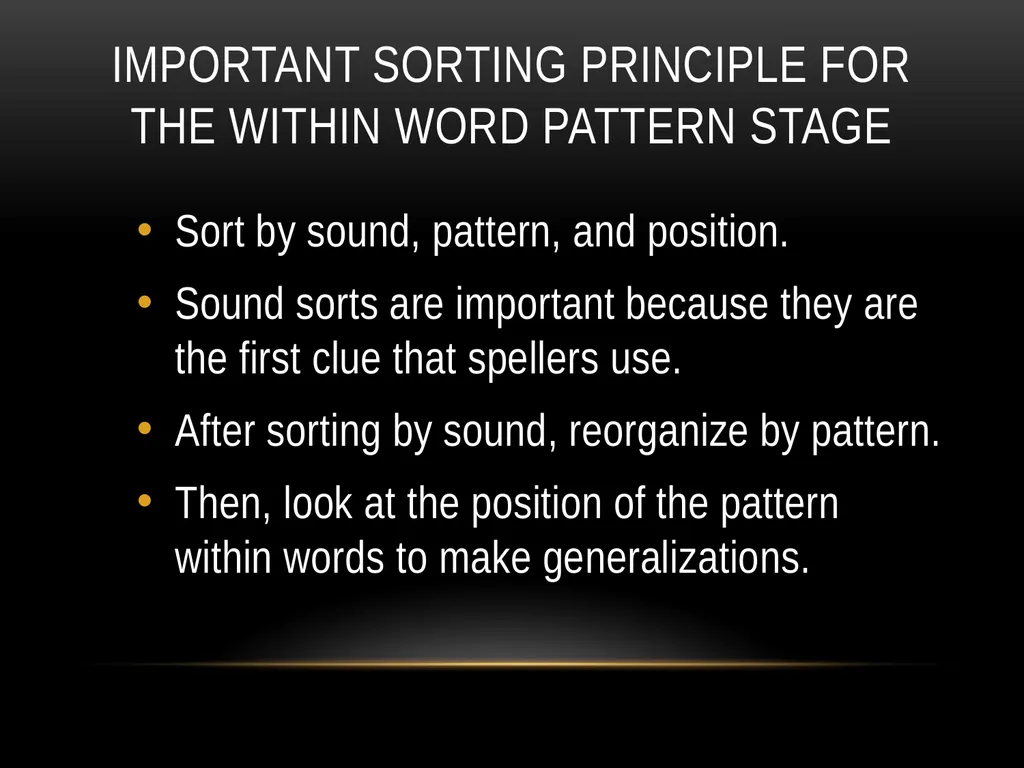
slide15. Important sorting principle for the within word pattern stage Sort by sound, pattern, and position.
Sound sorts are important because they are the first clue that spellers use.
After sorting by sound, reorganize by pattern.
Then, look at the position of the pattern within words to make generalizations.<br>
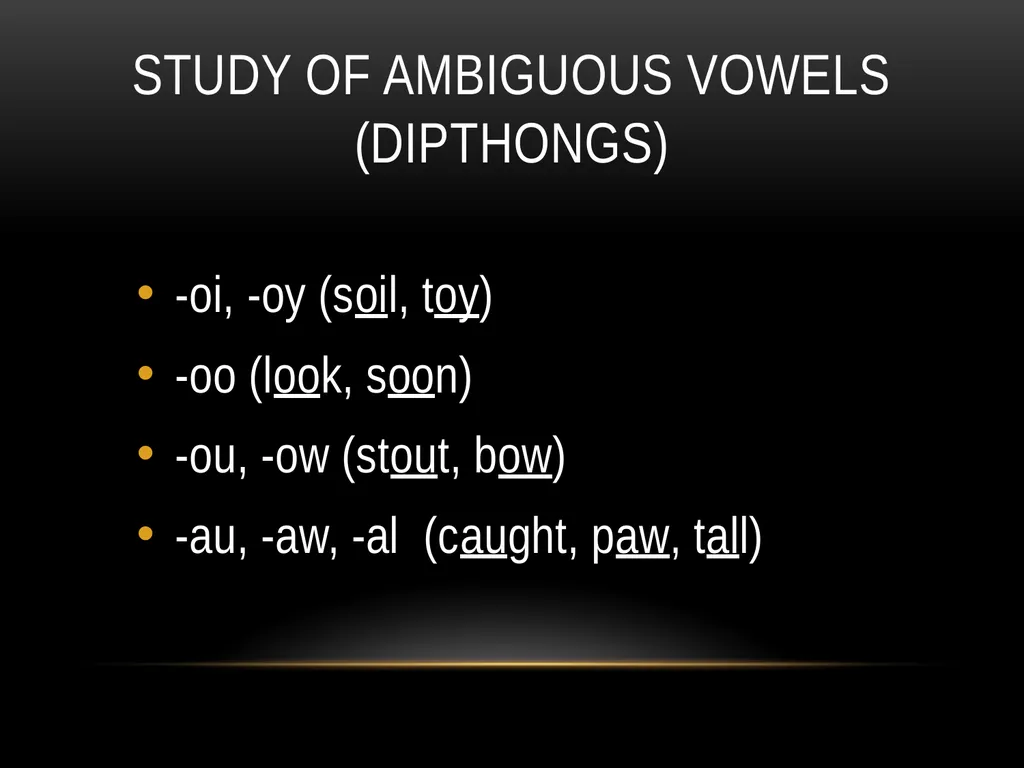
slide16. Study of ambiguous vowels (dipthongs) -oi, -oy (soil, toy)
-oo (look, soon)
-ou, -ow (stout, bow)
-au, -aw, -al (caught, paw, tall)<br>
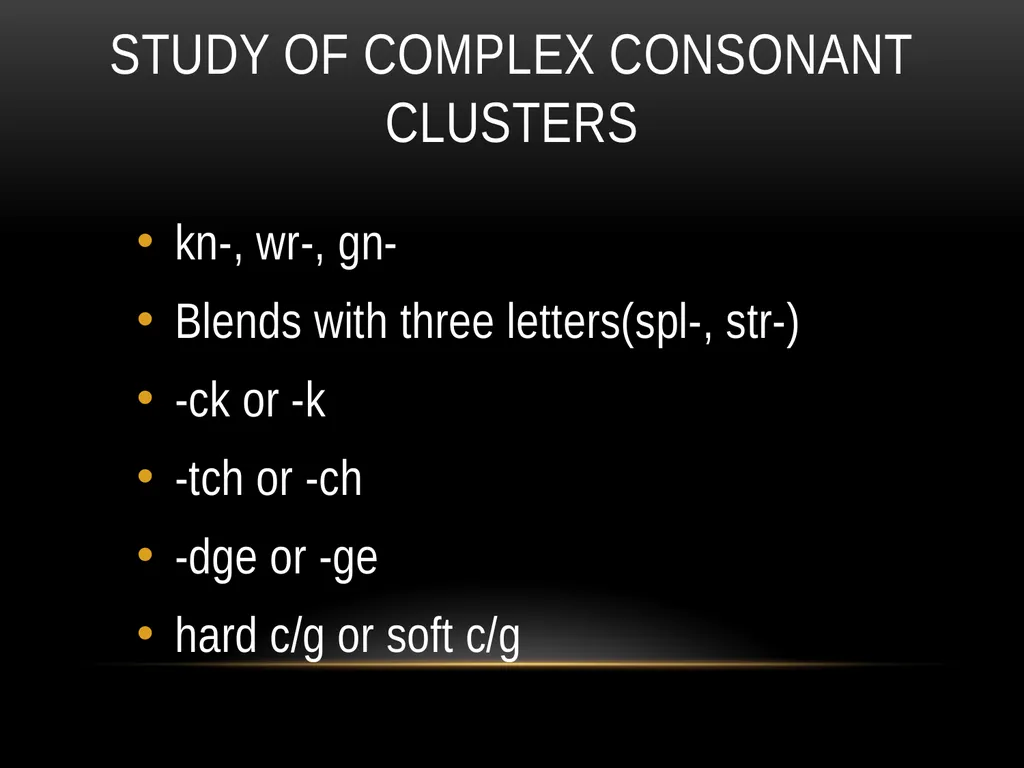
slide17. Study of complex consonant clusters kn-, wr-, gn-
Blends with three letters(spl-, str-)
-ck or -k
-tch or -ch
-dge or -ge
hard c/g or soft c/g<br>
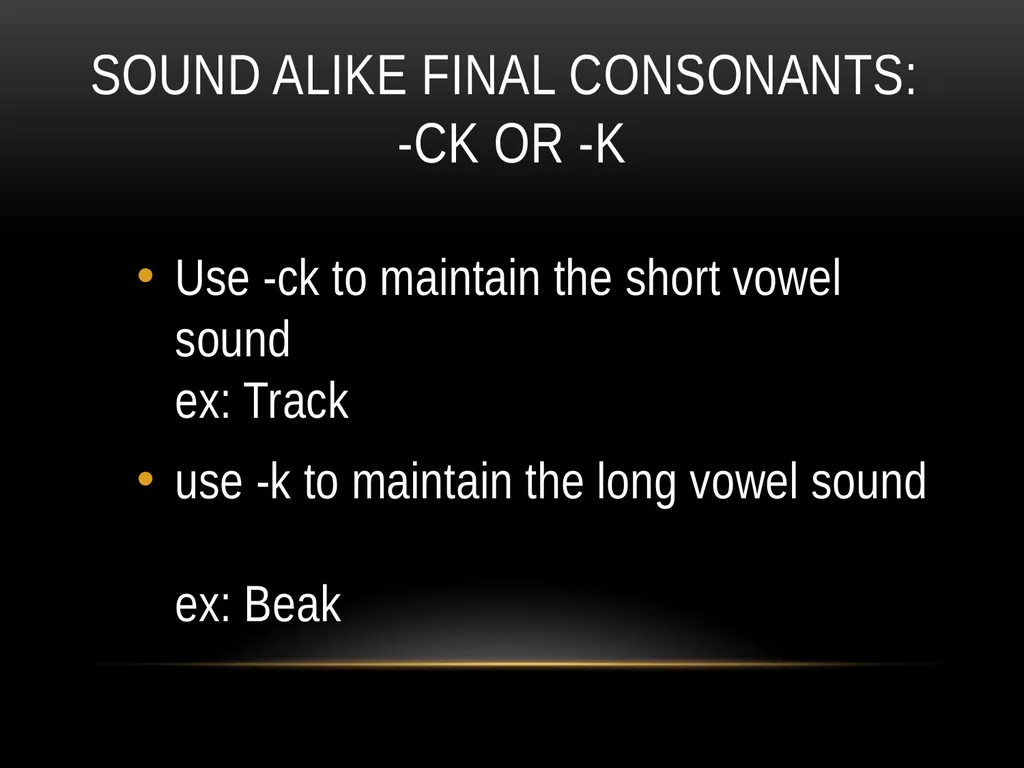
slide18. Sound alike final consonants: -ck or -k Use -ck to maintain the short vowel sound ex: Track
use -k to maintain the long vowel sound ex: Beak<br>
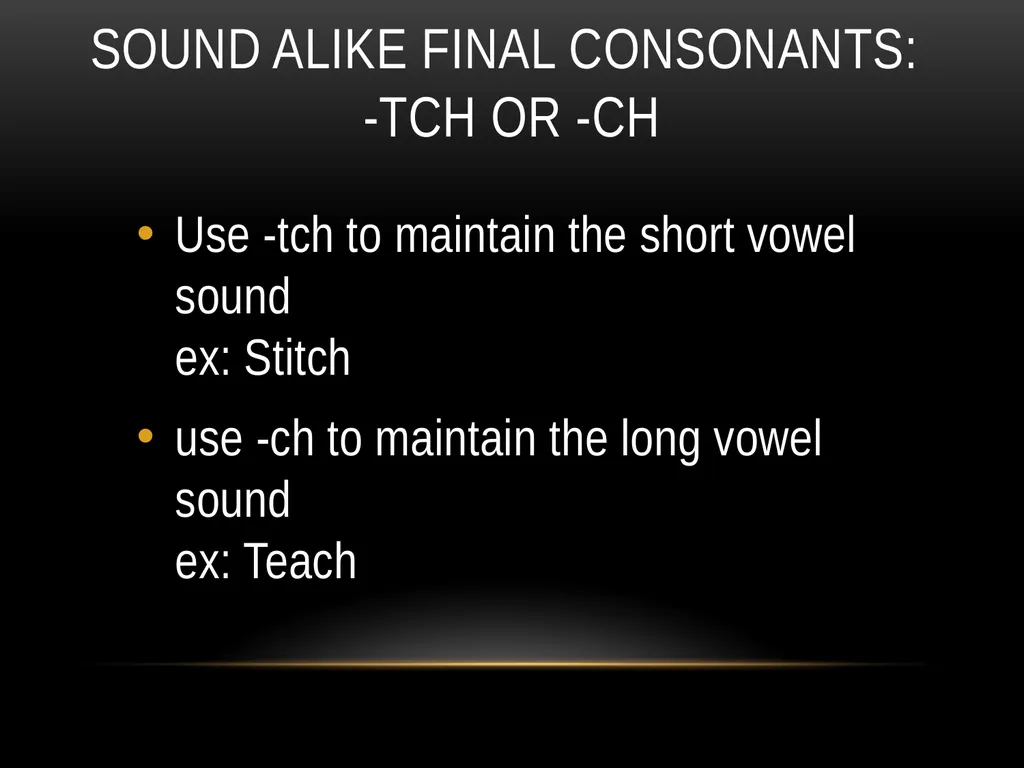
slide19. Sound alike final consonants: -tch or -ch Use -tch to maintain the short vowel soundex: Stitch
use -ch to maintain the long vowel soundex: Teach<br>
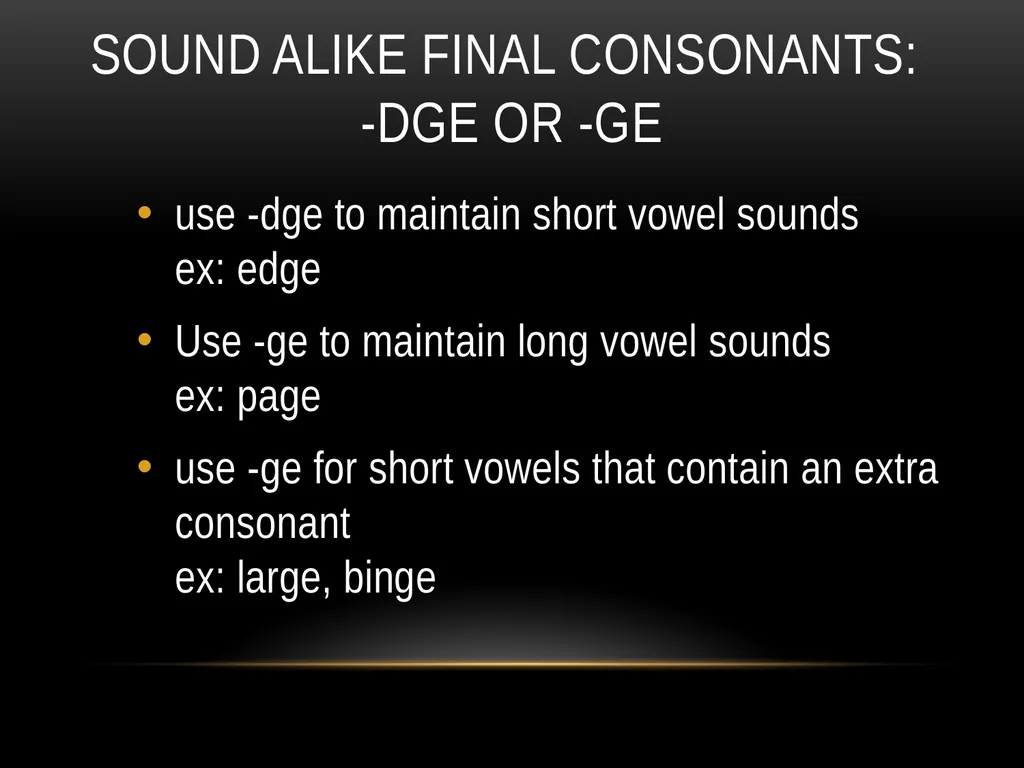
slide20. Sound alike final consonants: -dge or -ge use -dge to maintain short vowel sounds ex: edge
Use -ge to maintain long vowel soundsex: page
use -ge for short vowels that contain an extra consonantex: large, binge<br>
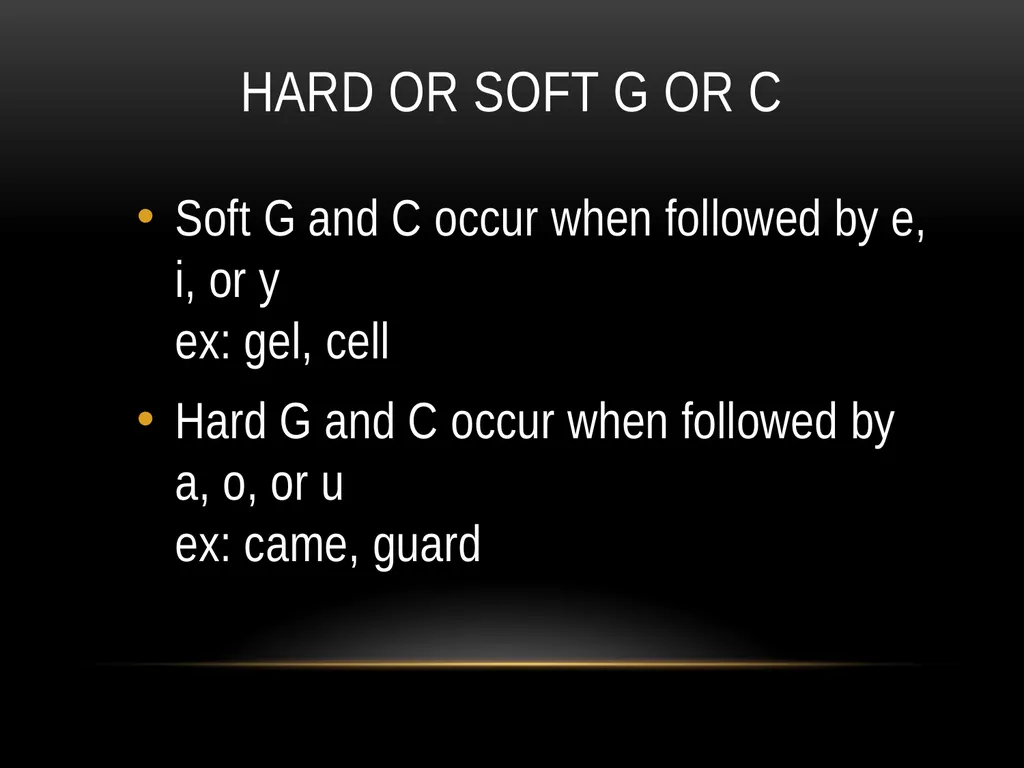
slide21. Hard or soft G or c Soft G and C occur when followed by e, i, or yex: gel, cell
Hard G and C occur when followed by a, o, or uex: came, guard<br>
slide22. Study of homophones Transitioning into the meaning tier of spelling
Still only use single syllable words<br>
slide23. Assessment Spelling ‘test’ (i.e. blind writing sort) at end of pattern study to see if the patterns are being utilized correctly
Monitor spelling and word usage in independent writing
Periodically use previously studied patterns in new sorts
Use word study notebooks for assessment to direct instruction<br>
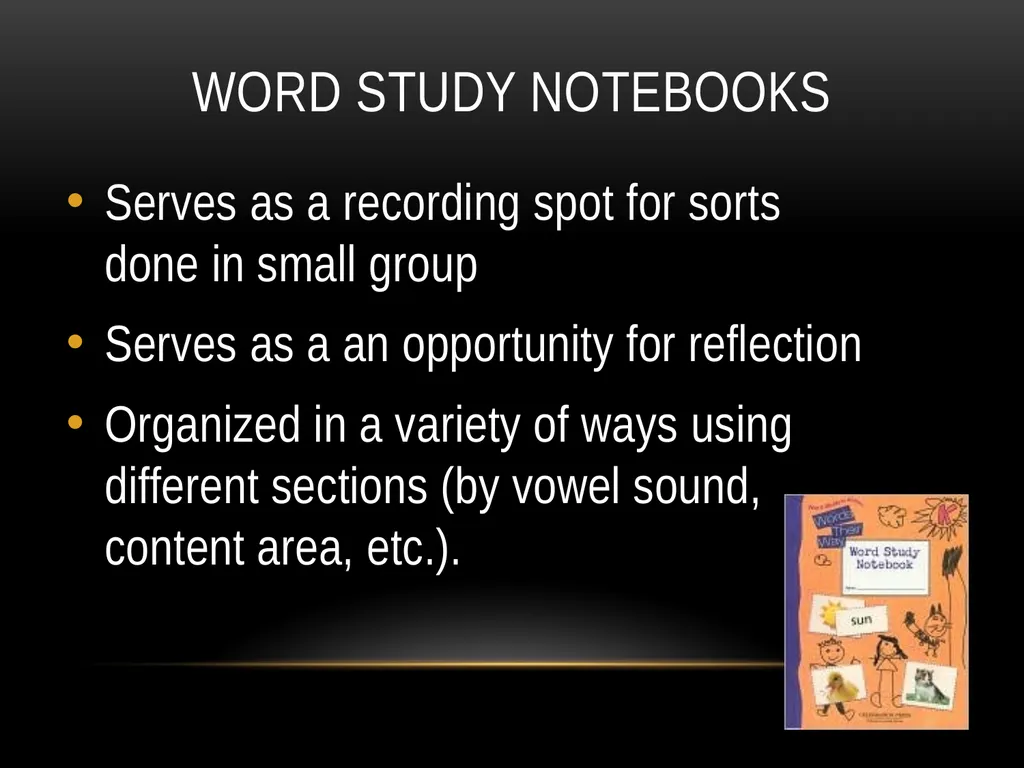
slide24. Word study notebooks Serves as a recording spot for sorts done in small group
Serves as a an opportunity for reflection
Organized in a variety of ways using different sections (by vowel sound, content area, etc.).<br>

K-2 Teachers Word study: Session fourWithin word pattern stage<br>
slide2. Tiers of development Meaning Pattern Alphabet Syllables and Affixes
Derivational Relations Within Word Pattern Emergent
Letter Name<br>
slide3. Transition to within word pattern stage Students begin to represent a long-vowel sound by playing around with letters
Ex. caek (cake), snale (snail)
Students correctly represent preconsonantal nasals
Ex. bump, sing<br>
slide4. Current theory suggests that the brain is a
pattern detector, not a rule applier.
Decoding a word occurs when the brain
recognizes a familiar spelling pattern or, if
the pattern itself is not familiar, searches
through its store of words with similar
patterns.
(Adams, 1990)<br>
slide5. The paomnnehil pweor of the hmuan mnind.
Aoccdrnig to a rscheearch at Cmabrigde
Uinervtisy, it deosn’t mttear in waht oredr
the ltteers in a wrod are, the olny iprmoetnt
tihng is taht the frist and lsat ltteer be at the
rghit pclae. The rset can be a taotl mses
and you can sitll raed it wouthit porbelm.
Tish is bcuseau the huamn mnid deos not
raed ervey lteter by istlef, but the wrod as a
wlohe.
Amzanig, huh?<br>
slide6. Within word pattern readers Read with more fluency and expression
Read in larger chunks (phrasal reading)
Begin to read silently
Finger point reading drops away<br>
slide7. Common within word pattern books Simple chapter books- Little Bear, Frances, Frog & Toad, Henry & Mudge
Informational series – Eyewitness Readers 1&2, Let’s Read & Find Out
I Can Read Books-Arthur, Wagon Wheels, Sam the Minuteman
Step Into Reading-Tut’s Mummy, Who Shot the President?
Novelettes -Junie B. Jones, Nate the Great, The Boxcar Children, The Magic Tree House, (series)
Quality literature-The Stories Julian Tells<br>
slide8. Within word pattern writers Writes with greater fluency (phrasal writing fluency rather than word by word)
The act of writing isn’t as laborious as in the LN stage
Paragraph(s) vs. sentence(s)
Consistently use capital letters and sentence punctuation accurately
Can focus more on ideas, greater depth<br>
slide9. Within word pattern spellers Come to understand that there are more letters than sounds in some words-- focus is on patterns in words
Difference in how the brain scans words
LN Speller: letter by letter-- b - a - t
WW Speller: onset/rime-- b - at<br>
slide10. Early within word pattern stage What They Know
• Beginning and ending
consonants
• Digraphs and blends
• Preconsonantal nasals
• Short vowels in CVC words What They Use But Confuse
• Long vowel e-marker CVCe
words (caek/cake)
• Common long vowel patters
(bote/boat) What They Don’t Know
• R-controlled vowels
• Ambiguous vowels
• Complex consonant clusters
• Homophones<br>
slide11. Study of long vowels Focus is on one vowel at a time
Best to start with the CVCe pattern then move onto other common long vowel patterns
Rotate through all long vowel patterns with each sound first contrasted with the short vowel sound, then compare different long vowel patterns<br>
slide12. Mid letter-Name What They Know
• Silent e marker (CVCe)
• Common long vowel
patterns in single syllable
words What They Use But Confuse
R-controlled vowels What They Don’t Know
• Ambiguous vowels
•Complex consonant clusters
• Homophones<br>
slide13. Study of R-controlled vowels Instruction begins with contrasting words that have the initial consonant r-blend with r-controlled vowels. ex: grill vs. girl
Focus is on how the r can “rob” a vowel of its normal sound or make two different vowels sound the same. ex: Fir, fur<br>
slide14. Mid letter-Name What They Know
• Silent e marker (CVCe)
• Common long vowel
patterns in single syllable
Words
• R-controlled vowels What They Use But Confuse
• Ambiguous vowels
•Complex consonant clusters
• Contractions, Plurals, Homophones, Irregular Vowels What They Don’t Know
• Vowel patterns in multisyllabic
Words
• Prefixes and suffixes
• Inflectional endings
(-ed, -ing)
• Plurals<br>
slide15. Important sorting principle for the within word pattern stage Sort by sound, pattern, and position.
Sound sorts are important because they are the first clue that spellers use.
After sorting by sound, reorganize by pattern.
Then, look at the position of the pattern within words to make generalizations.<br>
slide16. Study of ambiguous vowels (dipthongs) -oi, -oy (soil, toy)
-oo (look, soon)
-ou, -ow (stout, bow)
-au, -aw, -al (caught, paw, tall)<br>
slide17. Study of complex consonant clusters kn-, wr-, gn-
Blends with three letters(spl-, str-)
-ck or -k
-tch or -ch
-dge or -ge
hard c/g or soft c/g<br>
slide18. Sound alike final consonants: -ck or -k Use -ck to maintain the short vowel sound ex: Track
use -k to maintain the long vowel sound ex: Beak<br>
slide19. Sound alike final consonants: -tch or -ch Use -tch to maintain the short vowel soundex: Stitch
use -ch to maintain the long vowel soundex: Teach<br>
slide20. Sound alike final consonants: -dge or -ge use -dge to maintain short vowel sounds ex: edge
Use -ge to maintain long vowel soundsex: page
use -ge for short vowels that contain an extra consonantex: large, binge<br>
slide21. Hard or soft G or c Soft G and C occur when followed by e, i, or yex: gel, cell
Hard G and C occur when followed by a, o, or uex: came, guard<br>
slide22. Study of homophones Transitioning into the meaning tier of spelling
Still only use single syllable words<br>
slide23. Assessment Spelling ‘test’ (i.e. blind writing sort) at end of pattern study to see if the patterns are being utilized correctly
Monitor spelling and word usage in independent writing
Periodically use previously studied patterns in new sorts
Use word study notebooks for assessment to direct instruction<br>
slide24. Word study notebooks Serves as a recording spot for sorts done in small group
Serves as a an opportunity for reflection
Organized in a variety of ways using different sections (by vowel sound, content area, etc.).<br>