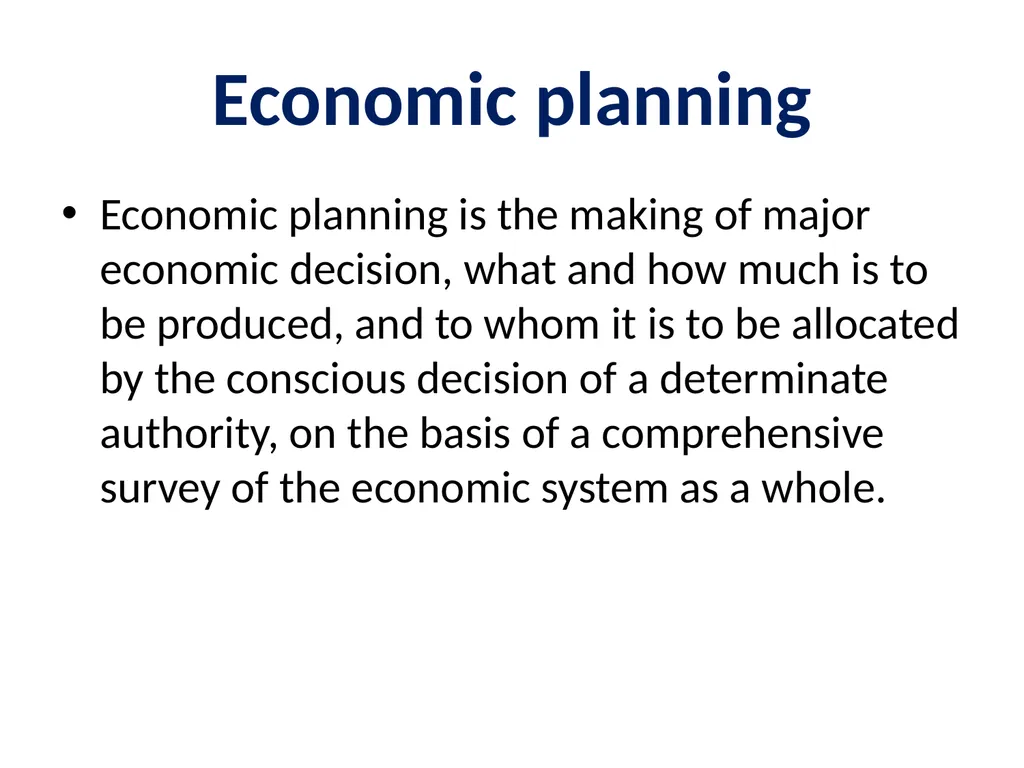
Economic planning Economic planning is the making
Description: Economic planning Economic planning is the making of major economic decision, what and how much is to be produced, and to whom it is to be allocated by the conscious decision of a determinate authority, on the basis of a comprehensive
Related Topics
Download Presentation
"Economic planning Economic planning is the making" is the property of its rightful owner. Permission is granted to download and print the materials on this website for personal, non-commercial use only, and to display it on your personal computer provided you do not modify the materials and that you retain all copyright notices contained in the materials. By downloading content from our website, you accept the terms of this agreement.
Presentation Transcript
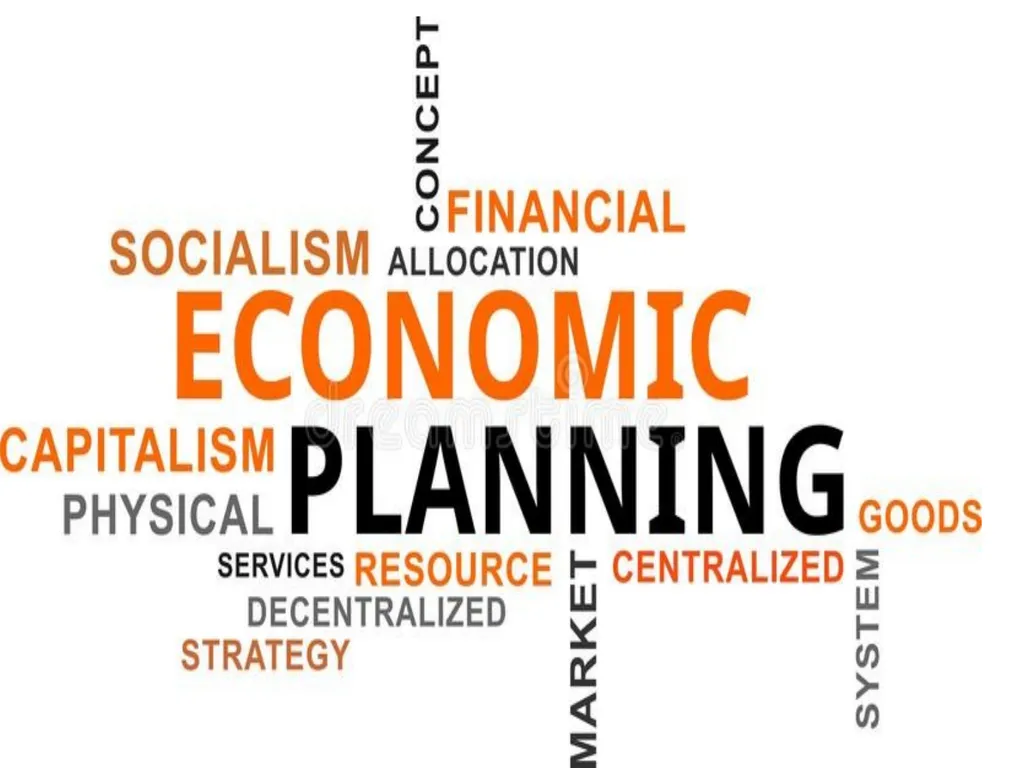
slide3. Economic planning Economic planning is the making of major economic decision, what and how much is to be produced, and to whom it is to be allocated by the conscious decision of a determinate authority, on the basis of a comprehensive survey of the economic system as a whole.<br>
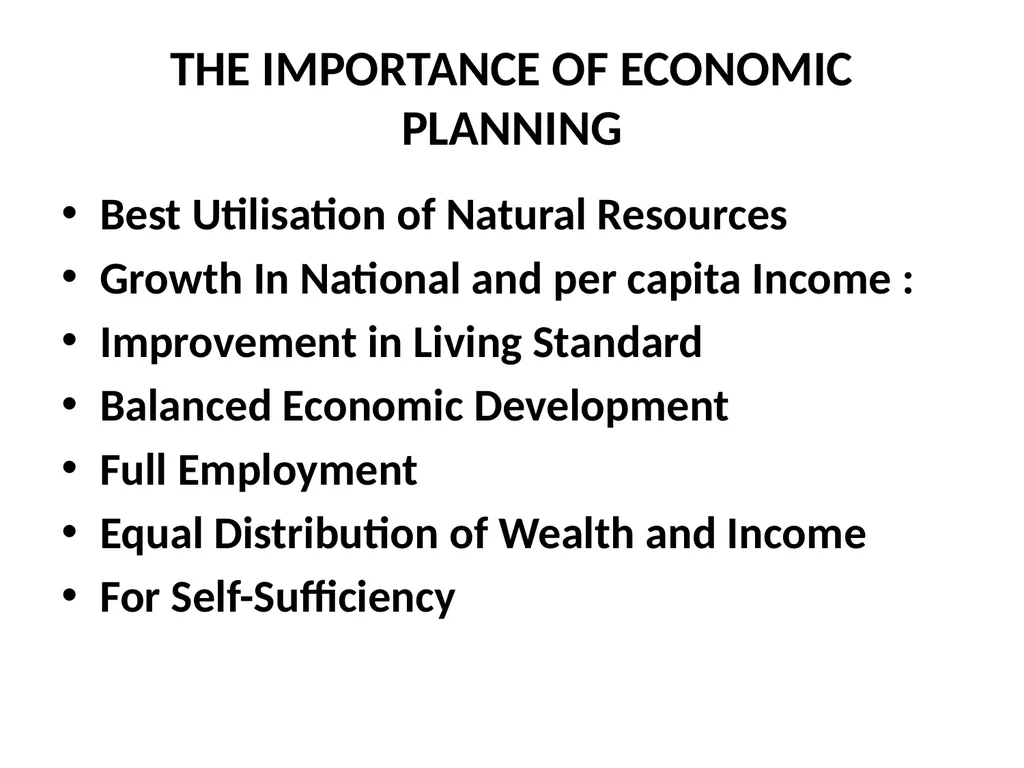
slide5. THE IMPORTANCE OF ECONOMIC PLANNING Best Utilisation of Natural Resources
Growth In National and per capita Income :
Improvement in Living Standard
Balanced Economic Development
Full Employment
Equal Distribution of Wealth and Income
For Self-Sufficiency<br>
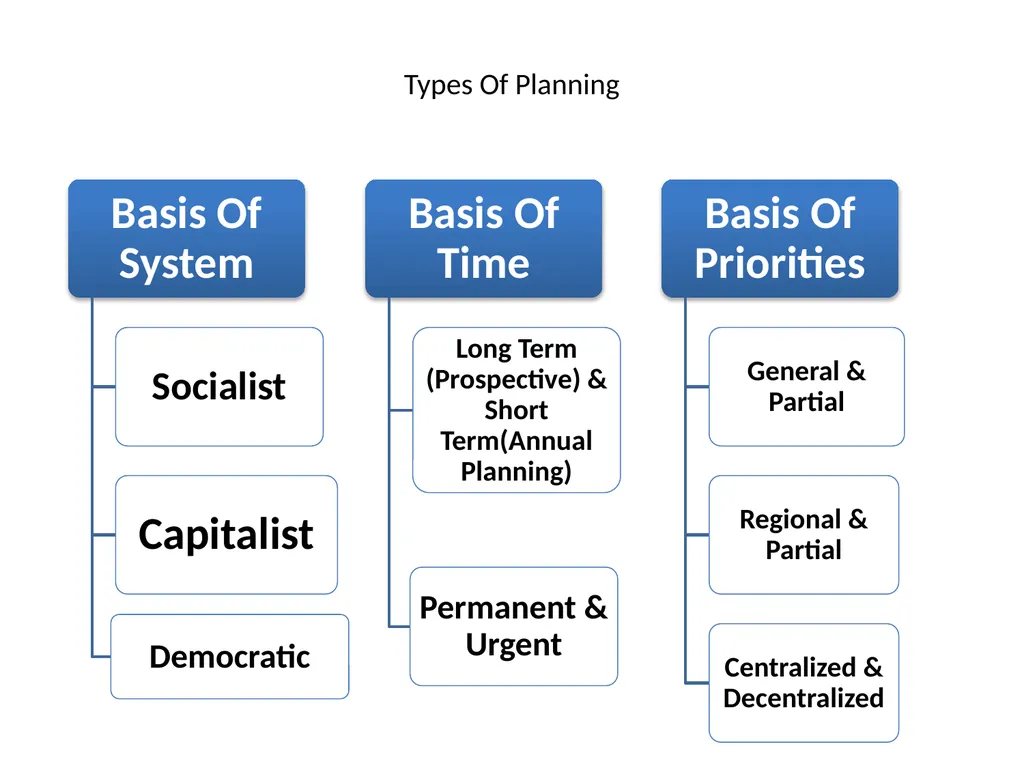
slide6. Types Of Planning<br>
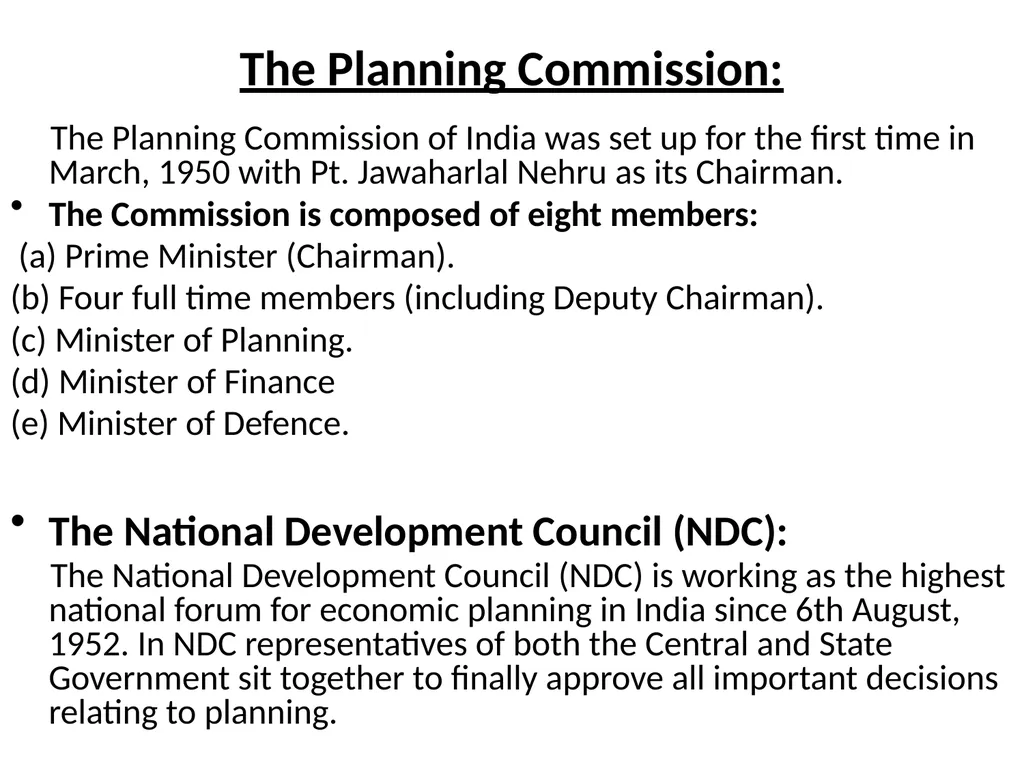
slide7. The Planning Commission: The Planning Commission of India was set up for the first time in March, 1950 with Pt. Jawaharlal Nehru as its Chairman.
The Commission is composed of eight members:
(a)Â Prime Minister (Chairman).
(b)Â Four full time members (including Deputy Chairman).
(c)Â Minister of Planning.
(d)Â Minister of Finance
(e)Â Minister of Defence.
The National Development Council (NDC):
The National Development Council (NDC) is working as the highest national forum for economic planning in India since 6th August, 1952. In NDC representatives of both the Central and State Government sit together to finally approve all important decisions relating to planning.<br>
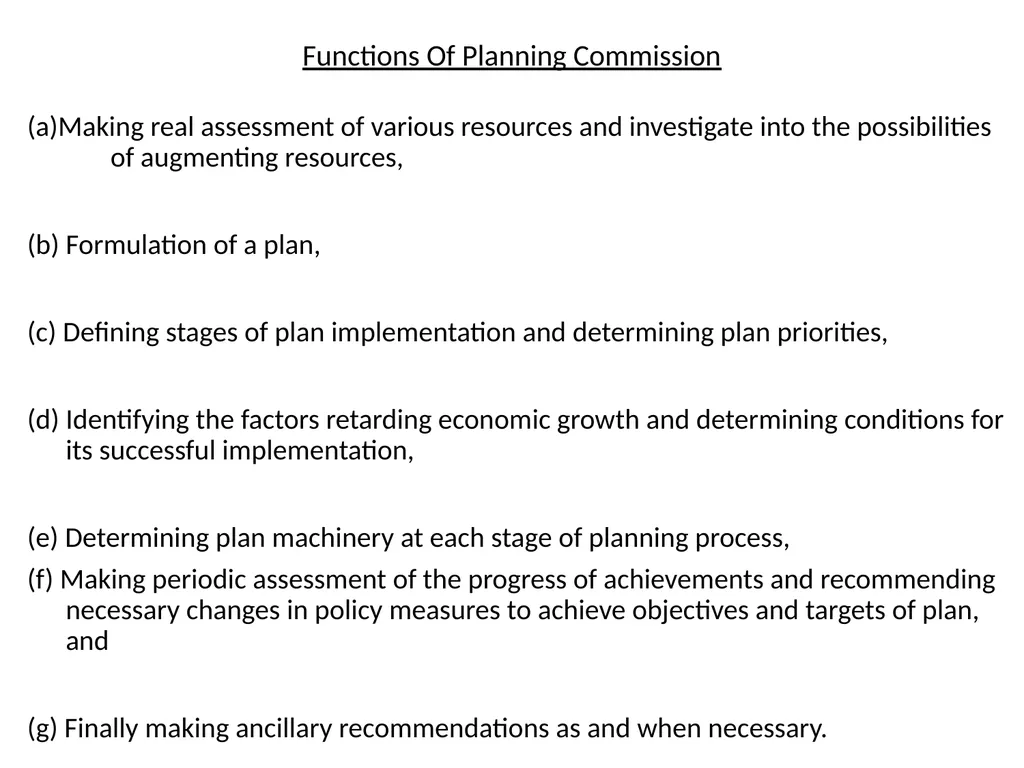
slide8. Functions Of Planning Commission (a)Making real assessment of various resources and investigate into the possibilities of augmenting resources,
(b) Formulation of a plan,
(c) Defining stages of plan implementation and determining plan priorities,
(d) Identifying the factors retarding economic growth and determining conditions for its successful implementation,
(e) Determining plan machinery at each stage of planning process,
(f) Making periodic assessment of the progress of achievements and recommending necessary changes in policy measures to achieve objectives and targets of plan, and
(g) Finally making ancillary recommendations as and when necessary.<br>
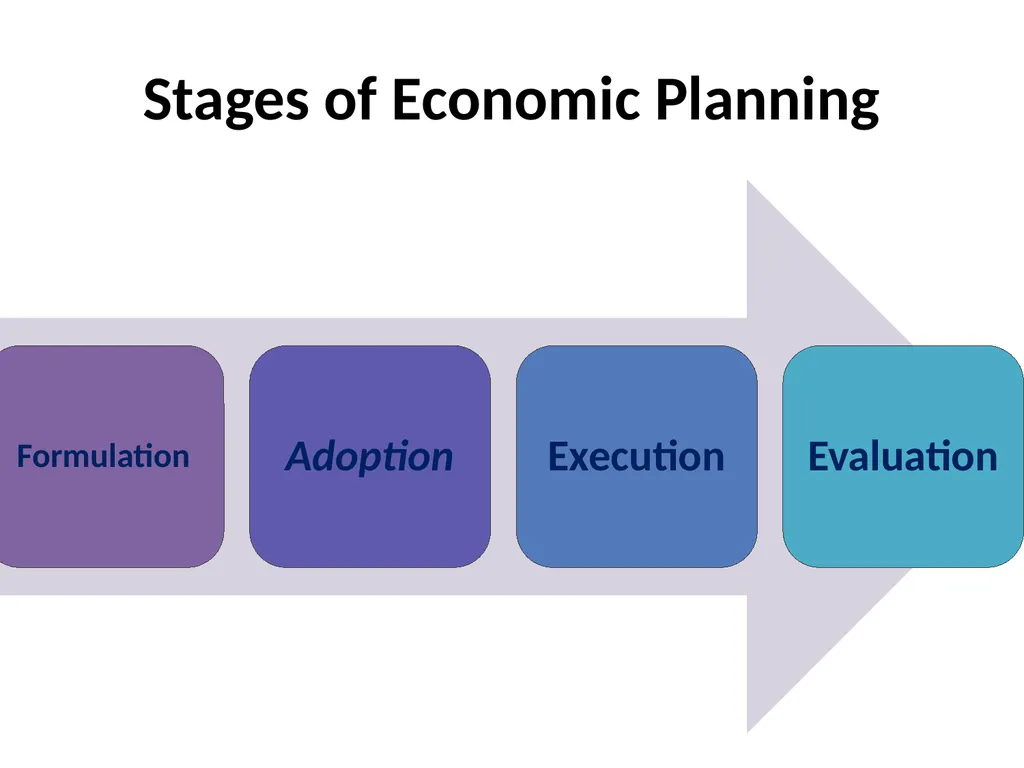
slide9. Stages of Economic Planning<br>
slide5. THE IMPORTANCE OF ECONOMIC PLANNING Best Utilisation of Natural Resources
Growth In National and per capita Income :
Improvement in Living Standard
Balanced Economic Development
Full Employment
Equal Distribution of Wealth and Income
For Self-Sufficiency<br>
slide6. Types Of Planning<br>
slide7. The Planning Commission: The Planning Commission of India was set up for the first time in March, 1950 with Pt. Jawaharlal Nehru as its Chairman.
The Commission is composed of eight members:
(a)Â Prime Minister (Chairman).
(b)Â Four full time members (including Deputy Chairman).
(c)Â Minister of Planning.
(d)Â Minister of Finance
(e)Â Minister of Defence.
The National Development Council (NDC):
The National Development Council (NDC) is working as the highest national forum for economic planning in India since 6th August, 1952. In NDC representatives of both the Central and State Government sit together to finally approve all important decisions relating to planning.<br>
slide8. Functions Of Planning Commission (a)Making real assessment of various resources and investigate into the possibilities of augmenting resources,
(b) Formulation of a plan,
(c) Defining stages of plan implementation and determining plan priorities,
(d) Identifying the factors retarding economic growth and determining conditions for its successful implementation,
(e) Determining plan machinery at each stage of planning process,
(f) Making periodic assessment of the progress of achievements and recommending necessary changes in policy measures to achieve objectives and targets of plan, and
(g) Finally making ancillary recommendations as and when necessary.<br>
slide9. Stages of Economic Planning<br>