Educational process in modern climatology within the web-GIS platform Climate Yulia Gordova, Valentina Gorbatenko, Evgeny Gordov, Yulia Martynova, Igor Okladnikov, Alexander Titov, and Tamara Shulgina (1) Institute of monitoring of
"Educational process in modern climatology within" is the property of its rightful owner. Permission is granted to
download and print the materials on this website for personal, non-commercial use only, and to display it
on your personal computer provided you do not modify the materials and that you retain all copyright
notices contained in the materials. By downloading content from our website, you accept the terms of this
agreement.
Presentation Transcript
01
Educational process in modern climatology within the web-GIS platform "Climate" Yulia Gordova, Valentina Gorbatenko, Evgeny Gordov, Yulia Martynova, Igor Okladnikov, Alexander Titov, and Tamara Shulgina
(1) Institute of monitoring of climatic and ecological systems SB RAS, Tomsk, Russian Federation (yulia@scert.ru),
(3) Tomsk State University, Tomsk, Russian Federation,
(4) Siberian Regional Hydrometeorological Research Institute, Novosibirsk, Russian Federation,
(2) Tomsk branch of Institute of Computational Technologies SB RAS, Novosibirsk, Russian Federation<br>
02
Preparation of future professionals in Earth system sciences in our institute:
organization of young scientists schools (School on Computational Information Technologies for Environmental Sciences CITES every two years)
usage of thematic informational computational systems (web-GIS based platform “Climate”)<br>
03
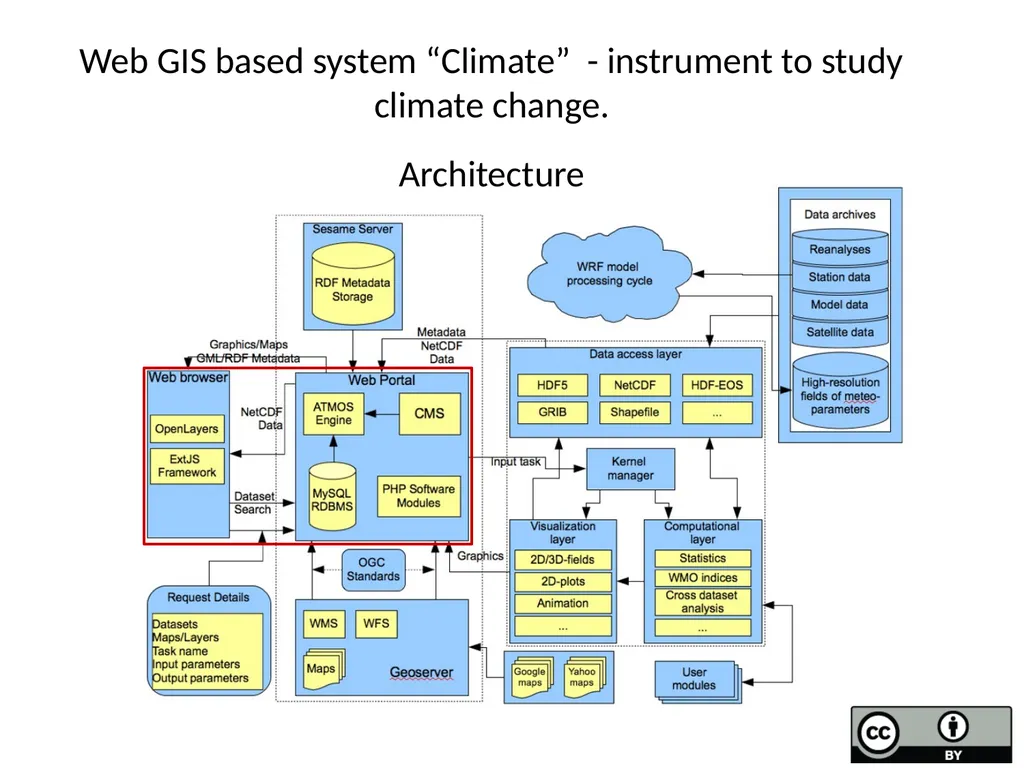
Web GIS based system “Climate” - instrument to study climate change.
Architecture<br>
04
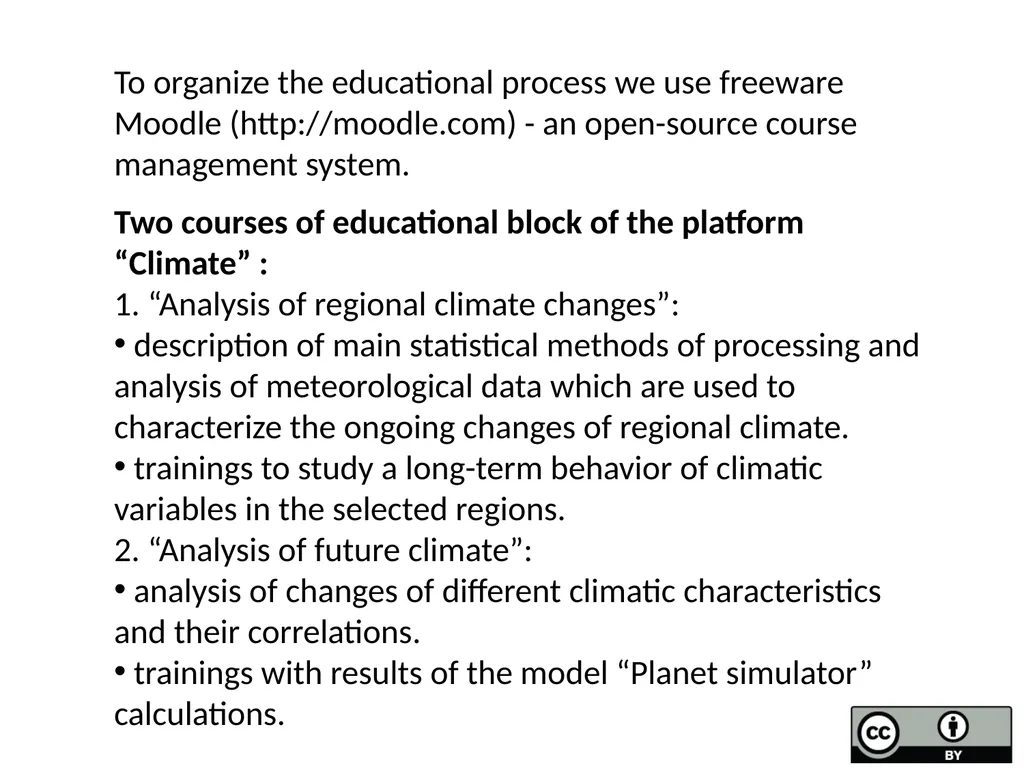
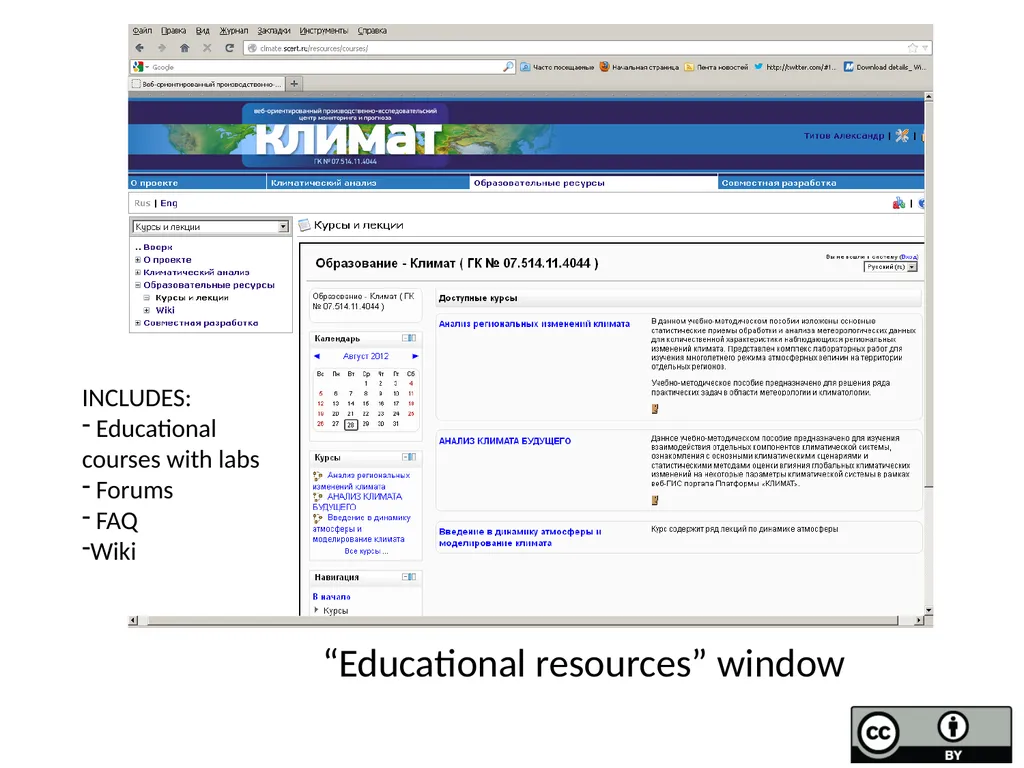
To organize the educational process we use freeware Moodle (http://moodle.com) - an open-source course management system.
Two courses of educational block of the platform “Climate” :
1. “Analysis of regional climate changes”:
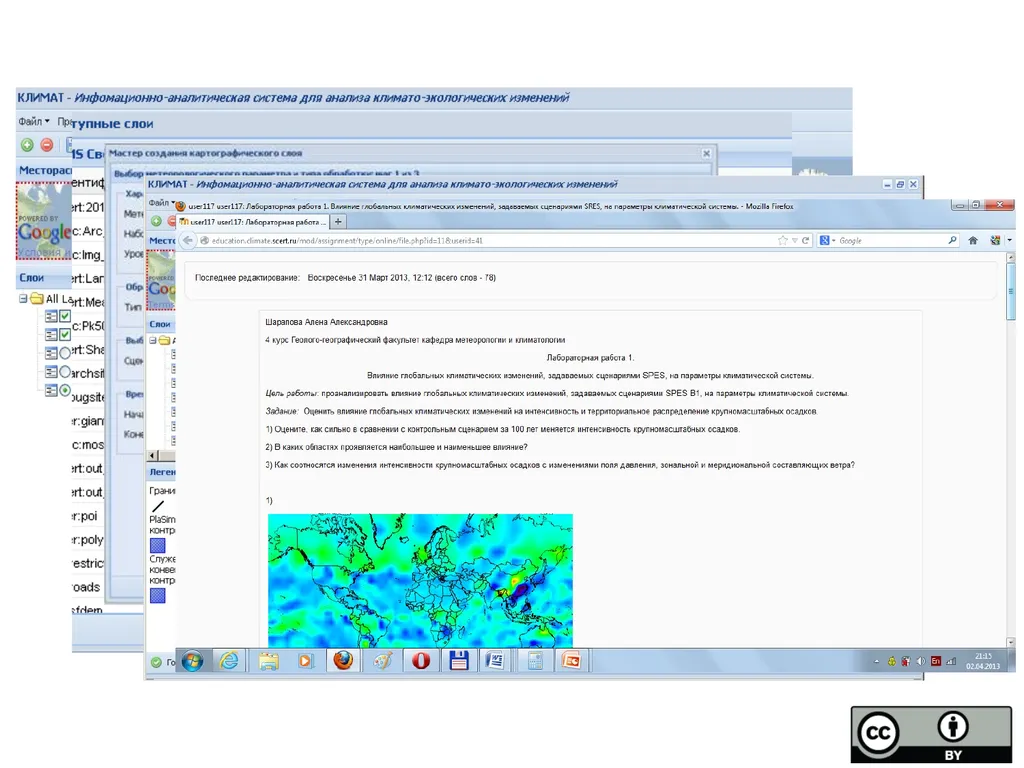
description of main statistical methods of processing and analysis of meteorological data which are used to characterize the ongoing changes of regional climate.
trainings to study a long-term behavior of climatic variables in the selected regions.
2. “Analysis of future climate”:
analysis of changes of different climatic characteristics and their correlations.
trainings with results of the model “Planet simulator” calculations.<br>
05
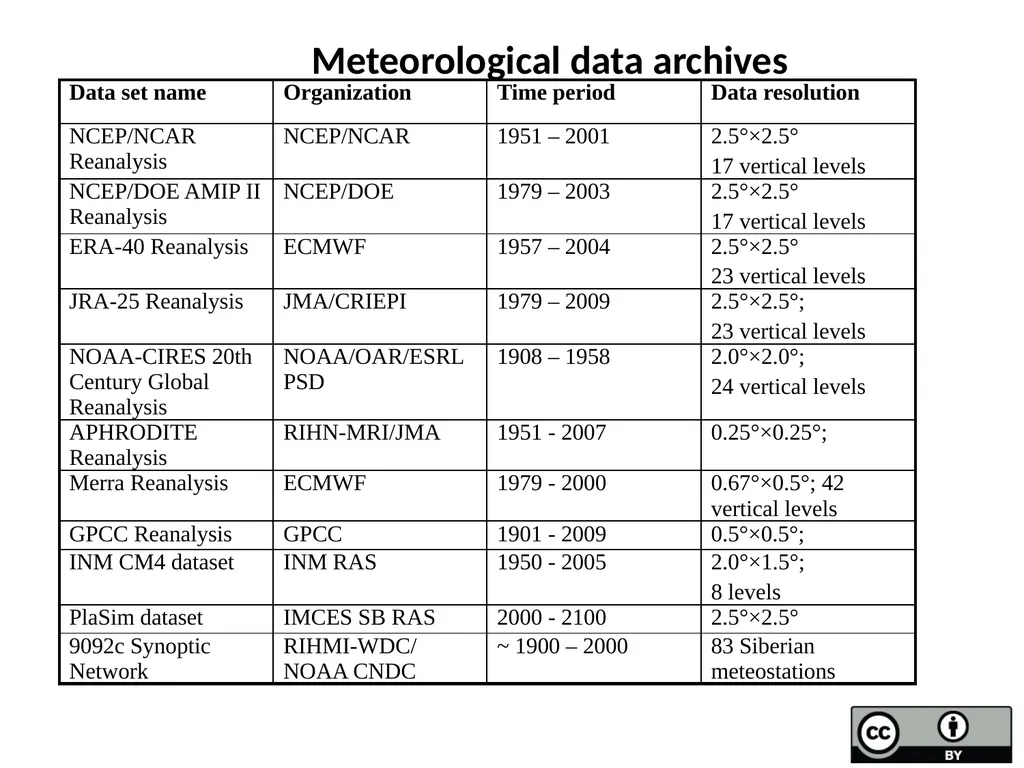
Meteorological data archives<br>
06
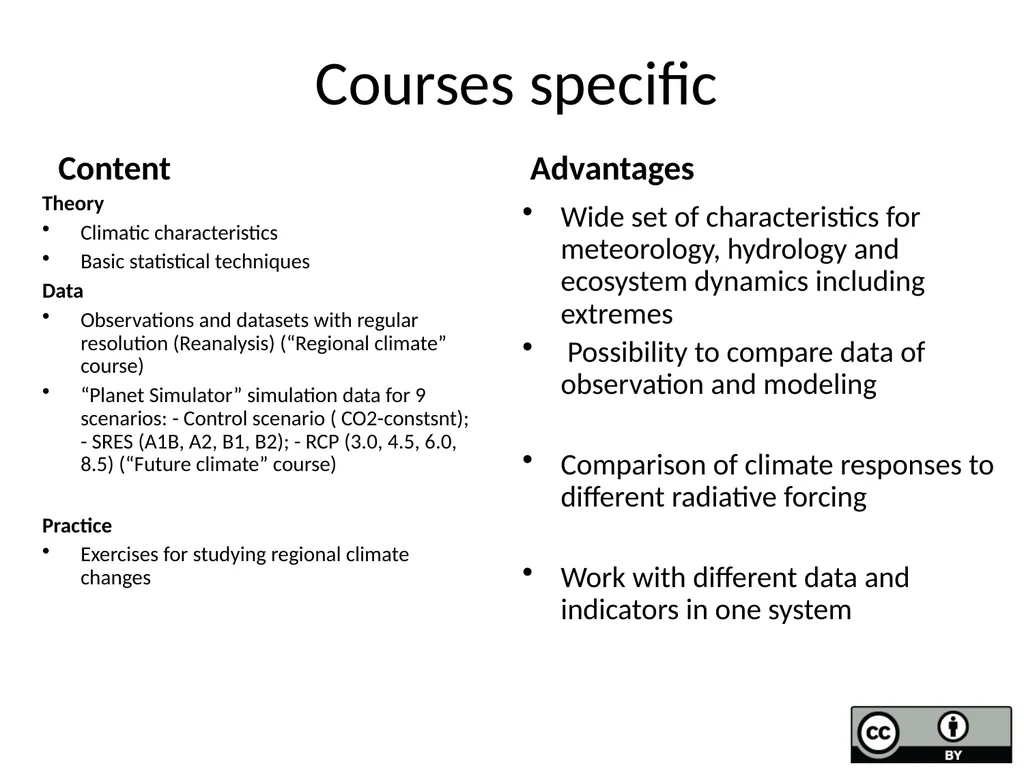
Courses specific Content Theory
Climatic characteristics
Basic statistical techniques
Data
Observations and datasets with regular resolution (Reanalysis) (“Regional climate” course)
“Planet Simulator” simulation data for 9 scenarios: - Control scenario ( CO2-constsnt); - SRES (A1B, A2, B1, B2); - RCP (3.0, 4.5, 6.0, 8.5) (“Future climate” course)
Practice
Exercises for studying regional climate changes Advantages Wide set of characteristics for meteorology, hydrology and ecosystem dynamics including extremes
Possibility to compare data of observation and modeling
Comparison of climate responses to different radiative forcing
Work with different data and indicators in one system<br>
Results A group of Tomsk State University students were subscribed for both educational courses. After reading the theoretical part they have to pass through trainings within the systems. By now this group has passed the first course.
Their results are sent to teachers to check their progress and to authors of the courses to find out weak points.
Advantages for students
- fresh point of view on familiar disciplines
acquaintance with modern research and modeling tools and approaches
chance to acquire new information and results by themselves
opportunity to conduct their own scientific research on the basis of the available information and theoretical material.<br>
10
PLANS
to prepare Interactive course on climate changes
to improve set of tasks in existing courses
to expand tools to include regional climate model<br>
11
Acknowledgements 1. APN project “Capacity building to study and address climate change induced extremes in Northern Asia”
[CBA2012-16NSY]
2. State contract of Russian Ministry of Education and Science
07.514.11.4044