
ELFT Training Packages for Primary Care -
Description: ELFT Training Packages for Primary Care - Psychiatric Emergencies - Responsible Clinician for contact: Frank Röhricht Associate Medical Director Psychiatric Emergencies Common manifestations of psychiatric conditions often encountered in
Related Topics
Download Presentation
"ELFT Training Packages for Primary Care -" is the property of its rightful owner. Permission is granted to download and print the materials on this website for personal, non-commercial use only, and to display it on your personal computer provided you do not modify the materials and that you retain all copyright notices contained in the materials. By downloading content from our website, you accept the terms of this agreement.
Presentation Transcript
slide1. ELFT Training Packages
for Primary Care
- Psychiatric Emergencies - Responsible Clinician for contact:
Frank Röhricht
Associate Medical Director<br>
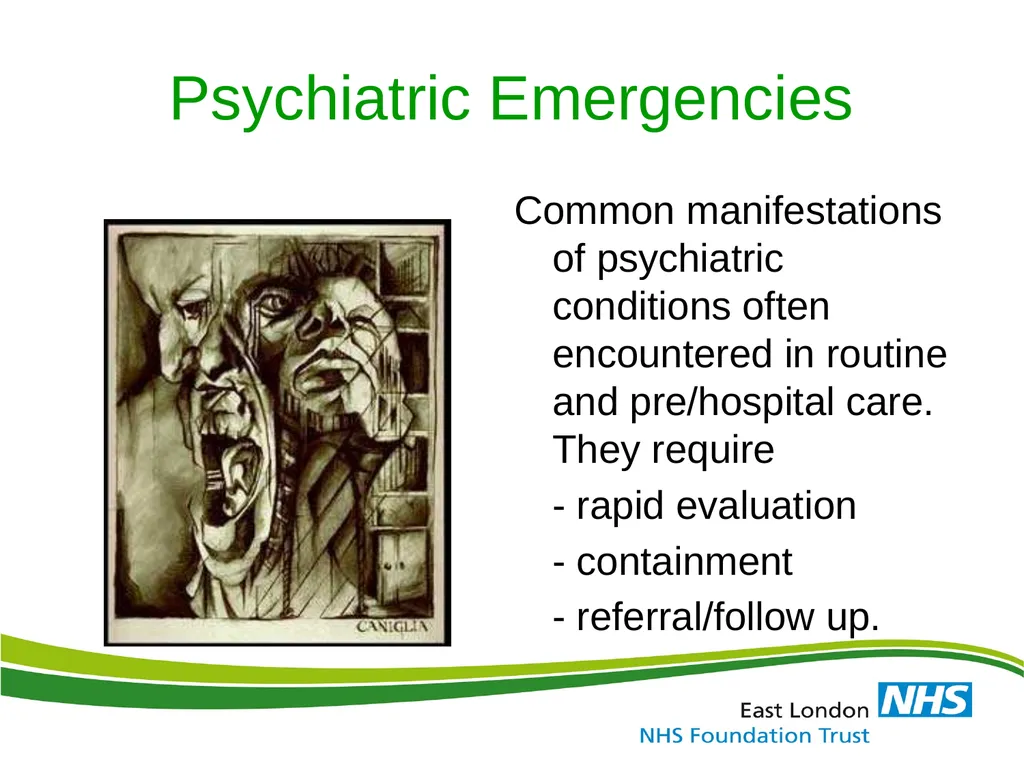
slide2. Psychiatric Emergencies Common manifestations of psychiatric conditions often encountered in routine and pre/hospital care. They require
- rapid evaluation
- containment
- referral/follow up.<br>
slide3. Definition A psychiatric emergency is any unusual behaviour, mood, perception or thought, which if not rapidly attended to may result in harm to a patient or others.<br>
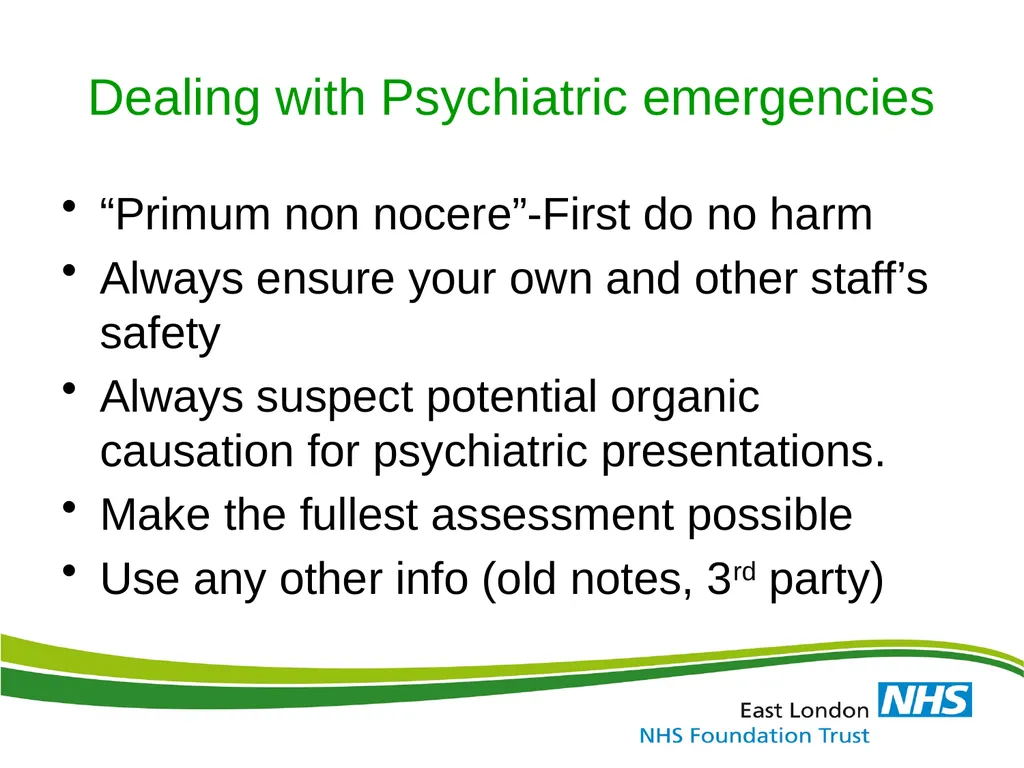
slide4. Dealing with Psychiatric emergencies “Primum non nocere”-First do no harm
Always ensure your own and other staff’s safety
Always suspect potential organic causation for psychiatric presentations.
Make the fullest assessment possible
Use any other info (old notes, 3rd party)<br>
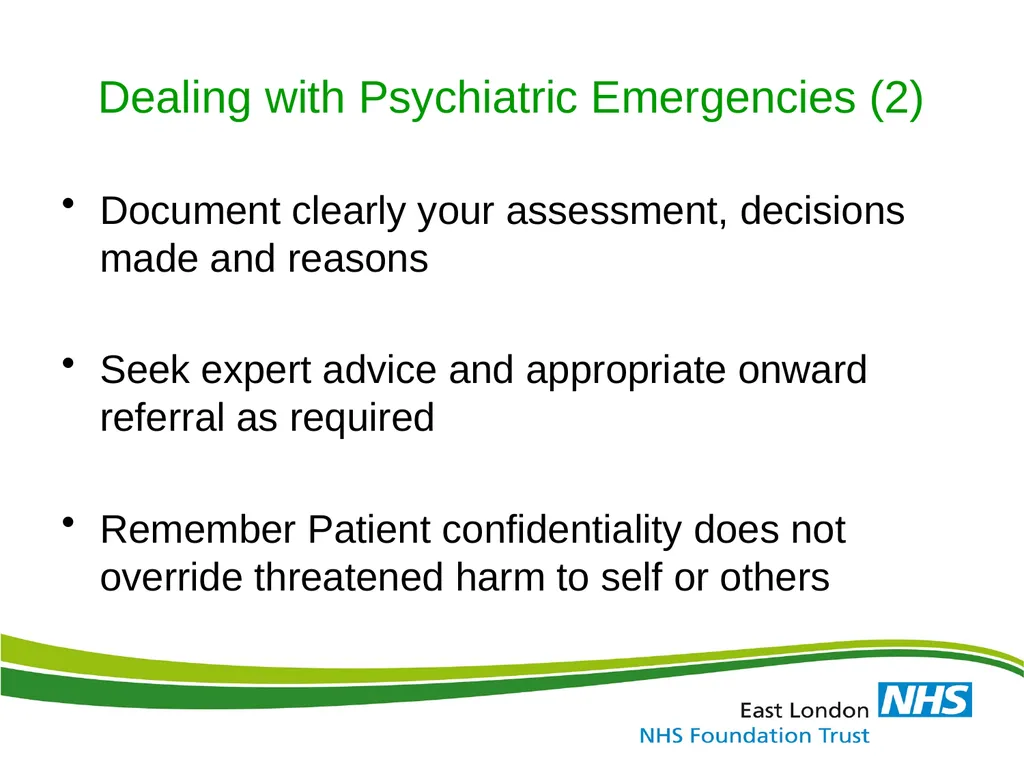
slide5. Dealing with Psychiatric Emergencies (2) Document clearly your assessment, decisions made and reasons
Seek expert advice and appropriate onward referral as required
Remember Patient confidentiality does not override threatened harm to self or others<br>
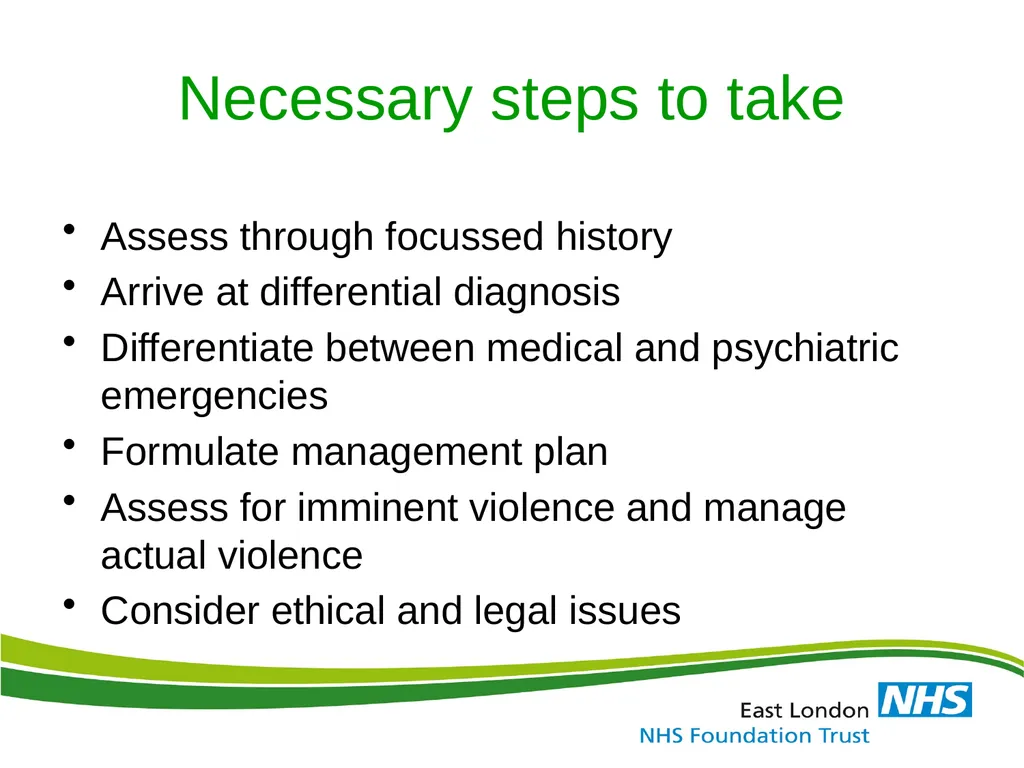
slide6. Necessary steps to take Assess through focussed history
Arrive at differential diagnosis
Differentiate between medical and psychiatric emergencies
Formulate management plan
Assess for imminent violence and manage actual violence
Consider ethical and legal issues<br>
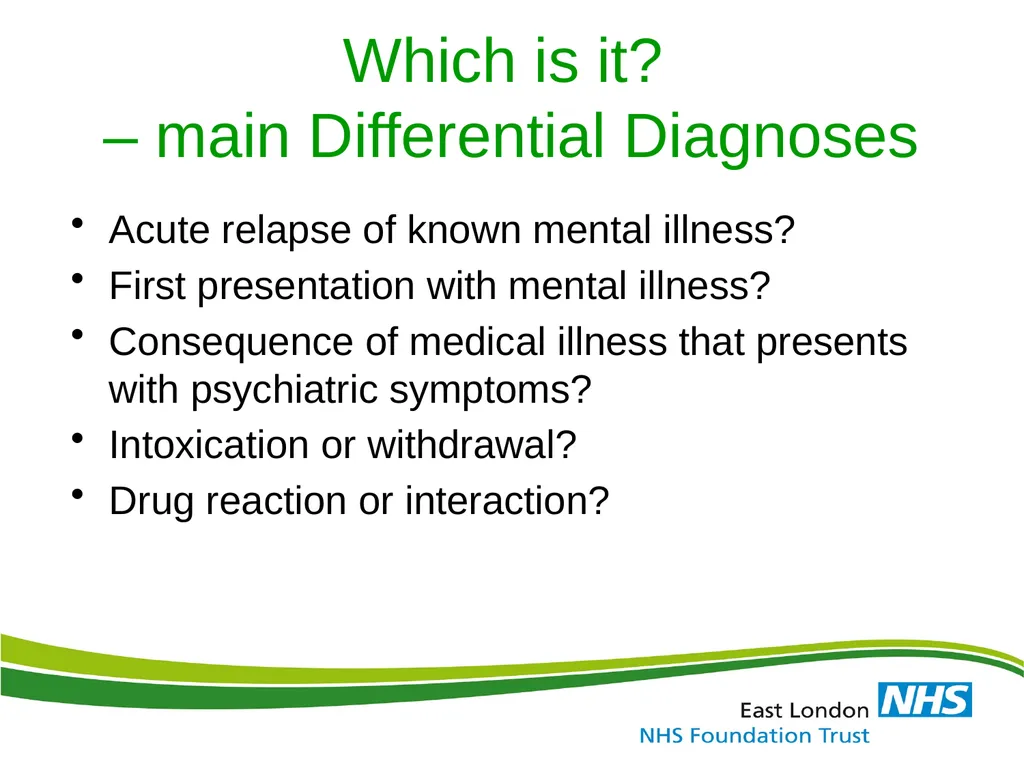
slide7. Which is it? – main Differential Diagnoses Acute relapse of known mental illness?
First presentation with mental illness?
Consequence of medical illness that presents with psychiatric symptoms?
Intoxication or withdrawal?
Drug reaction or interaction?<br>
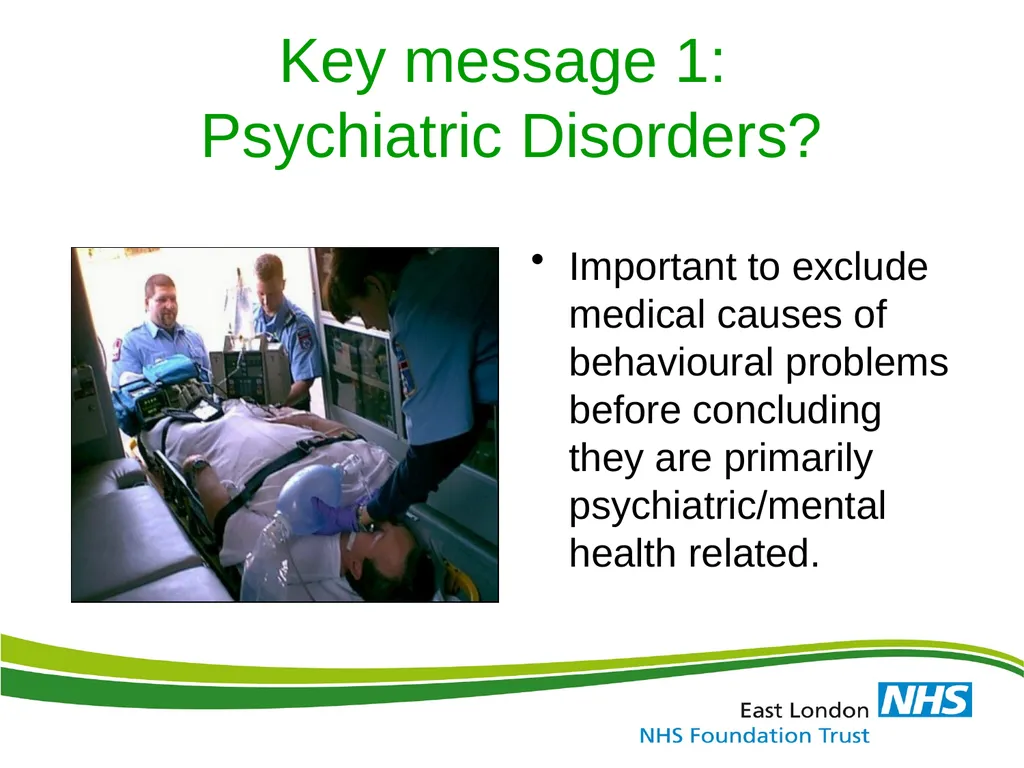
slide8. Key message 1: Psychiatric Disorders? Important to exclude medical causes of behavioural problems before concluding they are primarily psychiatric/mental health related.<br>
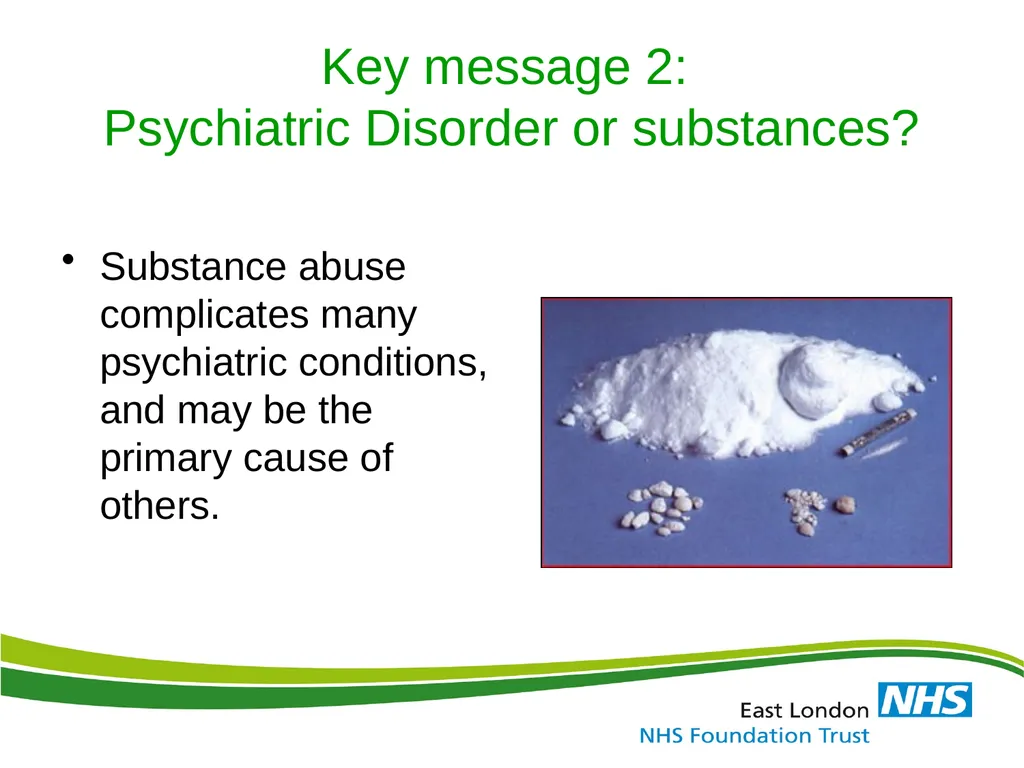
slide9. Key message 2: Psychiatric Disorder or substances? Substance abuse complicates many psychiatric conditions, and may be the primary cause of others.<br>
slide10. Structured Assessment History (and collateral history )
Mental State
Physical examination (Uncooperative agitated patients tend to aggravate staff, leading to inadequate/incomplete physical examination)
Investigations (Blood tests, ECG, X-Ray, etc. as required)<br>
slide11. Investigations FBC and Inflammatory markers
U&E, LFTs, Calcium, TFTs,
Blood Glucose
Alcometer
Urine drug screen
ECG, Chest x-ray, Spirometry
Brain imaging(CT/MRI) , EEG, LP<br>
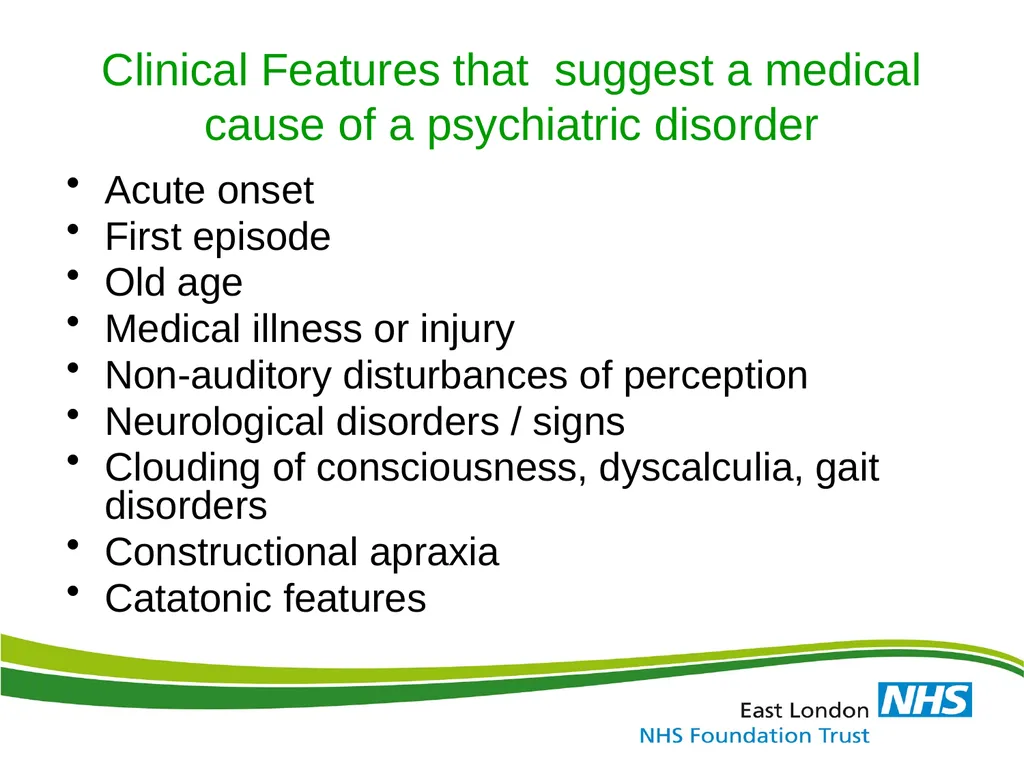
slide12. Clinical Features that suggest a medical cause of a psychiatric disorder Acute onset
First episode
Old age
Medical illness or injury
Non-auditory disturbances of perception
Neurological disorders / signs
Clouding of consciousness, dyscalculia, gait disorders
Constructional apraxia
Catatonic features<br>
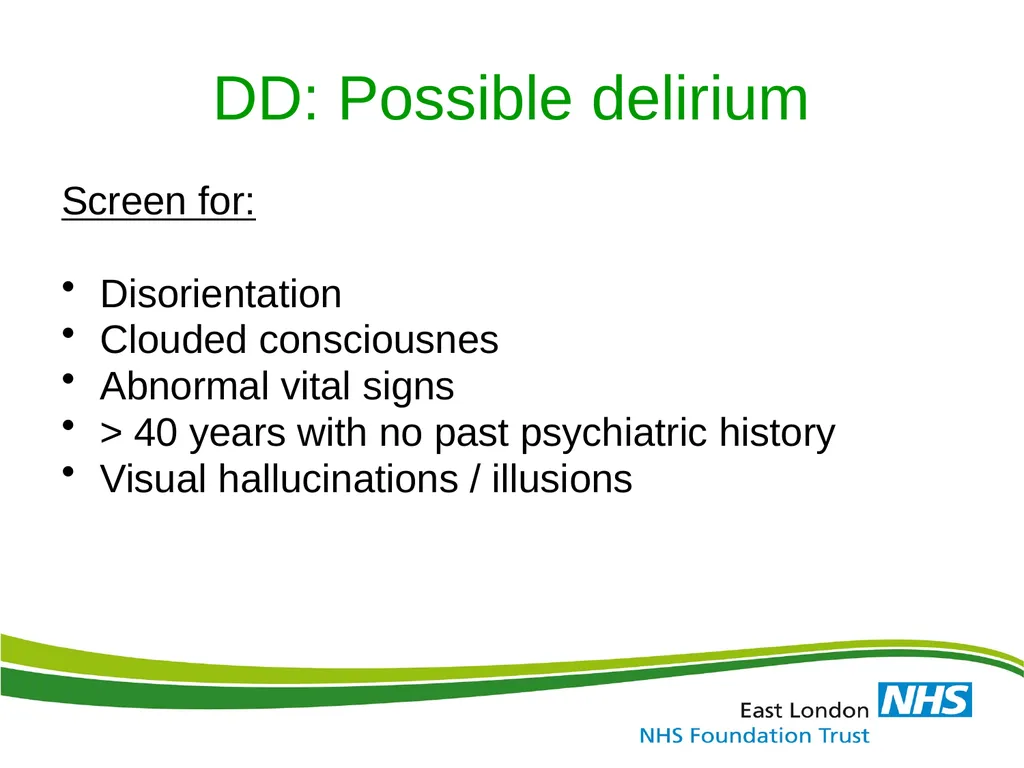
slide13. DD: Possible delirium Screen for:
Disorientation
Clouded consciousnes
Abnormal vital signs
> 40 years with no past psychiatric history
Visual hallucinations / illusions<br>
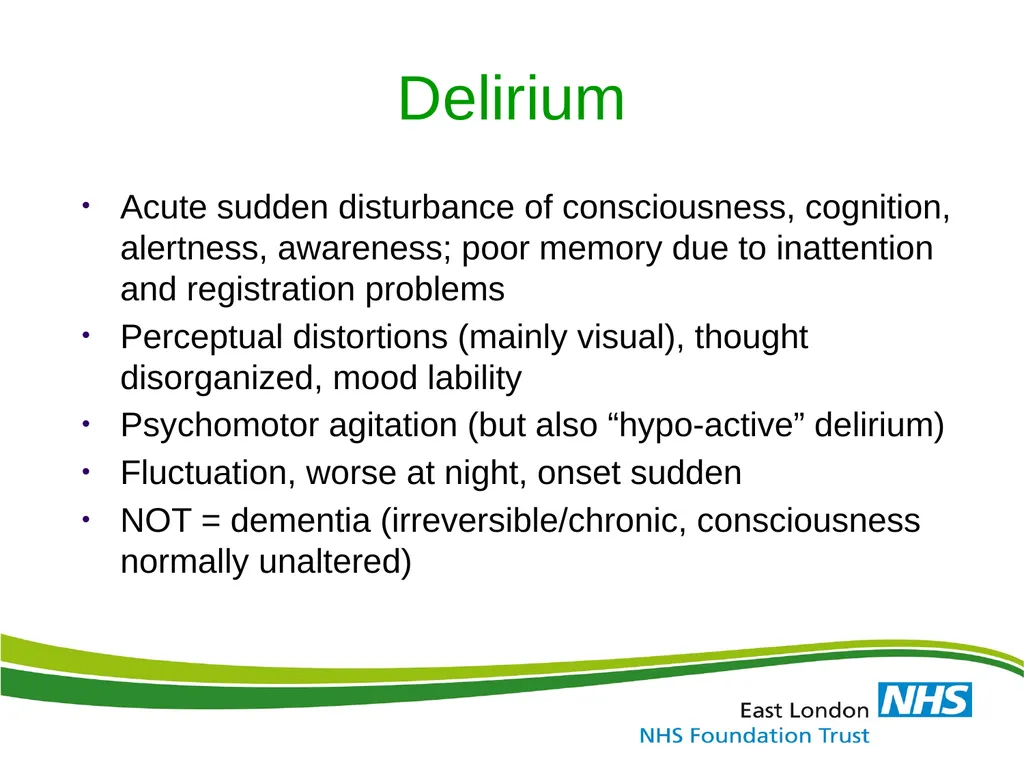
slide14. Delirium Acute sudden disturbance of consciousness, cognition, alertness, awareness; poor memory due to inattention and registration problems
Perceptual distortions (mainly visual), thought disorganized, mood lability
Psychomotor agitation (but also “hypo-active” delirium)
Fluctuation, worse at night, onset sudden
NOT = dementia (irreversible/chronic, consciousness normally unaltered)<br>
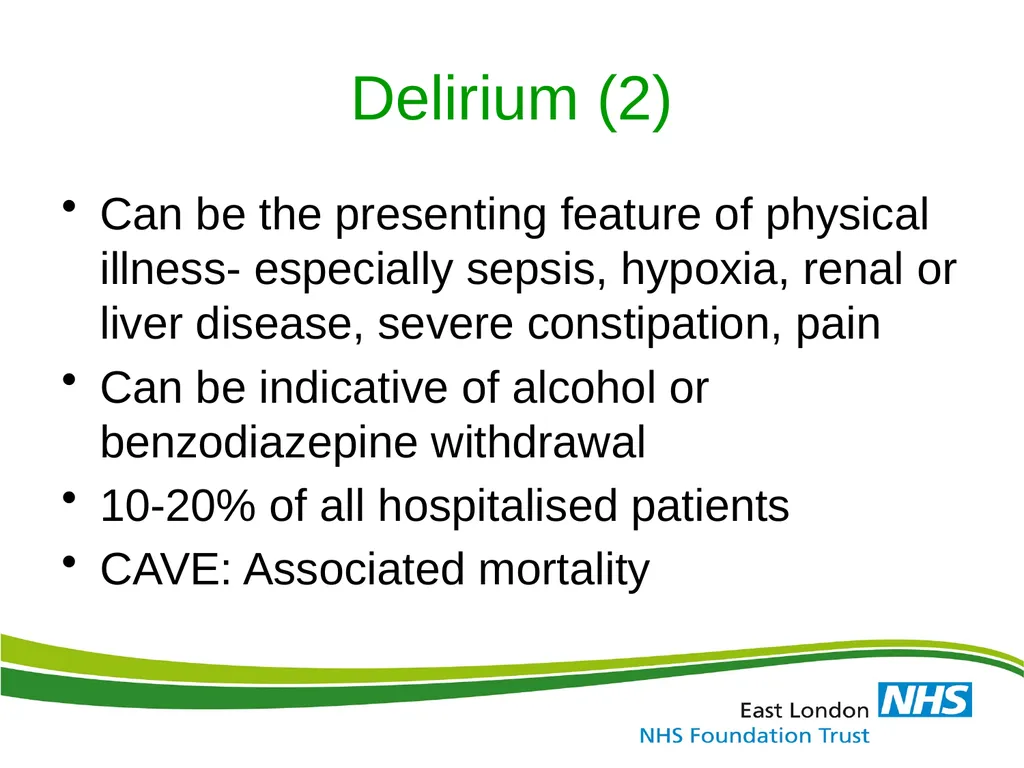
slide15. Delirium (2) Can be the presenting feature of physical illness- especially sepsis, hypoxia, renal or liver disease, severe constipation, pain
Can be indicative of alcohol or benzodiazepine withdrawal
10-20% of all hospitalised patients
CAVE: Associated mortality<br>
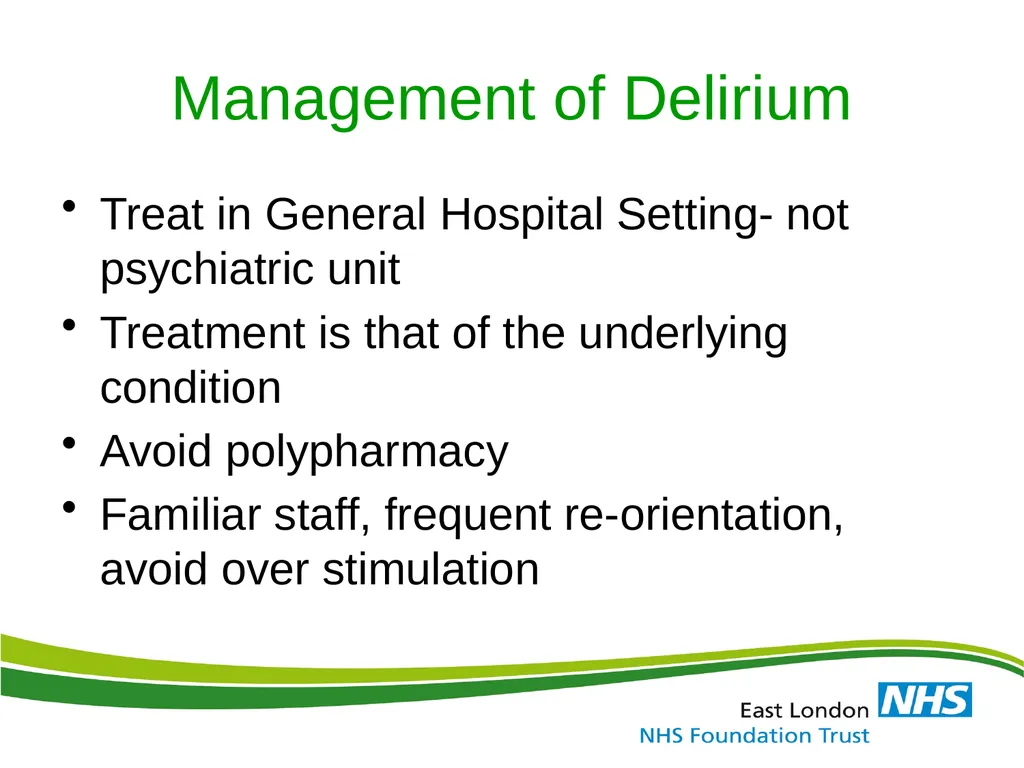
slide16. Management of Delirium Treat in General Hospital Setting- not psychiatric unit
Treatment is that of the underlying condition
Avoid polypharmacy
Familiar staff, frequent re-orientation, avoid over stimulation<br>
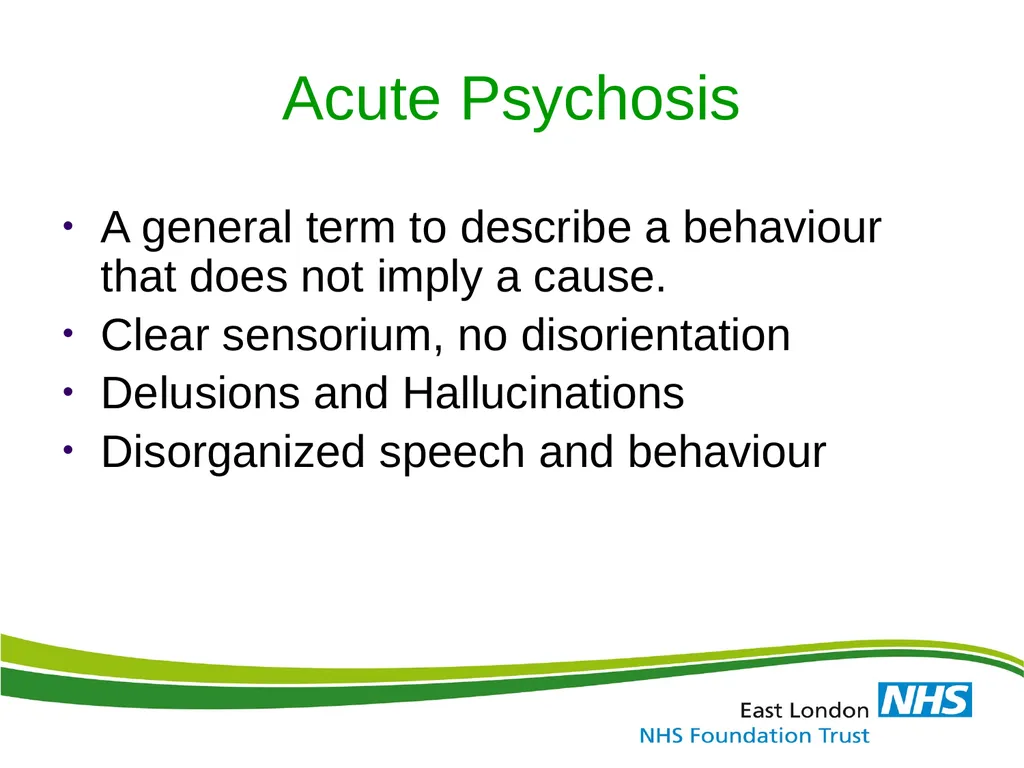
slide17. Acute Psychosis A general term to describe a behaviour that does not imply a cause.
Clear sensorium, no disorientation
Delusions and Hallucinations
Disorganized speech and behaviour<br>
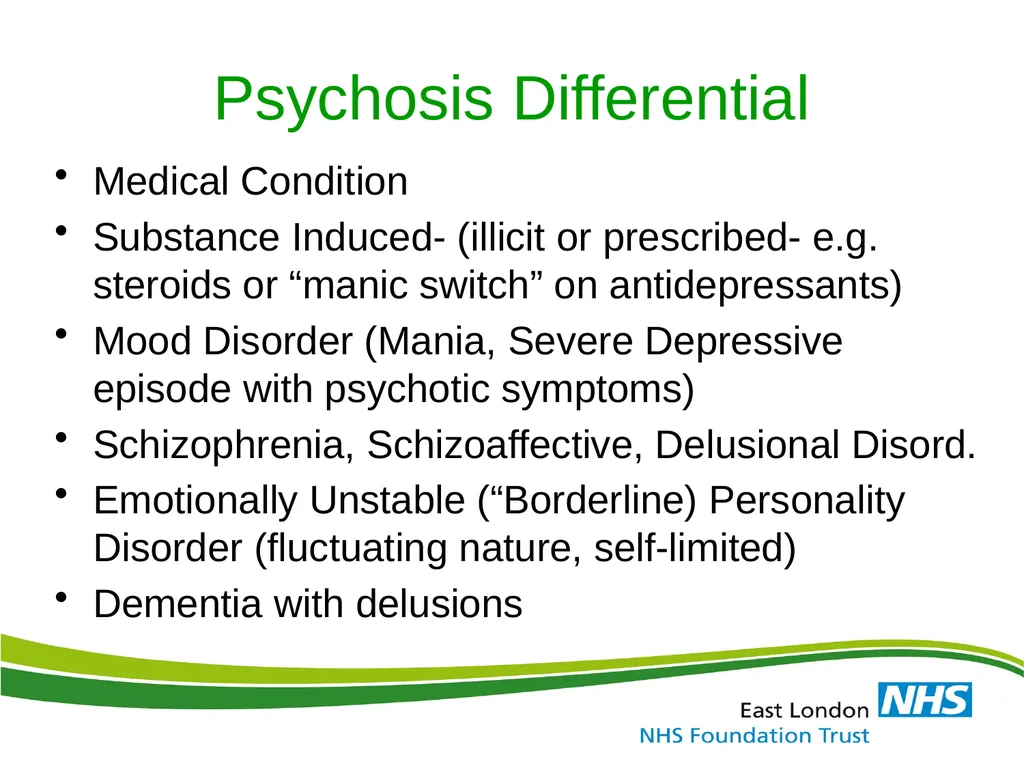
slide18. Psychosis Differential Medical Condition
Substance Induced- (illicit or prescribed- e.g. steroids or “manic switch” on antidepressants)
Mood Disorder (Mania, Severe Depressive episode with psychotic symptoms)
Schizophrenia, Schizoaffective, Delusional Disord.
Emotionally Unstable (“Borderline) Personality Disorder (fluctuating nature, self-limited)
Dementia with delusions<br>
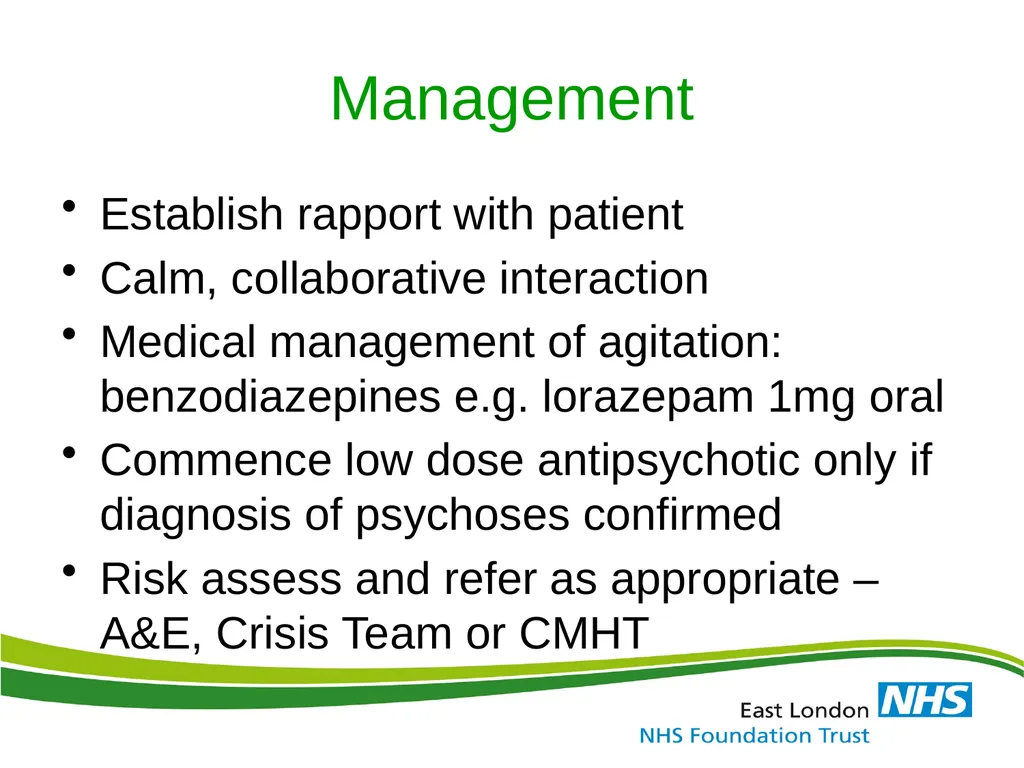
slide19. Management Establish rapport with patient
Calm, collaborative interaction
Medical management of agitation: benzodiazepines e.g. lorazepam 1mg oral
Commence low dose antipsychotic only if diagnosis of psychoses confirmed
Risk assess and refer as appropriate – A&E, Crisis Team or CMHT<br>
slide20. The Suicidal Patient Is the Patient in a high risk group?
Assess for most common risk factors: high levels of distress, well formed plans (suicide note), hopelessness, distressing psychotic symptoms (command hallucinations), pain or chronic illness, lack of social supports (young single male/unemployed), substance misuse
Listen to your “gut feeling” and take collateral information<br>
slide21. How to ask about suicidality? How do you feel about the future?
Have you ever felt that life was not worth living?
Do you wish you could just not wake up in the morning?
Have you had thoughts of ending your life? Any actual plans? If so, What are they?
What has stopped you from doing anything so far?<br>
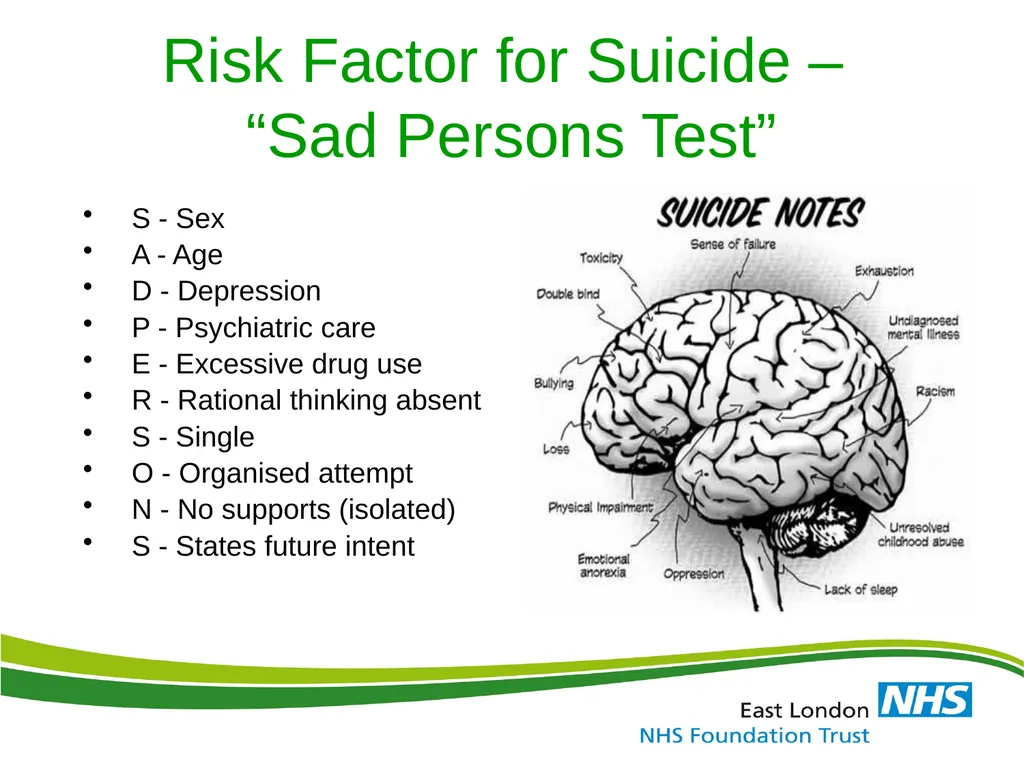
slide22. Risk Factor for Suicide – “Sad Persons Test” S - Sex
A - Age
D - Depression
P - Psychiatric care
E - Excessive drug use
R - Rational thinking absent
S - Single
O - Organised attempt
N - No supports (isolated)
S - States future intent<br>
slide23. Early Warning Signs Mood Changes
Social Withdrawal
Suicidal Talk- ”I wish I was dead”, “People better off without me”, “I just want all this to end “
Preoccupation with Death
Prior Suicide Gestures or Attempts<br>
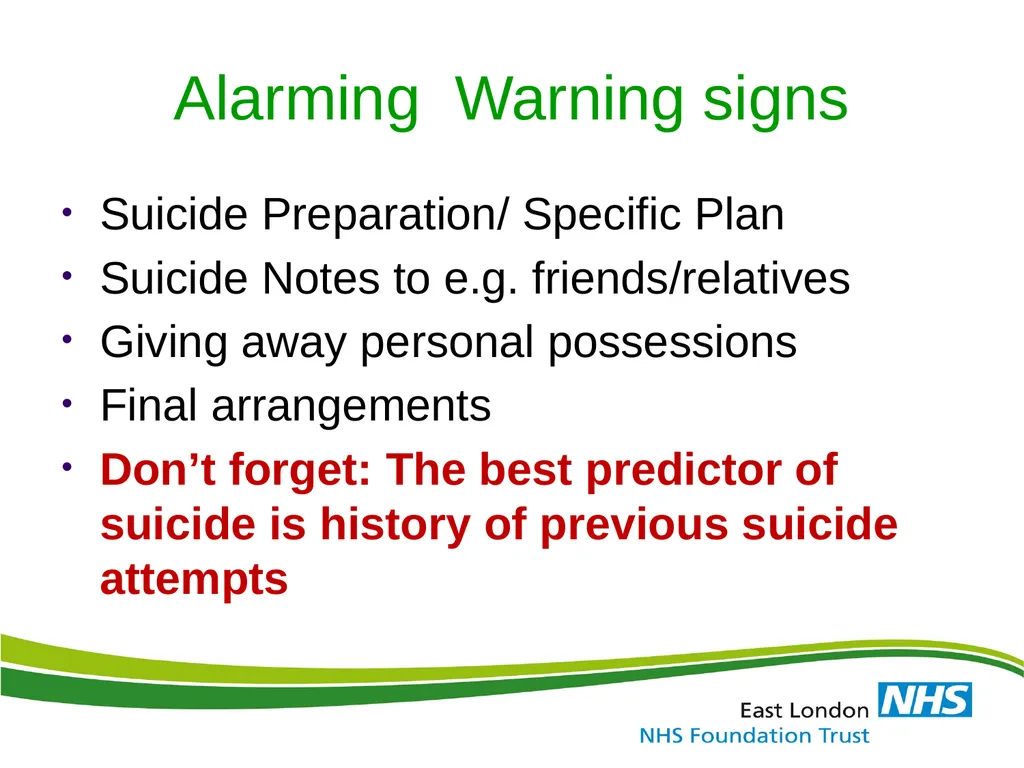
slide24. Alarming Warning signs Suicide Preparation/ Specific Plan
Suicide Notes to e.g. friends/relatives
Giving away personal possessions
Final arrangements
Don’t forget: The best predictor of suicide is history of previous suicide attempts<br>
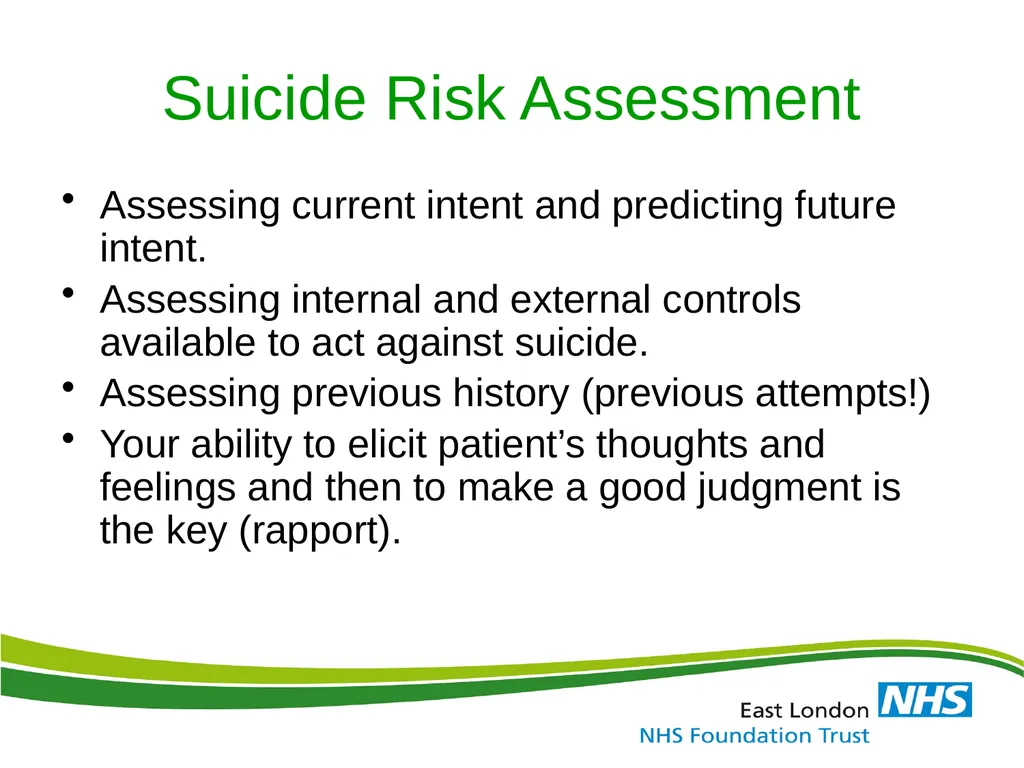
slide25. Suicide Risk Assessment Assessing current intent and predicting future intent.
Assessing internal and external controls available to act against suicide.
Assessing previous history (previous attempts!)
Your ability to elicit patient’s thoughts and feelings and then to make a good judgment is the key (rapport).<br>
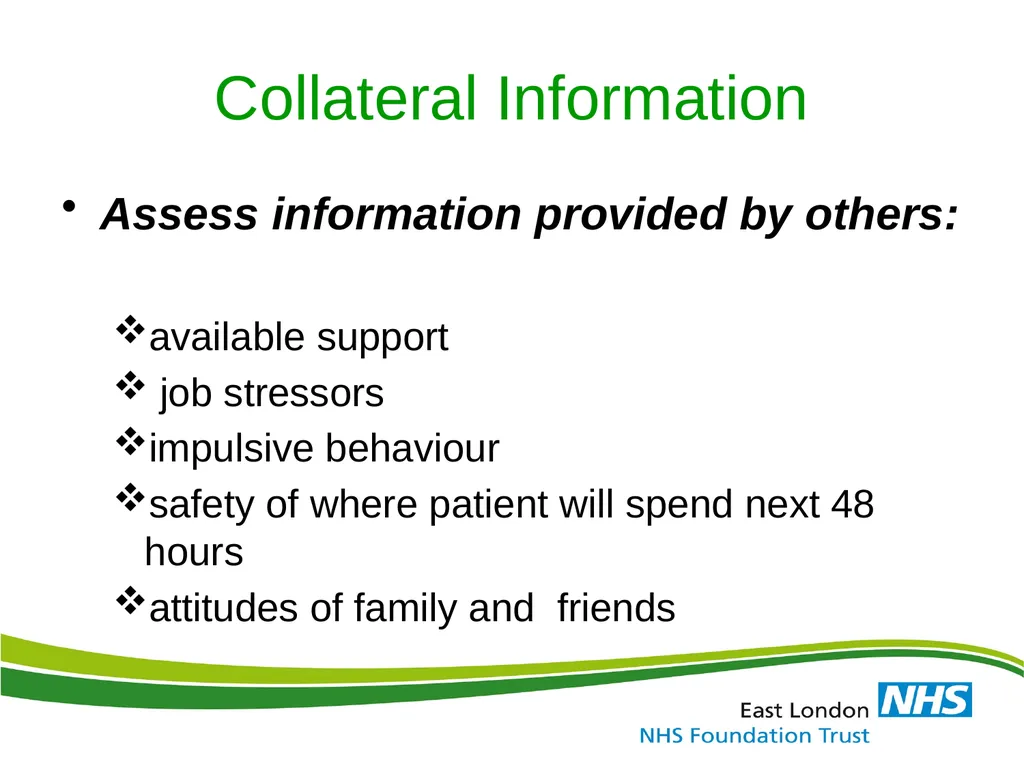
slide26. Collateral Information Assess information provided by others:
available support
job stressors
impulsive behaviour
safety of where patient will spend next 48 hours
attitudes of family and friends<br>
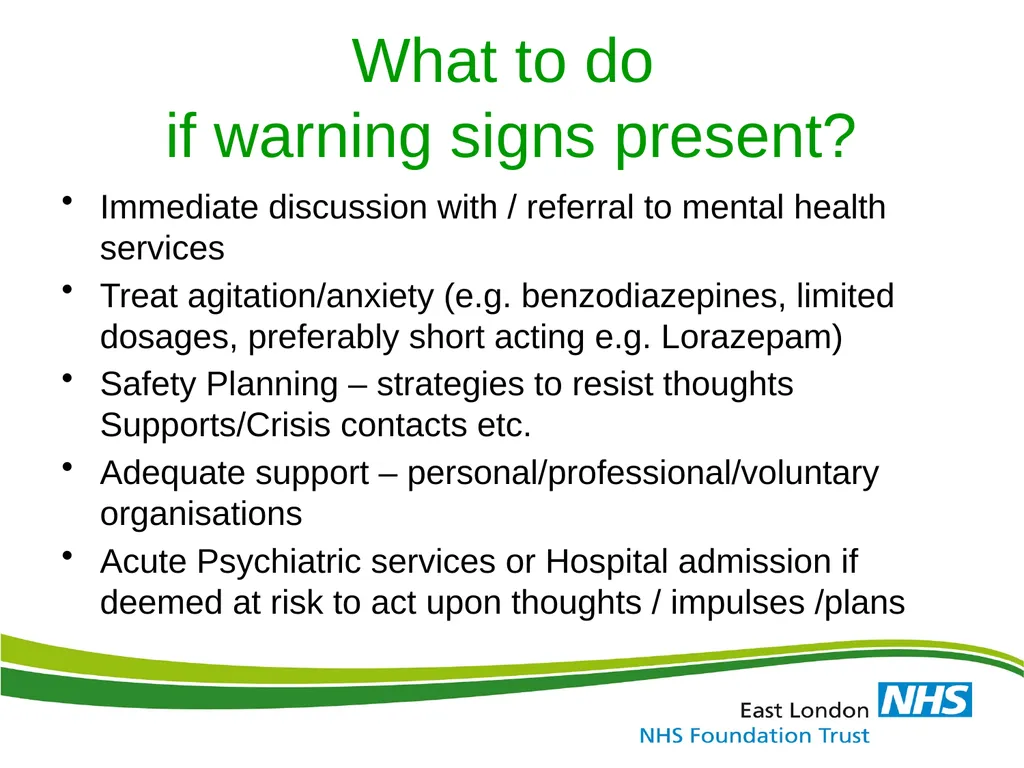
slide27. What to do if warning signs present? Immediate discussion with / referral to mental health services
Treat agitation/anxiety (e.g. benzodiazepines, limited dosages, preferably short acting e.g. Lorazepam)
Safety Planning – strategies to resist thoughts Supports/Crisis contacts etc.
Adequate support – personal/professional/voluntary organisations
Acute Psychiatric services or Hospital admission if deemed at risk to act upon thoughts / impulses /plans<br>
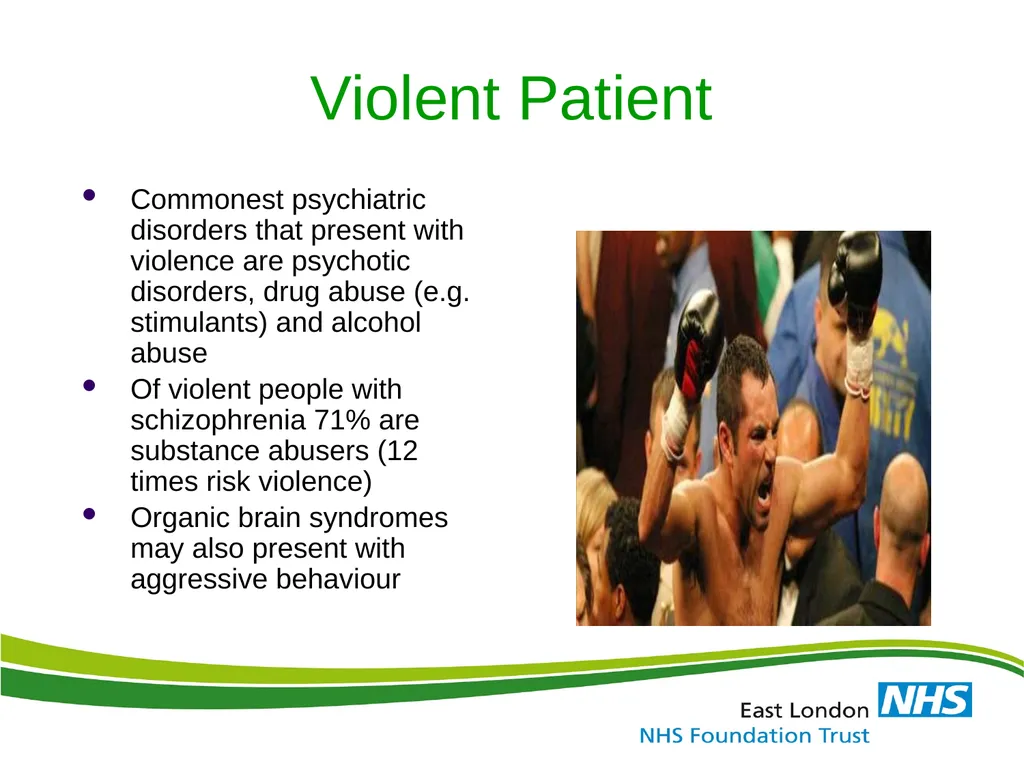
slide28. Violent Patient Commonest psychiatric disorders that present with violence are psychotic disorders, drug abuse (e.g. stimulants) and alcohol abuse
Of violent people with schizophrenia 71% are substance abusers (12 times risk violence)
Organic brain syndromes may also present with aggressive behaviour<br>
slide29. Risk Factors for Violence Male, Young (<40)
Poverty, unemployment
Mental illness – psychotic illness, personality disorder
Alcohol or substance use
The best predictor of violence is previous violence<br>
slide30. Risk Assessment – potential for aggression Prior history: Assault/thoughts of violence/police record/antisocial/aggressive conduct/ delinquency/ weapons/alcohol & drugs.
Behaviour: anti-social/aggressive/impulsive
Personality traits: paranoia/morbid jealousy/relationship difficulties/anger/ tendency to lose temper easily
Thoughts: actively ask for thoughts/images/ fantasies or impulses of violent nature<br>
slide31. Management of Violent Patient Ensure safety of patient and staff
To determine if ideation or behavior stems from specific psychiatric illness
Warn third parties of a serious threat of harm if present
To effect an appropriate treatment / management plan (“delivering despite difficulties”)<br>
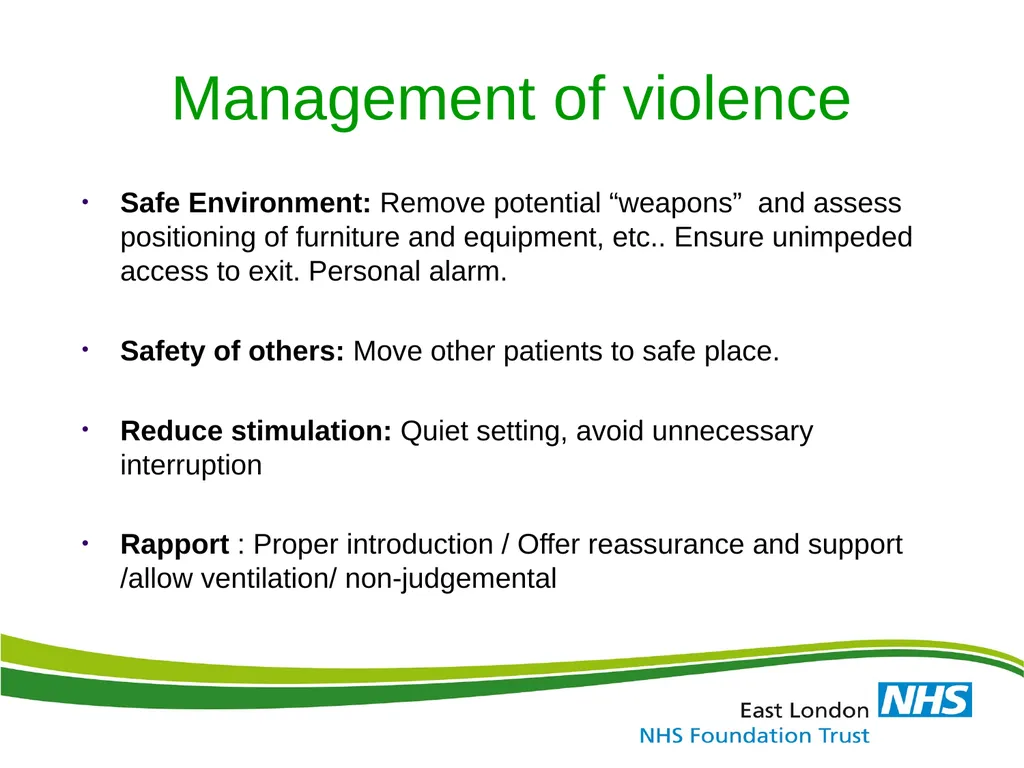
slide32. Management of violence Safe Environment: Remove potential “weapons” and assess positioning of furniture and equipment, etc.. Ensure unimpeded access to exit. Personal alarm.
Safety of others: Move other patients to safe place.
Reduce stimulation: Quiet setting, avoid unnecessary interruption
Rapport : Proper introduction / Offer reassurance and support /allow ventilation/ non-judgemental<br>
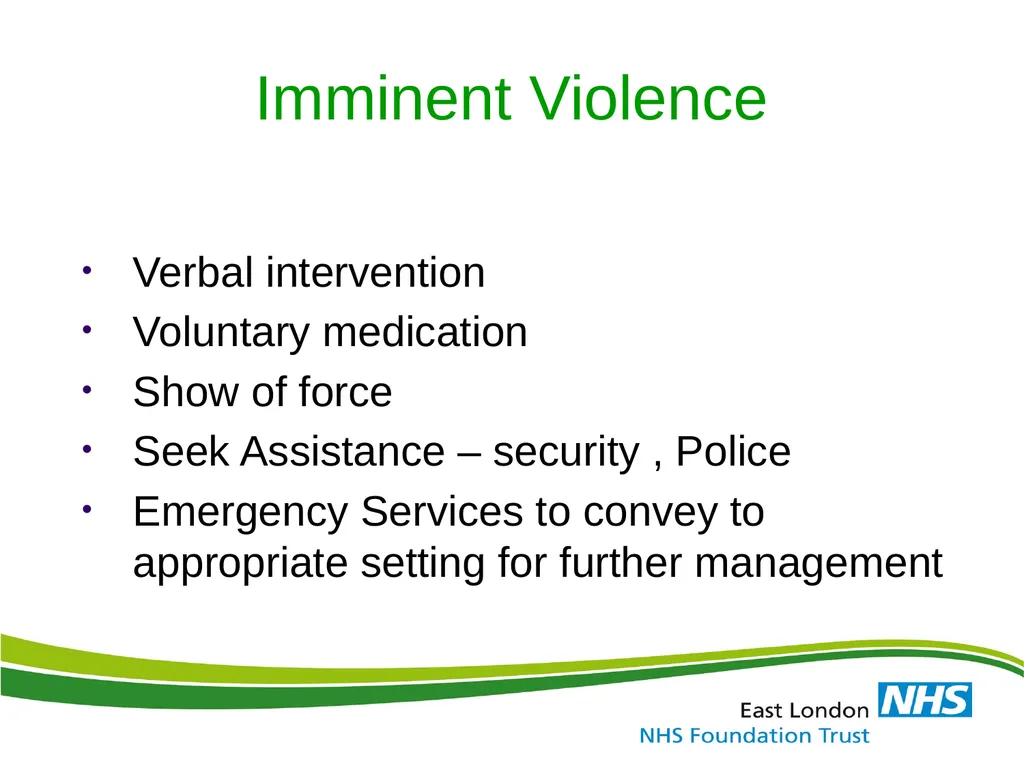
slide33. Imminent Violence Verbal intervention
Voluntary medication
Show of force
Seek Assistance – security , Police
Emergency Services to convey to appropriate setting for further management<br>
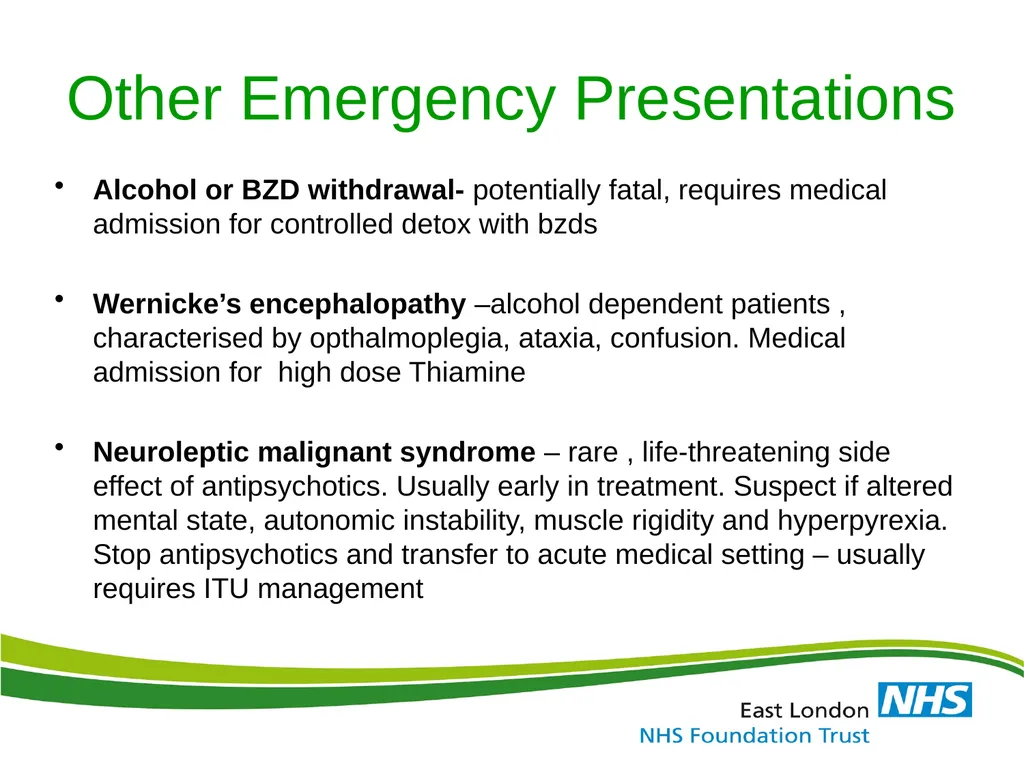
slide34. Other Emergency Presentations Alcohol or BZD withdrawal- potentially fatal, requires medical admission for controlled detox with bzds
Wernicke’s encephalopathy –alcohol dependent patients , characterised by opthalmoplegia, ataxia, confusion. Medical admission for high dose Thiamine
Neuroleptic malignant syndrome – rare , life-threatening side effect of antipsychotics. Usually early in treatment. Suspect if altered mental state, autonomic instability, muscle rigidity and hyperpyrexia. Stop antipsychotics and transfer to acute medical setting – usually requires ITU management<br>
slide35. Discussion Questions?<br>
Frank Röhricht
Associate Medical Director<br>
slide2. Psychiatric Emergencies Common manifestations of psychiatric conditions often encountered in routine and pre/hospital care. They require
- rapid evaluation
- containment
- referral/follow up.<br>
slide3. Definition A psychiatric emergency is any unusual behaviour, mood, perception or thought, which if not rapidly attended to may result in harm to a patient or others.<br>
slide4. Dealing with Psychiatric emergencies “Primum non nocere”-First do no harm
Always ensure your own and other staff’s safety
Always suspect potential organic causation for psychiatric presentations.
Make the fullest assessment possible
Use any other info (old notes, 3rd party)<br>
slide5. Dealing with Psychiatric Emergencies (2) Document clearly your assessment, decisions made and reasons
Seek expert advice and appropriate onward referral as required
Remember Patient confidentiality does not override threatened harm to self or others<br>
slide6. Necessary steps to take Assess through focussed history
Arrive at differential diagnosis
Differentiate between medical and psychiatric emergencies
Formulate management plan
Assess for imminent violence and manage actual violence
Consider ethical and legal issues<br>
slide7. Which is it? – main Differential Diagnoses Acute relapse of known mental illness?
First presentation with mental illness?
Consequence of medical illness that presents with psychiatric symptoms?
Intoxication or withdrawal?
Drug reaction or interaction?<br>
slide8. Key message 1: Psychiatric Disorders? Important to exclude medical causes of behavioural problems before concluding they are primarily psychiatric/mental health related.<br>
slide9. Key message 2: Psychiatric Disorder or substances? Substance abuse complicates many psychiatric conditions, and may be the primary cause of others.<br>
slide10. Structured Assessment History (and collateral history )
Mental State
Physical examination (Uncooperative agitated patients tend to aggravate staff, leading to inadequate/incomplete physical examination)
Investigations (Blood tests, ECG, X-Ray, etc. as required)<br>
slide11. Investigations FBC and Inflammatory markers
U&E, LFTs, Calcium, TFTs,
Blood Glucose
Alcometer
Urine drug screen
ECG, Chest x-ray, Spirometry
Brain imaging(CT/MRI) , EEG, LP<br>
slide12. Clinical Features that suggest a medical cause of a psychiatric disorder Acute onset
First episode
Old age
Medical illness or injury
Non-auditory disturbances of perception
Neurological disorders / signs
Clouding of consciousness, dyscalculia, gait disorders
Constructional apraxia
Catatonic features<br>
slide13. DD: Possible delirium Screen for:
Disorientation
Clouded consciousnes
Abnormal vital signs
> 40 years with no past psychiatric history
Visual hallucinations / illusions<br>
slide14. Delirium Acute sudden disturbance of consciousness, cognition, alertness, awareness; poor memory due to inattention and registration problems
Perceptual distortions (mainly visual), thought disorganized, mood lability
Psychomotor agitation (but also “hypo-active” delirium)
Fluctuation, worse at night, onset sudden
NOT = dementia (irreversible/chronic, consciousness normally unaltered)<br>
slide15. Delirium (2) Can be the presenting feature of physical illness- especially sepsis, hypoxia, renal or liver disease, severe constipation, pain
Can be indicative of alcohol or benzodiazepine withdrawal
10-20% of all hospitalised patients
CAVE: Associated mortality<br>
slide16. Management of Delirium Treat in General Hospital Setting- not psychiatric unit
Treatment is that of the underlying condition
Avoid polypharmacy
Familiar staff, frequent re-orientation, avoid over stimulation<br>
slide17. Acute Psychosis A general term to describe a behaviour that does not imply a cause.
Clear sensorium, no disorientation
Delusions and Hallucinations
Disorganized speech and behaviour<br>
slide18. Psychosis Differential Medical Condition
Substance Induced- (illicit or prescribed- e.g. steroids or “manic switch” on antidepressants)
Mood Disorder (Mania, Severe Depressive episode with psychotic symptoms)
Schizophrenia, Schizoaffective, Delusional Disord.
Emotionally Unstable (“Borderline) Personality Disorder (fluctuating nature, self-limited)
Dementia with delusions<br>
slide19. Management Establish rapport with patient
Calm, collaborative interaction
Medical management of agitation: benzodiazepines e.g. lorazepam 1mg oral
Commence low dose antipsychotic only if diagnosis of psychoses confirmed
Risk assess and refer as appropriate – A&E, Crisis Team or CMHT<br>
slide20. The Suicidal Patient Is the Patient in a high risk group?
Assess for most common risk factors: high levels of distress, well formed plans (suicide note), hopelessness, distressing psychotic symptoms (command hallucinations), pain or chronic illness, lack of social supports (young single male/unemployed), substance misuse
Listen to your “gut feeling” and take collateral information<br>
slide21. How to ask about suicidality? How do you feel about the future?
Have you ever felt that life was not worth living?
Do you wish you could just not wake up in the morning?
Have you had thoughts of ending your life? Any actual plans? If so, What are they?
What has stopped you from doing anything so far?<br>
slide22. Risk Factor for Suicide – “Sad Persons Test” S - Sex
A - Age
D - Depression
P - Psychiatric care
E - Excessive drug use
R - Rational thinking absent
S - Single
O - Organised attempt
N - No supports (isolated)
S - States future intent<br>
slide23. Early Warning Signs Mood Changes
Social Withdrawal
Suicidal Talk- ”I wish I was dead”, “People better off without me”, “I just want all this to end “
Preoccupation with Death
Prior Suicide Gestures or Attempts<br>
slide24. Alarming Warning signs Suicide Preparation/ Specific Plan
Suicide Notes to e.g. friends/relatives
Giving away personal possessions
Final arrangements
Don’t forget: The best predictor of suicide is history of previous suicide attempts<br>
slide25. Suicide Risk Assessment Assessing current intent and predicting future intent.
Assessing internal and external controls available to act against suicide.
Assessing previous history (previous attempts!)
Your ability to elicit patient’s thoughts and feelings and then to make a good judgment is the key (rapport).<br>
slide26. Collateral Information Assess information provided by others:
available support
job stressors
impulsive behaviour
safety of where patient will spend next 48 hours
attitudes of family and friends<br>
slide27. What to do if warning signs present? Immediate discussion with / referral to mental health services
Treat agitation/anxiety (e.g. benzodiazepines, limited dosages, preferably short acting e.g. Lorazepam)
Safety Planning – strategies to resist thoughts Supports/Crisis contacts etc.
Adequate support – personal/professional/voluntary organisations
Acute Psychiatric services or Hospital admission if deemed at risk to act upon thoughts / impulses /plans<br>
slide28. Violent Patient Commonest psychiatric disorders that present with violence are psychotic disorders, drug abuse (e.g. stimulants) and alcohol abuse
Of violent people with schizophrenia 71% are substance abusers (12 times risk violence)
Organic brain syndromes may also present with aggressive behaviour<br>
slide29. Risk Factors for Violence Male, Young (<40)
Poverty, unemployment
Mental illness – psychotic illness, personality disorder
Alcohol or substance use
The best predictor of violence is previous violence<br>
slide30. Risk Assessment – potential for aggression Prior history: Assault/thoughts of violence/police record/antisocial/aggressive conduct/ delinquency/ weapons/alcohol & drugs.
Behaviour: anti-social/aggressive/impulsive
Personality traits: paranoia/morbid jealousy/relationship difficulties/anger/ tendency to lose temper easily
Thoughts: actively ask for thoughts/images/ fantasies or impulses of violent nature<br>
slide31. Management of Violent Patient Ensure safety of patient and staff
To determine if ideation or behavior stems from specific psychiatric illness
Warn third parties of a serious threat of harm if present
To effect an appropriate treatment / management plan (“delivering despite difficulties”)<br>
slide32. Management of violence Safe Environment: Remove potential “weapons” and assess positioning of furniture and equipment, etc.. Ensure unimpeded access to exit. Personal alarm.
Safety of others: Move other patients to safe place.
Reduce stimulation: Quiet setting, avoid unnecessary interruption
Rapport : Proper introduction / Offer reassurance and support /allow ventilation/ non-judgemental<br>
slide33. Imminent Violence Verbal intervention
Voluntary medication
Show of force
Seek Assistance – security , Police
Emergency Services to convey to appropriate setting for further management<br>
slide34. Other Emergency Presentations Alcohol or BZD withdrawal- potentially fatal, requires medical admission for controlled detox with bzds
Wernicke’s encephalopathy –alcohol dependent patients , characterised by opthalmoplegia, ataxia, confusion. Medical admission for high dose Thiamine
Neuroleptic malignant syndrome – rare , life-threatening side effect of antipsychotics. Usually early in treatment. Suspect if altered mental state, autonomic instability, muscle rigidity and hyperpyrexia. Stop antipsychotics and transfer to acute medical setting – usually requires ITU management<br>
slide35. Discussion Questions?<br>