Emergency Operations Activation Levels Southern Tier Coalition Work Group Finger Lakes Southern Tier H H H H H H Problem Statement Develop a plain language Emergency Operations Plan activation level matrix to enhance the common operating
"Emergency Operations Activation Levels Southern" is the property of its rightful owner. Permission is granted to
download and print the materials on this website for personal, non-commercial use only, and to display it
on your personal computer provided you do not modify the materials and that you retain all copyright
notices contained in the materials. By downloading content from our website, you accept the terms of this
agreement.
Presentation Transcript
01
Emergency Operations Activation Levels Southern Tier Coalition Work Group<br>
02
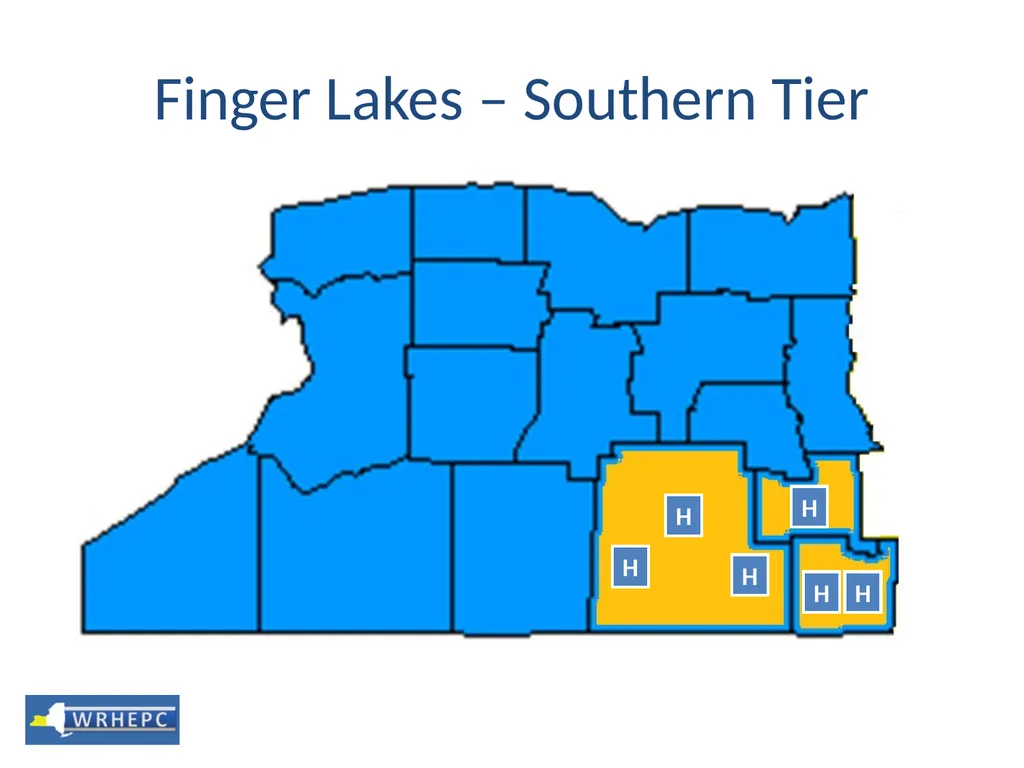
Finger Lakes – Southern Tier H H H H H H<br>
03
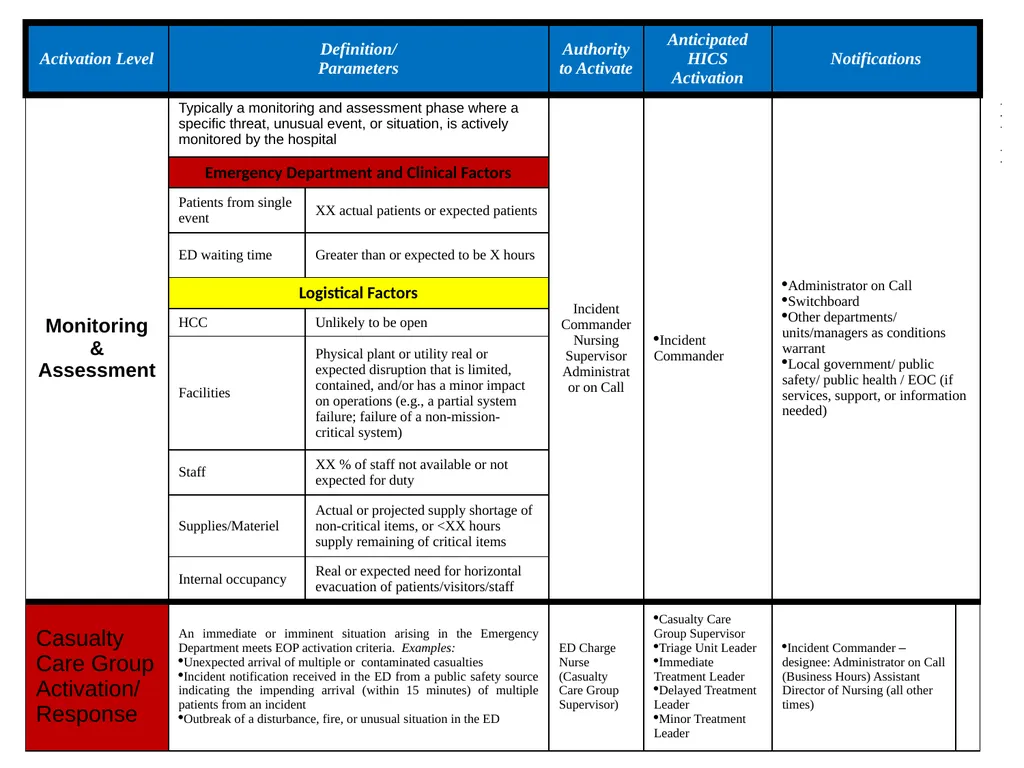
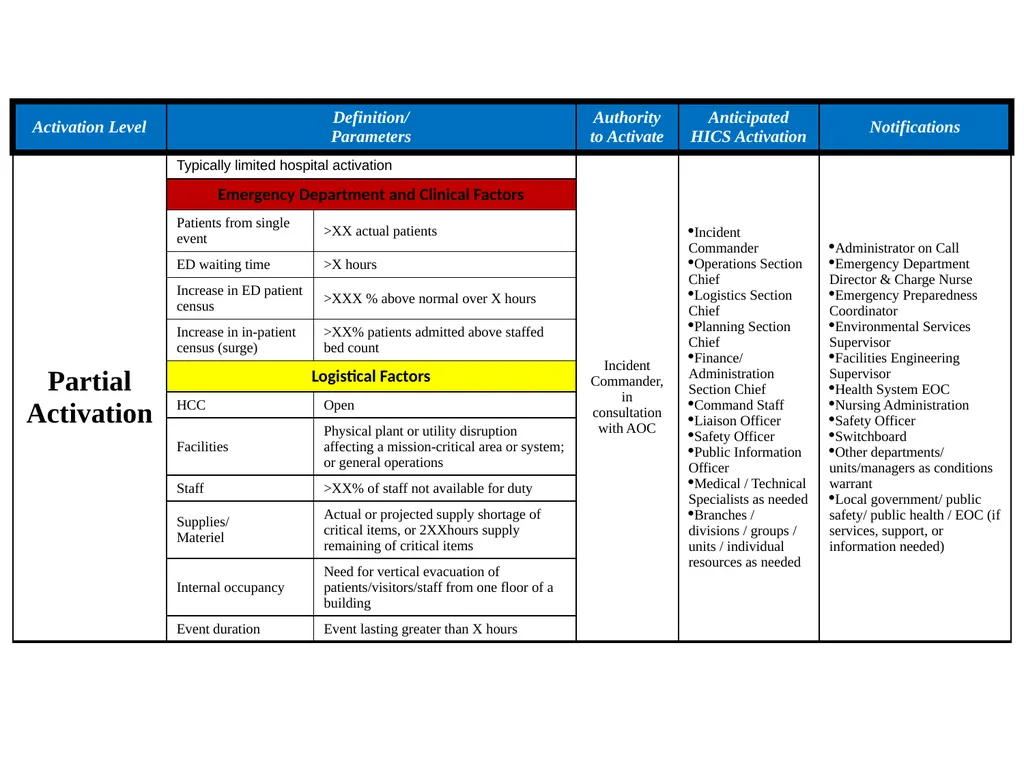
Problem Statement Develop a plain language Emergency Operations Plan activation level matrix to enhance the common operating picture among healthcare and emergency management agencies.<br>
04
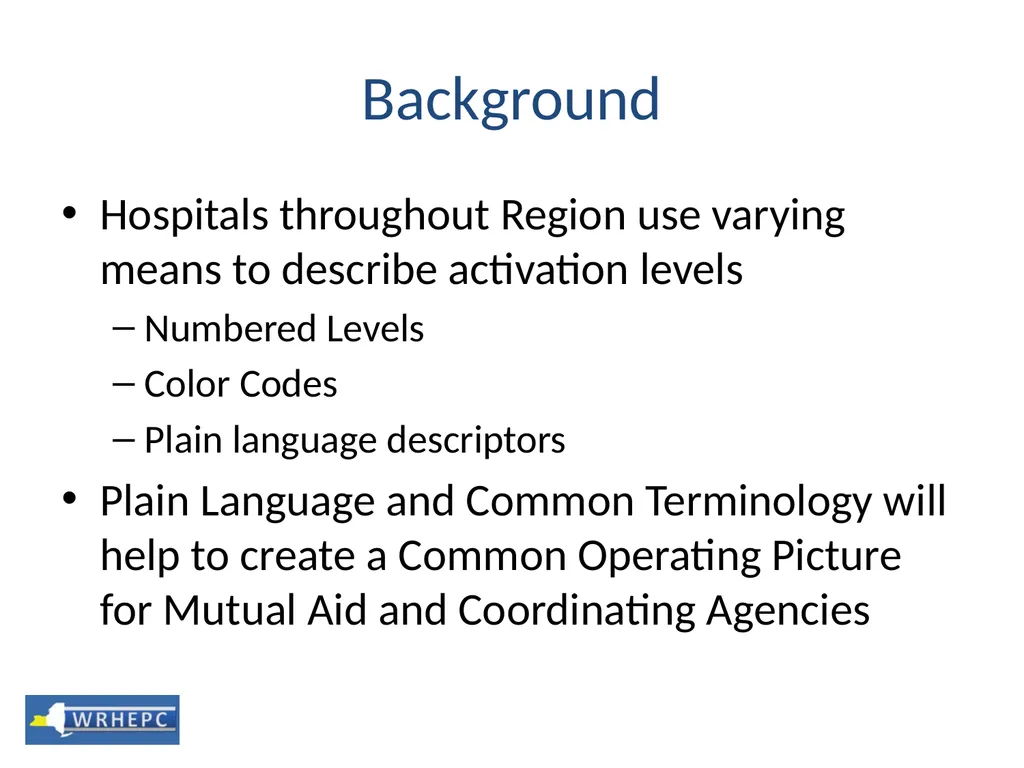
Background Hospitals throughout Region use varying means to describe activation levels
Numbered Levels
Color Codes
Plain language descriptors
Plain Language and Common Terminology will help to create a Common Operating Picture for Mutual Aid and Coordinating Agencies<br>
05
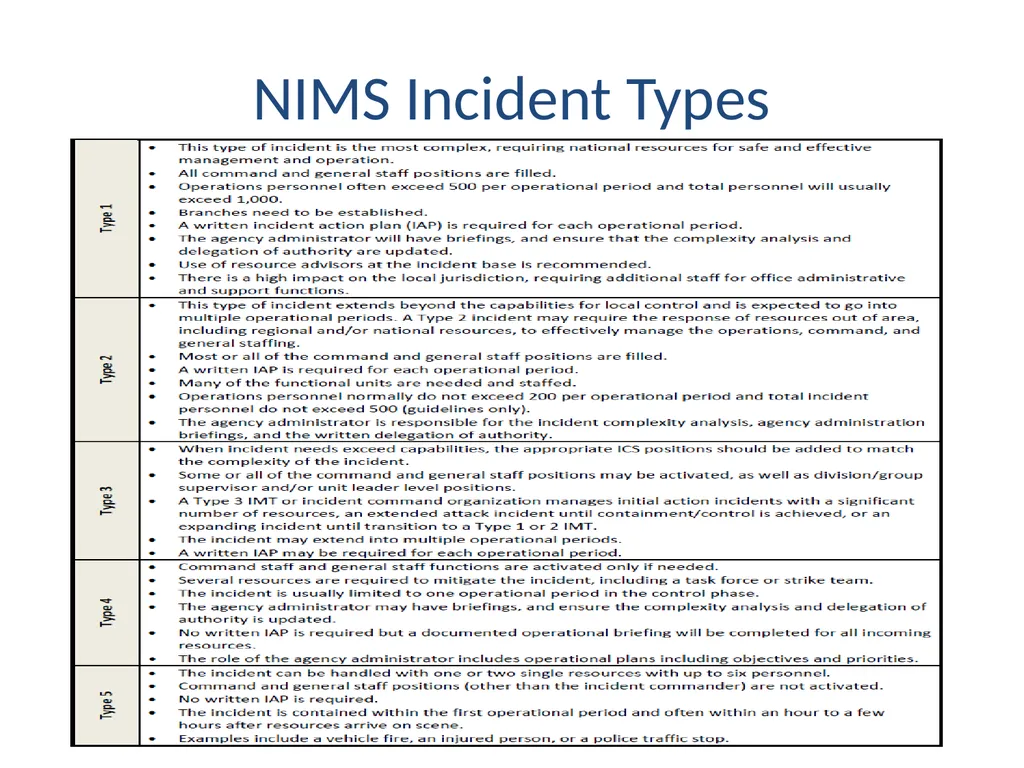
NIMS Incident Types<br>
06
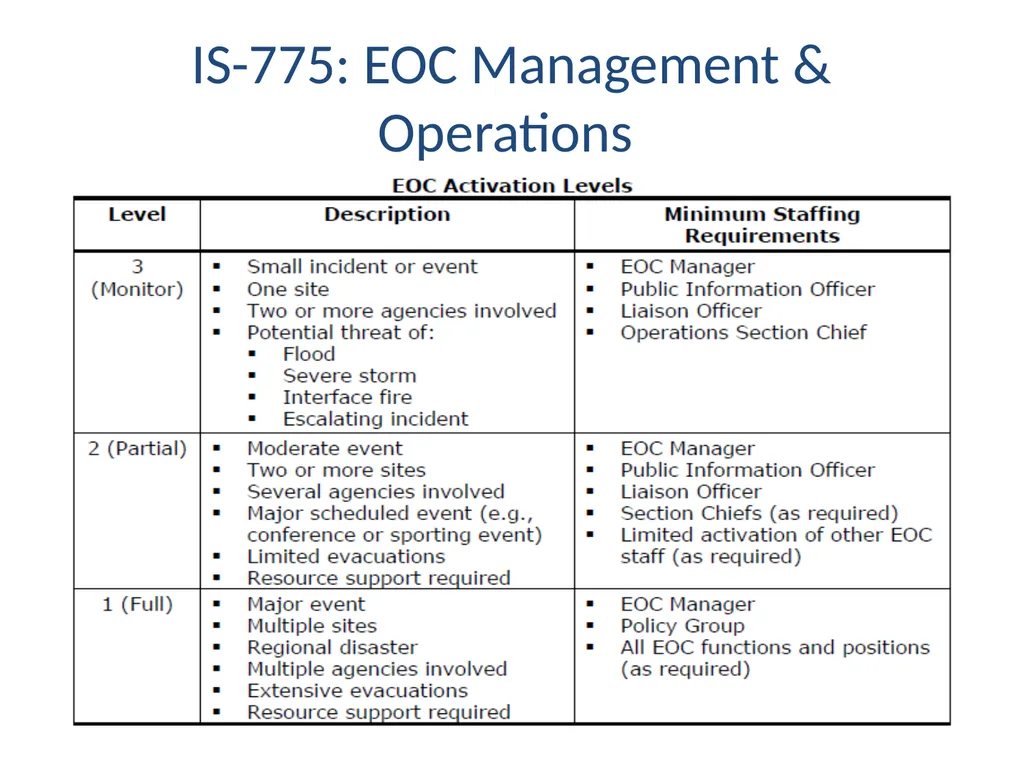
IS-775: EOC Management & Operations<br>
07
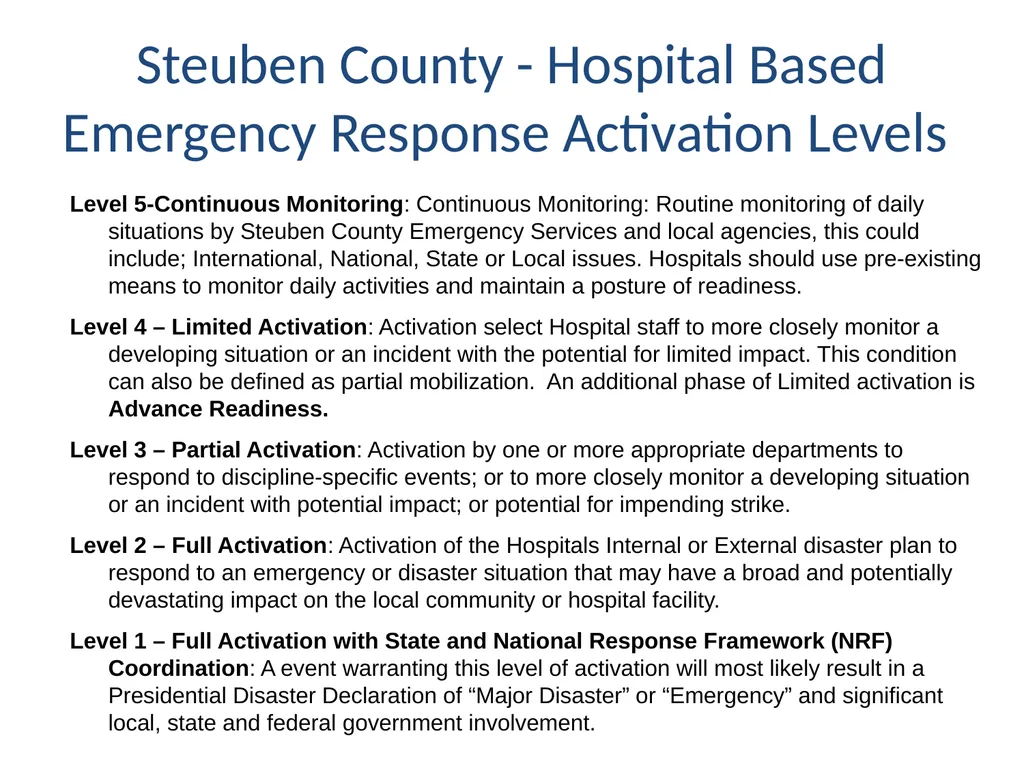
Steuben County - Hospital Based Emergency Response Activation Levels Level 5-Continuous Monitoring: Continuous Monitoring: Routine monitoring of daily situations by Steuben County Emergency Services and local agencies, this could include; International, National, State or Local issues. Hospitals should use pre-existing means to monitor daily activities and maintain a posture of readiness.
Level 4 – Limited Activation: Activation select Hospital staff to more closely monitor a developing situation or an incident with the potential for limited impact. This condition can also be defined as partial mobilization. An additional phase of Limited activation is Advance Readiness.
Level 3 – Partial Activation: Activation by one or more appropriate departments to respond to discipline-specific events; or to more closely monitor a developing situation or an incident with potential impact; or potential for impending strike.
Level 2 – Full Activation: Activation of the Hospitals Internal or External disaster plan to respond to an emergency or disaster situation that may have a broad and potentially devastating impact on the local community or hospital facility.
Level 1 – Full Activation with State and National Response Framework (NRF) Coordination: A event warranting this level of activation will most likely result in a Presidential Disaster Declaration of “Major Disaster” or “Emergency” and significant local, state and federal government involvement.<br>
08
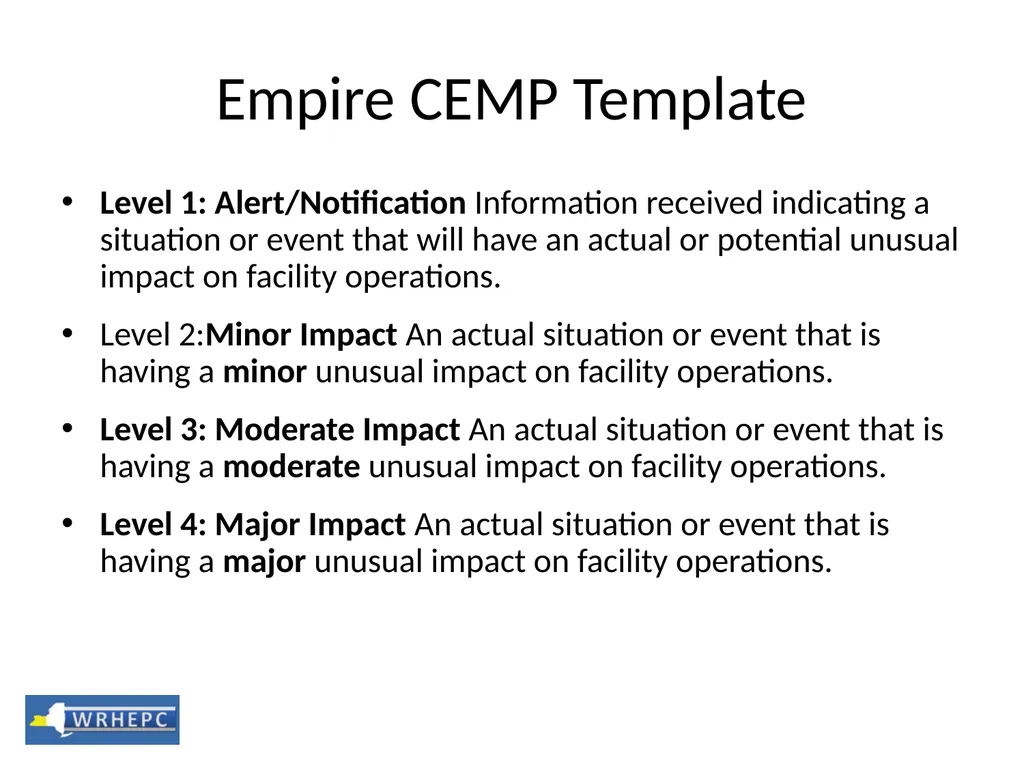
Empire CEMP Template Level 1: Alert/Notification Information received indicating a situation or event that will have an actual or potential unusual impact on facility operations.
Level 2:Minor Impact An actual situation or event that is having a minor unusual impact on facility operations.
Level 3: Moderate Impact An actual situation or event that is having a moderate unusual impact on facility operations.
Level 4: Major Impact An actual situation or event that is having a major unusual impact on facility operations.<br>
09
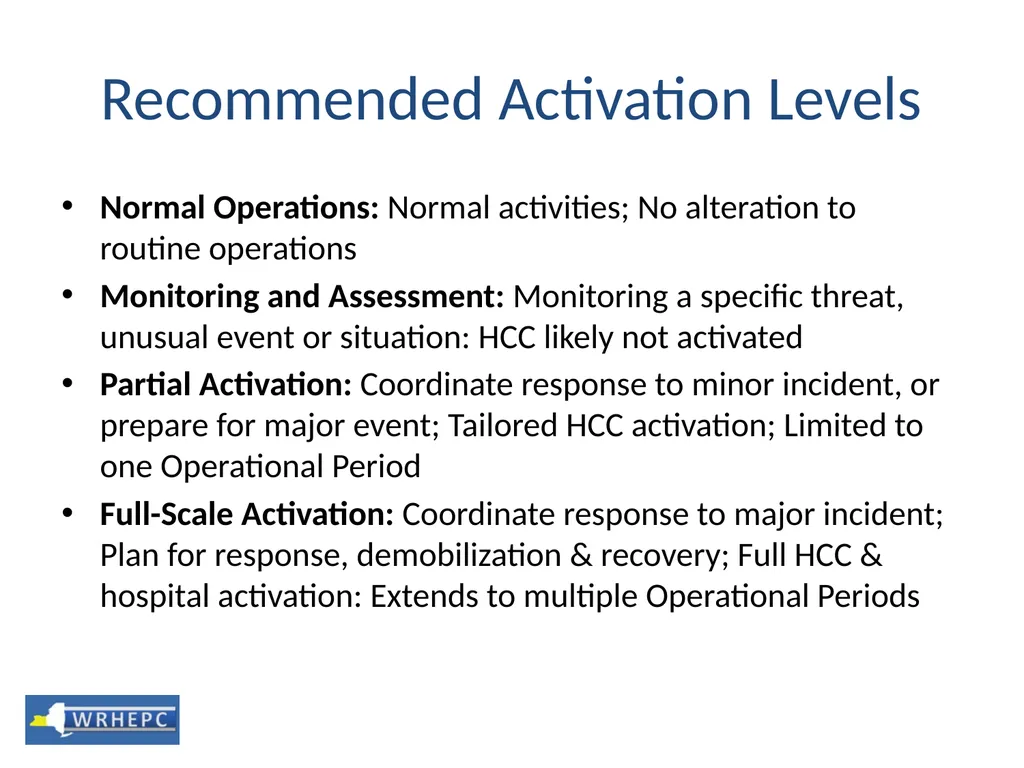
Recommended Activation Levels Normal Operations: Normal activities; No alteration to routine operations
Monitoring and Assessment: Monitoring a specific threat, unusual event or situation: HCC likely not activated
Partial Activation: Coordinate response to minor incident, or prepare for major event; Tailored HCC activation; Limited to one Operational Period
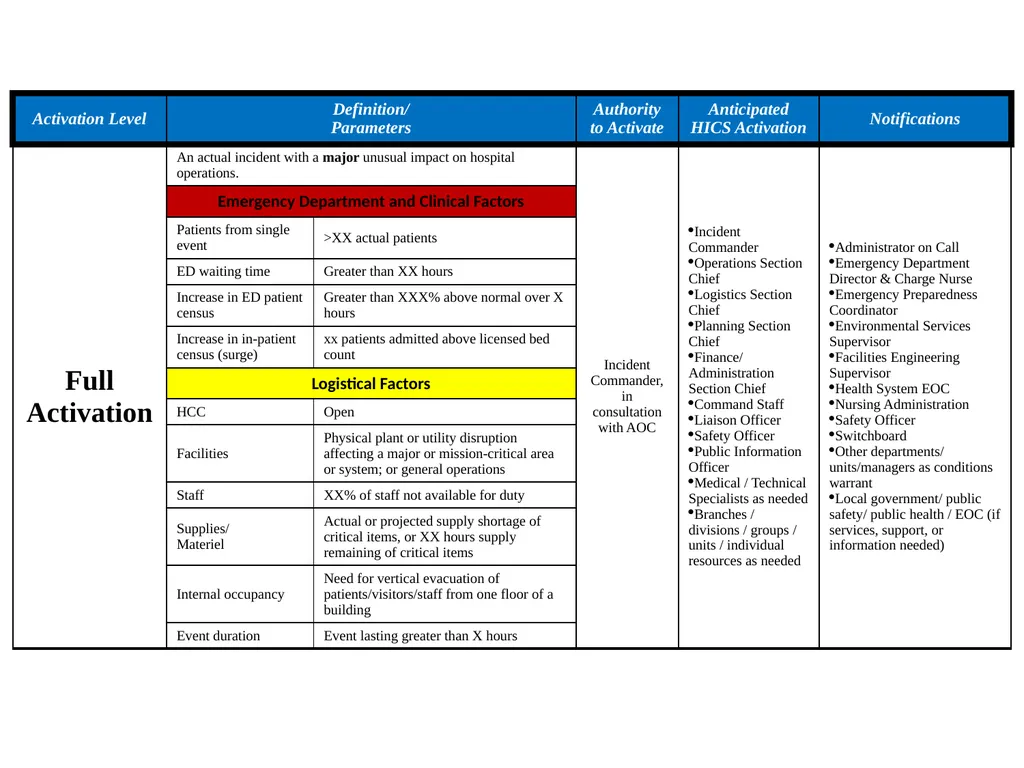
Full-Scale Activation: Coordinate response to major incident; Plan for response, demobilization & recovery; Full HCC & hospital activation: Extends to multiple Operational Periods<br>
10
Recommendation That WREPC healthcare agencies consider the adoption of the plain language Emergency Operations Plan Activation matrix.<br>