04
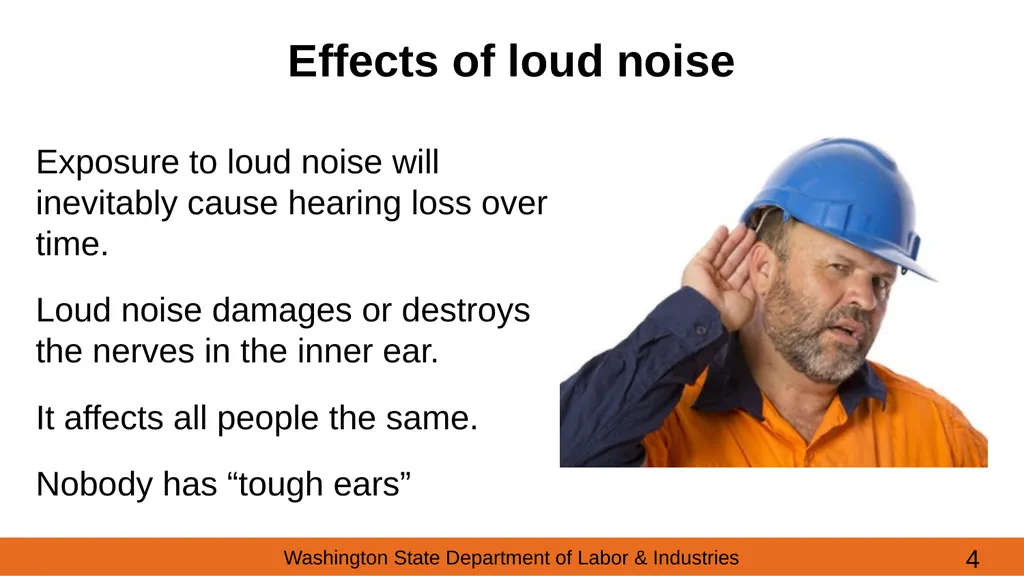
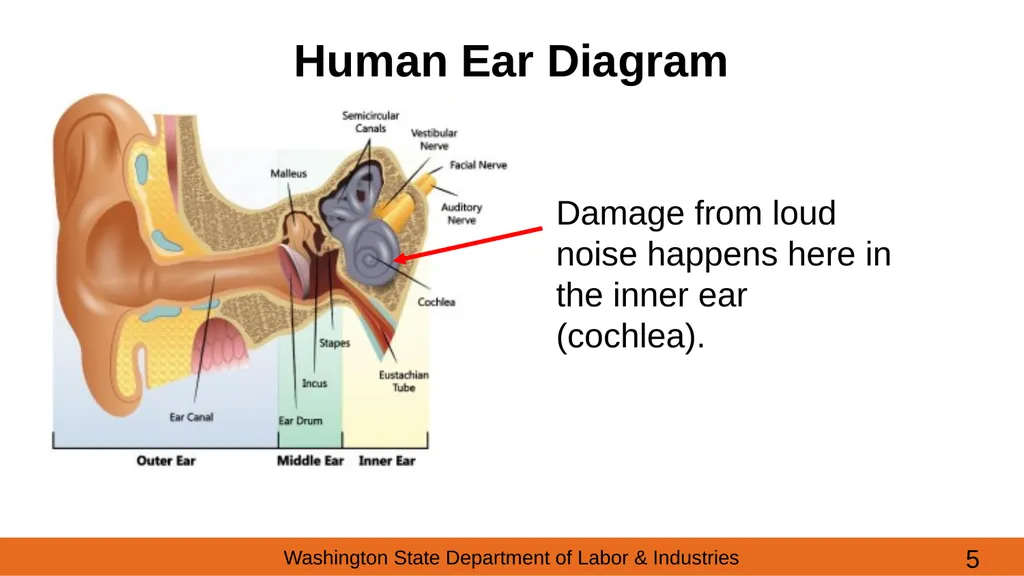
Effects of loud noise Exposure to loud noise will inevitably cause hearing loss over time.
Loud noise damages or destroys the nerves in the inner ear.
It affects all people the same.
Nobody has “tough ears”<br>
05
Human Ear Diagram Damage from loud noise happens here in the inner ear (cochlea).<br>
06
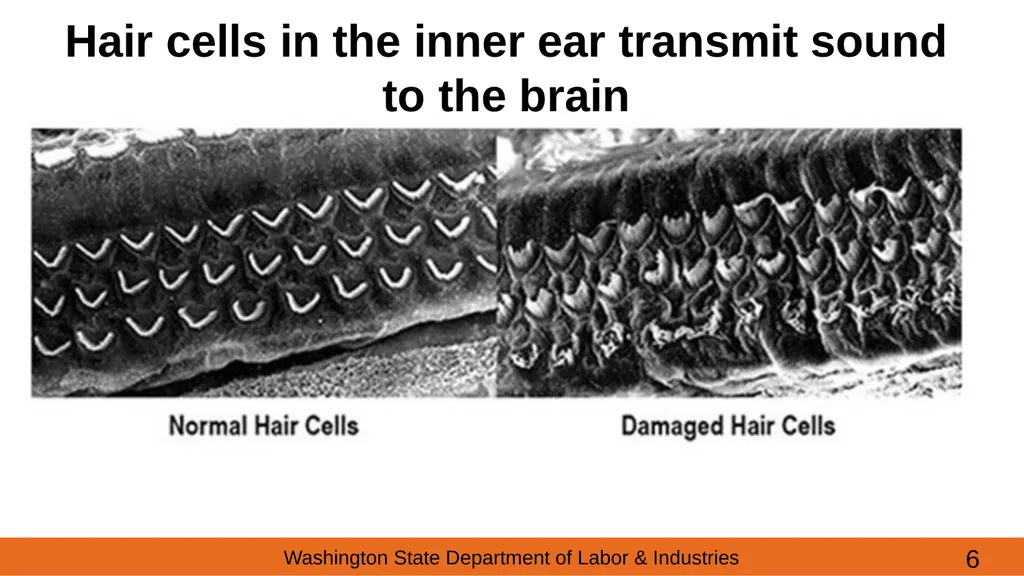
Hair cells in the inner ear transmit sound to the brain<br>
07
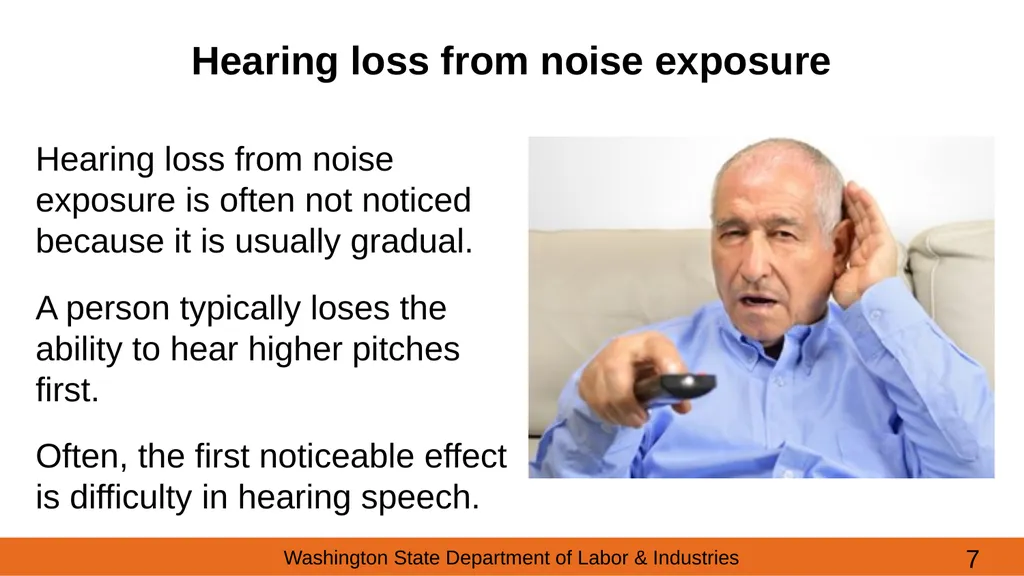
Hearing loss from noise exposure Hearing loss from noise exposure is often not noticed because it is usually gradual.
A person typically loses the ability to hear higher pitches first.
Often, the first noticeable effect is difficulty in hearing speech.<br>
08
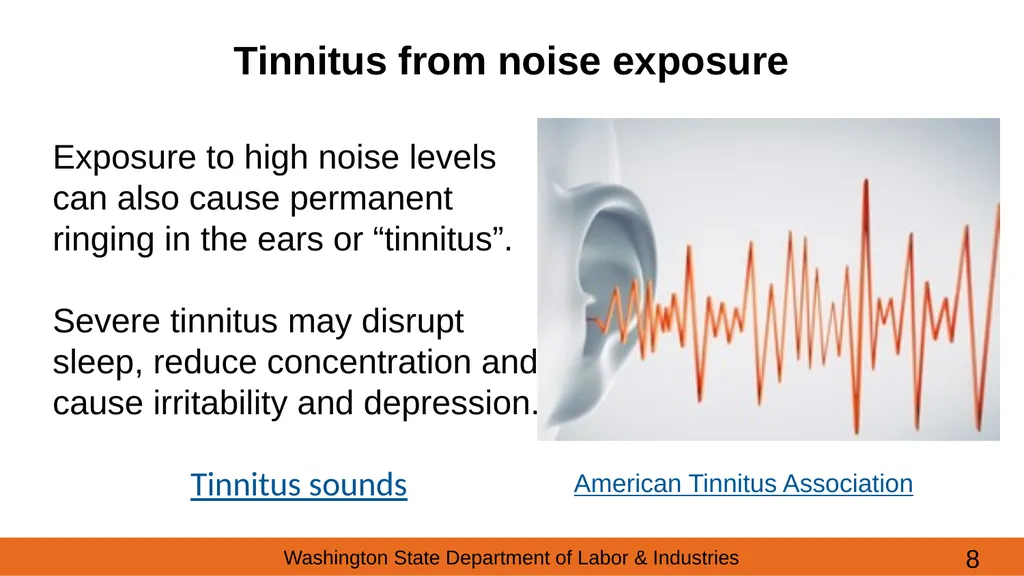
Tinnitus from noise exposure Exposure to high noise levels can also cause permanent ringing in the ears or “tinnitus”.
Severe tinnitus may disrupt sleep, reduce concentration and cause irritability and depression. Tinnitus sounds American Tinnitus Association<br>
09
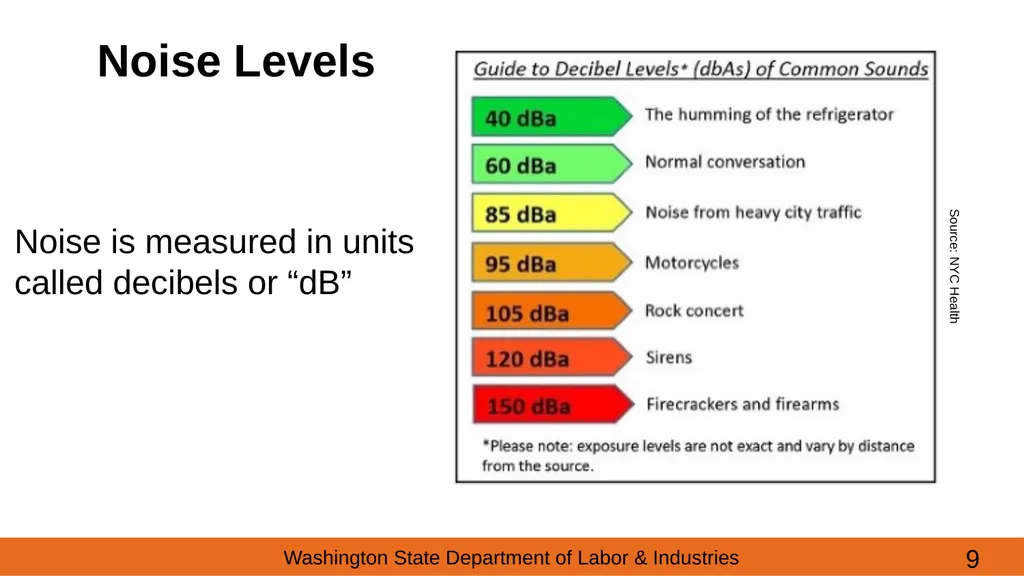
Noise Levels Noise is measured in units called decibels or “dB” Source: NYC Health<br>
10
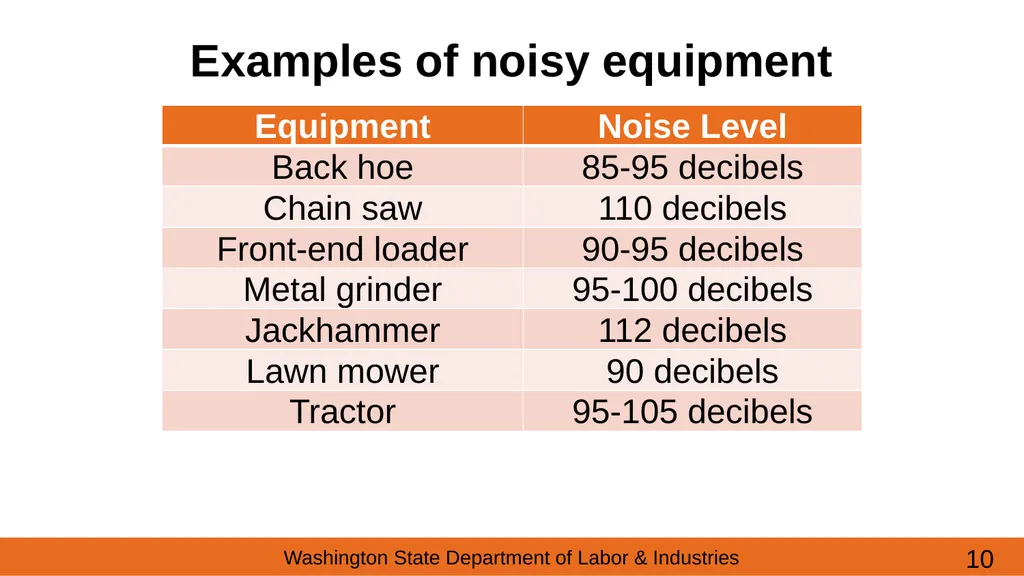
Examples of noisy equipment<br>
11
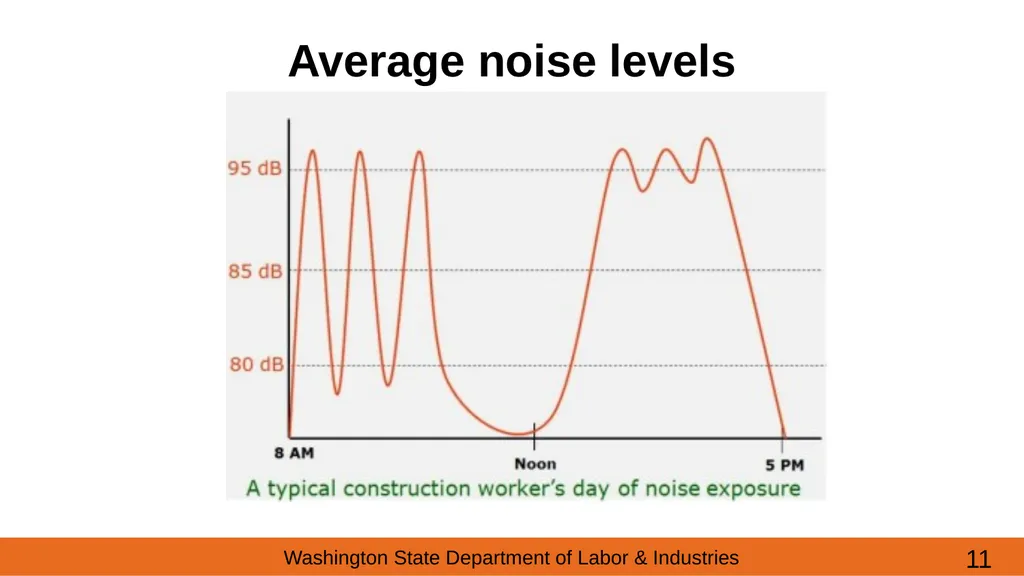
Average noise levels<br>
12
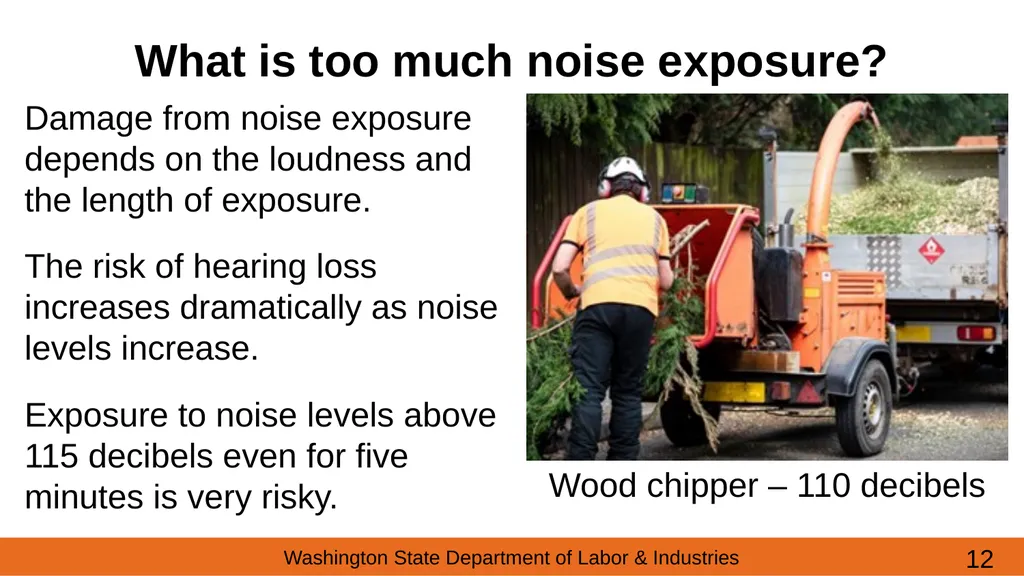
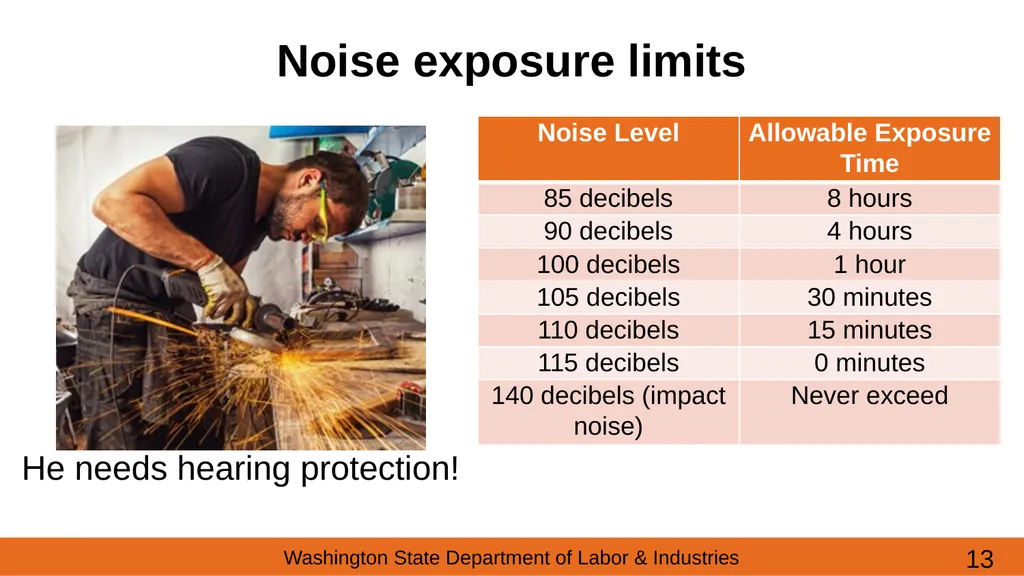
Damage from noise exposure depends on the loudness and the length of exposure.
The risk of hearing loss increases dramatically as noise levels increase.
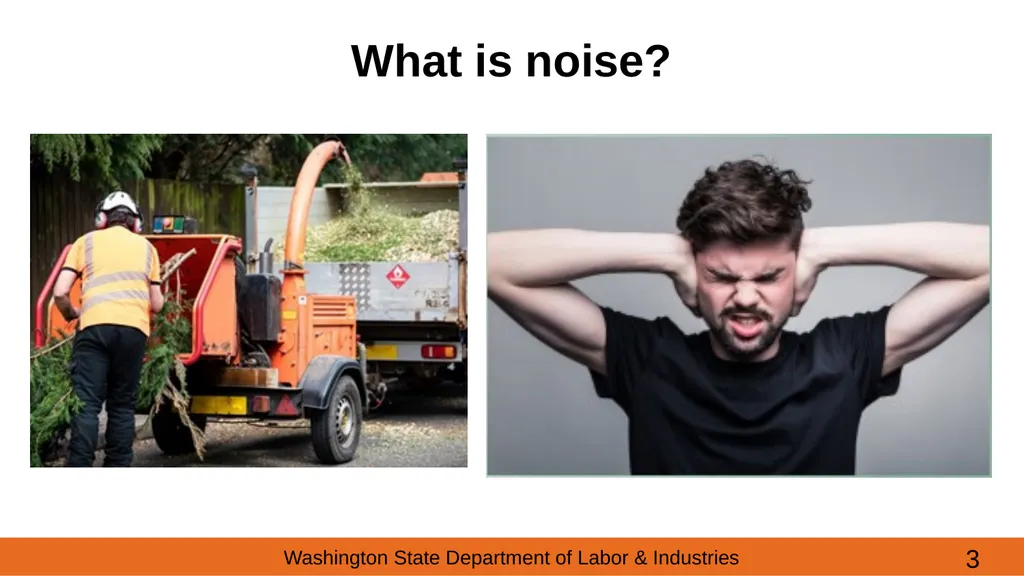
Exposure to noise levels above 115 decibels even for five minutes is very risky. Wood chipper – 110 decibels What is too much noise exposure?<br>
13
Noise exposure limits He needs hearing protection!<br>
14
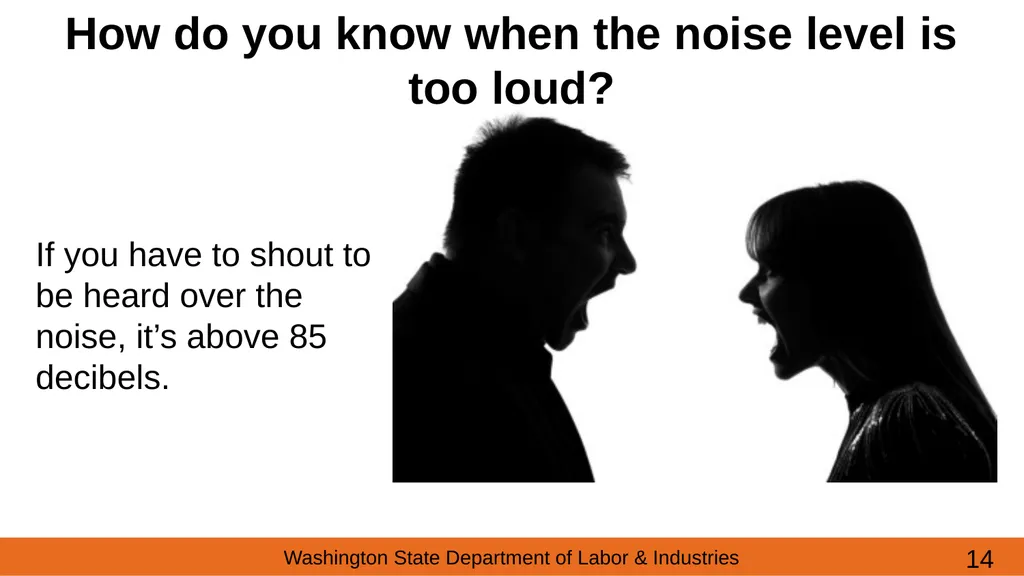
How do you know when the noise level is too loud? If you have to shout to be heard over the noise, it’s above 85 decibels.<br>
15
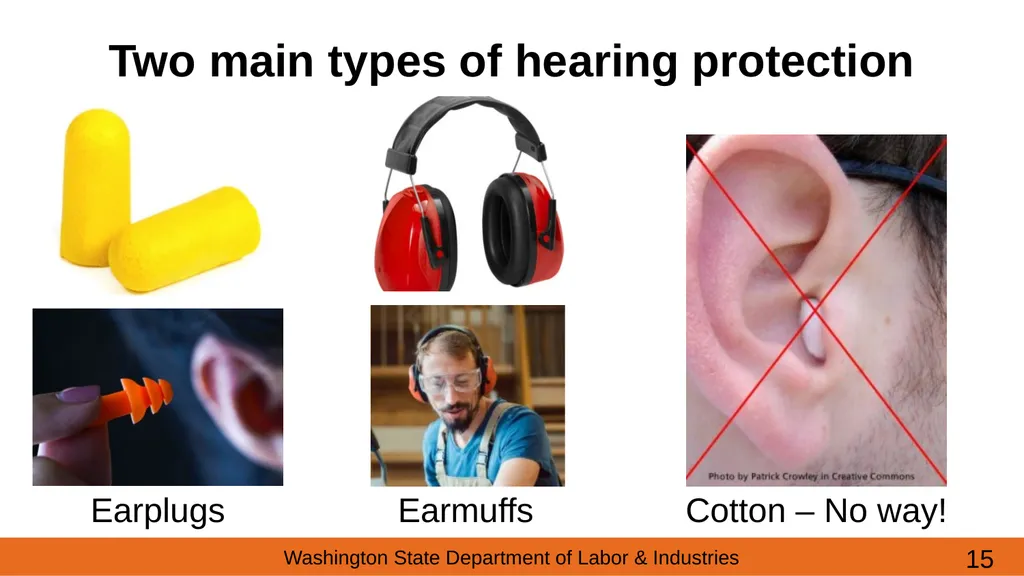
Two main types of hearing protection Earplugs Earmuffs Cotton – No way!<br>
16
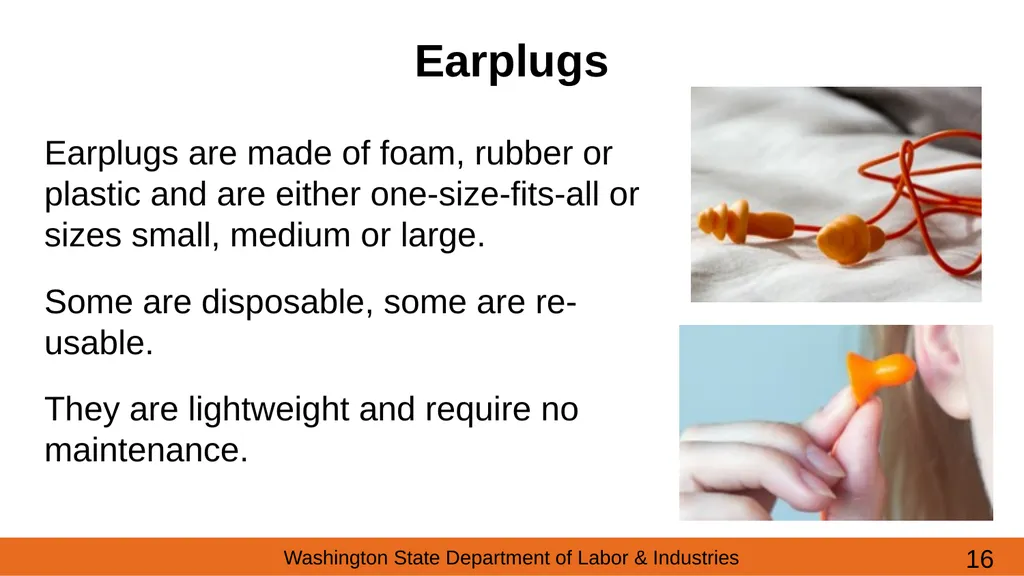
Earplugs Earplugs are made of foam, rubber or plastic and are either one-size-fits-all or sizes small, medium or large.
Some are disposable, some are re-usable.
They are lightweight and require no maintenance.<br>
17
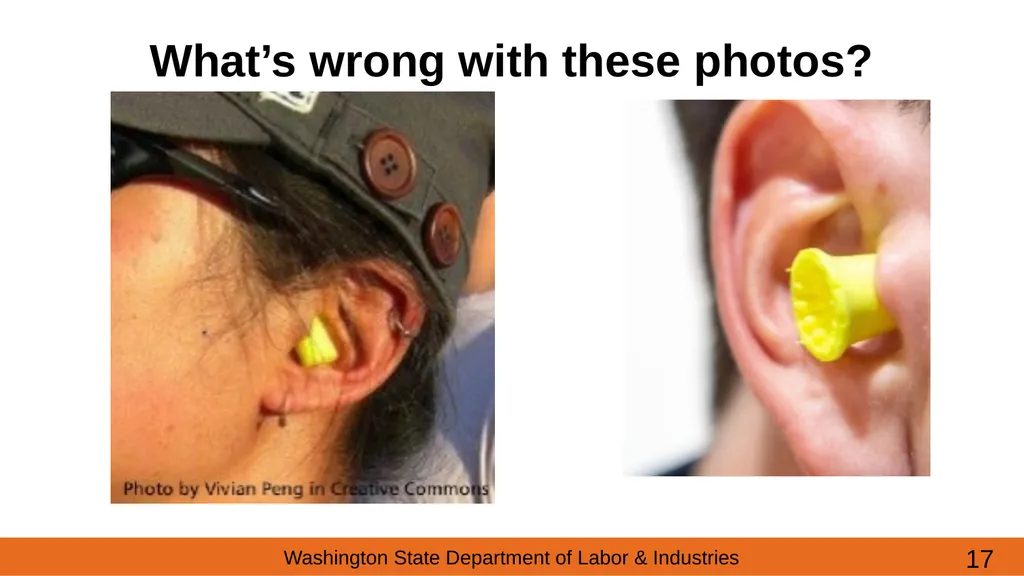
What’s wrong with these photos?<br>
18
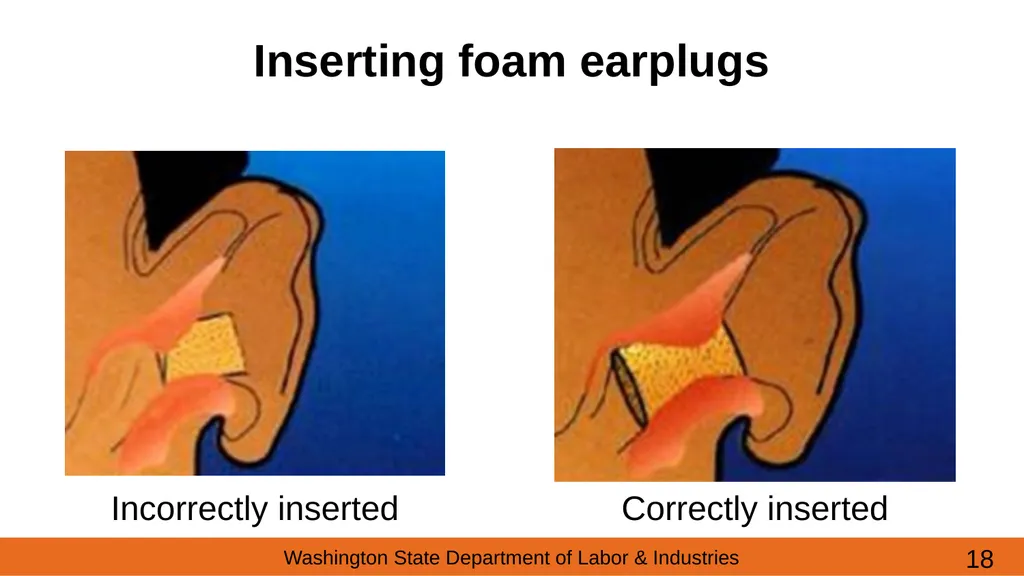
Inserting foam earplugs Incorrectly inserted Correctly inserted<br>
19
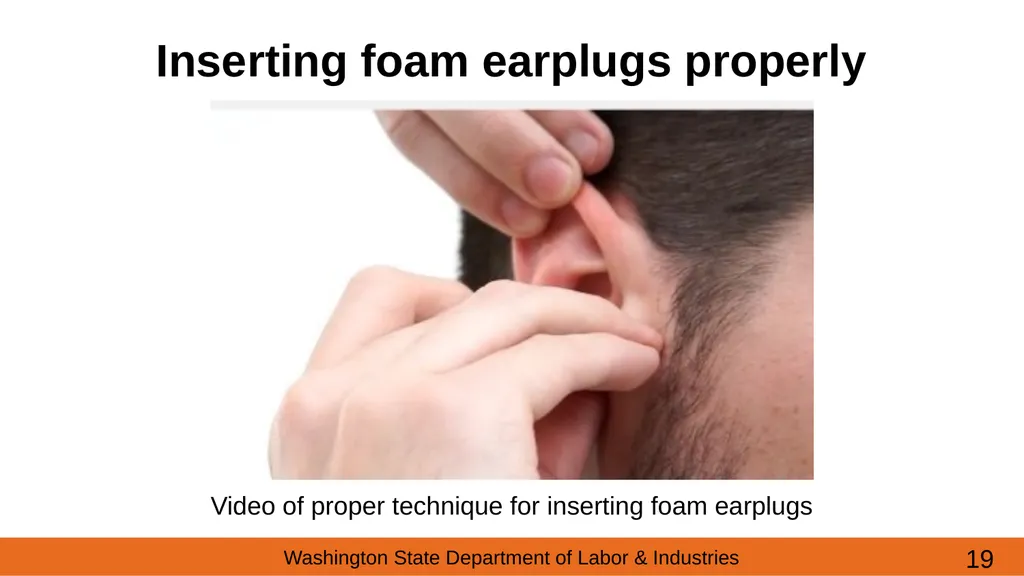
Inserting foam earplugs properly Video of proper technique for inserting foam earplugs<br>
20
Earplug comfort Earplugs may be uncomfortable for some people at first.
Earplugs rarely cause infection or prolonged irritation of the ear canal.
Most people can find a comfortable fit by trying several sizes, types, or brands.
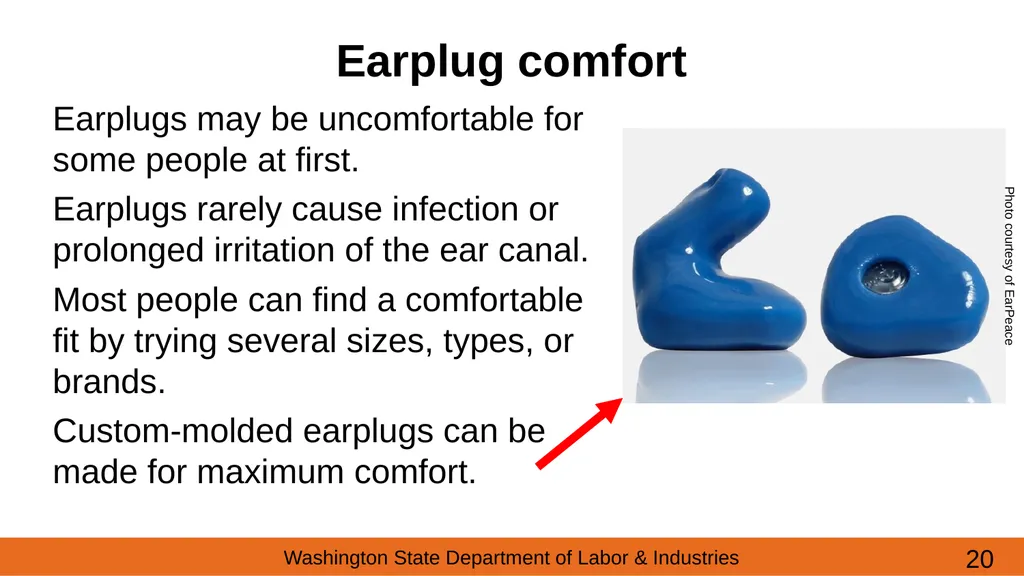
Custom-molded earplugs can be made for maximum comfort. Photo courtesy of EarPeace<br>
21
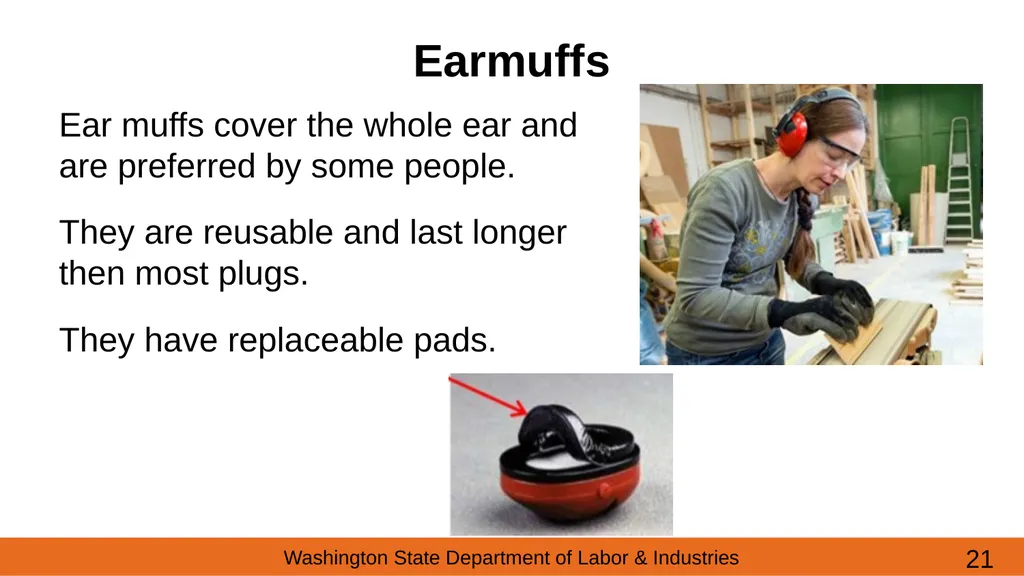
Earmuffs Ear muffs cover the whole ear and are preferred by some people.
They are reusable and last longer then most plugs.
They have replaceable pads.<br>
22
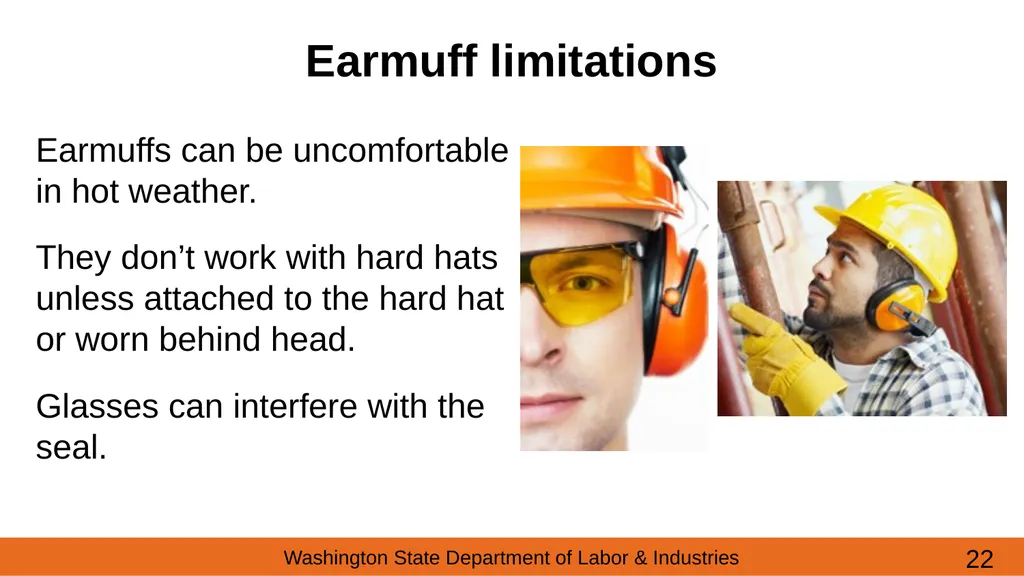
Earmuff limitations Earmuffs can be uncomfortable in hot weather.
They don’t work with hard hats unless attached to the hard hat or worn behind head.
Glasses can interfere with the seal.<br>
23
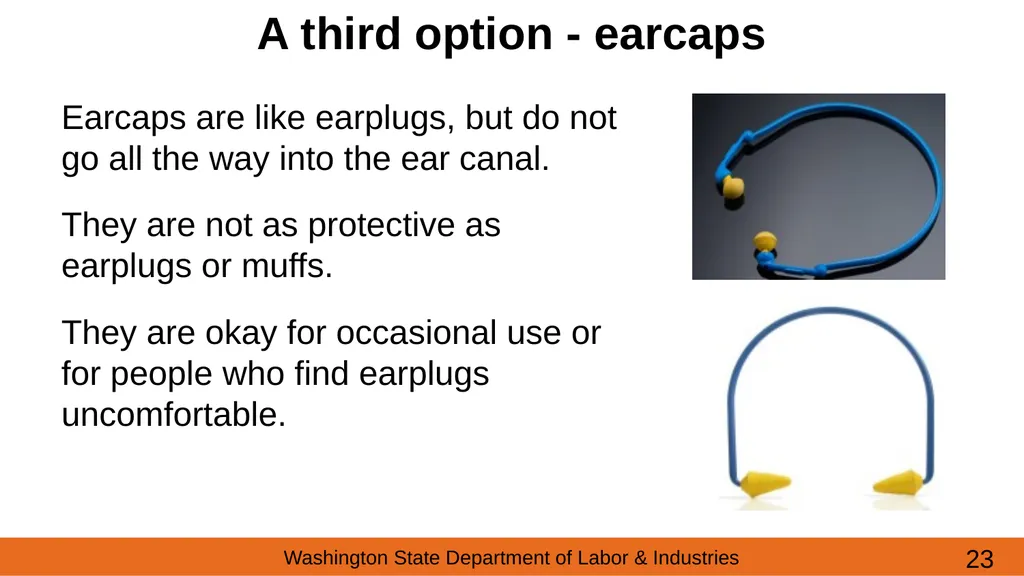
A third option - earcaps Earcaps are like earplugs, but do not go all the way into the ear canal.
They are not as protective as earplugs or muffs.
They are okay for occasional use or for people who find earplugs uncomfortable.<br>
24
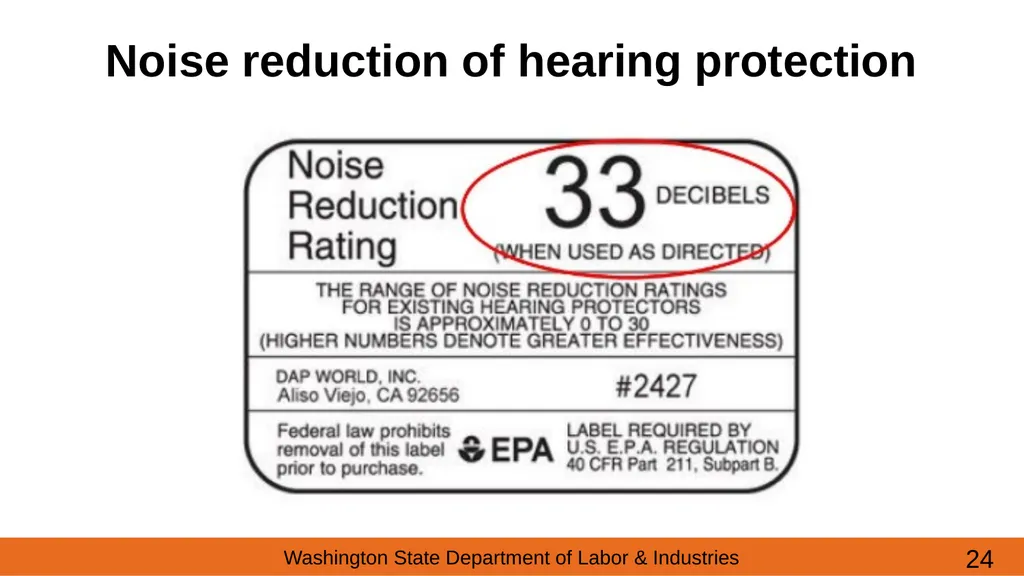
Noise reduction of hearing protection<br>
25
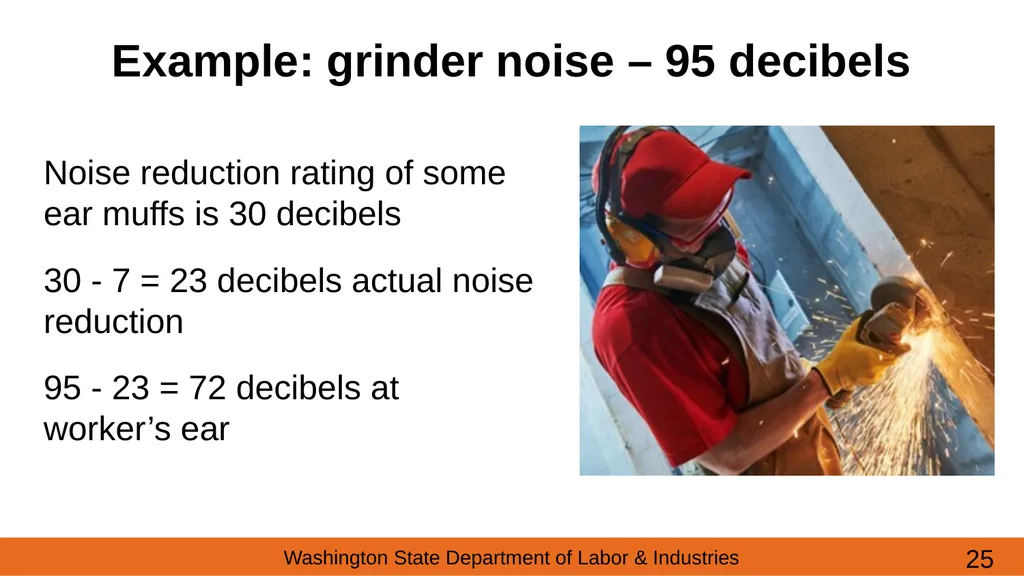
Example: grinder noise – 95 decibels Noise reduction rating of some ear muffs is 30 decibels
30 - 7 = 23 decibels actual noise reduction
95 - 23 = 72 decibels at worker’s ear<br>
26
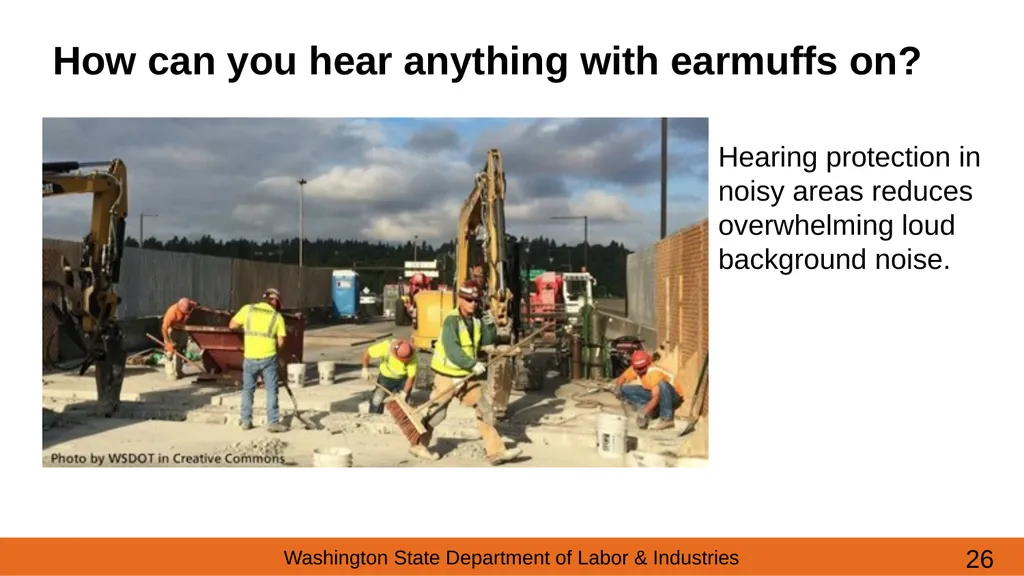
How can you hear anything with earmuffs on? Hearing protection in noisy areas reduces overwhelming loud background noise.<br>
27
What happens if you take your earmuffs off for just a few minutes? No effect –
it is just a few minutes
OR
It might make my ears ring
OR
It will cause some hearing loss Noise level at this location – 110 decibels<br>
28
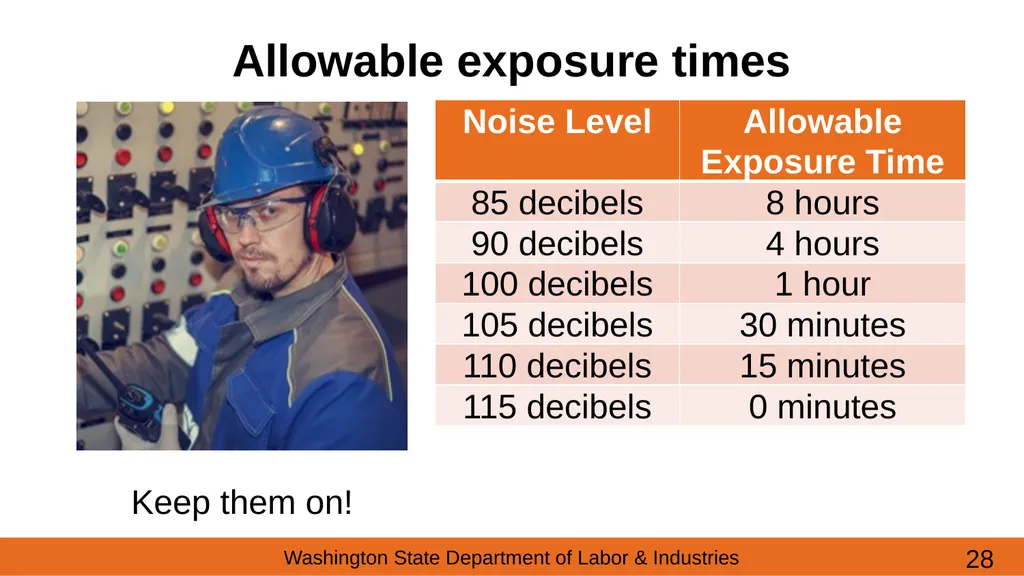
Allowable exposure times Keep them on!<br>
29
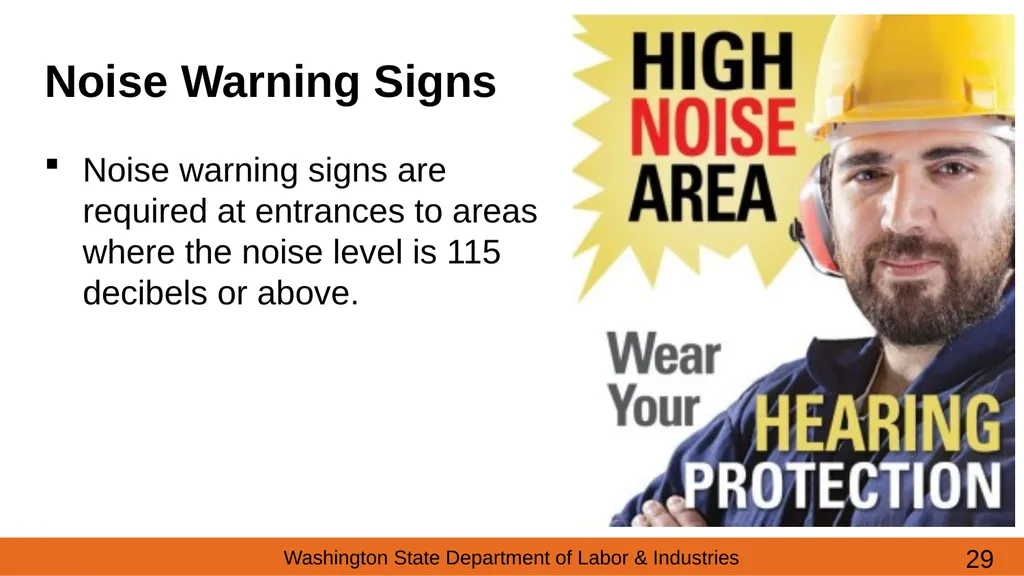
Noise Warning Signs Noise warning signs are required at entrances to areas where the noise level is 115 decibels or above.<br>
30
Hearing aids and loud noise<br>
31
Smart phones and noise cancelling headphones Regular earbuds are not protective.
Some noise cancelling headphones can provide protection.<br>
32
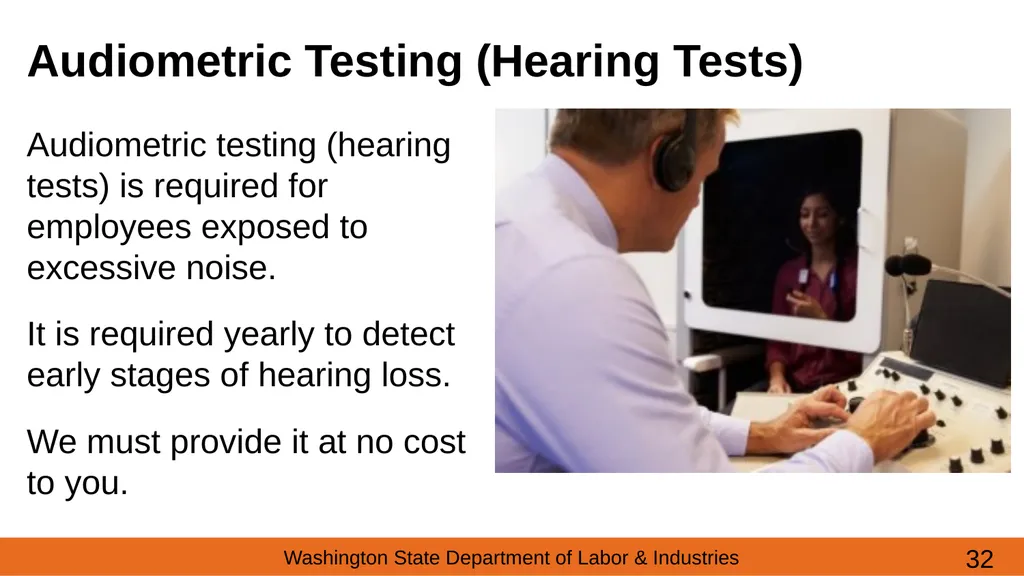
Audiometric Testing (Hearing Tests) Audiometric testing (hearing tests) is required for employees exposed to excessive noise.
It is required yearly to detect early stages of hearing loss.
We must provide it at no cost to you.<br>
33
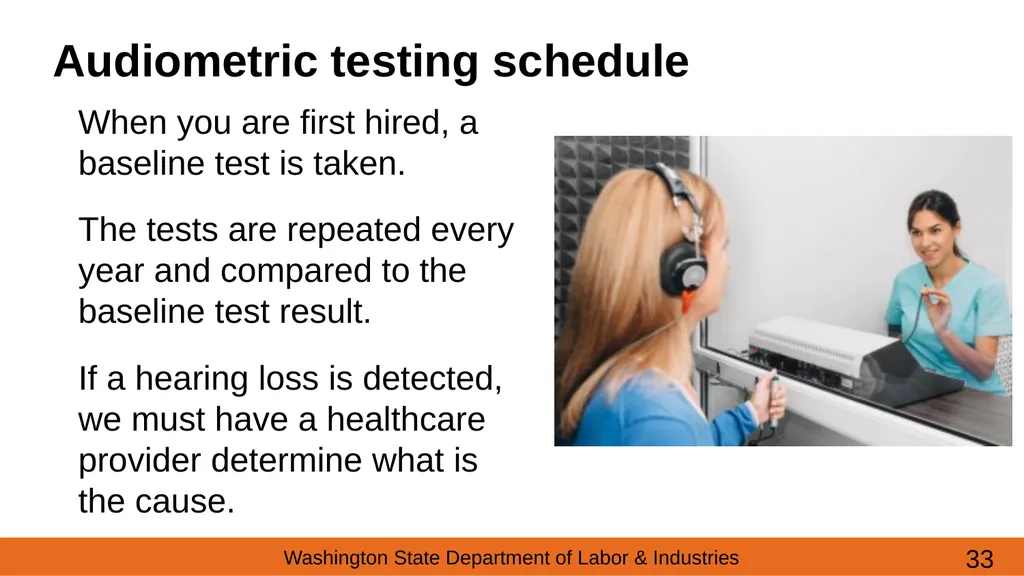
When you are first hired, a baseline test is taken.
The tests are repeated every year and compared to the baseline test result.
If a hearing loss is detected, we must have a healthcare provider determine what is the cause. Audiometric testing schedule<br>
34
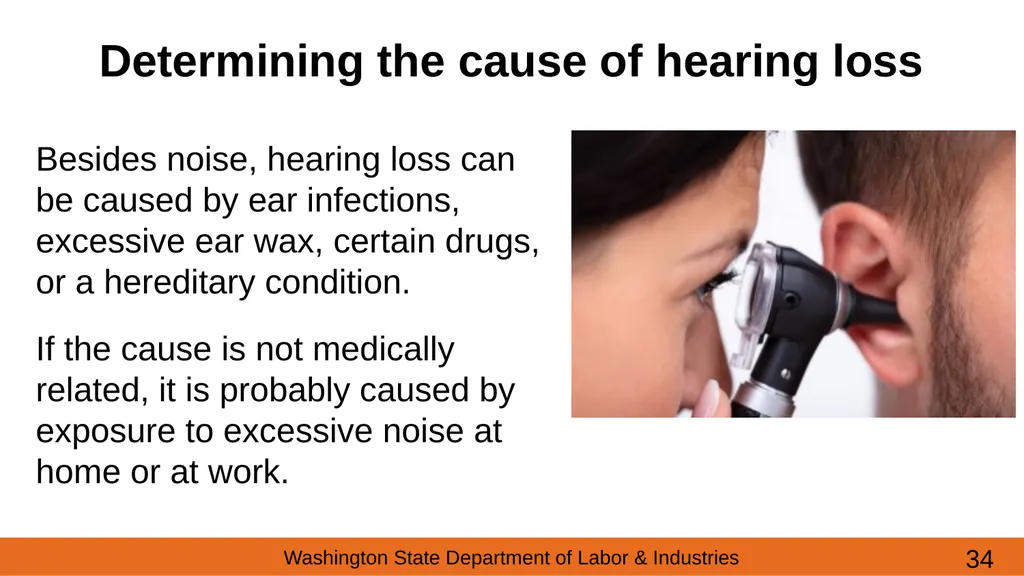
Determining the cause of hearing loss Besides noise, hearing loss can be caused by ear infections, excessive ear wax, certain drugs, or a hereditary condition.
If the cause is not medically related, it is probably caused by exposure to excessive noise at home or at work.<br>
35
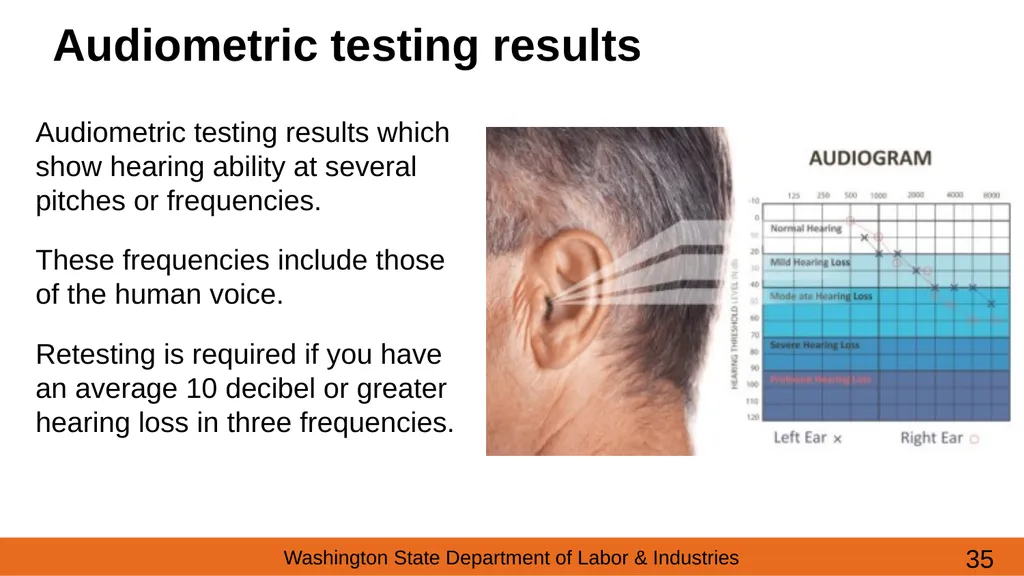
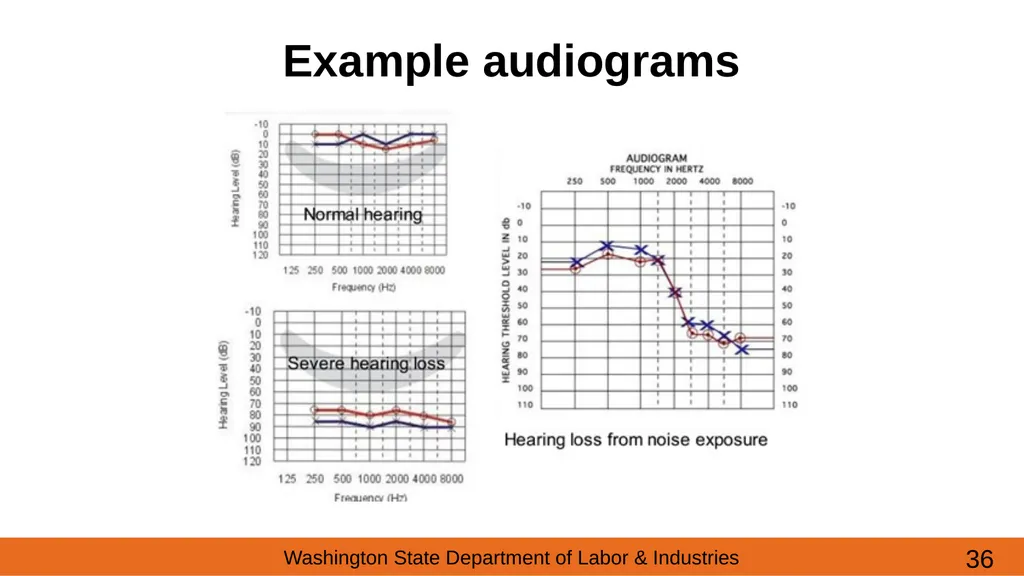
Audiometric testing results which show hearing ability at several pitches or frequencies.
These frequencies include those of the human voice.
Retesting is required if you have an average 10 decibel or greater hearing loss in three frequencies. Audiometric testing results<br>
36
Example audiograms<br>
37
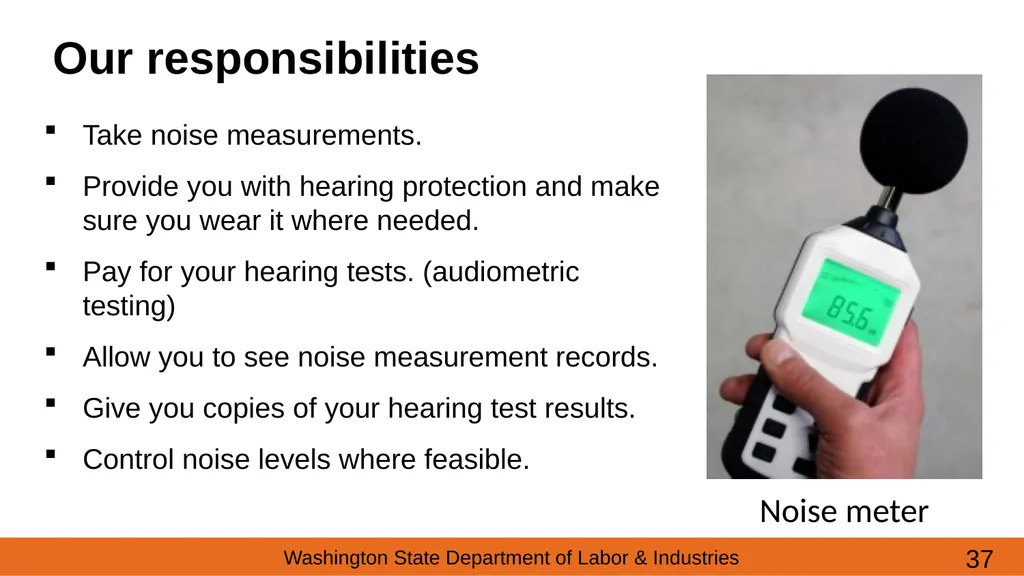
Our responsibilities Take noise measurements.
Provide you with hearing protection and make sure you wear it where needed.
Pay for your hearing tests. (audiometric testing)
Allow you to see noise measurement records.
Give you copies of your hearing test results.
Control noise levels where feasible. Noise meter<br>
38
The following areas or use of equipment is where hearing protection is required:<br>
39
Noise level measurements results were:<br>
40
We have done the following to reduce noise levels:<br>
41
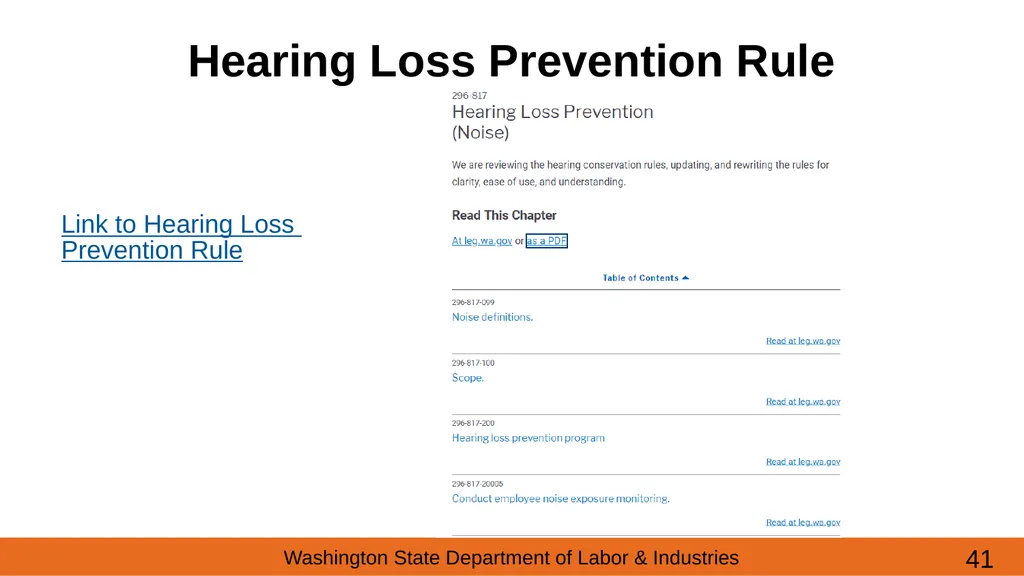
Hearing Loss Prevention Rule Link to Hearing Loss Prevention Rule<br>