Energy Transformation for Green Growth Pathways for Sustainable Energy Security to Power Indias Economic Growth 29 August 2015, Kolkata Growth Environment Indias rapid economic growth A range of developmental outcomes Cost to the
Related Topics
Share
Embed code
Download this presentation From Below
"Energy Transformation for Green Growth Pathways" is the property of its rightful owner. Permission is granted to
download and print the materials on this website for personal, non-commercial use only, and to display it
on your personal computer provided you do not modify the materials and that you retain all copyright
notices contained in the materials. By downloading content from our website, you accept the terms of this
agreement.
Presentation Transcript
01
Energy Transformation for Green Growth Pathways for Sustainable Energy Security to Power India’s Economic Growth
29 August 2015, Kolkata<br>
02
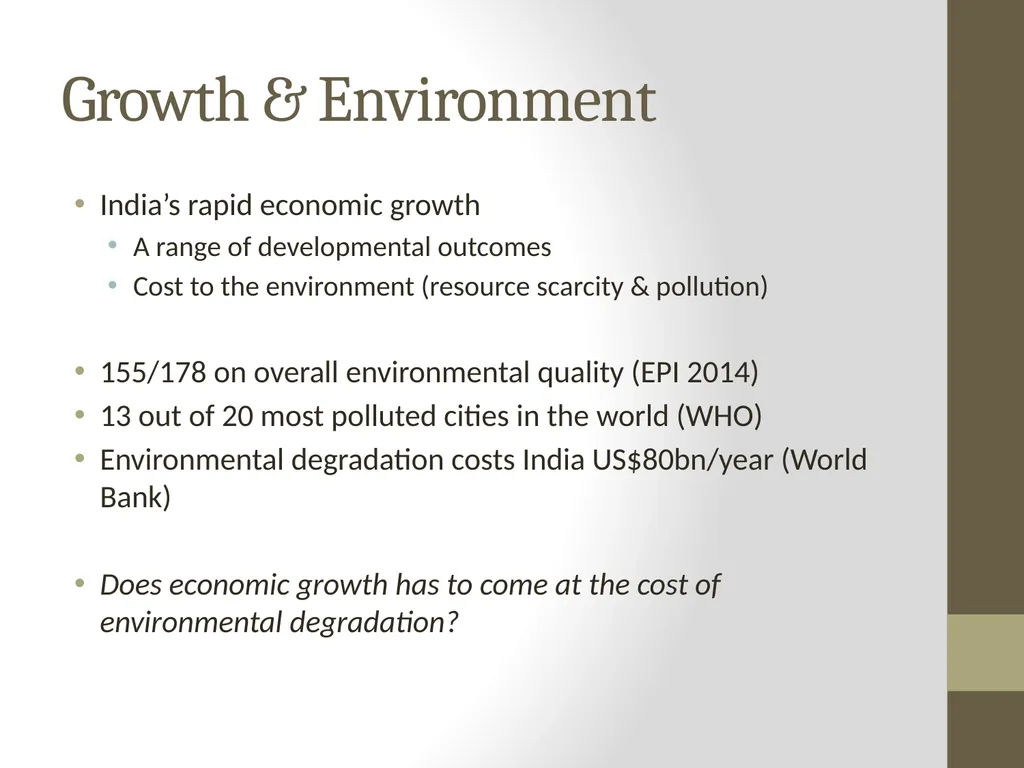
Growth & Environment India’s rapid economic growth
A range of developmental outcomes
Cost to the environment (resource scarcity & pollution)
155/178 on overall environmental quality (EPI 2014)
13 out of 20 most polluted cities in the world (WHO)
Environmental degradation costs India US$80bn/year (World Bank)
Does economic growth has to come at the cost of environmental degradation?<br>
03
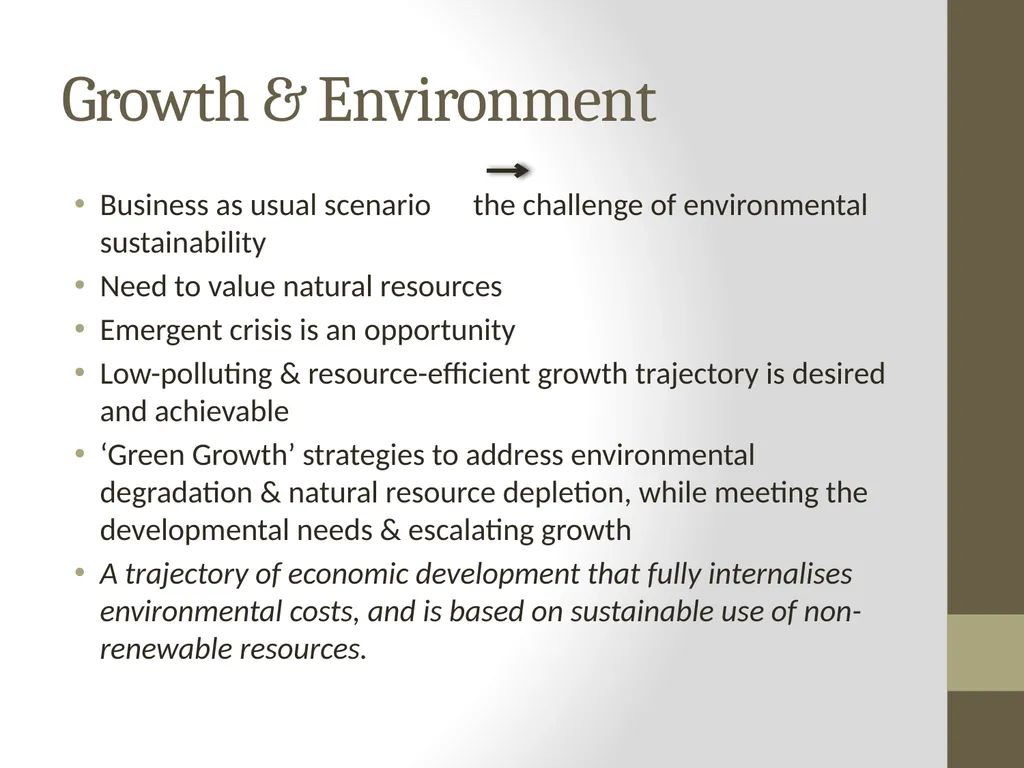
Growth & Environment Business as usual scenario the challenge of environmental sustainability
Need to value natural resources
Emergent crisis is an opportunity
Low-polluting & resource-efficient growth trajectory is desired and achievable
‘Green Growth’ strategies to address environmental degradation & natural resource depletion, while meeting the developmental needs & escalating growth
A trajectory of economic development that fully internalises environmental costs, and is based on sustainable use of non-renewable resources.<br>
04
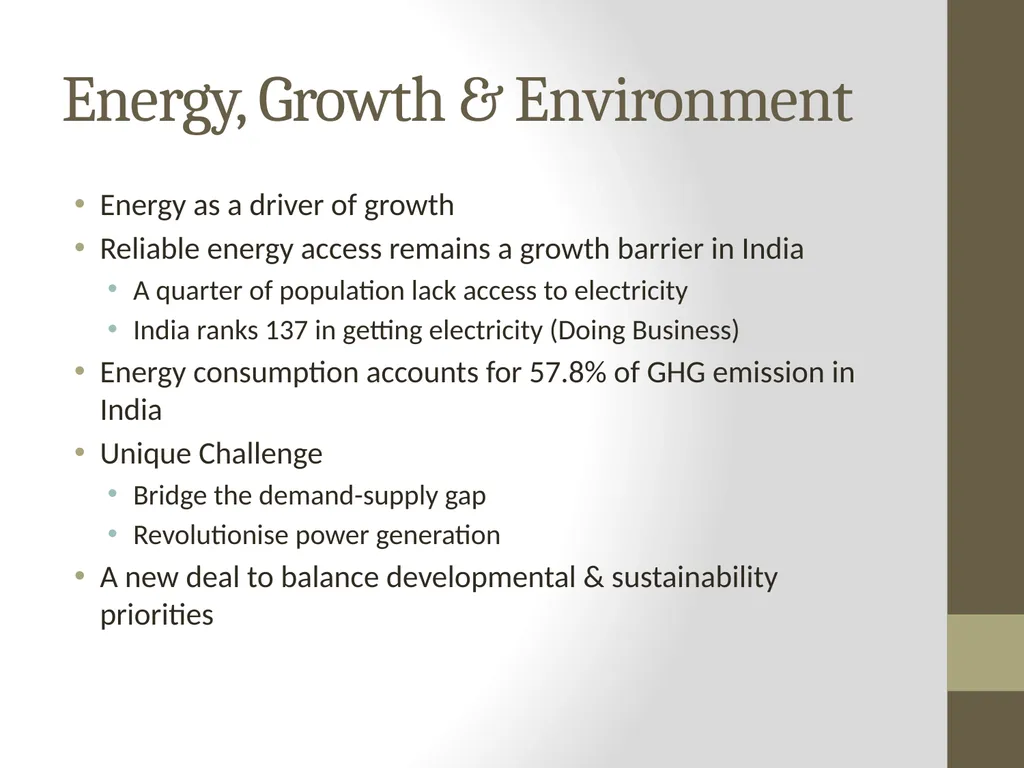
Energy, Growth & Environment Energy as a driver of growth
Reliable energy access remains a growth barrier in India
A quarter of population lack access to electricity
India ranks 137 in getting electricity (Doing Business)
Energy consumption accounts for 57.8% of GHG emission in India
Unique Challenge
Bridge the demand-supply gap
Revolutionise power generation
A new deal to balance developmental & sustainability priorities<br>
05
Energy, Growth & Environment India is the third largest electricity market
Projected to grow fastest in coming decade
Of the 10 largest electricity systems, Indian market grew fastest with a growth of 9.6% between 2013 & 2014
With 74% of electricity from coal-fired power plants in 1014-15, India is the most coal dependent nation
Projected to consume 20% of all internationally traded coal
Import dependency to fuel power plants
Over past 5 years, coal import has tripled to supply 22% of total consumption in 2014
In 2014, Indian electricity was second most carbon intensive among top 20 nations<br>
06
Need for an Energy Transformation Need for a transformation in the way energy produced, distributed and consumed
GoI recognises the need
To deliver, in sustainable way, a significantly bigger electricity supply
To improve grid efficiency & encourage infrastructure investment
To support a rapid diversification away from coal-fired power<br>
07
Need for an Energy Transformation We have planned a 5x growth in renewable energy in the next five years. It is an article of faith for Prime Minister Narendra Modi. India is much more conscious today and all of us recognise that we have to leave behind a cleaner and greener country as we move forward.
Minister of Power, Coal and New & Renewable Energy
Additional RE installed capacity of 175MW by 2022
National Solar Mission- 100 GW by 2022
Proposed National Renewable Energy Act
New Integrated Energy Policy<br>
08
Developmental & Environmental Implications National energy security
Reduced import dependency
Industrial promotion (boost the Make in India initiative)
Employment generation
Regional development
Facilitate achievement of forthcoming SDGs
Reduced carbon intensity of economy
Reduced natural resource depletion and pollution<br>
09
Challenges to be Addressed India’s energy transformation will require huge investment
Meeting the RE targets only needs US$200 bn investment
Fragile power market and bankrupt distribution utilities
Systemic challenges
Fundamental challenges in all segments of Indian electricity
Process challenges
Conflict of policies
Integrated planning
Effective regulation
Conceptual challenges
Sustainability – Equity
Availability – Affordability – Accessibility
Diversity<br>
10
Political Economy Matters Long-standing ‘growth-first’ approach
Polluters pay
Climate action plan
Indian approach to sustainable development
Inclusiveness & equity
Limits of Indian approach<br>
11
There is a will to transform the energy sector.
Have we got the right strategies in place?
How to create a strong political mandate for energy transformations?
How to mobilise decision-makers and social majority for such a transformation?<br>