
Engaging Students in Statistics through Art
Description: Engaging Students in Statistics through Art Dancing Statistics eCOTS 2020 Dr Lucy Irving The Dancing Statistics Films Search BPS Official and... Sampling and Standard Error Correlation Variance Frequency Distributions Merging of
Related Topics
Download Presentation
"Engaging Students in Statistics through Art" is the property of its rightful owner. Permission is granted to download and print the materials on this website for personal, non-commercial use only, and to display it on your personal computer provided you do not modify the materials and that you retain all copyright notices contained in the materials. By downloading content from our website, you accept the terms of this agreement.
Presentation Transcript
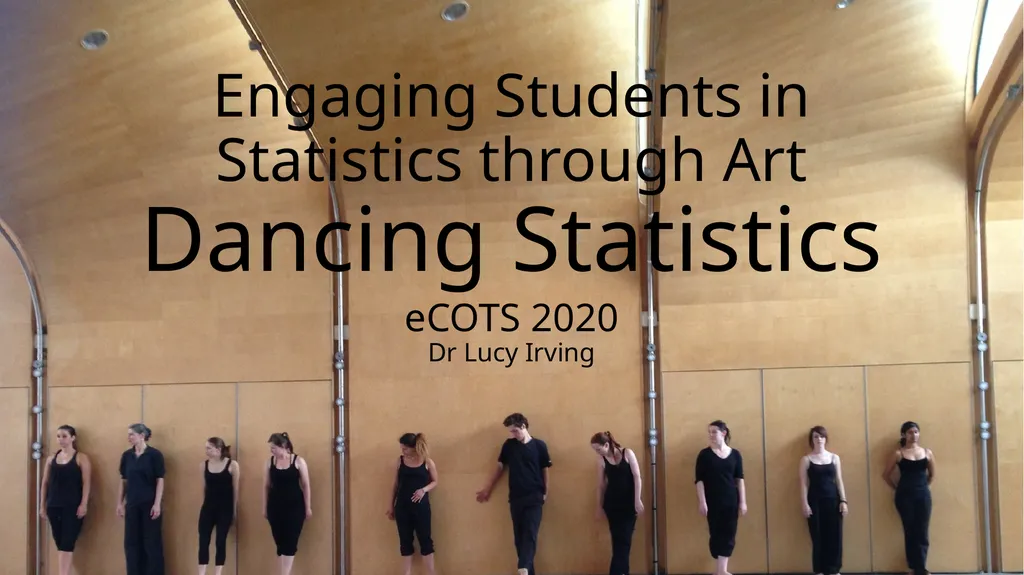
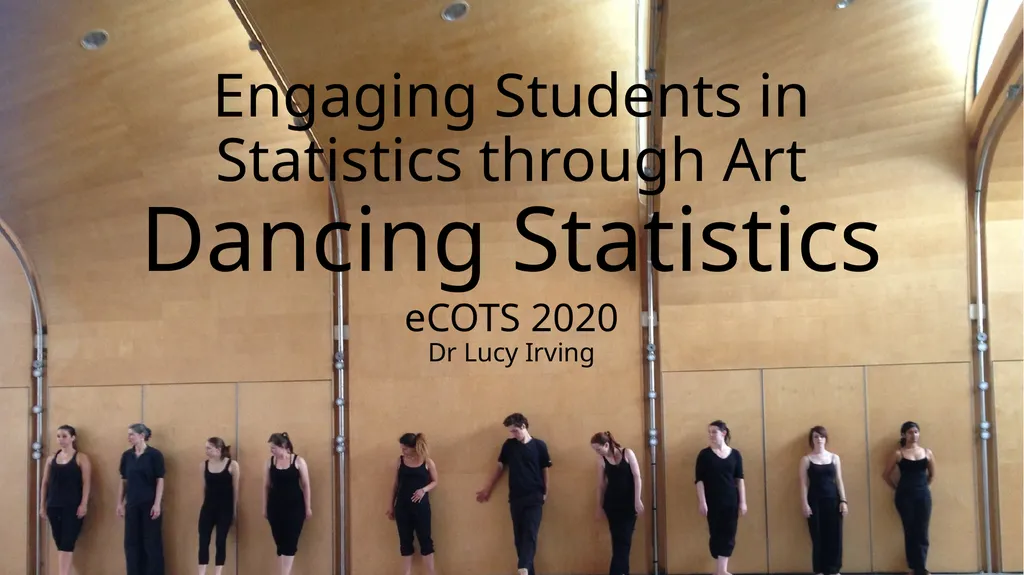
slide1. Engaging Students in Statistics through Art
Dancing Statistics eCOTS 2020
Dr Lucy Irving<br>
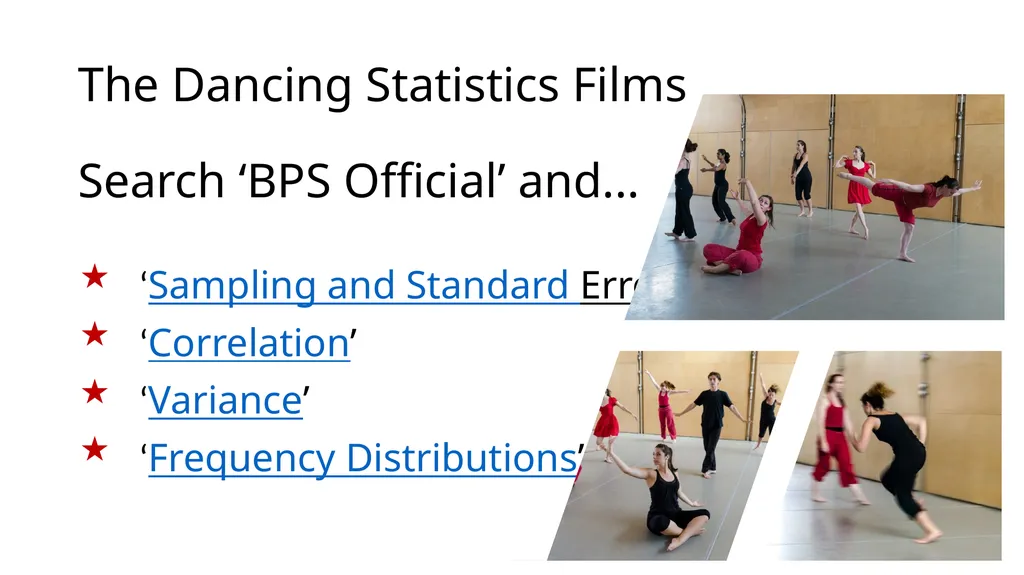
slide2. The Dancing Statistics Films Search ‘BPS Official’ and...
‘Sampling and Standard Error’
‘Correlation’
‘Variance’
‘Frequency Distributions’<br>
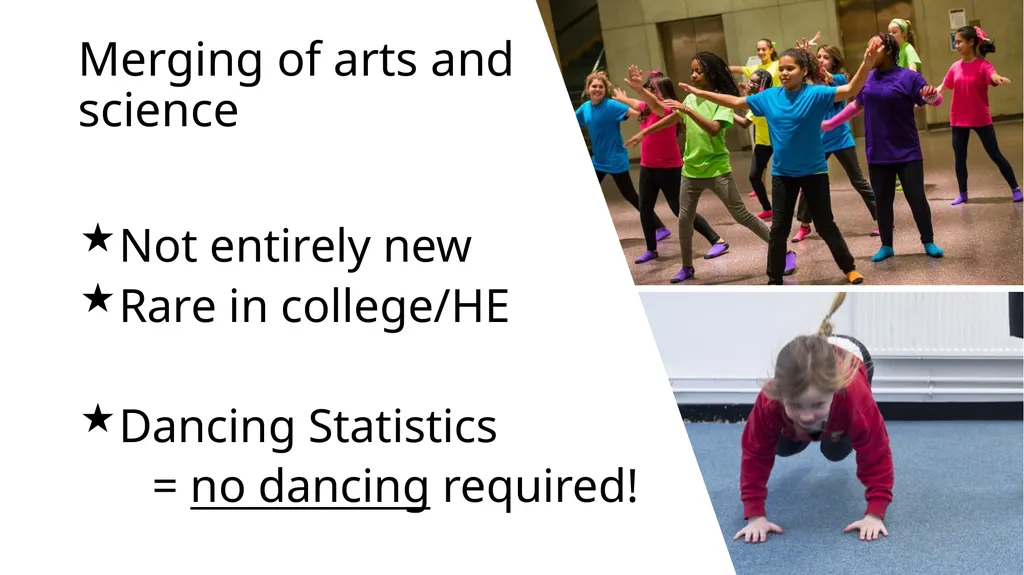
slide3. Merging of arts and science Not entirely new
Rare in college/HE
Dancing Statistics
= no dancing required!<br>
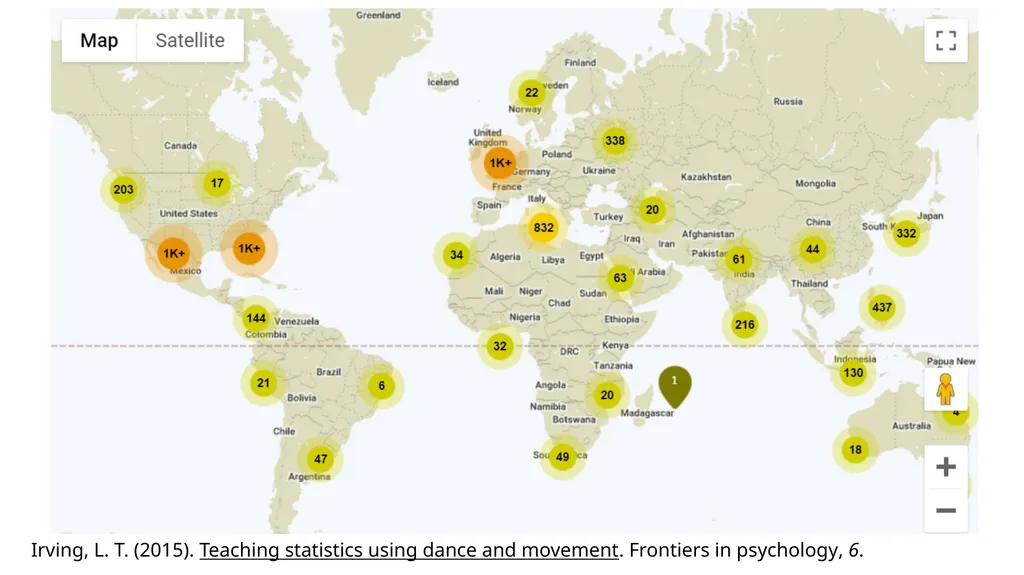
slide5. Irving, L. T. (2015). Teaching statistics using dance and movement. Frontiers in psychology, 6.<br>
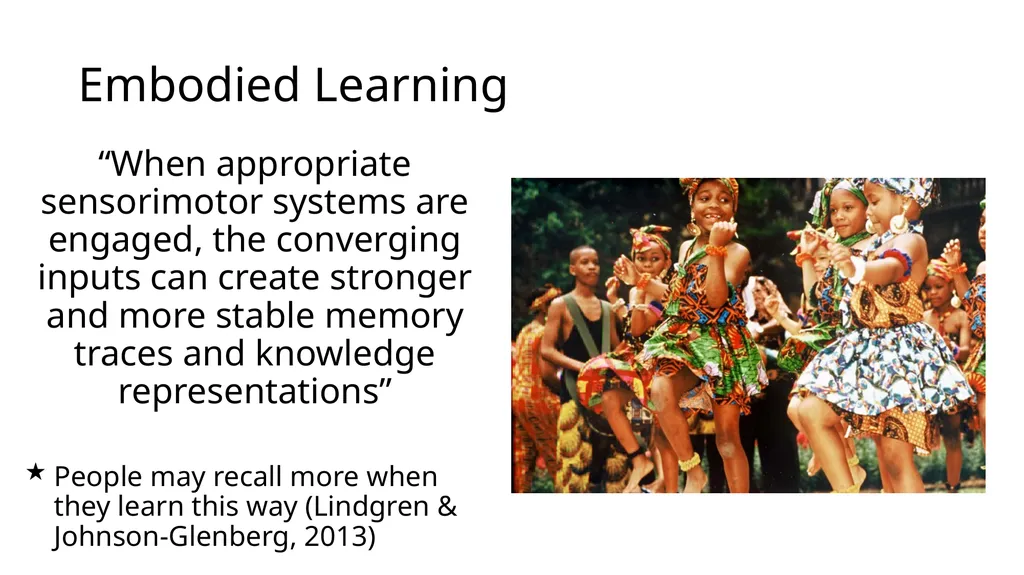
slide6. Embodied Learning “When appropriate sensorimotor systems are engaged, the converging inputs can create stronger and more stable memory traces and knowledge representations”
People may recall more when they learn this way (Lindgren & Johnson-Glenberg, 2013)<br>
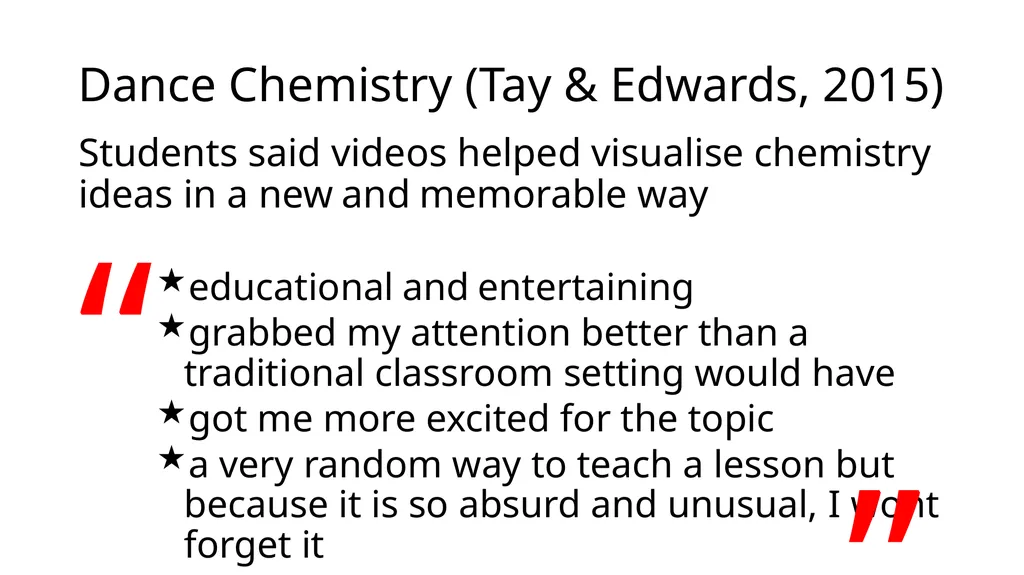
slide7. Dance Chemistry (Tay & Edwards, 2015) Students said videos helped visualise chemistry ideas in a new and memorable way
educational and entertaining
grabbed my attention better than a traditional classroom setting would have
got me more excited for the topic
a very random way to teach a lesson but because it is so absurd and unusual, I wont forget it ” “<br>
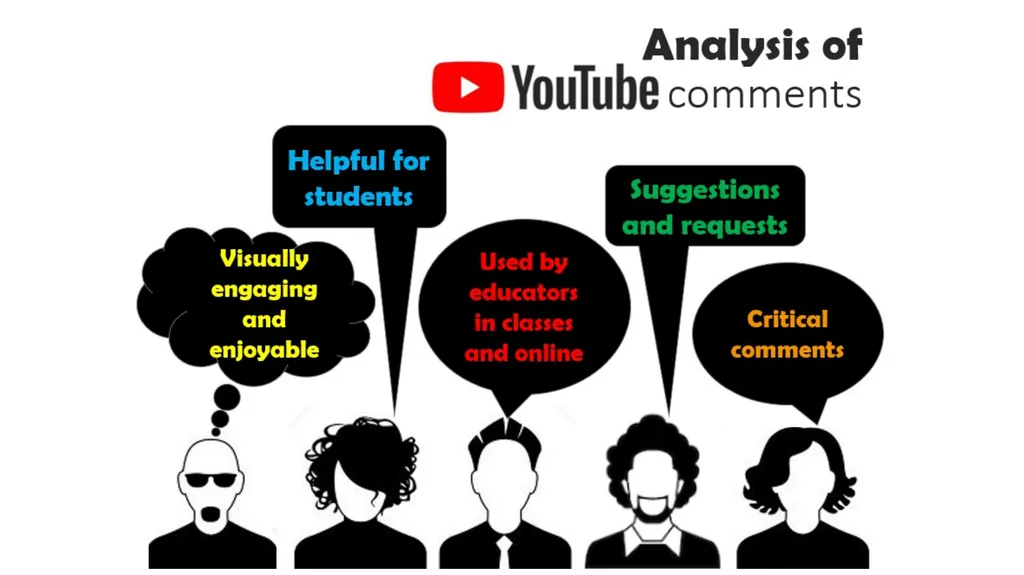
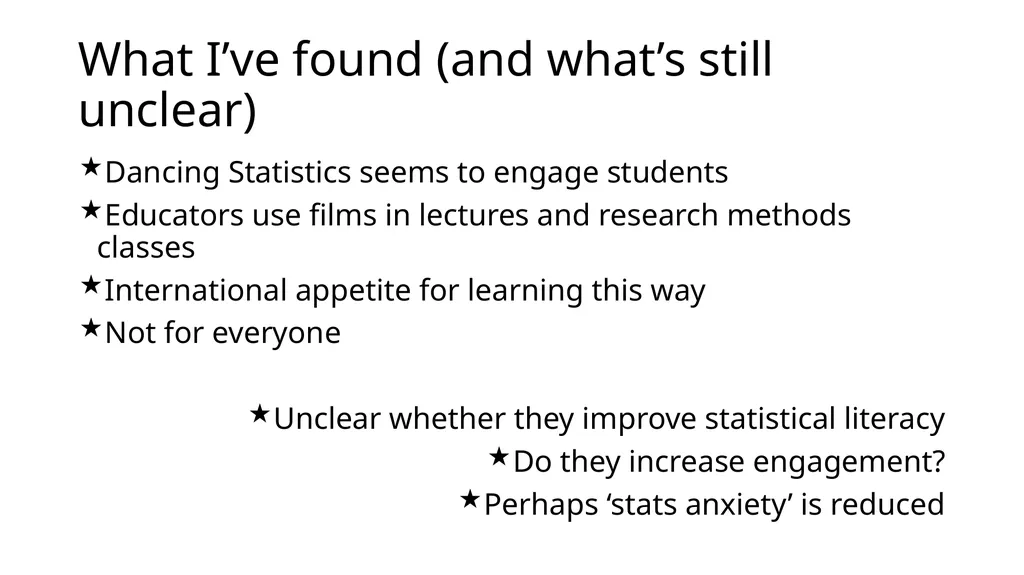
slide8. What I’ve found (and what’s still unclear) Dancing Statistics seems to engage students
Educators use films in lectures and research methods classes
International appetite for learning this way
Not for everyone
Unclear whether they improve statistical literacy
Do they increase engagement?
Perhaps ‘stats anxiety’ is reduced<br>
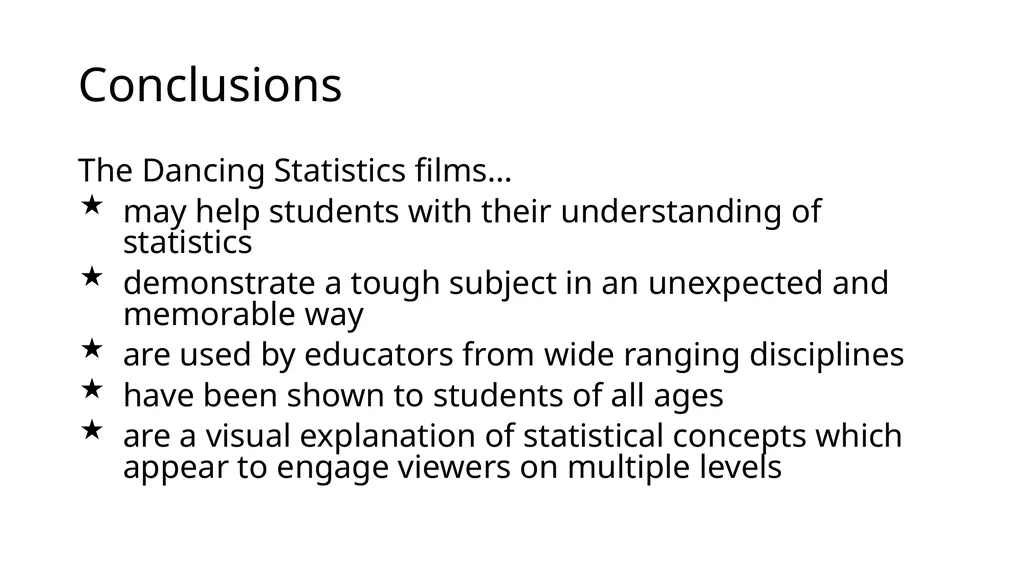
slide9. Conclusions The Dancing Statistics films…
may help students with their understanding of statistics
demonstrate a tough subject in an unexpected and memorable way
are used by educators from wide ranging disciplines
have been shown to students of all ages
are a visual explanation of statistical concepts which appear to engage viewers on multiple levels<br>
slide10. Thanks for your time Some references
Bohannon, J. (2011). Dance vs. PowerPoint, a modest proposal. TEDx Brussels.
Harris et al 2019. Ready, Cell, Go! Guided Movement Exercises in an Introductory Cell Biology Course. Students solved spatiotemporal and energetic problems with their own bodies in constrained spaces. these exercises rearranged concepts learned in the classroom, facilitating that sense of discovery
Irving, L. T. (2015). Teaching statistics using dance and movement. Frontiers in psychology, 6.
Kalpana, I. M. (2015). Bharatanatyam and mathematics: Teaching geometry through dance. Journal of Fine and Studio Art, 5(2), 6-17.
Lobo, Y. B., & Winsler, A. (2006). The effects of a creative dance and movement program on the social competence of head start preschoolers. Social Development, 15(3), 501-519.
Stern, E., & Schaffer, K. (2012). Math dance: Erik Stern and Karl Schaffer at TEDx Manhattan Beach. Accessed from: https://www.youtube.com/watch?v=Ws2y-cGoWqQ.
Tay, G. C., & Edwards, K. D. (2015). DanceChemistry: Helping Students Visualize Chemistry Concepts through Dance Videos. Journal of Chemical Education, 92(11), 1956-1959. If you have feedback, ideas, or suggestions, I’d love to hear from you l.irving@mdx.ac.uk
@StatsDancer<br>
slide11. Embodied Learning References Deans, J. (2016). Thinking, feeling and relating: Young children learning through dance. Australasian Journal of Early Childhood, 41(3), 46-57.
Johnson-Glenberg, M. C., & Megowan-Romanowicz, C. (2017). Embodied science and mixed reality: How gesture and motion capture affect physics education. Cognitive Research: Principles and Implications, 2(1), 24.
Lindgren, R., & Johnson-Glenberg, M. (2013). Emboldened by embodiment: Six precepts for research on embodied learning and mixed reality. Educational Researcher, 42(8), 445-452.
Skulmowski, A., & Rey, G. D. (2018). Embodied learning: introducing a taxonomy based on bodily engagement and task integration. Cognitive research: principles and implications, 3(1), 6.<br>
slide2. The Dancing Statistics Films Search ‘BPS Official’ and...
‘Sampling and Standard Error’
‘Correlation’
‘Variance’
‘Frequency Distributions’<br>
slide3. Merging of arts and science Not entirely new
Rare in college/HE
Dancing Statistics
= no dancing required!<br>
slide5. Irving, L. T. (2015). Teaching statistics using dance and movement. Frontiers in psychology, 6.<br>
slide6. Embodied Learning “When appropriate sensorimotor systems are engaged, the converging inputs can create stronger and more stable memory traces and knowledge representations”
People may recall more when they learn this way (Lindgren & Johnson-Glenberg, 2013)<br>
slide7. Dance Chemistry (Tay & Edwards, 2015) Students said videos helped visualise chemistry ideas in a new and memorable way
educational and entertaining
grabbed my attention better than a traditional classroom setting would have
got me more excited for the topic
a very random way to teach a lesson but because it is so absurd and unusual, I wont forget it ” “<br>
slide8. What I’ve found (and what’s still unclear) Dancing Statistics seems to engage students
Educators use films in lectures and research methods classes
International appetite for learning this way
Not for everyone
Unclear whether they improve statistical literacy
Do they increase engagement?
Perhaps ‘stats anxiety’ is reduced<br>
slide9. Conclusions The Dancing Statistics films…
may help students with their understanding of statistics
demonstrate a tough subject in an unexpected and memorable way
are used by educators from wide ranging disciplines
have been shown to students of all ages
are a visual explanation of statistical concepts which appear to engage viewers on multiple levels<br>
slide10. Thanks for your time Some references
Bohannon, J. (2011). Dance vs. PowerPoint, a modest proposal. TEDx Brussels.
Harris et al 2019. Ready, Cell, Go! Guided Movement Exercises in an Introductory Cell Biology Course. Students solved spatiotemporal and energetic problems with their own bodies in constrained spaces. these exercises rearranged concepts learned in the classroom, facilitating that sense of discovery
Irving, L. T. (2015). Teaching statistics using dance and movement. Frontiers in psychology, 6.
Kalpana, I. M. (2015). Bharatanatyam and mathematics: Teaching geometry through dance. Journal of Fine and Studio Art, 5(2), 6-17.
Lobo, Y. B., & Winsler, A. (2006). The effects of a creative dance and movement program on the social competence of head start preschoolers. Social Development, 15(3), 501-519.
Stern, E., & Schaffer, K. (2012). Math dance: Erik Stern and Karl Schaffer at TEDx Manhattan Beach. Accessed from: https://www.youtube.com/watch?v=Ws2y-cGoWqQ.
Tay, G. C., & Edwards, K. D. (2015). DanceChemistry: Helping Students Visualize Chemistry Concepts through Dance Videos. Journal of Chemical Education, 92(11), 1956-1959. If you have feedback, ideas, or suggestions, I’d love to hear from you l.irving@mdx.ac.uk
@StatsDancer<br>
slide11. Embodied Learning References Deans, J. (2016). Thinking, feeling and relating: Young children learning through dance. Australasian Journal of Early Childhood, 41(3), 46-57.
Johnson-Glenberg, M. C., & Megowan-Romanowicz, C. (2017). Embodied science and mixed reality: How gesture and motion capture affect physics education. Cognitive Research: Principles and Implications, 2(1), 24.
Lindgren, R., & Johnson-Glenberg, M. (2013). Emboldened by embodiment: Six precepts for research on embodied learning and mixed reality. Educational Researcher, 42(8), 445-452.
Skulmowski, A., & Rey, G. D. (2018). Embodied learning: introducing a taxonomy based on bodily engagement and task integration. Cognitive research: principles and implications, 3(1), 6.<br>