ENGINE INDICATING AND CREW ALERTING SYSTEM (EICAS) INTRODUCTION An engine-indicating and crew-alerting system (EICAS) is an integrated system used in modern aircraft to provide aircraft crew with aircraft engines and other systems
"ENGINE INDICATING AND CREW ALERTING SYSTEM (EICAS)" is the property of its rightful owner. Permission is granted to
download and print the materials on this website for personal, non-commercial use only, and to display it
on your personal computer provided you do not modify the materials and that you retain all copyright
notices contained in the materials. By downloading content from our website, you accept the terms of this
agreement.
Presentation Transcript
01
ENGINE INDICATING AND CREW ALERTING SYSTEM (EICAS)<br>
02
INTRODUCTION An engine-indicating and crew-alerting system (EICAS) is an integrated system used in modern aircraft to provide aircraft crew with aircraft engines and other systems instrumentation and crew annunciations.
EICAS typically includes instrumentation of various engine parameters, including for example revolutions per minute, temperature values, fuel flow and quantity, oil pressure etc.
Typical other aircraft systems monitored by EICAS are for example hydraulic, pneumatic, electrical, deicing, environmental and control surface systems. EICAS has high connectivity & provides data acquisition and routing.<br>
03
INTRODUCTION EICAS is a key function of a glass cockpit system, which replaces all analog gauges with software-driven electronic displays.
Most of the display area is used for navigation and orientation displays, but one display or a section of a display is set aside specifically for EICAS.
The crew-alerting system (CAS) is used in place of the annunciator panel on older systems.
Rather than signaling a system failure by turning on a light behind a translucent button, failures are shown as a list of messages in a small window near the other EICAS indications.<br>
04
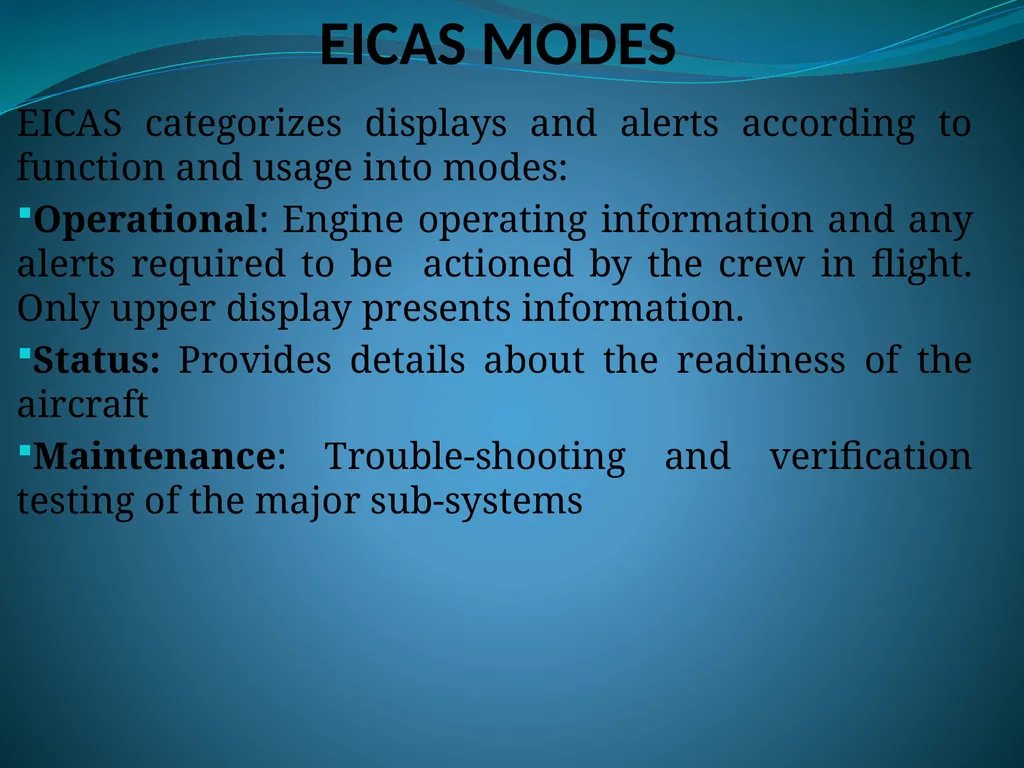
EICAS MODES EICAS categorizes displays and alerts according to function and usage into modes:
Operational: Engine operating information and any alerts required to be actioned by the crew in flight. Only upper display presents information.
Status: Provides details about the readiness of the aircraft
Maintenance: Trouble-shooting and verification testing of the major sub-systems<br>
05
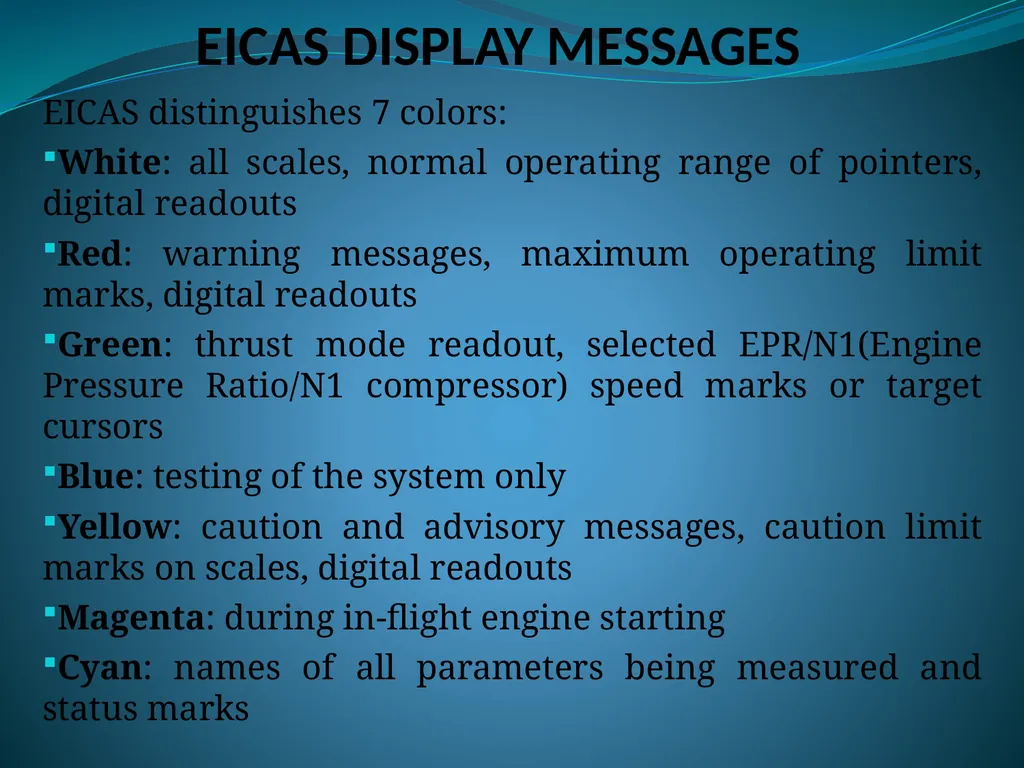
EICAS DISPLAY MESSAGES EICAS distinguishes 7 colors:
White: all scales, normal operating range of pointers, digital readouts
Red: warning messages, maximum operating limit marks, digital readouts
Green: thrust mode readout, selected EPR/N1(Engine Pressure Ratio/N1 compressor) speed marks or target cursors
Blue: testing of the system only
Yellow: caution and advisory messages, caution limit marks on scales, digital readouts
Magenta: during in-flight engine starting
Cyan: names of all parameters being measured and status marks<br>
06
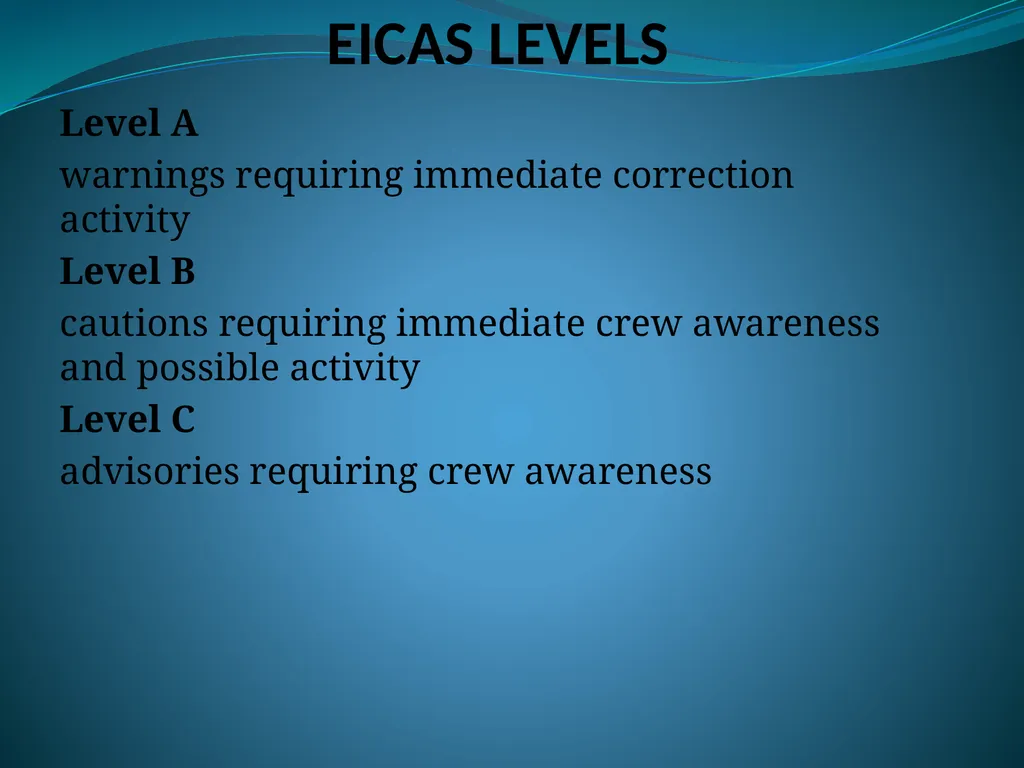
EICAS LEVELS Level A
warnings requiring immediate correction activity
Level B
cautions requiring immediate crew awareness and possible activity
Level C
advisories requiring crew awareness<br>