
Engineers in a global context Integrating

Description: Engineers in a global context Integrating Stimulating learning approaches in a USE learning line Who are we? Johanna Höffken (Innovation Sciences -TIS); Annelies Bobelyn (Industrial Engineering ITEM); Madeleine Gibescu (Electrical
Related Topics
Download Presentation
"Engineers in a global context Integrating" is the property of its rightful owner. Permission is granted to download and print the materials on this website for personal, non-commercial use only, and to display it on your personal computer provided you do not modify the materials and that you retain all copyright notices contained in the materials. By downloading content from our website, you accept the terms of this agreement.
Presentation Transcript
slide1. Engineers
in a global context Integrating Stimulating learning approaches in a USE learning line<br>
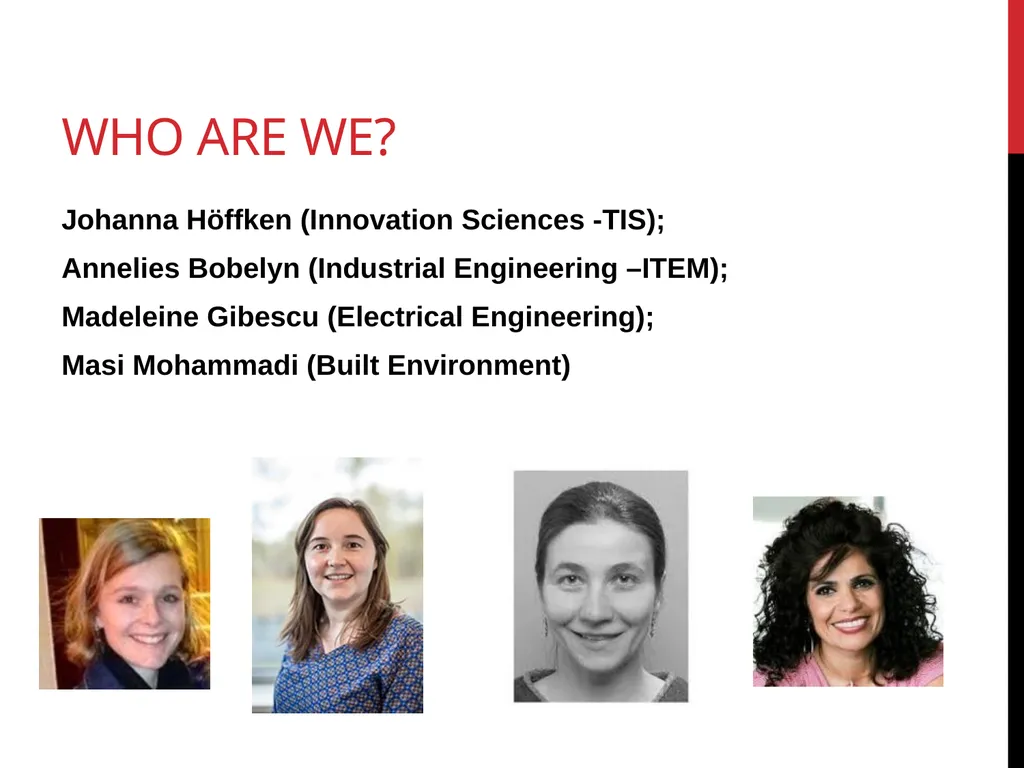
slide2. Who are we? Johanna Höffken (Innovation Sciences -TIS);
Annelies Bobelyn (Industrial Engineering –ITEM);
Madeleine Gibescu (Electrical Engineering);
Masi Mohammadi (Built Environment)<br>
slide3. Aim & Justification Our project aims to explore and implement stimulating learning approaches, which link and integrate university education with the broader context.
Educate ‘T-shaped’ engineers:
students’ ability to communicate and collaborate not only across but also beyond their disciplinary and cultural boundaries.
Student’s ability to (inter)act with(in) a broader, transdisciplinary practice-context.<br>
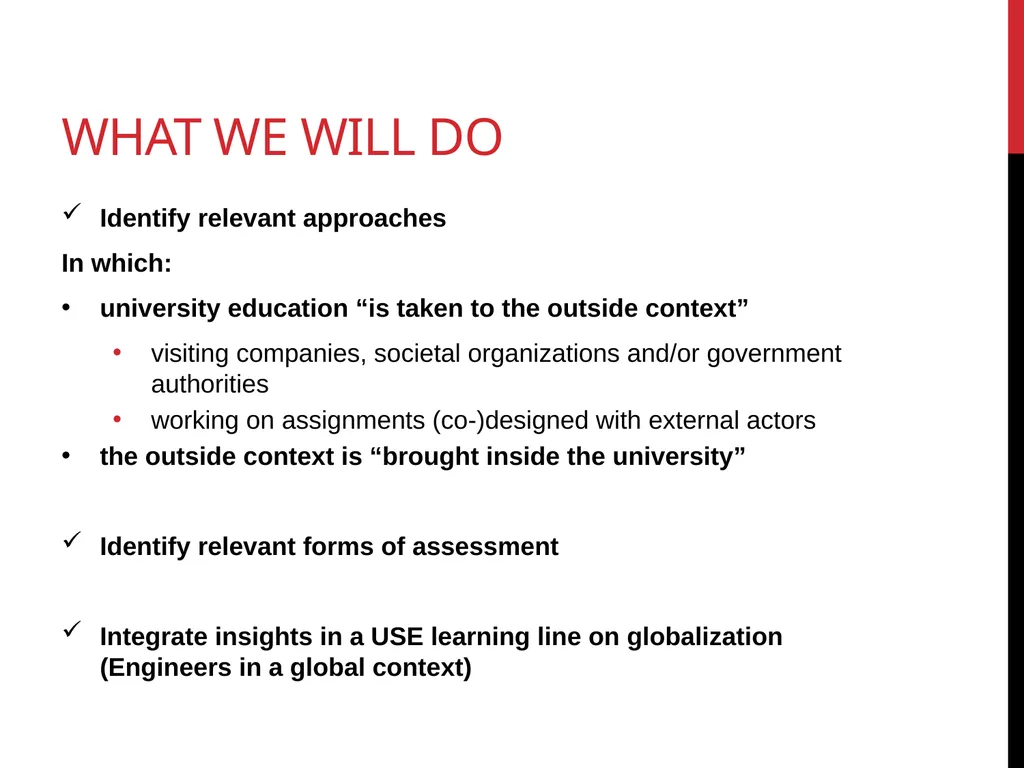
slide4. What we will do Identify relevant approaches
In which:
university education “is taken to the outside context”
visiting companies, societal organizations and/or government authorities
working on assignments (co-)designed with external actors
the outside context is “brought inside the university”
Identify relevant forms of assessment
Integrate insights in a USE learning line on globalization (Engineers in a global context)<br>
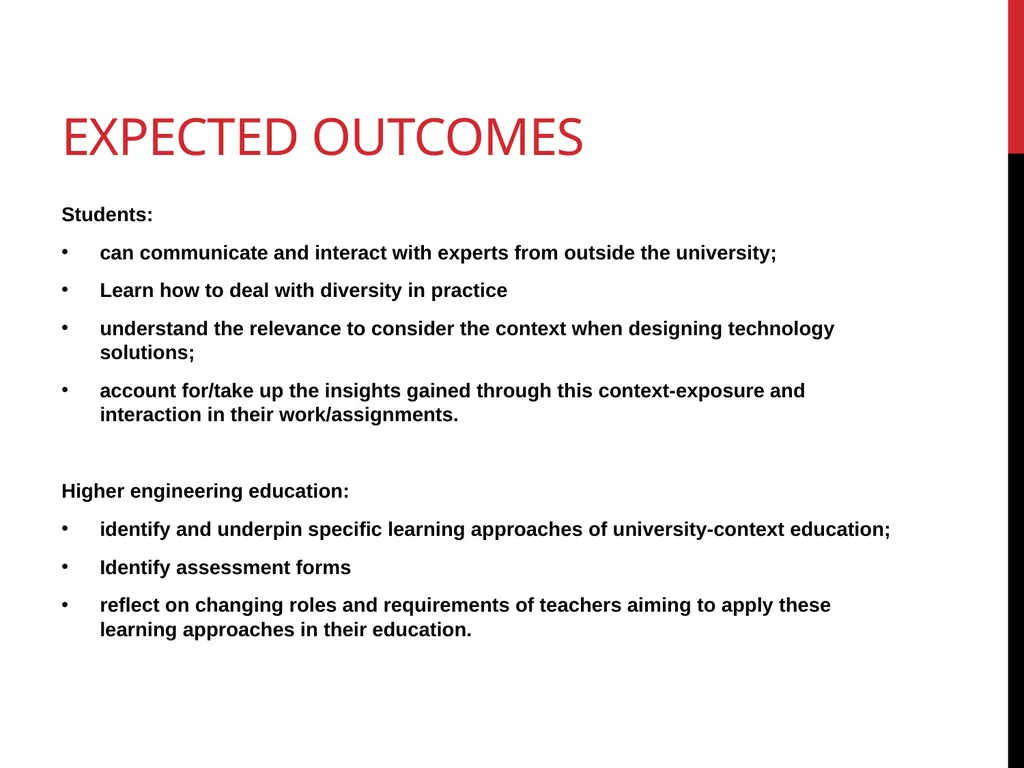
slide5. Expected outcomes Students:
can communicate and interact with experts from outside the university;
Learn how to deal with diversity in practice
understand the relevance to consider the context when designing technology solutions;
account for/take up the insights gained through this context-exposure and interaction in their work/assignments.
Higher engineering education:
identify and underpin specific learning approaches of university-context education;
Identify assessment forms
reflect on changing roles and requirements of teachers aiming to apply these learning approaches in their education.<br>
slide6. THANK YOU for your ATTENTION<br>
slide2. Who are we? Johanna Höffken (Innovation Sciences -TIS);
Annelies Bobelyn (Industrial Engineering –ITEM);
Madeleine Gibescu (Electrical Engineering);
Masi Mohammadi (Built Environment)<br>
slide3. Aim & Justification Our project aims to explore and implement stimulating learning approaches, which link and integrate university education with the broader context.
Educate ‘T-shaped’ engineers:
students’ ability to communicate and collaborate not only across but also beyond their disciplinary and cultural boundaries.
Student’s ability to (inter)act with(in) a broader, transdisciplinary practice-context.<br>
slide4. What we will do Identify relevant approaches
In which:
university education “is taken to the outside context”
visiting companies, societal organizations and/or government authorities
working on assignments (co-)designed with external actors
the outside context is “brought inside the university”
Identify relevant forms of assessment
Integrate insights in a USE learning line on globalization (Engineers in a global context)<br>
slide5. Expected outcomes Students:
can communicate and interact with experts from outside the university;
Learn how to deal with diversity in practice
understand the relevance to consider the context when designing technology solutions;
account for/take up the insights gained through this context-exposure and interaction in their work/assignments.
Higher engineering education:
identify and underpin specific learning approaches of university-context education;
Identify assessment forms
reflect on changing roles and requirements of teachers aiming to apply these learning approaches in their education.<br>
slide6. THANK YOU for your ATTENTION<br>