
English: First Additional Language NQF 3 Revision
Description: English: First Additional Language NQF 3 Revision and mock examination papers Module 12 Overview 1 Pre-listening 3 Post-listening 2 During listening The listening process Speaking Reading and viewing Writing WRITING This involves planning,
Related Topics
Download Presentation
"English: First Additional Language NQF 3 Revision" is the property of its rightful owner. Permission is granted to download and print the materials on this website for personal, non-commercial use only, and to display it on your personal computer provided you do not modify the materials and that you retain all copyright notices contained in the materials. By downloading content from our website, you accept the terms of this agreement.
Presentation Transcript
slide1. English: First Additional Language NQF 3<br>
slide2. Revision and mock examination papers Module 12<br>
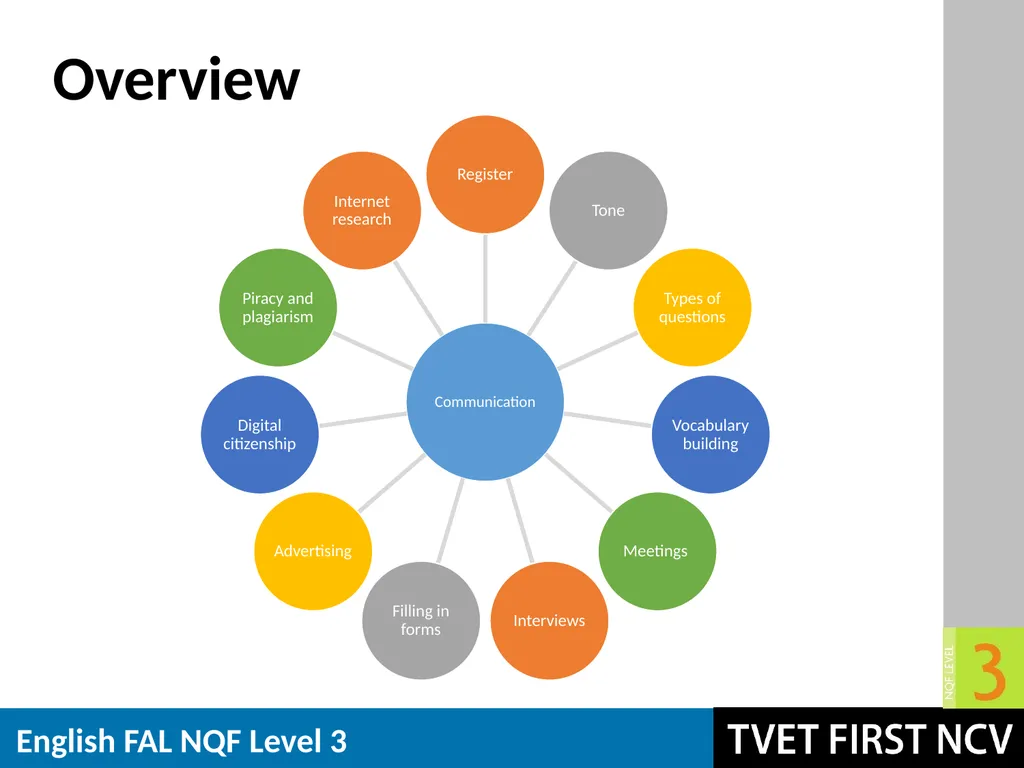
slide3. Overview<br>
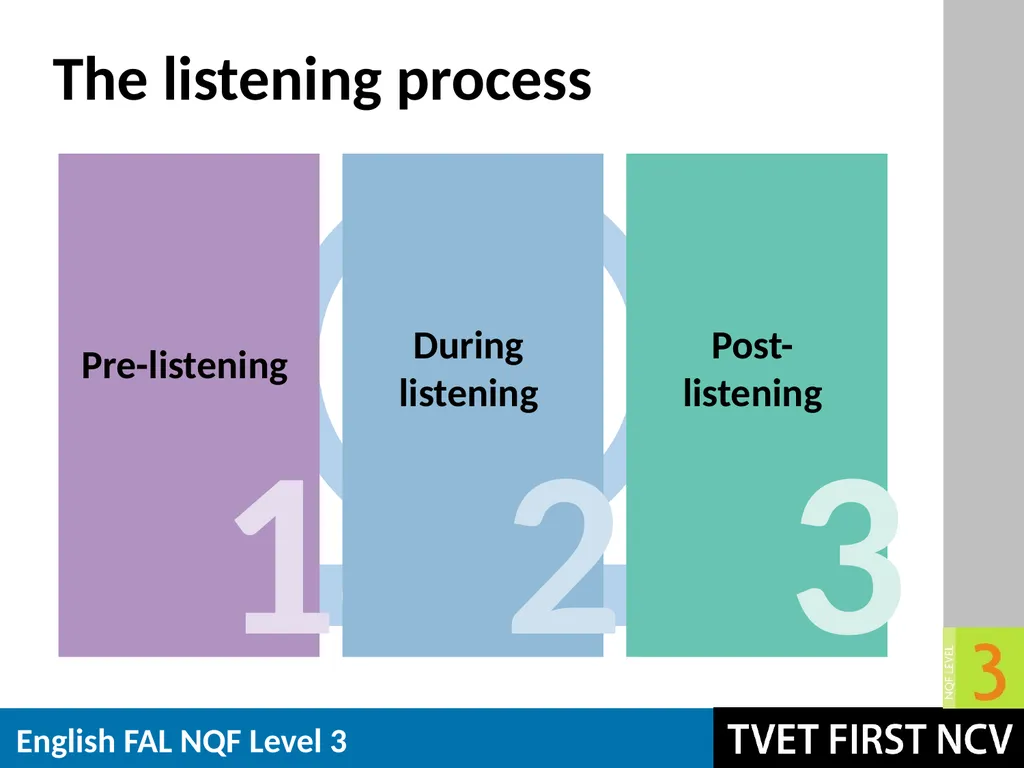
slide4. 1 Pre-listening 3 Post-listening 2 During
listening The listening process<br>
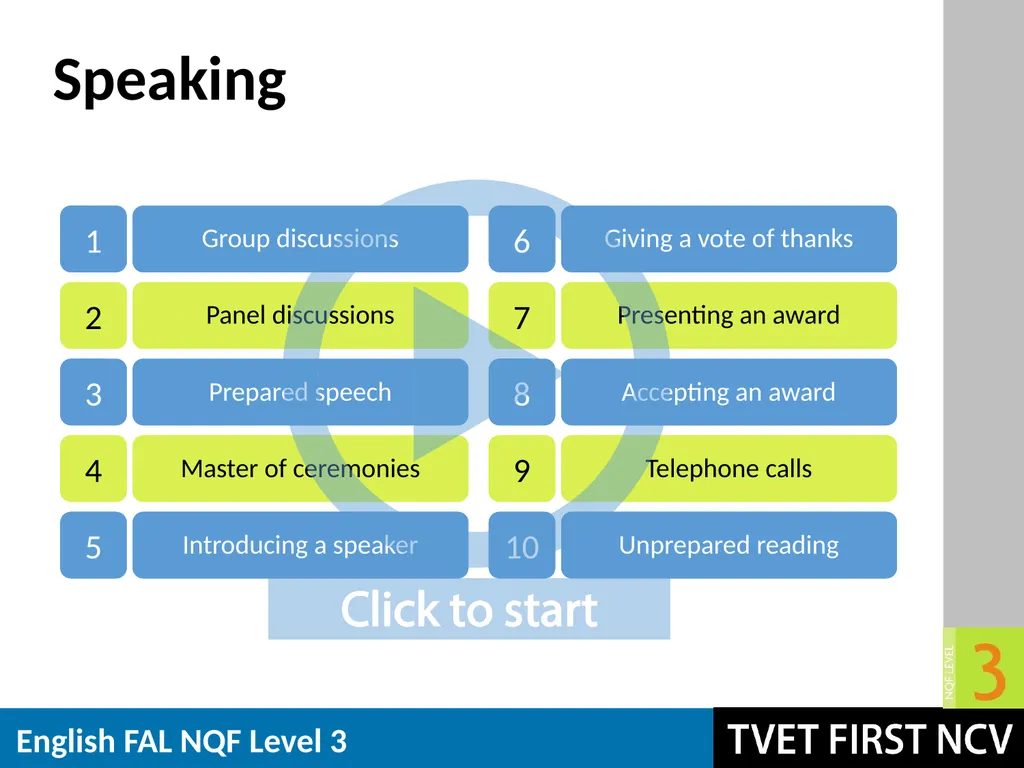
slide5. Speaking<br>
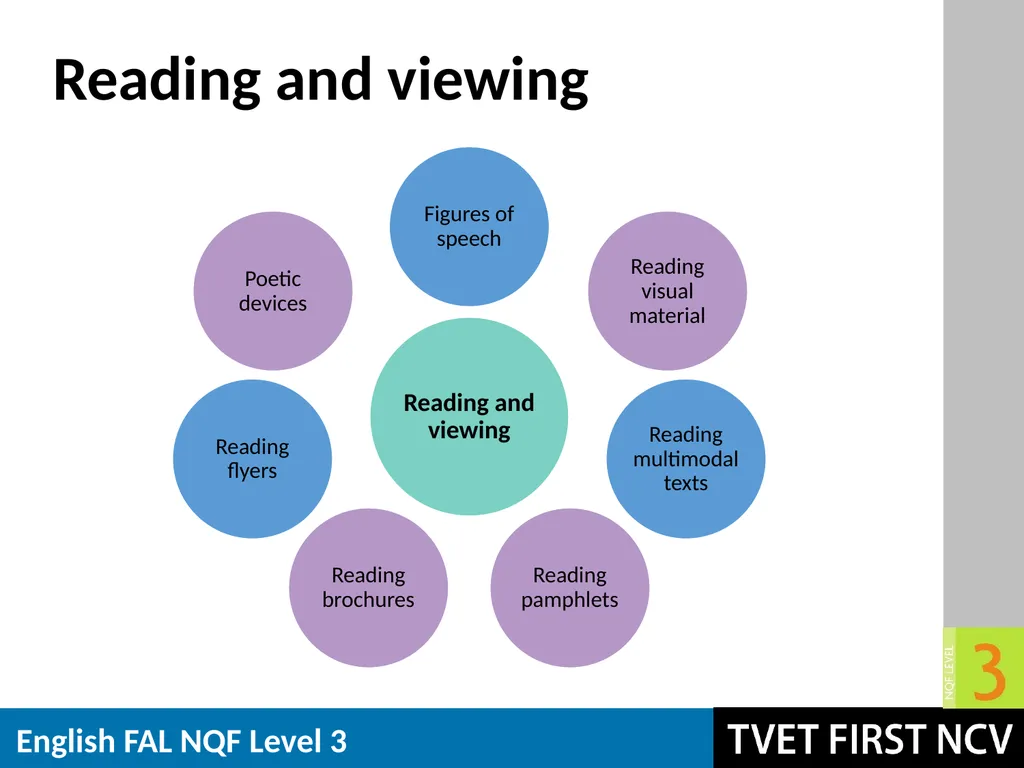
slide6. Reading and viewing<br>
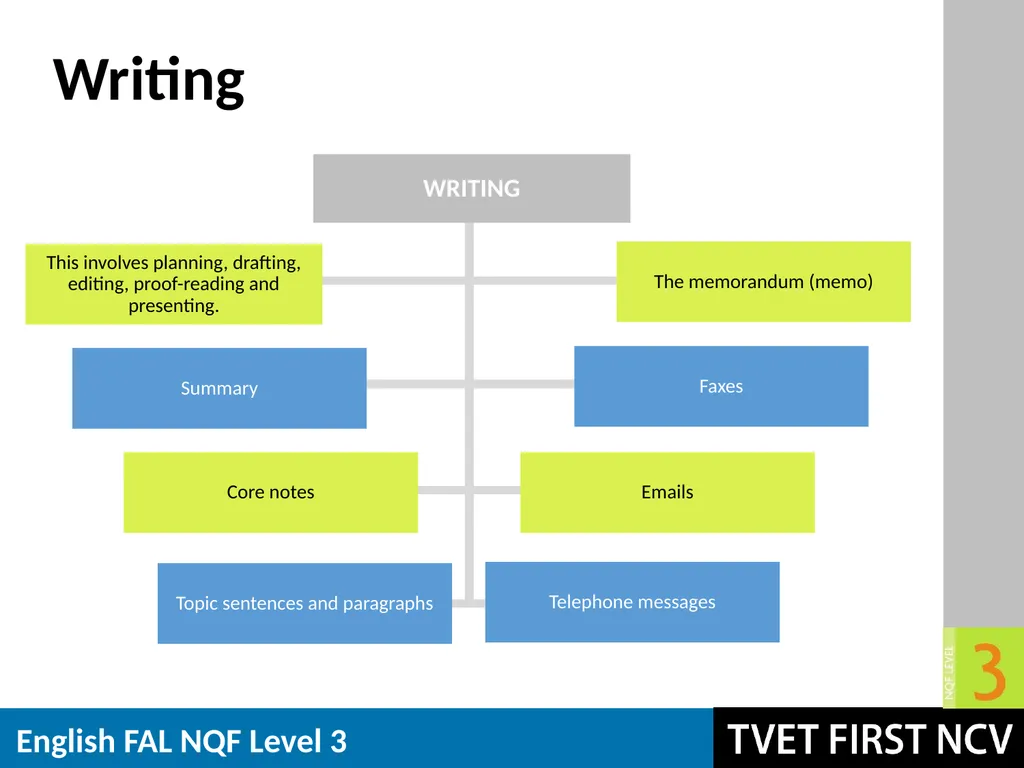
slide7. Writing WRITING This involves planning, drafting, editing, proof-reading and presenting. Summary Core notes Topic sentences and paragraphs Telephone messages Emails Faxes The memorandum (memo)<br>
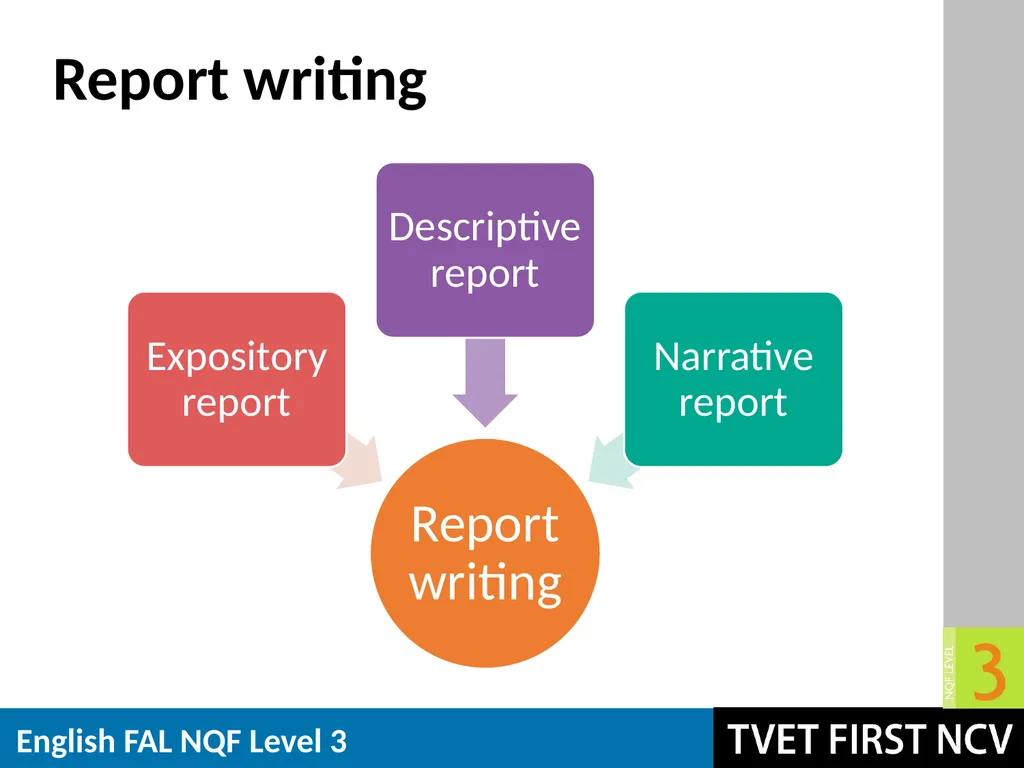
slide8. Report writing<br>
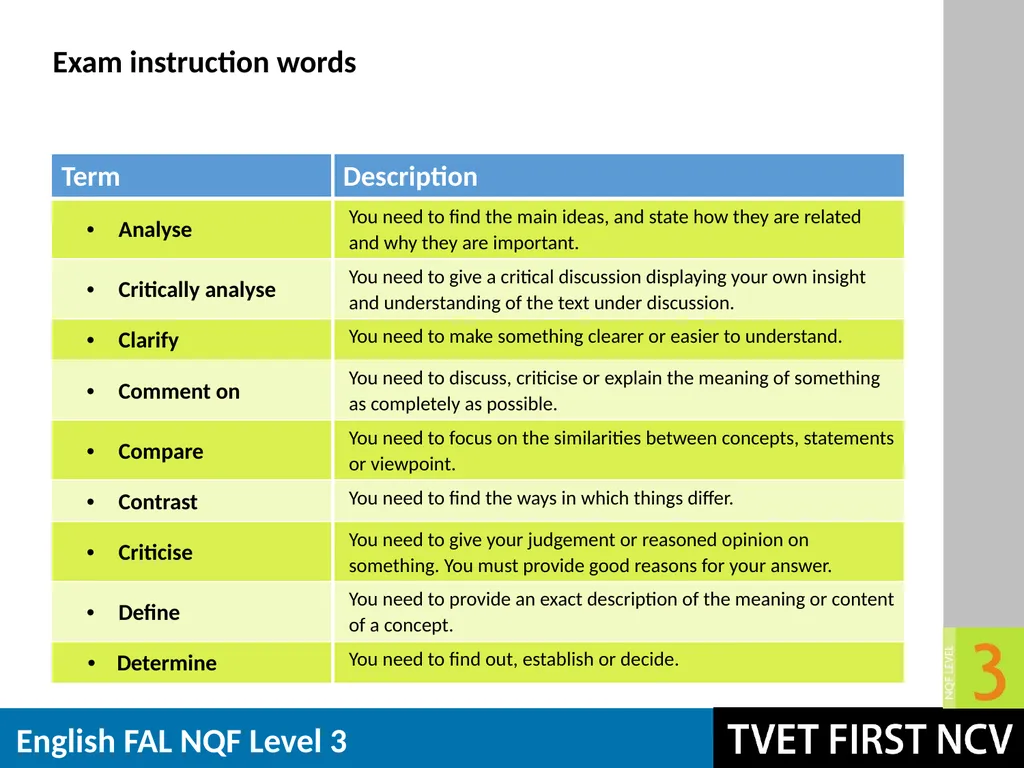
slide9. Exam instruction words<br>
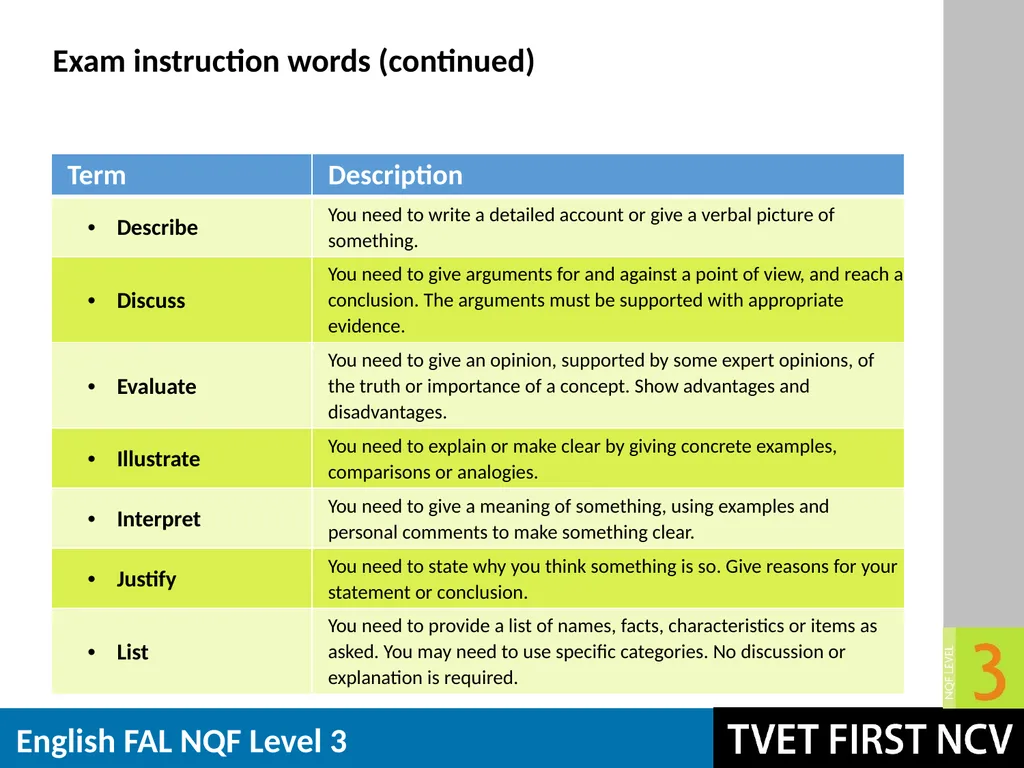
slide10. Exam instruction words (continued)<br>
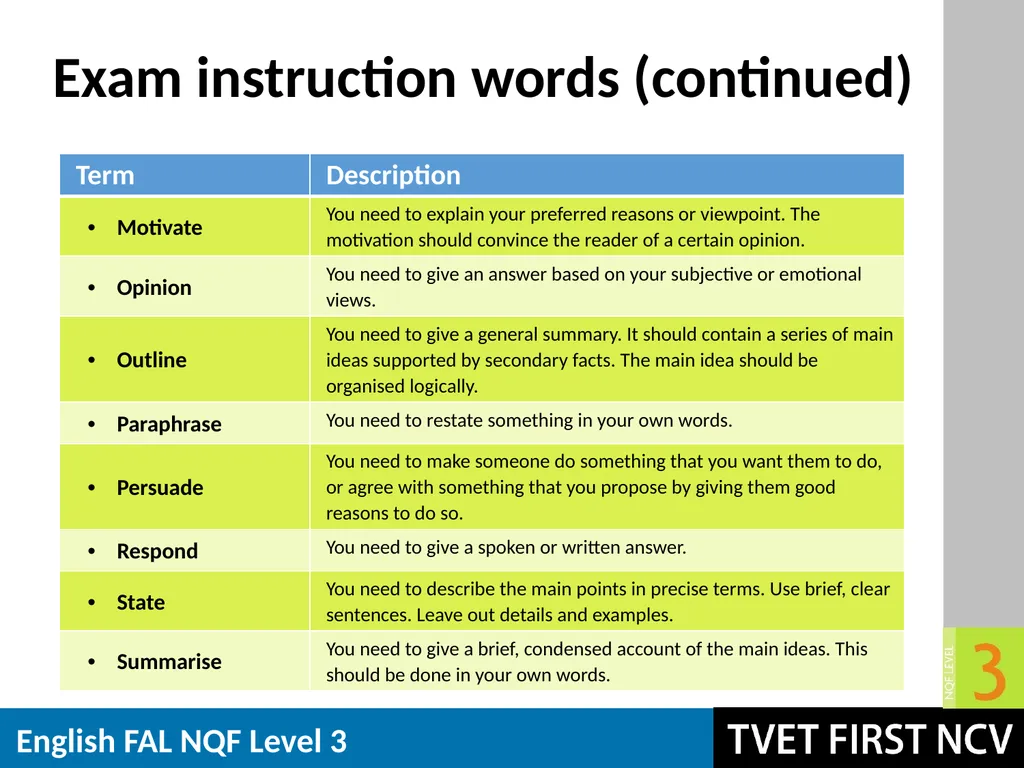
slide11. Exam instruction words (continued)<br>
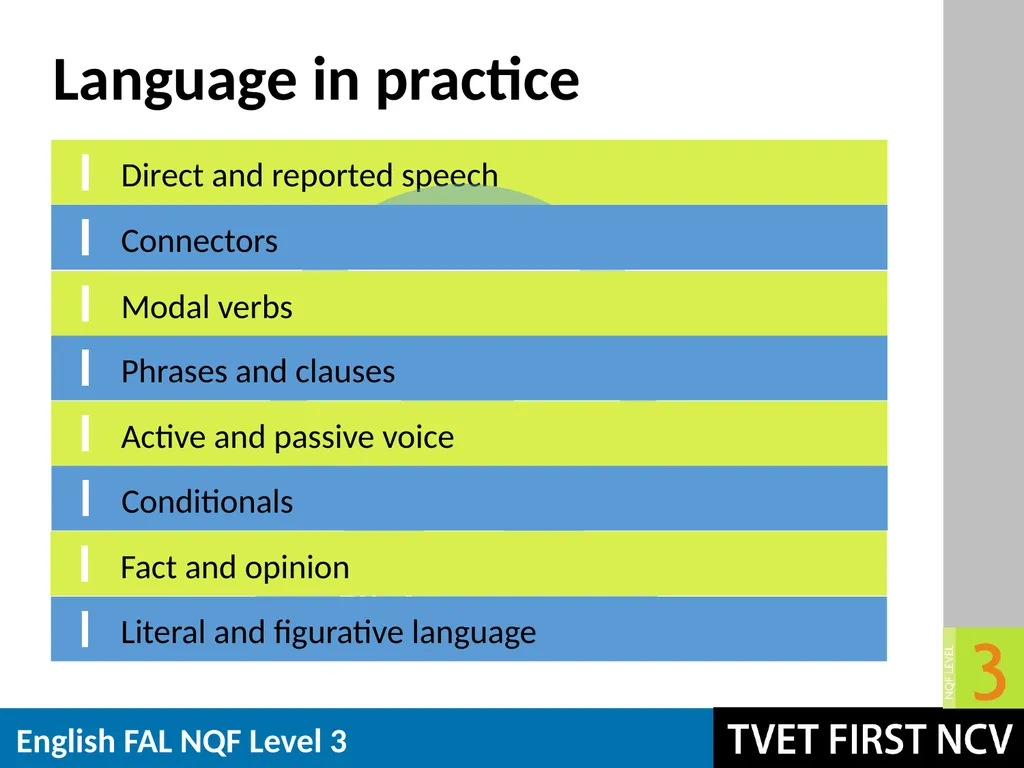
slide12. Language in practice Direct and reported speech Connectors Modal verbs Phrases and clauses Active and passive voice Conditionals Fact and opinion Literal and figurative language<br>
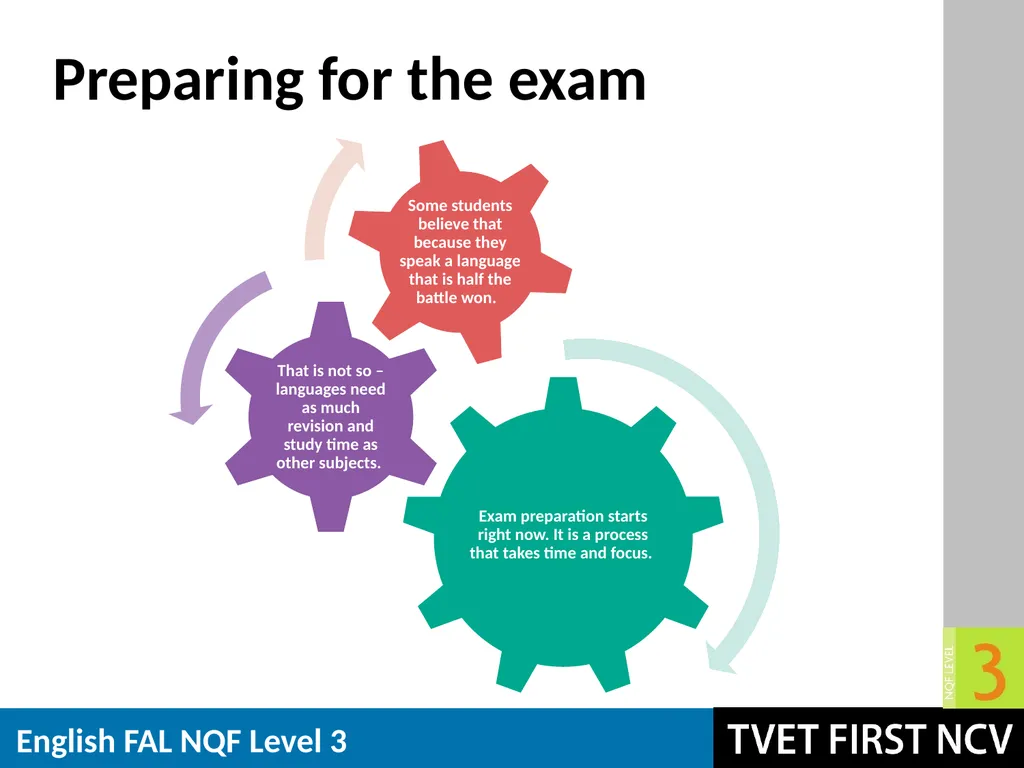
slide13. Preparing for the exam<br>
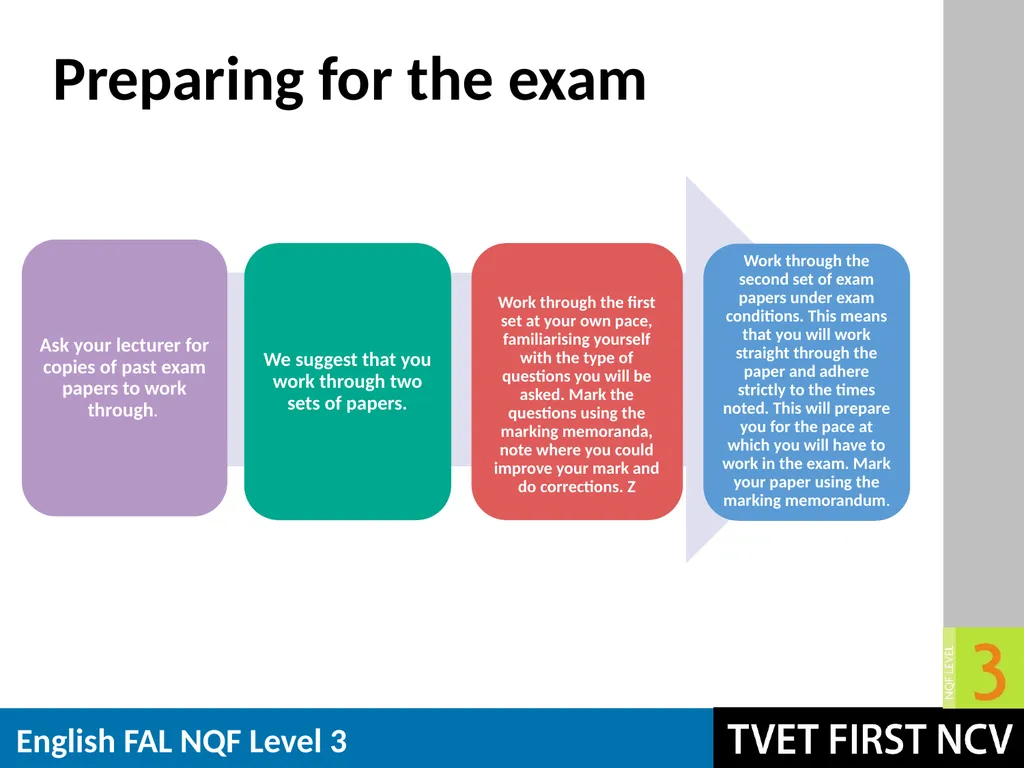
slide14. Preparing for the exam<br>
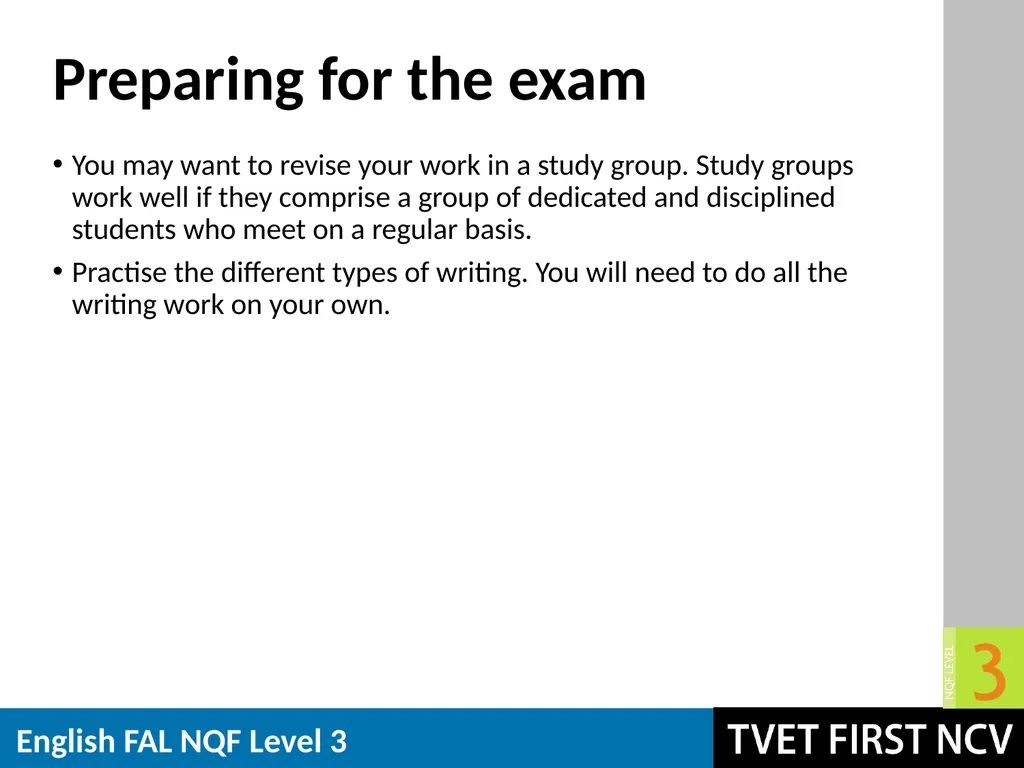
slide15. Preparing for the exam You may want to revise your work in a study group. Study groups work well if they comprise a group of dedicated and disciplined students who meet on a regular basis.
Practise the different types of writing. You will need to do all the writing work on your own.<br>
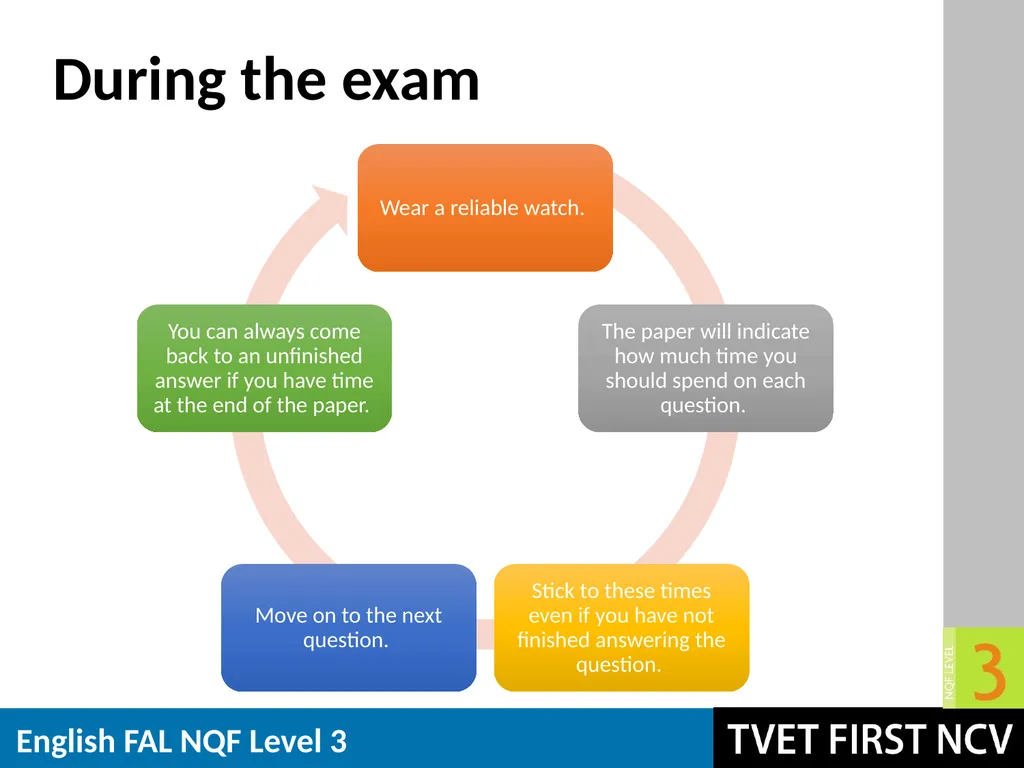
slide16. During the exam<br>
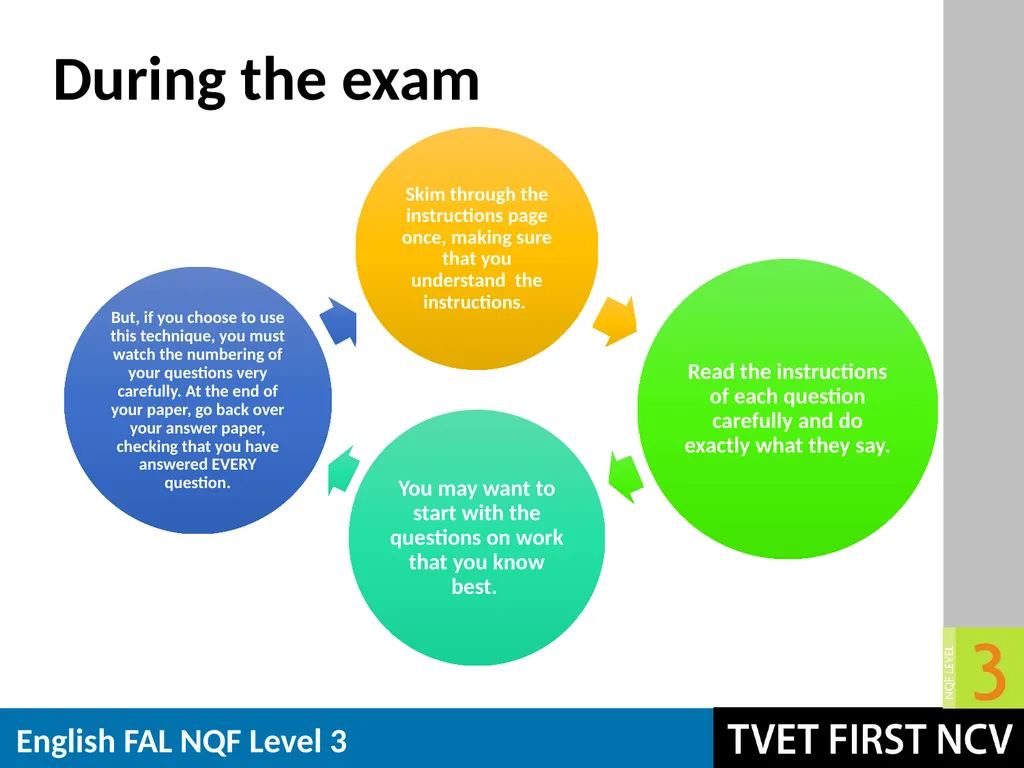
slide17. During the exam<br>
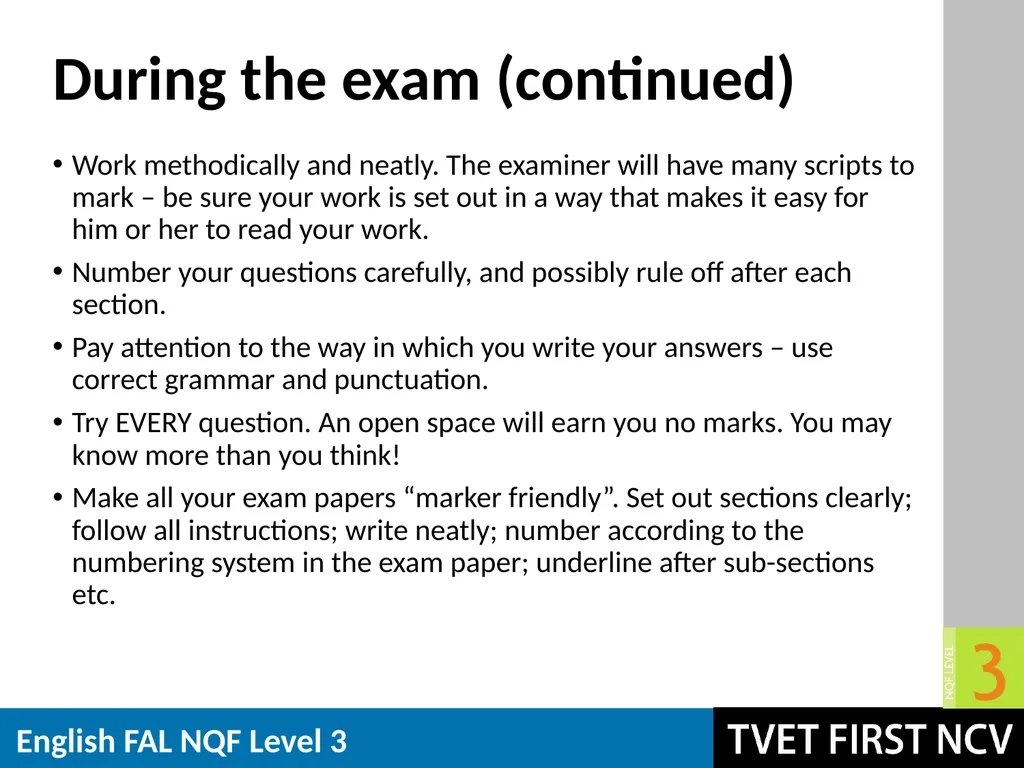
slide18. During the exam (continued) Work methodically and neatly. The examiner will have many scripts to mark – be sure your work is set out in a way that makes it easy for him or her to read your work.
Number your questions carefully, and possibly rule off after each section.
Pay attention to the way in which you write your answers – use correct grammar and punctuation.
Try EVERY question. An open space will earn you no marks. You may know more than you think!
Make all your exam papers “marker friendly”. Set out sections clearly; follow all instructions; write neatly; number according to the numbering system in the exam paper; underline after sub-sections etc.<br>
slide2. Revision and mock examination papers Module 12<br>
slide3. Overview<br>
slide4. 1 Pre-listening 3 Post-listening 2 During
listening The listening process<br>
slide5. Speaking<br>
slide6. Reading and viewing<br>
slide7. Writing WRITING This involves planning, drafting, editing, proof-reading and presenting. Summary Core notes Topic sentences and paragraphs Telephone messages Emails Faxes The memorandum (memo)<br>
slide8. Report writing<br>
slide9. Exam instruction words<br>
slide10. Exam instruction words (continued)<br>
slide11. Exam instruction words (continued)<br>
slide12. Language in practice Direct and reported speech Connectors Modal verbs Phrases and clauses Active and passive voice Conditionals Fact and opinion Literal and figurative language<br>
slide13. Preparing for the exam<br>
slide14. Preparing for the exam<br>
slide15. Preparing for the exam You may want to revise your work in a study group. Study groups work well if they comprise a group of dedicated and disciplined students who meet on a regular basis.
Practise the different types of writing. You will need to do all the writing work on your own.<br>
slide16. During the exam<br>
slide17. During the exam<br>
slide18. During the exam (continued) Work methodically and neatly. The examiner will have many scripts to mark – be sure your work is set out in a way that makes it easy for him or her to read your work.
Number your questions carefully, and possibly rule off after each section.
Pay attention to the way in which you write your answers – use correct grammar and punctuation.
Try EVERY question. An open space will earn you no marks. You may know more than you think!
Make all your exam papers “marker friendly”. Set out sections clearly; follow all instructions; write neatly; number according to the numbering system in the exam paper; underline after sub-sections etc.<br>