04
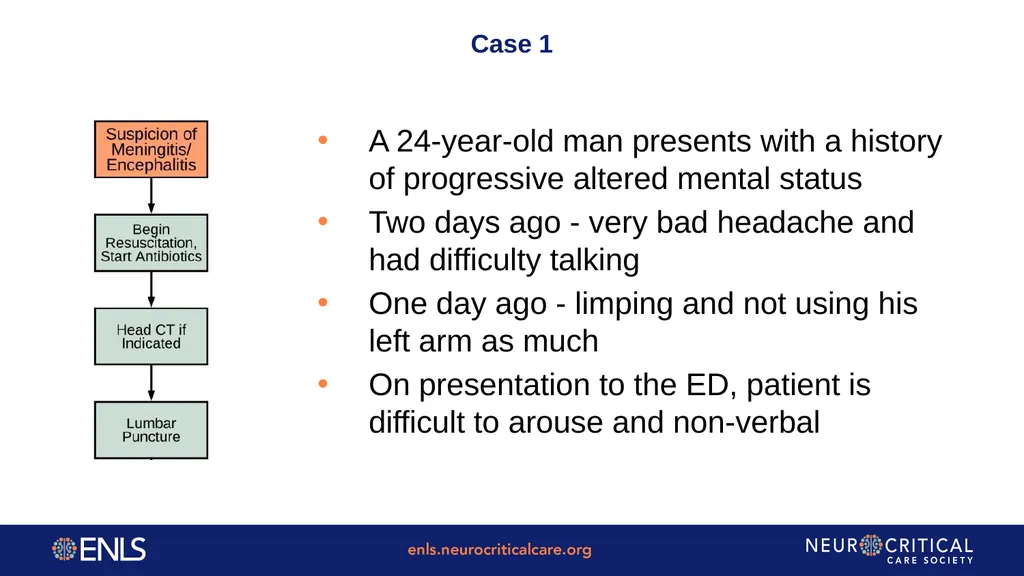
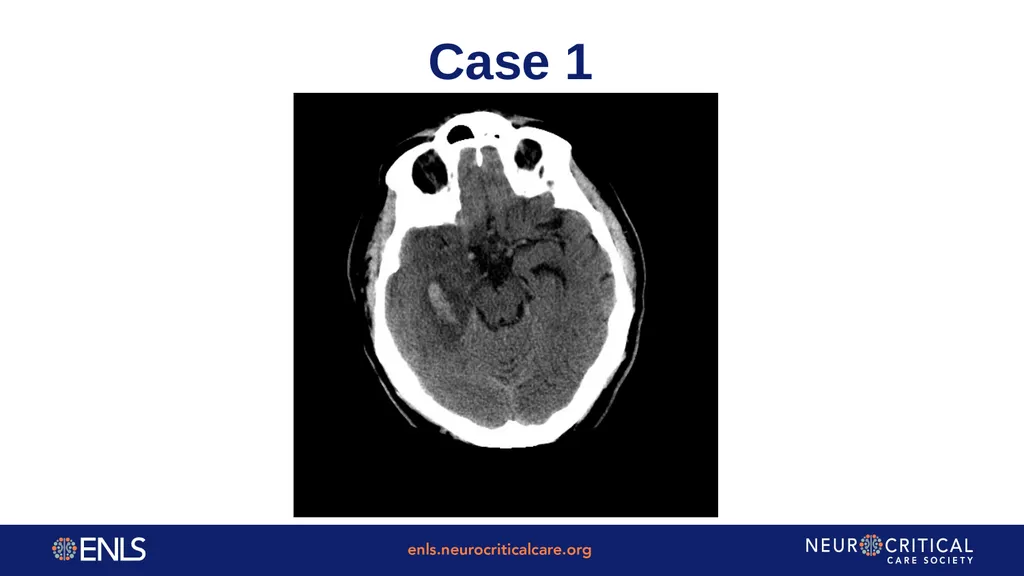
Case 1 A 24-year-old man presents with a history of progressive altered mental status
Two days ago - very bad headache and had difficulty talking
One day ago - limping and not using his left arm as much
On presentation to the ED, patient is difficult to arouse and non-verbal<br>
05
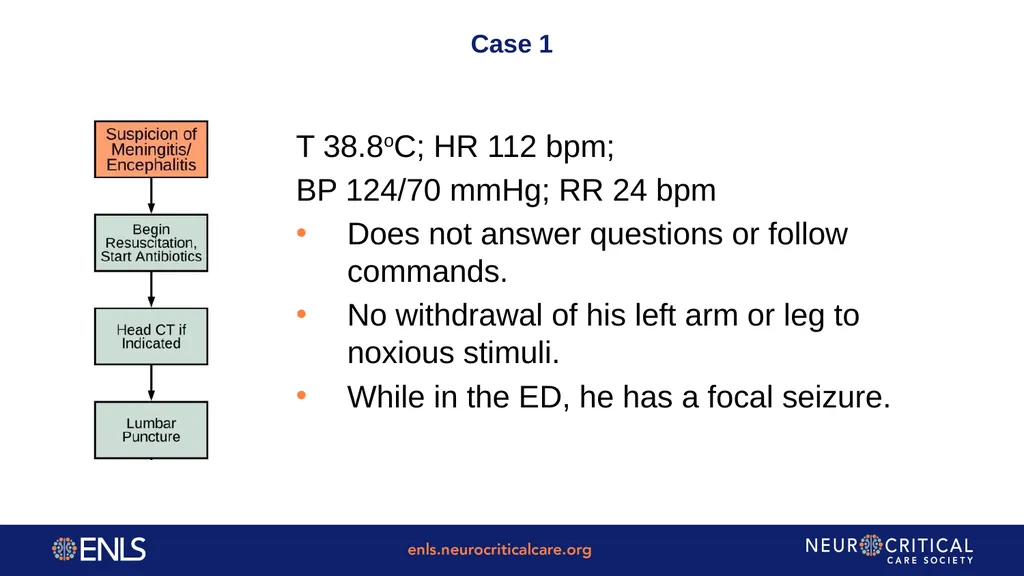
Case 1 T 38.8oC; HR 112 bpm;
BP 124/70 mmHg; RR 24 bpm
Does not answer questions or follow commands.
No withdrawal of his left arm or leg to noxious stimuli.
While in the ED, he has a focal seizure.<br>
06
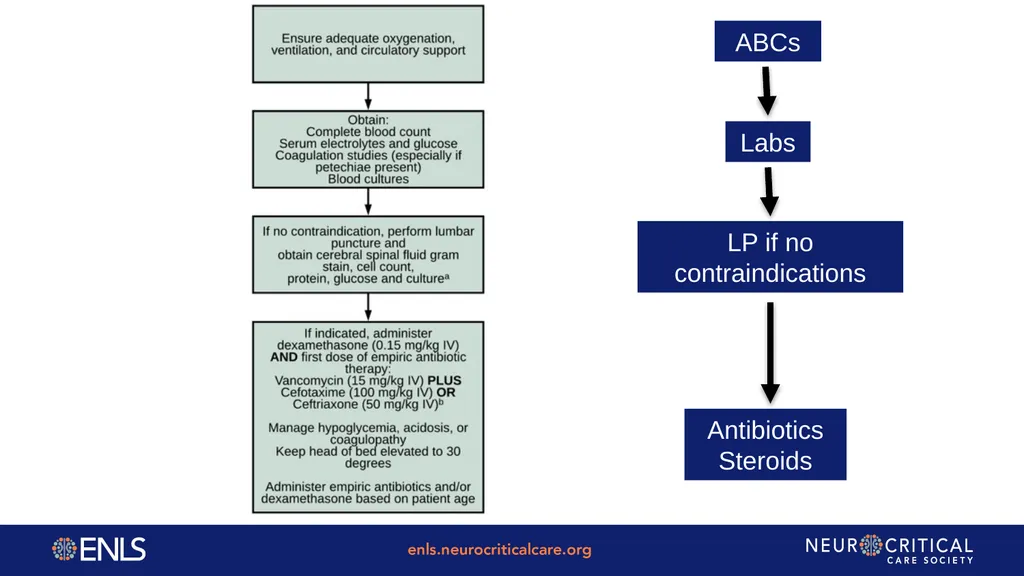
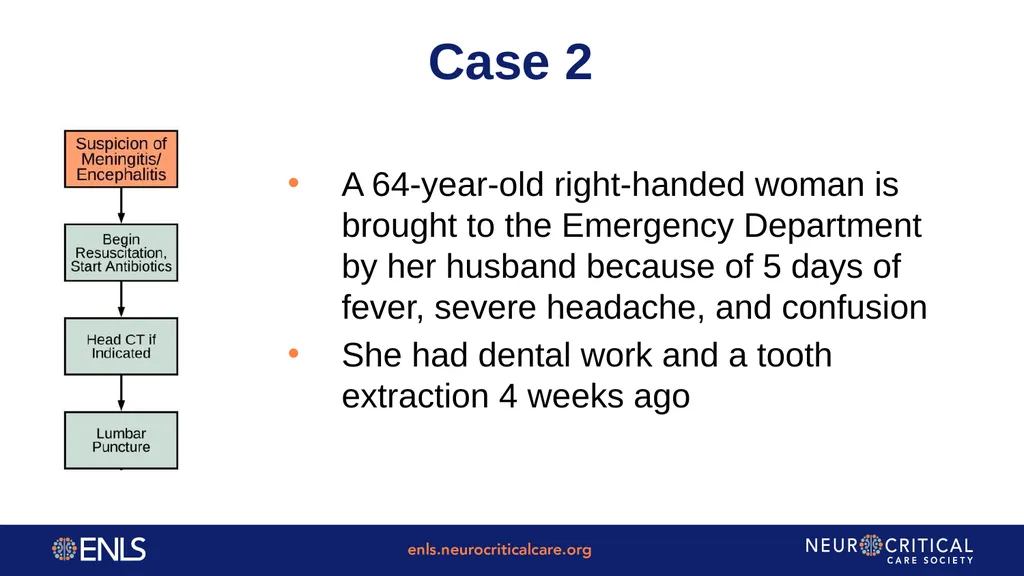
ABCs Labs LP if no contraindications Antibiotics
Steroids<br>
07
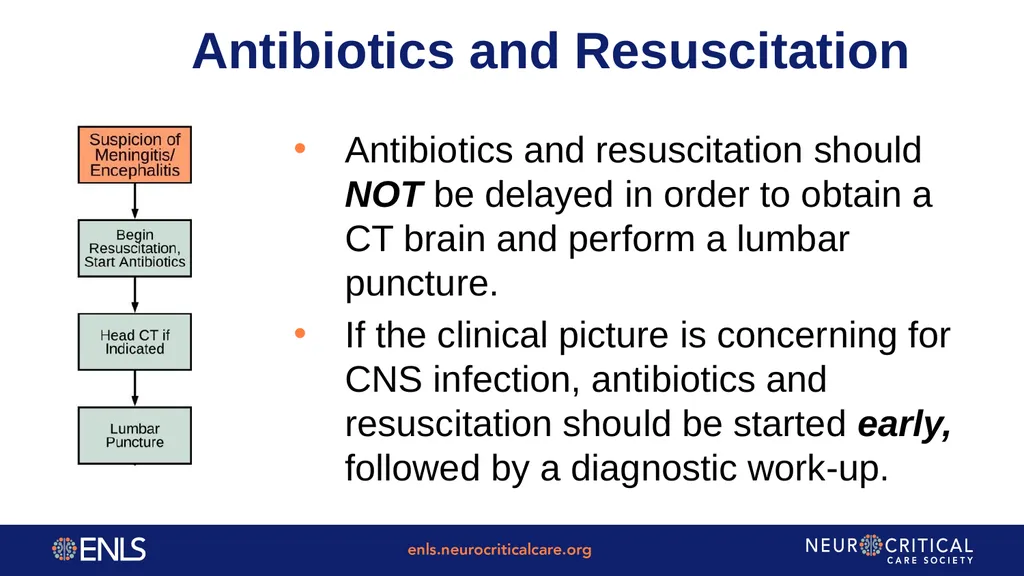
Antibiotics and Resuscitation Antibiotics and resuscitation should NOT be delayed in order to obtain a CT brain and perform a lumbar puncture.
If the clinical picture is concerning for CNS infection, antibiotics and resuscitation should be started early, followed by a diagnostic work-up.<br>
08
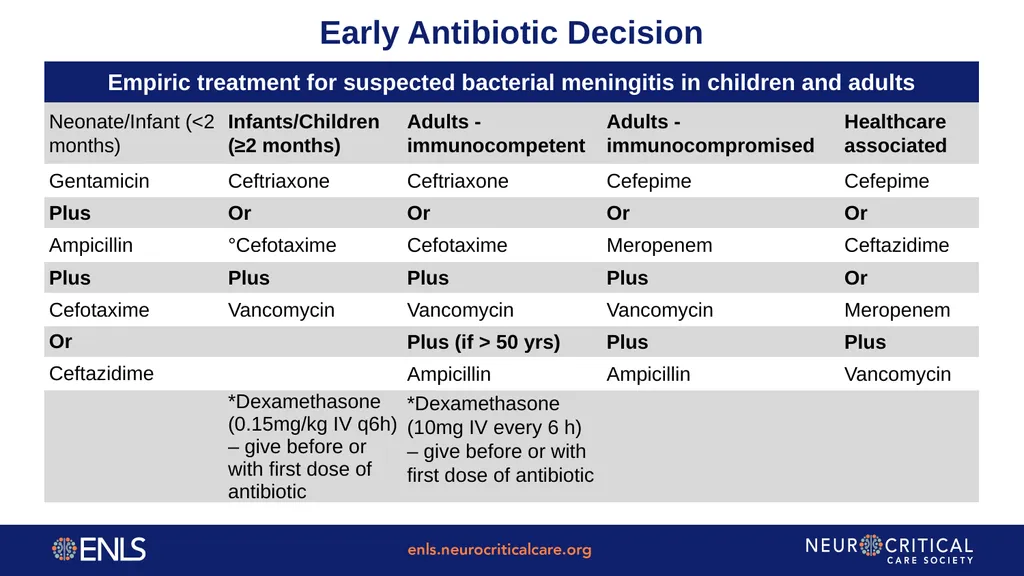
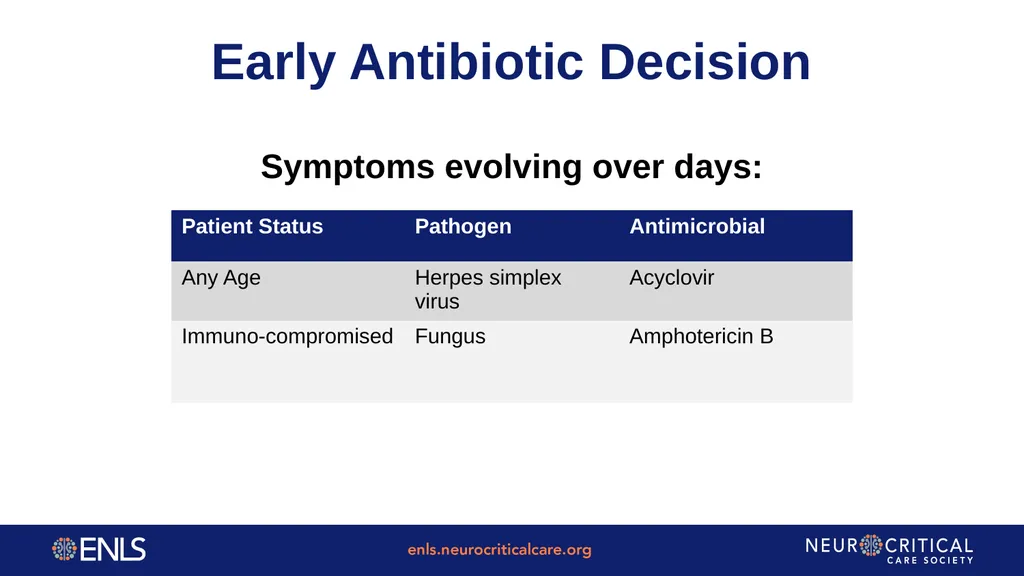
Early Antibiotic Decision<br>
09
Early Antibiotic Decision Symptoms evolving over days:<br>
10
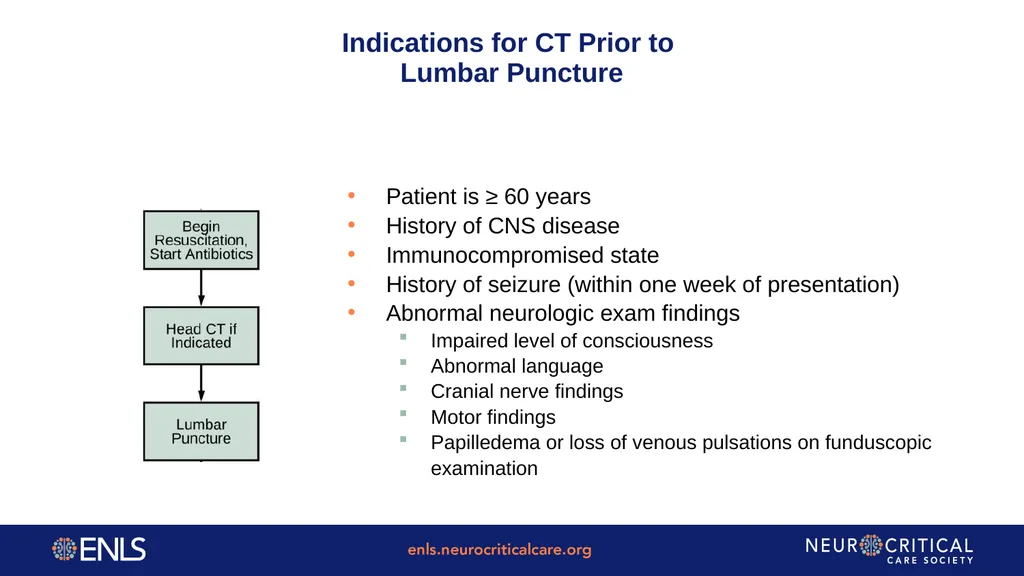
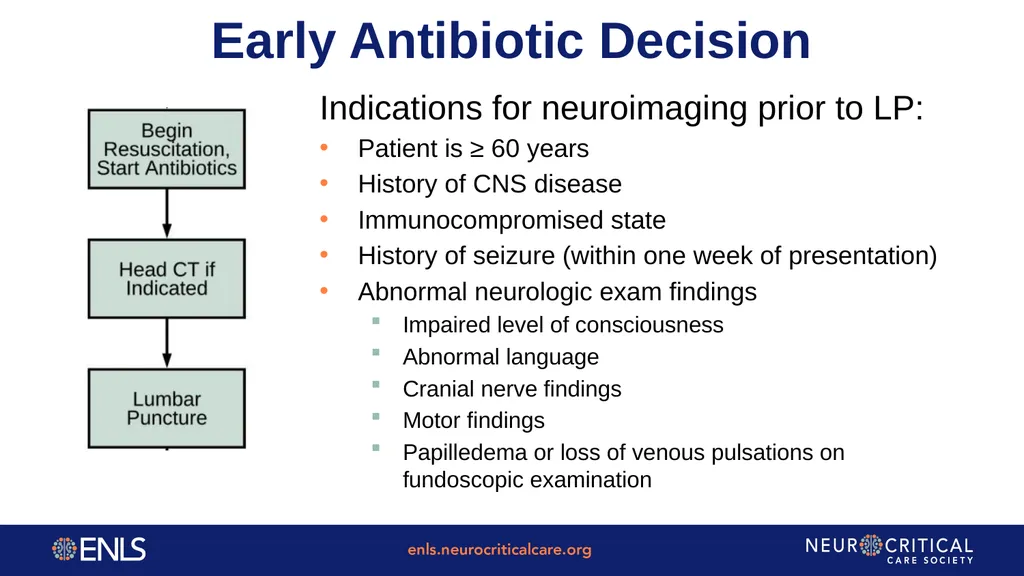
Indications for CT Prior to �Lumbar Puncture Patient is ≥ 60 years
History of CNS disease
Immunocompromised state
History of seizure (within one week of presentation)
Abnormal neurologic exam findings
Impaired level of consciousness
Abnormal language
Cranial nerve findings
Motor findings
Papilledema or loss of venous pulsations on funduscopic examination<br>
13
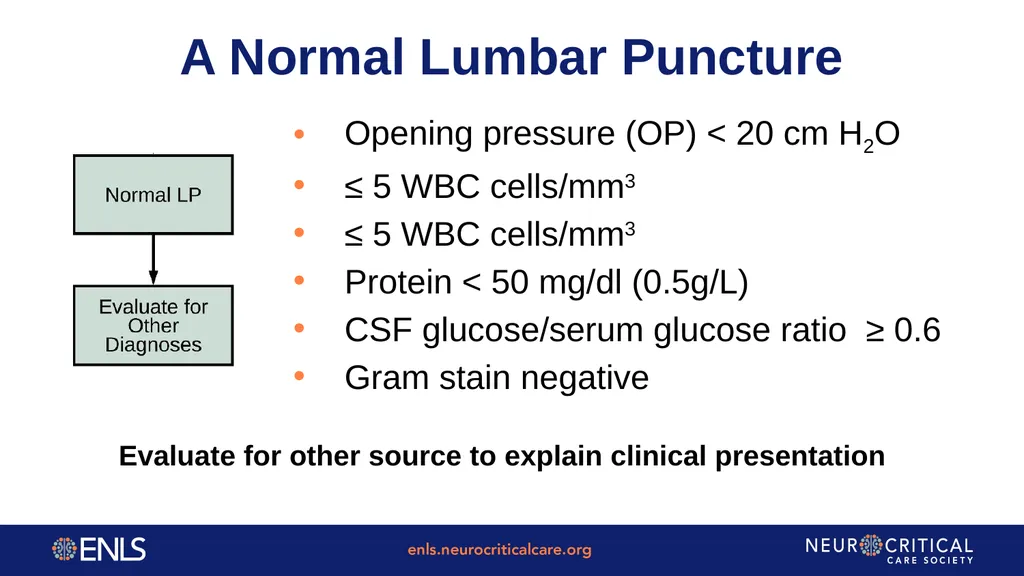
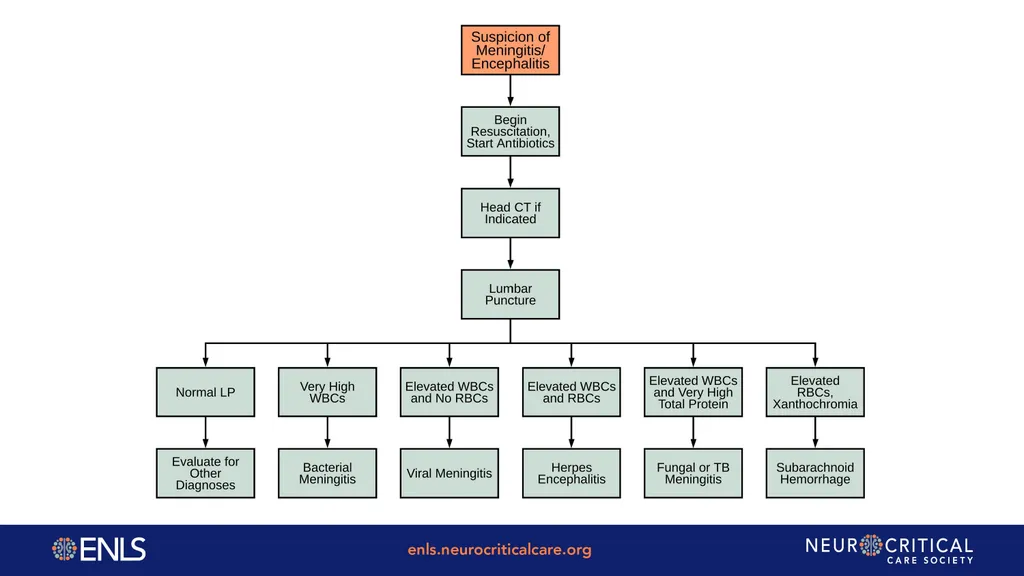
A Normal Lumbar Puncture Opening pressure (OP) < 20 cm H2O
≤ 5 WBC cells/mm3
≤ 5 WBC cells/mm3
Protein < 50 mg/dl (0.5g/L)
CSF glucose/serum glucose ratio ≥ 0.6
Gram stain negative Evaluate for other source to explain clinical presentation<br>
14
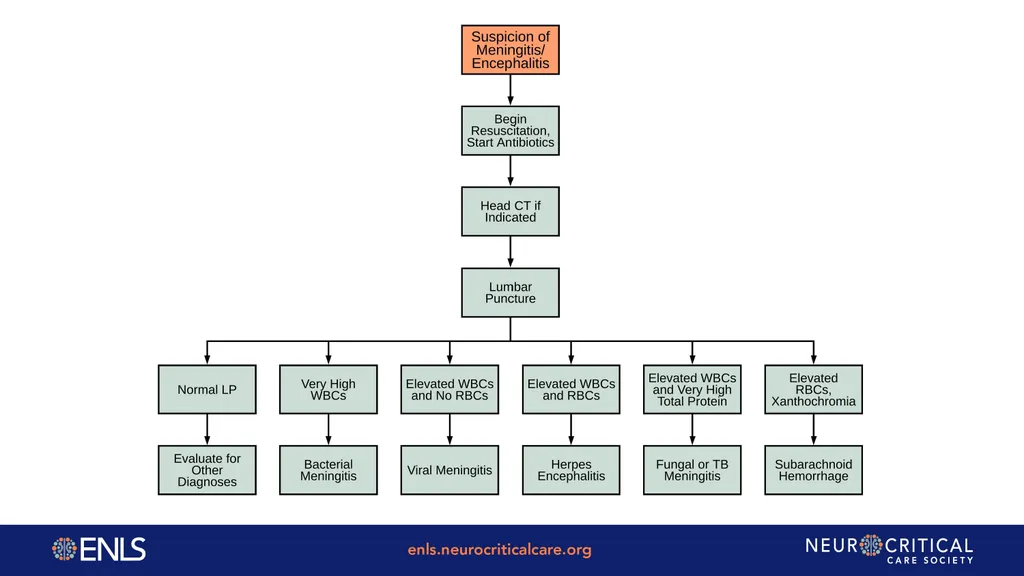
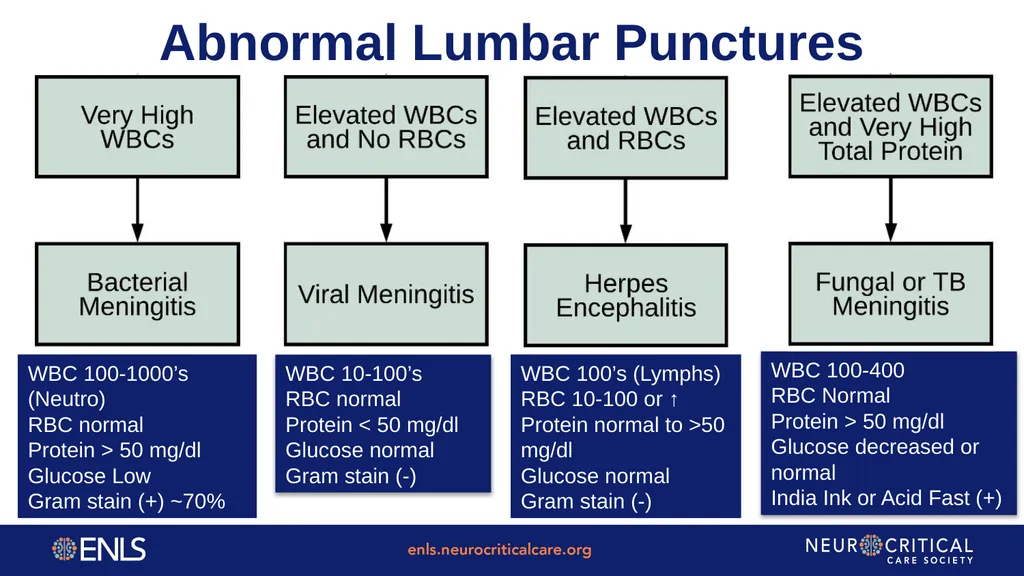
Abnormal Lumbar Punctures WBC 100-1000’s (Neutro)
RBC normal
Protein > 50 mg/dl
Glucose Low
Gram stain (+) ~70% WBC 10-100’s
RBC normal
Protein < 50 mg/dl
Glucose normal
Gram stain (-) WBC 100’s (Lymphs)
RBC 10-100 or ↑
Protein normal to >50 mg/dl
Glucose normal
Gram stain (-) WBC 100-400
RBC Normal
Protein > 50 mg/dl
Glucose decreased or normal
India Ink or Acid Fast (+)<br>
15
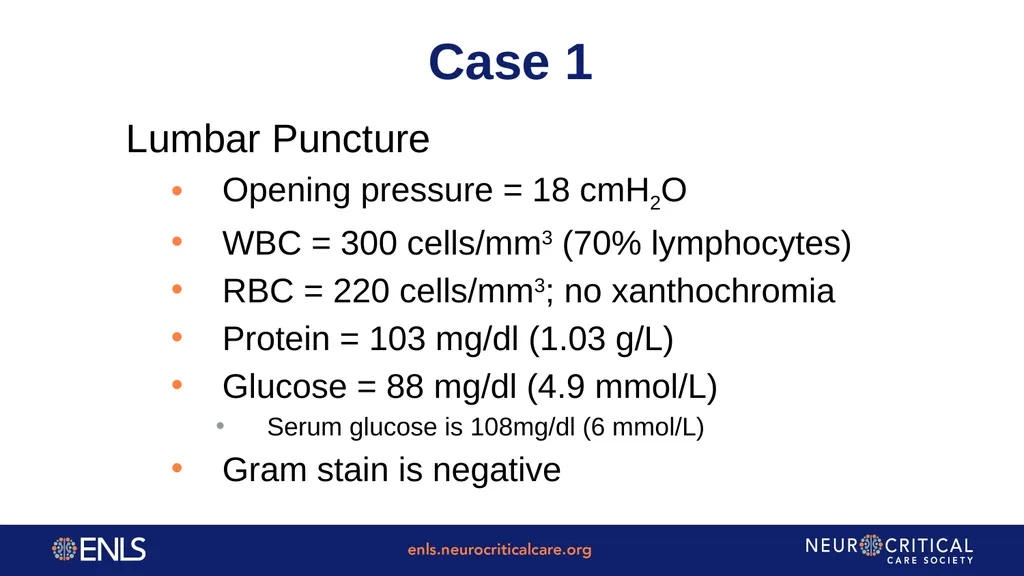
Case 1 Lumbar Puncture
Opening pressure = 18 cmH2O
WBC = 300 cells/mm3 (70% lymphocytes)
RBC = 220 cells/mm3; no xanthochromia
Protein = 103 mg/dl (1.03 g/L)
Glucose = 88 mg/dl (4.9 mmol/L)
Serum glucose is 108mg/dl (6 mmol/L)
Gram stain is negative<br>
16
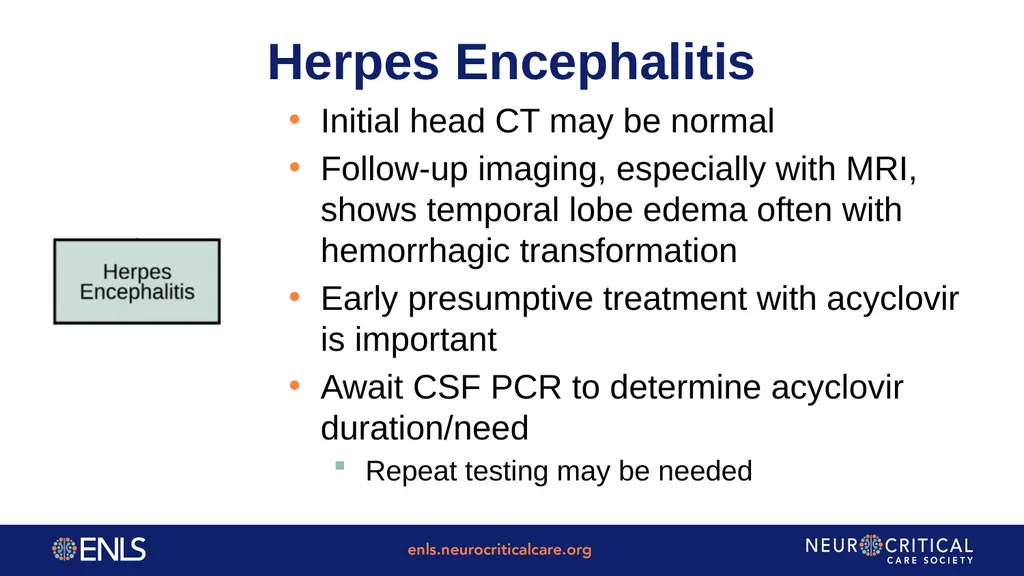
Herpes Encephalitis Initial head CT may be normal
Follow-up imaging, especially with MRI, shows temporal lobe edema often with hemorrhagic transformation
Early presumptive treatment with acyclovir is important
Await CSF PCR to determine acyclovir duration/need
Repeat testing may be needed<br>
17
MRI (FLAIR Sequence) �Herpes Encephalitis<br>
18
Case 2 A 64-year-old right-handed woman is brought to the Emergency Department by her husband because of 5 days of fever, severe headache, and confusion
She had dental work and a tooth extraction 4 weeks ago<br>
19
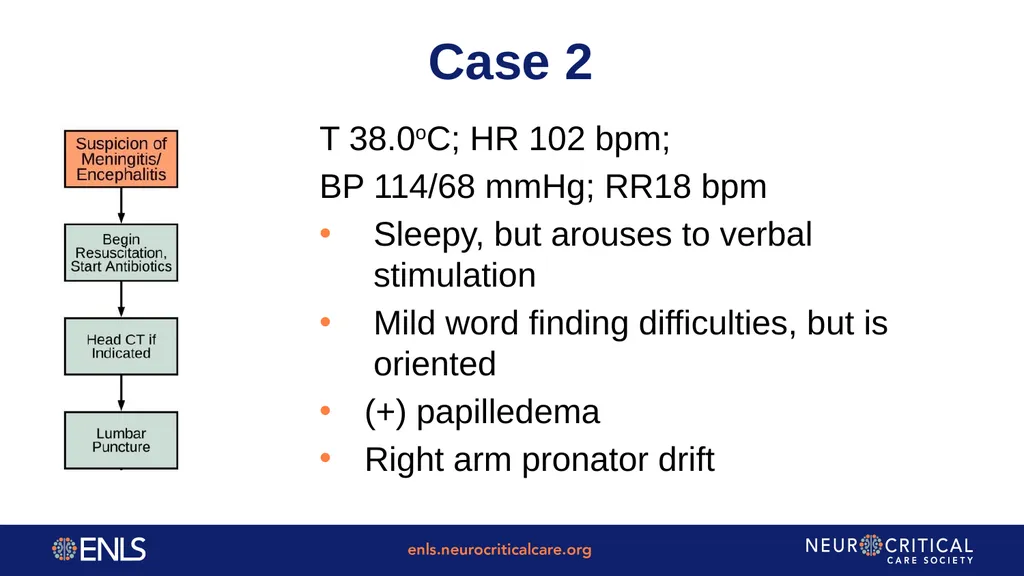
Case 2 T 38.0oC; HR 102 bpm;
BP 114/68 mmHg; RR18 bpm
Sleepy, but arouses to verbal stimulation
Mild word finding difficulties, but is oriented
(+) papilledema
Right arm pronator drift<br>
20
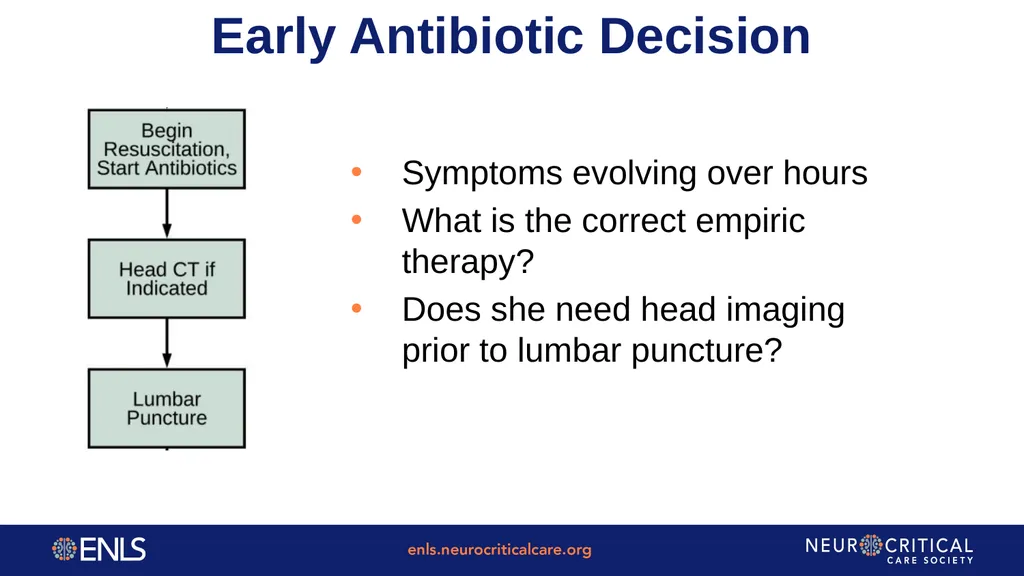
Early Antibiotic Decision Symptoms evolving over hours
What is the correct empiric therapy?
Does she need head imaging prior to lumbar puncture?<br>
21
Early Antibiotic Decision Indications for neuroimaging prior to LP:
Patient is ≥ 60 years
History of CNS disease
Immunocompromised state
History of seizure (within one week of presentation)
Abnormal neurologic exam findings
Impaired level of consciousness
Abnormal language
Cranial nerve findings
Motor findings
Papilledema or loss of venous pulsations on fundoscopic examination<br>
23
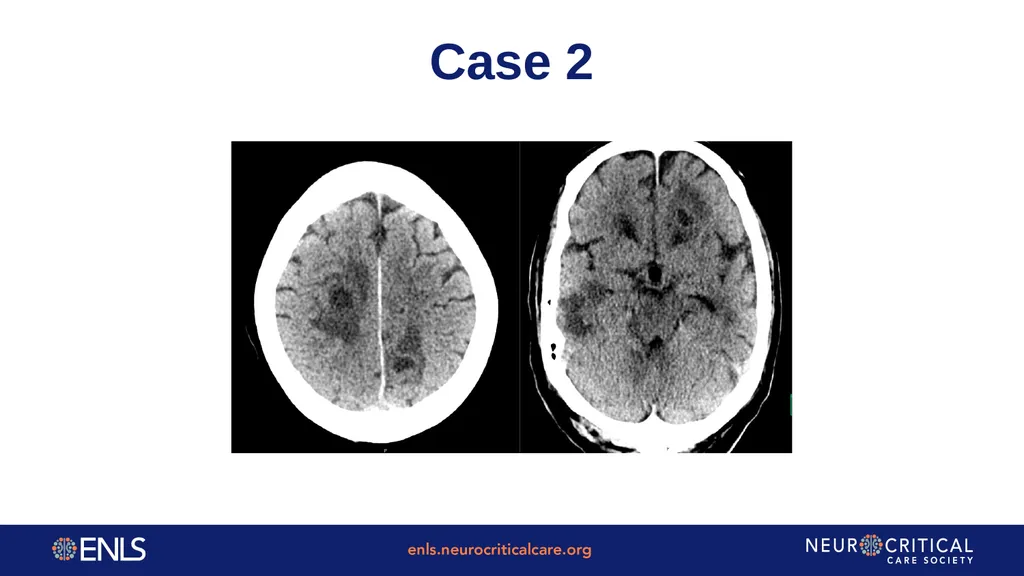
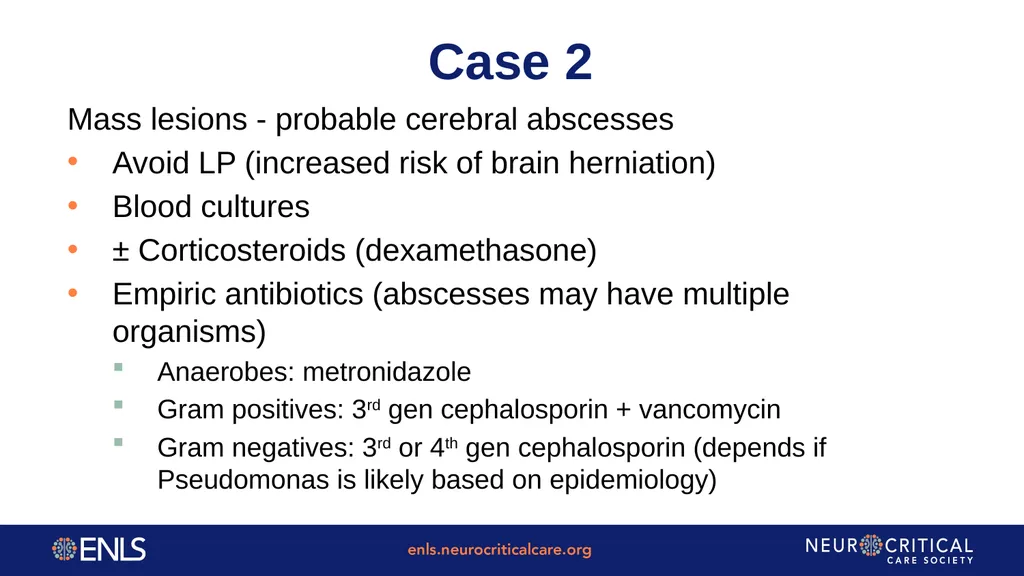
Case 2 Mass lesions - probable cerebral abscesses
Avoid LP (increased risk of brain herniation)
Blood cultures
± Corticosteroids (dexamethasone)
Empiric antibiotics (abscesses may have multiple organisms)
Anaerobes: metronidazole
Gram positives: 3rd gen cephalosporin + vancomycin
Gram negatives: 3rd or 4th gen cephalosporin (depends if Pseudomonas is likely based on epidemiology)<br>
24
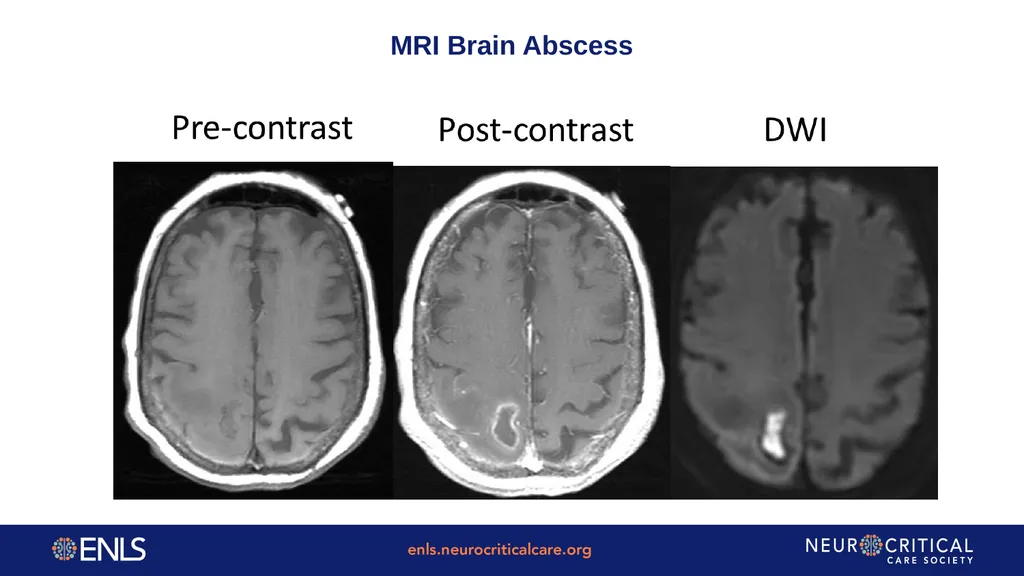
Pre-contrast Post-contrast DWI MRI Brain Abscess<br>
25
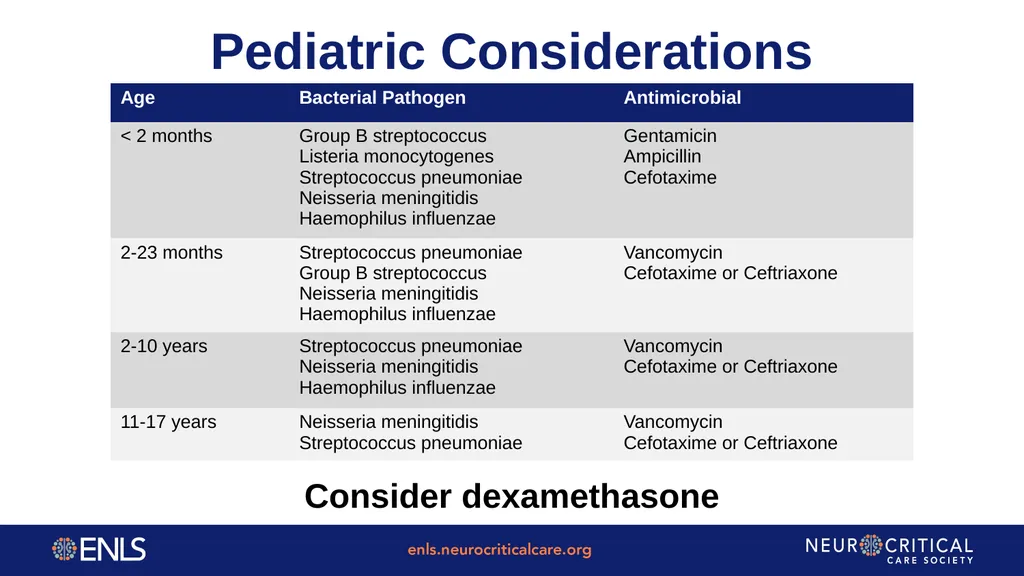
Pediatric Considerations Consider dexamethasone<br>
26
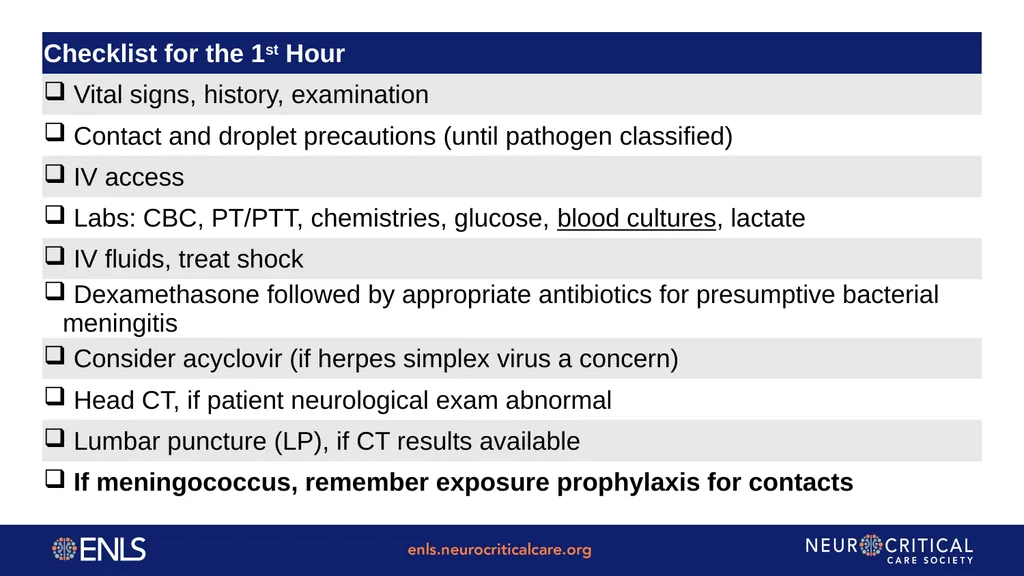
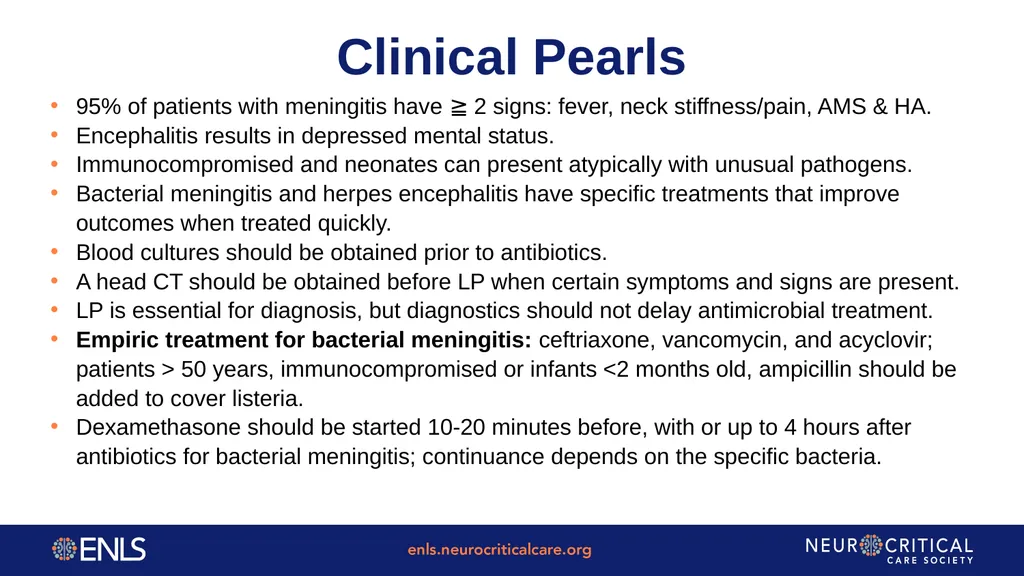
Clinical Pearls 95% of patients with meningitis have ≧ 2 signs: fever, neck stiffness/pain, AMS & HA.
Encephalitis results in depressed mental status.
Immunocompromised and neonates can present atypically with unusual pathogens.
Bacterial meningitis and herpes encephalitis have specific treatments that improve outcomes when treated quickly.
Blood cultures should be obtained prior to antibiotics.
A head CT should be obtained before LP when certain symptoms and signs are present.
LP is essential for diagnosis, but diagnostics should not delay antimicrobial treatment.
Empiric treatment for bacterial meningitis: ceftriaxone, vancomycin, and acyclovir; patients > 50 years, immunocompromised or infants <2 months old, ampicillin should be added to cover listeria.
Dexamethasone should be started 10-20 minutes before, with or up to 4 hours after antibiotics for bacterial meningitis; continuance depends on the specific bacteria.<br>
27
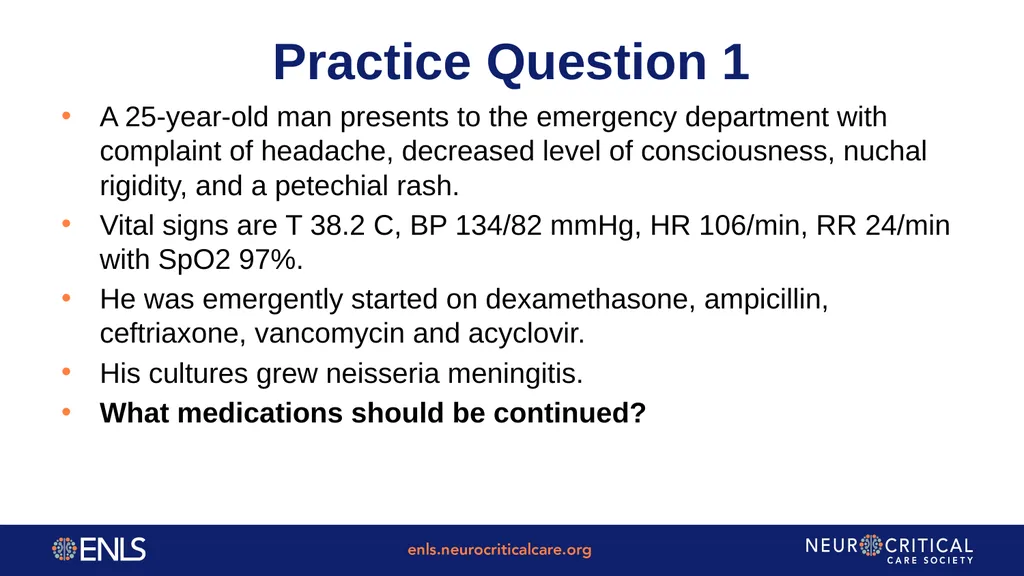
Practice Question 1 A 25-year-old man presents to the emergency department with complaint of headache, decreased level of consciousness, nuchal rigidity, and a petechial rash.
Vital signs are T 38.2 C, BP 134/82 mmHg, HR 106/min, RR 24/min with SpO2 97%.
He was emergently started on dexamethasone, ampicillin, ceftriaxone, vancomycin and acyclovir.
His cultures grew neisseria meningitis.
What medications should be continued?<br>
28
Practice Question 1 Acyclovir and ceftriaxone
Ceftriaxone
Ceftriaxone and vancomycin
Ceftriaxone and dexamethasone
Vancomycin and acyclovir<br>
29
Practice Question 1 Acyclovir and ceftriaxone
Ceftriaxone
Ceftriaxone and vancomycin
Ceftriaxone and dexamethasone
Vancomycin and acyclovir Preferred treatment for Neisseria meningitidis is a third-generation cephalosporin such as ceftriaxone.<br>
30
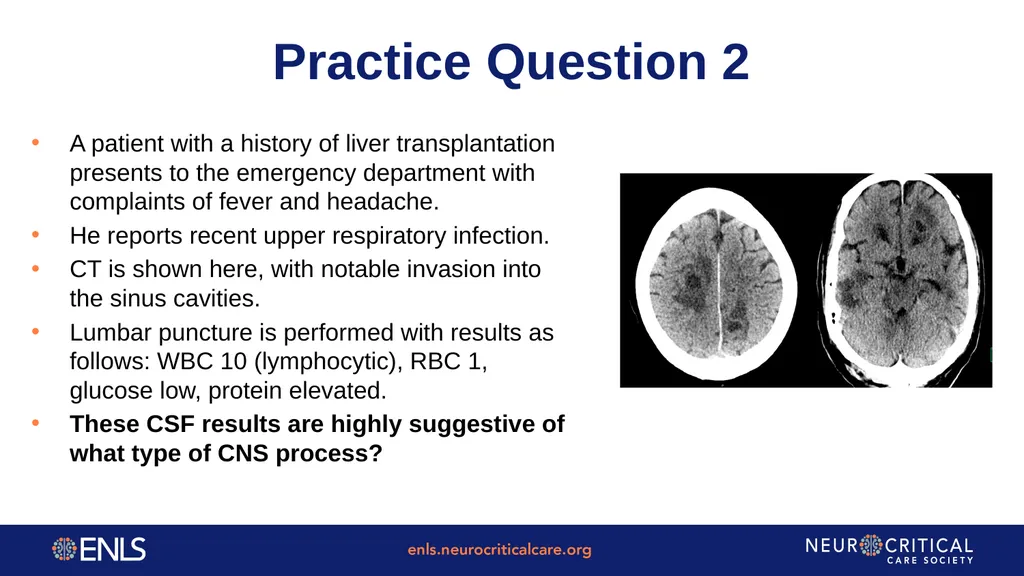
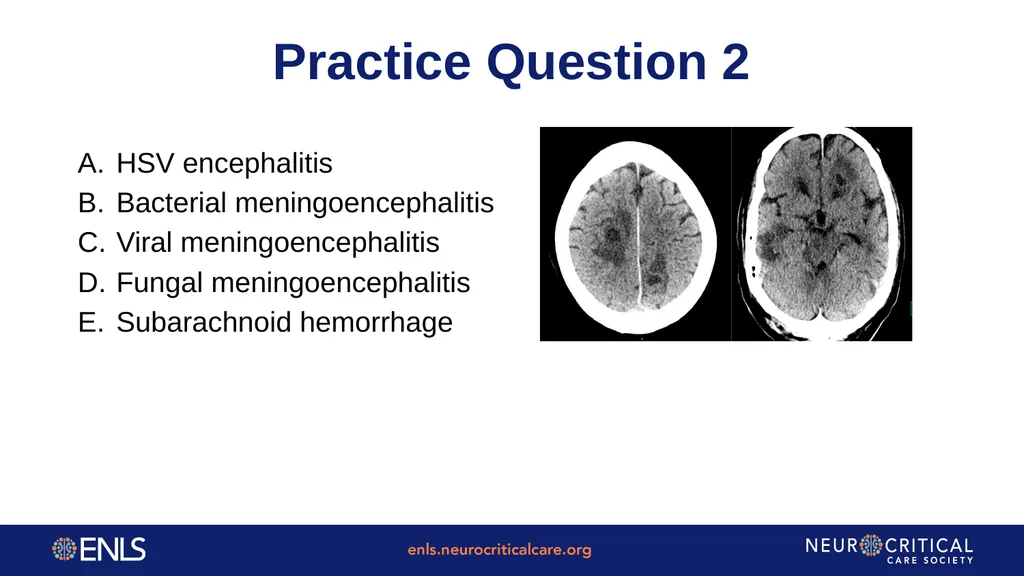
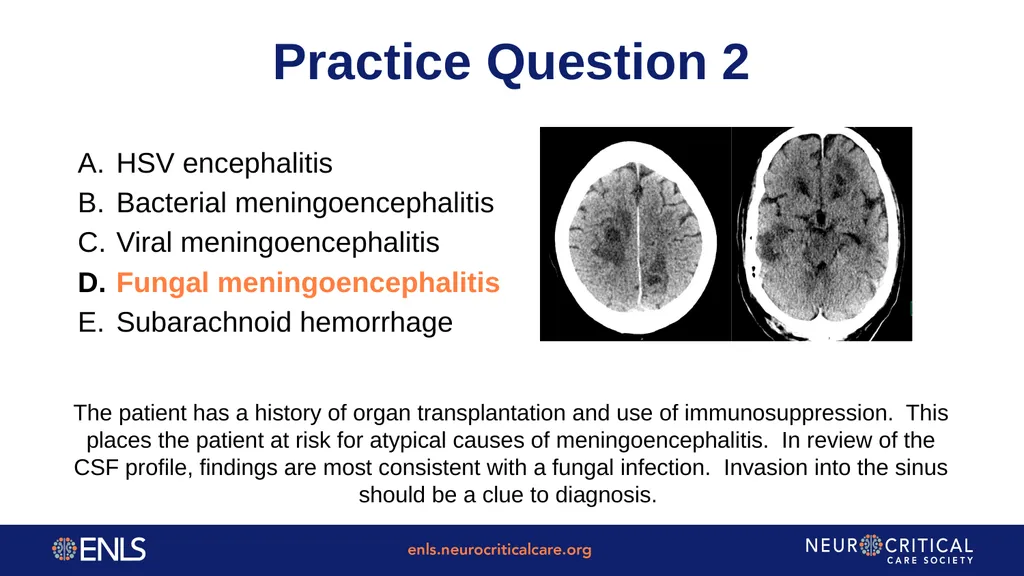
Practice Question 2 A patient with a history of liver transplantation presents to the emergency department with complaints of fever and headache.
He reports recent upper respiratory infection.
CT is shown here, with notable invasion into the sinus cavities.
Lumbar puncture is performed with results as follows: WBC 10 (lymphocytic), RBC 1, glucose low, protein elevated.
These CSF results are highly suggestive of what type of CNS process?<br>
31
Practice Question 2 HSV encephalitis
Bacterial meningoencephalitis
Viral meningoencephalitis
Fungal meningoencephalitis
Subarachnoid hemorrhage<br>
32
Practice Question 2 HSV encephalitis
Bacterial meningoencephalitis
Viral meningoencephalitis
Fungal meningoencephalitis
Subarachnoid hemorrhage The patient has a history of organ transplantation and use of immunosuppression. This places the patient at risk for atypical causes of meningoencephalitis. In review of the CSF profile, findings are most consistent with a fungal infection. Invasion into the sinus should be a clue to diagnosis.<br>