Enrico Bisogno Chief, Data Development and Dissemination Section UNODC UNCTAD-UNODC Conceptual framework for the statistical measurement of Illicit Financial Flows IFFs at the crossroad of multiple policy agendas Vehicle to finance
"Enrico Bisogno Chief, Data Development and" is the property of its rightful owner. Permission is granted to
download and print the materials on this website for personal, non-commercial use only, and to display it
on your personal computer provided you do not modify the materials and that you retain all copyright
notices contained in the materials. By downloading content from our website, you accept the terms of this
agreement.
Presentation Transcript
01
Enrico Bisogno
Chief, Data Development and Dissemination Section
UNODC UNCTAD-UNODC
Conceptual framework for the statistical measurement of Illicit Financial Flows<br>
02
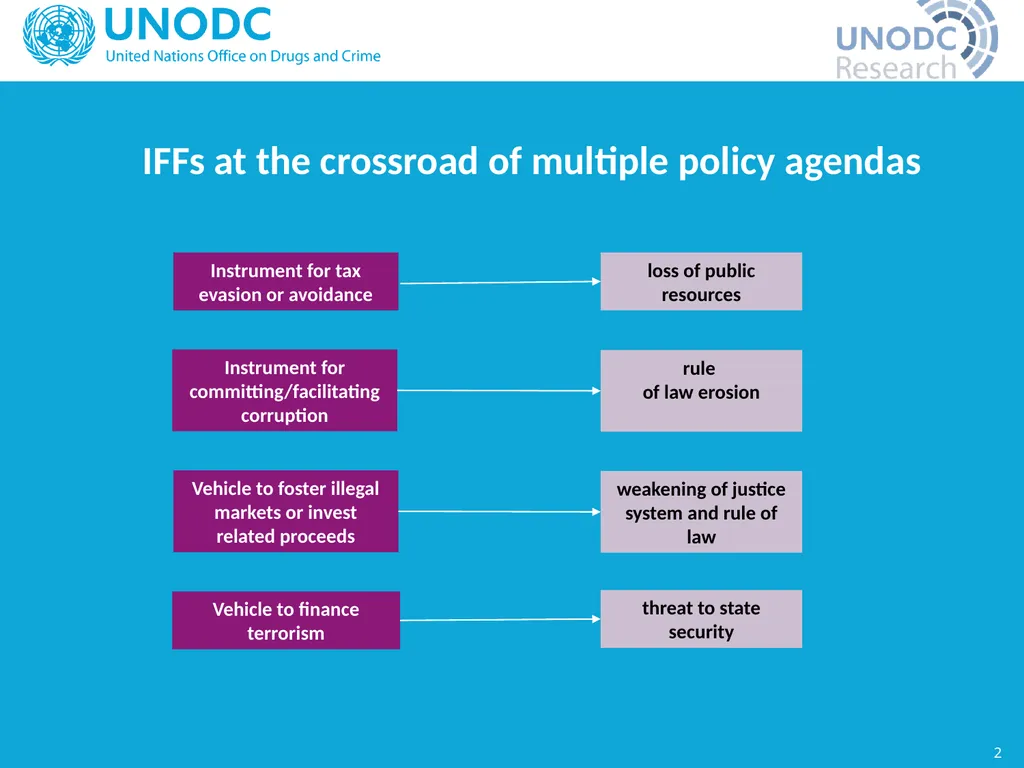
IFFs at the crossroad of multiple policy agendas Vehicle to finance terrorism Instrument for committing/facilitating corruption Vehicle to foster illegal markets or invest related proceeds Instrument for tax evasion or avoidance loss of public resources rule of law erosion weakening of justice system and rule of law threat to state security<br>
03
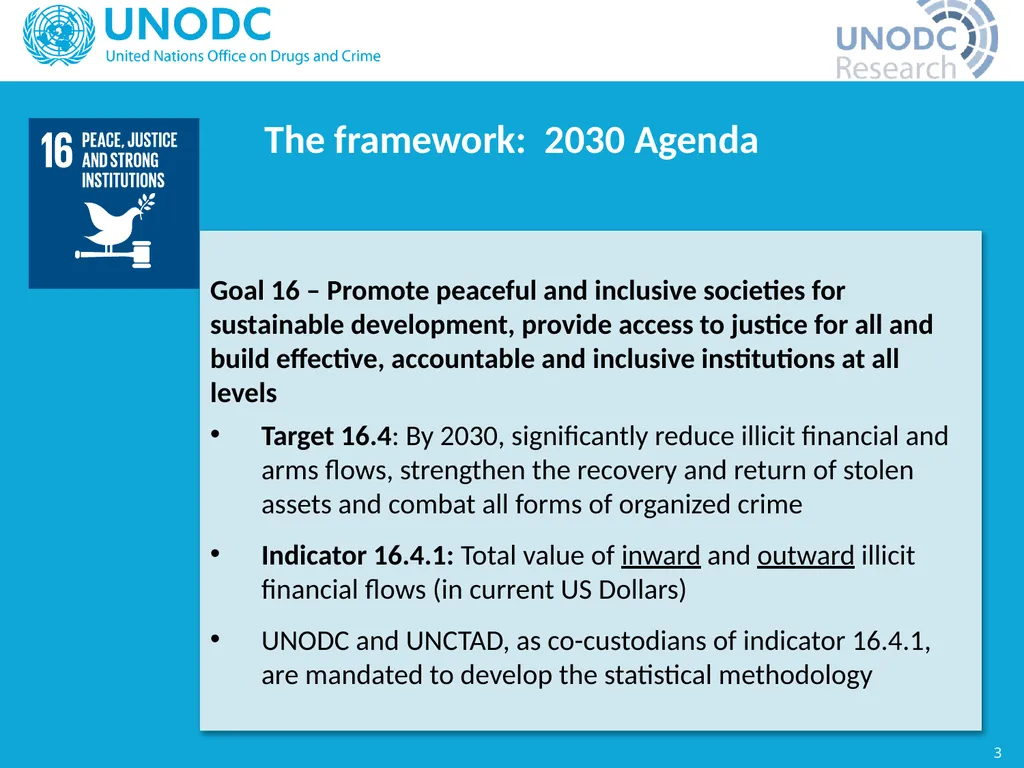
The framework: 2030 Agenda Goal 16 – Promote peaceful and inclusive societies for sustainable development, provide access to justice for all and build effective, accountable and inclusive institutions at all levels
Target 16.4: By 2030, significantly reduce illicit financial and arms flows, strengthen the recovery and return of stolen assets and combat all forms of organized crime
Indicator 16.4.1: Total value of inward and outward illicit financial flows (in current US Dollars)
UNODC and UNCTAD, as co-custodians of indicator 16.4.1, are mandated to develop the statistical methodology<br>
04
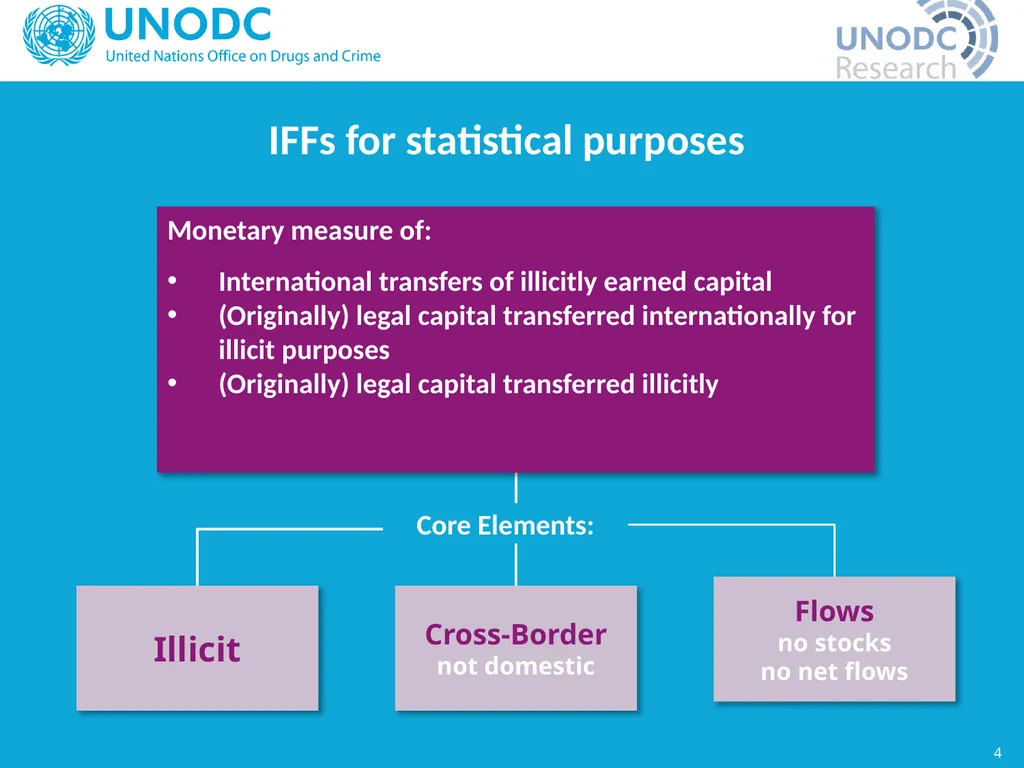
IFFs for statistical purposes Monetary measure of:
International transfers of illicitly earned capital
(Originally) legal capital transferred internationally for illicit purposes
(Originally) legal capital transferred illicitly Illicit Cross-Border
not domestic Flows
no stocks
no net flows Core Elements:<br>
05
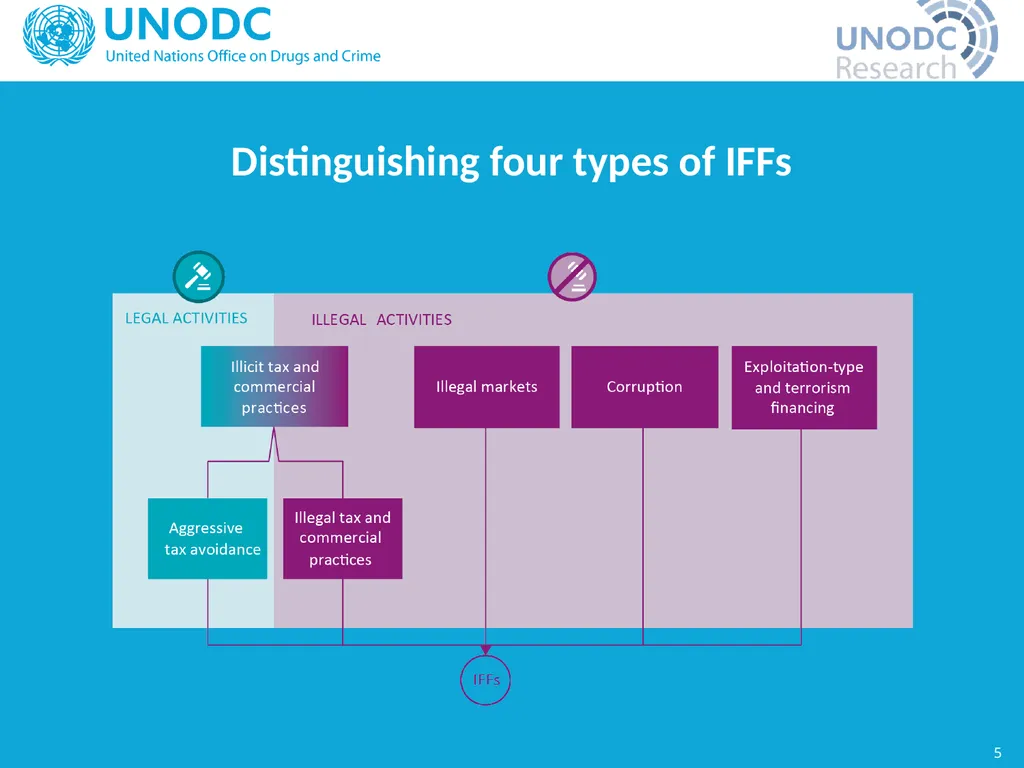
Distinguishing four types of IFFs<br>
06
IFFs from illegal markets/activities Corruption Exploitation-type and terrorism financing Illegal markets Drug trafficking
Firearm trafficking
Illegal mining
Smuggling of migrants
Smuggling of goods
Wildlife trafficking
… Bribery
Embezzlement
Abuse of functions
Trading in influence
Illicit enrichment
Other acts of corruption Kidnapping
Slavery and exploitation
Trafficking in persons
Sexual exploitation
Extortion
Robbery
Burglary
Theft
Financing of terrorism Productive activities Non productive activities<br>
07
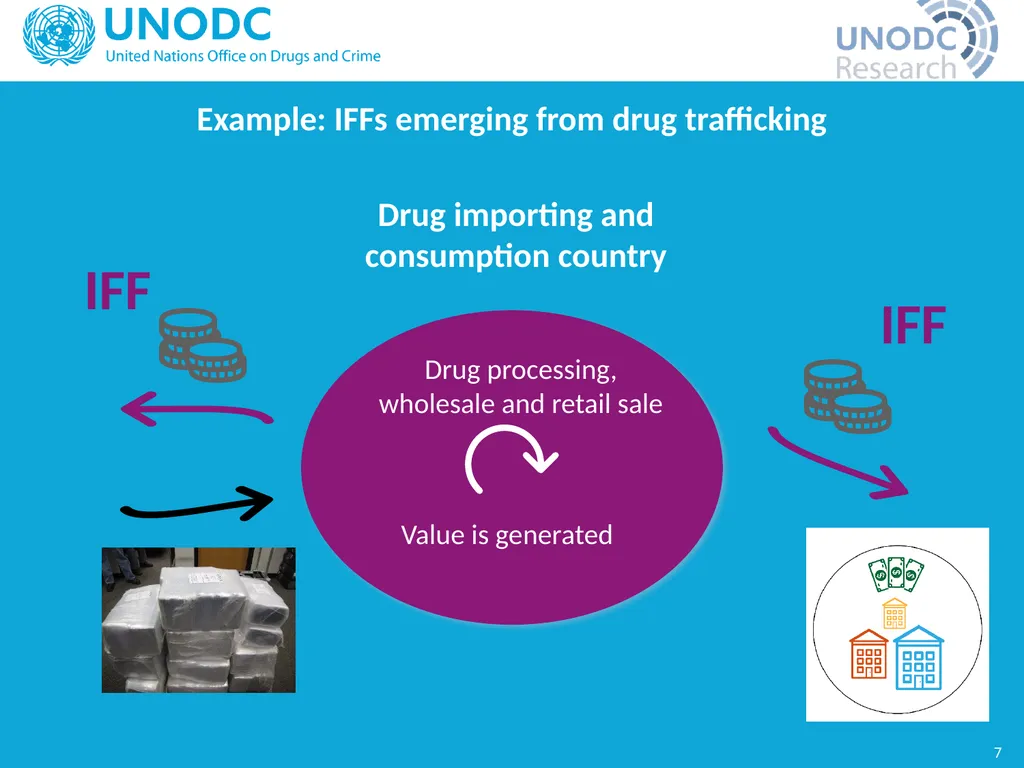
Drug importing and consumption country Value is generated IFF IFF Drug processing, wholesale and retail sale Example: IFFs emerging from drug trafficking<br>
08
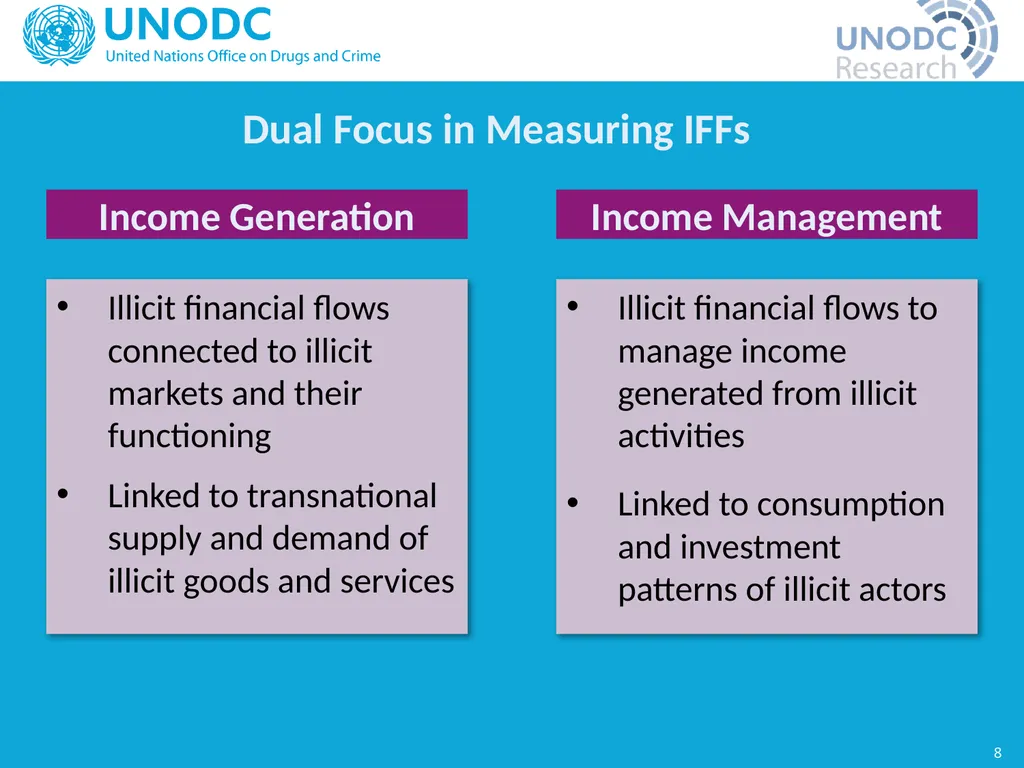
Dual Focus in Measuring IFFs Illicit financial flows connected to illicit markets and their functioning
Linked to transnational supply and demand of illicit goods and services Illicit financial flows to manage income generated from illicit activities
Linked to consumption and investment patterns of illicit actors Income Generation Income Management<br>
09
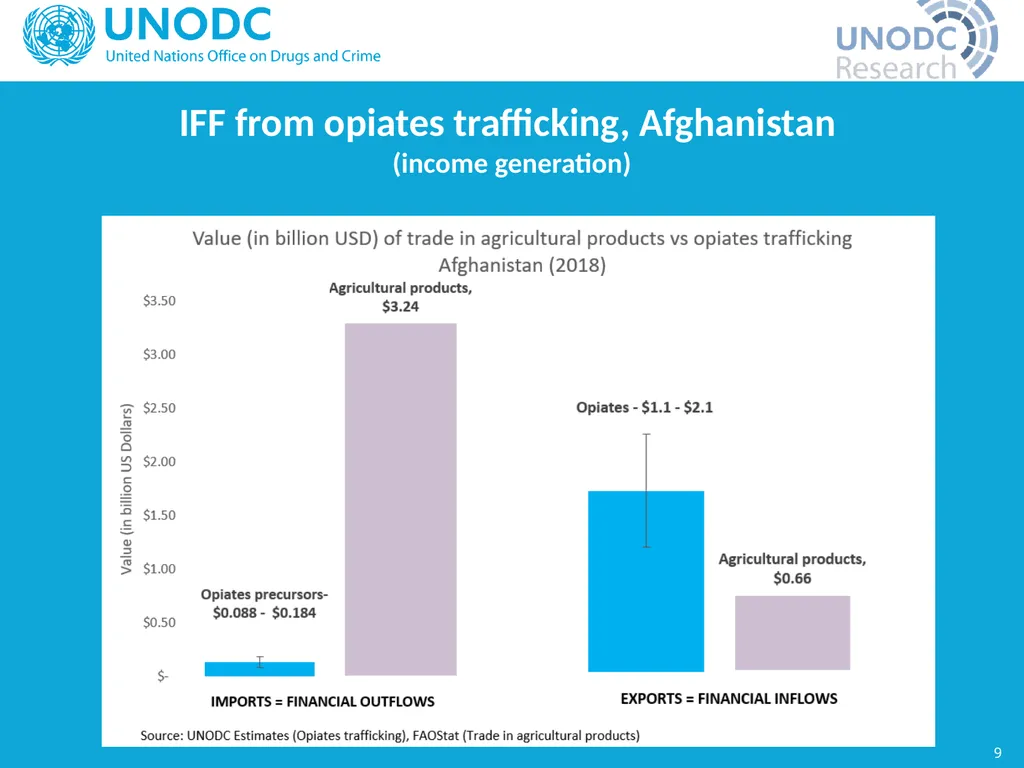
IFF from opiates trafficking, Afghanistan (income generation)<br>
10
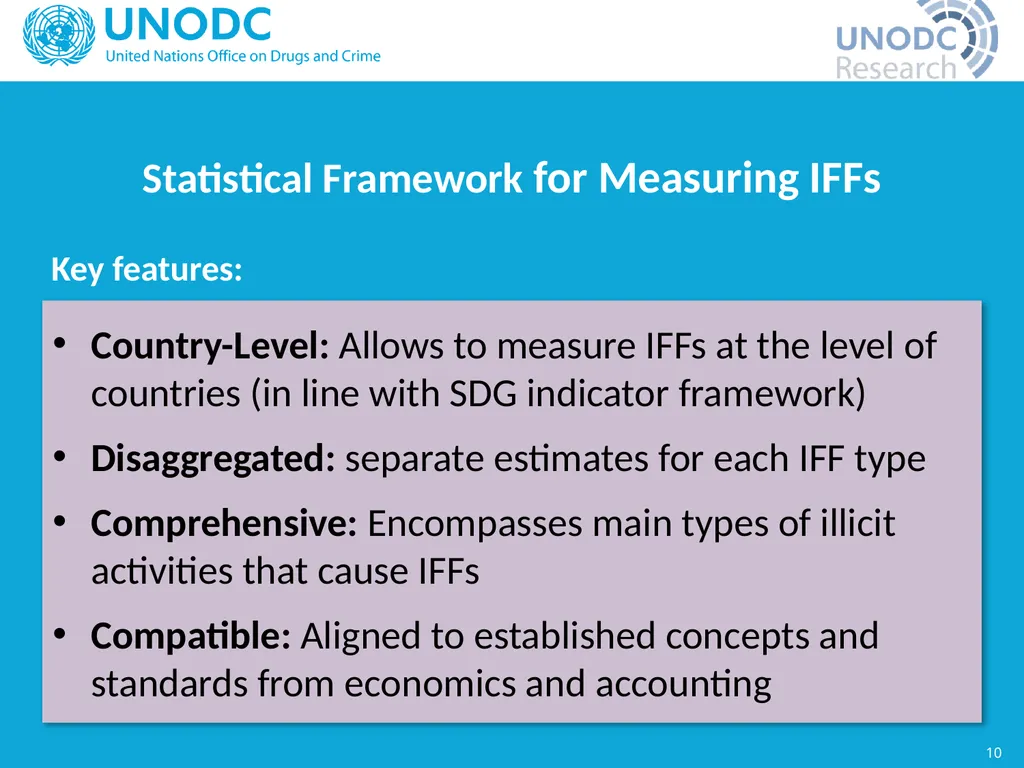
Statistical Framework for Measuring IFFs Key features: Country-Level: Allows to measure IFFs at the level of countries (in line with SDG indicator framework)
Disaggregated: separate estimates for each IFF type
Comprehensive: Encompasses main types of illicit activities that cause IFFs
Compatible: Aligned to established concepts and standards from economics and accounting<br>