EnterpriseAction Plan Core Portfolio Item This is a word-processed document of 300-600 words in length. The is a plan for an enterprising activity which a student (or group) intends to organise, or an action which a student (or group)
"Enterprise/Action Plan Core Portfolio Item This is" is the property of its rightful owner. Permission is granted to
download and print the materials on this website for personal, non-commercial use only, and to display it
on your personal computer provided you do not modify the materials and that you retain all copyright
notices contained in the materials. By downloading content from our website, you accept the terms of this
agreement.
Presentation Transcript
01
Enterprise/Action Plan Core Portfolio Item<br>
02
This is a word-processed document of 300-600 words in length.
The is a plan for an enterprising activity which a student (or group) intends to organise, or an action which a student (or group) intends to take.
The plan should be in the future tense.
However you must show that you have already undertaken some research, and analysis thereof, as part of the initial investigation prior to completing the plan.
Therefore, these parts of the plan – notably ‘Research methods’ – should contain some details in the past tense. Outline<br>
03
Where group work is involved, it is very important to highlight your own individual contribution to the enterprise/action – you must include personal objectives
Examples of enterprise/action plans
A plan for a local area investigation
A plan for a visit to an enterprise
A plan for a careers, information evening
A plan for a fundraising event
A plan for a mini enterprise
A plan for learning a new skill
A plan for organising a work placement Outline continued…<br>
04
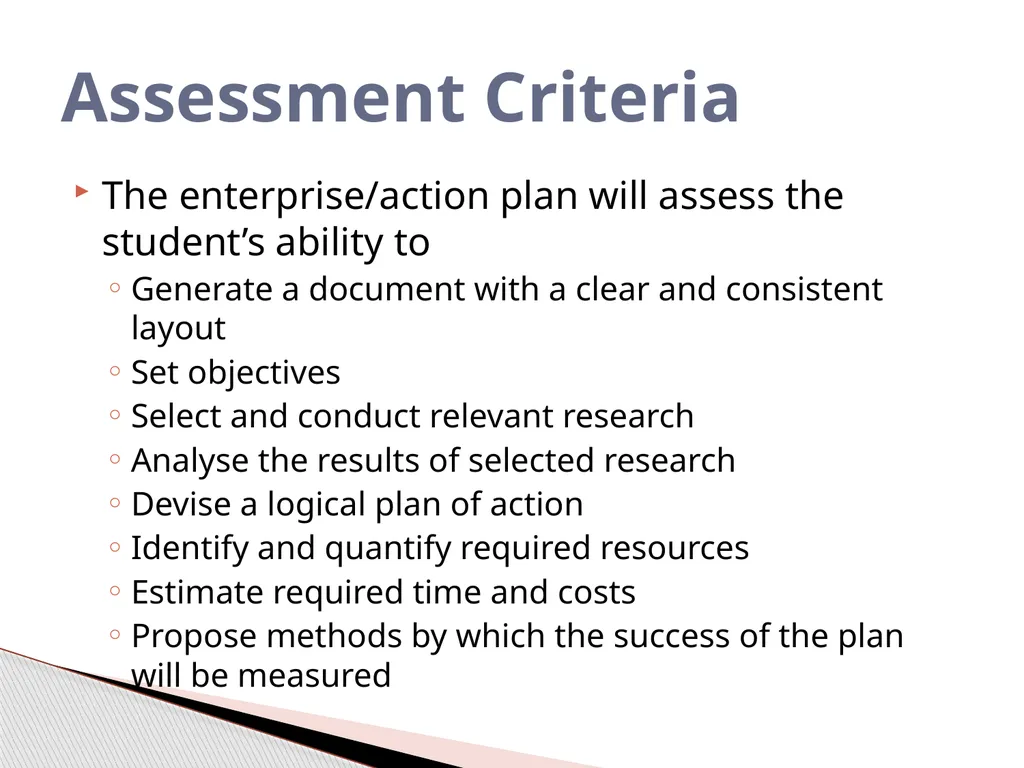
The enterprise/action plan will assess the student’s ability to
Generate a document with a clear and consistent layout
Set objectives
Select and conduct relevant research
Analyse the results of selected research
Devise a logical plan of action
Identify and quantify required resources
Estimate required time and costs
Propose methods by which the success of the plan will be measured Assessment Criteria<br>
05
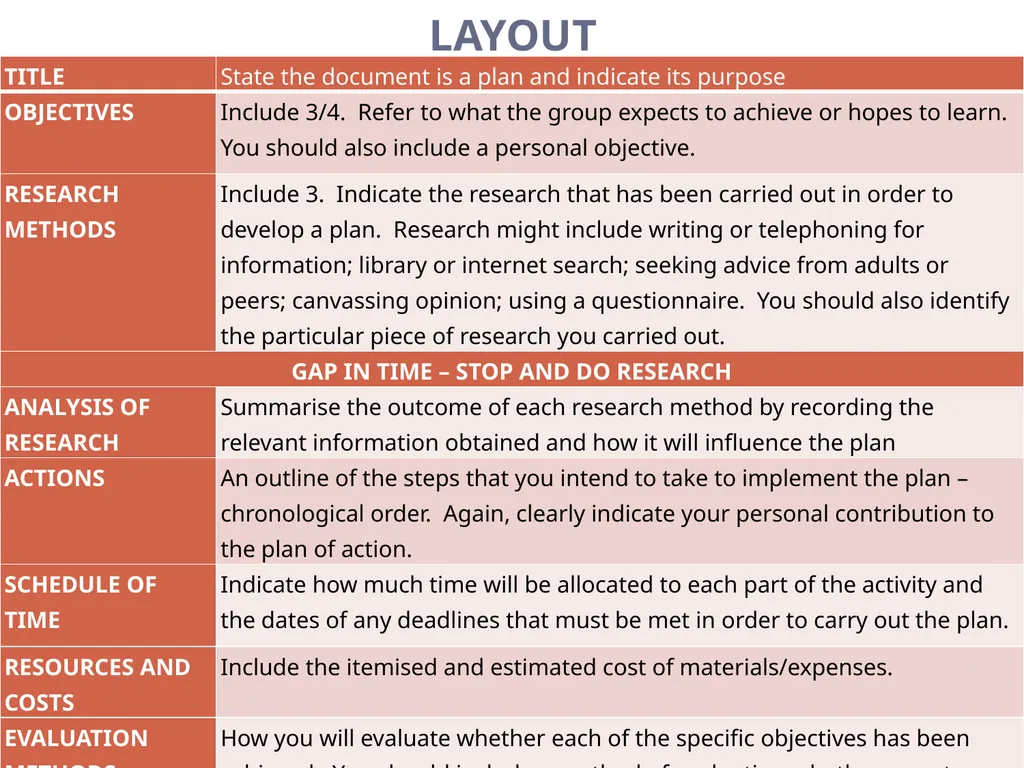
LAYOUT<br>
06
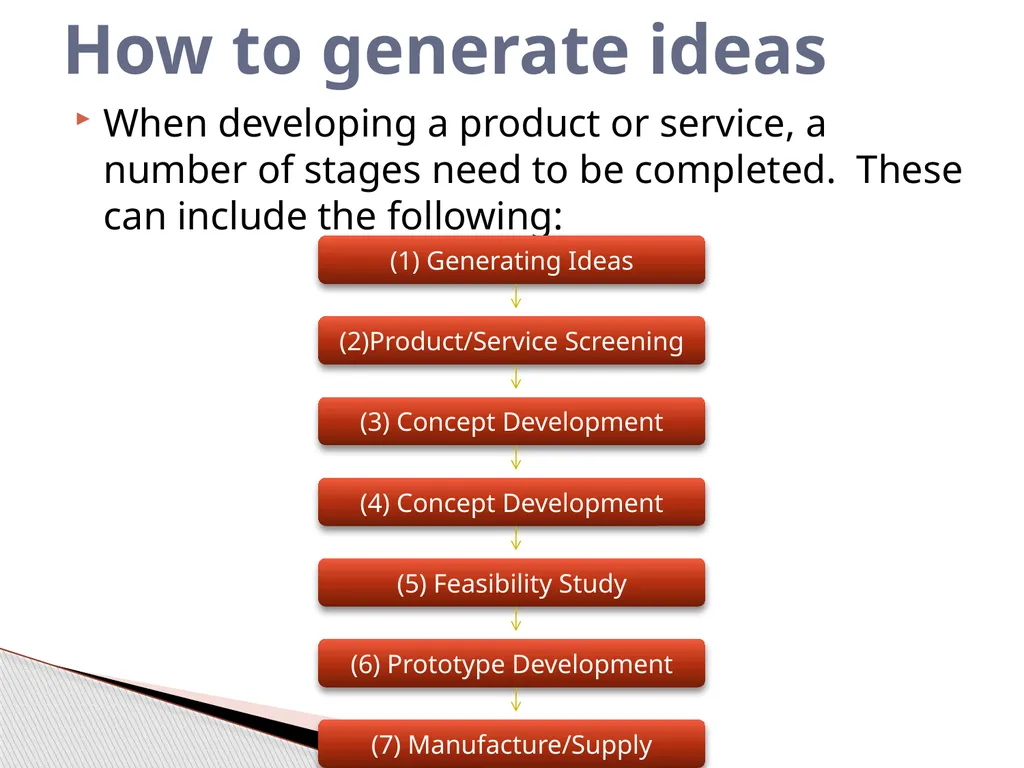
When developing a product or service, a number of stages need to be completed. These can include the following: How to generate ideas (1) Generating Ideas (2)Product/Service Screening (3) Concept Development (4) Concept Development (5) Feasibility Study (6) Prototype Development (7) Manufacture/Supply<br>
07
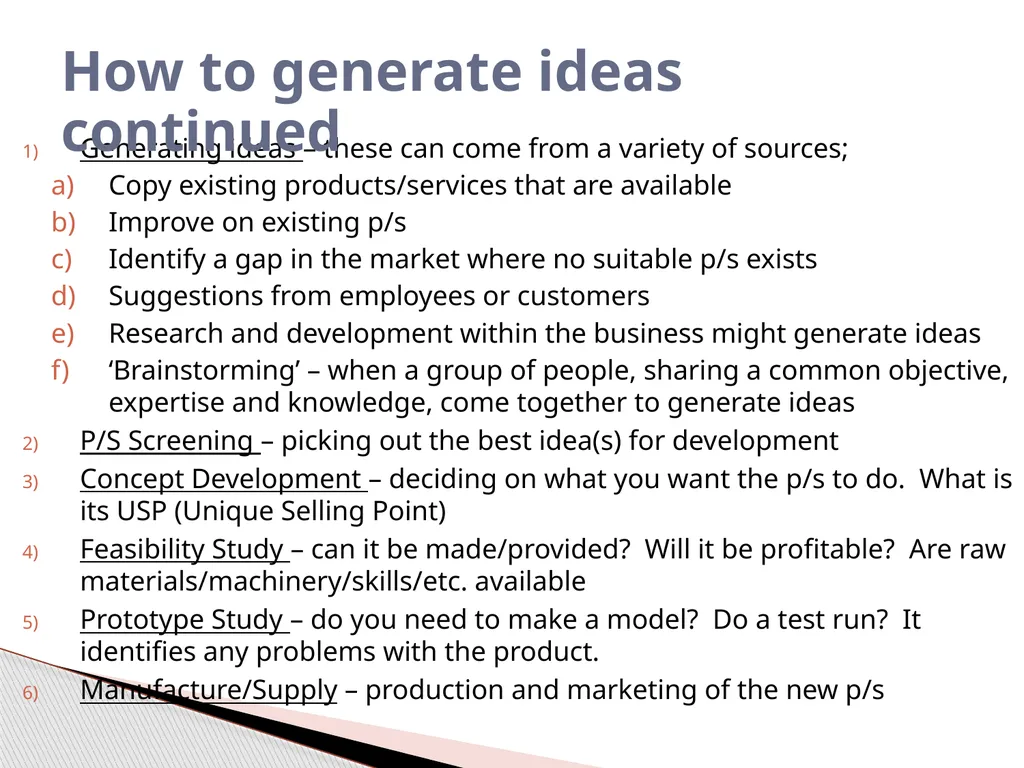
Generating ideas – these can come from a variety of sources;
Copy existing products/services that are available
Improve on existing p/s
Identify a gap in the market where no suitable p/s exists
Suggestions from employees or customers
Research and development within the business might generate ideas
‘Brainstorming’ – when a group of people, sharing a common objective, expertise and knowledge, come together to generate ideas
P/S Screening – picking out the best idea(s) for development
Concept Development – deciding on what you want the p/s to do. What is its USP (Unique Selling Point)
Feasibility Study – can it be made/provided? Will it be profitable? Are raw materials/machinery/skills/etc. available
Prototype Study – do you need to make a model? Do a test run? It identifies any problems with the product.
Manufacture/Supply – production and marketing of the new p/s How to generate ideas continued<br>
08
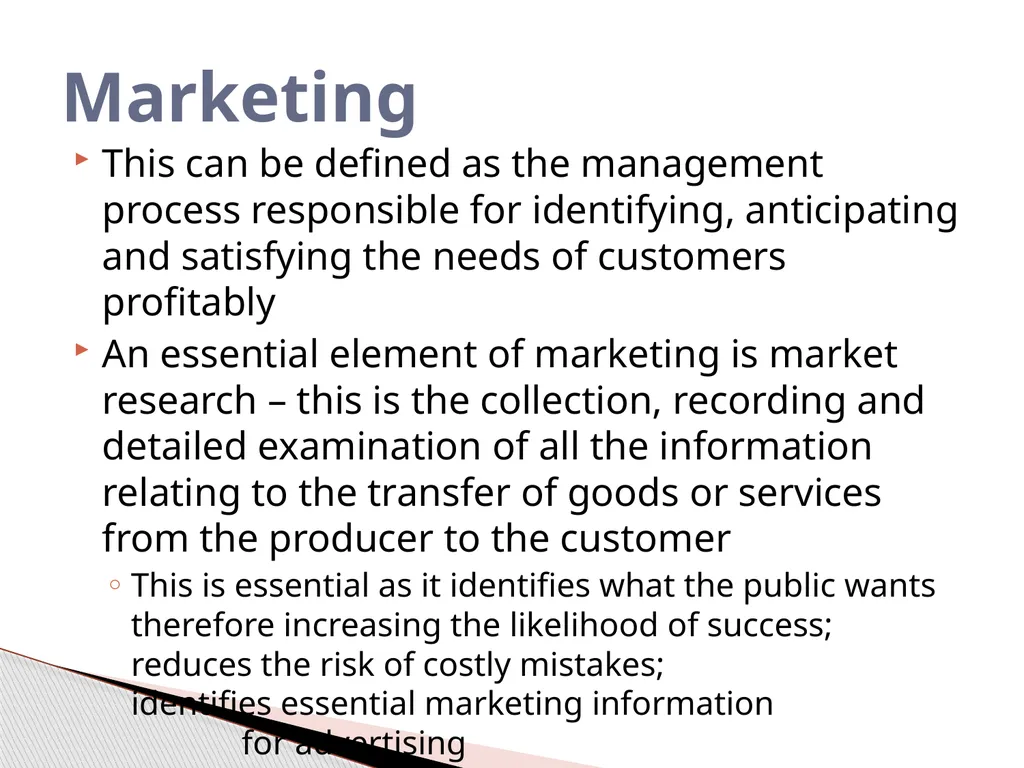
This can be defined as the management process responsible for identifying, anticipating and satisfying the needs of customers profitably
An essential element of marketing is market research – this is the collection, recording and detailed examination of all the information relating to the transfer of goods or services from the producer to the customer
This is essential as it identifies what the public wants therefore increasing the likelihood of success; reduces the risk of costly mistakes; identifies essential marketing information for advertising Marketing<br>
09
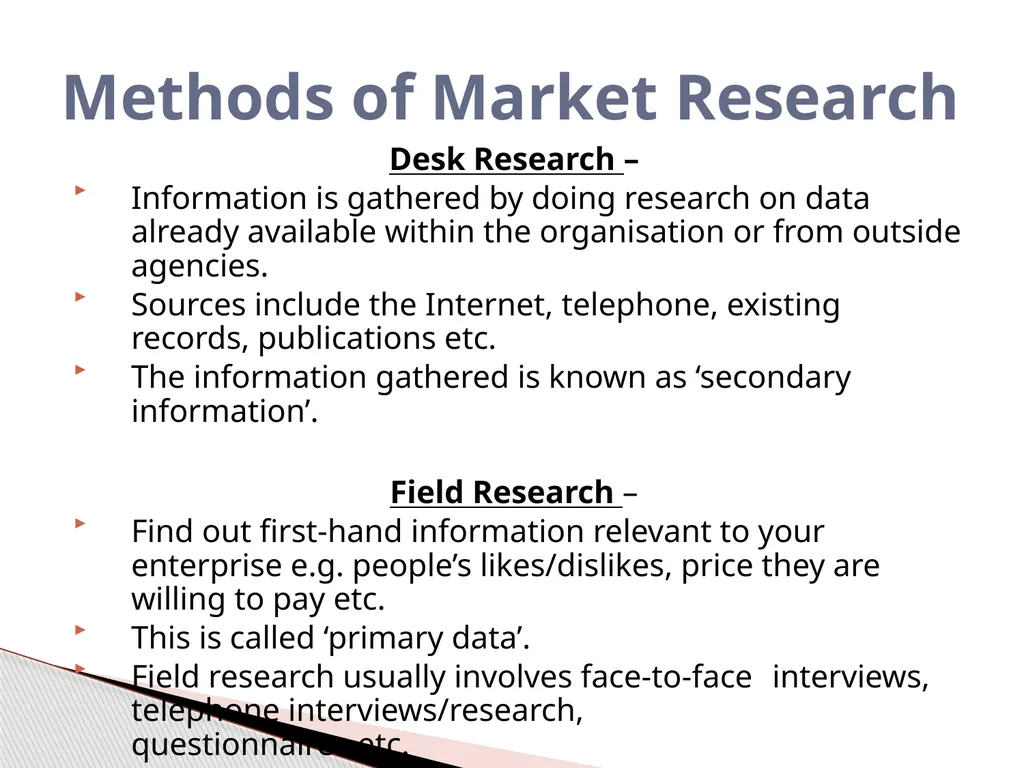
Desk Research –
Information is gathered by doing research on data already available within the organisation or from outside agencies.
Sources include the Internet, telephone, existing records, publications etc.
The information gathered is known as ‘secondary information’.
Field Research –
Find out first-hand information relevant to your enterprise e.g. people’s likes/dislikes, price they are willing to pay etc.
This is called ‘primary data’.
Field research usually involves face-to-face interviews, telephone interviews/research, questionnaires etc. Methods of Market Research<br>
10
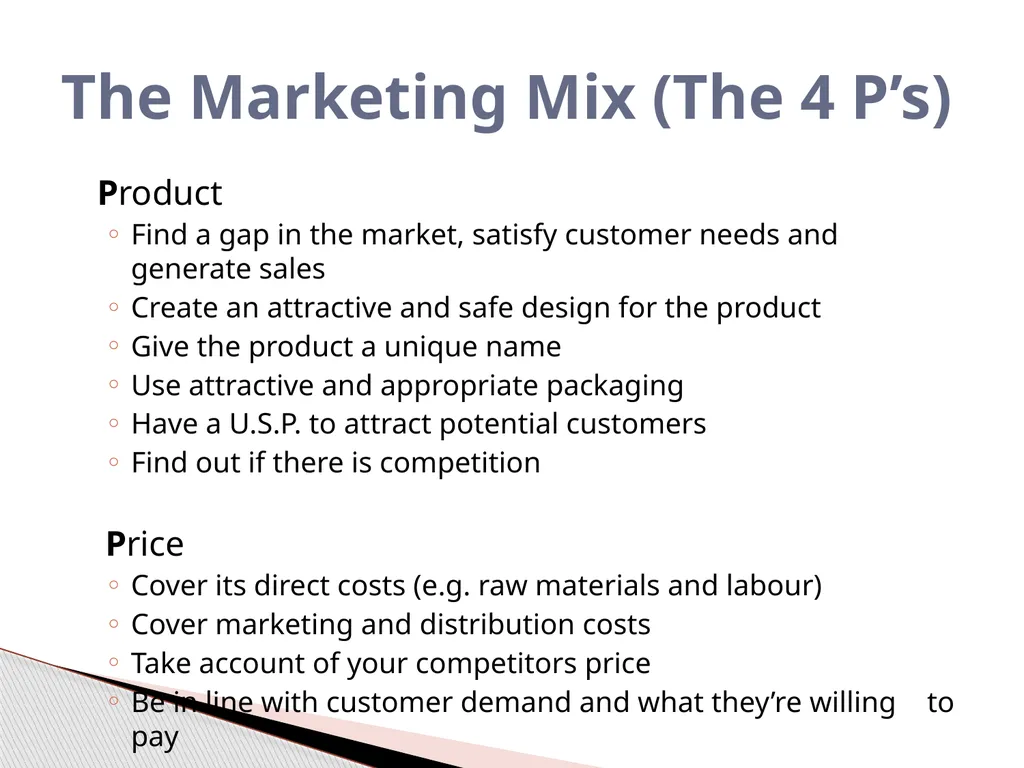
Product
Find a gap in the market, satisfy customer needs and generate sales
Create an attractive and safe design for the product
Give the product a unique name
Use attractive and appropriate packaging
Have a U.S.P. to attract potential customers
Find out if there is competition
Price
Cover its direct costs (e.g. raw materials and labour)
Cover marketing and distribution costs
Take account of your competitors price
Be in line with customer demand and what they’re willing to pay The Marketing Mix (The 4 P’s)<br>
11
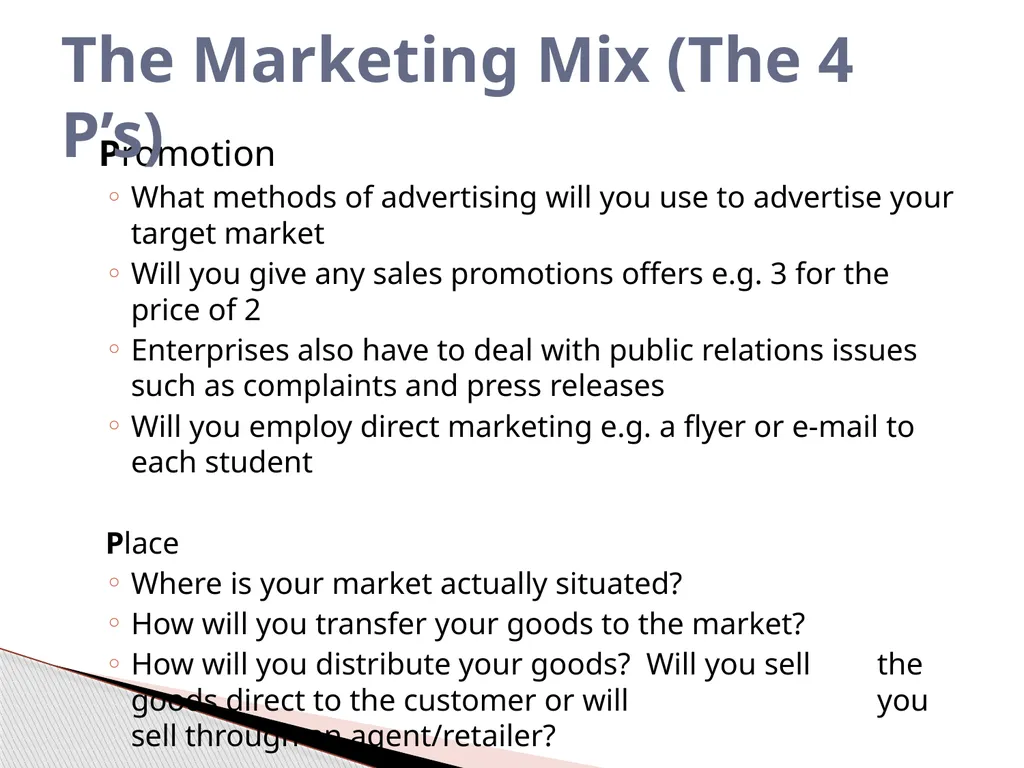
Promotion
What methods of advertising will you use to advertise your target market
Will you give any sales promotions offers e.g. 3 for the price of 2
Enterprises also have to deal with public relations issues such as complaints and press releases
Will you employ direct marketing e.g. a flyer or e-mail to each student
Place
Where is your market actually situated?
How will you transfer your goods to the market?
How will you distribute your goods? Will you sell the goods direct to the customer or will you sell through an agent/retailer? The Marketing Mix (The 4 P’s)<br>