Epi-Ready Foodborne Illness and its Impact Module
Description: Epi-Ready Foodborne Illness and its Impact Module 2 Module Objectives By the end of this module, participants will be able to identify the agents of foodborne illness and the associated burden on the United States. Explain the burden of
Related Topics
Download Presentation
"Epi-Ready Foodborne Illness and its Impact Module" is the property of its rightful owner. Permission is granted to download and print the materials on this website for personal, non-commercial use only, and to display it on your personal computer provided you do not modify the materials and that you retain all copyright notices contained in the materials. By downloading content from our website, you accept the terms of this agreement.
Presentation Transcript
slide1. Epi-Ready Foodborne Illness and its Impact Module 2<br>
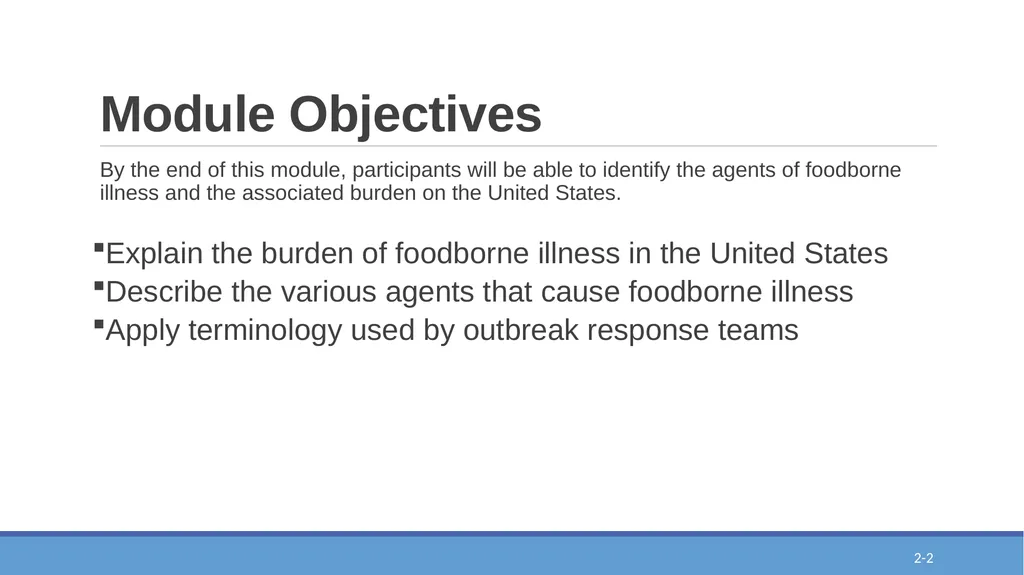
slide2. Module Objectives By the end of this module, participants will be able to identify the agents of foodborne illness and the associated burden on the United States. Explain the burden of foodborne illness in the United States
Describe the various agents that cause foodborne illness
Apply terminology used by outbreak response teams 2-2<br>
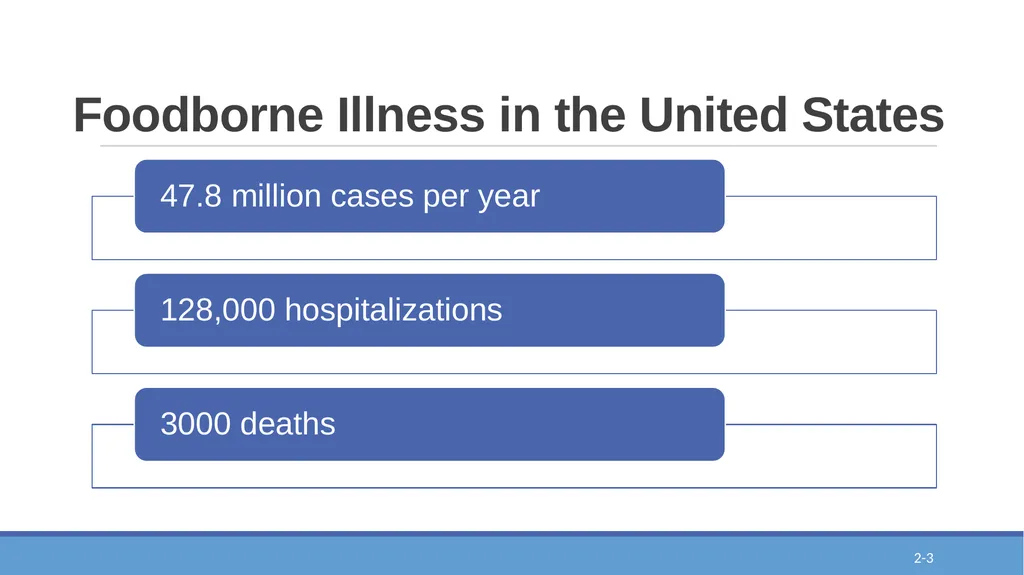
slide3. Foodborne Illness in the United States 2-3<br>
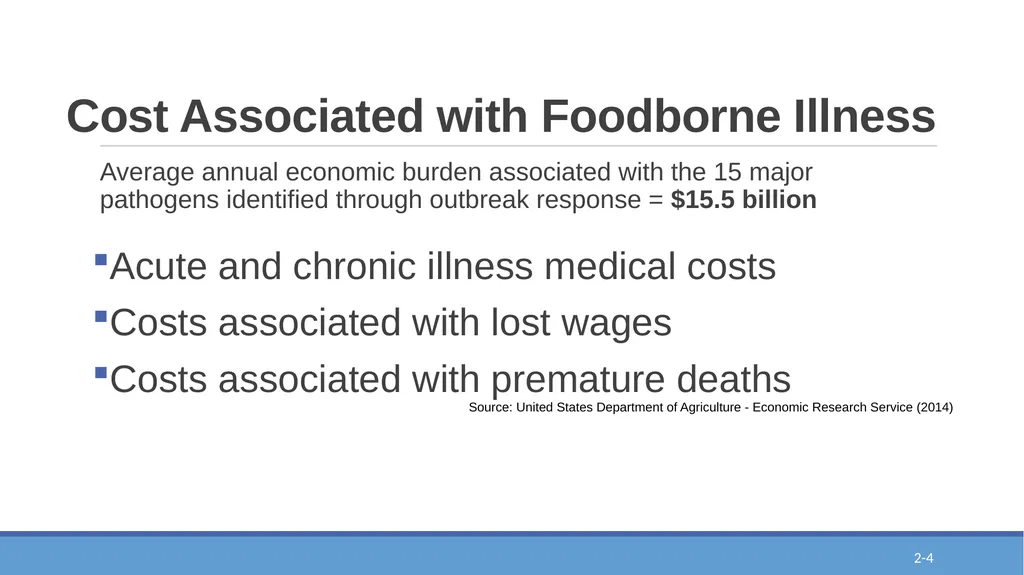
slide4. Cost Associated with Foodborne Illness Average annual economic burden associated with the 15 major pathogens identified through outbreak response = $15.5 billion Acute and chronic illness medical costs
Costs associated with lost wages
Costs associated with premature deaths 2-4 Source: United States Department of Agriculture - Economic Research Service (2014)<br>
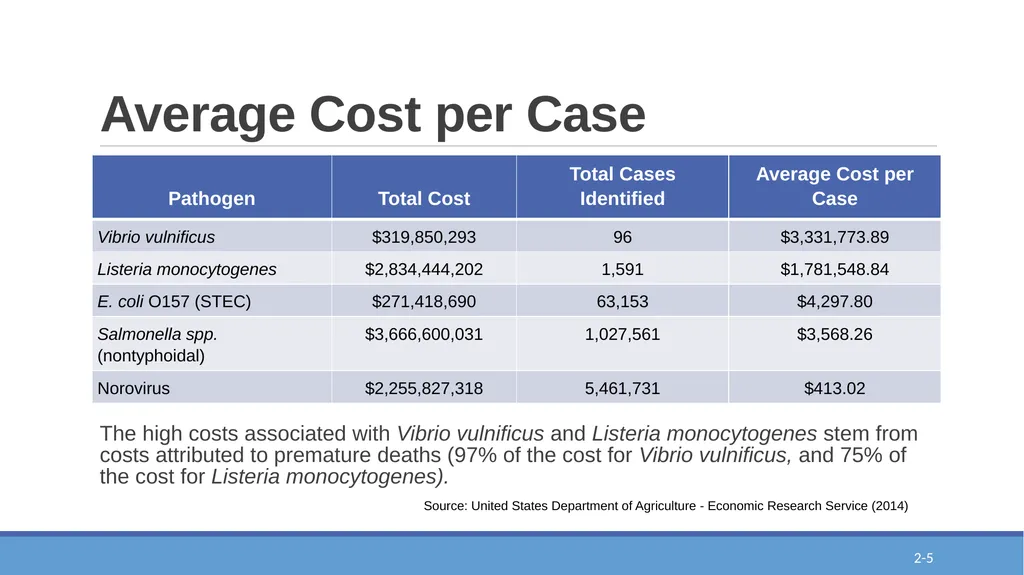
slide5. Average Cost per Case The high costs associated with Vibrio vulnificus and Listeria monocytogenes stem from costs attributed to premature deaths (97% of the cost for Vibrio vulnificus, and 75% of the cost for Listeria monocytogenes). 2-5 Source: United States Department of Agriculture - Economic Research Service (2014)<br>
slide6. Burden on the Food Industry 2-6 Seldom limited to one company
May impact entire community
Indirect costs also include:
Litigation
Regulatory compliance
Direct cost can reach $10 million<br>
slide7. Salmonella Saintpaul Outbreak - 2008 Initially tomatoes were implicated in an outbreak of 1442 ill in 43 states, D.C., and Canada
FDA issued a warning not to eat tomatoes
Ongoing investigation revealed that Jalapeno and Serrano peppers were the cause of the outbreak.
Florida and Georgia tomato growers lost $100 to $125 million
Tomatoes that were selling for $18-19 per box before the FDA announcement were selling for just $4 afterwards. Some Florida growers reported selling boxes for $0.50 2-7<br>
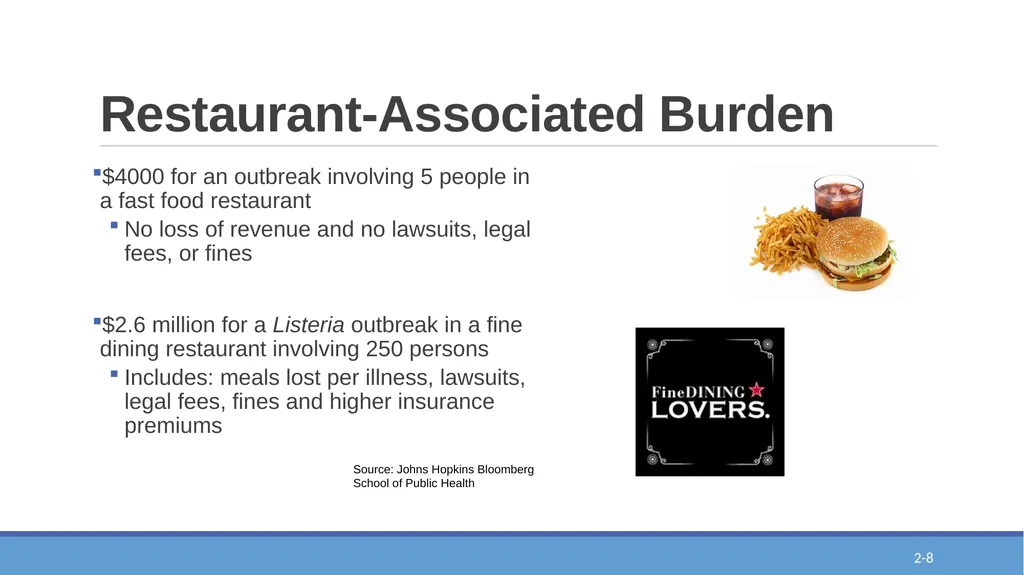
slide8. Restaurant-Associated Burden $4000 for an outbreak involving 5 people in a fast food restaurant
No loss of revenue and no lawsuits, legal fees, or fines
$2.6 million for a Listeria outbreak in a fine dining restaurant involving 250 persons
Includes: meals lost per illness, lawsuits, legal fees, fines and higher insurance premiums 2-8 Source: Johns Hopkins Bloomberg School of Public Health<br>
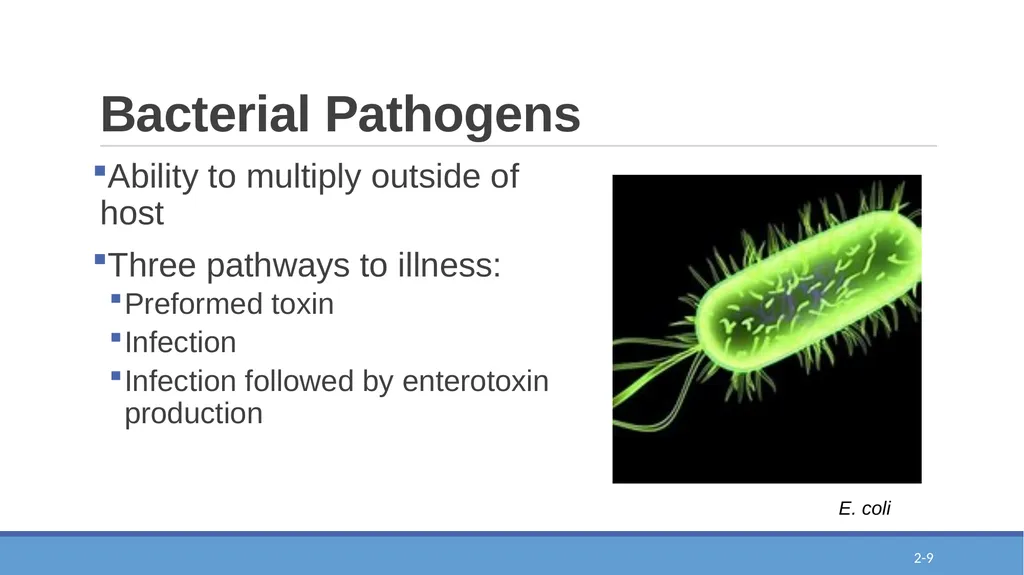
slide9. Bacterial Pathogens Ability to multiply outside of host
Three pathways to illness:
Preformed toxin
Infection
Infection followed by enterotoxin production 2-9 E. coli<br>
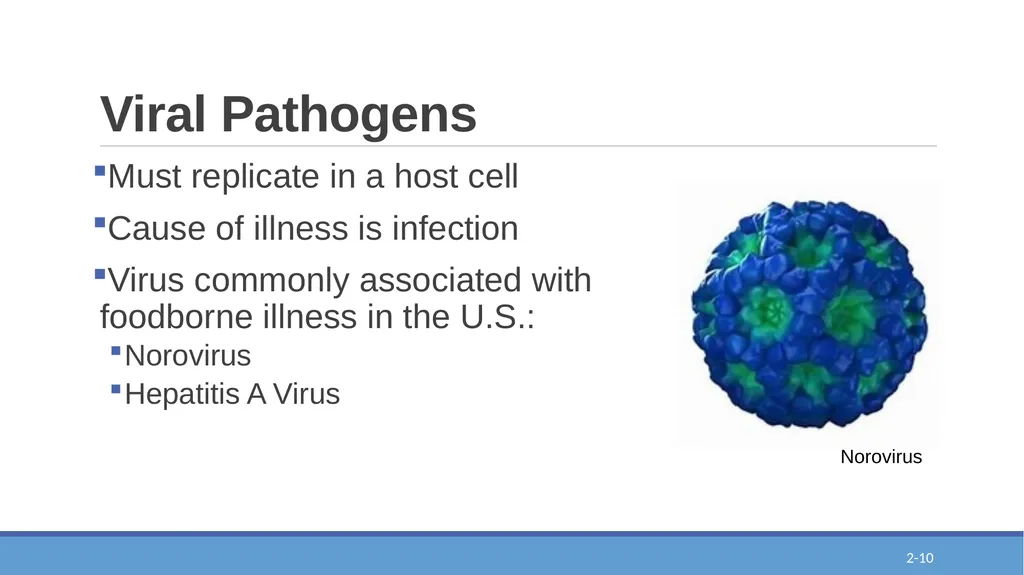
slide10. Viral Pathogens Must replicate in a host cell
Cause of illness is infection
Virus commonly associated with foodborne illness in the U.S.:
Norovirus
Hepatitis A Virus 2-10 Norovirus<br>
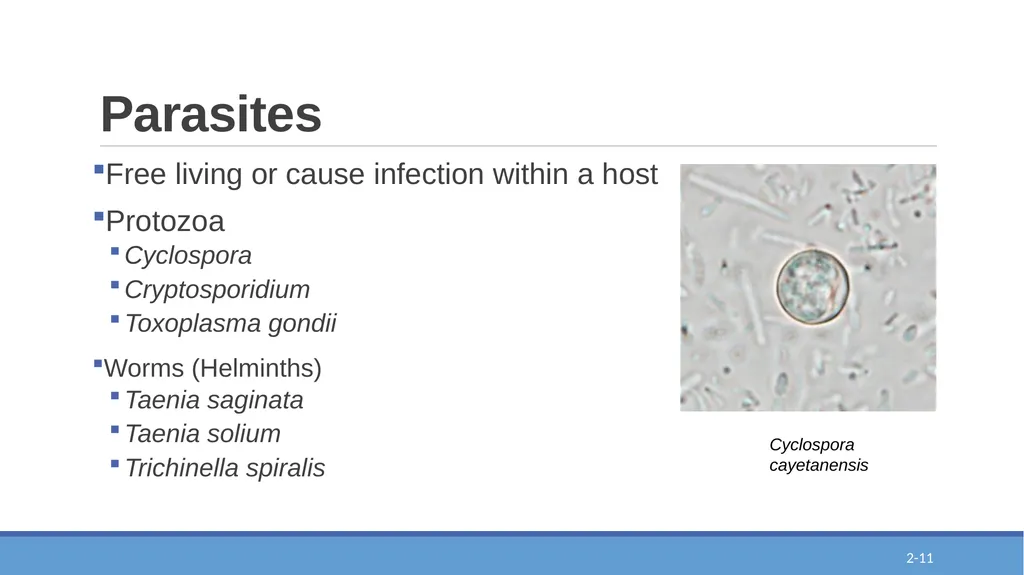
slide11. Parasites 2-11 Free living or cause infection within a host
Protozoa
Cyclospora
Cryptosporidium
Toxoplasma gondii
Worms (Helminths)
Taenia saginata
Taenia solium
Trichinella spiralis Cyclospora cayetanensis<br>
slide12. Toxins and Chemicals 4-12 Marine algae toxins
Fungal toxins
Fish toxins
Chemicals<br>
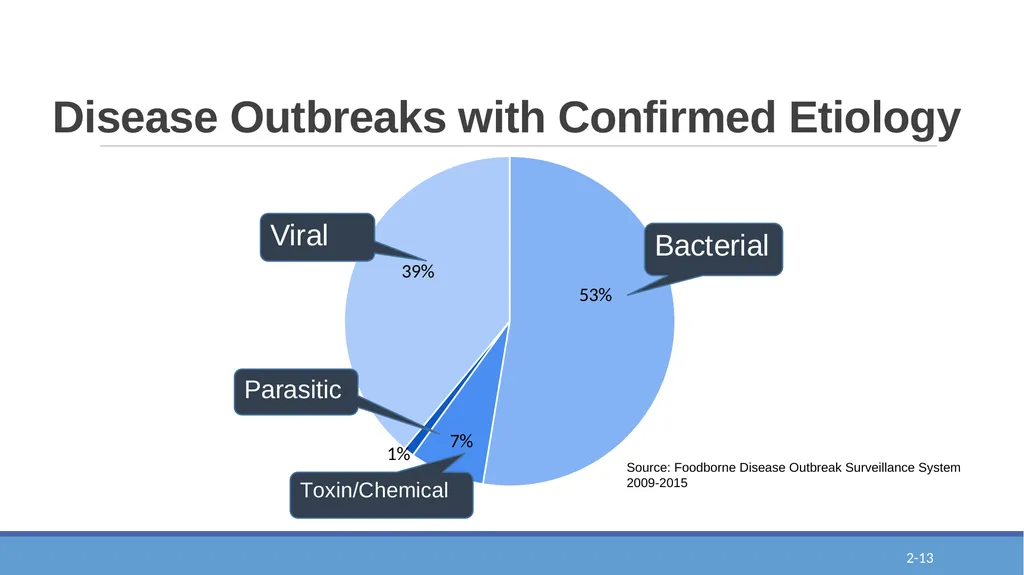
slide13. Disease Outbreaks with Confirmed Etiology 2-13 Source: Foodborne Disease Outbreak Surveillance System 2009-2015<br>
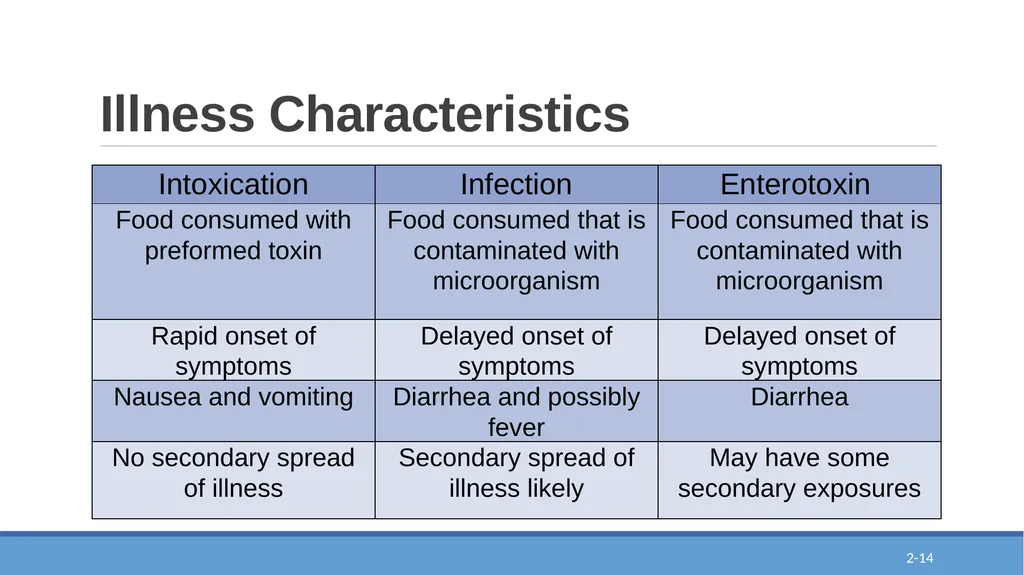
slide14. Illness Characteristics 2-14<br>
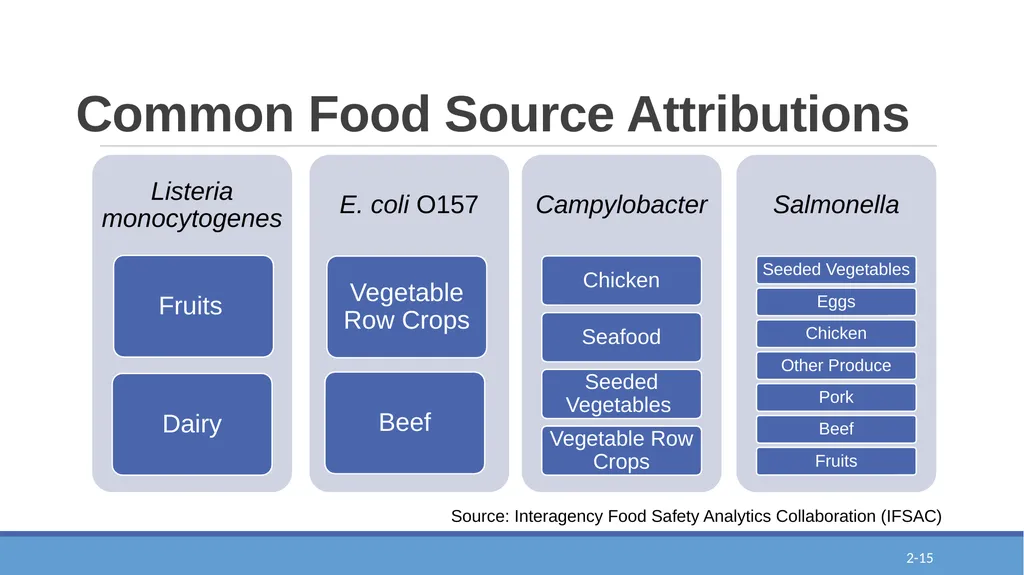
slide15. Common Food Source Attributions 2-15 Source: Interagency Food Safety Analytics Collaboration (IFSAC)<br>
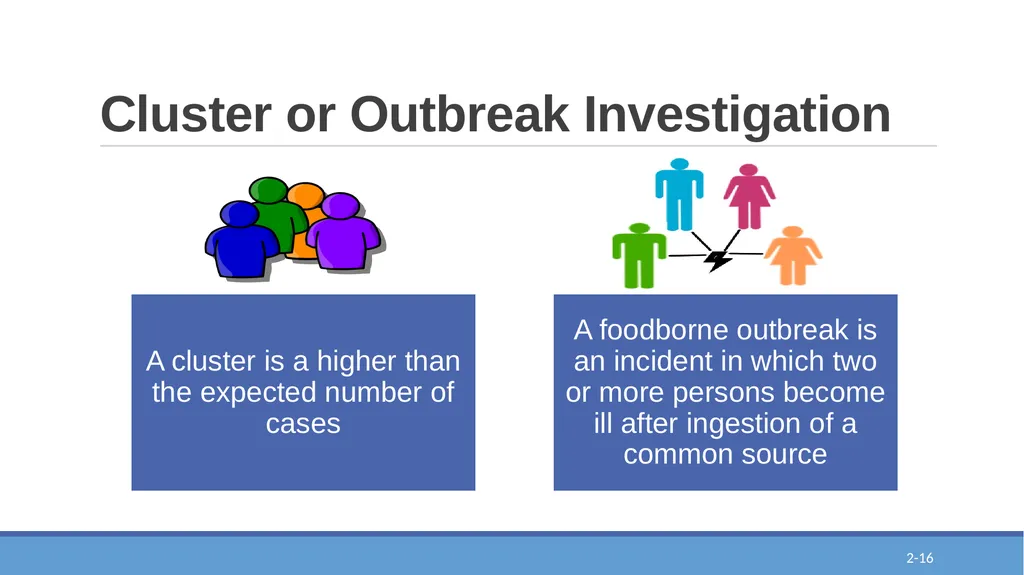
slide16. Cluster or Outbreak Investigation 2-16<br>
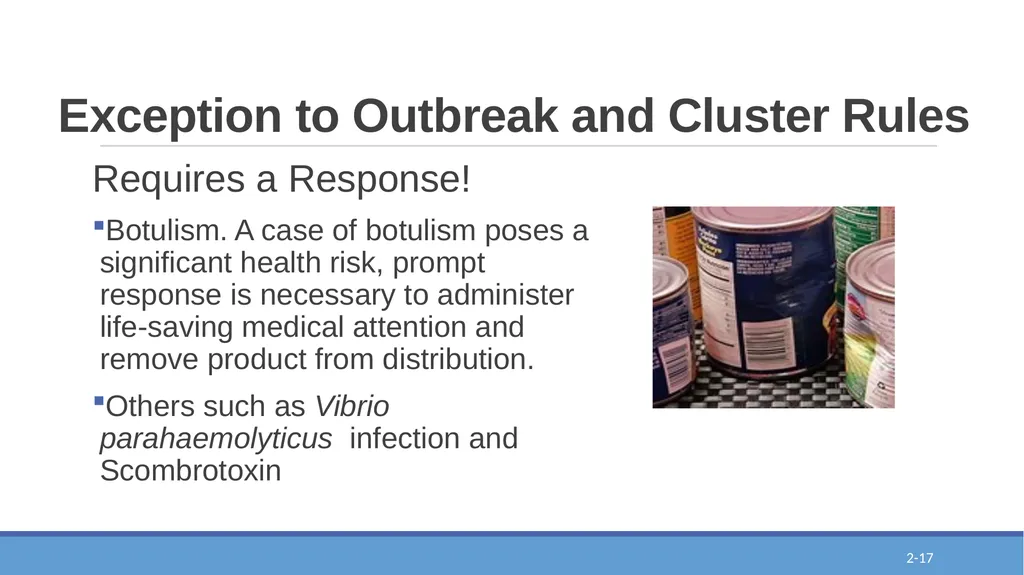
slide17. Exception to Outbreak and Cluster Rules Requires a Response!
Botulism. A case of botulism poses a significant health risk, prompt response is necessary to administer life-saving medical attention and remove product from distribution.
Others such as Vibrio parahaemolyticus infection and Scombrotoxin 2-17<br>

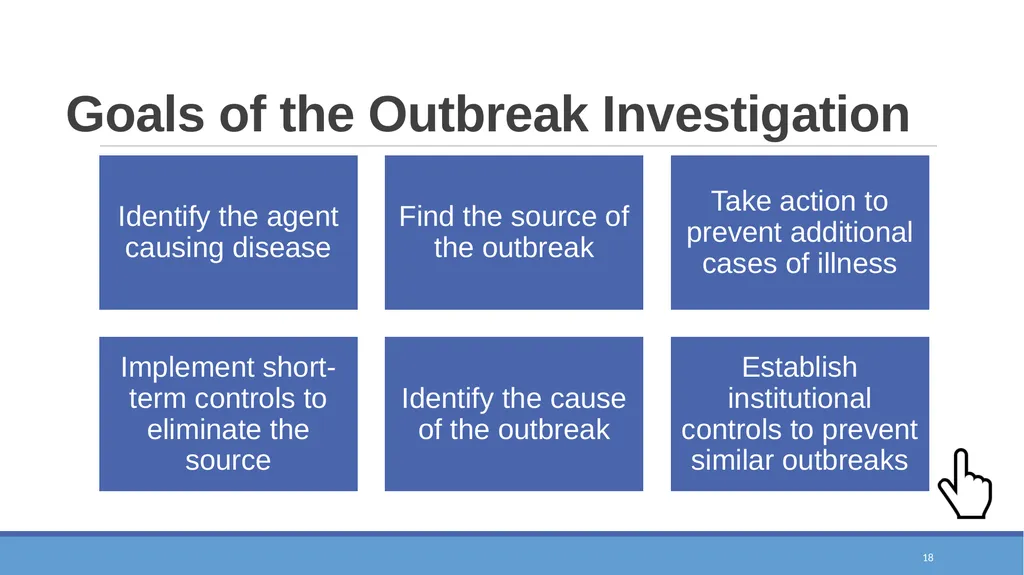
slide18. Goals of the Outbreak Investigation 18<br>
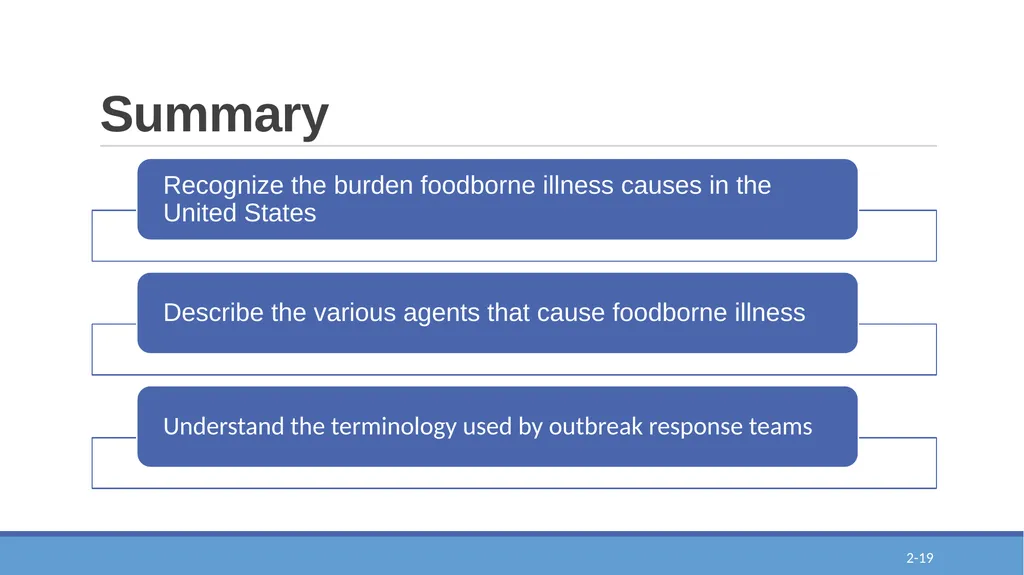
slide19. Summary 2-19<br>
slide20. Coming Up Next 2-20<br>
slide2. Module Objectives By the end of this module, participants will be able to identify the agents of foodborne illness and the associated burden on the United States. Explain the burden of foodborne illness in the United States
Describe the various agents that cause foodborne illness
Apply terminology used by outbreak response teams 2-2<br>
slide3. Foodborne Illness in the United States 2-3<br>
slide4. Cost Associated with Foodborne Illness Average annual economic burden associated with the 15 major pathogens identified through outbreak response = $15.5 billion Acute and chronic illness medical costs
Costs associated with lost wages
Costs associated with premature deaths 2-4 Source: United States Department of Agriculture - Economic Research Service (2014)<br>
slide5. Average Cost per Case The high costs associated with Vibrio vulnificus and Listeria monocytogenes stem from costs attributed to premature deaths (97% of the cost for Vibrio vulnificus, and 75% of the cost for Listeria monocytogenes). 2-5 Source: United States Department of Agriculture - Economic Research Service (2014)<br>
slide6. Burden on the Food Industry 2-6 Seldom limited to one company
May impact entire community
Indirect costs also include:
Litigation
Regulatory compliance
Direct cost can reach $10 million<br>
slide7. Salmonella Saintpaul Outbreak - 2008 Initially tomatoes were implicated in an outbreak of 1442 ill in 43 states, D.C., and Canada
FDA issued a warning not to eat tomatoes
Ongoing investigation revealed that Jalapeno and Serrano peppers were the cause of the outbreak.
Florida and Georgia tomato growers lost $100 to $125 million
Tomatoes that were selling for $18-19 per box before the FDA announcement were selling for just $4 afterwards. Some Florida growers reported selling boxes for $0.50 2-7<br>
slide8. Restaurant-Associated Burden $4000 for an outbreak involving 5 people in a fast food restaurant
No loss of revenue and no lawsuits, legal fees, or fines
$2.6 million for a Listeria outbreak in a fine dining restaurant involving 250 persons
Includes: meals lost per illness, lawsuits, legal fees, fines and higher insurance premiums 2-8 Source: Johns Hopkins Bloomberg School of Public Health<br>
slide9. Bacterial Pathogens Ability to multiply outside of host
Three pathways to illness:
Preformed toxin
Infection
Infection followed by enterotoxin production 2-9 E. coli<br>
slide10. Viral Pathogens Must replicate in a host cell
Cause of illness is infection
Virus commonly associated with foodborne illness in the U.S.:
Norovirus
Hepatitis A Virus 2-10 Norovirus<br>
slide11. Parasites 2-11 Free living or cause infection within a host
Protozoa
Cyclospora
Cryptosporidium
Toxoplasma gondii
Worms (Helminths)
Taenia saginata
Taenia solium
Trichinella spiralis Cyclospora cayetanensis<br>
slide12. Toxins and Chemicals 4-12 Marine algae toxins
Fungal toxins
Fish toxins
Chemicals<br>
slide13. Disease Outbreaks with Confirmed Etiology 2-13 Source: Foodborne Disease Outbreak Surveillance System 2009-2015<br>
slide14. Illness Characteristics 2-14<br>
slide15. Common Food Source Attributions 2-15 Source: Interagency Food Safety Analytics Collaboration (IFSAC)<br>
slide16. Cluster or Outbreak Investigation 2-16<br>
slide17. Exception to Outbreak and Cluster Rules Requires a Response!
Botulism. A case of botulism poses a significant health risk, prompt response is necessary to administer life-saving medical attention and remove product from distribution.
Others such as Vibrio parahaemolyticus infection and Scombrotoxin 2-17<br>
slide18. Goals of the Outbreak Investigation 18<br>
slide19. Summary 2-19<br>
slide20. Coming Up Next 2-20<br>