
Equine Influenza (Flu) Dr Mritunjay Kumar


Description: Equine Influenza (Flu) Dr Mritunjay Kumar Associate Professor VMD, BVC, BASU, Patna Equine Influenza (Flu) Equine influenza virus (EIV) is a highly contagious Influenza A virus which is a common cause of acute respiratory disease in Equidae
Related Topics
Download Presentation
"Equine Influenza (Flu) Dr Mritunjay Kumar" is the property of its rightful owner. Permission is granted to download and print the materials on this website for personal, non-commercial use only, and to display it on your personal computer provided you do not modify the materials and that you retain all copyright notices contained in the materials. By downloading content from our website, you accept the terms of this agreement.
Presentation Transcript
slide1. Equine Influenza (Flu) Dr Mritunjay Kumar
Associate Professor
VMD, BVC, BASU, Patna<br>
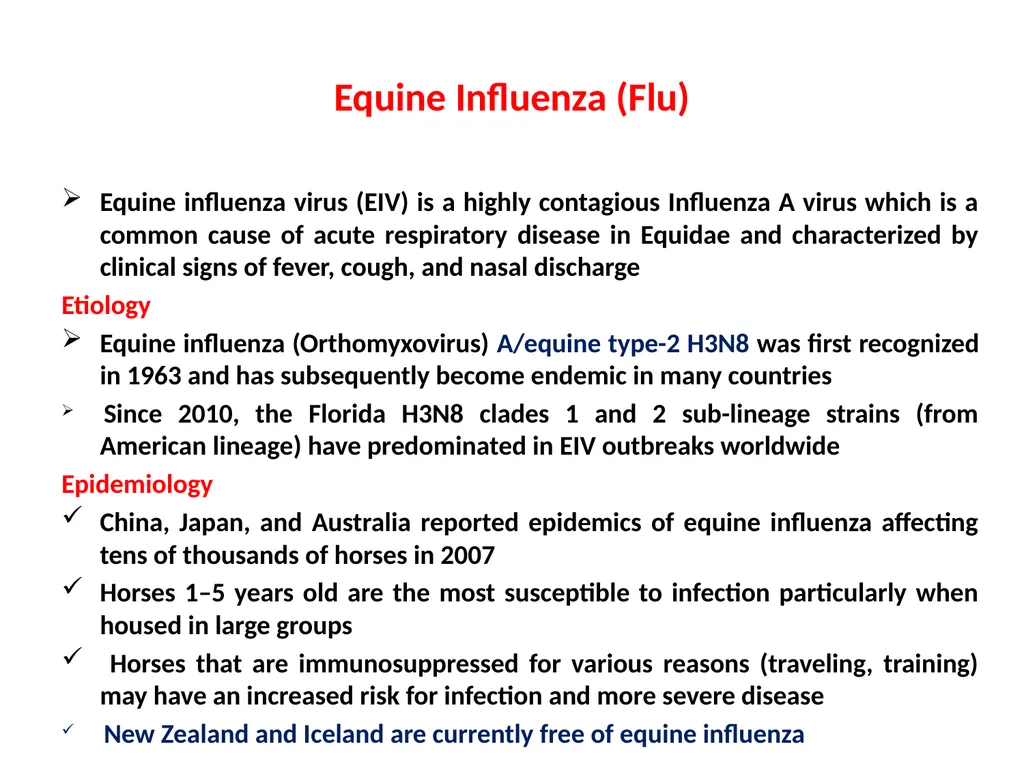
slide2. Equine Influenza (Flu) Equine influenza virus (EIV) is a highly contagious Influenza A virus which is a common cause of acute respiratory disease in Equidae and characterized by clinical signs of fever, cough, and nasal discharge
Etiology
Equine influenza (Orthomyxovirus) A/equine type-2 H3N8 was first recognized in 1963 and has subsequently become endemic in many countries
Since 2010, the Florida H3N8 clades 1 and 2 sub-lineage strains (from American lineage) have predominated in EIV outbreaks worldwide
Epidemiology
China, Japan, and Australia reported epidemics of equine influenza affecting tens of thousands of horses in 2007
Horses 1–5 years old are the most susceptible to infection particularly when housed in large groups
Horses that are immunosuppressed for various reasons (traveling, training) may have an increased risk for infection and more severe disease
New Zealand and Iceland are currently free of equine influenza<br>
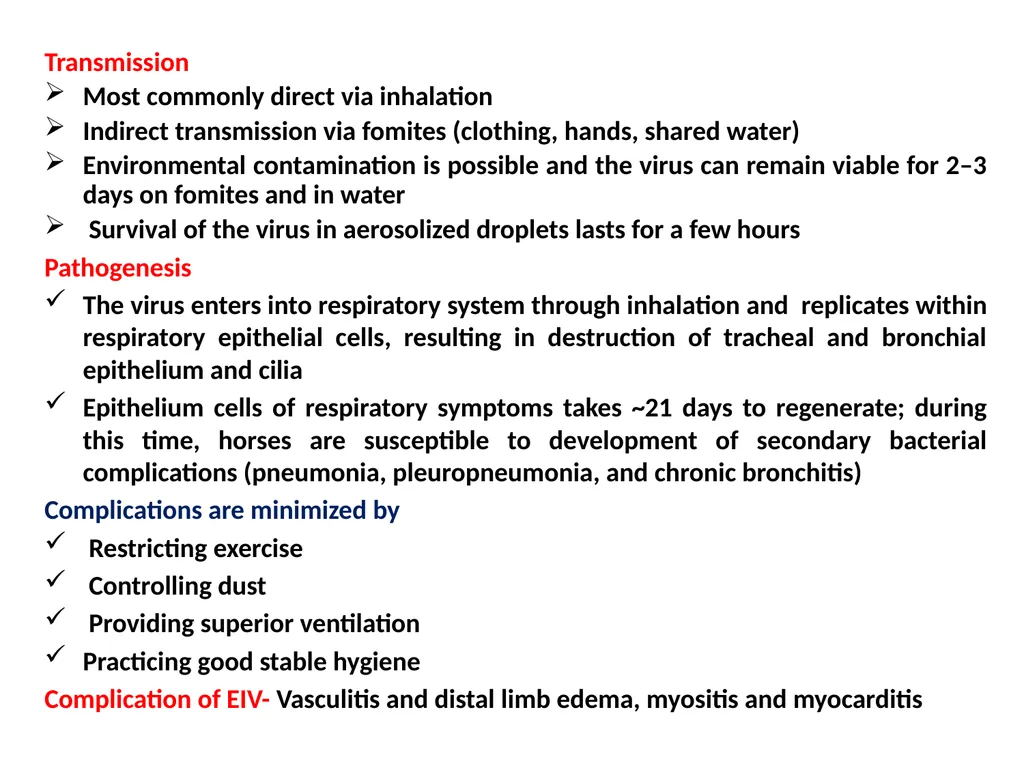
slide3. Transmission
Most commonly direct via inhalation
Indirect transmission via fomites (clothing, hands, shared water)
Environmental contamination is possible and the virus can remain viable for 2–3 days on fomites and in water
Survival of the virus in aerosolized droplets lasts for a few hours
Pathogenesis
The virus enters into respiratory system through inhalation and replicates within respiratory epithelial cells, resulting in destruction of tracheal and bronchial epithelium and cilia
Epithelium cells of respiratory symptoms takes ~21 days to regenerate; during this time, horses are susceptible to development of secondary bacterial complications (pneumonia, pleuropneumonia, and chronic bronchitis)
Complications are minimized by
Restricting exercise
Controlling dust
Providing superior ventilation
Practicing good stable hygiene
Complication of EIV- Vasculitis and distal limb edema, myositis and myocarditis<br>
slide4. Clinical Signs
The incubation period of influenza is 1–3 days and most of the clinical signs developing 3–5 days after exposure
High fever (up to 106°F) with depression, anorexia, and weakness
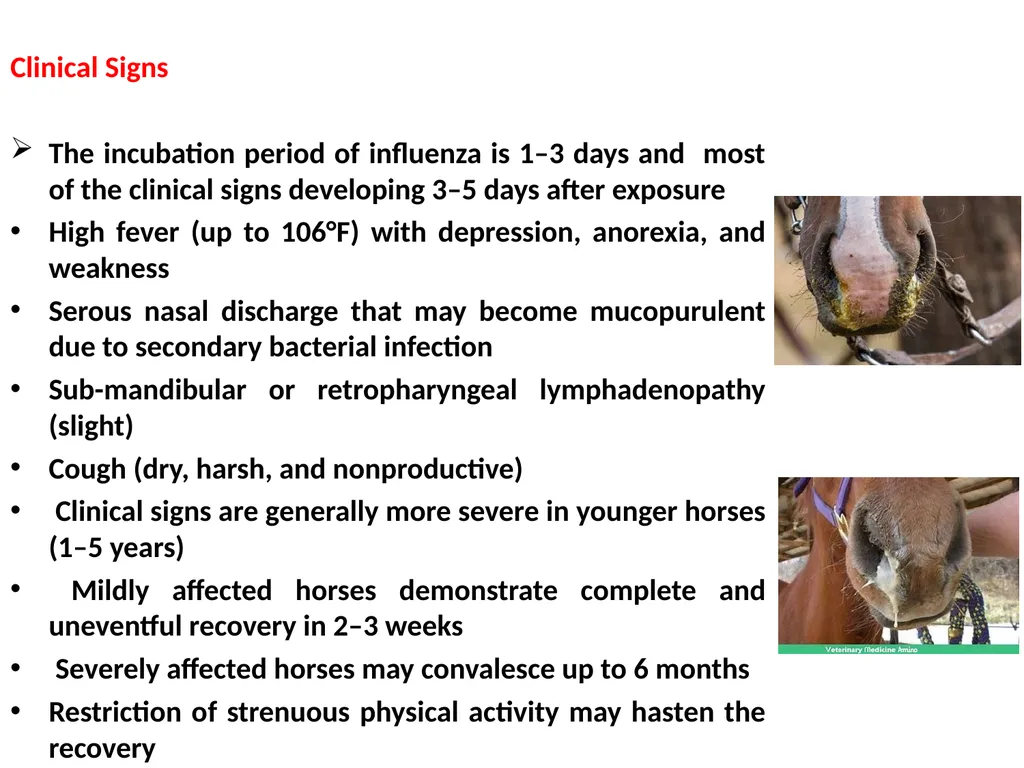
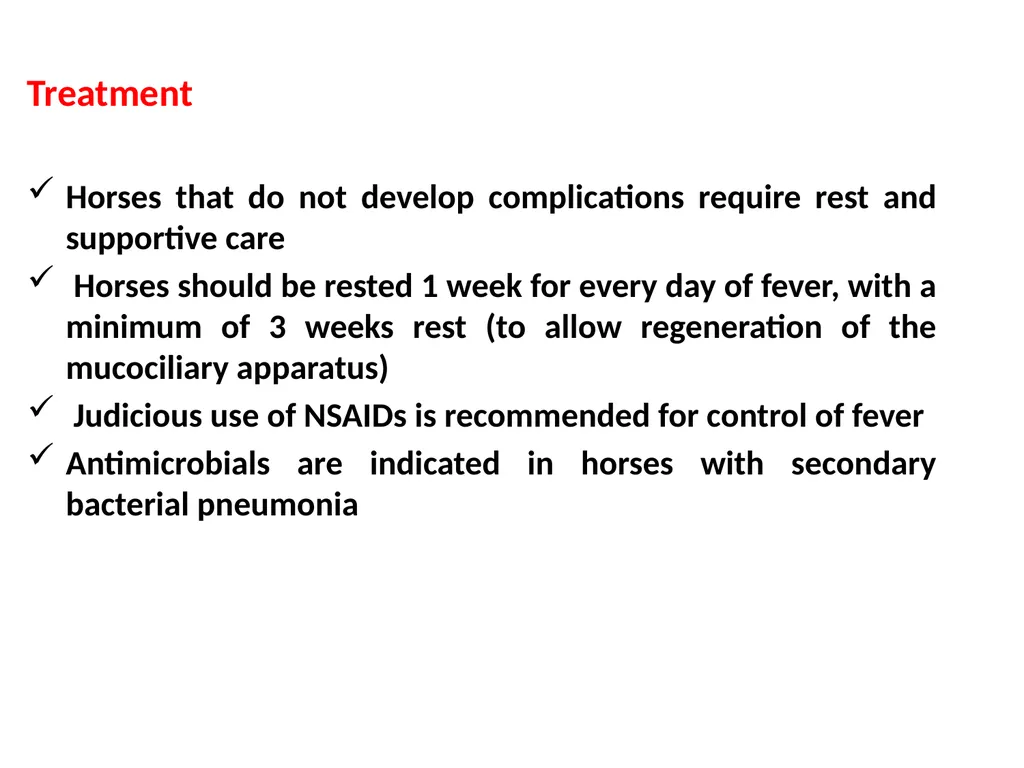
Serous nasal discharge that may become mucopurulent due to secondary bacterial infection
Sub-mandibular or retropharyngeal lymphadenopathy (slight)
Cough (dry, harsh, and nonproductive)
Clinical signs are generally more severe in younger horses (1–5 years)
Mildly affected horses demonstrate complete and uneventful recovery in 2–3 weeks
Severely affected horses may convalesce up to 6 months
Restriction of strenuous physical activity may hasten the recovery<br>
slide5. Diagnosis
Based on history and clinical signs
Confirmatory diagnosis by virus isolation or RT-PCR array from nasopharyngeal swabs
Sample should be collected within 1-2 days of infection
Other diagnostic tests are stall-side immunoassay or antigen-capture ELISA kits
Serologic testing, on paired serum samples collected shortly after the appearance of clinical signs and then again approximately 2 weeks later
Prevention of Equine Influenza<br>
slide6. Treatment
Horses that do not develop complications require rest and supportive care
Horses should be rested 1 week for every day of fever, with a minimum of 3 weeks rest (to allow regeneration of the mucociliary apparatus)
Judicious use of NSAIDs is recommended for control of fever
Antimicrobials are indicated in horses with secondary bacterial pneumonia<br>
slide7. Prevention and Control
Control and prevention of influenza requires biosecurity practices and vaccination
Isolation of sick horses during outbreaks following standard biosecurity guidelines for 21 days after resolution signs in last newly infected horse
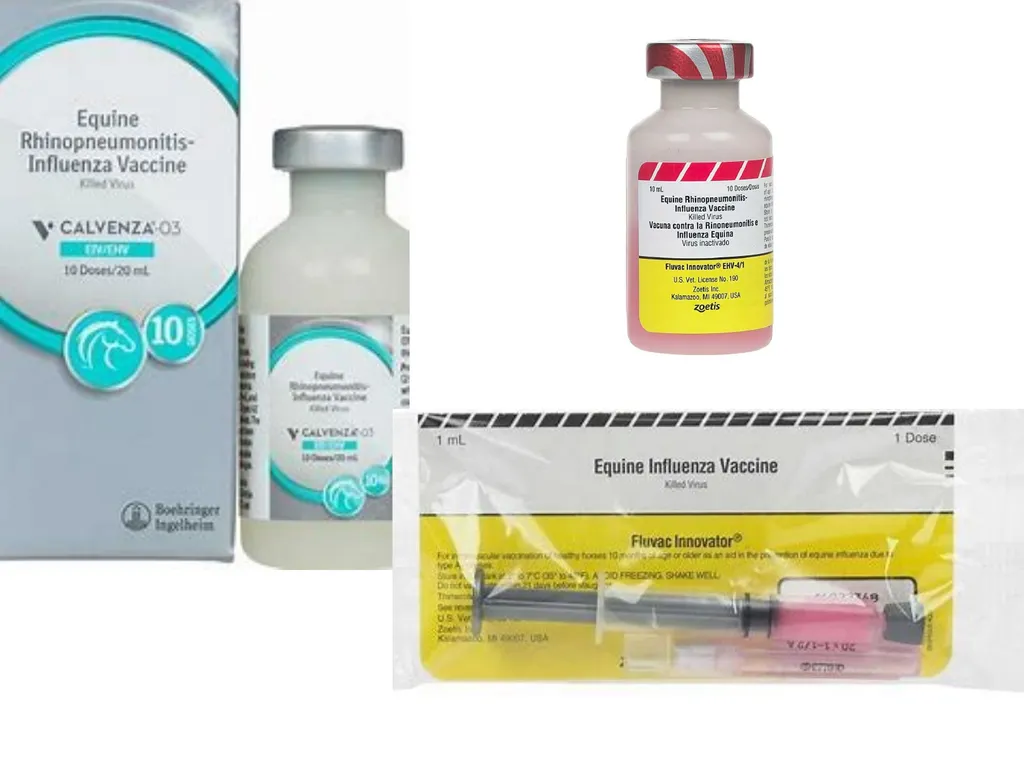
Most influenza vaccines are inactivated, adjuvanted vaccines recommended primarily for intramuscular administration @1ml
Modified-live influenza vaccine (Intra-nasal), designed to induce mucosal (local) antibody protection is also available
Because the duration of protection provided by current vaccines is limited, booster injections in endemic area recommended every 6 months
The intranasal vaccine can achieve more rapid protection in 5–7 days and thus is recommended for horses unvaccinated before the outbreak<br>
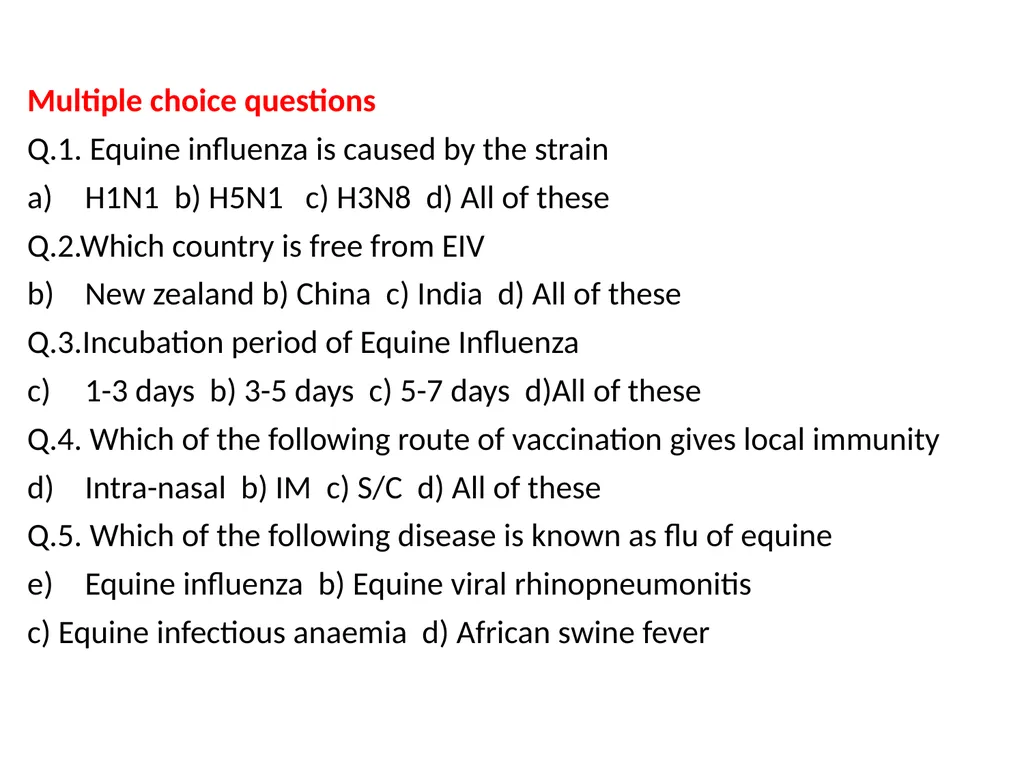
slide9. Multiple choice questions
Q.1. Equine influenza is caused by the strain
H1N1 b) H5N1 c) H3N8 d) All of these
Q.2.Which country is free from EIV
New zealand b) China c) India d) All of these
Q.3.Incubation period of Equine Influenza
1-3 days b) 3-5 days c) 5-7 days d)All of these
Q.4. Which of the following route of vaccination gives local immunity
Intra-nasal b) IM c) S/C d) All of these
Q.5. Which of the following disease is known as flu of equine
Equine influenza b) Equine viral rhinopneumonitis
c) Equine infectious anaemia d) African swine fever<br>
Associate Professor
VMD, BVC, BASU, Patna<br>
slide2. Equine Influenza (Flu) Equine influenza virus (EIV) is a highly contagious Influenza A virus which is a common cause of acute respiratory disease in Equidae and characterized by clinical signs of fever, cough, and nasal discharge
Etiology
Equine influenza (Orthomyxovirus) A/equine type-2 H3N8 was first recognized in 1963 and has subsequently become endemic in many countries
Since 2010, the Florida H3N8 clades 1 and 2 sub-lineage strains (from American lineage) have predominated in EIV outbreaks worldwide
Epidemiology
China, Japan, and Australia reported epidemics of equine influenza affecting tens of thousands of horses in 2007
Horses 1–5 years old are the most susceptible to infection particularly when housed in large groups
Horses that are immunosuppressed for various reasons (traveling, training) may have an increased risk for infection and more severe disease
New Zealand and Iceland are currently free of equine influenza<br>
slide3. Transmission
Most commonly direct via inhalation
Indirect transmission via fomites (clothing, hands, shared water)
Environmental contamination is possible and the virus can remain viable for 2–3 days on fomites and in water
Survival of the virus in aerosolized droplets lasts for a few hours
Pathogenesis
The virus enters into respiratory system through inhalation and replicates within respiratory epithelial cells, resulting in destruction of tracheal and bronchial epithelium and cilia
Epithelium cells of respiratory symptoms takes ~21 days to regenerate; during this time, horses are susceptible to development of secondary bacterial complications (pneumonia, pleuropneumonia, and chronic bronchitis)
Complications are minimized by
Restricting exercise
Controlling dust
Providing superior ventilation
Practicing good stable hygiene
Complication of EIV- Vasculitis and distal limb edema, myositis and myocarditis<br>
slide4. Clinical Signs
The incubation period of influenza is 1–3 days and most of the clinical signs developing 3–5 days after exposure
High fever (up to 106°F) with depression, anorexia, and weakness
Serous nasal discharge that may become mucopurulent due to secondary bacterial infection
Sub-mandibular or retropharyngeal lymphadenopathy (slight)
Cough (dry, harsh, and nonproductive)
Clinical signs are generally more severe in younger horses (1–5 years)
Mildly affected horses demonstrate complete and uneventful recovery in 2–3 weeks
Severely affected horses may convalesce up to 6 months
Restriction of strenuous physical activity may hasten the recovery<br>
slide5. Diagnosis
Based on history and clinical signs
Confirmatory diagnosis by virus isolation or RT-PCR array from nasopharyngeal swabs
Sample should be collected within 1-2 days of infection
Other diagnostic tests are stall-side immunoassay or antigen-capture ELISA kits
Serologic testing, on paired serum samples collected shortly after the appearance of clinical signs and then again approximately 2 weeks later
Prevention of Equine Influenza<br>
slide6. Treatment
Horses that do not develop complications require rest and supportive care
Horses should be rested 1 week for every day of fever, with a minimum of 3 weeks rest (to allow regeneration of the mucociliary apparatus)
Judicious use of NSAIDs is recommended for control of fever
Antimicrobials are indicated in horses with secondary bacterial pneumonia<br>
slide7. Prevention and Control
Control and prevention of influenza requires biosecurity practices and vaccination
Isolation of sick horses during outbreaks following standard biosecurity guidelines for 21 days after resolution signs in last newly infected horse
Most influenza vaccines are inactivated, adjuvanted vaccines recommended primarily for intramuscular administration @1ml
Modified-live influenza vaccine (Intra-nasal), designed to induce mucosal (local) antibody protection is also available
Because the duration of protection provided by current vaccines is limited, booster injections in endemic area recommended every 6 months
The intranasal vaccine can achieve more rapid protection in 5–7 days and thus is recommended for horses unvaccinated before the outbreak<br>
slide9. Multiple choice questions
Q.1. Equine influenza is caused by the strain
H1N1 b) H5N1 c) H3N8 d) All of these
Q.2.Which country is free from EIV
New zealand b) China c) India d) All of these
Q.3.Incubation period of Equine Influenza
1-3 days b) 3-5 days c) 5-7 days d)All of these
Q.4. Which of the following route of vaccination gives local immunity
Intra-nasal b) IM c) S/C d) All of these
Q.5. Which of the following disease is known as flu of equine
Equine influenza b) Equine viral rhinopneumonitis
c) Equine infectious anaemia d) African swine fever<br>