
ETHICAL ISSUES IN ENTREPRENERSHIP Ethical issues

Description: ETHICAL ISSUES IN ENTREPRENERSHIP Ethical issues in entrepreneurship refers to the moral dilemmas, conflicts or concerns that arise when starting, running or growing a business. DEFINTIONS Ethics refers to the branch of philosophy that
Related Topics
Download Presentation
"ETHICAL ISSUES IN ENTREPRENERSHIP Ethical issues" is the property of its rightful owner. Permission is granted to download and print the materials on this website for personal, non-commercial use only, and to display it on your personal computer provided you do not modify the materials and that you retain all copyright notices contained in the materials. By downloading content from our website, you accept the terms of this agreement.
Presentation Transcript
slide1. ETHICAL ISSUES
IN ENTREPRENERSHIP<br>
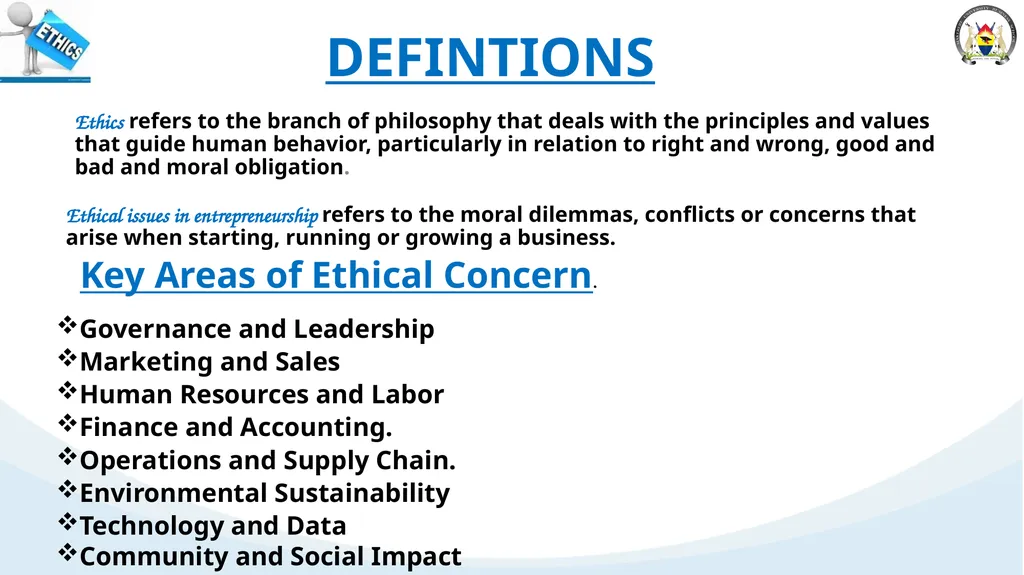
slide2. Ethical issues in entrepreneurship refers to the moral dilemmas, conflicts or concerns that arise when starting, running or growing a business. DEFINTIONS Ethics refers to the branch of philosophy that deals with the principles and values that guide human behavior, particularly in relation to right and wrong, good and bad and moral obligation. Key Areas of Ethical Concern. Governance and Leadership
Marketing and Sales
Human Resources and Labor
Finance and Accounting.
Operations and Supply Chain.
Environmental Sustainability
Technology and Data
Community and Social Impact<br>
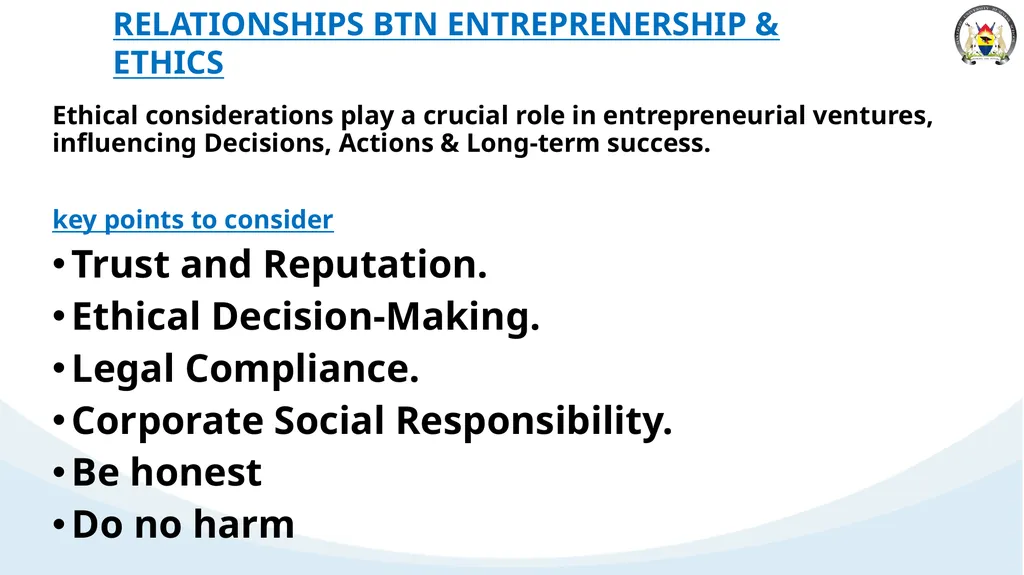
slide3. Ethical considerations play a crucial role in entrepreneurial ventures, influencing Decisions, Actions & Long-term success.
key points to consider
Trust and Reputation.
Ethical Decision-Making.
Legal Compliance.
Corporate Social Responsibility.
Be honest
Do no harm RELATIONSHIPS BTN ENTREPRENERSHIP & ETHICS<br>
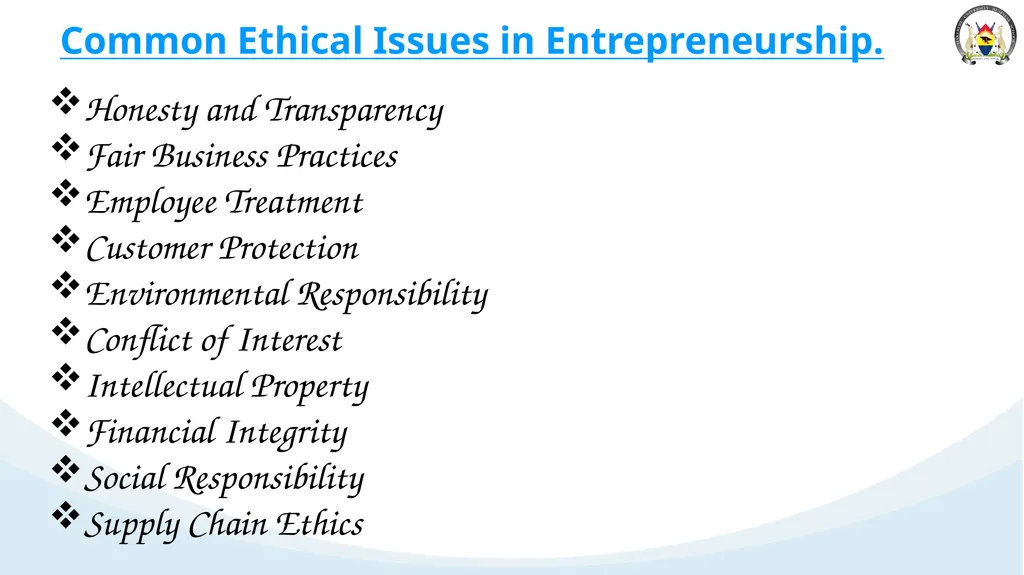
slide4. Common Ethical Issues in Entrepreneurship. Honesty and Transparency
Fair Business Practices
Employee Treatment
Customer Protection
Environmental Responsibility
Conflict of Interest
Intellectual Property
Financial Integrity
Social Responsibility
Supply Chain Ethics<br>
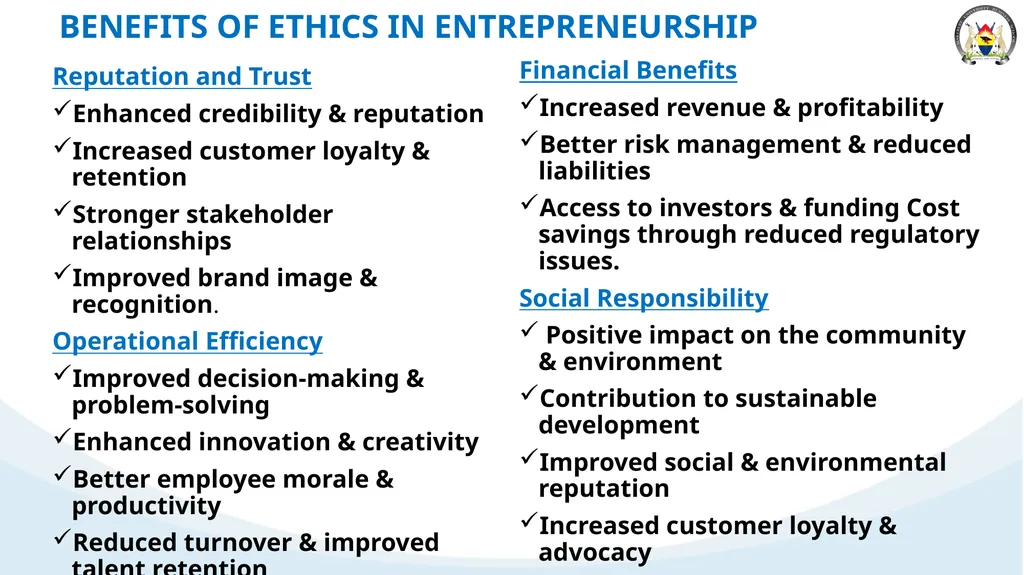
slide5. BENEFITS OF ETHICS IN ENTREPRENEURSHIP Reputation and Trust
Enhanced credibility & reputation
Increased customer loyalty & retention
Stronger stakeholder relationships
Improved brand image & recognition.
Operational Efficiency
Improved decision-making & problem-solving
Enhanced innovation & creativity
Better employee morale & productivity
Reduced turnover & improved talent retention Financial Benefits
Increased revenue & profitability
Better risk management & reduced liabilities
Access to investors & funding Cost savings through reduced regulatory issues.
Social Responsibility
Positive impact on the community & environment
Contribution to sustainable development
Improved social & environmental reputation
Increased customer loyalty & advocacy<br>
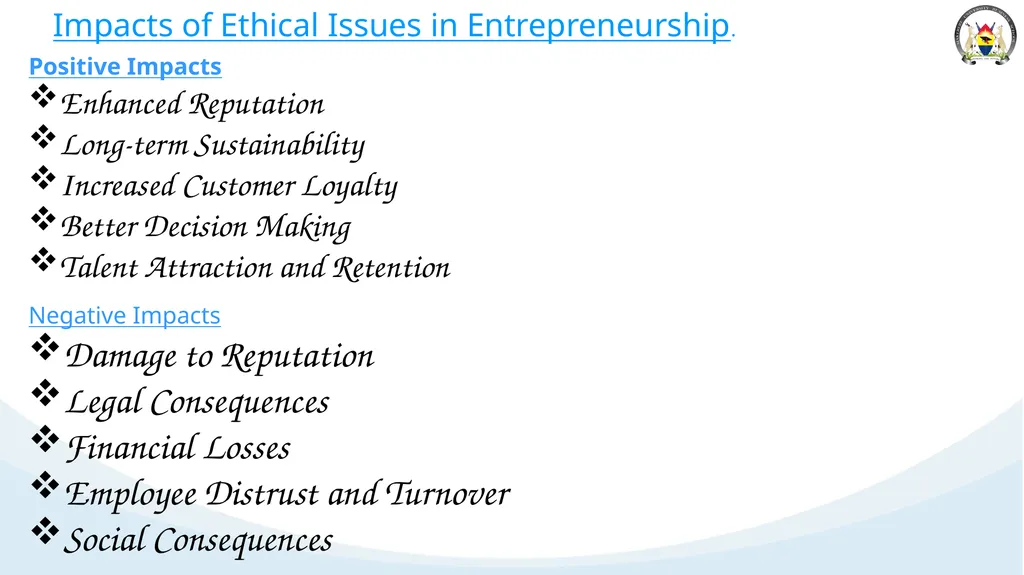
slide6. Positive Impacts
Enhanced Reputation
Long-term Sustainability
Increased Customer Loyalty
Better Decision Making
Talent Attraction and Retention Impacts of Ethical Issues in Entrepreneurship. Negative Impacts
Damage to Reputation
Legal Consequences
Financial Losses
Employee Distrust and Turnover
Social Consequences<br>
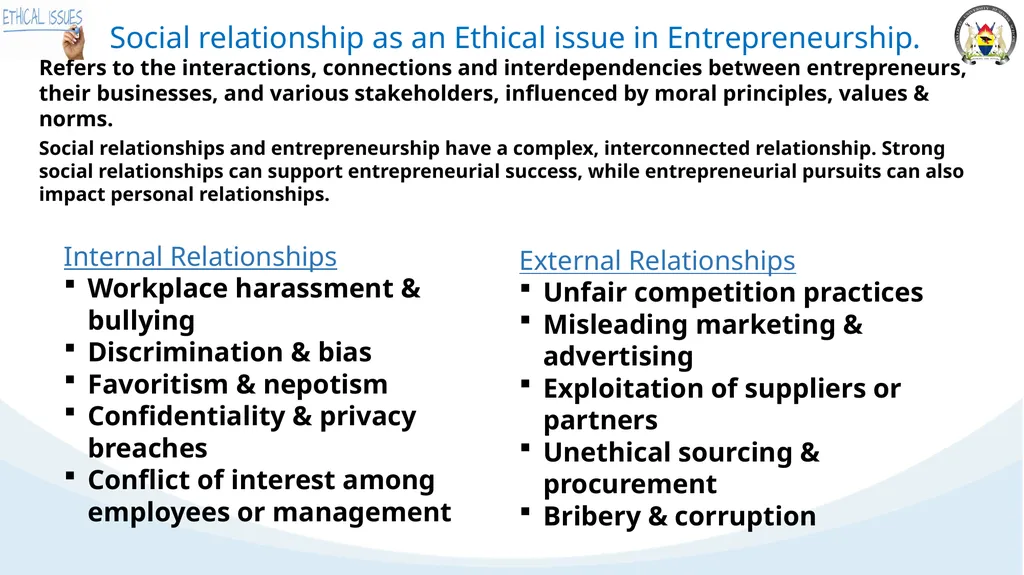
slide7. Social relationship as an Ethical issue in Entrepreneurship.
Refers to the interactions, connections and interdependencies between entrepreneurs, their businesses, and various stakeholders, influenced by moral principles, values & norms. Social relationships and entrepreneurship have a complex, interconnected relationship. Strong social relationships can support entrepreneurial success, while entrepreneurial pursuits can also impact personal relationships. Internal Relationships
Workplace harassment & bullying
Discrimination & bias
Favoritism & nepotism
Confidentiality & privacy breaches
Conflict of interest among employees or management External Relationships
Unfair competition practices
Misleading marketing & advertising
Exploitation of suppliers or partners
Unethical sourcing & procurement
Bribery & corruption<br>
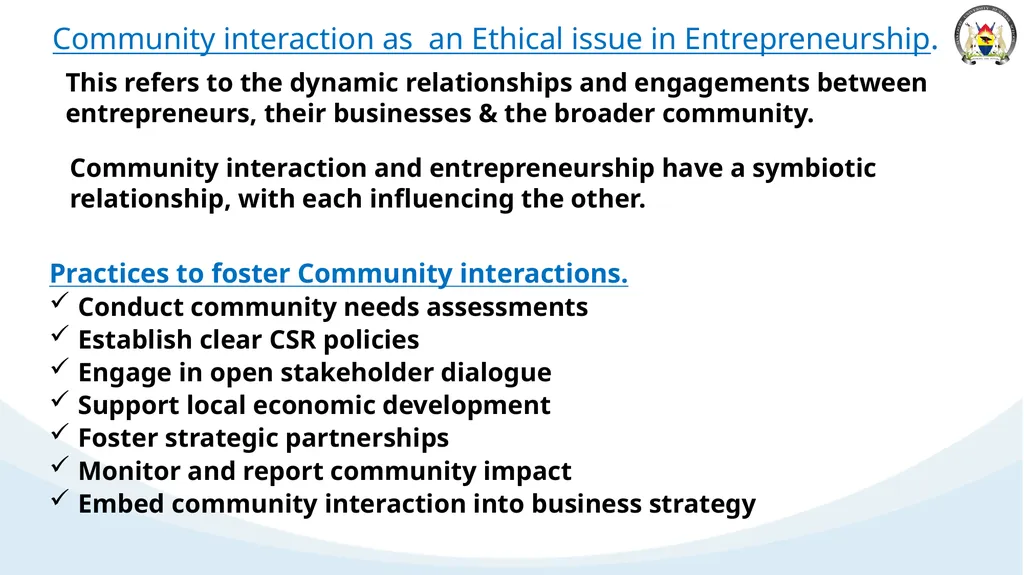
slide8. This refers to the dynamic relationships and engagements between entrepreneurs, their businesses & the broader community. Community interaction as an Ethical issue in Entrepreneurship. Community interaction and entrepreneurship have a symbiotic relationship, with each influencing the other. Practices to foster Community interactions.
Conduct community needs assessments
Establish clear CSR policies
Engage in open stakeholder dialogue
Support local economic development
Foster strategic partnerships
Monitor and report community impact
Embed community interaction into business strategy<br>
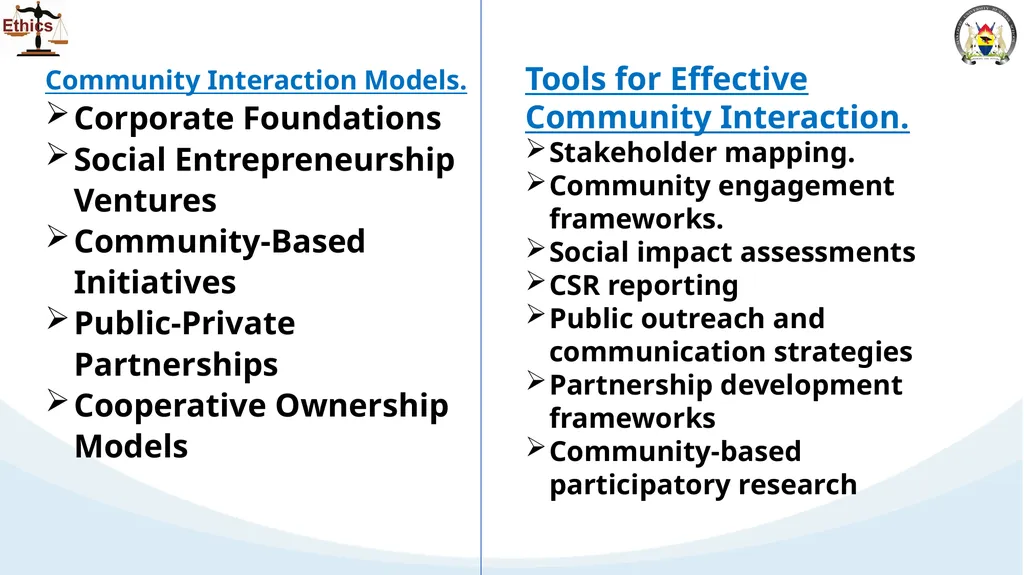
slide9. Community Interaction Models.
Corporate Foundations
Social Entrepreneurship Ventures
Community-Based Initiatives
Public-Private Partnerships
Cooperative Ownership Models Tools for Effective Community Interaction.
Stakeholder mapping.
Community engagement frameworks.
Social impact assessments
CSR reporting
Public outreach and communication strategies
Partnership development frameworks
Community-based participatory research<br>
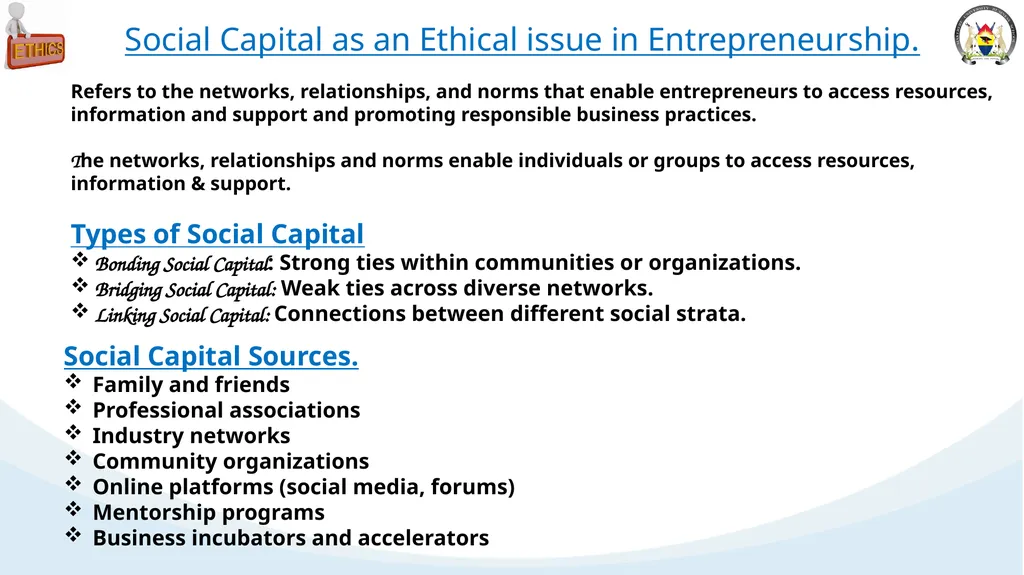
slide10. Refers to the networks, relationships, and norms that enable entrepreneurs to access resources, information and support and promoting responsible business practices.
The networks, relationships and norms enable individuals or groups to access resources, information & support.
Types of Social Capital
Bonding Social Capital: Strong ties within communities or organizations.
Bridging Social Capital: Weak ties across diverse networks.
Linking Social Capital: Connections between different social strata. Social Capital Sources.
Family and friends
Professional associations
Industry networks
Community organizations
Online platforms (social media, forums)
Mentorship programs
Business incubators and accelerators Social Capital as an Ethical issue in Entrepreneurship.<br>
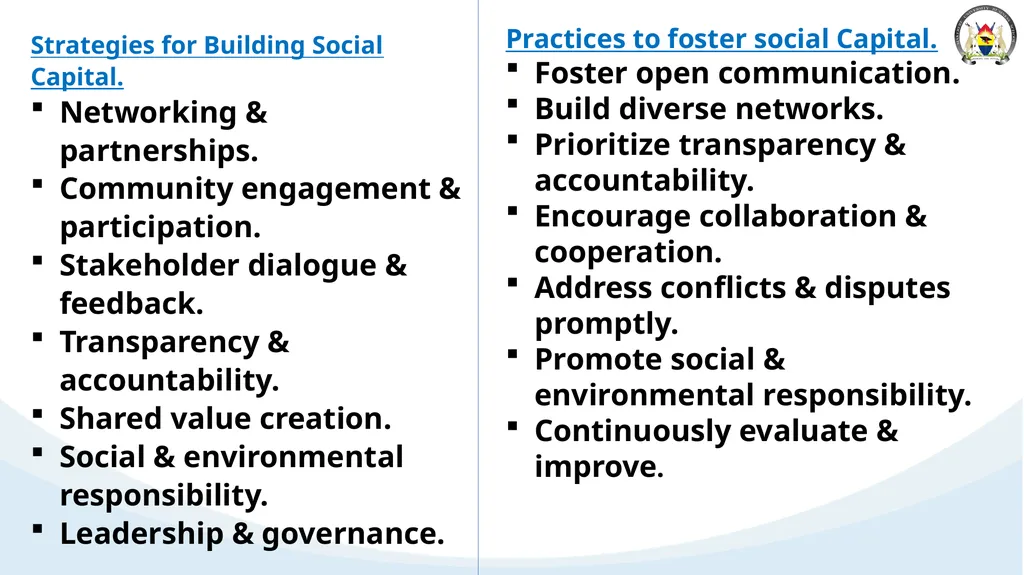
slide11. Strategies for Building Social Capital.
Networking & partnerships.
Community engagement & participation.
Stakeholder dialogue & feedback.
Transparency & accountability.
Shared value creation.
Social & environmental responsibility.
Leadership & governance. Practices to foster social Capital.
Foster open communication.
Build diverse networks.
Prioritize transparency & accountability.
Encourage collaboration & cooperation.
Address conflicts & disputes promptly.
Promote social & environmental responsibility.
Continuously evaluate & improve.<br>
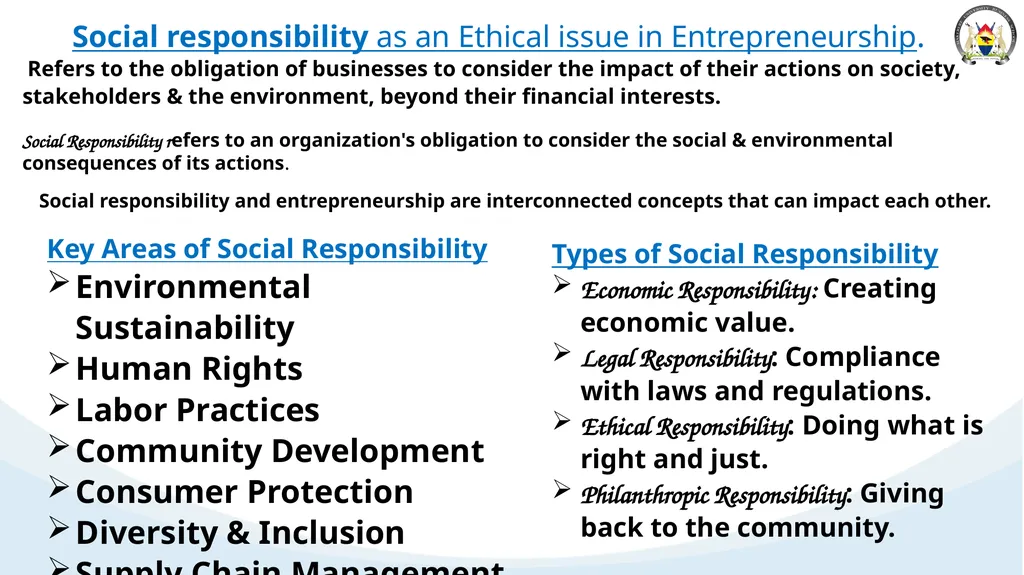
slide12. Social responsibility as an Ethical issue in Entrepreneurship.
Refers to the obligation of businesses to consider the impact of their actions on society, stakeholders & the environment, beyond their financial interests. Key Areas of Social Responsibility
Environmental Sustainability
Human Rights
Labor Practices
Community Development
Consumer Protection
Diversity & Inclusion
Supply Chain Management Types of Social Responsibility
Economic Responsibility: Creating economic value.
Legal Responsibility: Compliance with laws and regulations.
Ethical Responsibility: Doing what is right and just.
Philanthropic Responsibility: Giving back to the community. Social Responsibility refers to an organization's obligation to consider the social & environmental consequences of its actions. Social responsibility and entrepreneurship are interconnected concepts that can impact each other.<br>
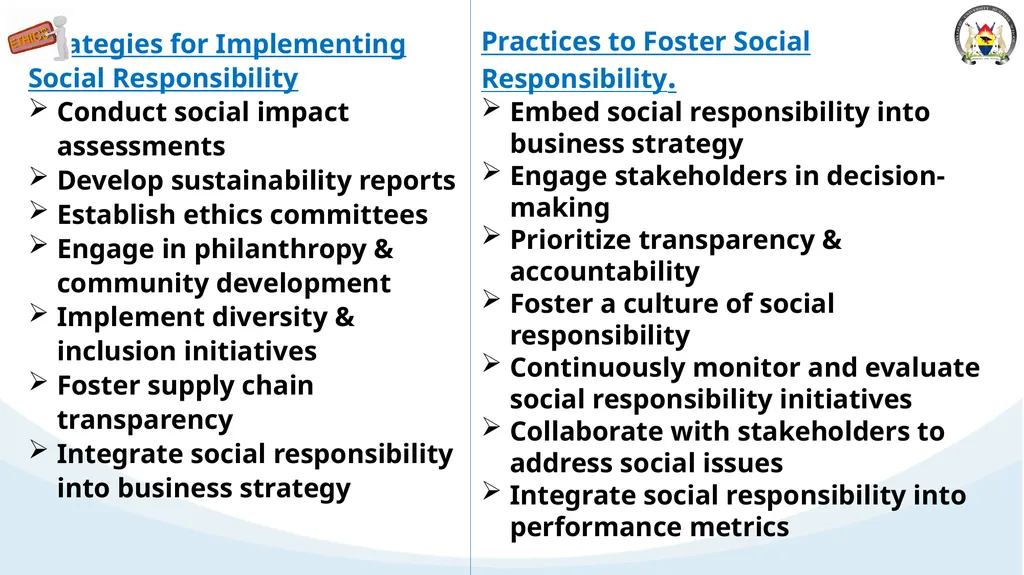
slide13. Strategies for Implementing Social Responsibility
Conduct social impact assessments
Develop sustainability reports
Establish ethics committees
Engage in philanthropy & community development
Implement diversity & inclusion initiatives
Foster supply chain transparency
Integrate social responsibility into business strategy Practices to Foster Social Responsibility.
Embed social responsibility into business strategy
Engage stakeholders in decision-making
Prioritize transparency & accountability
Foster a culture of social responsibility
Continuously monitor and evaluate social responsibility initiatives
Collaborate with stakeholders to address social issues
Integrate social responsibility into performance metrics<br>
slide14. Thank You<br>
IN ENTREPRENERSHIP<br>
slide2. Ethical issues in entrepreneurship refers to the moral dilemmas, conflicts or concerns that arise when starting, running or growing a business. DEFINTIONS Ethics refers to the branch of philosophy that deals with the principles and values that guide human behavior, particularly in relation to right and wrong, good and bad and moral obligation. Key Areas of Ethical Concern. Governance and Leadership
Marketing and Sales
Human Resources and Labor
Finance and Accounting.
Operations and Supply Chain.
Environmental Sustainability
Technology and Data
Community and Social Impact<br>
slide3. Ethical considerations play a crucial role in entrepreneurial ventures, influencing Decisions, Actions & Long-term success.
key points to consider
Trust and Reputation.
Ethical Decision-Making.
Legal Compliance.
Corporate Social Responsibility.
Be honest
Do no harm RELATIONSHIPS BTN ENTREPRENERSHIP & ETHICS<br>
slide4. Common Ethical Issues in Entrepreneurship. Honesty and Transparency
Fair Business Practices
Employee Treatment
Customer Protection
Environmental Responsibility
Conflict of Interest
Intellectual Property
Financial Integrity
Social Responsibility
Supply Chain Ethics<br>
slide5. BENEFITS OF ETHICS IN ENTREPRENEURSHIP Reputation and Trust
Enhanced credibility & reputation
Increased customer loyalty & retention
Stronger stakeholder relationships
Improved brand image & recognition.
Operational Efficiency
Improved decision-making & problem-solving
Enhanced innovation & creativity
Better employee morale & productivity
Reduced turnover & improved talent retention Financial Benefits
Increased revenue & profitability
Better risk management & reduced liabilities
Access to investors & funding Cost savings through reduced regulatory issues.
Social Responsibility
Positive impact on the community & environment
Contribution to sustainable development
Improved social & environmental reputation
Increased customer loyalty & advocacy<br>
slide6. Positive Impacts
Enhanced Reputation
Long-term Sustainability
Increased Customer Loyalty
Better Decision Making
Talent Attraction and Retention Impacts of Ethical Issues in Entrepreneurship. Negative Impacts
Damage to Reputation
Legal Consequences
Financial Losses
Employee Distrust and Turnover
Social Consequences<br>
slide7. Social relationship as an Ethical issue in Entrepreneurship.
Refers to the interactions, connections and interdependencies between entrepreneurs, their businesses, and various stakeholders, influenced by moral principles, values & norms. Social relationships and entrepreneurship have a complex, interconnected relationship. Strong social relationships can support entrepreneurial success, while entrepreneurial pursuits can also impact personal relationships. Internal Relationships
Workplace harassment & bullying
Discrimination & bias
Favoritism & nepotism
Confidentiality & privacy breaches
Conflict of interest among employees or management External Relationships
Unfair competition practices
Misleading marketing & advertising
Exploitation of suppliers or partners
Unethical sourcing & procurement
Bribery & corruption<br>
slide8. This refers to the dynamic relationships and engagements between entrepreneurs, their businesses & the broader community. Community interaction as an Ethical issue in Entrepreneurship. Community interaction and entrepreneurship have a symbiotic relationship, with each influencing the other. Practices to foster Community interactions.
Conduct community needs assessments
Establish clear CSR policies
Engage in open stakeholder dialogue
Support local economic development
Foster strategic partnerships
Monitor and report community impact
Embed community interaction into business strategy<br>
slide9. Community Interaction Models.
Corporate Foundations
Social Entrepreneurship Ventures
Community-Based Initiatives
Public-Private Partnerships
Cooperative Ownership Models Tools for Effective Community Interaction.
Stakeholder mapping.
Community engagement frameworks.
Social impact assessments
CSR reporting
Public outreach and communication strategies
Partnership development frameworks
Community-based participatory research<br>
slide10. Refers to the networks, relationships, and norms that enable entrepreneurs to access resources, information and support and promoting responsible business practices.
The networks, relationships and norms enable individuals or groups to access resources, information & support.
Types of Social Capital
Bonding Social Capital: Strong ties within communities or organizations.
Bridging Social Capital: Weak ties across diverse networks.
Linking Social Capital: Connections between different social strata. Social Capital Sources.
Family and friends
Professional associations
Industry networks
Community organizations
Online platforms (social media, forums)
Mentorship programs
Business incubators and accelerators Social Capital as an Ethical issue in Entrepreneurship.<br>
slide11. Strategies for Building Social Capital.
Networking & partnerships.
Community engagement & participation.
Stakeholder dialogue & feedback.
Transparency & accountability.
Shared value creation.
Social & environmental responsibility.
Leadership & governance. Practices to foster social Capital.
Foster open communication.
Build diverse networks.
Prioritize transparency & accountability.
Encourage collaboration & cooperation.
Address conflicts & disputes promptly.
Promote social & environmental responsibility.
Continuously evaluate & improve.<br>
slide12. Social responsibility as an Ethical issue in Entrepreneurship.
Refers to the obligation of businesses to consider the impact of their actions on society, stakeholders & the environment, beyond their financial interests. Key Areas of Social Responsibility
Environmental Sustainability
Human Rights
Labor Practices
Community Development
Consumer Protection
Diversity & Inclusion
Supply Chain Management Types of Social Responsibility
Economic Responsibility: Creating economic value.
Legal Responsibility: Compliance with laws and regulations.
Ethical Responsibility: Doing what is right and just.
Philanthropic Responsibility: Giving back to the community. Social Responsibility refers to an organization's obligation to consider the social & environmental consequences of its actions. Social responsibility and entrepreneurship are interconnected concepts that can impact each other.<br>
slide13. Strategies for Implementing Social Responsibility
Conduct social impact assessments
Develop sustainability reports
Establish ethics committees
Engage in philanthropy & community development
Implement diversity & inclusion initiatives
Foster supply chain transparency
Integrate social responsibility into business strategy Practices to Foster Social Responsibility.
Embed social responsibility into business strategy
Engage stakeholders in decision-making
Prioritize transparency & accountability
Foster a culture of social responsibility
Continuously monitor and evaluate social responsibility initiatives
Collaborate with stakeholders to address social issues
Integrate social responsibility into performance metrics<br>
slide14. Thank You<br>