
ETHICS Theme 3: Teleological Ethics C: Application
Description: ETHICS Theme 3: Teleological Ethics C: Application of Situation Ethics Spec Check Component 3: Ethics Theme 3: Teleological Ethics By the end of this topic you will Have applied Situation Ethics to homosexual relationships. Have applied
Related Topics
Download Presentation
"ETHICS Theme 3: Teleological Ethics C: Application" is the property of its rightful owner. Permission is granted to download and print the materials on this website for personal, non-commercial use only, and to display it on your personal computer provided you do not modify the materials and that you retain all copyright notices contained in the materials. By downloading content from our website, you accept the terms of this agreement.
Presentation Transcript
slide1. ETHICS
Theme 3: Teleological Ethics
C: Application of Situation Ethics<br>
slide2. Spec Check – Component 3: Ethics Theme 3: Teleological Ethics<br>
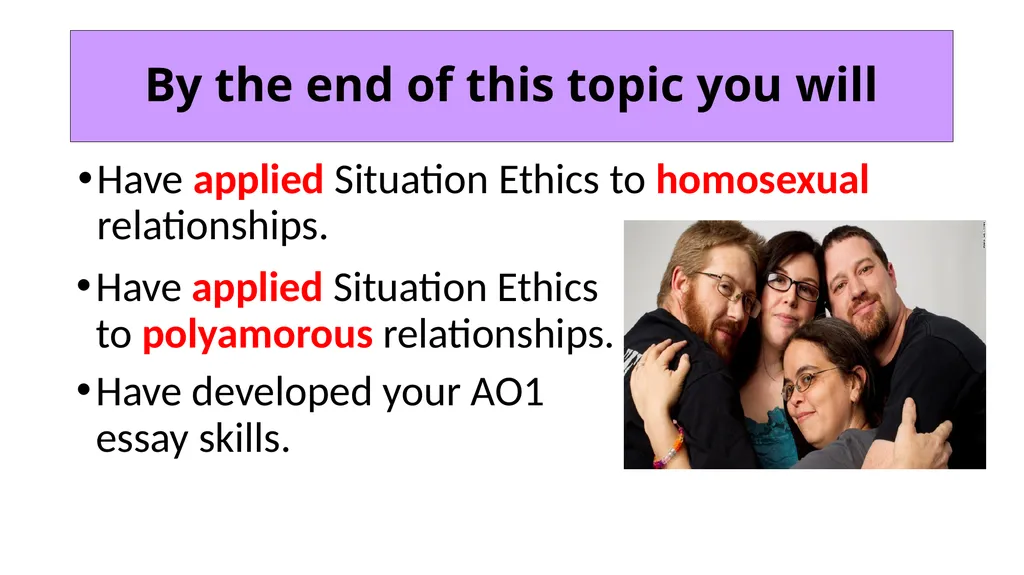
slide3. By the end of this topic you will Have applied Situation Ethics to homosexual relationships. Have applied Situation Ethics to polyamorous relationships.
Have developed your AO1 essay skills.<br>
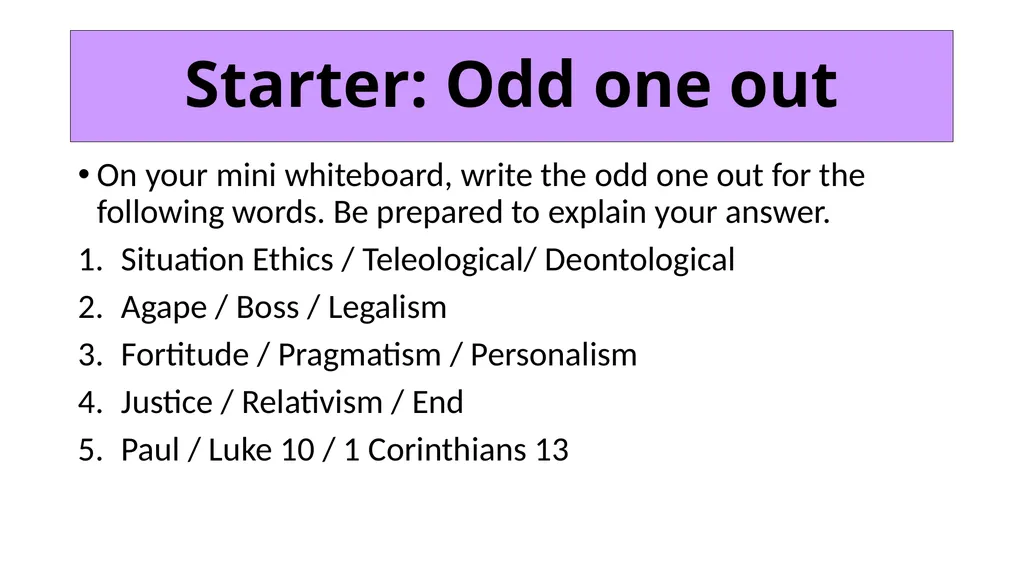
slide4. Starter: Odd one out On your mini whiteboard, write the odd one out for the following words. Be prepared to explain your answer.
Situation Ethics / Teleological/ Deontological
Agape / Boss / Legalism
Fortitude / Pragmatism / Personalism
Justice / Relativism / End
Paul / Luke 10 / 1 Corinthians 13<br>
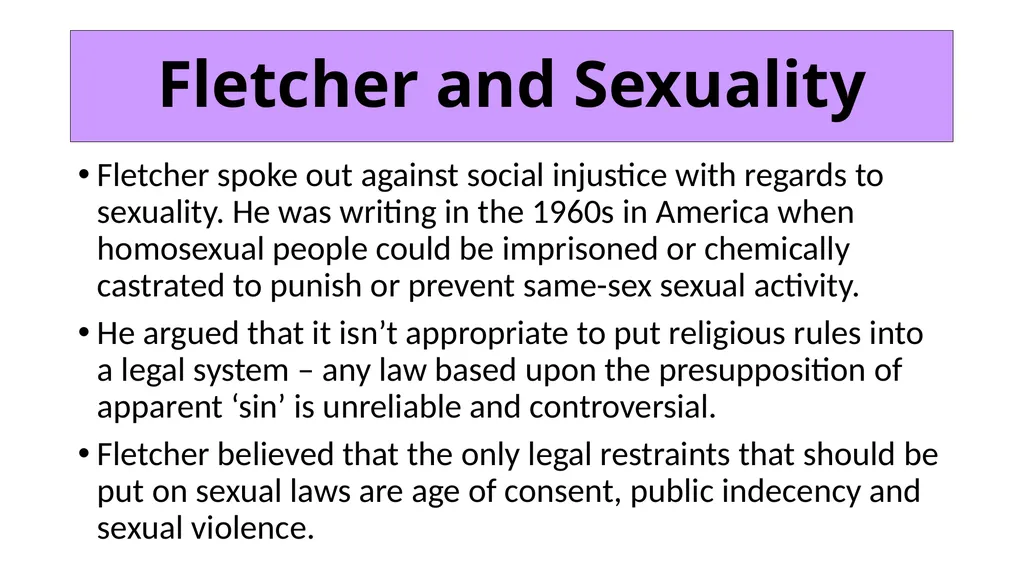
slide5. Fletcher and Sexuality Fletcher spoke out against social injustice with regards to sexuality. He was writing in the 1960s in America when homosexual people could be imprisoned or chemically castrated to punish or prevent same-sex sexual activity.
He argued that it isn’t appropriate to put religious rules into a legal system – any law based upon the presupposition of apparent ‘sin’ is unreliable and controversial.
Fletcher believed that the only legal restraints that should be put on sexual laws are age of consent, public indecency and sexual violence.<br>
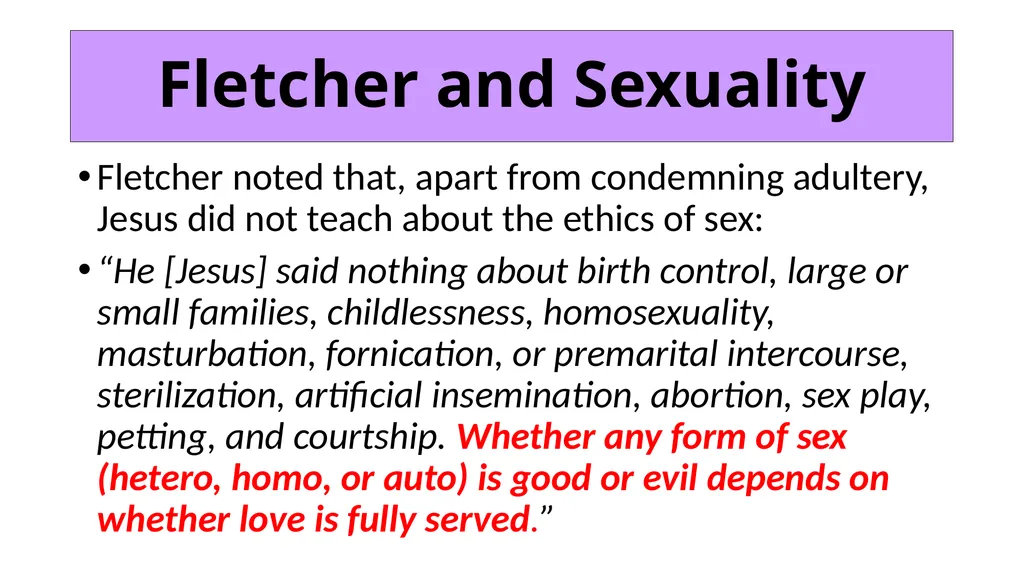
slide6. Fletcher and Sexuality Fletcher noted that, apart from condemning adultery, Jesus did not teach about the ethics of sex:
“He [Jesus] said nothing about birth control, large or small families, childlessness, homosexuality, masturbation, fornication, or premarital intercourse, sterilization, artificial insemination, abortion, sex play, petting, and courtship. Whether any form of sex (hetero, homo, or auto) is good or evil depends on whether love is fully served.”<br>
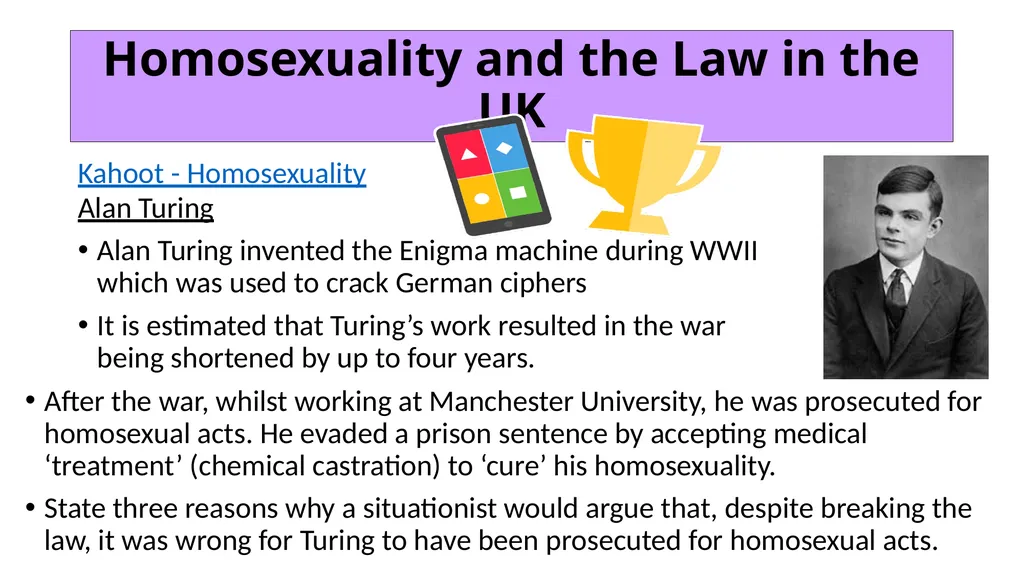
slide7. Homosexuality and the Law in the UK Kahoot - Homosexuality Alan Turing
Alan Turing invented the Enigma machine during WWII which was used to crack German ciphers
It is estimated that Turing’s work resulted in the war being shortened by up to four years. After the war, whilst working at Manchester University, he was prosecuted for homosexual acts. He evaded a prison sentence by accepting medical ‘treatment’ (chemical castration) to ‘cure’ his homosexuality.
State three reasons why a situationist would argue that, despite breaking the law, it was wrong for Turing to have been prosecuted for homosexual acts.<br>
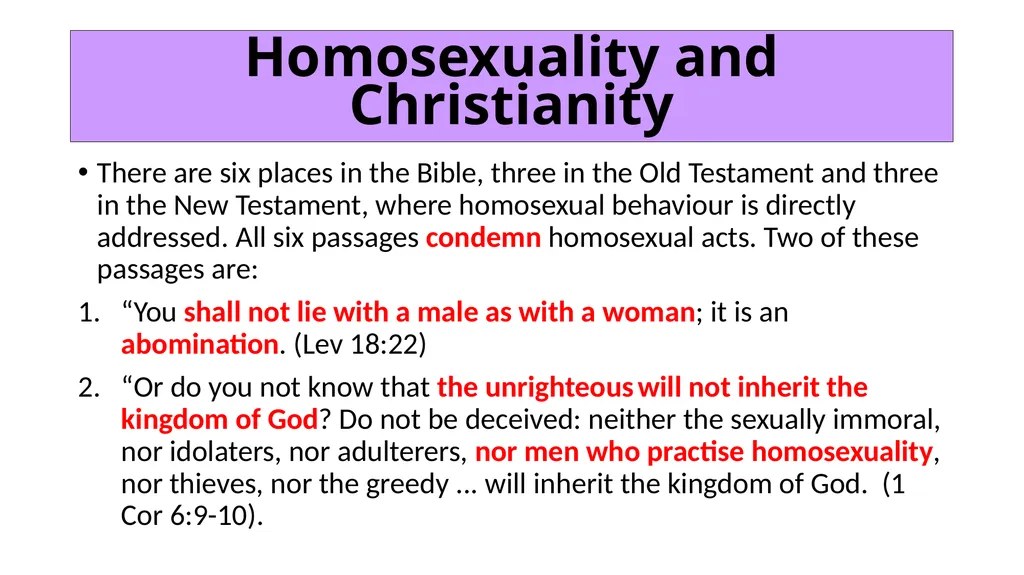
slide8. Homosexuality and Christianity There are six places in the Bible, three in the Old Testament and three in the New Testament, where homosexual behaviour is directly addressed. All six passages condemn homosexual acts. Two of these passages are:
“You shall not lie with a male as with a woman; it is an abomination. (Lev 18:22)
“Or do you not know that the unrighteous will not inherit the kingdom of God? Do not be deceived: neither the sexually immoral, nor idolaters, nor adulterers, nor men who practise homosexuality, nor thieves, nor the greedy ... will inherit the kingdom of God. (1 Cor 6:9-10).<br>
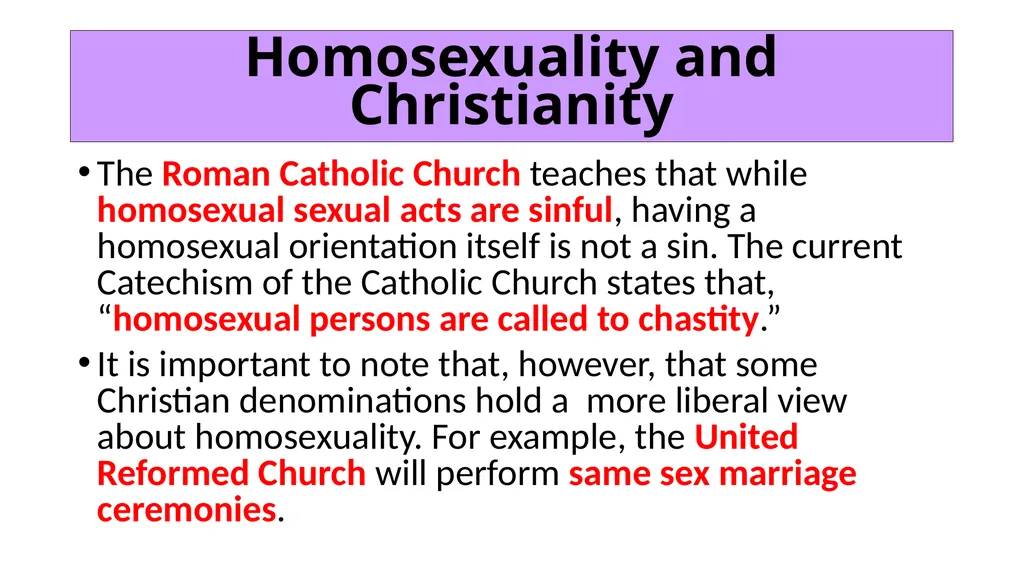
slide9. Homosexuality and Christianity The Roman Catholic Church teaches that while homosexual sexual acts are sinful, having a homosexual orientation itself is not a sin. The current Catechism of the Catholic Church states that, “homosexual persons are called to chastity.”
It is important to note that, however, that some Christian denominations hold a more liberal view about homosexuality. For example, the United Reformed Church will perform same sex marriage ceremonies.<br>
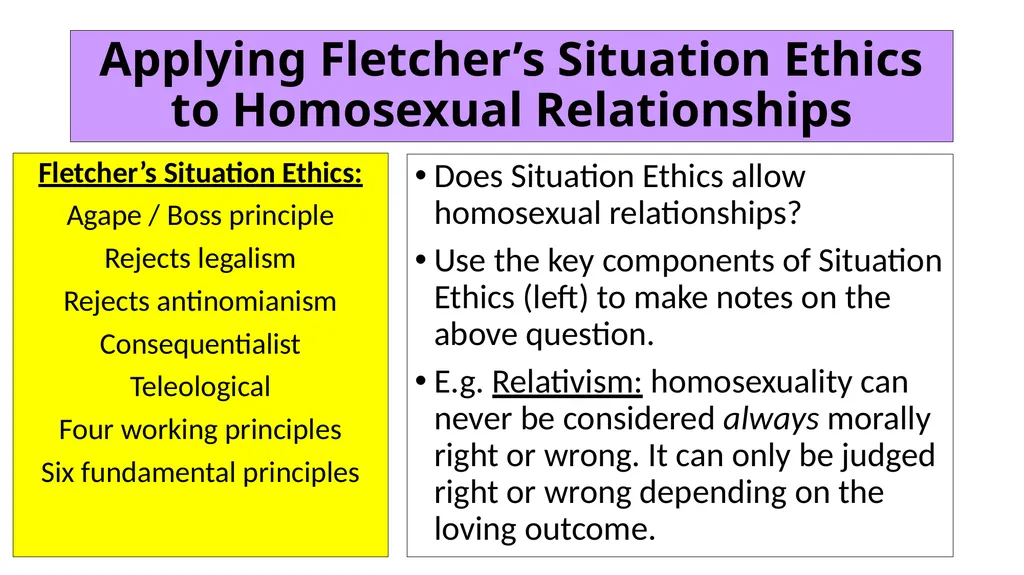
slide10. Applying Fletcher’s Situation Ethics to Homosexual Relationships Does Situation Ethics allow homosexual relationships?
Use the key components of Situation Ethics (left) to make notes on the above question.
E.g. Relativism: homosexuality can never be considered always morally right or wrong. It can only be judged right or wrong depending on the loving outcome. Fletcher’s Situation Ethics:
Agape / Boss principle
Rejects legalism
Rejects antinomianism
Consequentialist
Teleological
Four working principles
Six fundamental principles<br>
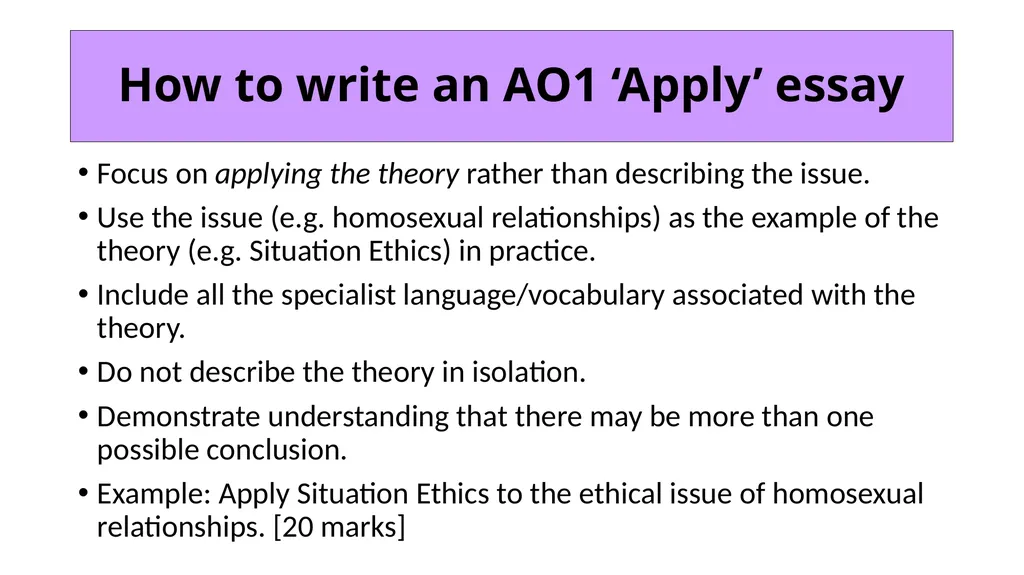
slide11. How to write an AO1 ‘Apply’ essay Focus on applying the theory rather than describing the issue.
Use the issue (e.g. homosexual relationships) as the example of the theory (e.g. Situation Ethics) in practice.
Include all the specialist language/vocabulary associated with the theory.
Do not describe the theory in isolation.
Demonstrate understanding that there may be more than one possible conclusion.
Example: Apply Situation Ethics to the ethical issue of homosexual relationships. [20 marks]<br>
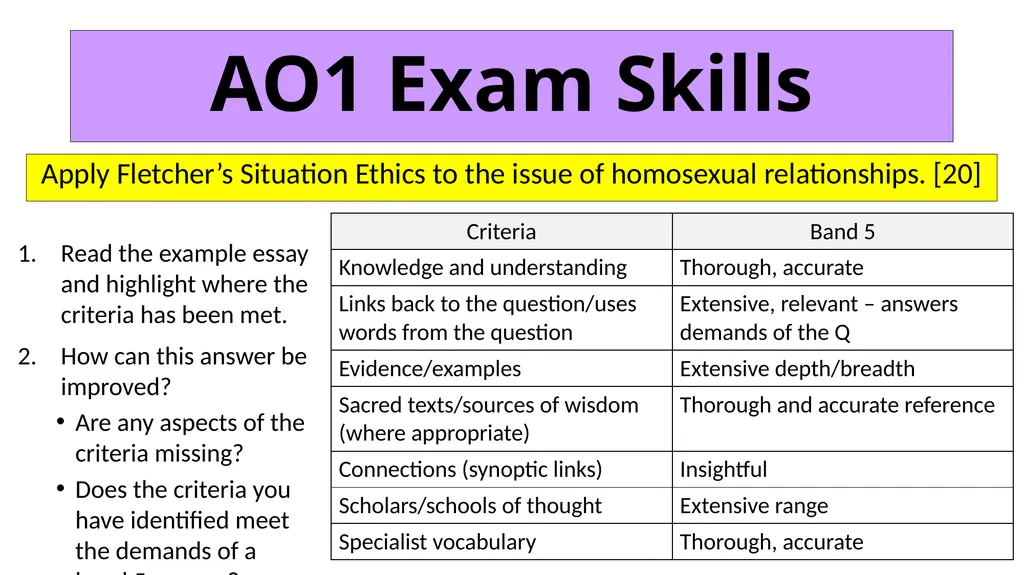
slide12. AO1 Exam Skills Read the example essay and highlight where the criteria has been met.
How can this answer be improved?
Are any aspects of the criteria missing?
Does the criteria you have identified meet the demands of a band 5 answer? Apply Fletcher’s Situation Ethics to the issue of homosexual relationships. [20]<br>
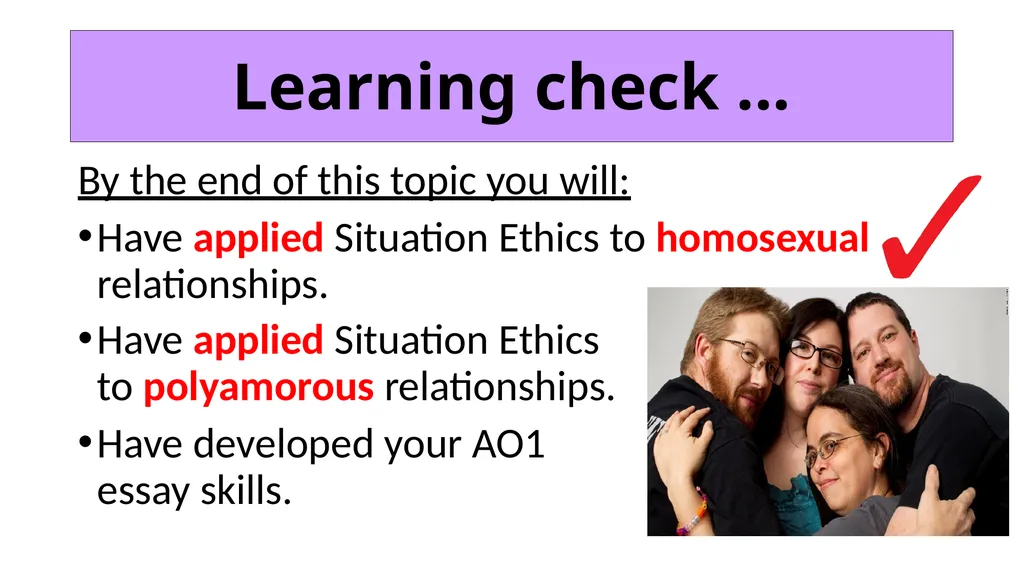
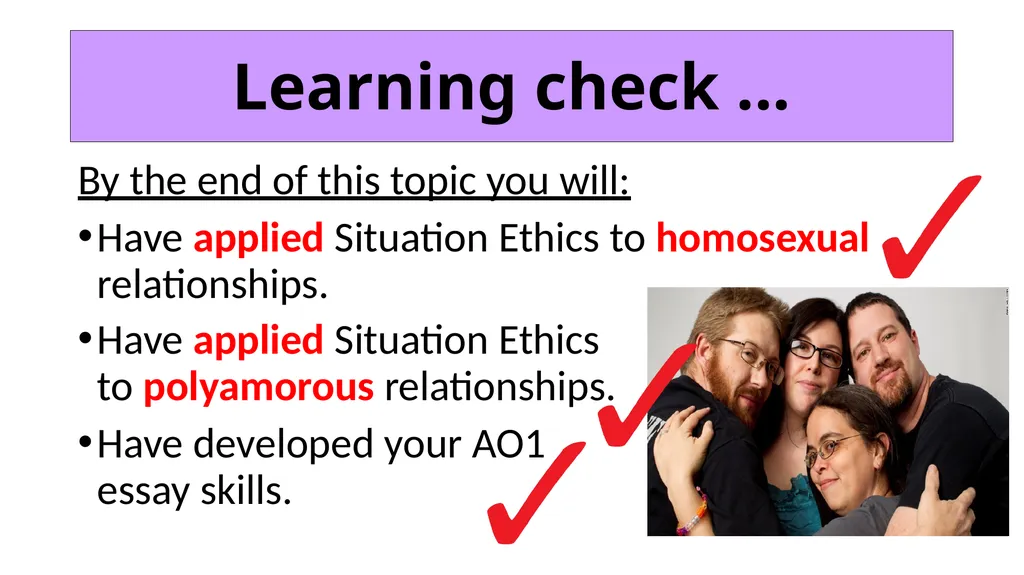
slide13. Learning check ... By the end of this topic you will:
Have applied Situation Ethics to homosexual relationships. Have applied Situation Ethics to polyamorous relationships.
Have developed your AO1 essay skills.<br>
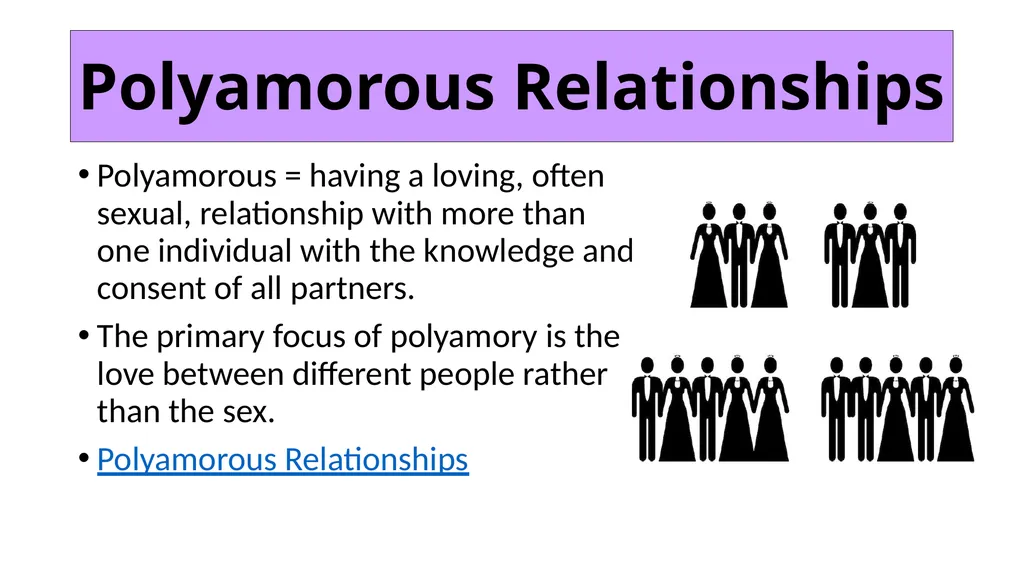
slide14. Polyamorous Relationships Polyamorous = having a loving, often sexual, relationship with more than one individual with the knowledge and consent of all partners.
The primary focus of polyamory is the love between different people rather than the sex.
Polyamorous Relationships<br>
slide15. Polyamory and Christianity Traditional Christian denominations prohibit polyamorous relationships.
Polyamorous relationships fail to uphold the biblical idea that sexual relationships should be between one man and one woman in the covenant of marriage.
For example, Genesis 2:24 says, “Therefore a man leaves his father and his mother and clings to his wife, and they become one flesh.” A married couple cannot be “one flesh” if multiple people, or “fleshes”, are involved.<br>
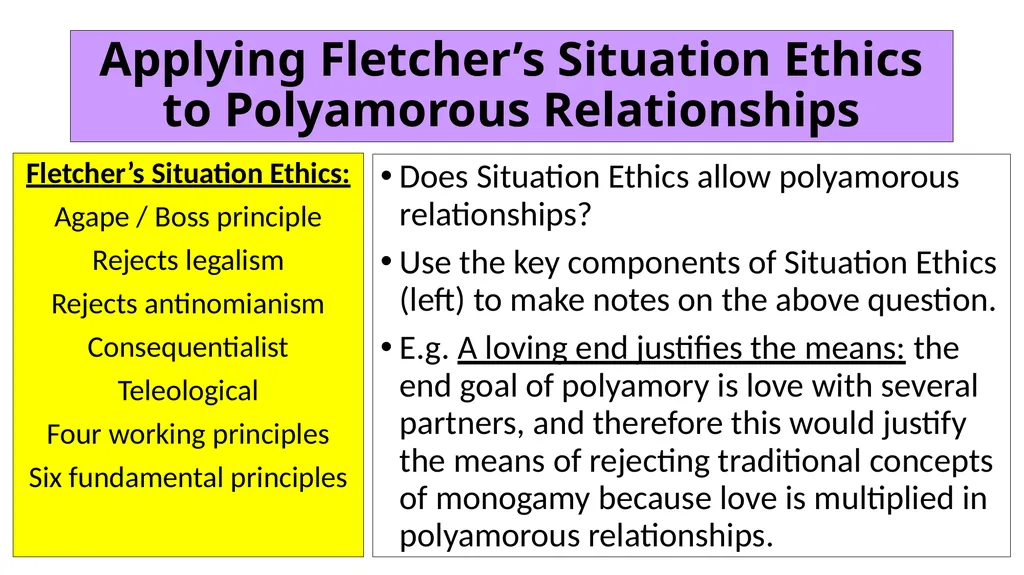
slide16. Applying Fletcher’s Situation Ethics to Polyamorous Relationships Does Situation Ethics allow polyamorous relationships?
Use the key components of Situation Ethics (left) to make notes on the above question.
E.g. A loving end justifies the means: the end goal of polyamory is love with several partners, and therefore this would justify the means of rejecting traditional concepts of monogamy because love is multiplied in polyamorous relationships. Fletcher’s Situation Ethics:
Agape / Boss principle
Rejects legalism
Rejects antinomianism
Consequentialist
Teleological
Four working principles
Six fundamental principles<br>
slide17. Learning check ... By the end of this topic you will:
Have applied Situation Ethics to homosexual relationships. Have applied Situation Ethics to polyamorous relationships.
Have developed your AO1 essay skills.<br>
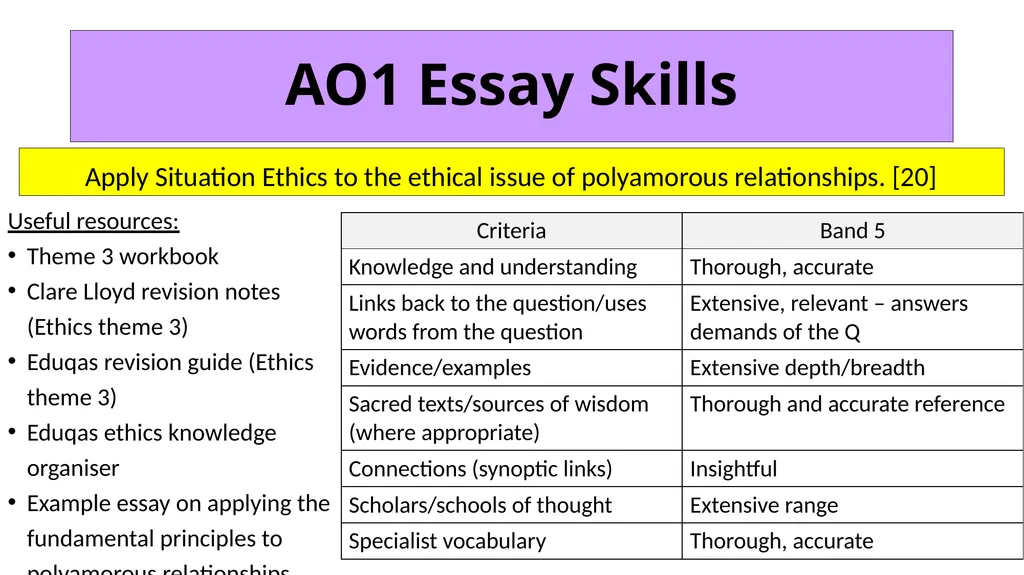
slide18. AO1 Essay Skills Apply Situation Ethics to the ethical issue of polyamorous relationships. [20] Useful resources:
Theme 3 workbook
Clare Lloyd revision notes (Ethics theme 3)
Eduqas revision guide (Ethics theme 3)
Eduqas ethics knowledge organiser
Example essay on applying the fundamental principles to polyamorous relationships<br>
slide19. AO1 Essay Skills Read the essay on applying the 6 fundamental principles of Situation Ethics to Polyamorous relationships.
Highlight:
Accurate use of specialist vocabulary
Accurate reference to sacred text/sources of authority.
Use of evidence / examples.
Use the Eduqas AO1 band descriptors and decide:
What band you would place the essay in.
What mark you would give it within the band.
How would you improve this essay?<br>
slide20. Learning check ... By the end of this topic you will:
Have applied Situation Ethics to homosexual relationships. Have applied Situation Ethics to polyamorous relationships.
Have developed your AO1 essay skills.<br>
Theme 3: Teleological Ethics
C: Application of Situation Ethics<br>
slide2. Spec Check – Component 3: Ethics Theme 3: Teleological Ethics<br>
slide3. By the end of this topic you will Have applied Situation Ethics to homosexual relationships. Have applied Situation Ethics to polyamorous relationships.
Have developed your AO1 essay skills.<br>
slide4. Starter: Odd one out On your mini whiteboard, write the odd one out for the following words. Be prepared to explain your answer.
Situation Ethics / Teleological/ Deontological
Agape / Boss / Legalism
Fortitude / Pragmatism / Personalism
Justice / Relativism / End
Paul / Luke 10 / 1 Corinthians 13<br>
slide5. Fletcher and Sexuality Fletcher spoke out against social injustice with regards to sexuality. He was writing in the 1960s in America when homosexual people could be imprisoned or chemically castrated to punish or prevent same-sex sexual activity.
He argued that it isn’t appropriate to put religious rules into a legal system – any law based upon the presupposition of apparent ‘sin’ is unreliable and controversial.
Fletcher believed that the only legal restraints that should be put on sexual laws are age of consent, public indecency and sexual violence.<br>
slide6. Fletcher and Sexuality Fletcher noted that, apart from condemning adultery, Jesus did not teach about the ethics of sex:
“He [Jesus] said nothing about birth control, large or small families, childlessness, homosexuality, masturbation, fornication, or premarital intercourse, sterilization, artificial insemination, abortion, sex play, petting, and courtship. Whether any form of sex (hetero, homo, or auto) is good or evil depends on whether love is fully served.”<br>
slide7. Homosexuality and the Law in the UK Kahoot - Homosexuality Alan Turing
Alan Turing invented the Enigma machine during WWII which was used to crack German ciphers
It is estimated that Turing’s work resulted in the war being shortened by up to four years. After the war, whilst working at Manchester University, he was prosecuted for homosexual acts. He evaded a prison sentence by accepting medical ‘treatment’ (chemical castration) to ‘cure’ his homosexuality.
State three reasons why a situationist would argue that, despite breaking the law, it was wrong for Turing to have been prosecuted for homosexual acts.<br>
slide8. Homosexuality and Christianity There are six places in the Bible, three in the Old Testament and three in the New Testament, where homosexual behaviour is directly addressed. All six passages condemn homosexual acts. Two of these passages are:
“You shall not lie with a male as with a woman; it is an abomination. (Lev 18:22)
“Or do you not know that the unrighteous will not inherit the kingdom of God? Do not be deceived: neither the sexually immoral, nor idolaters, nor adulterers, nor men who practise homosexuality, nor thieves, nor the greedy ... will inherit the kingdom of God. (1 Cor 6:9-10).<br>
slide9. Homosexuality and Christianity The Roman Catholic Church teaches that while homosexual sexual acts are sinful, having a homosexual orientation itself is not a sin. The current Catechism of the Catholic Church states that, “homosexual persons are called to chastity.”
It is important to note that, however, that some Christian denominations hold a more liberal view about homosexuality. For example, the United Reformed Church will perform same sex marriage ceremonies.<br>
slide10. Applying Fletcher’s Situation Ethics to Homosexual Relationships Does Situation Ethics allow homosexual relationships?
Use the key components of Situation Ethics (left) to make notes on the above question.
E.g. Relativism: homosexuality can never be considered always morally right or wrong. It can only be judged right or wrong depending on the loving outcome. Fletcher’s Situation Ethics:
Agape / Boss principle
Rejects legalism
Rejects antinomianism
Consequentialist
Teleological
Four working principles
Six fundamental principles<br>
slide11. How to write an AO1 ‘Apply’ essay Focus on applying the theory rather than describing the issue.
Use the issue (e.g. homosexual relationships) as the example of the theory (e.g. Situation Ethics) in practice.
Include all the specialist language/vocabulary associated with the theory.
Do not describe the theory in isolation.
Demonstrate understanding that there may be more than one possible conclusion.
Example: Apply Situation Ethics to the ethical issue of homosexual relationships. [20 marks]<br>
slide12. AO1 Exam Skills Read the example essay and highlight where the criteria has been met.
How can this answer be improved?
Are any aspects of the criteria missing?
Does the criteria you have identified meet the demands of a band 5 answer? Apply Fletcher’s Situation Ethics to the issue of homosexual relationships. [20]<br>
slide13. Learning check ... By the end of this topic you will:
Have applied Situation Ethics to homosexual relationships. Have applied Situation Ethics to polyamorous relationships.
Have developed your AO1 essay skills.<br>
slide14. Polyamorous Relationships Polyamorous = having a loving, often sexual, relationship with more than one individual with the knowledge and consent of all partners.
The primary focus of polyamory is the love between different people rather than the sex.
Polyamorous Relationships<br>
slide15. Polyamory and Christianity Traditional Christian denominations prohibit polyamorous relationships.
Polyamorous relationships fail to uphold the biblical idea that sexual relationships should be between one man and one woman in the covenant of marriage.
For example, Genesis 2:24 says, “Therefore a man leaves his father and his mother and clings to his wife, and they become one flesh.” A married couple cannot be “one flesh” if multiple people, or “fleshes”, are involved.<br>
slide16. Applying Fletcher’s Situation Ethics to Polyamorous Relationships Does Situation Ethics allow polyamorous relationships?
Use the key components of Situation Ethics (left) to make notes on the above question.
E.g. A loving end justifies the means: the end goal of polyamory is love with several partners, and therefore this would justify the means of rejecting traditional concepts of monogamy because love is multiplied in polyamorous relationships. Fletcher’s Situation Ethics:
Agape / Boss principle
Rejects legalism
Rejects antinomianism
Consequentialist
Teleological
Four working principles
Six fundamental principles<br>
slide17. Learning check ... By the end of this topic you will:
Have applied Situation Ethics to homosexual relationships. Have applied Situation Ethics to polyamorous relationships.
Have developed your AO1 essay skills.<br>
slide18. AO1 Essay Skills Apply Situation Ethics to the ethical issue of polyamorous relationships. [20] Useful resources:
Theme 3 workbook
Clare Lloyd revision notes (Ethics theme 3)
Eduqas revision guide (Ethics theme 3)
Eduqas ethics knowledge organiser
Example essay on applying the fundamental principles to polyamorous relationships<br>
slide19. AO1 Essay Skills Read the essay on applying the 6 fundamental principles of Situation Ethics to Polyamorous relationships.
Highlight:
Accurate use of specialist vocabulary
Accurate reference to sacred text/sources of authority.
Use of evidence / examples.
Use the Eduqas AO1 band descriptors and decide:
What band you would place the essay in.
What mark you would give it within the band.
How would you improve this essay?<br>
slide20. Learning check ... By the end of this topic you will:
Have applied Situation Ethics to homosexual relationships. Have applied Situation Ethics to polyamorous relationships.
Have developed your AO1 essay skills.<br>