"EVMA Requirements Framework & Data Inputs Dan" is the property of its rightful owner. Permission is granted to
download and print the materials on this website for personal, non-commercial use only, and to display it
on your personal computer provided you do not modify the materials and that you retain all copyright
notices contained in the materials. By downloading content from our website, you accept the terms of this
agreement.
Presentation Transcript
01
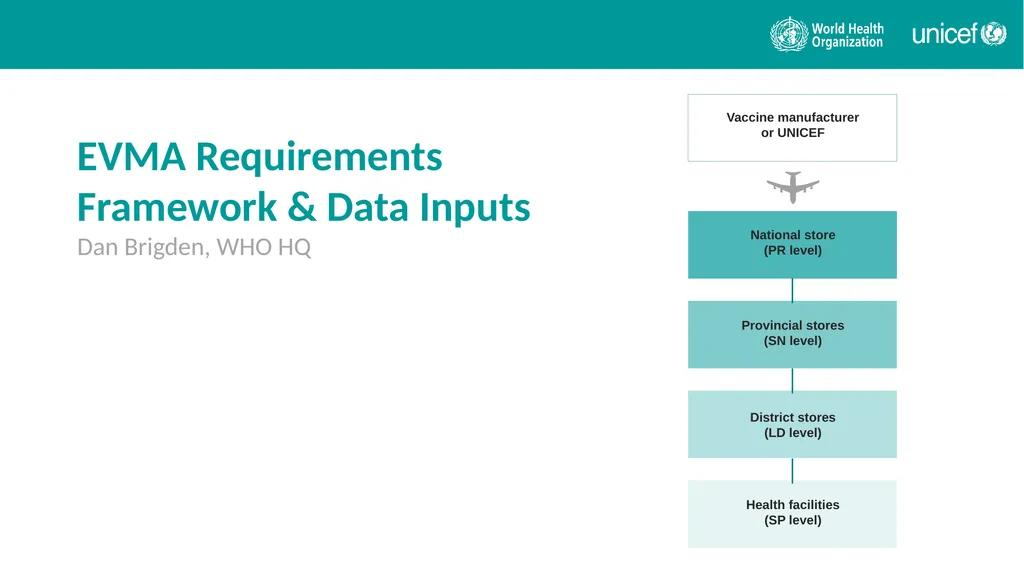
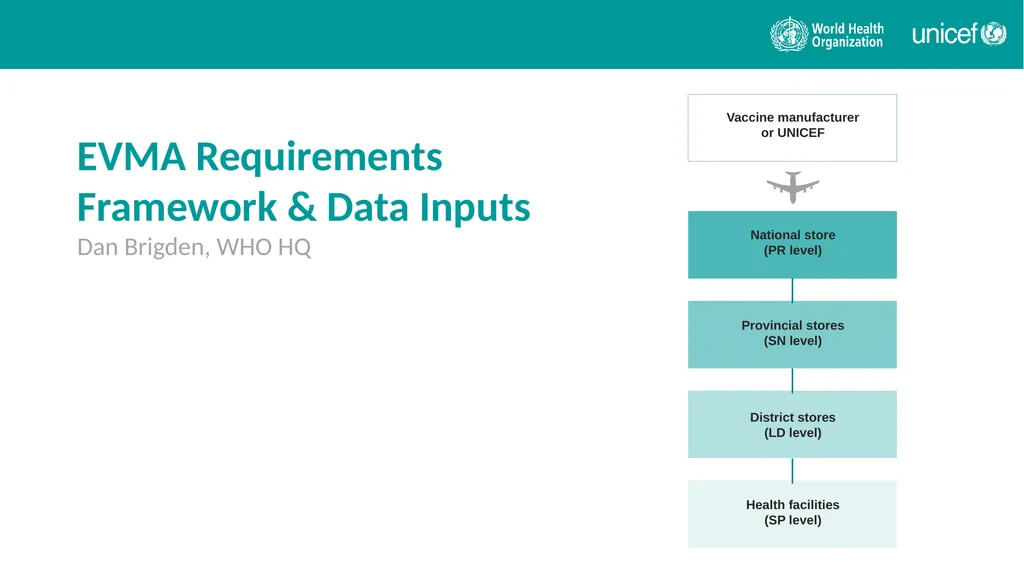
EVMA Requirements Framework & Data Inputs
Dan Brigden, WHO HQ<br>
02
EVM Requirements Framework<br>
03
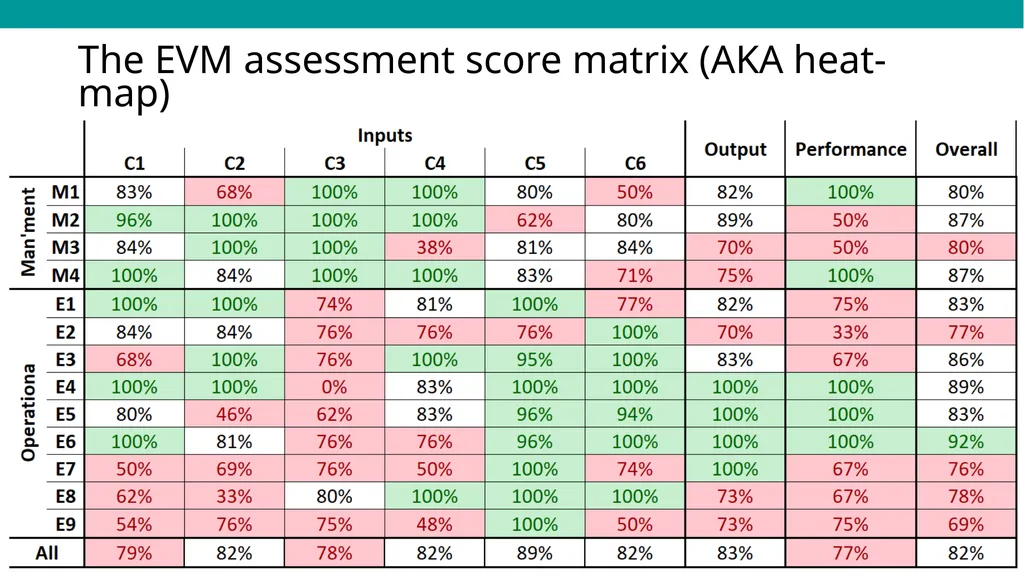
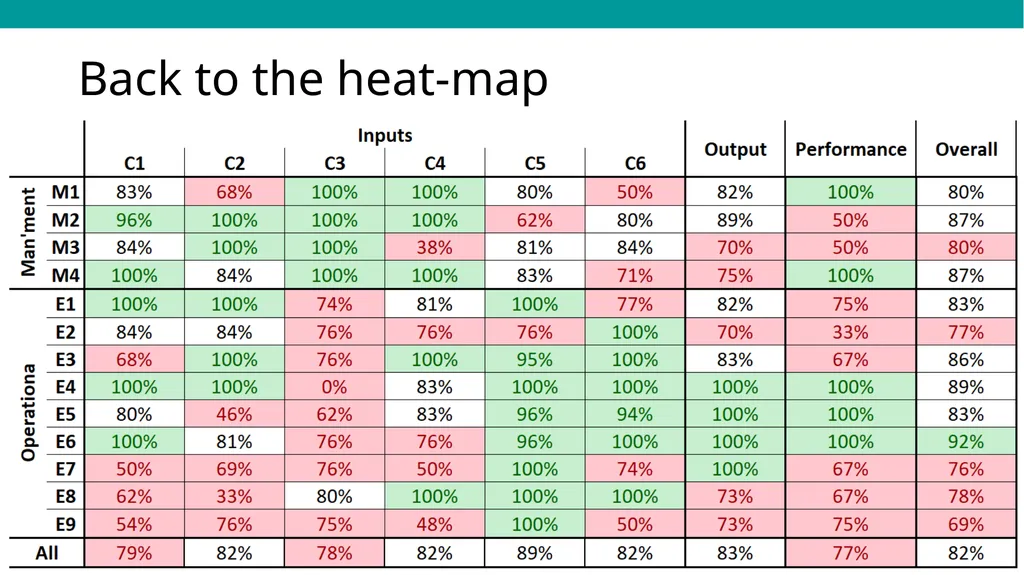
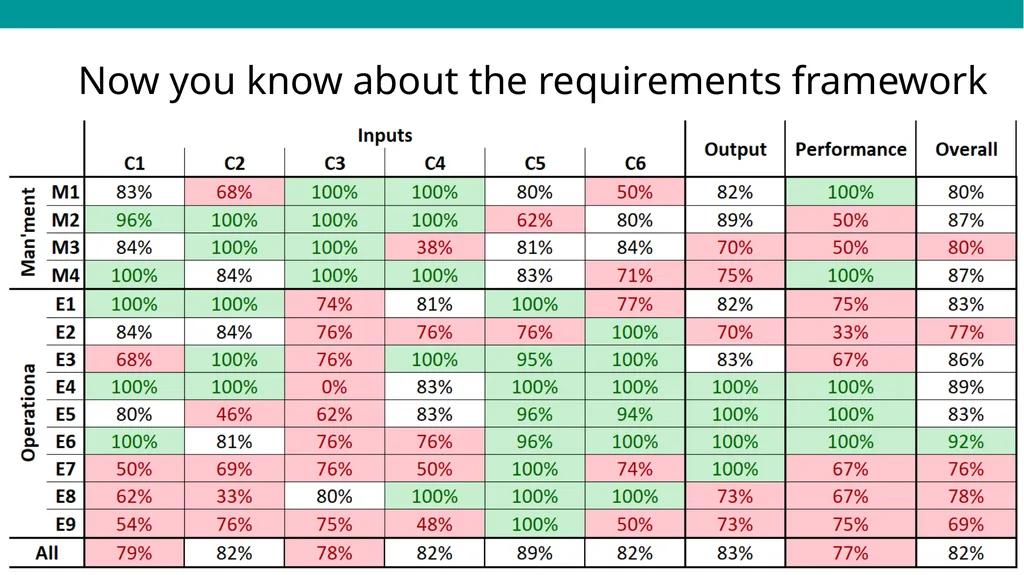
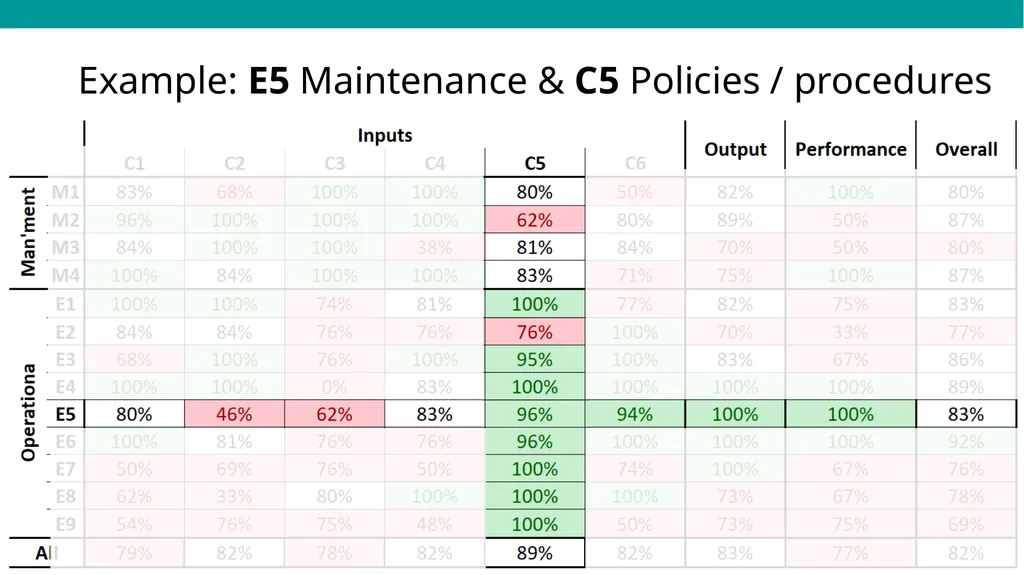
The EVM assessment score matrix (AKA heat-map)<br>
04
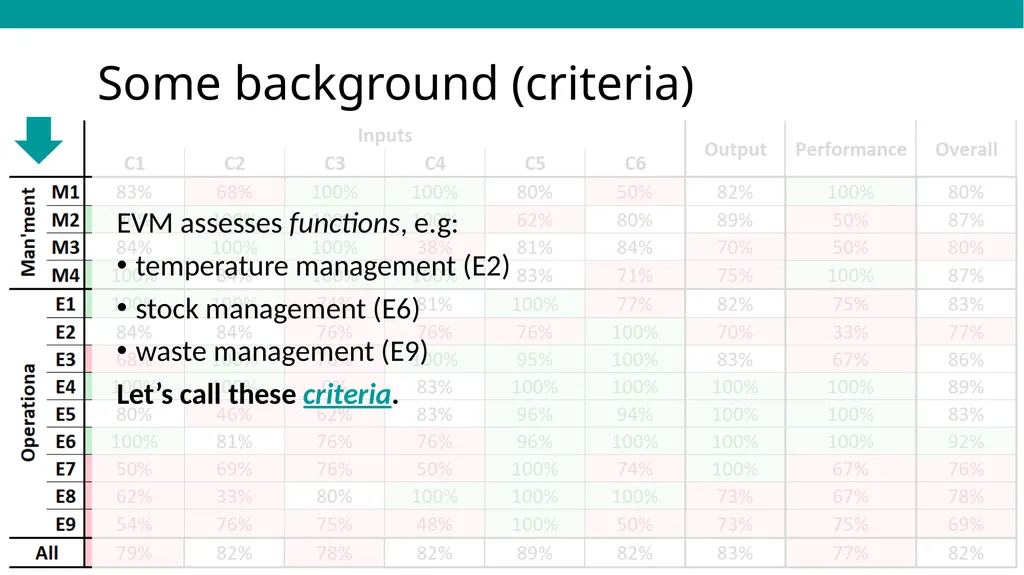
Some background (criteria) EVM assesses functions, e.g:
temperature management (E2)
stock management (E6)
waste management (E9)
Let’s call these criteria.<br>
05
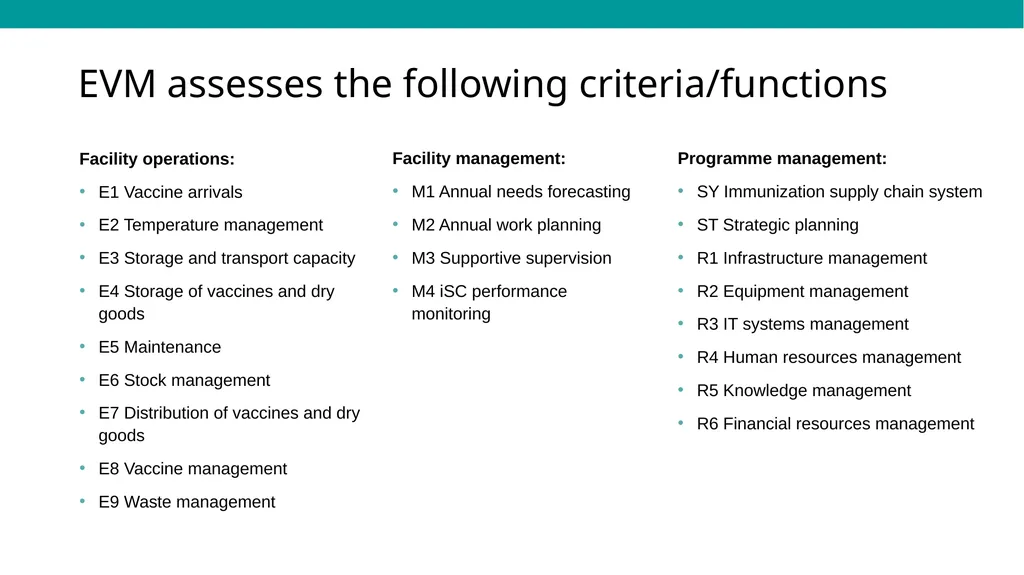
EVM assesses the following criteria/functions Facility operations:
E1 Vaccine arrivals
E2 Temperature management
E3 Storage and transport capacity
E4 Storage of vaccines and dry goods
E5 Maintenance
E6 Stock management
E7 Distribution of vaccines and dry goods
E8 Vaccine management
E9 Waste management Facility management:
M1 Annual needs forecasting
M2 Annual work planning
M3 Supportive supervision
M4 iSC performance monitoring Programme management:
SY Immunization supply chain system
ST Strategic planning
R1 Infrastructure management
R2 Equipment management
R3 IT systems management
R4 Human resources management
R5 Knowledge management
R6 Financial resources management<br>
06
Back to the heat-map<br>
07
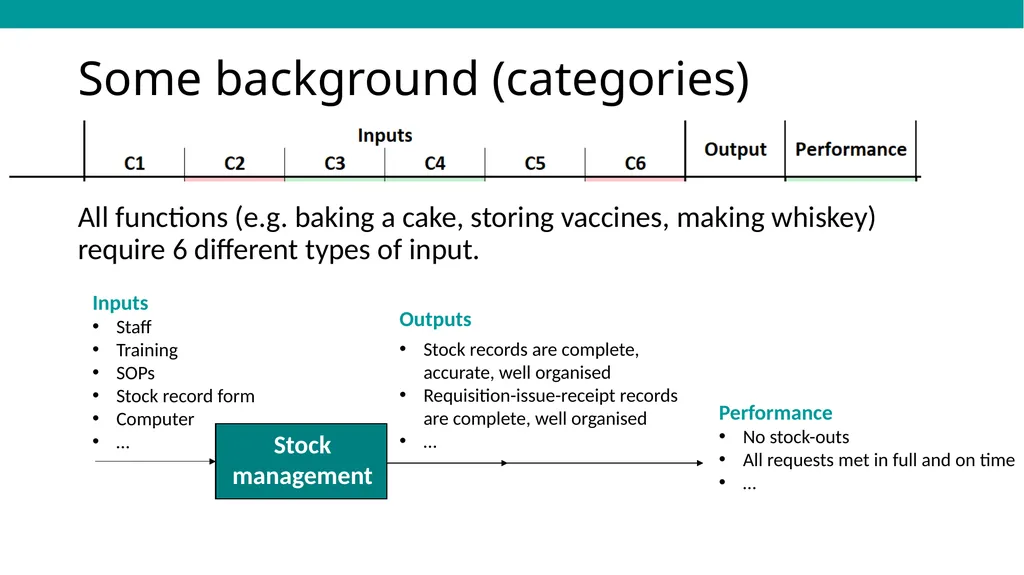
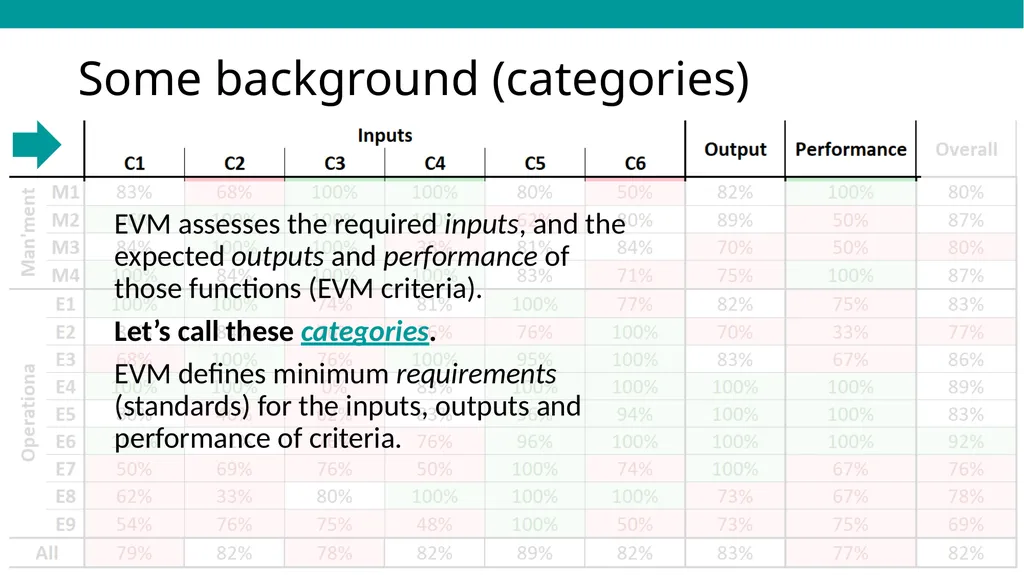
Some background (categories) All functions (e.g. baking a cake, storing vaccines, making whiskey) require 6 different types of input. Inputs
Staff
Training
SOPs
Stock record form
Computer
… Outputs
Stock records are complete, accurate, well organised
Requisition-issue-receipt records are complete, well organised
… Performance
No stock-outs
All requests met in full and on time
…<br>
08
EVM assesses the required inputs, and the expected outputs and performance of those functions (EVM criteria).
Let’s call these categories.
EVM defines minimum requirements (standards) for the inputs, outputs and performance of criteria. Some background (categories)<br>
09
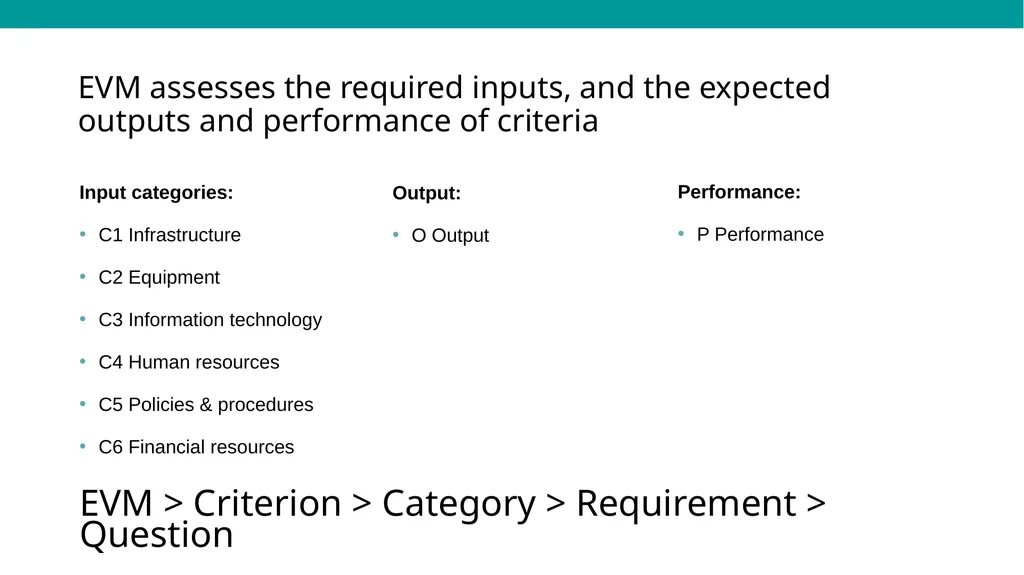
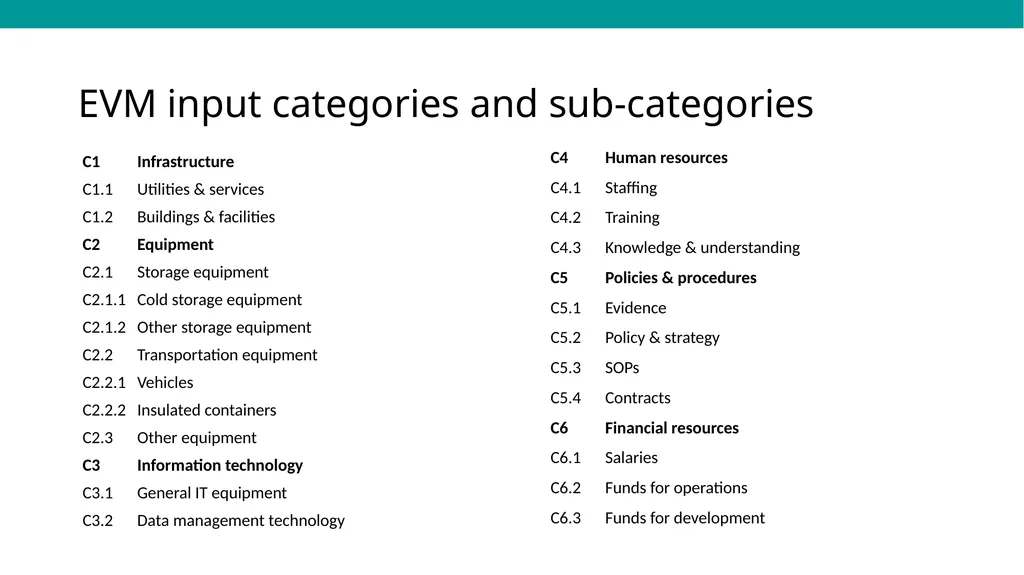
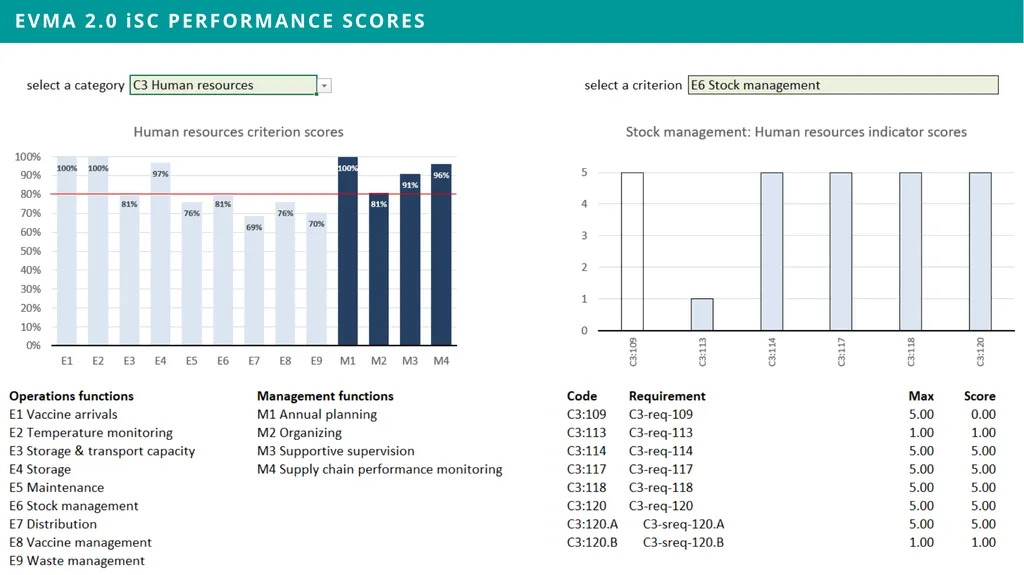
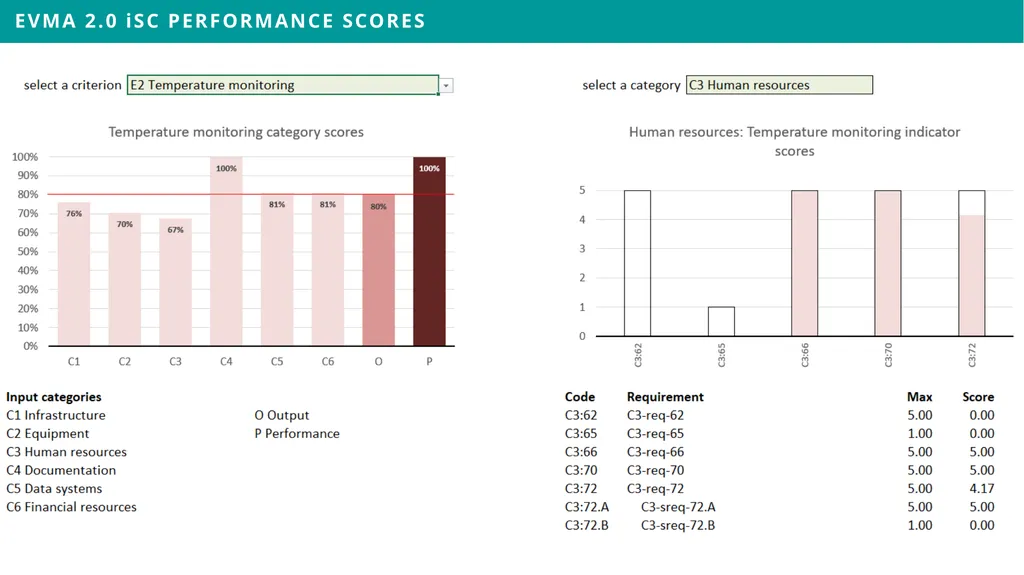
EVM assesses the required inputs, and the expected outputs and performance of criteria Input categories:
C1 Infrastructure
C2 Equipment
C3 Information technology
C4 Human resources
C5 Policies & procedures
C6 Financial resources Output:
O Output Performance:
P Performance EVM > Criterion > Category > Requirement > Question<br>
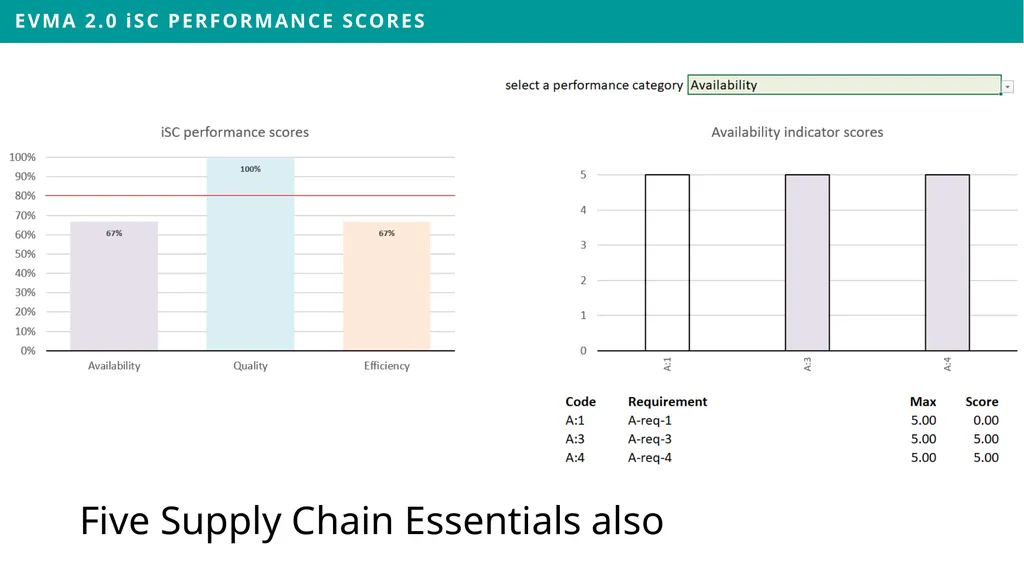
EVMA 2.0 iSC PERFORMANCE SCORES Five Supply Chain Essentials also<br>
16
EVM Data Inputs<br>
17
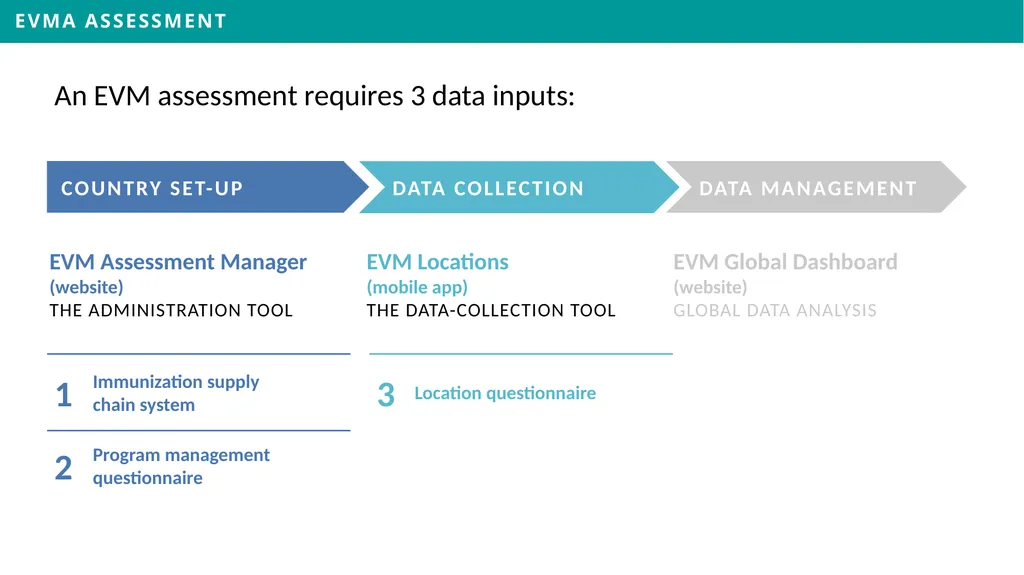
DATA COLLECTION DATA MANAGEMENT COUNTRY SET-UP EVMA ASSESSMENT An EVM assessment requires 3 data inputs: EVM Locations
(mobile app)
THE DATA-COLLECTION TOOL EVM Assessment Manager
(website)
THE ADMINISTRATION TOOL EVM Global Dashboard
(website)
GLOBAL DATA ANALYSIS 1 2 3 Immunization supply chain system Program management questionnaire Location questionnaire<br>
18
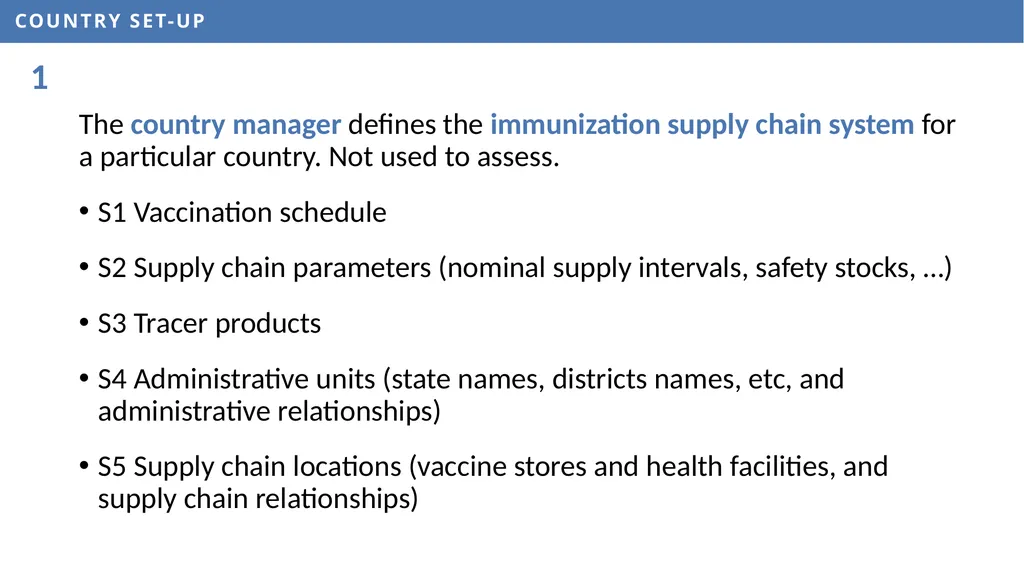
The country manager defines the immunization supply chain system for a particular country. Not used to assess.
S1 Vaccination schedule
S2 Supply chain parameters (nominal supply intervals, safety stocks, …)
S3 Tracer products
S4 Administrative units (state names, districts names, etc, and administrative relationships)
S5 Supply chain locations (vaccine stores and health facilities, and supply chain relationships) COUNTRY SET-UP 1<br>
19
The country manager and the management staff (e.g. EPI manager, iSC manager) conduct the program management questionnaire.
SY Immunization supply chain system
ST Strategic planning
R1 Infrastructure management
R2 Equipment management
R3 IT systems management
R4 Human resources management
R5 Knowledge management
R6 Financial resources management PROGRAM MANAGEMENT QUESTIONNAIRE 2<br>
20
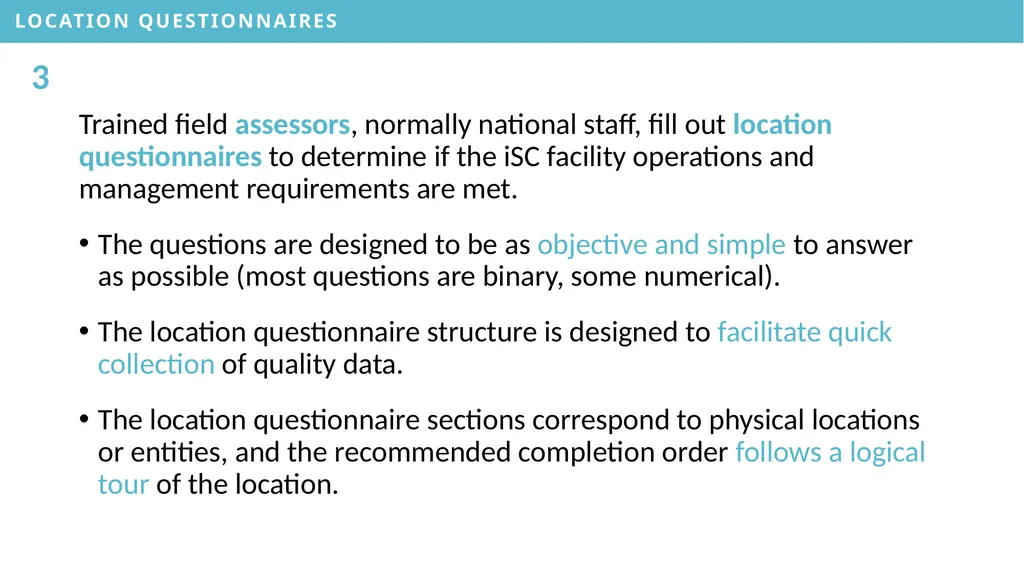
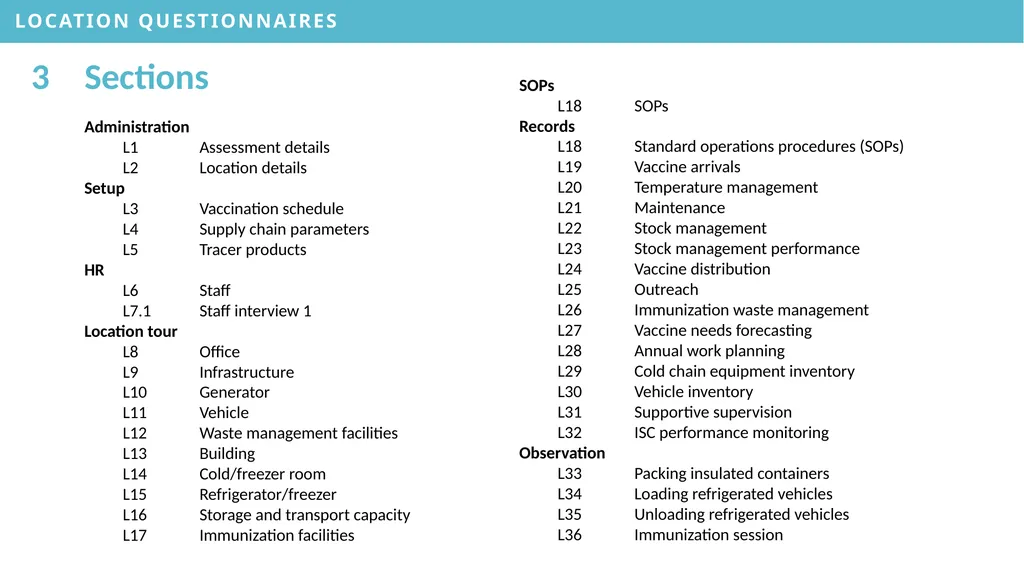
Trained field assessors, normally national staff, fill out location questionnaires to determine if the iSC facility operations and management requirements are met.
The questions are designed to be as objective and simple to answer as possible (most questions are binary, some numerical).
The location questionnaire structure is designed to facilitate quick collection of quality data.
The location questionnaire sections correspond to physical locations or entities, and the recommended completion order follows a logical tour of the location. LOCATION QUESTIONNAIRES 3<br>
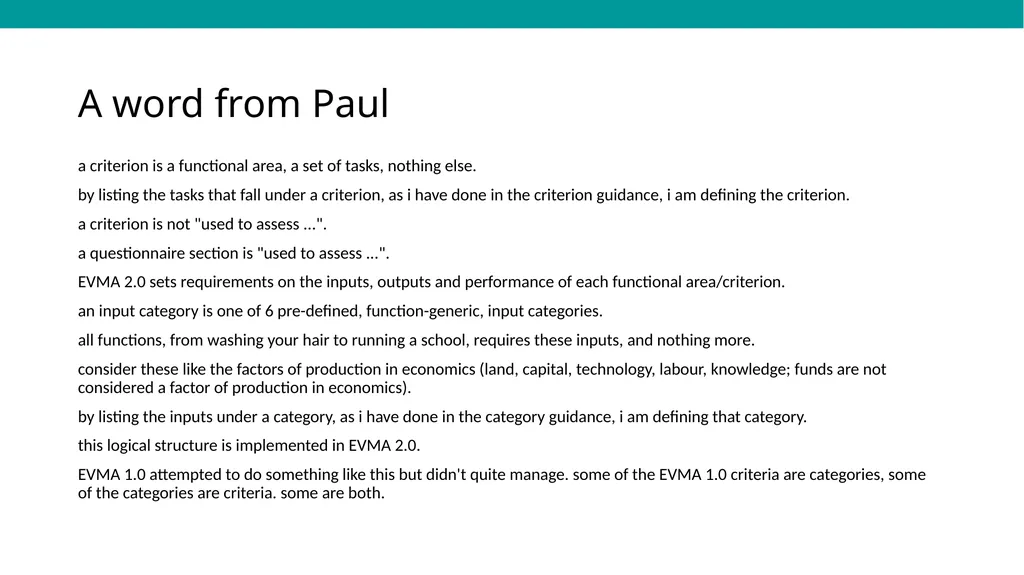
A word from Paul a criterion is a functional area, a set of tasks, nothing else.
by listing the tasks that fall under a criterion, as i have done in the criterion guidance, i am defining the criterion.
a criterion is not "used to assess ...".
a questionnaire section is "used to assess ...".
EVMA 2.0 sets requirements on the inputs, outputs and performance of each functional area/criterion.
an input category is one of 6 pre-defined, function-generic, input categories.
all functions, from washing your hair to running a school, requires these inputs, and nothing more.
consider these like the factors of production in economics (land, capital, technology, labour, knowledge; funds are not considered a factor of production in economics).
by listing the inputs under a category, as i have done in the category guidance, i am defining that category.
this logical structure is implemented in EVMA 2.0.
EVMA 1.0 attempted to do something like this but didn't quite manage. some of the EVMA 1.0 criteria are categories, some of the categories are criteria. some are both.<br>