
Example Business Analysis Scenario Template When
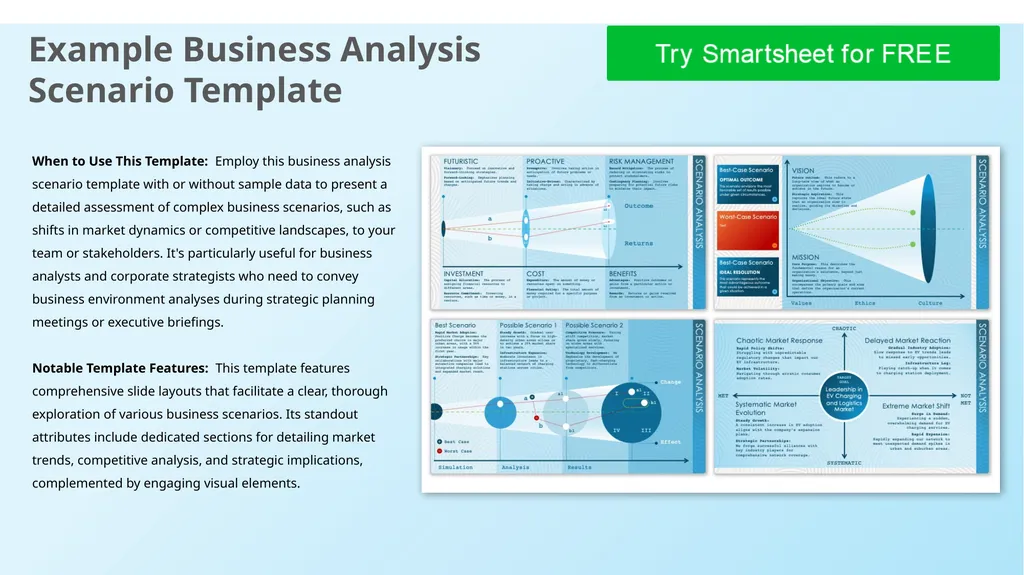
Description: Example Business Analysis Scenario Template When to Use This Template: Employ this business analysis scenario template with or without sample data to present a detailed assessment of complex business scenarios, such as shifts in market
Related Topics
Download Presentation
"Example Business Analysis Scenario Template When" is the property of its rightful owner. Permission is granted to download and print the materials on this website for personal, non-commercial use only, and to display it on your personal computer provided you do not modify the materials and that you retain all copyright notices contained in the materials. By downloading content from our website, you accept the terms of this agreement.
Presentation Transcript
slide1. Example Business Analysis Scenario Template When to Use This Template: Employ this business analysis scenario template with or without sample data to present a detailed assessment of complex business scenarios, such as shifts in market dynamics or competitive landscapes, to your team or stakeholders. It's particularly useful for business analysts and corporate strategists who need to convey business environment analyses during strategic planning meetings or executive briefings.
Notable Template Features: This template features comprehensive slide layouts that facilitate a clear, thorough exploration of various business scenarios. Its standout attributes include dedicated sections for detailing market trends, competitive analysis, and strategic implications, complemented by engaging visual elements.<br>
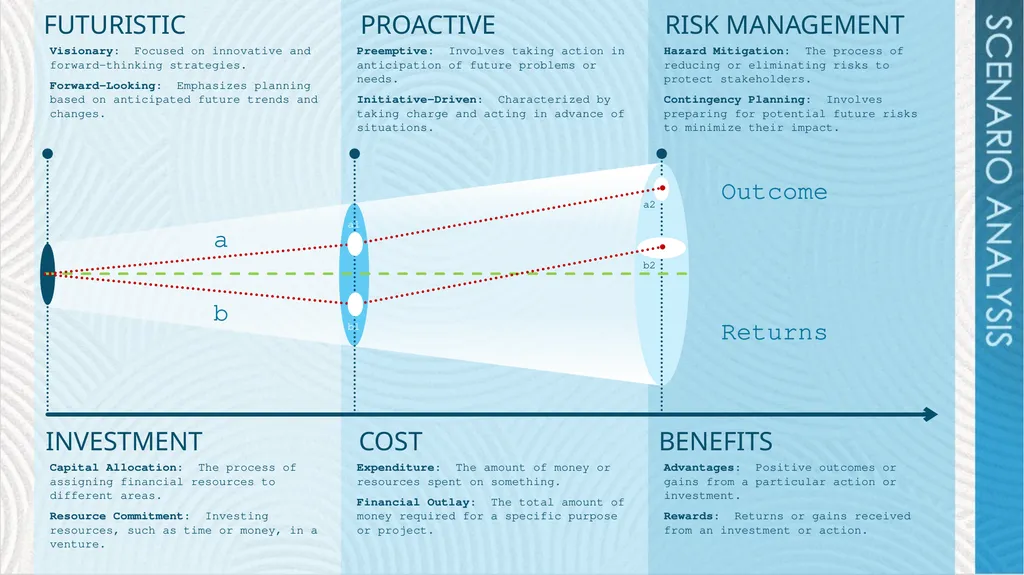
slide2. FUTURISTIC Visionary: Focused on innovative and forward-thinking strategies.
Forward-Looking: Emphasizes planning based on anticipated future trends and changes. PROACTIVE Preemptive: Involves taking action in anticipation of future problems or needs.
Initiative-Driven: Characterized by taking charge and acting in advance of situations. RISK MANAGEMENT Hazard Mitigation: The process of reducing or eliminating risks to protect stakeholders.
Contingency Planning: Involves preparing for potential future risks to minimize their impact. INVESTMENT Capital Allocation: The process of assigning financial resources to different areas.
Resource Commitment: Investing resources, such as time or money, in a venture. COST Expenditure: The amount of money or resources spent on something.
Financial Outlay: The total amount of money required for a specific purpose or project. BENEFITS Advantages: Positive outcomes or gains from a particular action or investment.
Rewards: Returns or gains received from an investment or action. Outcome Returns a b a1 b1 a2 b2<br>
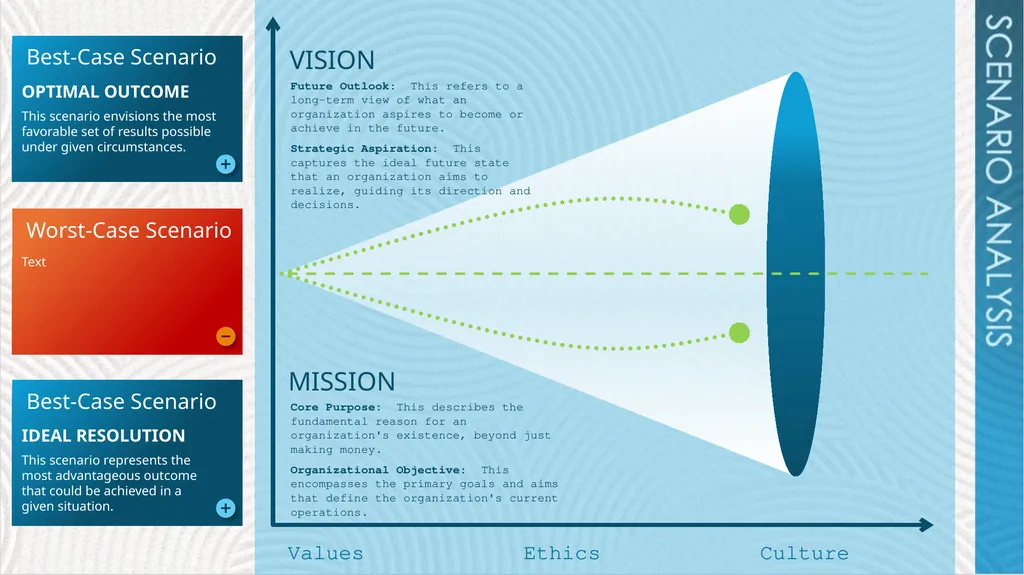
slide3. MISSION Core Purpose: This describes the fundamental reason for an organization's existence, beyond just making money.
Organizational Objective: This encompasses the primary goals and aims that define the organization's current operations. VISION Future Outlook: This refers to a long-term view of what an organization aspires to become or achieve in the future.
Strategic Aspiration: This captures the ideal future state that an organization aims to realize, guiding its direction and decisions. Best-Case Scenario OPTIMAL OUTCOME
This scenario envisions the most favorable set of results possible under given circumstances. Worst-Case Scenario Text Best-Case Scenario IDEAL RESOLUTION
This scenario represents the most advantageous outcome that could be achieved in a given situation. Values Ethics Culture<br>
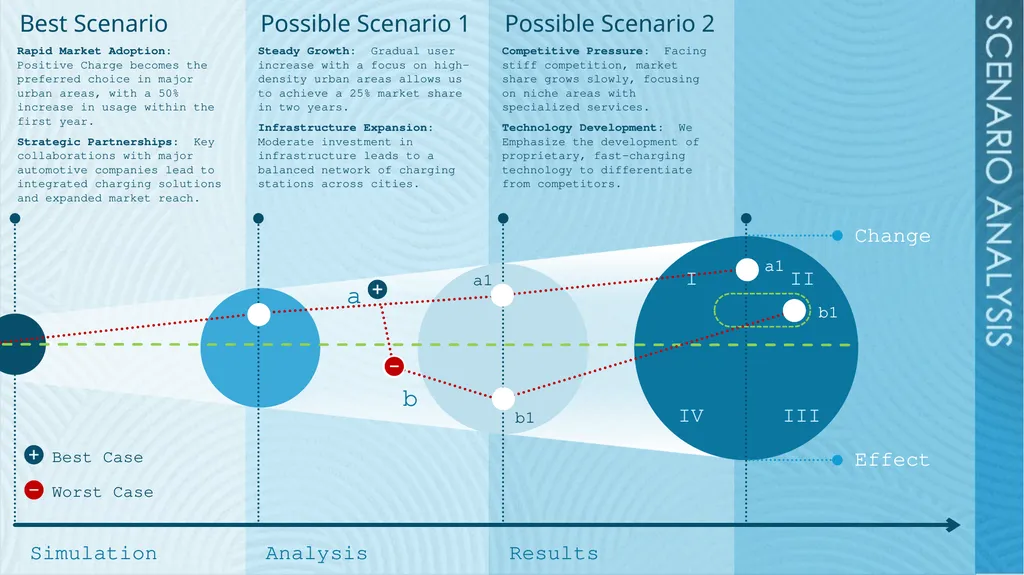
slide4. Best Scenario Rapid Market Adoption: Positive Charge becomes the preferred choice in major urban areas, with a 50% increase in usage within the first year.
Strategic Partnerships: Key collaborations with major automotive companies lead to integrated charging solutions and expanded market reach. Possible Scenario 1 Steady Growth: Gradual user increase with a focus on high-density urban areas allows us to achieve a 25% market share in two years.
Infrastructure Expansion: Moderate investment in infrastructure leads to a balanced network of charging stations across cities. Possible Scenario 2 Competitive Pressure: Facing stiff competition, market share grows slowly, focusing on niche areas with specialized services.
Technology Development: We Emphasize the development of proprietary, fast-charging technology to differentiate from competitors. Change Effect a b b1 Simulation Analysis Results Best Case Worst Case I II IV III a1 b1 a1<br>
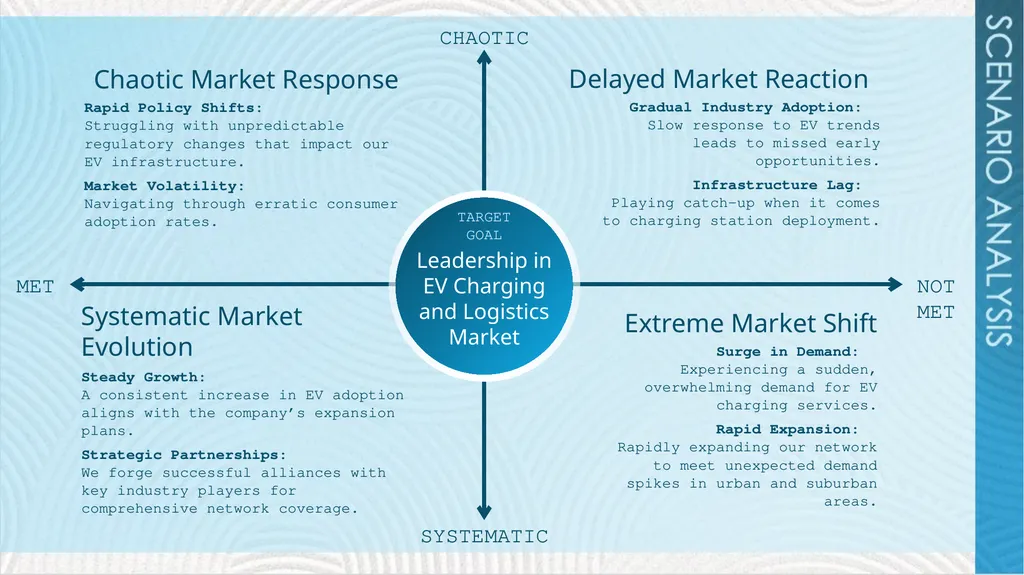
slide5. Systematic Market Evolution Steady Growth: A consistent increase in EV adoption aligns with the company’s expansion plans.
Strategic Partnerships: We forge successful alliances with key industry players for comprehensive network coverage. Chaotic Market Response Rapid Policy Shifts: Struggling with unpredictable regulatory changes that impact our EV infrastructure.
Market Volatility: Navigating through erratic consumer adoption rates. MET Leadership in EV Charging and Logistics Market TARGET GOAL NOTMET CHAOTIC SYSTEMATIC Delayed Market Reaction Gradual Industry Adoption: Slow response to EV trends leads to missed early opportunities.
Infrastructure Lag: Playing catch-up when it comes to charging station deployment. Extreme Market Shift Surge in Demand: Experiencing a sudden, overwhelming demand for EV charging services.
Rapid Expansion: Rapidly expanding our network to meet unexpected demand spikes in urban and suburban areas.<br>
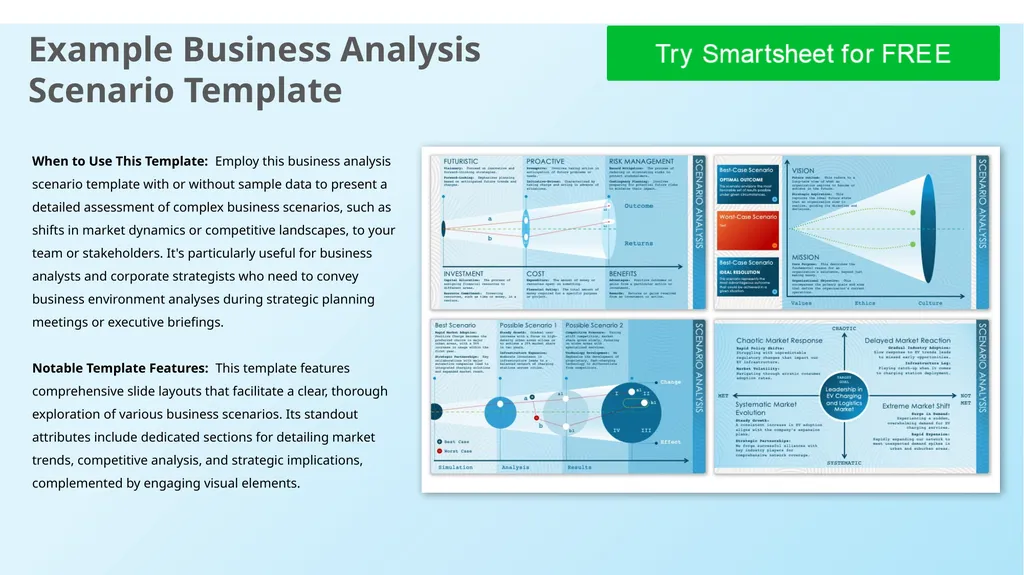
Notable Template Features: This template features comprehensive slide layouts that facilitate a clear, thorough exploration of various business scenarios. Its standout attributes include dedicated sections for detailing market trends, competitive analysis, and strategic implications, complemented by engaging visual elements.<br>
slide2. FUTURISTIC Visionary: Focused on innovative and forward-thinking strategies.
Forward-Looking: Emphasizes planning based on anticipated future trends and changes. PROACTIVE Preemptive: Involves taking action in anticipation of future problems or needs.
Initiative-Driven: Characterized by taking charge and acting in advance of situations. RISK MANAGEMENT Hazard Mitigation: The process of reducing or eliminating risks to protect stakeholders.
Contingency Planning: Involves preparing for potential future risks to minimize their impact. INVESTMENT Capital Allocation: The process of assigning financial resources to different areas.
Resource Commitment: Investing resources, such as time or money, in a venture. COST Expenditure: The amount of money or resources spent on something.
Financial Outlay: The total amount of money required for a specific purpose or project. BENEFITS Advantages: Positive outcomes or gains from a particular action or investment.
Rewards: Returns or gains received from an investment or action. Outcome Returns a b a1 b1 a2 b2<br>
slide3. MISSION Core Purpose: This describes the fundamental reason for an organization's existence, beyond just making money.
Organizational Objective: This encompasses the primary goals and aims that define the organization's current operations. VISION Future Outlook: This refers to a long-term view of what an organization aspires to become or achieve in the future.
Strategic Aspiration: This captures the ideal future state that an organization aims to realize, guiding its direction and decisions. Best-Case Scenario OPTIMAL OUTCOME
This scenario envisions the most favorable set of results possible under given circumstances. Worst-Case Scenario Text Best-Case Scenario IDEAL RESOLUTION
This scenario represents the most advantageous outcome that could be achieved in a given situation. Values Ethics Culture<br>
slide4. Best Scenario Rapid Market Adoption: Positive Charge becomes the preferred choice in major urban areas, with a 50% increase in usage within the first year.
Strategic Partnerships: Key collaborations with major automotive companies lead to integrated charging solutions and expanded market reach. Possible Scenario 1 Steady Growth: Gradual user increase with a focus on high-density urban areas allows us to achieve a 25% market share in two years.
Infrastructure Expansion: Moderate investment in infrastructure leads to a balanced network of charging stations across cities. Possible Scenario 2 Competitive Pressure: Facing stiff competition, market share grows slowly, focusing on niche areas with specialized services.
Technology Development: We Emphasize the development of proprietary, fast-charging technology to differentiate from competitors. Change Effect a b b1 Simulation Analysis Results Best Case Worst Case I II IV III a1 b1 a1<br>
slide5. Systematic Market Evolution Steady Growth: A consistent increase in EV adoption aligns with the company’s expansion plans.
Strategic Partnerships: We forge successful alliances with key industry players for comprehensive network coverage. Chaotic Market Response Rapid Policy Shifts: Struggling with unpredictable regulatory changes that impact our EV infrastructure.
Market Volatility: Navigating through erratic consumer adoption rates. MET Leadership in EV Charging and Logistics Market TARGET GOAL NOTMET CHAOTIC SYSTEMATIC Delayed Market Reaction Gradual Industry Adoption: Slow response to EV trends leads to missed early opportunities.
Infrastructure Lag: Playing catch-up when it comes to charging station deployment. Extreme Market Shift Surge in Demand: Experiencing a sudden, overwhelming demand for EV charging services.
Rapid Expansion: Rapidly expanding our network to meet unexpected demand spikes in urban and suburban areas.<br>