
Faculty Associate Professor of Medicine Georgetown
KL
Published · 66 slides · 0 views

1 / 1
Description
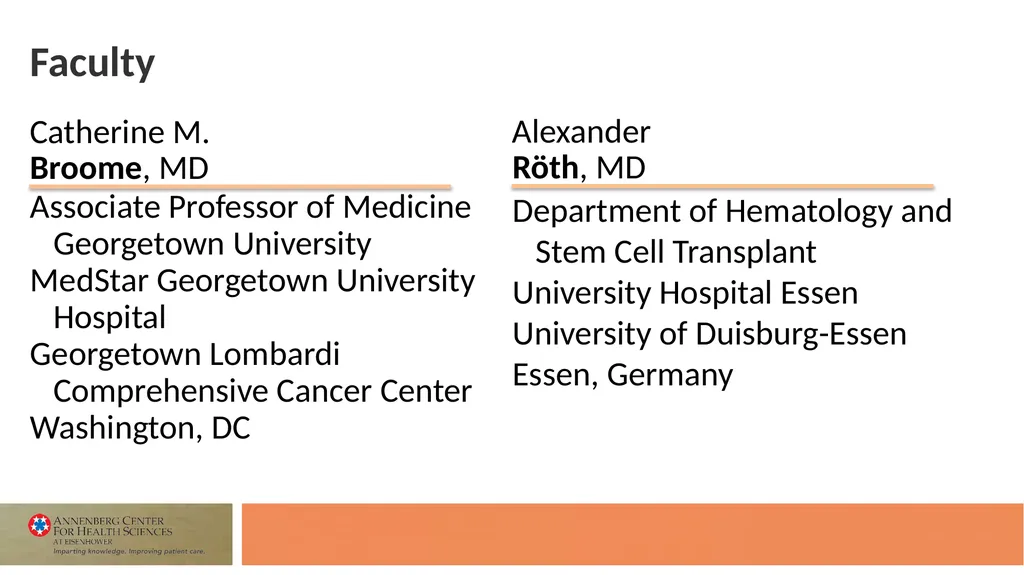
Faculty Associate Professor of Medicine Georgetown University MedStar Georgetown University Hospital Georgetown Lombardi Comprehensive Cancer Center Washington, DC Catherine M. Broome, MD Department of Hematology and Stem Cell Transplant
Related Topics
Share
Embed code
Download this presentation From Below
"Faculty Associate Professor of Medicine Georgetown" is the property of its rightful owner. Permission is granted to download and print the materials on this website for personal, non-commercial use only, and to display it on your personal computer provided you do not modify the materials and that you retain all copyright notices contained in the materials. By downloading content from our website, you accept the terms of this agreement.
Presentation Transcript
01
Faculty Associate Professor of Medicine
Georgetown University
MedStar Georgetown University
Hospital
Georgetown Lombardi
Comprehensive Cancer Center
Washington, DC Catherine M. Broome, MD Department of Hematology and
Stem Cell Transplant
University Hospital Essen
University of Duisburg-Essen
Essen, Germany Alexander Röth, MD<br>
Georgetown University
MedStar Georgetown University
Hospital
Georgetown Lombardi
Comprehensive Cancer Center
Washington, DC Catherine M. Broome, MD Department of Hematology and
Stem Cell Transplant
University Hospital Essen
University of Duisburg-Essen
Essen, Germany Alexander Röth, MD<br>
02
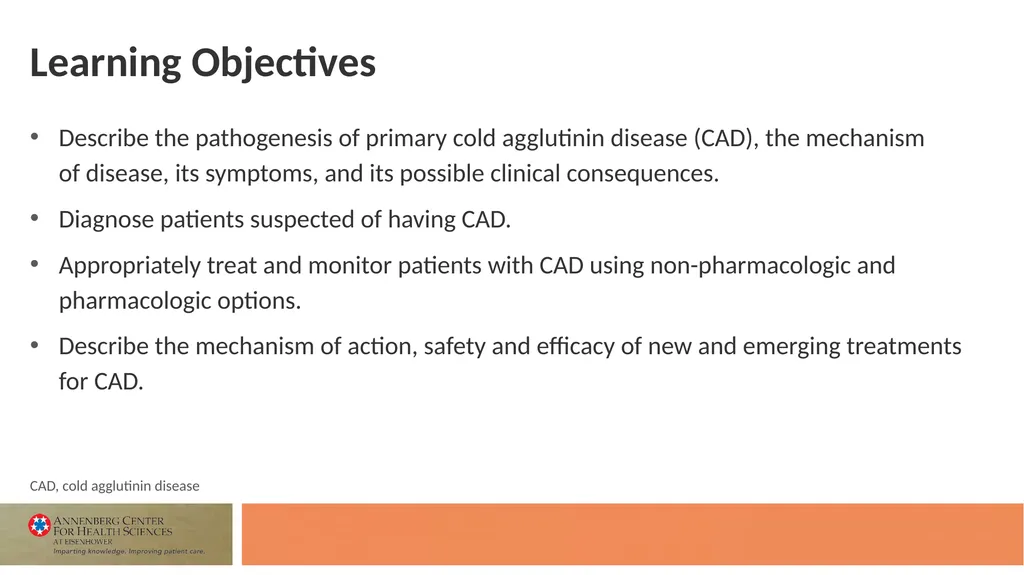
Learning Objectives Describe the pathogenesis of primary cold agglutinin disease (CAD), the mechanism
of disease, its symptoms, and its possible clinical consequences.
Diagnose patients suspected of having CAD.
Appropriately treat and monitor patients with CAD using non-pharmacologic and pharmacologic options.
Describe the mechanism of action, safety and efficacy of new and emerging treatments for CAD. CAD, cold agglutinin disease<br>
Diagnose patients suspected of having CAD.
Appropriately treat and monitor patients with CAD using non-pharmacologic and pharmacologic options.
Describe the mechanism of action, safety and efficacy of new and emerging treatments for CAD. CAD, cold agglutinin disease<br>
03
Module 1 Pathogenesis and Clinical Features of
Cold Agglutinin Disease<br>
04
Overview of Autoimmune Hemolytic Anemia and CAD Rare hematologic disease
Can present acutely in ER or with more chronic symptoms to PCP or other specialists
Challenging at presentation, if clinician is unfamiliar with this rare condition
Clinicians need to be aware of pathogenesis, signs, symptoms, and potential risks associated with CAD, along with non-pharmaceutical and pharmaceutical treatment options AIHA, autoimmune hemolytic anemia; CAD, Cold Agglutinin Disease.<br>
05
Cold Agglutinin Disease vs Cold Agglutinin Syndrome Primary (idiopathic) Cold Agglutinin Disease (CAD)
CAD is a subtype of AIHA caused by IgM autoantibodies, which tend to react at cold temperatures
CAs are IgM antibodies that bind to RBC antigens at less than core body temperatures (37°–39° F | 3°–4° C)
Secondary: Cold Agglutinin Syndrome (CAS)
Also, an AIHA mediated by IgM autoantibodies
Associated with systemic disease, most commonly either infection or malignancy
Often frequent causes: Mycoplasma pneumoniae pneumonia, Epstein-Barr virus infection, or indolent lymphoma AIHA, autoimmune hemolytic anemia; IgM, Immunoglobulin M; RBC, red blood cells<br>
06
What is Cold Agglutinin Disease? CAD defined: Rare, chronic hemolytic disorder caused by anti–RBC IgM autoantibodies, most often (>90%) monoclonal with k light-chain restriction recognizing the I antigen on the surface of RBC
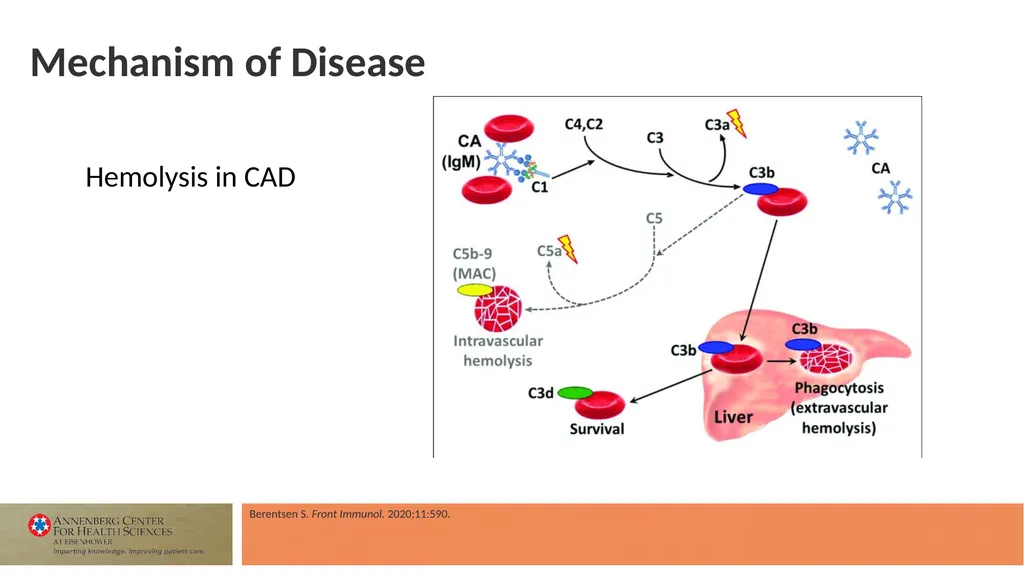
Hemolysis in CAD is complement-dependent with mainly extravascular hemolysis [typically in liver]
Represents 15% to 25% (~20%) of all AIHAs
It may be exacerbated by many things, including cold temperatures AIHA, autoimmune hemolytic anemia; IgM immunoglobulin M<br>
Hemolysis in CAD is complement-dependent with mainly extravascular hemolysis [typically in liver]
Represents 15% to 25% (~20%) of all AIHAs
It may be exacerbated by many things, including cold temperatures AIHA, autoimmune hemolytic anemia; IgM immunoglobulin M<br>
07
Prevalence of Patients with CAD Affects ~one person per million every year
5200 living with CAD in the United States
Affects middle-aged and elderly people
40–80 years of age
Average age of onset 60 years of age
More common in women than men CAD, Cold Agglutinin Disease.<br>
5200 living with CAD in the United States
Affects middle-aged and elderly people
40–80 years of age
Average age of onset 60 years of age
More common in women than men CAD, Cold Agglutinin Disease.<br>
08
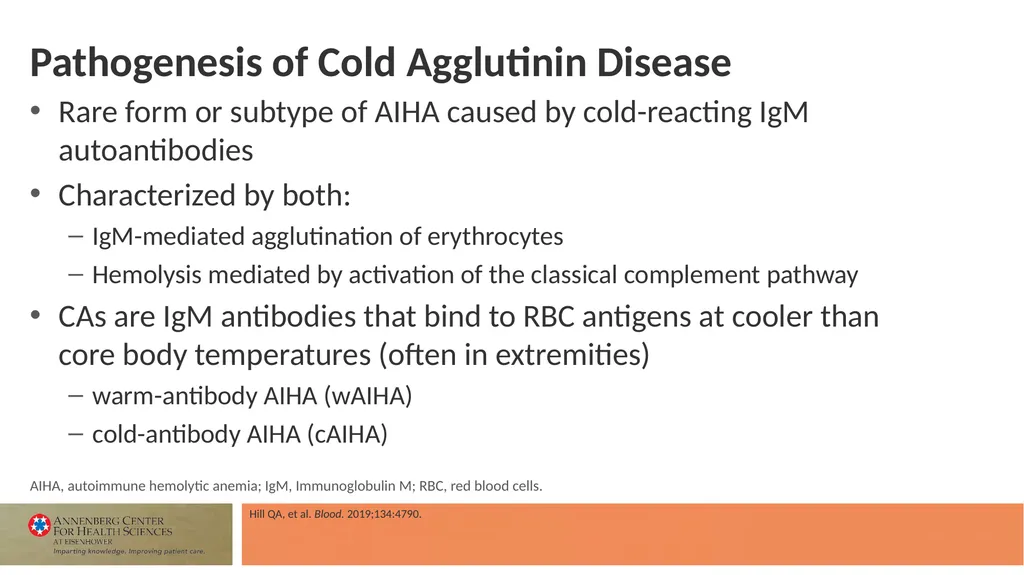
Pathogenesis of Cold Agglutinin Disease Rare form or subtype of AIHA caused by cold-reacting IgM autoantibodies
Characterized by both:
IgM-mediated agglutination of erythrocytes
Hemolysis mediated by activation of the classical complement pathway
CAs are IgM antibodies that bind to RBC antigens at cooler than core body temperatures (often in extremities)
warm-antibody AIHA (wAIHA)
cold-antibody AIHA (cAIHA) Hill QA, et al. Blood. 2019;134:4790. AIHA, autoimmune hemolytic anemia; IgM, Immunoglobulin M; RBC, red blood cells.<br>
09
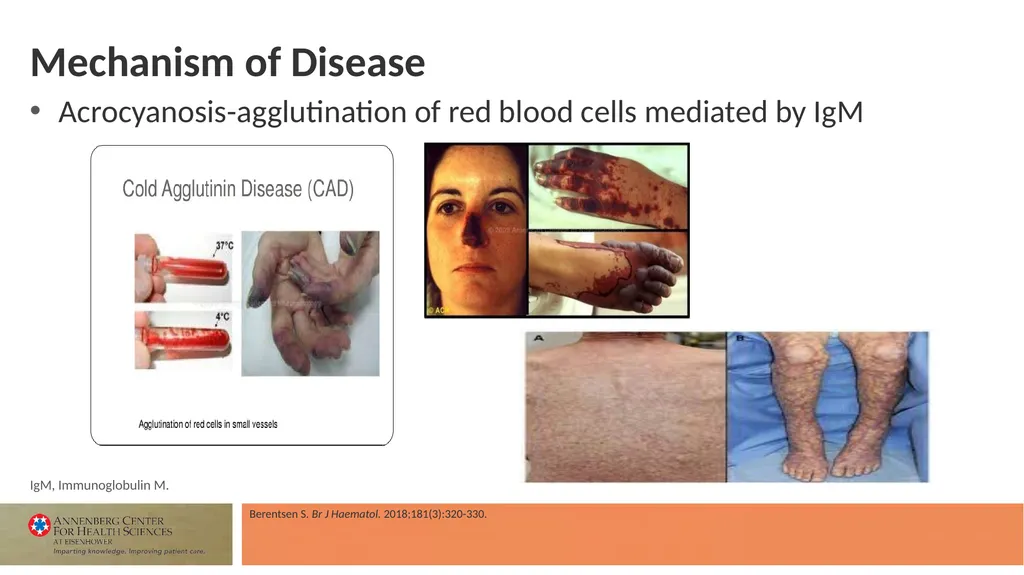
Mechanism of Disease Acrocyanosis-agglutination of red blood cells mediated by IgM Berentsen S. Br J Haematol. 2018;181(3):320-330. IgM, Immunoglobulin M.<br>
10
Mechanism of Disease Berentsen S. Front Immunol. 2020;11:590. Hemolysis in CAD<br>
11
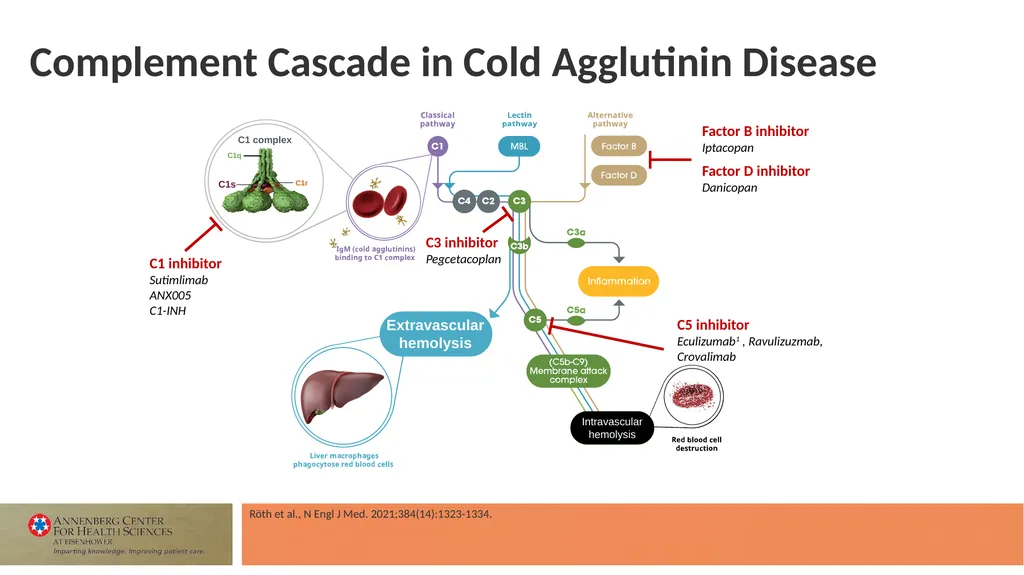
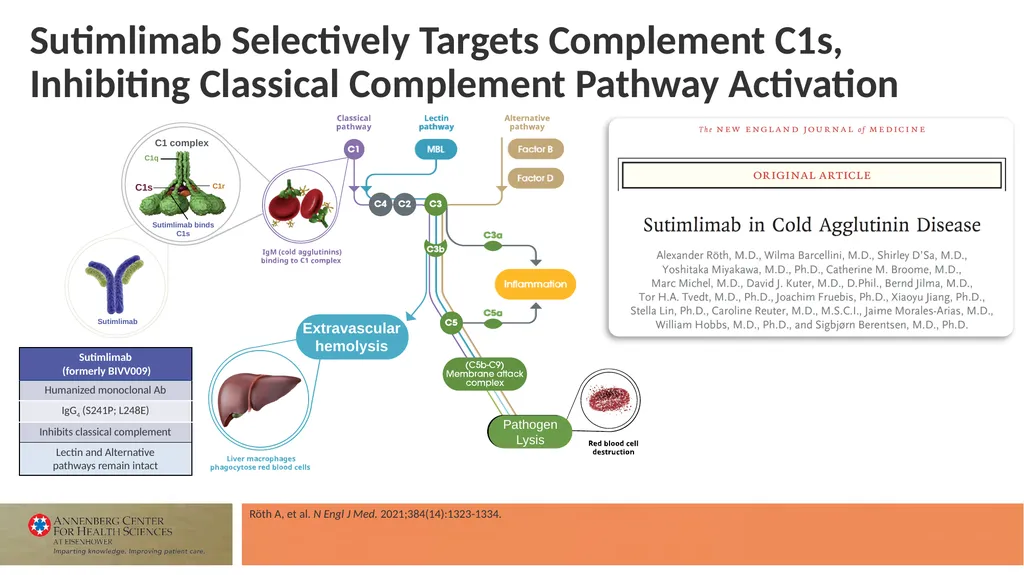
Complement Cascade in Cold Agglutinin Disease Röth et al., N Engl J Med. 2021;384(14):1323-1334. Phagocytosis Pathogen Lysis<br>
12
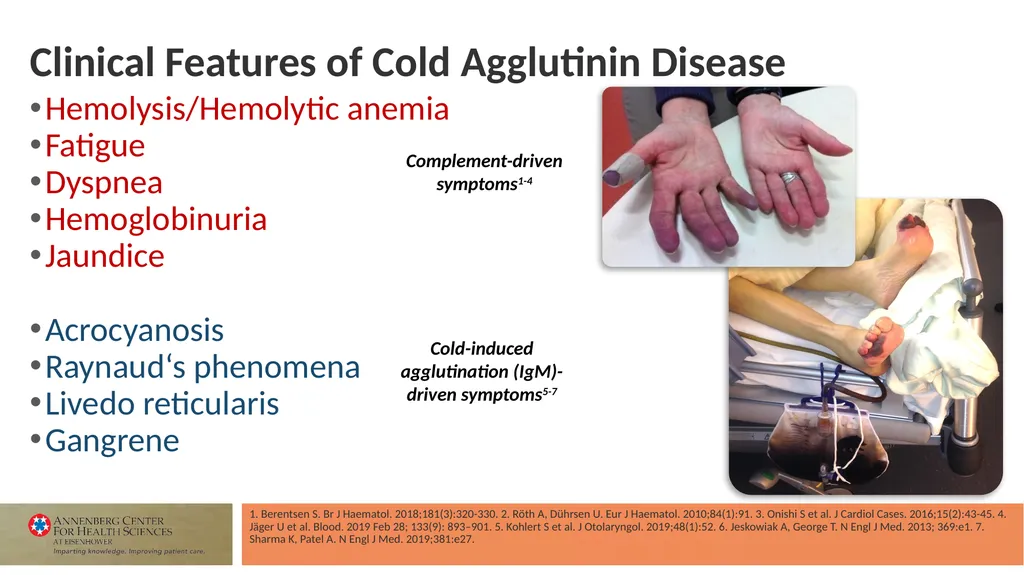
Clinical Features of Cold Agglutinin Disease Hemolysis/Hemolytic anemia
Fatigue
Dyspnea
Hemoglobinuria
Jaundice
Acrocyanosis
Raynaud‘s phenomena
Livedo reticularis
Gangrene 1. Berentsen S. Br J Haematol. 2018;181(3):320-330. 2. Röth A, Dührsen U. Eur J Haematol. 2010;84(1):91. 3. Onishi S et al. J Cardiol Cases. 2016;15(2):43-45. 4. Jäger U et al. Blood. 2019 Feb 28; 133(9): 893–901. 5. Kohlert S et al. J Otolaryngol. 2019;48(1):52. 6. Jeskowiak A, George T. N Engl J Med. 2013; 369:e1. 7. Sharma K, Patel A. N Engl J Med. 2019;381:e27. Complement-driven symptoms1-4 Cold-induced agglutination (IgM)-driven symptoms5-7<br>
13
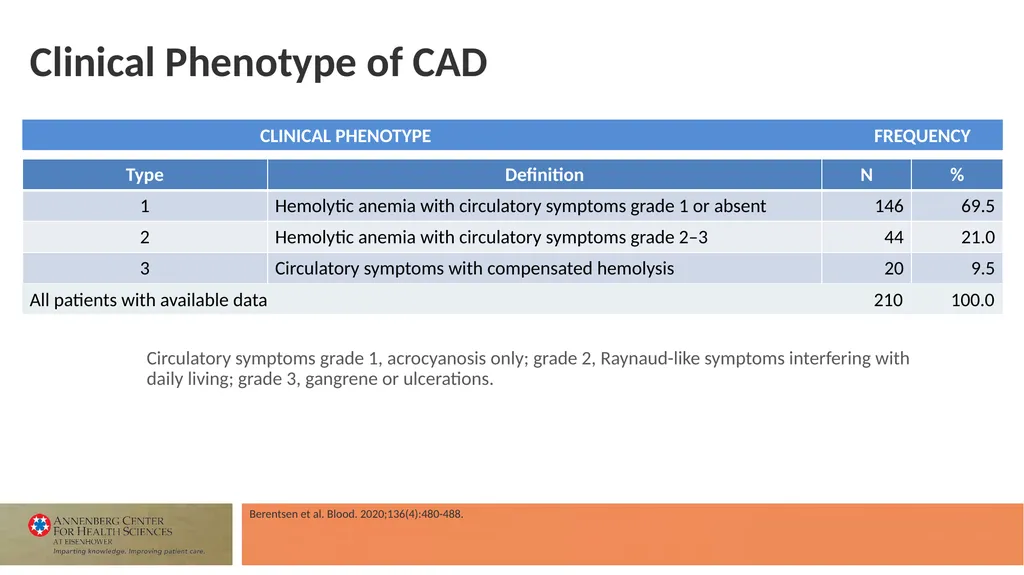
Clinical Phenotype of CAD Berentsen et al. Blood. 2020;136(4):480-488. Circulatory symptoms grade 1, acrocyanosis only; grade 2, Raynaud-like symptoms interfering with daily living; grade 3, gangrene or ulcerations. All patients with available data 210 100.0 CLINICAL PHENOTYPE FREQUENCY<br>
14
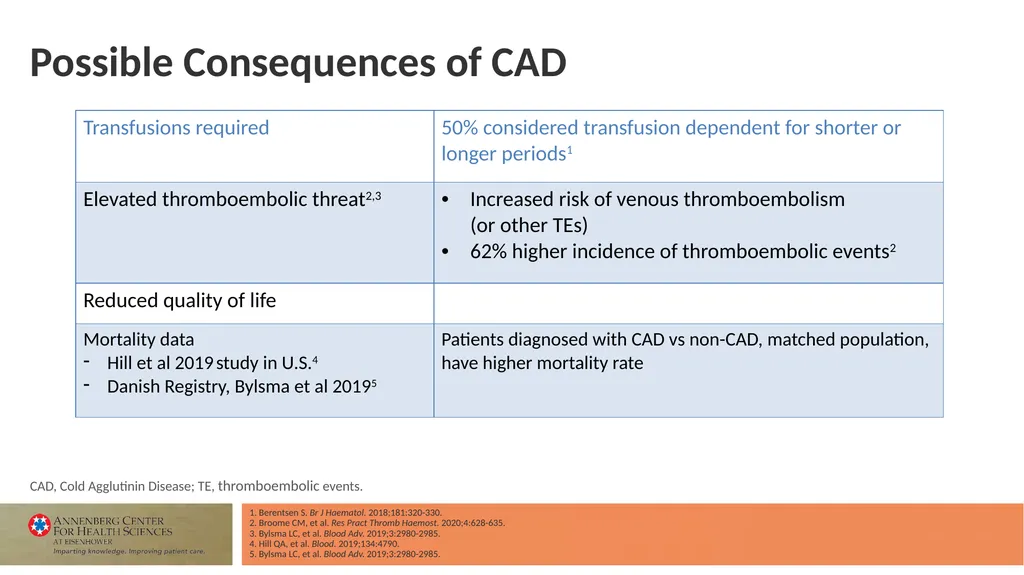
Possible Consequences of CAD 1. Berentsen S. Br J Haematol. 2018;181:320-330.
2. Broome CM, et al. Res Pract Thromb Haemost. 2020;4:628-635.
3. Bylsma LC, et al. Blood Adv. 2019;3:2980-2985.
4. Hill QA, et al. Blood. 2019;134:4790.
5. Bylsma LC, et al. Blood Adv. 2019;3:2980-2985. CAD, Cold Agglutinin Disease; TE, thromboembolic events.<br>
2. Broome CM, et al. Res Pract Thromb Haemost. 2020;4:628-635.
3. Bylsma LC, et al. Blood Adv. 2019;3:2980-2985.
4. Hill QA, et al. Blood. 2019;134:4790.
5. Bylsma LC, et al. Blood Adv. 2019;3:2980-2985. CAD, Cold Agglutinin Disease; TE, thromboembolic events.<br>
15
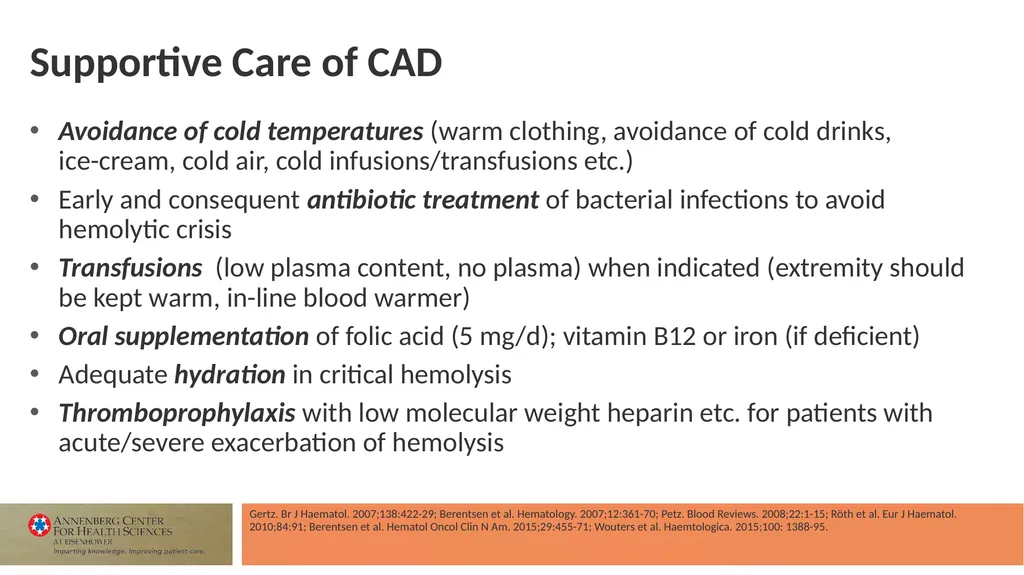
Supportive Care of CAD Avoidance of cold temperatures (warm clothing, avoidance of cold drinks,
ice-cream, cold air, cold infusions/transfusions etc.)
Early and consequent antibiotic treatment of bacterial infections to avoid hemolytic crisis
Transfusions (low plasma content, no plasma) when indicated (extremity should be kept warm, in-line blood warmer)
Oral supplementation of folic acid (5 mg/d); vitamin B12 or iron (if deficient)
Adequate hydration in critical hemolysis
Thromboprophylaxis with low molecular weight heparin etc. for patients with acute/severe exacerbation of hemolysis Gertz. Br J Haematol. 2007;138:422-29; Berentsen et al. Hematology. 2007;12:361-70; Petz. Blood Reviews. 2008;22:1-15; Röth et al. Eur J Haematol. 2010;84:91; Berentsen et al. Hematol Oncol Clin N Am. 2015;29:455-71; Wouters et al. Haemtologica. 2015;100: 1388-95.<br>
16
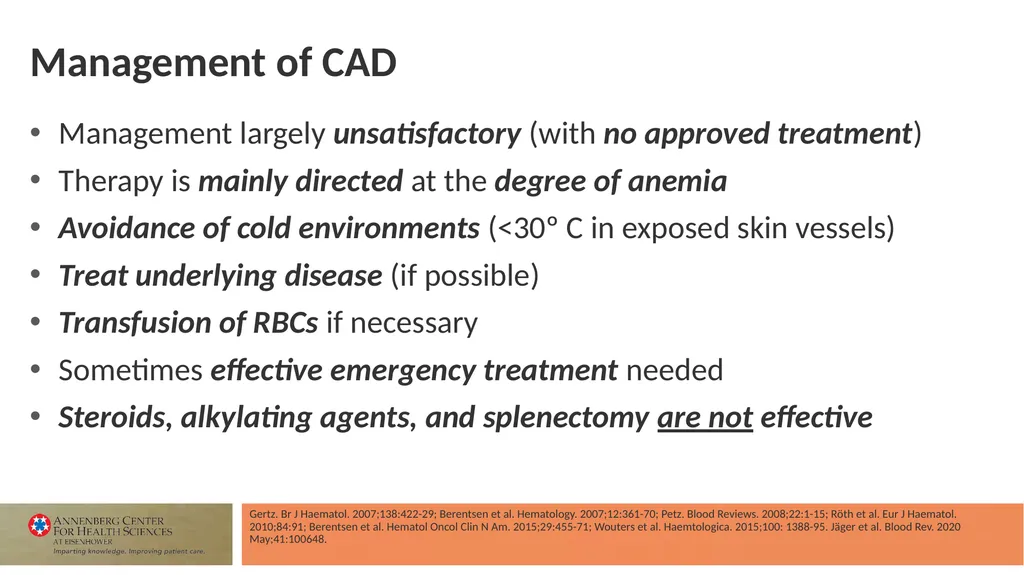
Management of CAD Management largely unsatisfactory (with no approved treatment)
Therapy is mainly directed at the degree of anemia
Avoidance of cold environments (<30º C in exposed skin vessels)
Treat underlying disease (if possible)
Transfusion of RBCs if necessary
Sometimes effective emergency treatment needed
Steroids, alkylating agents, and splenectomy are not effective Gertz. Br J Haematol. 2007;138:422-29; Berentsen et al. Hematology. 2007;12:361-70; Petz. Blood Reviews. 2008;22:1-15; Röth et al. Eur J Haematol. 2010;84:91; Berentsen et al. Hematol Oncol Clin N Am. 2015;29:455-71; Wouters et al. Haemtologica. 2015;100: 1388-95. Jäger et al. Blood Rev. 2020 May;41:100648.<br>
17
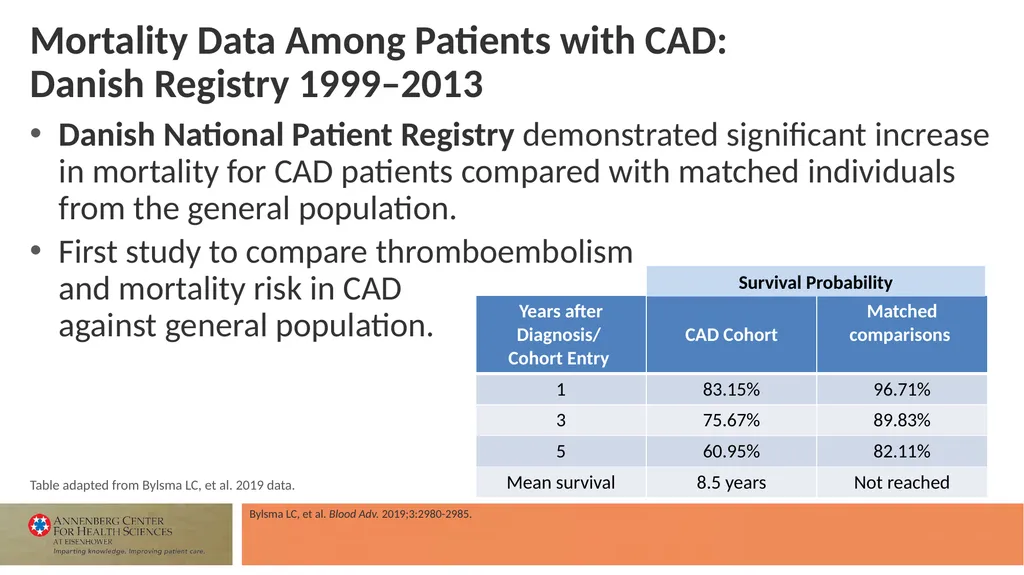
Mortality Data Among Patients with CAD:
Danish Registry 1999–2013 Danish National Patient Registry demonstrated significant increase in mortality for CAD patients compared with matched individuals from the general population.
First study to compare thromboembolism and mortality risk in CAD against general population. Bylsma LC, et al. Blood Adv. 2019;3:2980-2985. Table adapted from Bylsma LC, et al. 2019 data. Survival Probability<br>
First study to compare thromboembolism and mortality risk in CAD against general population. Bylsma LC, et al. Blood Adv. 2019;3:2980-2985. Table adapted from Bylsma LC, et al. 2019 data. Survival Probability<br>
18
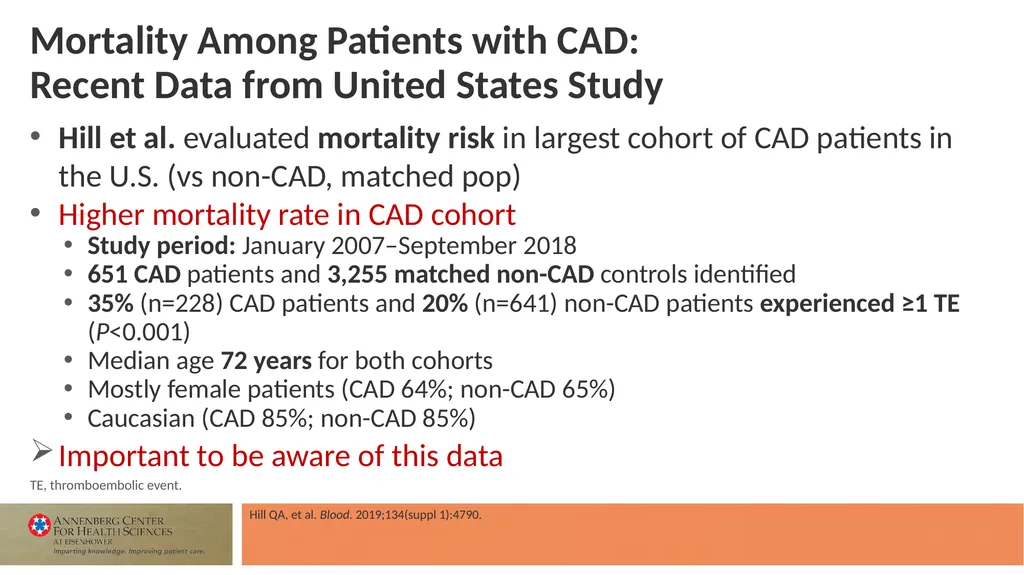
Mortality Among Patients with CAD:
Recent Data from United States Study Hill et al. evaluated mortality risk in largest cohort of CAD patients in the U.S. (vs non-CAD, matched pop)
Higher mortality rate in CAD cohort
Study period: January 2007–September 2018
651 CAD patients and 3,255 matched non-CAD controls identified
35% (n=228) CAD patients and 20% (n=641) non-CAD patients experienced ≥1 TE (P<0.001)
Median age 72 years for both cohorts
Mostly female patients (CAD 64%; non-CAD 65%)
Caucasian (CAD 85%; non-CAD 85%)
Important to be aware of this data Hill QA, et al. Blood. 2019;134(suppl 1):4790. TE, thromboembolic event.<br>
19
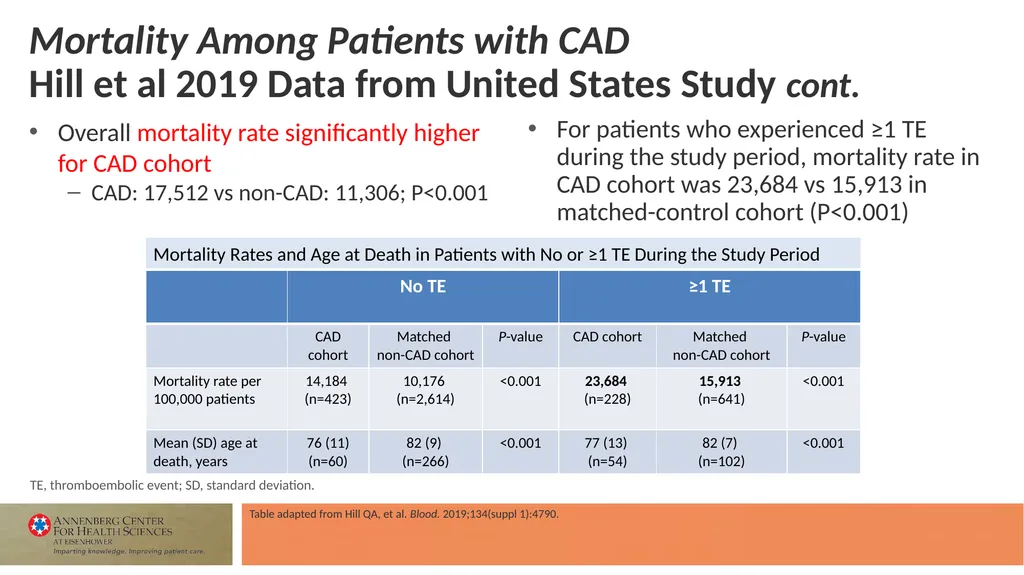
Mortality Among Patients with CAD
Hill et al 2019 Data from United States Study cont. Overall mortality rate significantly higher for CAD cohort
CAD: 17,512 vs non-CAD: 11,306; P<0.001 For patients who experienced ≥1 TE during the study period, mortality rate in CAD cohort was 23,684 vs 15,913 in matched-control cohort (P<0.001) TE, thromboembolic event; SD, standard deviation. Table adapted from Hill QA, et al. Blood. 2019;134(suppl 1):4790. Mortality Rates and Age at Death in Patients with No or ≥1 TE During the Study Period<br>
CAD: 17,512 vs non-CAD: 11,306; P<0.001 For patients who experienced ≥1 TE during the study period, mortality rate in CAD cohort was 23,684 vs 15,913 in matched-control cohort (P<0.001) TE, thromboembolic event; SD, standard deviation. Table adapted from Hill QA, et al. Blood. 2019;134(suppl 1):4790. Mortality Rates and Age at Death in Patients with No or ≥1 TE During the Study Period<br>
20
Module 2 Diagnosing Cold Agglutinin Disease<br>
21
Identify Potential Patients Diagnostic workup of AIHA is essential
Therapeutic management relates specifically to antibody type
Patient history and physical exam
Hemoglobin levels and blood cell counts
Blood smear examination
Direct antiglobulin test (DAT)
Detects immunoglobulin (IGG) and/or complement components on the RBC surface
When markers of hemolysis show anemia is hemolytic, DAT is performed to demonstrate autoimmune pathogenesis and identify autoantibody Barcellini W, et al. Dis Markers. 2015;2015:635670.
Jäger U, et al. Blood Rev. 2020;41:100648. AIHA, autoimmune hemolytic anemia; DAT, direct antiglobulin test; RBC, red blood cell.<br>
22
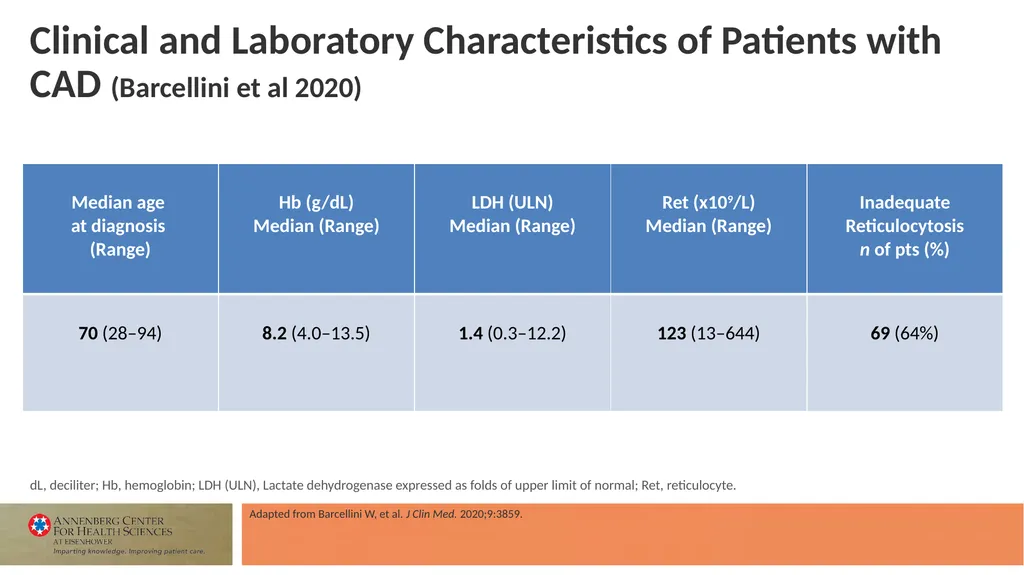
Clinical and Laboratory Characteristics of Patients with CAD (Barcellini et al 2020) Adapted from Barcellini W, et al. J Clin Med. 2020;9:3859. dL, deciliter; Hb, hemoglobin; LDH (ULN), Lactate dehydrogenase expressed as folds of upper limit of normal; Ret, reticulocyte.<br>
23
Diagnostic Criteria for CAD Chronic hemolysis
Polyspecific DAT positive
Monospecific DAT, strongly positive for C3d
CA titer ≥64 at 4°C
Bone marrow evaluation—advised in patients with CAD at diagnosis Barcellini W, et al. J Clin Med. 2020;9:3859.
Berentsen S. Front Immunol. 2020;11:590. DAT, direct antiglobulin Test.<br>
Polyspecific DAT positive
Monospecific DAT, strongly positive for C3d
CA titer ≥64 at 4°C
Bone marrow evaluation—advised in patients with CAD at diagnosis Barcellini W, et al. J Clin Med. 2020;9:3859.
Berentsen S. Front Immunol. 2020;11:590. DAT, direct antiglobulin Test.<br>
24
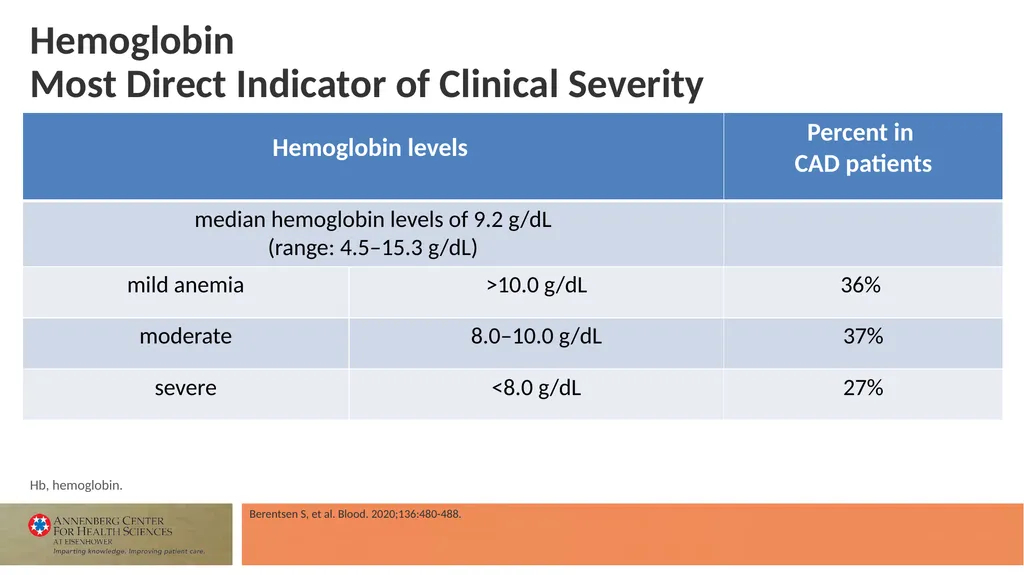
Hemoglobin
Most Direct Indicator of Clinical Severity Berentsen S, et al. Blood. 2020;136:480-488. Hb, hemoglobin.<br>
25
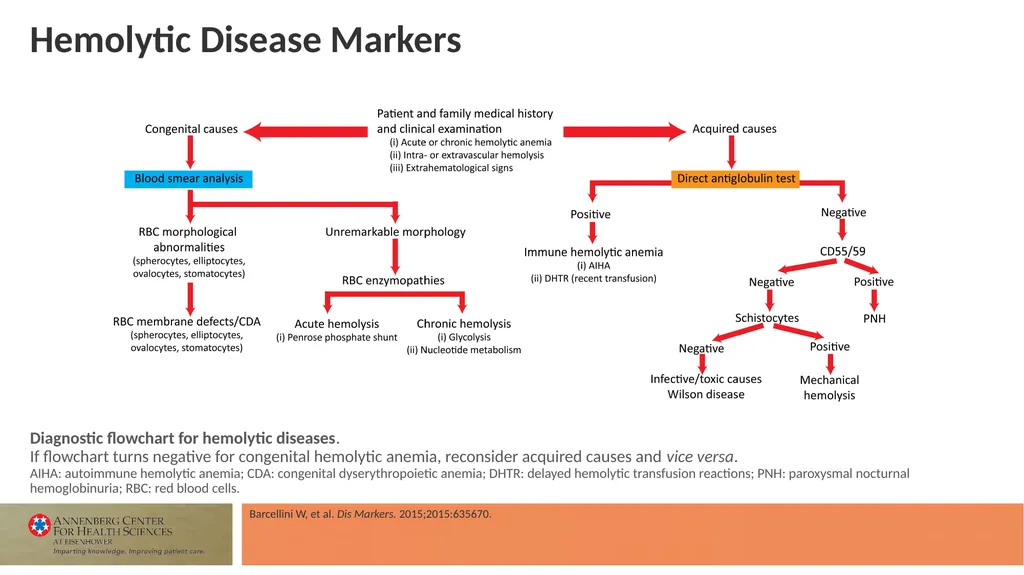
Hemolytic Disease Markers Barcellini W, et al. Dis Markers. 2015;2015:635670. Diagnostic flowchart for hemolytic diseases.
If flowchart turns negative for congenital hemolytic anemia, reconsider acquired causes and vice versa.
AIHA: autoimmune hemolytic anemia; CDA: congenital dyserythropoietic anemia; DHTR: delayed hemolytic transfusion reactions; PNH: paroxysmal nocturnal hemoglobinuria; RBC: red blood cells.<br>
If flowchart turns negative for congenital hemolytic anemia, reconsider acquired causes and vice versa.
AIHA: autoimmune hemolytic anemia; CDA: congenital dyserythropoietic anemia; DHTR: delayed hemolytic transfusion reactions; PNH: paroxysmal nocturnal hemoglobinuria; RBC: red blood cells.<br>
26
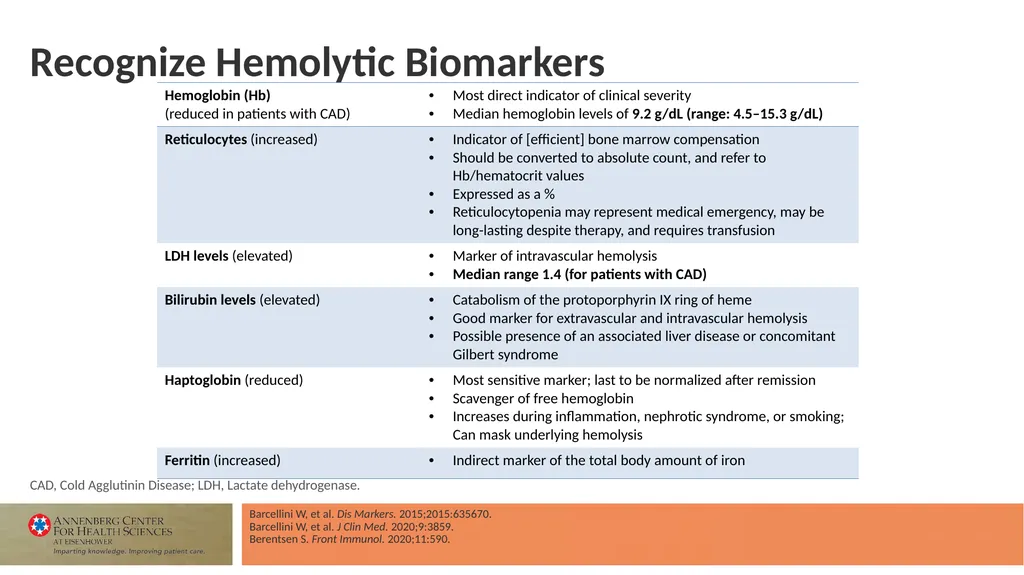
Recognize Hemolytic Biomarkers Barcellini W, et al. Dis Markers. 2015;2015:635670.
Barcellini W, et al. J Clin Med. 2020;9:3859.
Berentsen S. Front Immunol. 2020;11:590. CAD, Cold Agglutinin Disease; LDH, Lactate dehydrogenase.<br>
Barcellini W, et al. J Clin Med. 2020;9:3859.
Berentsen S. Front Immunol. 2020;11:590. CAD, Cold Agglutinin Disease; LDH, Lactate dehydrogenase.<br>
27
Module 3 Current Treatment Approaches for Patients with
Cold Agglutinin Disease<br>
Cold Agglutinin Disease<br>
28
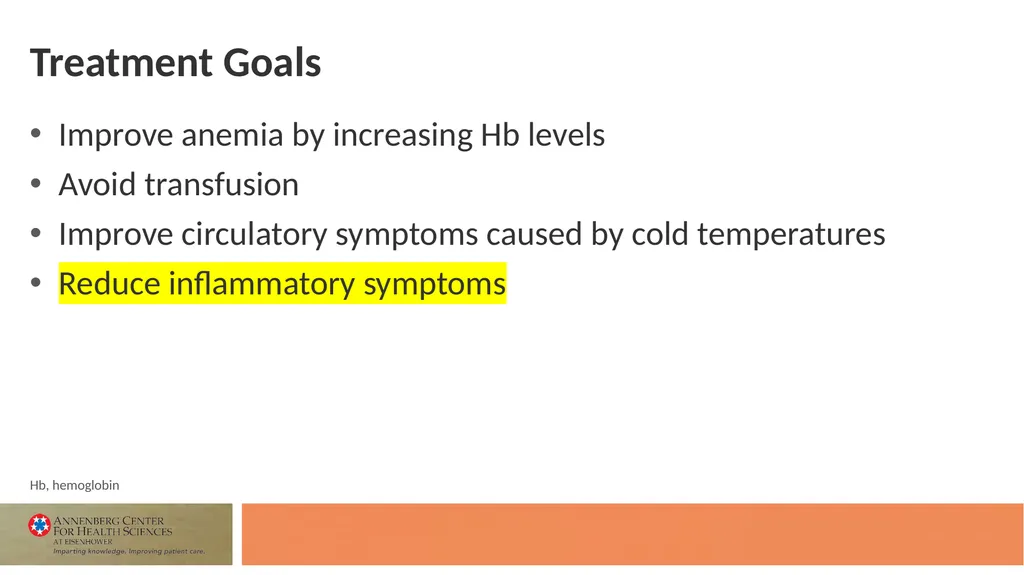
Treatment Goals Improve anemia by increasing Hb levels
Avoid transfusion
Improve circulatory symptoms caused by cold temperatures
Reduce inflammatory symptoms Hb, hemoglobin<br>
Avoid transfusion
Improve circulatory symptoms caused by cold temperatures
Reduce inflammatory symptoms Hb, hemoglobin<br>
29
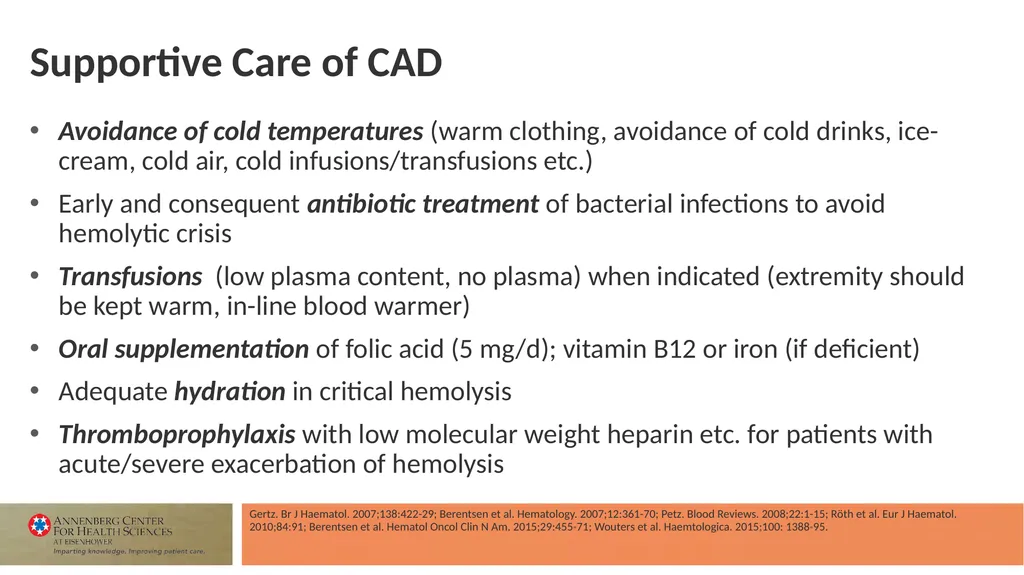
Supportive Care of CAD Avoidance of cold temperatures (warm clothing, avoidance of cold drinks, ice-cream, cold air, cold infusions/transfusions etc.)
Early and consequent antibiotic treatment of bacterial infections to avoid hemolytic crisis
Transfusions (low plasma content, no plasma) when indicated (extremity should be kept warm, in-line blood warmer)
Oral supplementation of folic acid (5 mg/d); vitamin B12 or iron (if deficient)
Adequate hydration in critical hemolysis
Thromboprophylaxis with low molecular weight heparin etc. for patients with acute/severe exacerbation of hemolysis Gertz. Br J Haematol. 2007;138:422-29; Berentsen et al. Hematology. 2007;12:361-70; Petz. Blood Reviews. 2008;22:1-15; Röth et al. Eur J Haematol. 2010;84:91; Berentsen et al. Hematol Oncol Clin N Am. 2015;29:455-71; Wouters et al. Haemtologica. 2015;100: 1388-95.<br>
30
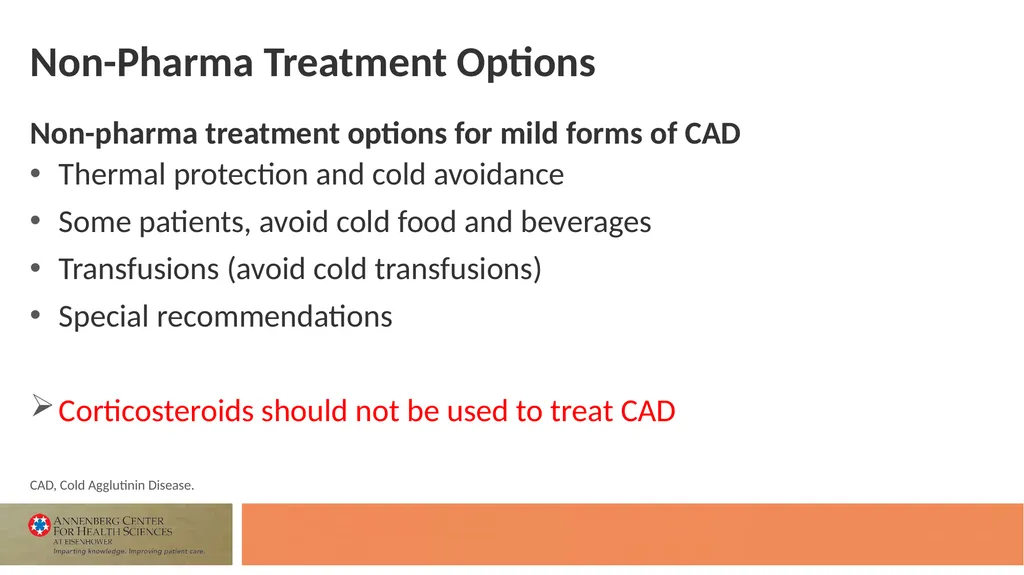
Non-Pharma Treatment Options Non-pharma treatment options for mild forms of CAD
Thermal protection and cold avoidance
Some patients, avoid cold food and beverages
Transfusions (avoid cold transfusions)
Special recommendations
Corticosteroids should not be used to treat CAD CAD, Cold Agglutinin Disease.<br>
Thermal protection and cold avoidance
Some patients, avoid cold food and beverages
Transfusions (avoid cold transfusions)
Special recommendations
Corticosteroids should not be used to treat CAD CAD, Cold Agglutinin Disease.<br>
31
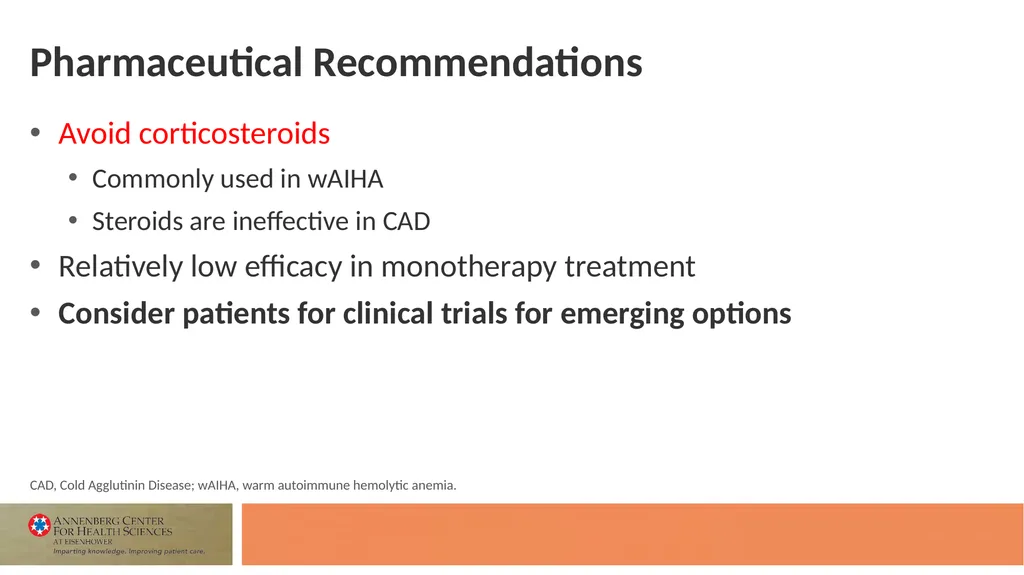
Pharmaceutical Recommendations Avoid corticosteroids
Commonly used in wAIHA
Steroids are ineffective in CAD
Relatively low efficacy in monotherapy treatment
Consider patients for clinical trials for emerging options CAD, Cold Agglutinin Disease; wAIHA, warm autoimmune hemolytic anemia.<br>
Commonly used in wAIHA
Steroids are ineffective in CAD
Relatively low efficacy in monotherapy treatment
Consider patients for clinical trials for emerging options CAD, Cold Agglutinin Disease; wAIHA, warm autoimmune hemolytic anemia.<br>
32
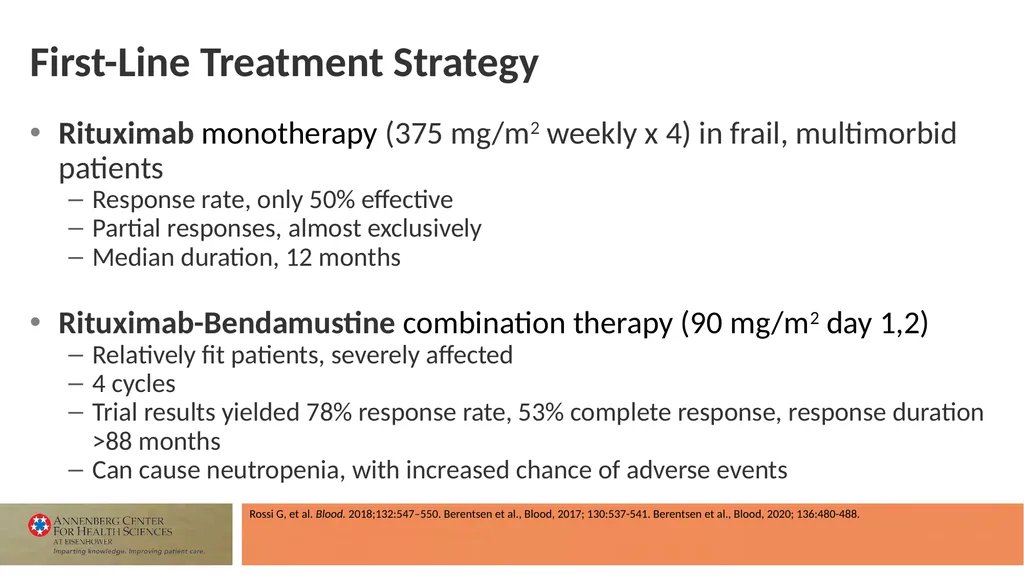
First-Line Treatment Strategy Rituximab monotherapy (375 mg/m2 weekly x 4) in frail, multimorbid patients
Response rate, only 50% effective
Partial responses, almost exclusively
Median duration, 12 months
Rituximab-Bendamustine combination therapy (90 mg/m2 day 1,2)
Relatively fit patients, severely affected
4 cycles
Trial results yielded 78% response rate, 53% complete response, response duration >88 months
Can cause neutropenia, with increased chance of adverse events Rossi G, et al. Blood. 2018;132:547–550. Berentsen et al., Blood, 2017; 130:537-541. Berentsen et al., Blood, 2020; 136:480-488.<br>
33
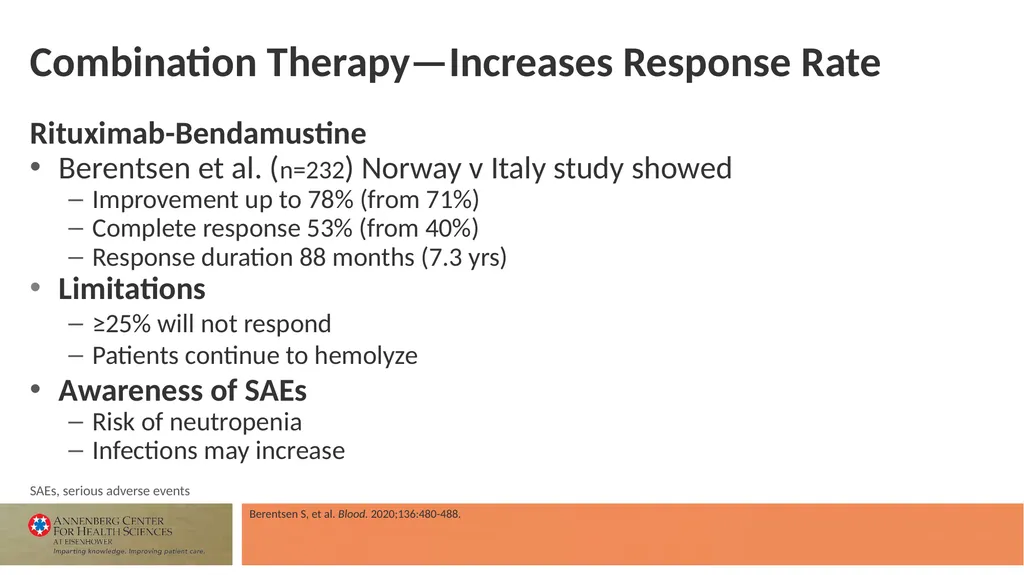
Combination Therapy—Increases Response Rate Rituximab-Bendamustine
Berentsen et al. (n=232) Norway v Italy study showed
Improvement up to 78% (from 71%)
Complete response 53% (from 40%)
Response duration 88 months (7.3 yrs)
Limitations
≥25% will not respond
Patients continue to hemolyze
Awareness of SAEs
Risk of neutropenia
Infections may increase Berentsen S, et al. Blood. 2020;136:480-488. SAEs, serious adverse events<br>
34
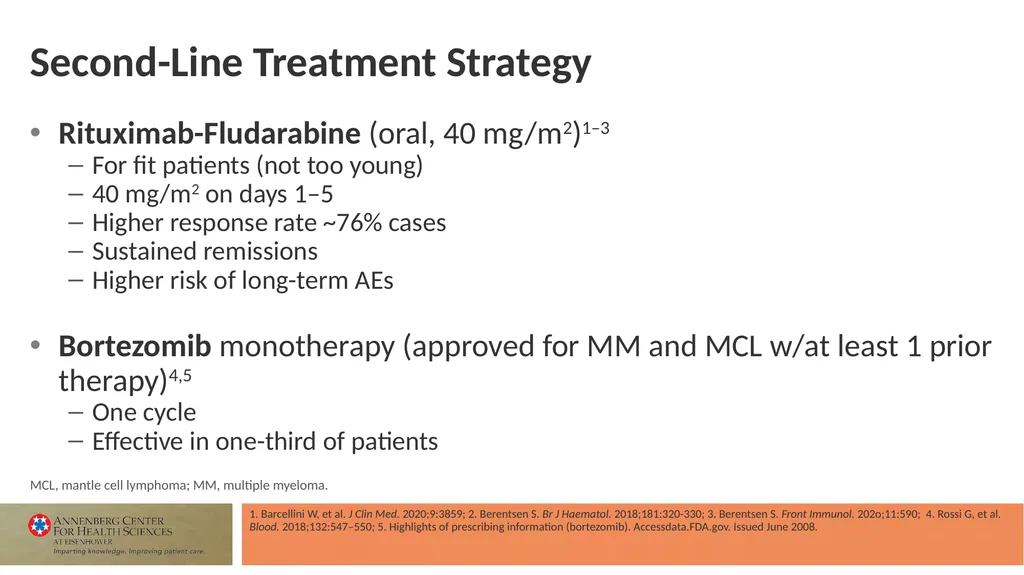
Second-Line Treatment Strategy Rituximab-Fludarabine (oral, 40 mg/m2)1–3
For fit patients (not too young)
40 mg/m2 on days 1–5
Higher response rate ~76% cases
Sustained remissions
Higher risk of long-term AEs
Bortezomib monotherapy (approved for MM and MCL w/at least 1 prior therapy)4,5
One cycle
Effective in one-third of patients 1. Barcellini W, et al. J Clin Med. 2020;9:3859; 2. Berentsen S. Br J Haematol. 2018;181:320-330; 3. Berentsen S. Front Immunol. 202o;11:590; 4. Rossi G, et al. Blood. 2018;132:547–550; 5. Highlights of prescribing information (bortezomib). Accessdata.FDA.gov. Issued June 2008. MCL, mantle cell lymphoma; MM, multiple myeloma.<br>
35
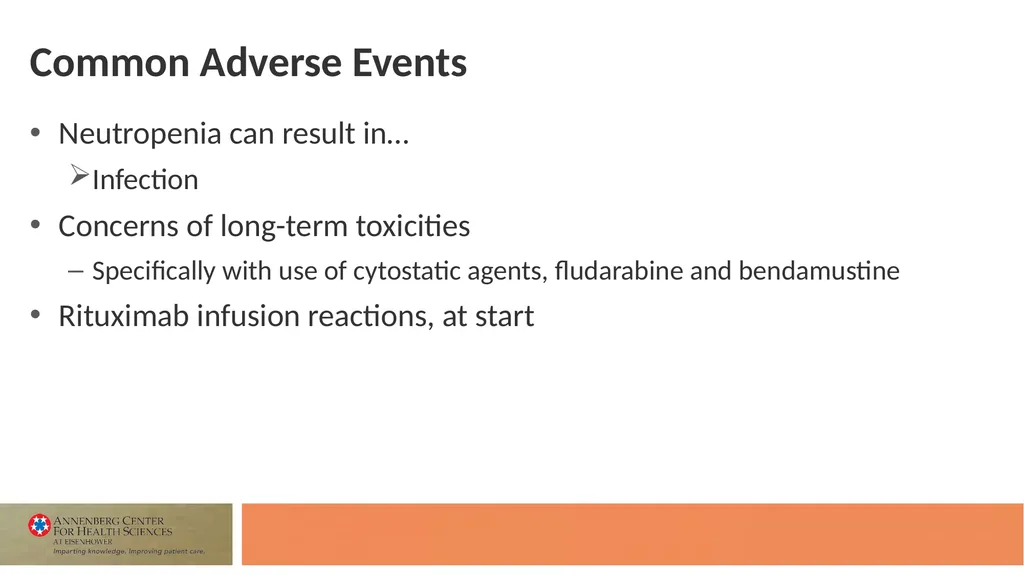
Common Adverse Events Neutropenia can result in…
Infection
Concerns of long-term toxicities
Specifically with use of cytostatic agents, fludarabine and bendamustine
Rituximab infusion reactions, at start<br>
Infection
Concerns of long-term toxicities
Specifically with use of cytostatic agents, fludarabine and bendamustine
Rituximab infusion reactions, at start<br>
36
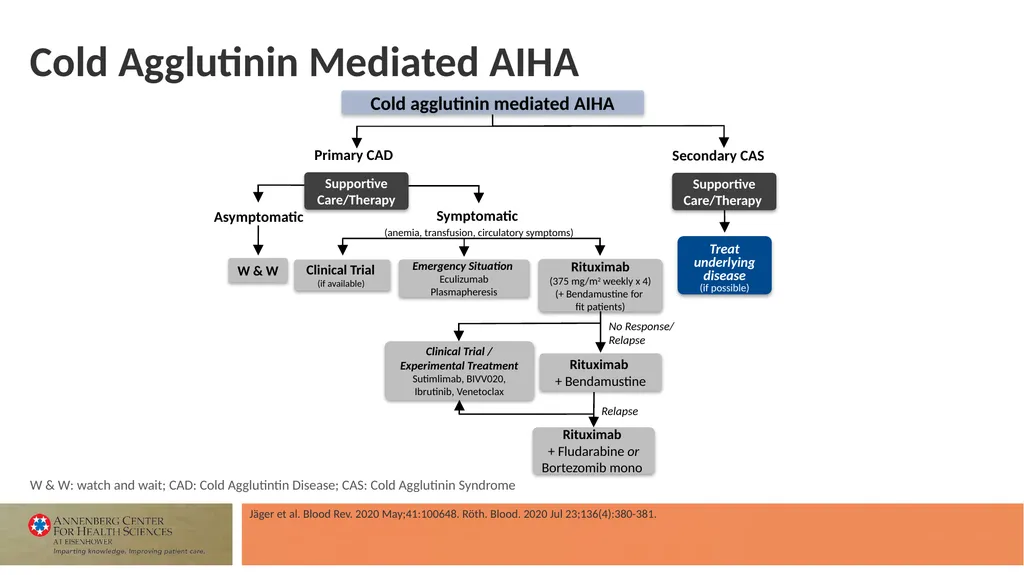
Cold Agglutinin Mediated AIHA Jäger et al. Blood Rev. 2020 May;41:100648. Röth. Blood. 2020 Jul 23;136(4):380-381. W & W: watch and wait; CAD: Cold Agglutintin Disease; CAS: Cold Agglutinin Syndrome Primary CAD Cold agglutinin mediated AIHA W & W Asymptomatic Secondary CAS Treat underlying disease
(if possible) Supportive
Care/Therapy Supportive
Care/Therapy<br>
(if possible) Supportive
Care/Therapy Supportive
Care/Therapy<br>
37
Module 4 Emerging Treatments for Cold Agglutinin Disease<br>
38
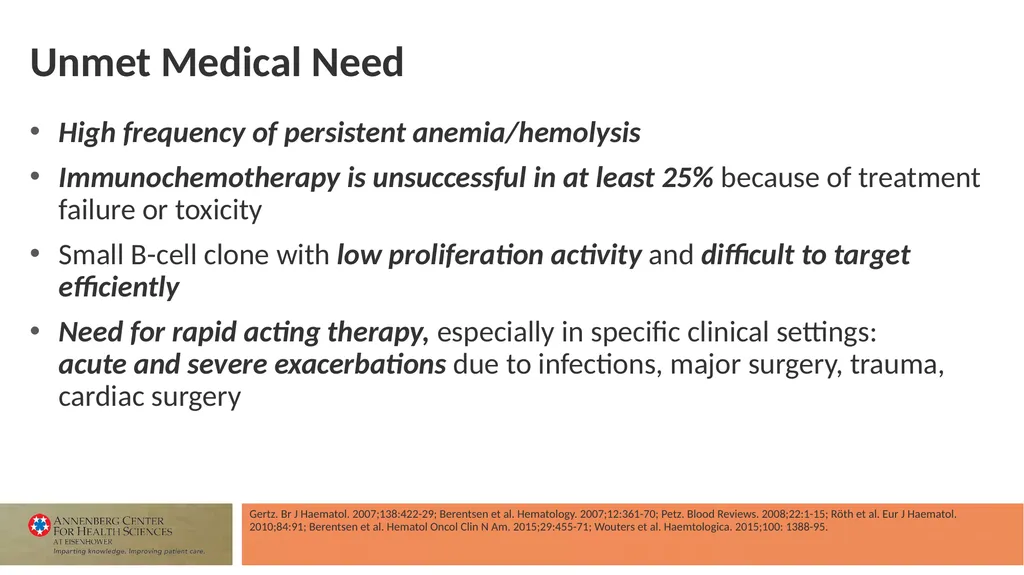
Unmet Medical Need High frequency of persistent anemia/hemolysis
Immunochemotherapy is unsuccessful in at least 25% because of treatment failure or toxicity
Small B-cell clone with low proliferation activity and difficult to target efficiently
Need for rapid acting therapy, especially in specific clinical settings: acute and severe exacerbations due to infections, major surgery, trauma, cardiac surgery Gertz. Br J Haematol. 2007;138:422-29; Berentsen et al. Hematology. 2007;12:361-70; Petz. Blood Reviews. 2008;22:1-15; Röth et al. Eur J Haematol. 2010;84:91; Berentsen et al. Hematol Oncol Clin N Am. 2015;29:455-71; Wouters et al. Haemtologica. 2015;100: 1388-95.<br>
39
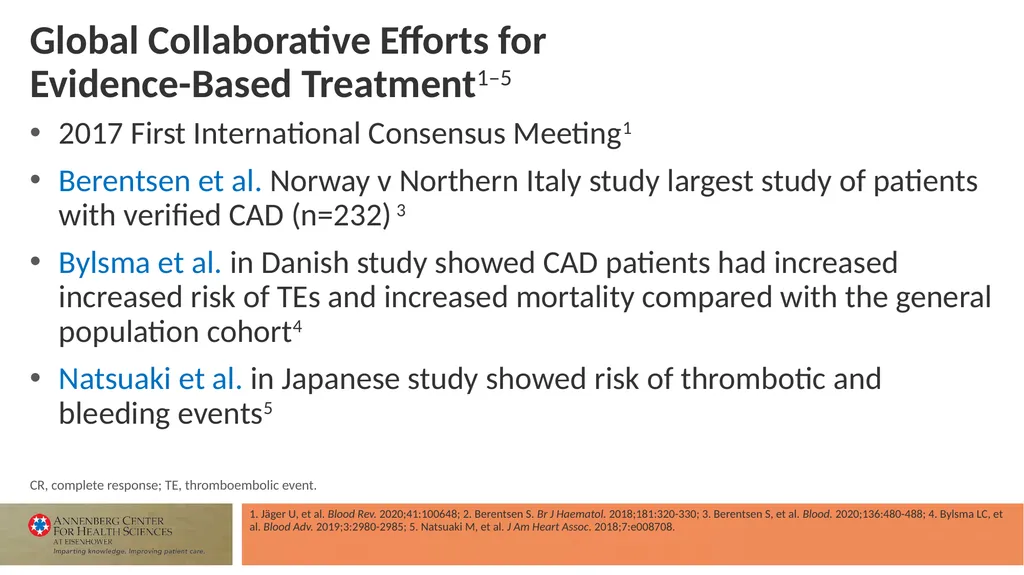
Global Collaborative Efforts for
Evidence-Based Treatment1–5 2017 First International Consensus Meeting1
Berentsen et al. Norway v Northern Italy study largest study of patients with verified CAD (n=232) 3
Bylsma et al. in Danish study showed CAD patients had increased increased risk of TEs and increased mortality compared with the general population cohort4
Natsuaki et al. in Japanese study showed risk of thrombotic and bleeding events5 1. Jäger U, et al. Blood Rev. 2020;41:100648; 2. Berentsen S. Br J Haematol. 2018;181:320-330; 3. Berentsen S, et al. Blood. 2020;136:480-488; 4. Bylsma LC, et al. Blood Adv. 2019;3:2980-2985; 5. Natsuaki M, et al. J Am Heart Assoc. 2018;7:e008708. CR, complete response; TE, thromboembolic event.<br>
40
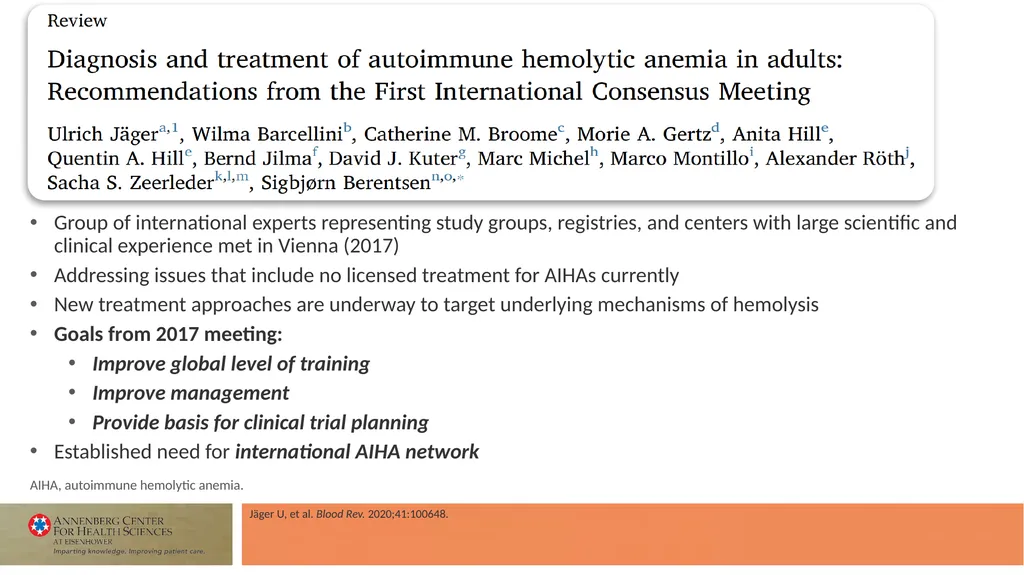
Group of international experts representing study groups, registries, and centers with large scientific and clinical experience met in Vienna (2017)
Addressing issues that include no licensed treatment for AIHAs currently
New treatment approaches are underway to target underlying mechanisms of hemolysis
Goals from 2017 meeting:
Improve global level of training
Improve management
Provide basis for clinical trial planning
Established need for international AIHA network Jäger U, et al. Blood Rev. 2020;41:100648. AIHA, autoimmune hemolytic anemia.<br>
41
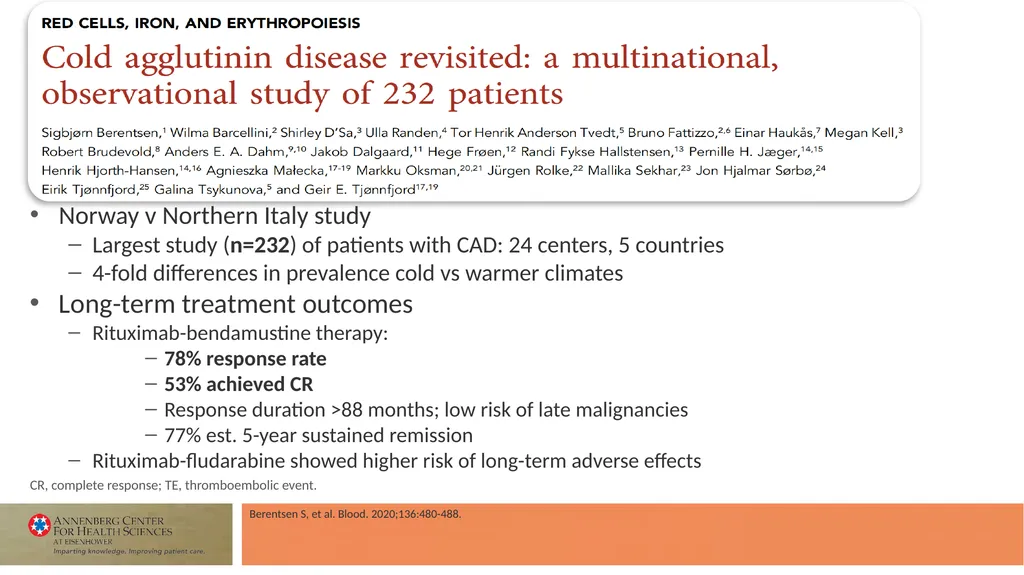
Norway v Northern Italy study
Largest study (n=232) of patients with CAD: 24 centers, 5 countries
4-fold differences in prevalence cold vs warmer climates
Long-term treatment outcomes
Rituximab-bendamustine therapy:
78% response rate
53% achieved CR
Response duration >88 months; low risk of late malignancies
77% est. 5-year sustained remission
Rituximab-fludarabine showed higher risk of long-term adverse effects Berentsen S, et al. Blood. 2020;136:480-488. CR, complete response; TE, thromboembolic event.<br>
42
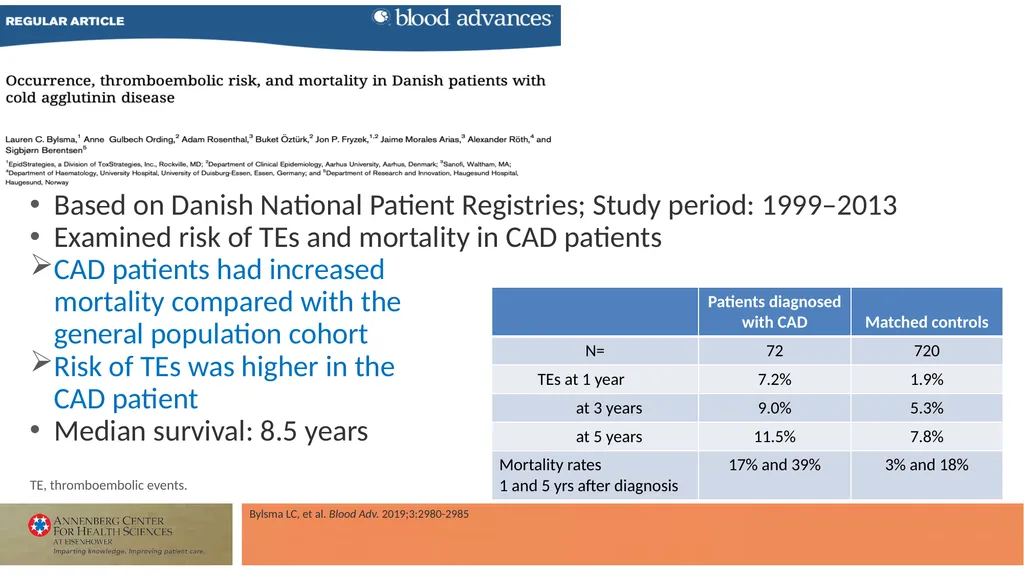
Based on Danish National Patient Registries; Study period: 1999–2013
Examined risk of TEs and mortality in CAD patients
CAD patients had increased mortality compared with the general population cohort
Risk of TEs was higher in the CAD patient
Median survival: 8.5 years Bylsma LC, et al. Blood Adv. 2019;3:2980-2985 TE, thromboembolic events.<br>
Examined risk of TEs and mortality in CAD patients
CAD patients had increased mortality compared with the general population cohort
Risk of TEs was higher in the CAD patient
Median survival: 8.5 years Bylsma LC, et al. Blood Adv. 2019;3:2980-2985 TE, thromboembolic events.<br>
43
Status of Potential Targets Potential targets are based on better understanding of pathogenesis
Few therapies for symptomatic CAD patients
No FDA-approved treatments at this time
Several emerging agents are in ongoing clinical trials Jäger U, et al. Blood Rev. 2020;41:100648.
Barcellini W, et al. J Clin Med. 2020;9:3859.
Broome CM, et al. Res Pract Thromb Haemost. 2020;4:628-635. CAD, Cold Agglutinin Disease.<br>
44
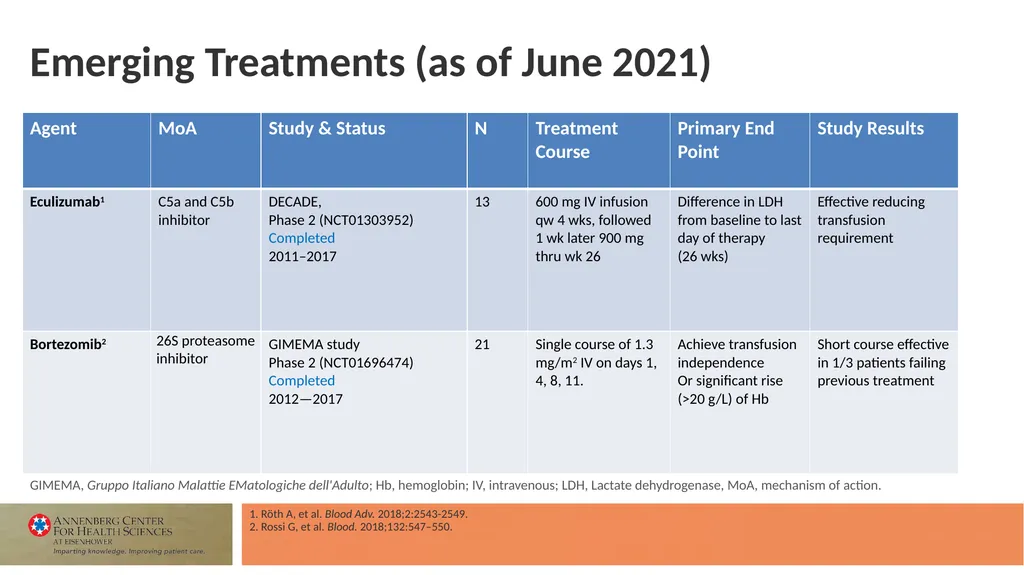
Emerging Treatments (as of June 2021) 1. Röth A, et al. Blood Adv. 2018;2:2543-2549.
2. Rossi G, et al. Blood. 2018;132:547–550. GIMEMA, Gruppo Italiano Malattie EMatologiche dell'Adulto; Hb, hemoglobin; IV, intravenous; LDH, Lactate dehydrogenase, MoA, mechanism of action.<br>
2. Rossi G, et al. Blood. 2018;132:547–550. GIMEMA, Gruppo Italiano Malattie EMatologiche dell'Adulto; Hb, hemoglobin; IV, intravenous; LDH, Lactate dehydrogenase, MoA, mechanism of action.<br>
45
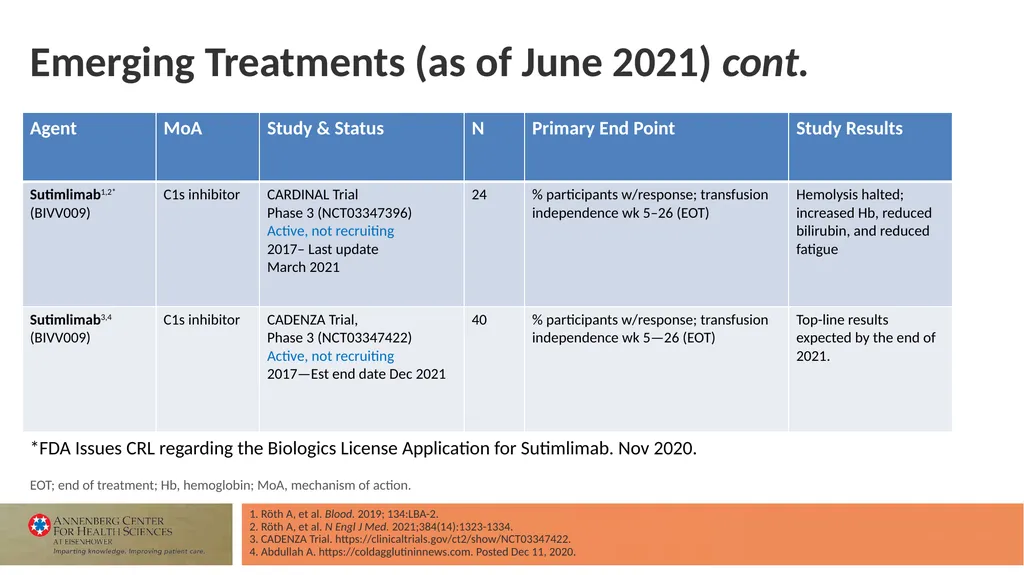
Emerging Treatments (as of June 2021) cont. 1. Röth A, et al. Blood. 2019; 134:LBA-2.
2. Röth A, et al. N Engl J Med. 2021;384(14):1323-1334.
3. CADENZA Trial. https://clinicaltrials.gov/ct2/show/NCT03347422.
4. Abdullah A. https://coldagglutininnews.com. Posted Dec 11, 2020. EOT; end of treatment; Hb, hemoglobin; MoA, mechanism of action. *FDA Issues CRL regarding the Biologics License Application for Sutimlimab. Nov 2020.<br>
46
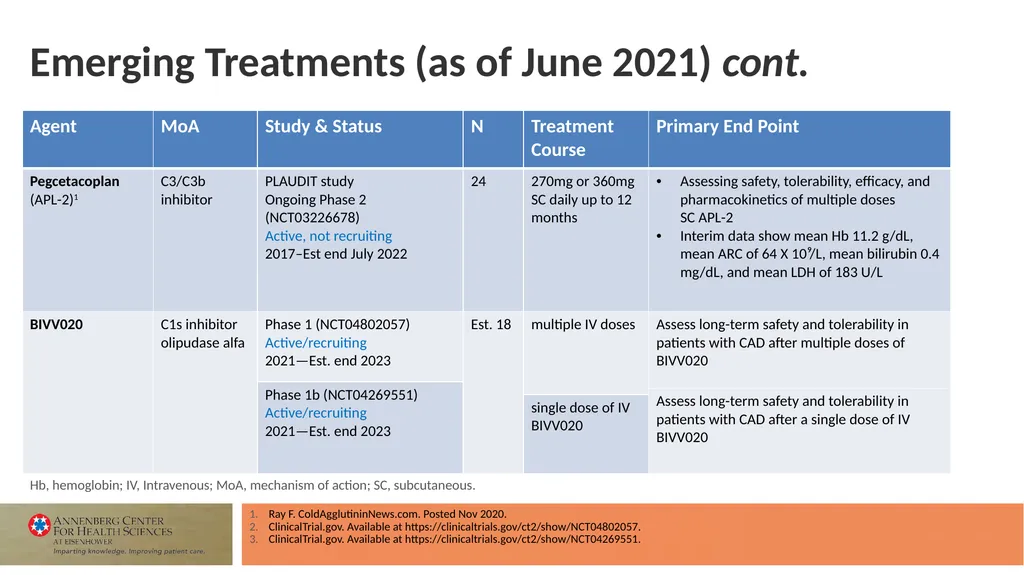
Emerging Treatments (as of June 2021) cont. Ray F. ColdAgglutininNews.com. Posted Nov 2020.
ClinicalTrial.gov. Available at https://clinicaltrials.gov/ct2/show/NCT04802057.
ClinicalTrial.gov. Available at https://clinicaltrials.gov/ct2/show/NCT04269551. Hb, hemoglobin; IV, Intravenous; MoA, mechanism of action; SC, subcutaneous.<br>
ClinicalTrial.gov. Available at https://clinicaltrials.gov/ct2/show/NCT04802057.
ClinicalTrial.gov. Available at https://clinicaltrials.gov/ct2/show/NCT04269551. Hb, hemoglobin; IV, Intravenous; MoA, mechanism of action; SC, subcutaneous.<br>
47
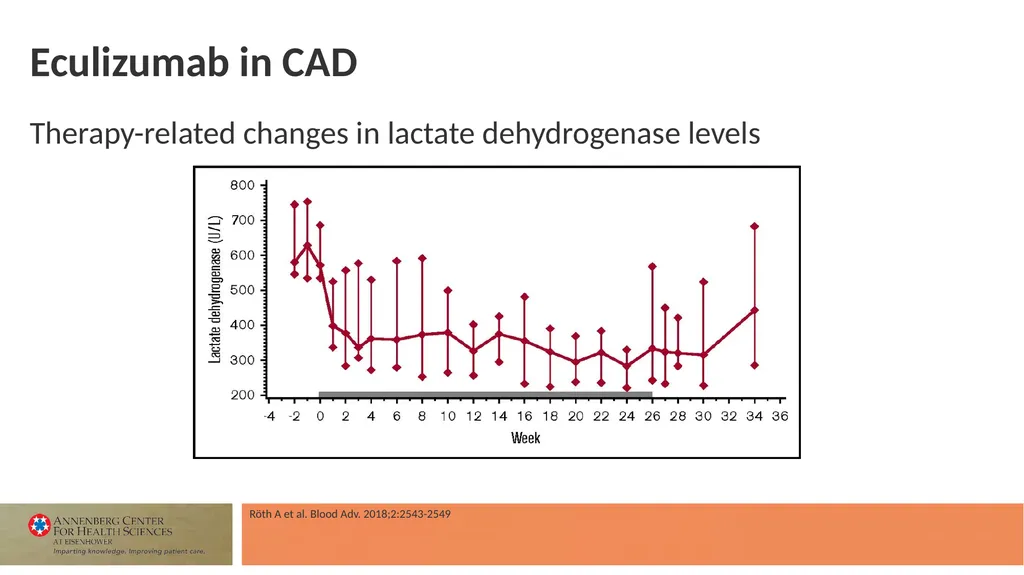
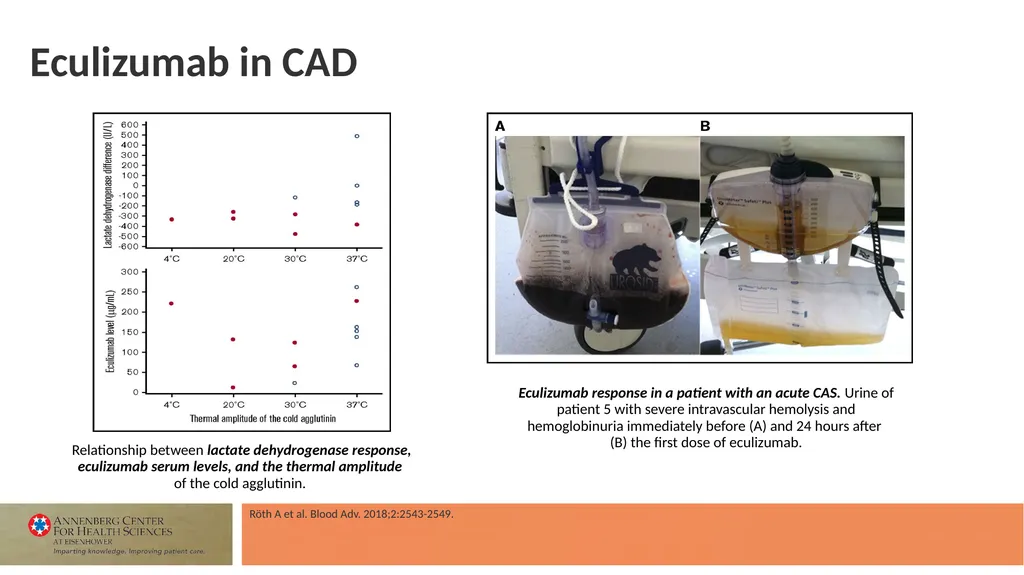
Eculizumab in CAD Therapy-related changes in lactate dehydrogenase levels Röth A et al. Blood Adv. 2018;2:2543-2549<br>
48
Eculizumab in CAD Röth A et al. Blood Adv. 2018;2:2543-2549. Relationship between lactate dehydrogenase response, eculizumab serum levels, and the thermal amplitude
of the cold agglutinin. Eculizumab response in a patient with an acute CAS. Urine of patient 5 with severe intravascular hemolysis and hemoglobinuria immediately before (A) and 24 hours after
(B) the first dose of eculizumab.<br>
49
Sutimlimab Selectively Targets Complement C1s,
Inhibiting Classical Complement Pathway Activation Röth A, et al. N Engl J Med. 2021;384(14):1323-1334. Sutimlimab Intravascular hemolysis Pathogen Lysis Extravascular hemolysis<br>
50
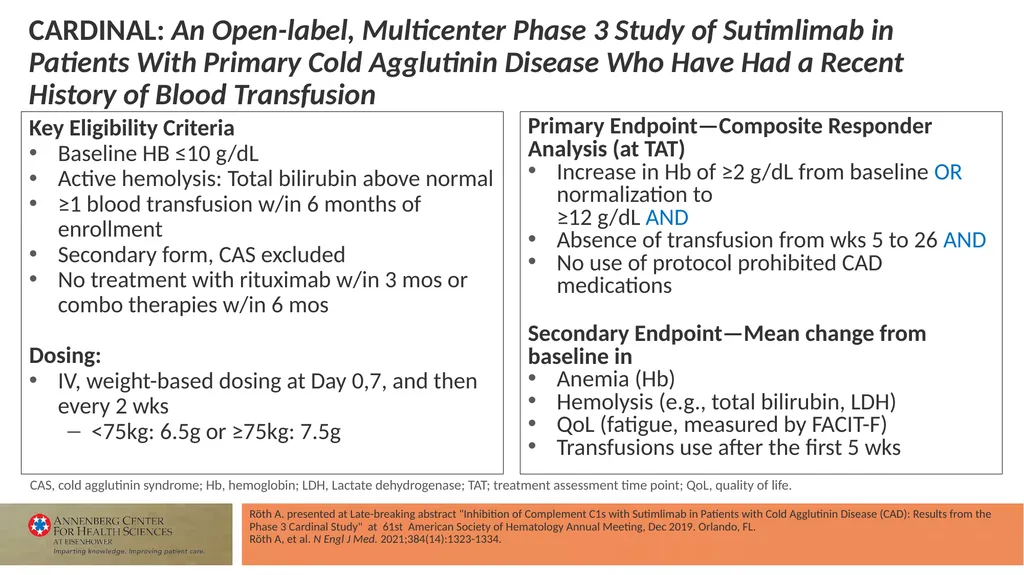
CARDINAL: An Open-label, Multicenter Phase 3 Study of Sutimlimab in Patients With Primary Cold Agglutinin Disease Who Have Had a Recent History of Blood Transfusion Key Eligibility Criteria
Baseline HB ≤10 g/dL
Active hemolysis: Total bilirubin above normal
≥1 blood transfusion w/in 6 months of enrollment
Secondary form, CAS excluded
No treatment with rituximab w/in 3 mos or combo therapies w/in 6 mos
Dosing:
IV, weight-based dosing at Day 0,7, and then every 2 wks
<75kg: 6.5g or ≥75kg: 7.5g Primary Endpoint—Composite Responder Analysis (at TAT)
Increase in Hb of ≥2 g/dL from baseline OR normalization to ≥12 g/dL AND
Absence of transfusion from wks 5 to 26 AND
No use of protocol prohibited CAD medications
Secondary Endpoint—Mean change from baseline in
Anemia (Hb)
Hemolysis (e.g., total bilirubin, LDH)
QoL (fatigue, measured by FACIT-F)
Transfusions use after the first 5 wks CAS, cold agglutinin syndrome; Hb, hemoglobin; LDH, Lactate dehydrogenase; TAT; treatment assessment time point; QoL, quality of life. Röth A. presented at Late-breaking abstract "Inhibition of Complement C1s with Sutimlimab in Patients with Cold Agglutinin Disease (CAD): Results from the Phase 3 Cardinal Study" at 61st American Society of Hematology Annual Meeting, Dec 2019. Orlando, FL.
Röth A, et al. N Engl J Med. 2021;384(14):1323-1334.<br>
51
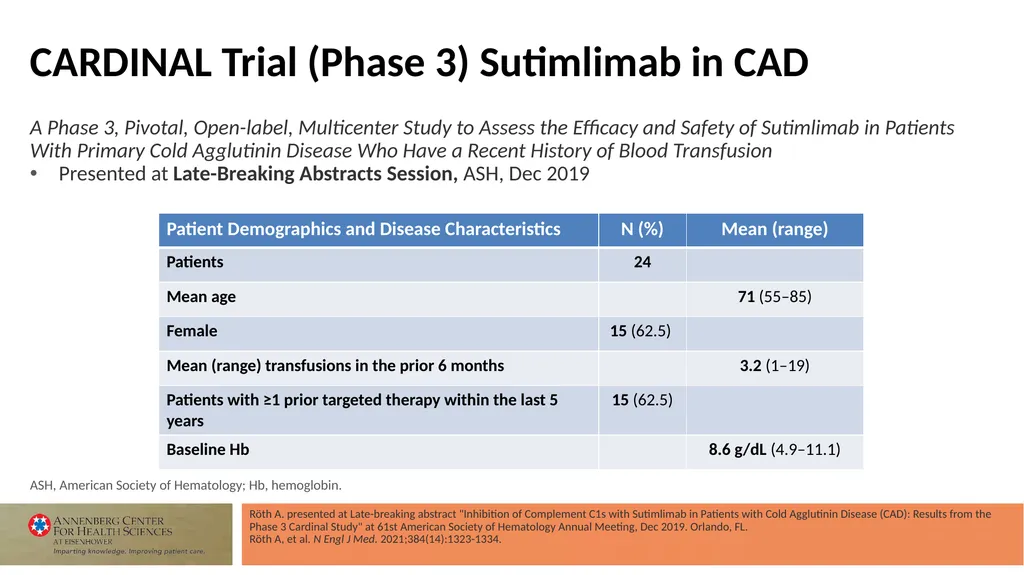
CARDINAL Trial (Phase 3) Sutimlimab in CAD A Phase 3, Pivotal, Open-label, Multicenter Study to Assess the Efficacy and Safety of Sutimlimab in Patients With Primary Cold Agglutinin Disease Who Have a Recent History of Blood Transfusion
Presented at Late-Breaking Abstracts Session, ASH, Dec 2019 Röth A. presented at Late-breaking abstract "Inhibition of Complement C1s with Sutimlimab in Patients with Cold Agglutinin Disease (CAD): Results from the Phase 3 Cardinal Study" at 61st American Society of Hematology Annual Meeting, Dec 2019. Orlando, FL.
Röth A, et al. N Engl J Med. 2021;384(14):1323-1334. ASH, American Society of Hematology; Hb, hemoglobin.<br>
52
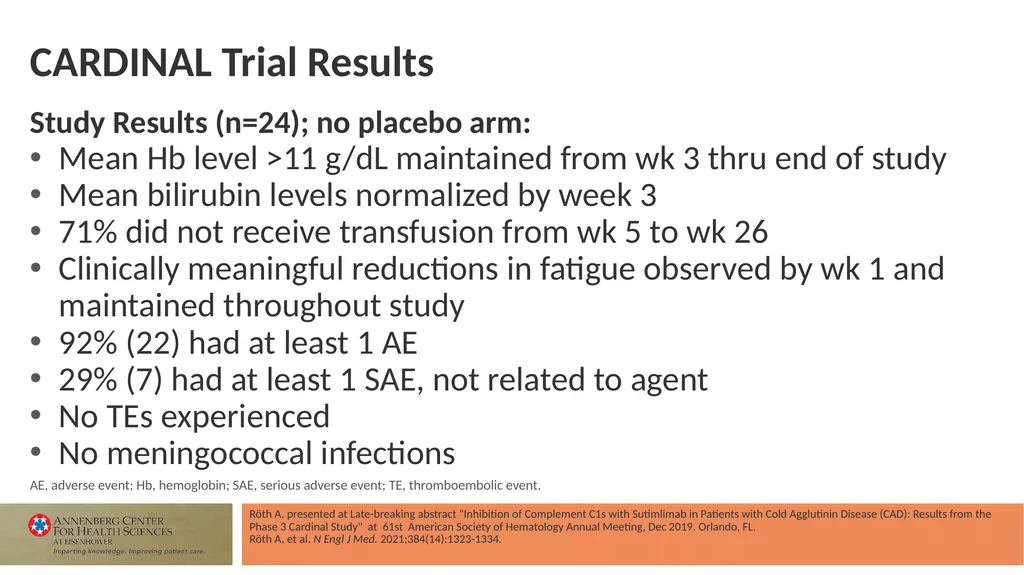
CARDINAL Trial Results Study Results (n=24); no placebo arm:
Mean Hb level >11 g/dL maintained from wk 3 thru end of study
Mean bilirubin levels normalized by week 3
71% did not receive transfusion from wk 5 to wk 26
Clinically meaningful reductions in fatigue observed by wk 1 and maintained throughout study
92% (22) had at least 1 AE
29% (7) had at least 1 SAE, not related to agent
No TEs experienced
No meningococcal infections Röth A. presented at Late-breaking abstract "Inhibition of Complement C1s with Sutimlimab in Patients with Cold Agglutinin Disease (CAD): Results from the Phase 3 Cardinal Study" at 61st American Society of Hematology Annual Meeting, Dec 2019. Orlando, FL.
Röth A, et al. N Engl J Med. 2021;384(14):1323-1334. AE, adverse event; Hb, hemoglobin; SAE, serious adverse event; TE, thromboembolic event.<br>
53
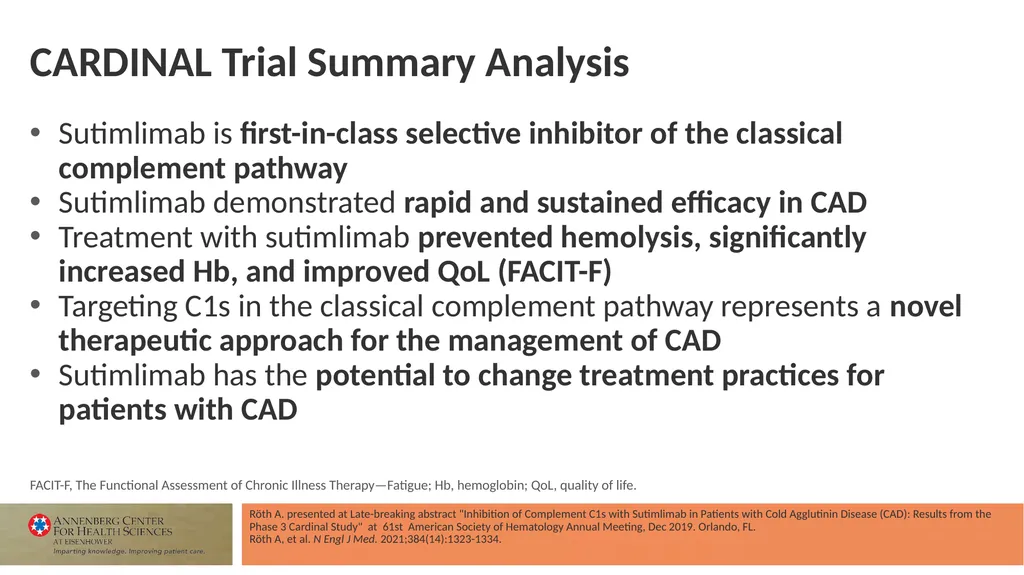
CARDINAL Trial Summary Analysis Sutimlimab is first-in-class selective inhibitor of the classical complement pathway
Sutimlimab demonstrated rapid and sustained efficacy in CAD
Treatment with sutimlimab prevented hemolysis, significantly increased Hb, and improved QoL (FACIT-F)
Targeting C1s in the classical complement pathway represents a novel therapeutic approach for the management of CAD
Sutimlimab has the potential to change treatment practices for patients with CAD Röth A. presented at Late-breaking abstract "Inhibition of Complement C1s with Sutimlimab in Patients with Cold Agglutinin Disease (CAD): Results from the Phase 3 Cardinal Study" at 61st American Society of Hematology Annual Meeting, Dec 2019. Orlando, FL.
Röth A, et al. N Engl J Med. 2021;384(14):1323-1334. FACIT-F, The Functional Assessment of Chronic Illness Therapy—Fatigue; Hb, hemoglobin; QoL, quality of life.<br>
54
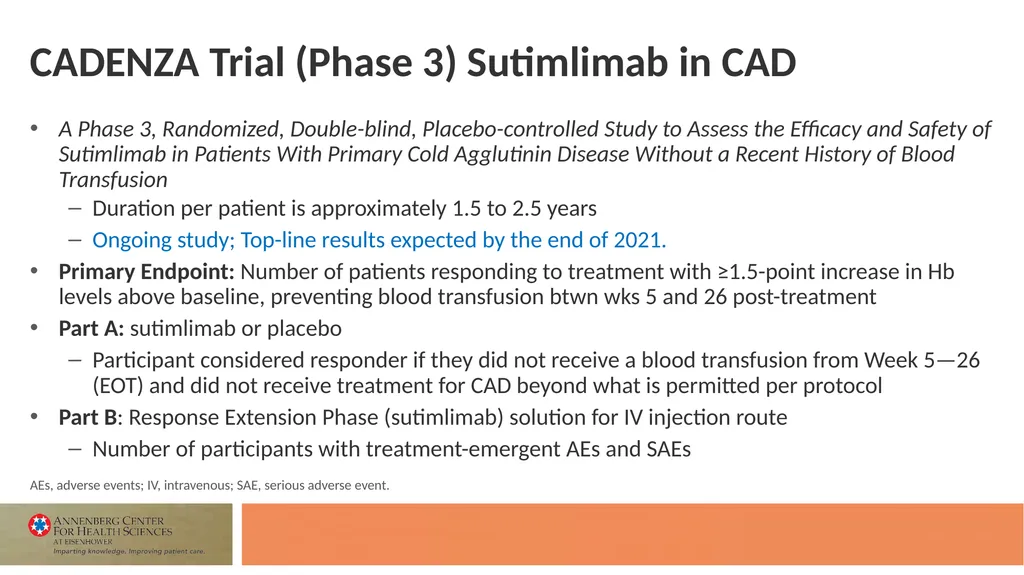
CADENZA Trial (Phase 3) Sutimlimab in CAD A Phase 3, Randomized, Double-blind, Placebo-controlled Study to Assess the Efficacy and Safety of Sutimlimab in Patients With Primary Cold Agglutinin Disease Without a Recent History of Blood Transfusion
Duration per patient is approximately 1.5 to 2.5 years
Ongoing study; Top-line results expected by the end of 2021.
Primary Endpoint: Number of patients responding to treatment with ≥1.5-point increase in Hb levels above baseline, preventing blood transfusion btwn wks 5 and 26 post-treatment
Part A: sutimlimab or placebo
Participant considered responder if they did not receive a blood transfusion from Week 5—26 (EOT) and did not receive treatment for CAD beyond what is permitted per protocol
Part B: Response Extension Phase (sutimlimab) solution for IV injection route
Number of participants with treatment-emergent AEs and SAEs AEs, adverse events; IV, intravenous; SAE, serious adverse event.<br>
55
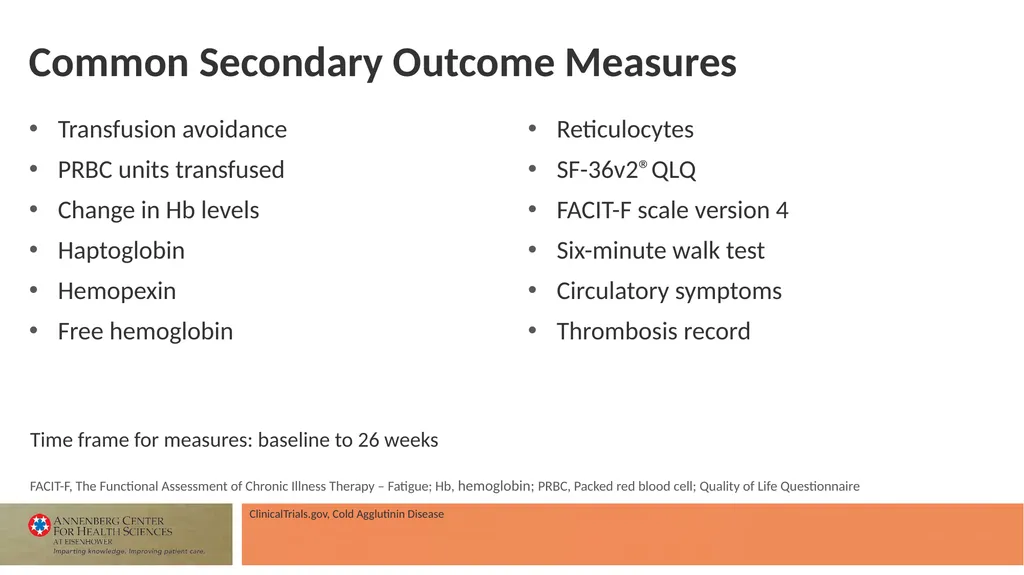
Common Secondary Outcome Measures Transfusion avoidance
PRBC units transfused
Change in Hb levels
Haptoglobin
Hemopexin
Free hemoglobin Reticulocytes
SF-36v2®QLQ
FACIT-F scale version 4
Six-minute walk test
Circulatory symptoms
Thrombosis record FACIT-F, The Functional Assessment of Chronic Illness Therapy – Fatigue; Hb, hemoglobin; PRBC, Packed red blood cell; Quality of Life Questionnaire ClinicalTrials.gov, Cold Agglutinin Disease Time frame for measures: baseline to 26 weeks<br>
56
Daratumumab Single-Case Study Daratumumab targets CD38-positive cells, expressed on plasma cells and lymphoplasmocytes
Shows immunomodulatory influence on cytokines (IL-6, IL-10, IL-17, IFN-γ, TNF-α, TGF-β)
Patient had long history of multi treated CAD (rituximab was ineffective) with severe transfusion-dependent anemia, low cold agglutinin titer, and IgG monoclonal gammopathy
Case indicates effectiveness ameliorating anemia and improving disabling circulatory symptoms
Although, patient did not experience a complete response
Hb levels increased 3 g/dL resulting in transfusion independence
Disabling circulatory symptoms disappeared
Potential additional therapeutic option for the refractory disease. Zaninoni A, et al. Front Immunol. 2021;12:649441.<br>
57
CADENCE Registry
Cold Agglutinin Disease Real World EvidENCE Registry Global Patient Registry will provide perspective longitudinal data
Launched 2019 to advance understanding of:
Patient demographics
Clinical presentation and characteristics
Co-morbidities and disease burden
Patterns and use of CAD treatments
Long-term clinical outcomes
Patients’ health-related quality of life
Different geographic locations
Register your patient | https://coldagglutininnews.com/2021/01/07/cadence-registry Available at https://coldagglutininnews.com/2021/01/07/cadence-registry Supported by Sanofi Genzyme<br>
58
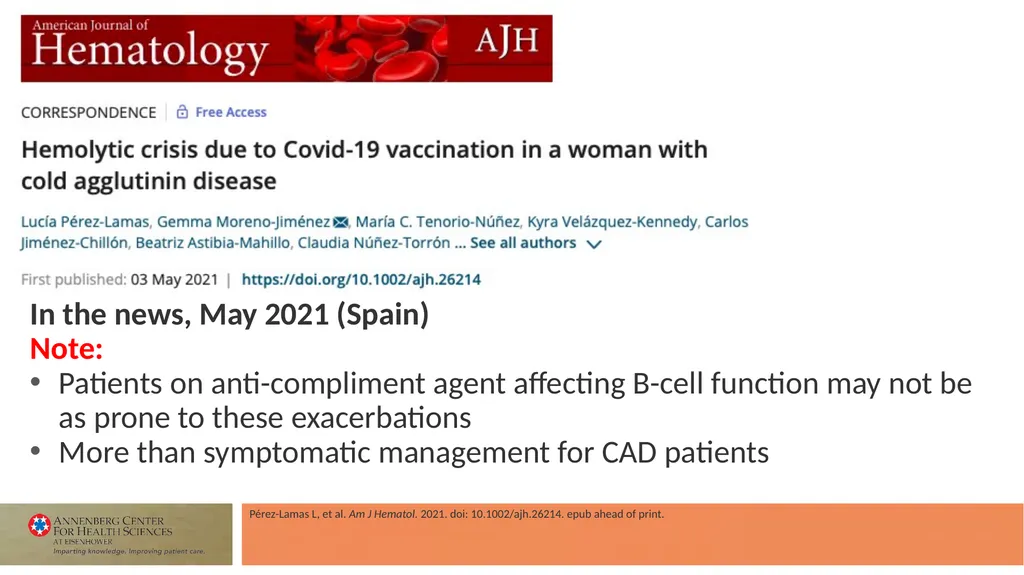
In the news, May 2021 (Spain)
Note:
Patients on anti-compliment agent affecting B-cell function may not be as prone to these exacerbations
More than symptomatic management for CAD patients Pérez-Lamas L, et al. Am J Hematol. 2021. doi: 10.1002/ajh.26214. epub ahead of print.<br>
Note:
Patients on anti-compliment agent affecting B-cell function may not be as prone to these exacerbations
More than symptomatic management for CAD patients Pérez-Lamas L, et al. Am J Hematol. 2021. doi: 10.1002/ajh.26214. epub ahead of print.<br>
59
Module 5 Interactive Case Scenario<br>
60
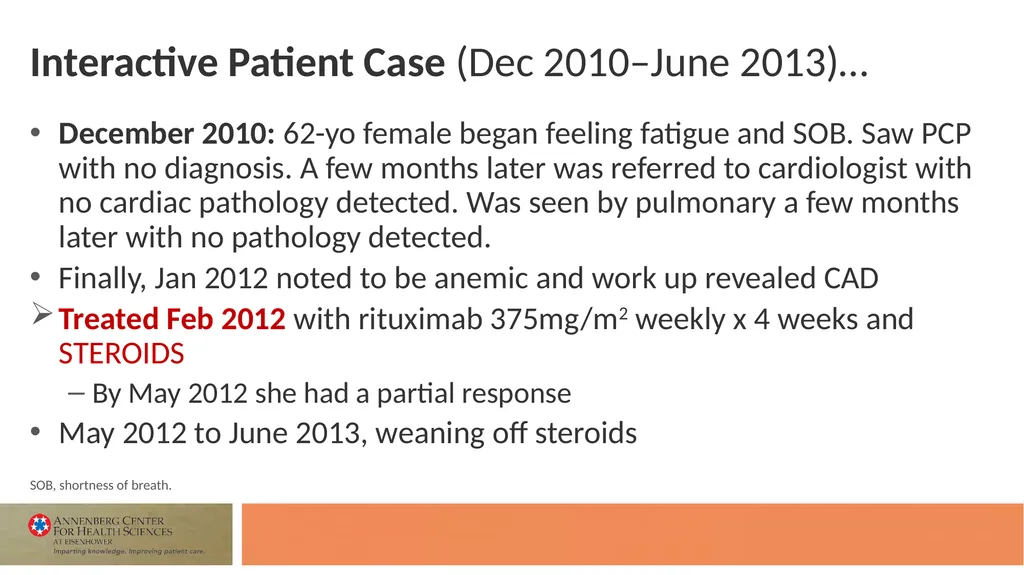
Interactive Patient Case (Dec 2010–June 2013)… December 2010: 62-yo female began feeling fatigue and SOB. Saw PCP with no diagnosis. A few months later was referred to cardiologist with no cardiac pathology detected. Was seen by pulmonary a few months later with no pathology detected.
Finally, Jan 2012 noted to be anemic and work up revealed CAD
Treated Feb 2012 with rituximab 375mg/m2 weekly x 4 weeks and STEROIDS
By May 2012 she had a partial response
May 2012 to June 2013, weaning off steroids SOB, shortness of breath.<br>
Finally, Jan 2012 noted to be anemic and work up revealed CAD
Treated Feb 2012 with rituximab 375mg/m2 weekly x 4 weeks and STEROIDS
By May 2012 she had a partial response
May 2012 to June 2013, weaning off steroids SOB, shortness of breath.<br>
61
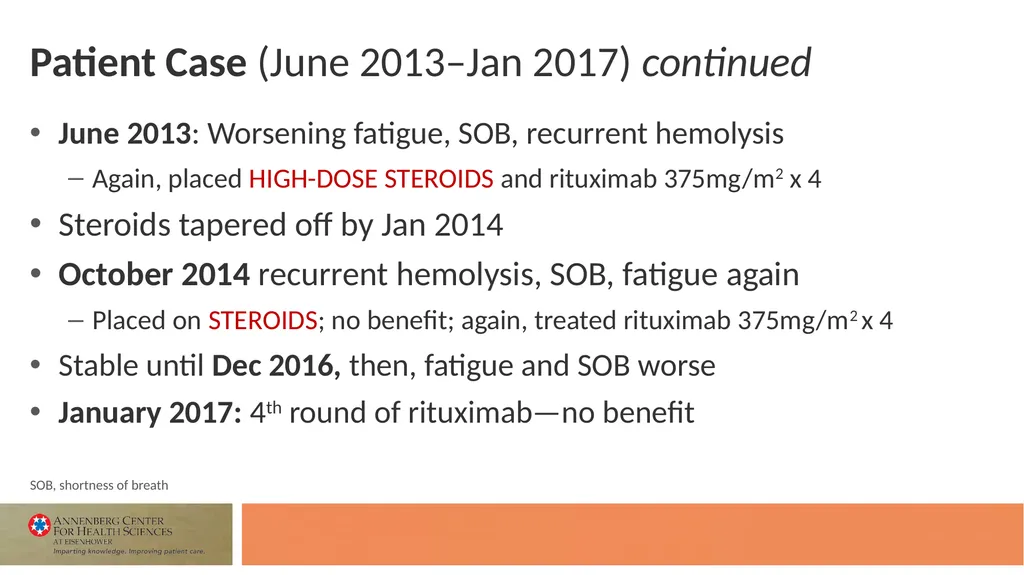
Patient Case (June 2013–Jan 2017) continued June 2013: Worsening fatigue, SOB, recurrent hemolysis
Again, placed HIGH-DOSE STEROIDS and rituximab 375mg/m2 x 4
Steroids tapered off by Jan 2014
October 2014 recurrent hemolysis, SOB, fatigue again
Placed on STEROIDS; no benefit; again, treated rituximab 375mg/m2 x 4
Stable until Dec 2016, then, fatigue and SOB worse
January 2017: 4th round of rituximab—no benefit SOB, shortness of breath<br>
62
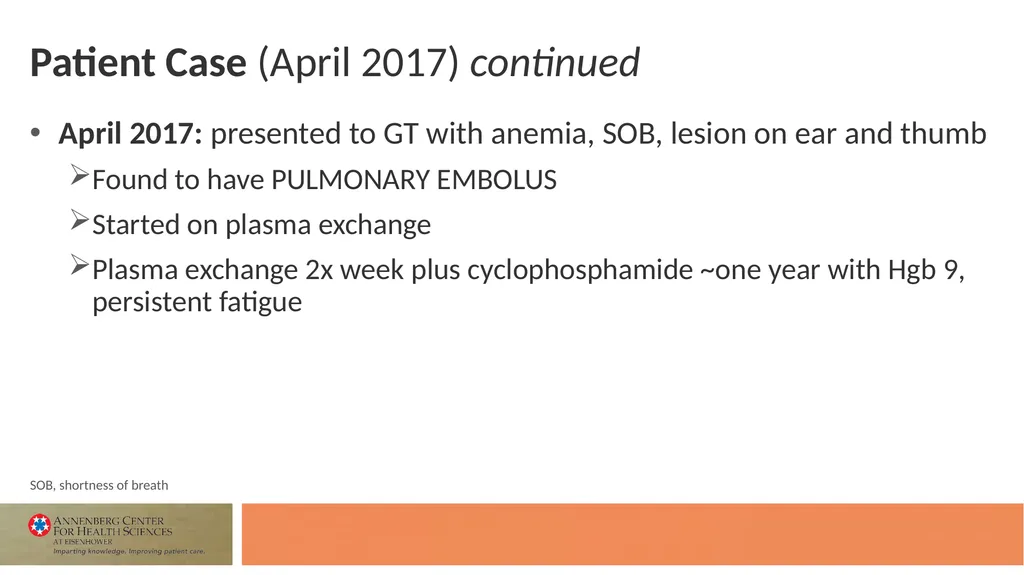
Patient Case (April 2017) continued April 2017: presented to GT with anemia, SOB, lesion on ear and thumb
Found to have PULMONARY EMBOLUS
Started on plasma exchange
Plasma exchange 2x week plus cyclophosphamide ~one year with Hgb 9, persistent fatigue SOB, shortness of breath<br>
Found to have PULMONARY EMBOLUS
Started on plasma exchange
Plasma exchange 2x week plus cyclophosphamide ~one year with Hgb 9, persistent fatigue SOB, shortness of breath<br>
63
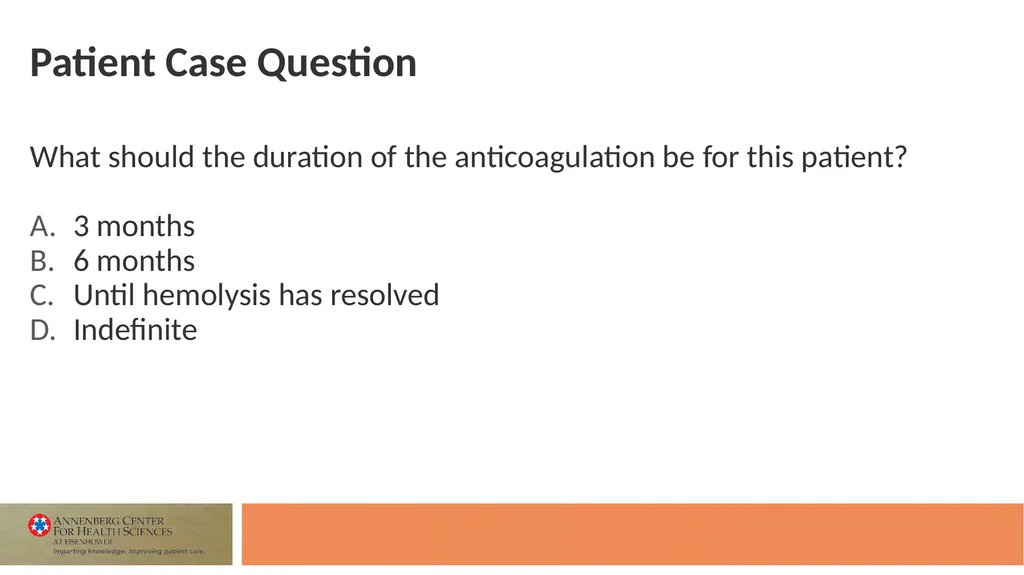
Patient Case Question What should the duration of the anticoagulation be for this patient?
3 months
6 months
Until hemolysis has resolved
Indefinite<br>
3 months
6 months
Until hemolysis has resolved
Indefinite<br>
64
Patient Case Answer and Explanation What should the duration of the anticoagulation be for this patient?
Correct answer is D: Indefinite
Explanation: Patients with CAD remain at risk for venous and arterial thrombotic events even when hemolysis appears inactive. This is believed to be related to chronic complement activation.<br>
Correct answer is D: Indefinite
Explanation: Patients with CAD remain at risk for venous and arterial thrombotic events even when hemolysis appears inactive. This is believed to be related to chronic complement activation.<br>
65
Takeaways Diagnostic markers include reduced Hb levels, increased reticulocytes, elevated LDH, elevated bilirubin levels, and reduced haptoglobin.
Novel therapeutic approaches on the cusp of approval for the management of CAD.
Clinicians should discuss potential clinical trials with patients who fail at first and second-line therapy.
Discuss CADENCE Registry and register your patients.
Be aware of investigational therapies in pipeline. https://coldagglutininnews.com/2021/01/07/cadence-registry Hb, hemoglobin; LDH, LDH, Lactate dehydrogenase.<br>