
Faculty Brenda B. Poindexter, MD, MS Chief,
MY
Published · 28 slides · 0 views

1 / 1




Description
Faculty Brenda B. Poindexter, MD, MS Chief, Division of Neonatology, Childrens Healthcare of Atlanta Marcus Professor of Pediatrics, Emory University School of Medicine Disclosure Brenda Poindexter has documented no financial relationships
Related Topics
Share
Embed code
Download this presentation From Below
"Faculty Brenda B. Poindexter, MD, MS Chief," is the property of its rightful owner. Permission is granted to download and print the materials on this website for personal, non-commercial use only, and to display it on your personal computer provided you do not modify the materials and that you retain all copyright notices contained in the materials. By downloading content from our website, you accept the terms of this agreement.
Presentation Transcript
01
Faculty Brenda B. Poindexter, MD, MS
Chief, Division of Neonatology, Children’s Healthcare of Atlanta
Marcus Professor of Pediatrics, Emory University School of Medicine<br>
Chief, Division of Neonatology, Children’s Healthcare of Atlanta
Marcus Professor of Pediatrics, Emory University School of Medicine<br>
02
Disclosure Brenda Poindexter has documented no financial relationships to disclose or conflicts of interest (COIs) to resolve and has documented this presentation will not involve discussion of unapproved or off-label, experimental or investigational use.
Special thanks to Barbara Cormack and Frank Bloomfield – my co-authors for a chapter in the 2nd Edition of Nutritional Care of Preterm Infants on this topic<br>
Special thanks to Barbara Cormack and Frank Bloomfield – my co-authors for a chapter in the 2nd Edition of Nutritional Care of Preterm Infants on this topic<br>
03
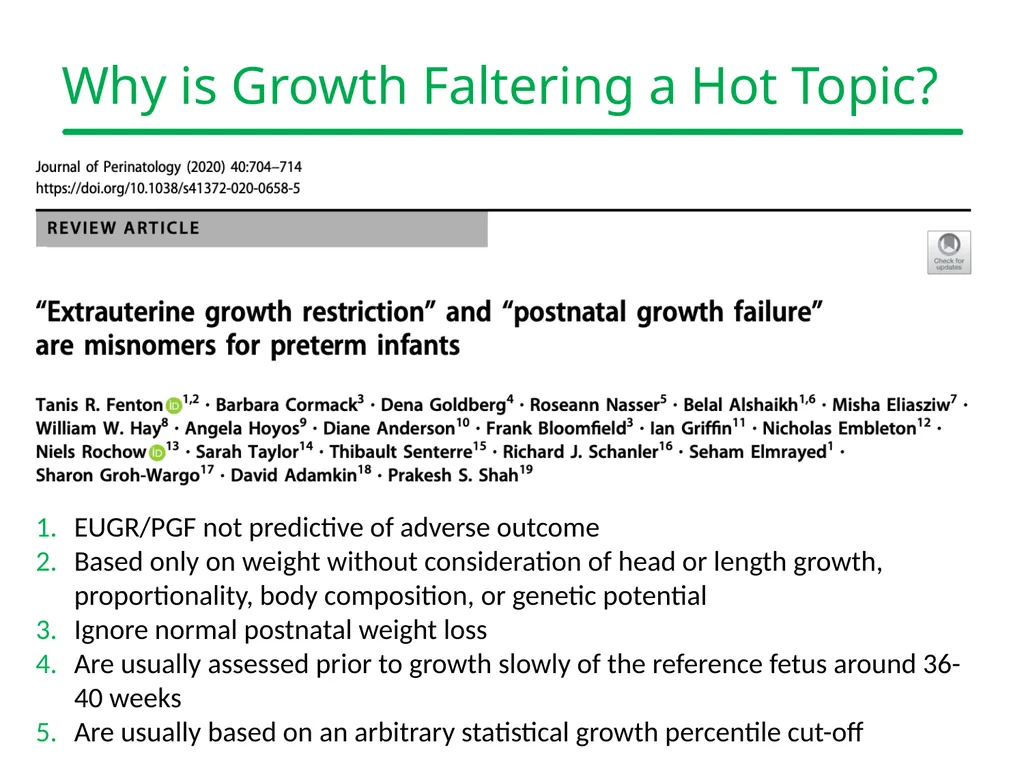
Why is Growth Faltering a Hot Topic? EUGR/PGF not predictive of adverse outcome
Based only on weight without consideration of head or length growth, proportionality, body composition, or genetic potential
Ignore normal postnatal weight loss
Are usually assessed prior to growth slowly of the reference fetus around 36-40 weeks
Are usually based on an arbitrary statistical growth percentile cut-off<br>
Based only on weight without consideration of head or length growth, proportionality, body composition, or genetic potential
Ignore normal postnatal weight loss
Are usually assessed prior to growth slowly of the reference fetus around 36-40 weeks
Are usually based on an arbitrary statistical growth percentile cut-off<br>
04
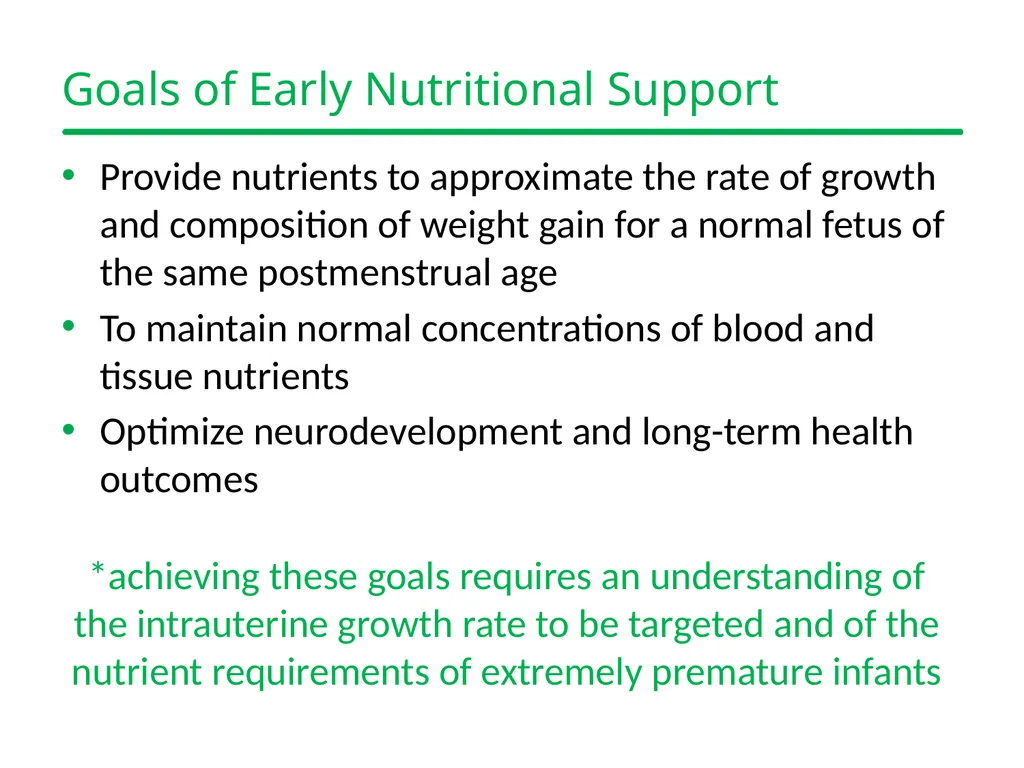
Goals of Early Nutritional Support Provide nutrients to approximate the rate of growth and composition of weight gain for a normal fetus of the same postmenstrual age
To maintain normal concentrations of blood and tissue nutrients
Optimize neurodevelopment and long-term health outcomes *achieving these goals requires an understanding of the intrauterine growth rate to be targeted and of the nutrient requirements of extremely premature infants<br>
To maintain normal concentrations of blood and tissue nutrients
Optimize neurodevelopment and long-term health outcomes *achieving these goals requires an understanding of the intrauterine growth rate to be targeted and of the nutrient requirements of extremely premature infants<br>
05
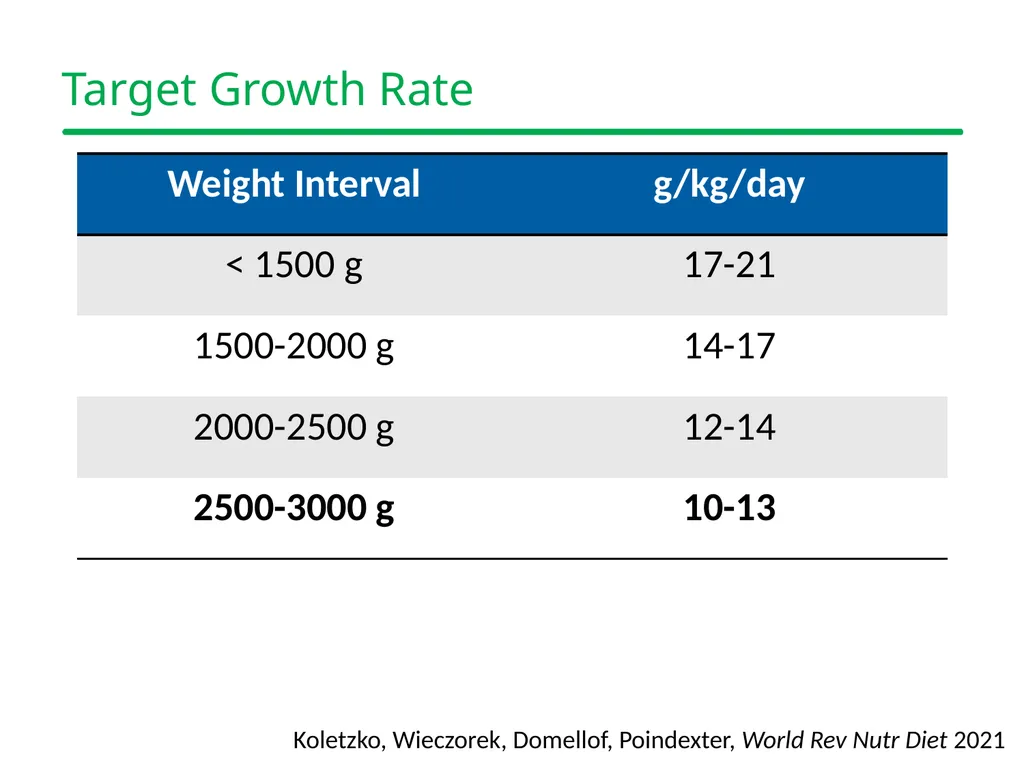
Target Growth Rate Koletzko, Wieczorek, Domellof, Poindexter, World Rev Nutr Diet 2021<br>
06
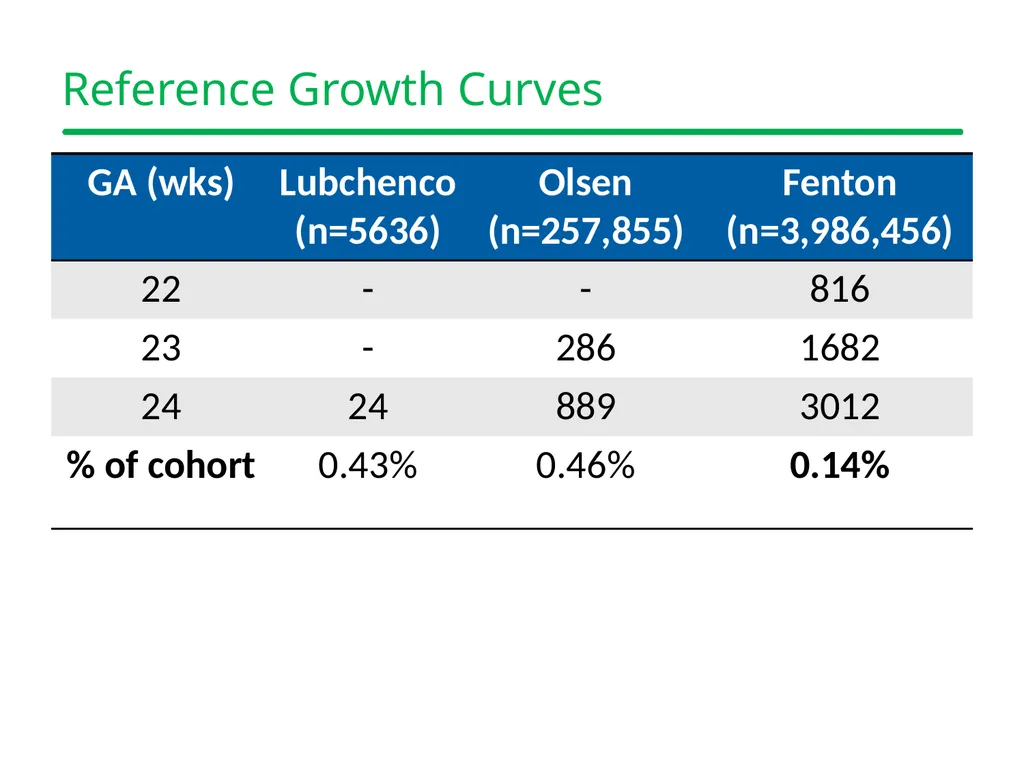
Reference Growth Curves<br>
07
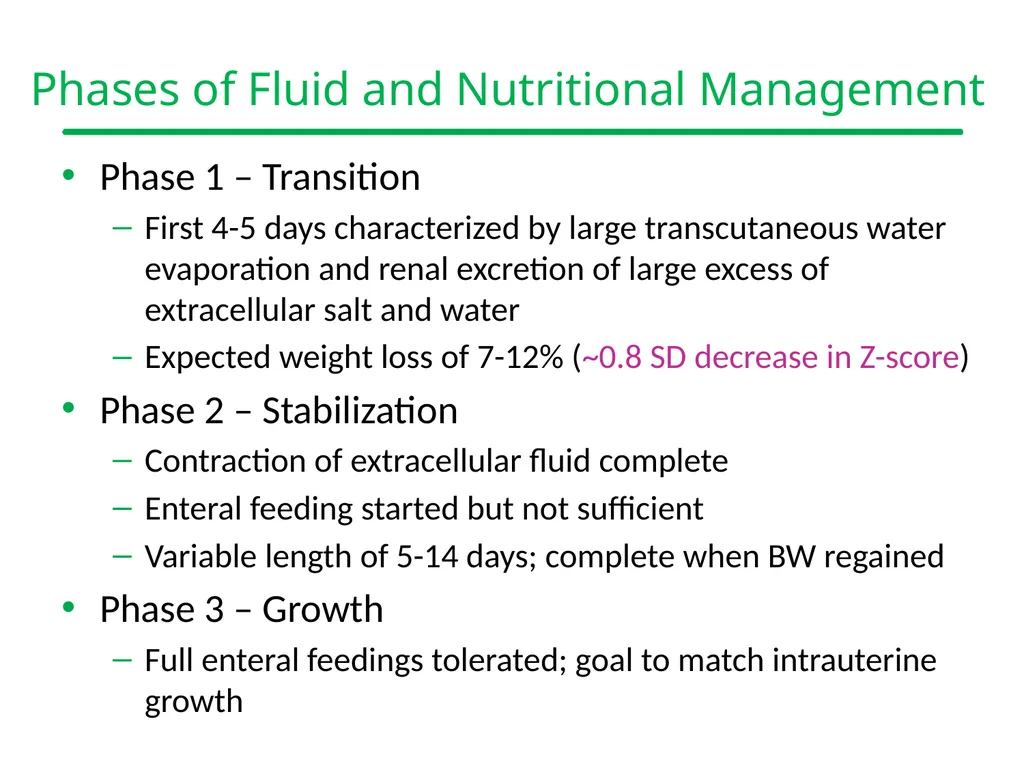
Phases of Fluid and Nutritional Management Phase 1 – Transition
First 4-5 days characterized by large transcutaneous water evaporation and renal excretion of large excess of extracellular salt and water
Expected weight loss of 7-12% (~0.8 SD decrease in Z-score)
Phase 2 – Stabilization
Contraction of extracellular fluid complete
Enteral feeding started but not sufficient
Variable length of 5-14 days; complete when BW regained
Phase 3 – Growth
Full enteral feedings tolerated; goal to match intrauterine growth<br>
First 4-5 days characterized by large transcutaneous water evaporation and renal excretion of large excess of extracellular salt and water
Expected weight loss of 7-12% (~0.8 SD decrease in Z-score)
Phase 2 – Stabilization
Contraction of extracellular fluid complete
Enteral feeding started but not sufficient
Variable length of 5-14 days; complete when BW regained
Phase 3 – Growth
Full enteral feedings tolerated; goal to match intrauterine growth<br>
08
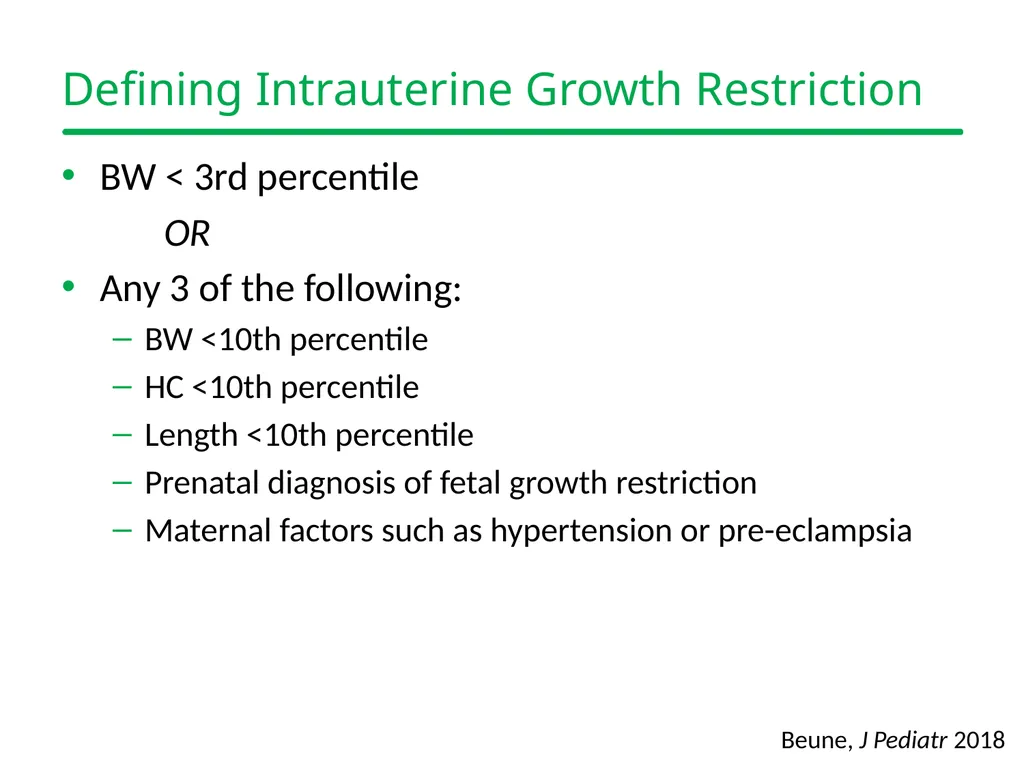
Defining Intrauterine Growth Restriction BW < 3rd percentile
OR
Any 3 of the following:
BW <10th percentile
HC <10th percentile
Length <10th percentile
Prenatal diagnosis of fetal growth restriction
Maternal factors such as hypertension or pre-eclampsia Beune, J Pediatr 2018<br>
OR
Any 3 of the following:
BW <10th percentile
HC <10th percentile
Length <10th percentile
Prenatal diagnosis of fetal growth restriction
Maternal factors such as hypertension or pre-eclampsia Beune, J Pediatr 2018<br>
09
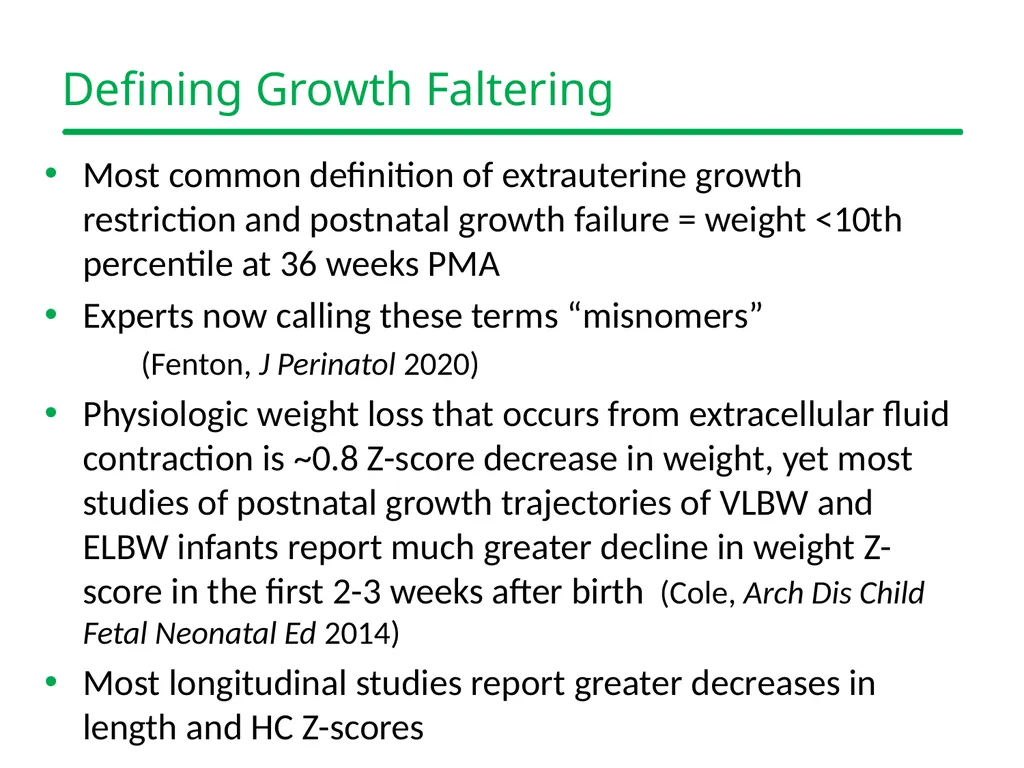
Defining Growth Faltering Most common definition of extrauterine growth restriction and postnatal growth failure = weight <10th percentile at 36 weeks PMA
Experts now calling these terms “misnomers”
(Fenton, J Perinatol 2020)
Physiologic weight loss that occurs from extracellular fluid contraction is ~0.8 Z-score decrease in weight, yet most studies of postnatal growth trajectories of VLBW and ELBW infants report much greater decline in weight Z-score in the first 2-3 weeks after birth (Cole, Arch Dis Child Fetal Neonatal Ed 2014)
Most longitudinal studies report greater decreases in length and HC Z-scores<br>
Experts now calling these terms “misnomers”
(Fenton, J Perinatol 2020)
Physiologic weight loss that occurs from extracellular fluid contraction is ~0.8 Z-score decrease in weight, yet most studies of postnatal growth trajectories of VLBW and ELBW infants report much greater decline in weight Z-score in the first 2-3 weeks after birth (Cole, Arch Dis Child Fetal Neonatal Ed 2014)
Most longitudinal studies report greater decreases in length and HC Z-scores<br>
10
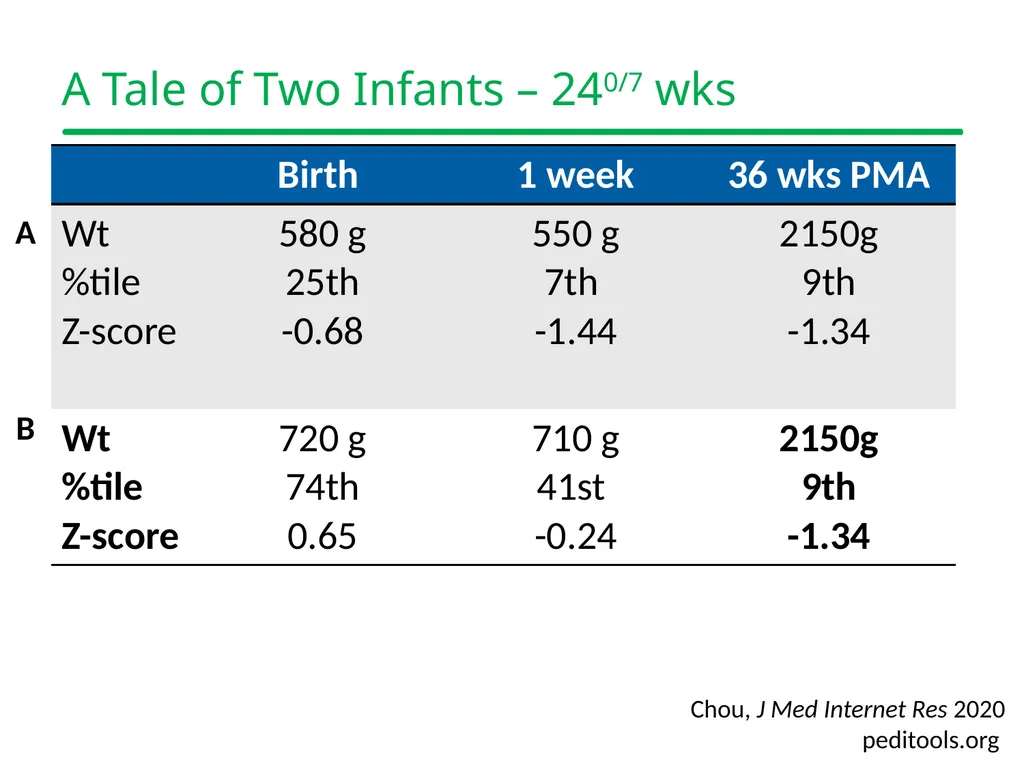
A Tale of Two Infants – 240/7 wks Chou, J Med Internet Res 2020
peditools.org A B<br>
peditools.org A B<br>
11
Take-home Point Growth faltering describes a change in growth trajectory, not a position on a growth chart at any given point in time<br>
12
Prevention is the Best Strategy Early parenteral and enteral nutrition
Early fortification of human milk
Transition period from parenteral to enteral nutrition
Standardized Feeding Protocols<br>
Early fortification of human milk
Transition period from parenteral to enteral nutrition
Standardized Feeding Protocols<br>
13
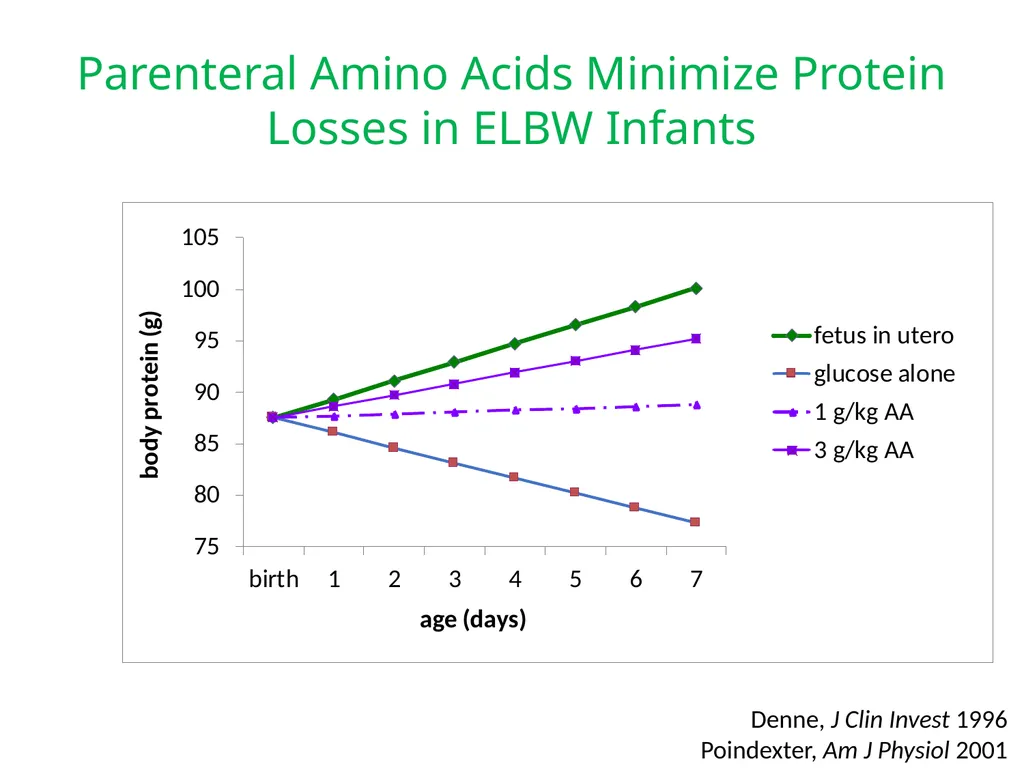
Parenteral Amino Acids Minimize Protein Losses in ELBW Infants Denne, J Clin Invest 1996
Poindexter, Am J Physiol 2001<br>
Poindexter, Am J Physiol 2001<br>
14
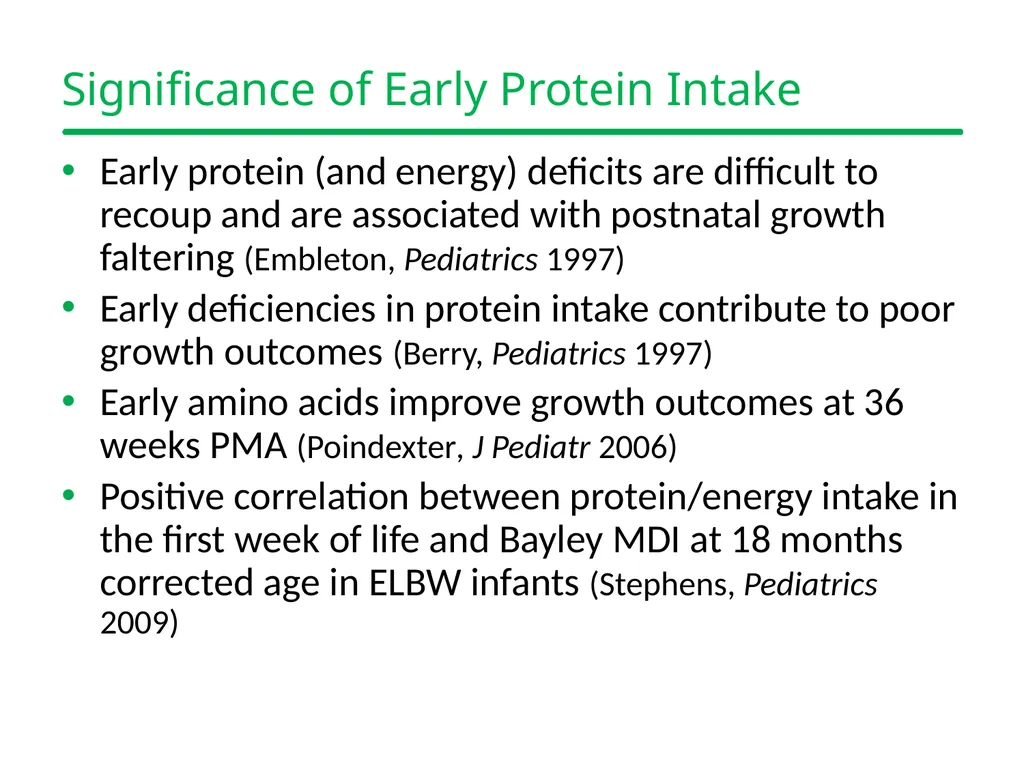
Significance of Early Protein Intake Early protein (and energy) deficits are difficult to recoup and are associated with postnatal growth faltering (Embleton, Pediatrics 1997)
Early deficiencies in protein intake contribute to poor growth outcomes (Berry, Pediatrics 1997)
Early amino acids improve growth outcomes at 36 weeks PMA (Poindexter, J Pediatr 2006)
Positive correlation between protein/energy intake in the first week of life and Bayley MDI at 18 months corrected age in ELBW infants (Stephens, Pediatrics 2009)<br>
Early deficiencies in protein intake contribute to poor growth outcomes (Berry, Pediatrics 1997)
Early amino acids improve growth outcomes at 36 weeks PMA (Poindexter, J Pediatr 2006)
Positive correlation between protein/energy intake in the first week of life and Bayley MDI at 18 months corrected age in ELBW infants (Stephens, Pediatrics 2009)<br>
15
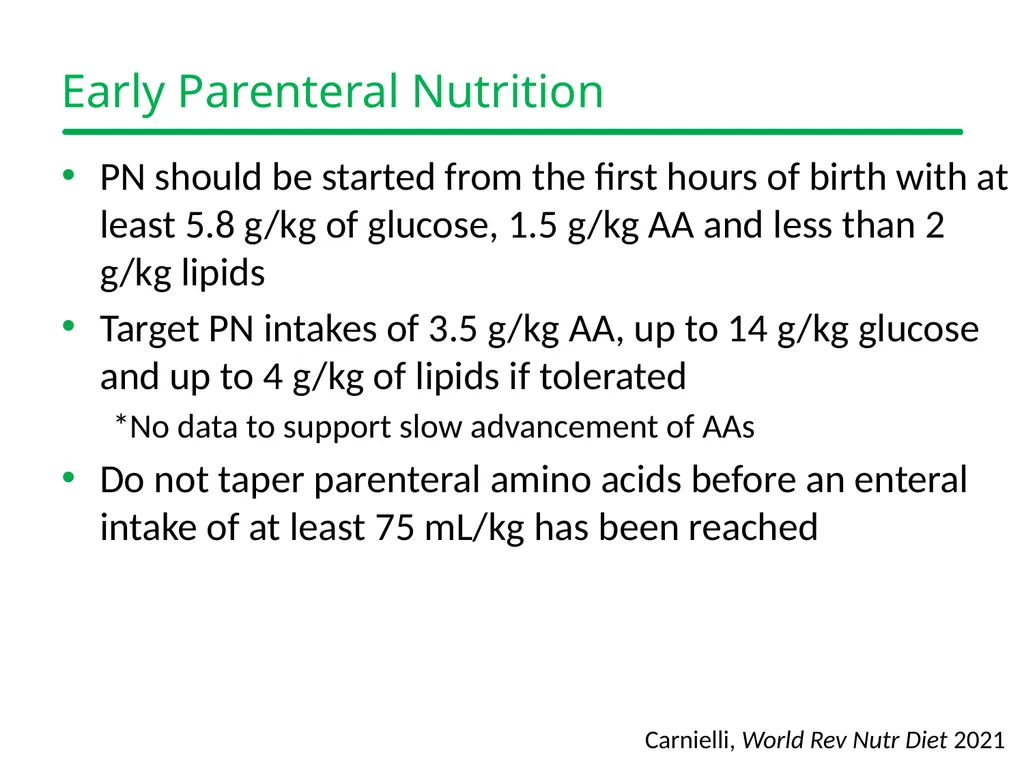
Early Parenteral Nutrition PN should be started from the first hours of birth with at least 5.8 g/kg of glucose, 1.5 g/kg AA and less than 2 g/kg lipids
Target PN intakes of 3.5 g/kg AA, up to 14 g/kg glucose and up to 4 g/kg of lipids if tolerated
*No data to support slow advancement of AAs
Do not taper parenteral amino acids before an enteral intake of at least 75 mL/kg has been reached Carnielli, World Rev Nutr Diet 2021<br>
Target PN intakes of 3.5 g/kg AA, up to 14 g/kg glucose and up to 4 g/kg of lipids if tolerated
*No data to support slow advancement of AAs
Do not taper parenteral amino acids before an enteral intake of at least 75 mL/kg has been reached Carnielli, World Rev Nutr Diet 2021<br>
16
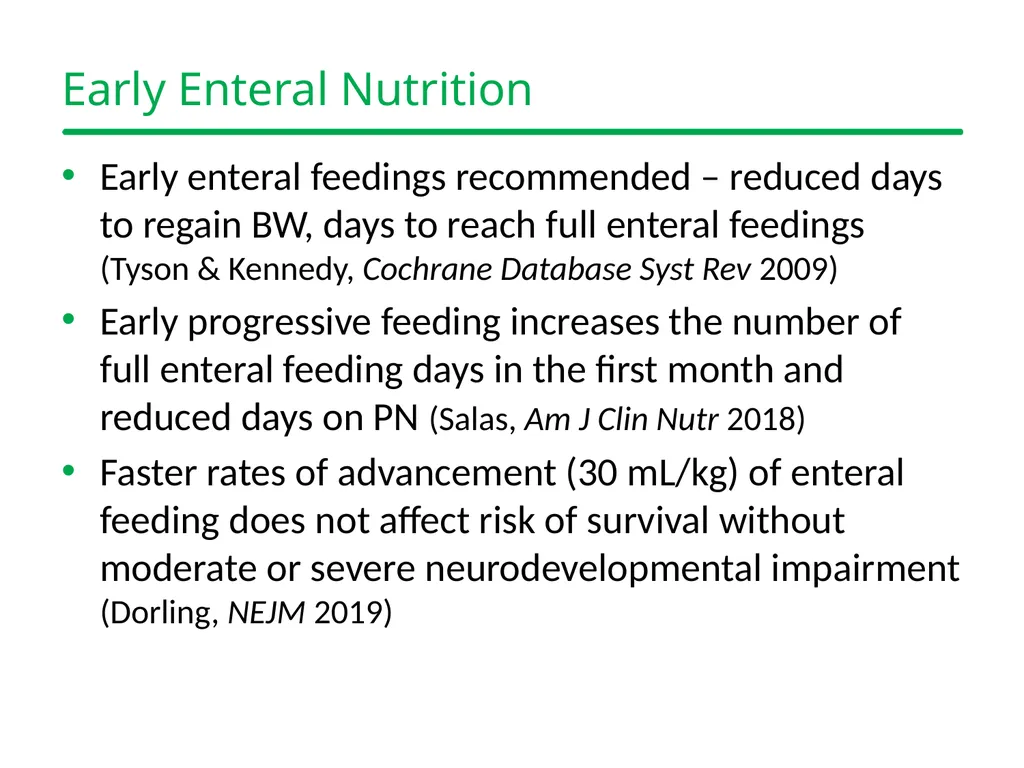
Early Enteral Nutrition Early enteral feedings recommended – reduced days to regain BW, days to reach full enteral feedings (Tyson & Kennedy, Cochrane Database Syst Rev 2009)
Early progressive feeding increases the number of full enteral feeding days in the first month and reduced days on PN (Salas, Am J Clin Nutr 2018)
Faster rates of advancement (30 mL/kg) of enteral feeding does not affect risk of survival without moderate or severe neurodevelopmental impairment (Dorling, NEJM 2019)<br>
Early progressive feeding increases the number of full enteral feeding days in the first month and reduced days on PN (Salas, Am J Clin Nutr 2018)
Faster rates of advancement (30 mL/kg) of enteral feeding does not affect risk of survival without moderate or severe neurodevelopmental impairment (Dorling, NEJM 2019)<br>
17
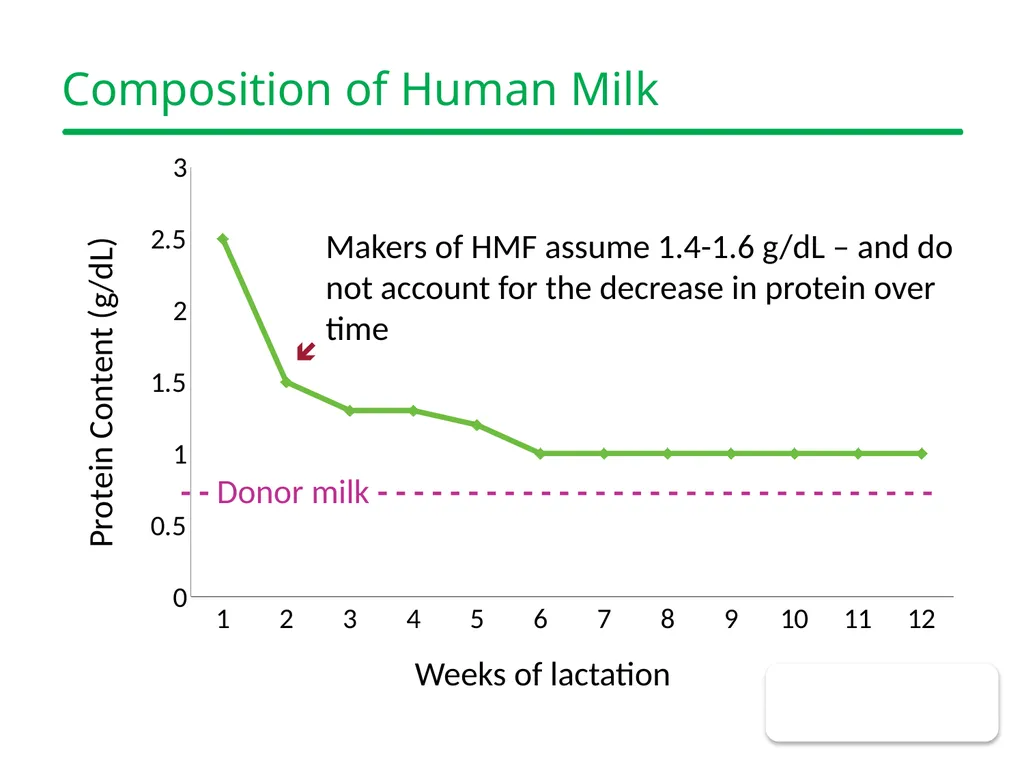
Composition of Human Milk Weeks of lactation - - Donor milk - - - - - - - - - - - - - - - - - - - - - - - - - - - - - - -<br>
18
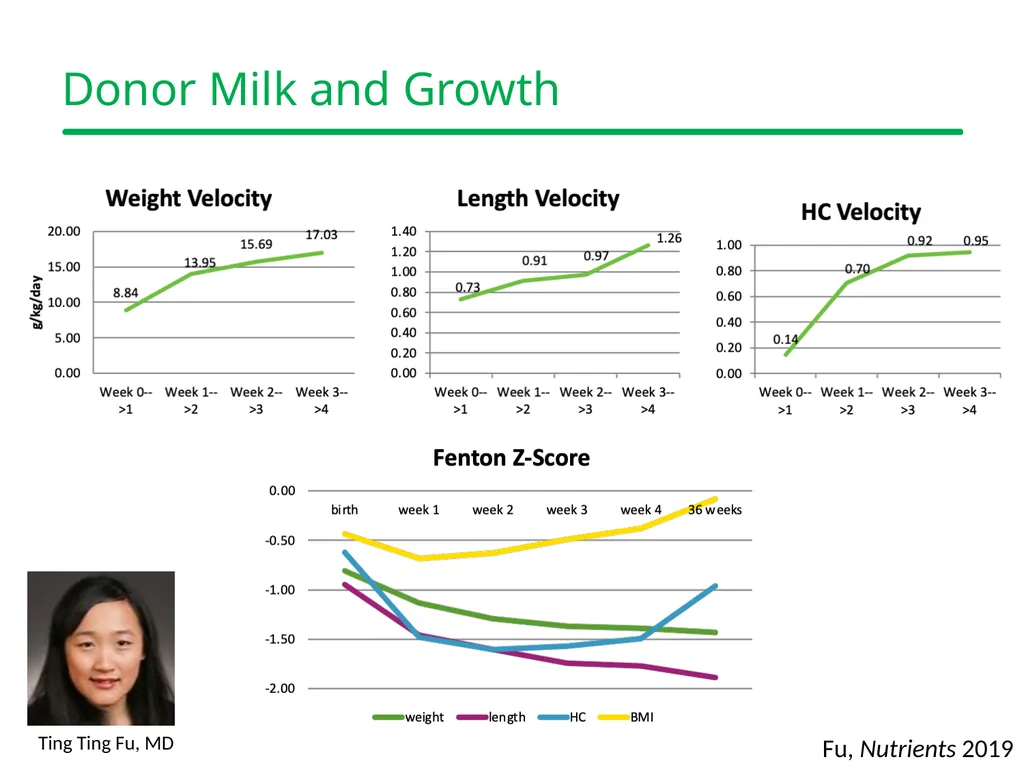
Donor Milk and Growth Fu, Nutrients 2019<br>
19
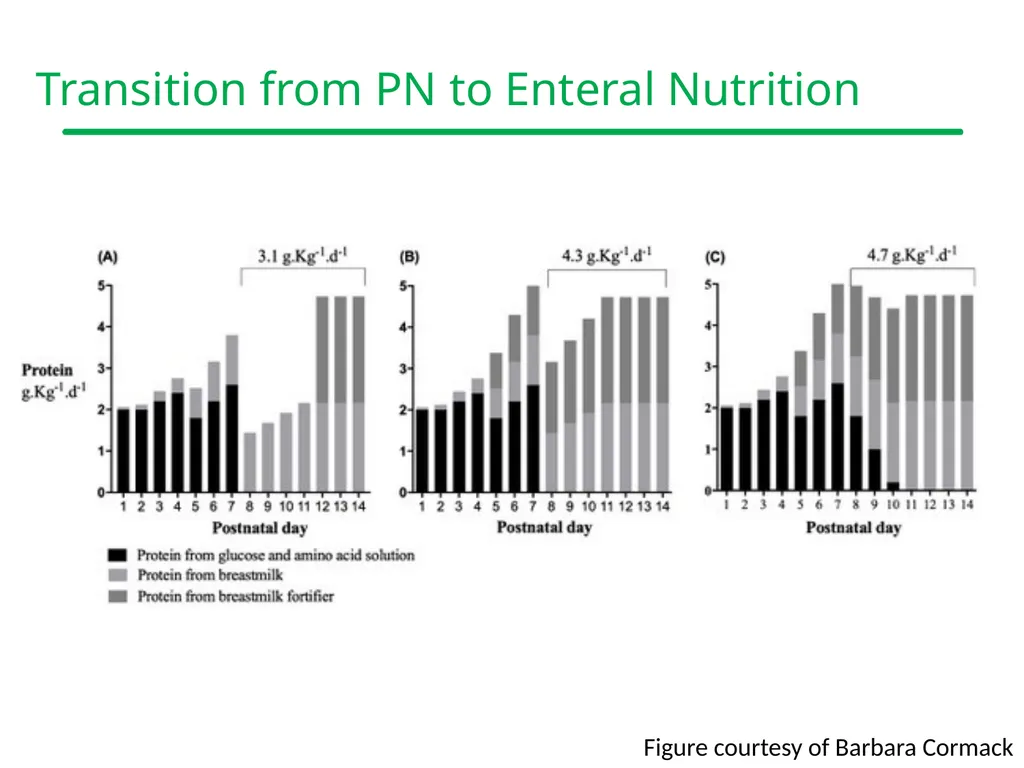
Transition from PN to Enteral Nutrition Figure courtesy of Barbara Cormack<br>
20
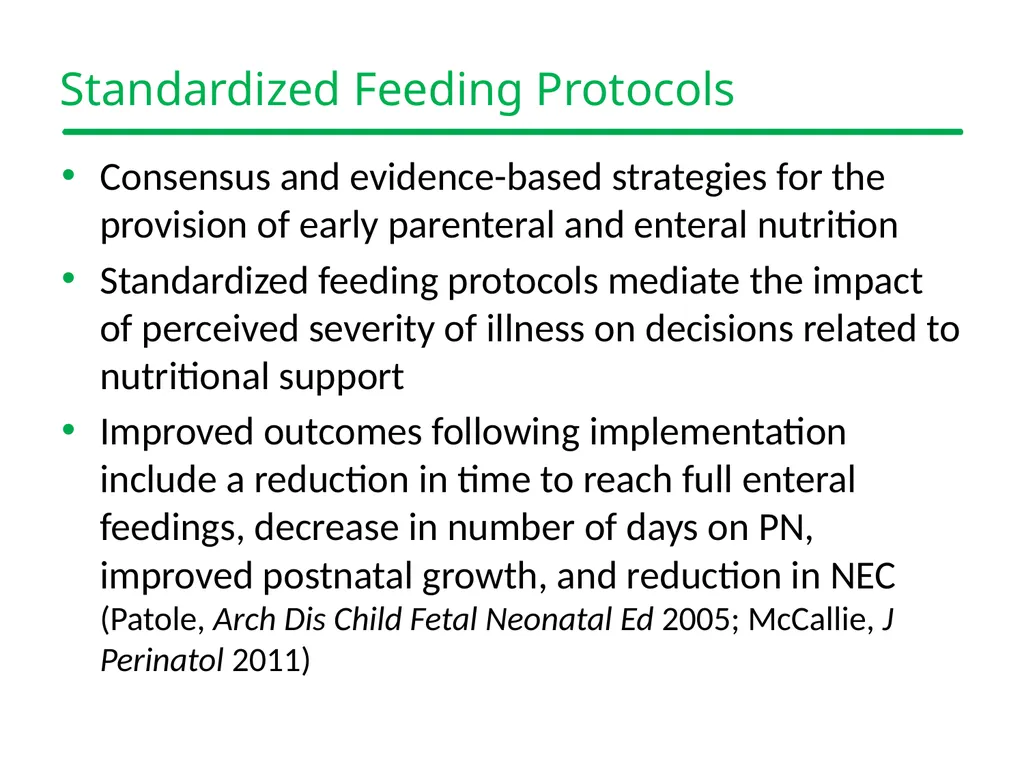
Standardized Feeding Protocols Consensus and evidence-based strategies for the provision of early parenteral and enteral nutrition
Standardized feeding protocols mediate the impact of perceived severity of illness on decisions related to nutritional support
Improved outcomes following implementation include a reduction in time to reach full enteral feedings, decrease in number of days on PN, improved postnatal growth, and reduction in NEC (Patole, Arch Dis Child Fetal Neonatal Ed 2005; McCallie, J Perinatol 2011)<br>
Standardized feeding protocols mediate the impact of perceived severity of illness on decisions related to nutritional support
Improved outcomes following implementation include a reduction in time to reach full enteral feedings, decrease in number of days on PN, improved postnatal growth, and reduction in NEC (Patole, Arch Dis Child Fetal Neonatal Ed 2005; McCallie, J Perinatol 2011)<br>
21
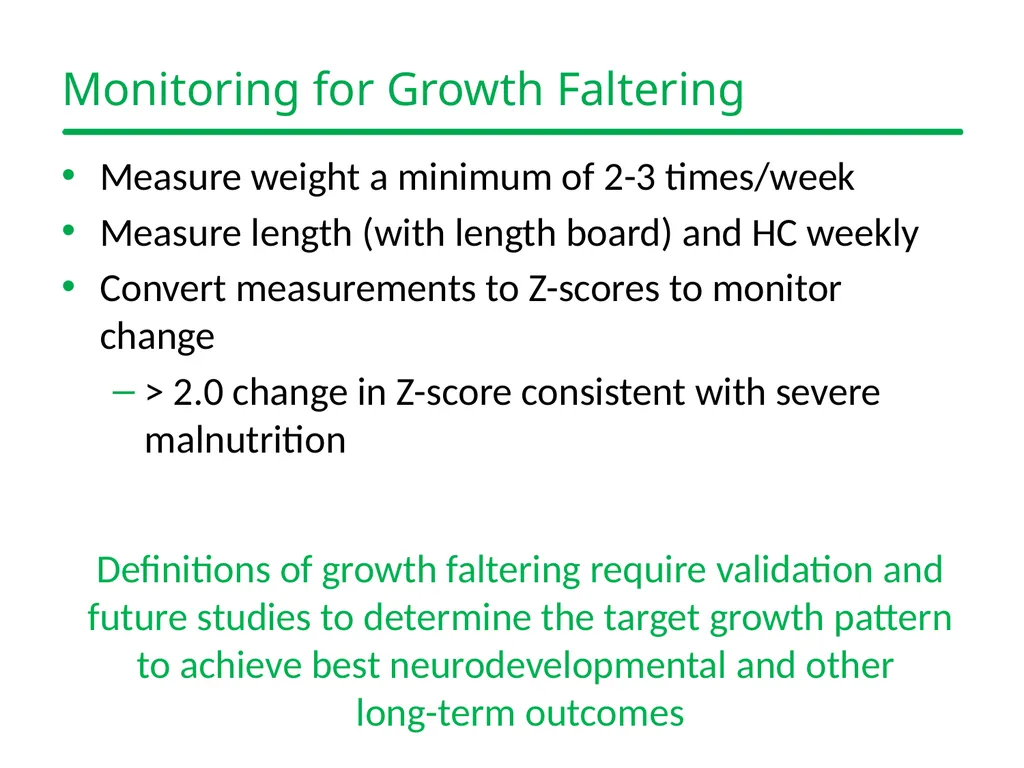
Monitoring for Growth Faltering Definitions of growth faltering require validation and future studies to determine the target growth pattern to achieve best neurodevelopmental and other
long-term outcomes Measure weight a minimum of 2-3 times/week
Measure length (with length board) and HC weekly
Convert measurements to Z-scores to monitor change
> 2.0 change in Z-score consistent with severe malnutrition<br>
Measure length (with length board) and HC weekly
Convert measurements to Z-scores to monitor change
> 2.0 change in Z-score consistent with severe malnutrition<br>
22
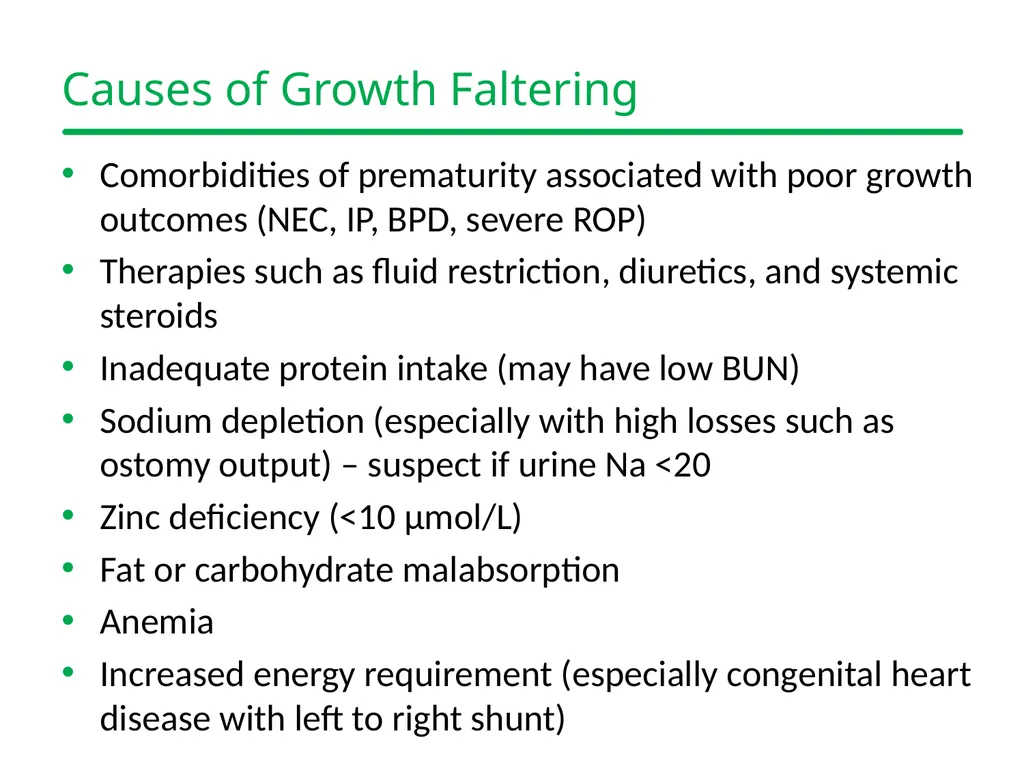
Causes of Growth Faltering Comorbidities of prematurity associated with poor growth outcomes (NEC, IP, BPD, severe ROP)
Therapies such as fluid restriction, diuretics, and systemic steroids
Inadequate protein intake (may have low BUN)
Sodium depletion (especially with high losses such as ostomy output) – suspect if urine Na <20
Zinc deficiency (<10 µmol/L)
Fat or carbohydrate malabsorption
Anemia
Increased energy requirement (especially congenital heart disease with left to right shunt)<br>
Therapies such as fluid restriction, diuretics, and systemic steroids
Inadequate protein intake (may have low BUN)
Sodium depletion (especially with high losses such as ostomy output) – suspect if urine Na <20
Zinc deficiency (<10 µmol/L)
Fat or carbohydrate malabsorption
Anemia
Increased energy requirement (especially congenital heart disease with left to right shunt)<br>
23
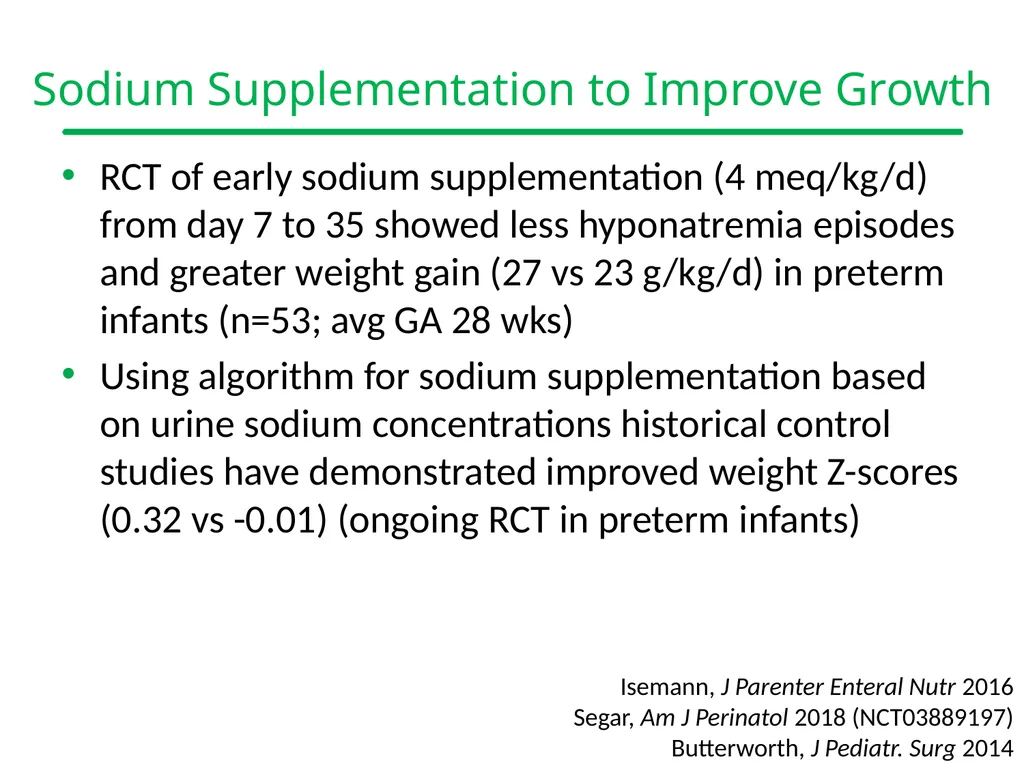
Sodium Supplementation to Improve Growth RCT of early sodium supplementation (4 meq/kg/d) from day 7 to 35 showed less hyponatremia episodes and greater weight gain (27 vs 23 g/kg/d) in preterm infants (n=53; avg GA 28 wks)
Using algorithm for sodium supplementation based on urine sodium concentrations historical control studies have demonstrated improved weight Z-scores (0.32 vs -0.01) (ongoing RCT in preterm infants) Isemann, J Parenter Enteral Nutr 2016
Segar, Am J Perinatol 2018 (NCT03889197)
Butterworth, J Pediatr. Surg 2014<br>
Using algorithm for sodium supplementation based on urine sodium concentrations historical control studies have demonstrated improved weight Z-scores (0.32 vs -0.01) (ongoing RCT in preterm infants) Isemann, J Parenter Enteral Nutr 2016
Segar, Am J Perinatol 2018 (NCT03889197)
Butterworth, J Pediatr. Surg 2014<br>
24
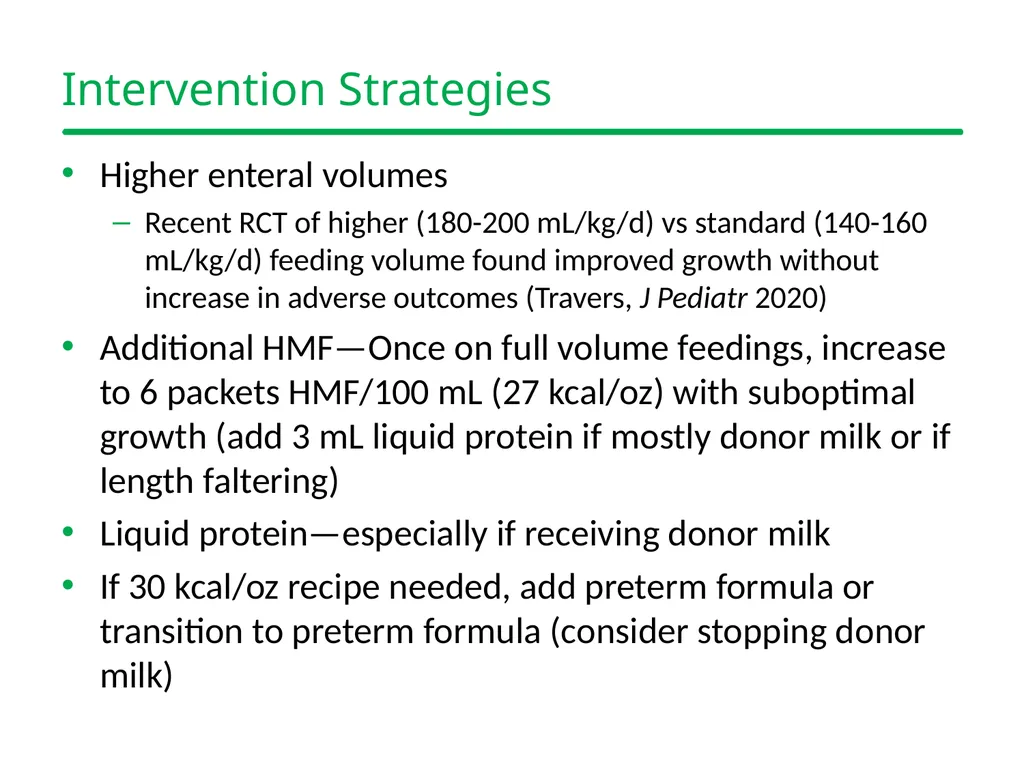
Intervention Strategies Higher enteral volumes
Recent RCT of higher (180-200 mL/kg/d) vs standard (140-160 mL/kg/d) feeding volume found improved growth without increase in adverse outcomes (Travers, J Pediatr 2020)
Additional HMF—Once on full volume feedings, increase to 6 packets HMF/100 mL (27 kcal/oz) with suboptimal growth (add 3 mL liquid protein if mostly donor milk or if length faltering)
Liquid protein—especially if receiving donor milk
If 30 kcal/oz recipe needed, add preterm formula or transition to preterm formula (consider stopping donor milk)<br>
Recent RCT of higher (180-200 mL/kg/d) vs standard (140-160 mL/kg/d) feeding volume found improved growth without increase in adverse outcomes (Travers, J Pediatr 2020)
Additional HMF—Once on full volume feedings, increase to 6 packets HMF/100 mL (27 kcal/oz) with suboptimal growth (add 3 mL liquid protein if mostly donor milk or if length faltering)
Liquid protein—especially if receiving donor milk
If 30 kcal/oz recipe needed, add preterm formula or transition to preterm formula (consider stopping donor milk)<br>
25
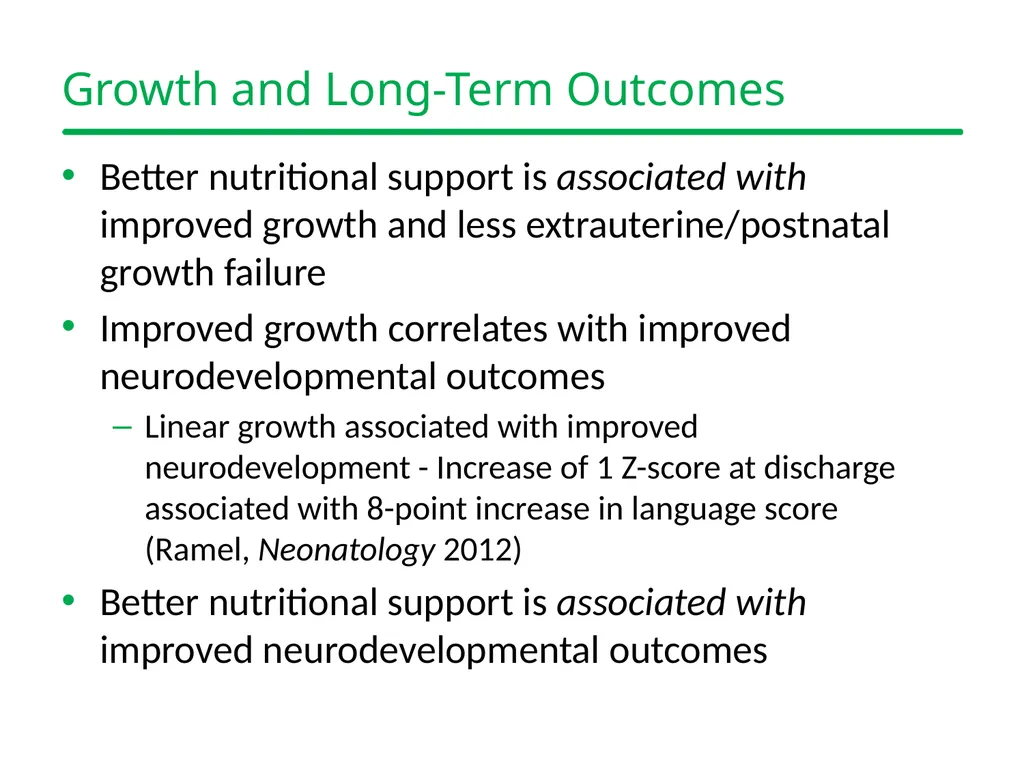
Growth and Long-Term Outcomes Better nutritional support is associated with improved growth and less extrauterine/postnatal growth failure
Improved growth correlates with improved neurodevelopmental outcomes
Linear growth associated with improved neurodevelopment - Increase of 1 Z-score at discharge associated with 8-point increase in language score (Ramel, Neonatology 2012)
Better nutritional support is associated with improved neurodevelopmental outcomes<br>
Improved growth correlates with improved neurodevelopmental outcomes
Linear growth associated with improved neurodevelopment - Increase of 1 Z-score at discharge associated with 8-point increase in language score (Ramel, Neonatology 2012)
Better nutritional support is associated with improved neurodevelopmental outcomes<br>
26
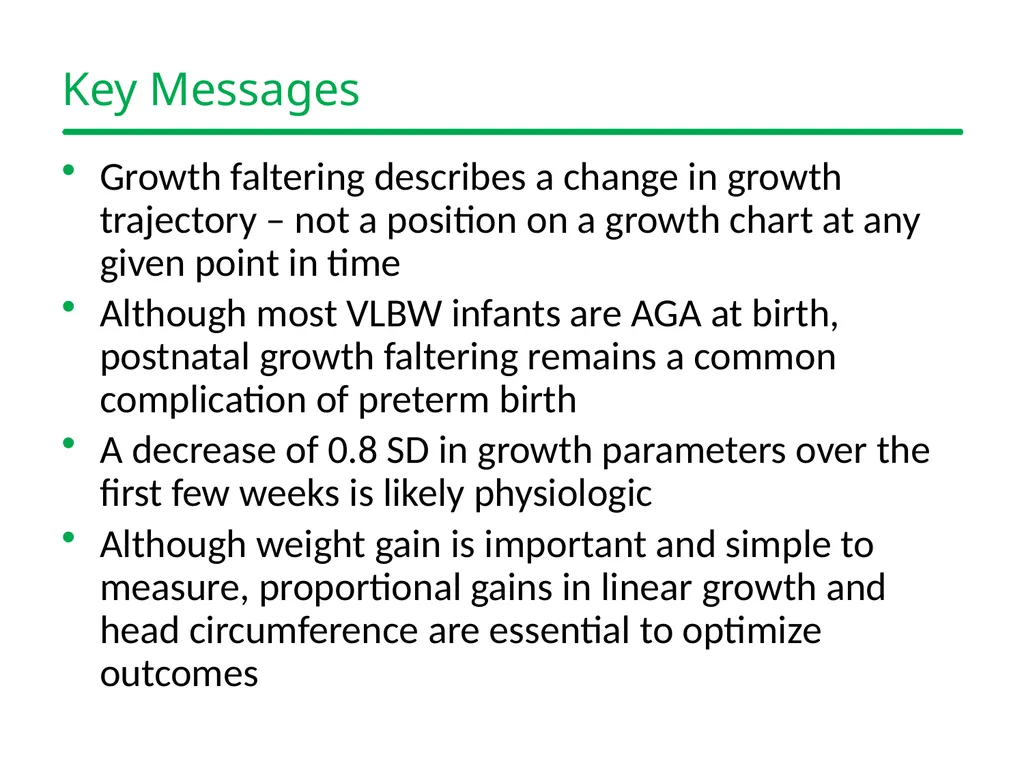
Key Messages Growth faltering describes a change in growth trajectory – not a position on a growth chart at any given point in time
Although most VLBW infants are AGA at birth, postnatal growth faltering remains a common complication of preterm birth
A decrease of 0.8 SD in growth parameters over the first few weeks is likely physiologic
Although weight gain is important and simple to measure, proportional gains in linear growth and head circumference are essential to optimize outcomes<br>
Although most VLBW infants are AGA at birth, postnatal growth faltering remains a common complication of preterm birth
A decrease of 0.8 SD in growth parameters over the first few weeks is likely physiologic
Although weight gain is important and simple to measure, proportional gains in linear growth and head circumference are essential to optimize outcomes<br>
27
Key Messages Prevention is the ideal, but when growth faltering does occur, prompt recognition, identification of contributing factors, and appropriate interventions are necessary
Future research needed to identify optimal rate of postnatal growth to improve neurodevelopmental outcomes<br>
Future research needed to identify optimal rate of postnatal growth to improve neurodevelopmental outcomes<br>